Tag: Solana

  • Bitcoin Holds Near $59.3K, Solana Rises 3.9%: Strategy Buyback and Easing Iran Tensions Shape Q3 Crypto Outlook

    Bitcoin Holds Near $59.3K, Solana Rises 3.9%: Strategy Buyback and Easing Iran Tensions Shape Q3 Crypto Outlook

    Bitcoin enters July with measured stability after weeks of sustained selling pressure. The world’s largest cryptocurrency is wrapping up its worst June since mid-2022, down nearly 19% for the month. BTC has failed to sustain any move above $62,000 since late May. Spot Bitcoin ETFs have also bled over $4 billion in net outflows this month alone, the largest monthly redemption since their launch in January 2024.

    The broader macro environment remains unfriendly. Fed Chair Kevin Warsh is speaking at the ECB Forum today, with markets watching for any signal on rate direction. The US payrolls report follows later this week. A hotter-than-expected print could push BTC back toward $57,000 quickly. On the other side, a 60-day US-Iran ceasefire and lower crude oil prices are providing modest relief to risk assets heading into the final session of Q2.

    Bitcoin Price Today: $59,357

    Bitcoin is trading near $59,357, down 0.24% over 24 hours. The token has spent most of June trapped below all key moving averages. Weekly performance shows a 6.69% decline, reflecting the sustained institutional selling pressure of the past four weeks.

    The $58,000 level remains the most actively watched support on the chart. A confirmed breakdown below it opens a path toward $55,000, with $52,000 as the next structural floor. Reclaiming $61,800–$62,500 with volume remains the minimum threshold for any meaningful recovery.

    RSI on the daily sits near 30.85, close to oversold territory but lacking divergence signals needed to call a bottom. Open interest in BTC futures has contracted from $31.3 billion to roughly $21.6 billion over the past month. That deleveraging reduces crash risk but also removes the fuel needed for a sharp short squeeze.

    Speaking about the prevailing market dynamics, Akshat Siddhant, Lead Quant Analyst at Mudrex, said: “Bitcoin remains below the $61,000 level despite improving risk sentiment following lower crude oil prices and the 60-day ceasefire agreement between the US and Iran. The recovery lost momentum after Strategy announced plans to sell up to $1.25 billion worth of Bitcoin through 2027, weighing on investor confidence.” He further mentions, “While easing geopolitical tensions have encouraged investors back into risk assets, weak spot demand has kept Bitcoin trading in a narrow range. Markets are now focused on Fed Chair Warsh’s speech at the ECB Forum and the upcoming US jobs report for clues on liquidity conditions in the second half of the year. A sustained move above $61,000 could revive buying interest, while $59,000 remains the key support level.”

    The CoinSwitch Markets Desk noted, “BTC has reclaimed the $60K mark, with an improving macro backdrop after the US agreed to meet with Iran, with talks set for today. While some headwinds remain, including ongoing outflows from US spot Bitcoin ETFs and expectations that the Federal Reserve will keep interest rates elevated for longer, buyers are showing resilience. After a brief dip below $59.2K, they stepped in to push the price back above $60K. In the near term, $60.5K–$60.8K is the level to watch on the upside, while $60K is holding firm as solid support.”

    According to the WazirX Market Desk, “Global markets are entering an important week as investors await the US payrolls data, which could shape expectations for the Federal Reserve’s next policy move. A stronger-than-expected jobs report may reinforce the case for higher interest rates, keeping pressure on risk assets. Bitcoin continues to hold the key $58,000–$60,000 support zone, while $62,500 remains the immediate resistance to watch. These levels will likely drive futures activity, with traders positioning for a breakout above resistance. Until then, range-bound trading is expected to dominate market participation. Ethereum futures traders could be watching the $1,550–$1,560 support zone and the $1,690–$1,700 resistance zone.”

    Piyush Walke, Derivatives Research Analyst at Delta Exchange, added, “Bitcoin remains anchored near $60,000 amid a US stock market surge. Retail investors continue to offload holdings while institutional buyers remain on hold. Fresh capital is yet to return to Bitcoin, with trading volumes subdued and open interest showing only minor changes.” He further said, “Bitcoin remains range-bound, consolidating near the key $58,000–$59,000 support zone. The SuperTrend remains bearish, with immediate resistance at $61,800–$62,500. Ethereum faced rejection at the 9 EMA and has slipped from $1,614. Immediate resistance is seen at $1,650–$1,670. On the downside, a break below $1,500 could send ETH toward the $1,400–$1,450 range.”

    Crypto Prices Today: Top 10 Coins at a Glance

    Let’s take a look at the top crypto prices today, based on CoinMarketCap data as of June 30.

    Biggest Gainers: Hyperliquid, Solana

    Hyperliquid leads the top ten today with a 7.17% gain, extending its strong run through June’s broader market weakness. The token’s on-chain financial ecosystem continues attracting fresh speculative capital. Solana follows with a 3.92% advance, supported by renewed activity in tokenized assets and its growing DeFi ecosystem. Both assets stand out sharply against the red section among most large caps.

    Biggest Losers: XRP, BNB

    XRP slips 0.80% as the broader altcoin complex struggles to attract fresh buying amid elevated rate expectations. Thin institutional interest continues to weigh on the token despite improving legal clarity around Ripple. BNB follows with a 0.62% decline, dragged by weak market-wide sentiment and no fresh catalyst to break the month-long downtrend.

    Crypto News Today Driving Market Sentiments

    Let’s take a look at the top headlines impacting crypto prices today.

    Strategy Announces $2 Billion Buyback, Formalizes Bitcoin Monetization Program

    Strategy Inc. launched a $2 billion stock buyback program on June 29, authorizing repurchases of its common stock and preferred securities, including STRC. The company simultaneously unveiled a Digital Credit Capital Framework. This formally creates a Bitcoin monetization program to fund dividends and reserves. Strategy still holds 847,363 BTC on its balance sheet. The buyback signals management’s commitment to supporting its equity without fully liquidating the core BTC treasury. Investors are watching MSTR closely. Any further BTC sales under the monetization program would add fresh supply to an already fragile market.

    US-Iran 60-Day Ceasefire Reduces Near-Term Risk, But Caution Remains

    A 60-day ceasefire between the US and Iran has reduced the most immediate tail risk for global markets. Crude oil prices have pulled back from recent highs near $97, easing some inflation pressure. The Strait of Hormuz remains a sensitive flashpoint. Any breakdown in the agreement could reverse risk appetite quickly. Crypto markets have been tracking oil headlines closely all month. For now, the truce has given buyers enough confidence to defend the $59,000–$60,000 zone heading into the last session of Q2.

    Fed Chair Warsh at ECB Forum, US Payrolls Due This Week

    Fed Chair Kevin Warsh is speaking at the ECB Forum today. His comments on rate policy are the week’s single most-watched macro event. Warsh is widely expected to maintain a hawkish stance. The 10-year Treasury yield sits sticky near 4.45%, keeping the opportunity cost of holding a non-yielding asset like Bitcoin elevated. The US payrolls report arrives later this week. A stronger-than-expected reading would reinforce the case for prolonged rate tightening and likely push BTC back below $58,000. A softer print could give markets the catalyst for a clean break above $61,800.

    US Strategic Bitcoin Reserve Blueprint Due by July 22

    The White House is expected to release its Strategic Bitcoin Reserve blueprint by July 22, ahead of an inter-agency regulatory report deadline. White House digital asset adviser Patrick Witt stated a major announcement is imminent. The US holds an estimated 328,372 BTC, accumulated through criminal and civil asset seizures. Two competing bills remain in Congress. Senator Cynthia Lummis’s BITCOIN Act would authorize Treasury purchases as early as Q4 2026. The American Reserve Modernization Act takes a more measured approach with a 20-year lockup. A clear legislative path would be the most significant policy catalyst for Bitcoin in the second half of the year.

    Investor and Market Outlook

    Bitcoin closes June in a structurally weak but stabilizing position. The Fear and Greed Index sits at 18, deep in Extreme Fear. ETF outflows have not reversed yet. The $58,000–$60,000 band remains the market’s most critical price zone heading into July. Harish Vatnani, Head of Trade at ZebPay, noted that markets will be watching whether ETF flows stabilize and whether demand improves in Q3 or whether first-half weakness extends further.

    The macro calendar is front-loaded this week. Warsh’s ECB Forum speech today and the US payrolls report will define whether July opens with tightening or easing expectations. A concrete update on the Strategic Bitcoin Reserve before July 22 adds another potential catalyst. July has historically delivered average Bitcoin returns between 7.6% and 10.3%, though seasonal strength requires a macro unlock to activate.

    Investors should track daily ETF flow data from SoSoValue, crude oil prices as a leading risk sentiment signal, and Bitcoin’s ability to hold above $59,000 into the weekly close. Avoiding leverage and maintaining tight risk management remains the practical priority until $61,800 is reclaimed with volume and conviction.

    FAQs

    What is the Bitcoin price today? Bitcoin is trading near $59,357.99 today, down 0.24% over 24 hours. Key support sits at $58,000–$59,000. Resistance stands at $61,800–$62,500, with $64,000 as the next target above.

    Why is Bitcoin falling in June 2026? Spot Bitcoin ETFs recorded over $4 billion in outflows this month, the largest since their January 2024 launch. Hawkish Fed expectations, residual US-Iran geopolitical uncertainty, and capital rotation into semiconductor and AI stocks have compressed sentiment.

    What is the biggest crypto news today? Strategy’s $2 billion buyback framework, the 60-day US-Iran ceasefire reducing immediate tail risk, and the approaching July 22 deadline for the US Strategic Bitcoin Reserve blueprint are the top stories driving markets today.

    Which coins are gaining the most today? Hyperliquid leads the top ten with a 7.17% gain. Solana follows at +3.92%. XRP and BNB are today’s notable decliners among large-cap assets.

    What should crypto investors watch this week? Monitor Fed Chair Warsh’s comments at the ECB Forum today and the US payrolls report later this week. Track daily spot Bitcoin ETF flows from SoSoValue. Bitcoin’s ability to hold $59,000 and break $61,800 with volume are the most important technical signals heading into Q3.

    Disclaimer: This article is for informational purposes only and does not constitute investment advice. Cryptocurrency investments are risky. Always do your own research before investing.
  • Solana (SOL) Bounces Off $60 Support: Oversold Signals and ETF Hopes Fuel Breakout Prospects

    Solana (SOL) Bounces Off $60 Support: Oversold Signals and ETF Hopes Fuel Breakout Prospects

    Solana’s native token, SOL, has staged a notable recovery after dipping near the critical $60 support level during a broad market correction. Strong buying pressure at this zone halted further declines, reigniting trader confidence and speculation about a potential breakout.

    At press time, SOL is trading around $66–$68, having touched lows close to $61 during the recent sell-off driven by Bitcoin’s brief drop near $60,000. Despite the broader weakness, Solana held one of its strongest support levels, signaling resilient demand.

    Technical Indicators Point to Oversold Reversal

    The Relative Strength Index (RSI) recently entered oversold territory, a historical precursor to short-term rebounds for SOL. Past data shows that similar oversold readings often preceded swift recoveries, and the bounce from $60 reinforces this pattern. Analysts now watch whether this rebound matures into a sustained uptrend or fades as a dead cat bounce.

    Correction Erased Earlier Gains, but Network Fundamentals Remain Strong

    Earlier this year, SOL traded above $90 before losing nearly 25% due to weak market sentiment, global economic uncertainty, and Bitcoin’s decline. However, the defense of $60 demonstrated strong buying interest at lower levels. Meanwhile, Solana’s blockchain continues to thrive: the network processed 25.3 billion transactions in Q1 2026, active addresses are near record highs, and stablecoin usage is rising. This divergence between price weakness and on-chain strength underpins long-term optimism.

    ETF Speculation and Rising Volume Lift Sentiment

    Renewed discussions around a potential spot Solana ETF have improved market sentiment. Although no official approval has been granted, the prospect of institutional inflows keeps traders hopeful. Additionally, 24-hour trading volume has surged past $3.8 billion, indicating renewed participation after panic selling subsided.

    Key Resistance at $70 in Focus

    Traders now eye the $70 resistance level. A decisive break above could trigger buying toward the $78–$80 range, where SOL traded before the correction. Failure to clear $70 might lead to a retest of $60. The coming sessions will be critical in determining the token’s short-term direction.

    Network Upgrade and Long-Term Outlook

    Solana’s development team continues advancing the Alpenglow upgrade, which aims to reduce transaction finality to ~150 milliseconds and boost validator performance. This technical improvement could strengthen Solana’s position in DeFi, gaming, and asset tokenization, adding to the positive long-term narrative.

    For now, SOL stands at a crossroads. Oversold signals, robust network activity, rising volume, and ETF hopes have revived breakout hopes, but the market awaits confirmation above $70 to validate a sustained recovery.

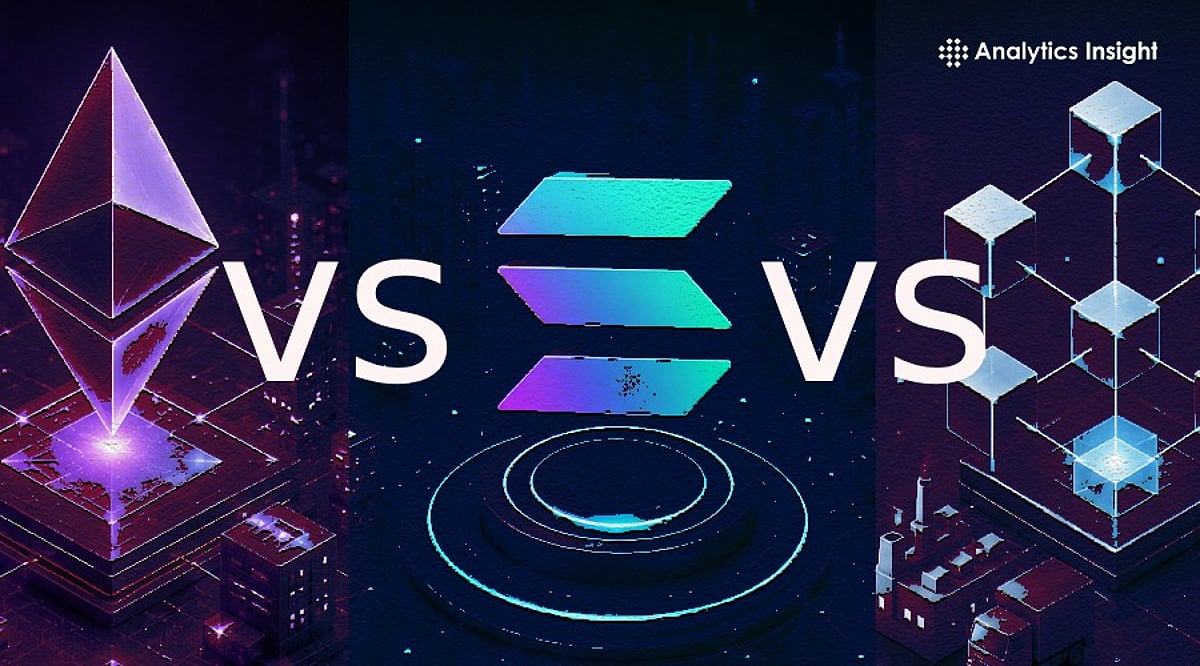
  • Enterprise Blockchain Showdown 2026: Ethereum, Solana, and Hyperledger Compared

    Enterprise Blockchain Showdown 2026: Ethereum, Solana, and Hyperledger Compared

    Enterprise blockchain adoption has surged as businesses choose Ethereum for security, Solana for speed, and Hyperledger for private networks, making blockchain a core part of enterprise infrastructure.

    Overview

    • Ethereum: Top choice for secure enterprise blockchain applications and tokenized finance.
    • Solana: Leads in transaction speed with over 65,000 TPS and extremely low fees.
    • Hyperledger: Dominates private enterprise networks where compliance and data control matter most.

    Blockchain technology has become a major part of business infrastructure. A few years ago, companies mainly tested blockchain through small experiments. Today, large companies, banks, healthcare firms, supply chain networks, and even governments use blockchain for real business operations.

    The enterprise blockchain market has grown quickly this year. Reports show that blockchain use in supply chain systems alone may cross $3.3 billion in 2026. Another fast-growing area is tokenized real-world assets (RWAs). This sector saw almost 589% growth entering 2026, which shows how serious enterprise adoption has become.

    As more companies move toward blockchain, three major platforms dominate the discussion: Ethereum, Solana, and Hyperledger. Each platform solves different business problems.

    Ethereum Remains the Enterprise Leader

    Ethereum continues to hold the strongest position in enterprise blockchain with its maturity and trust factor. Most large companies that build blockchain-based systems still prefer Ethereum because it has existed longer and has proven reliability.

    One of Ethereum’s biggest strengths is its huge developer ecosystem. Current estimates show more than 31,800 active developers working within the Ethereum ecosystem. This number remains far ahead of most blockchain competitors. For enterprises, this means easier access to engineers, better support systems, and stronger technical infrastructure.

    Ethereum has also improved its technology this year. Developers now focus on Verkle Trees architecture, a major network upgrade that helps reduce proof sizes and makes the network more efficient.

    Large financial institutions continue to choose Ethereum for tokenized securities, cross-border payments, digital identity systems, and decentralized finance products.

    The biggest weakness still comes from network speed and transaction cost. Ethereum remains slower than newer blockchain networks, especially when huge transaction volume enters the system. Even with these challenges, Ethereum remains the safest enterprise option for long-term business use.

    Solana Focuses on Speed and Scale

    Solana is challenging Ethereum and many other platforms by establishing a faster and less expensive option to serve businesses’ needs.

    Theoretically, Solana can handle 65,000 transactions per second on the network. In production, Solana has consistently processed over 3,400 transactions per second. The average cost per transaction on Solana is under $0.01, making it an attractive option for large-scale applications.

    Another area of rapid growth for Solana has been the developer ecosystem. Over the past few weeks alone, Solana has added over 7,600 new developers and overall ecosystem growth has exceeded 80% year on year.

    This extraordinary growth has prompted many businesses to build on Solana for payment systems, gaming solutions, high-volume applications, and IoT devices.

    Some companies continue to shy away from Solana because it previously experienced network outages. Businesses need reliable infrastructure at all times, so reliability is a major concern for many enterprises. While Solana is clearly superior in performance, many businesses still prefer Ethereum to ensure stability.

    Hyperledger Dominates Private Enterprise Networks

    Hyperledger takes a different approach compared to Ethereum and Solana. While public blockchains allow open participation, Hyperledger focuses on private blockchain systems where only approved participants enter the network. This makes Hyperledger highly attractive for enterprises that need control, privacy, and regulatory compliance.

    Hyperledger Fabric is currently the most widely used framework for permissioned enterprise blockchain systems. Recent improvements in Fabric 2.5+ have made the network faster while keeping strong security standards.

    A major real-world example comes from De Beers and its Tracr platform, built on Hyperledger infrastructure. The platform has now registered more than 5 million rough diamonds, representing almost two-thirds of company production value.

    Large organizations use Hyperledger for supply chain tracking, healthcare data systems, interbank settlements, and government record management. The biggest advantage comes from privacy and governance. The main drawback comes from reduced decentralization, since the network does not operate like public blockchains.

    Which Blockchain Wins in 2026?

    Depending on the business needs, the choice of platform varies:

    • Ethereum: Best for finance, tokenization, and enterprise apps where security and trust are key. Its developer ecosystem provides a huge competitive advantage.
    • Solana: Ideal when transaction speed is a priority. Extremely low fees and high throughput make it suitable for companies executing many transactions.
    • Hyperledger: Preferred for private enterprise systems requiring high control over access, data visibility, and regulatory compliance.

    The Future of Enterprise Blockchain

    The blockchain industry no longer focuses on one network. Companies now choose platforms based on their specific business model instead of following a single trend. Enterprise blockchain has moved far beyond early experimentation. It now serves as real infrastructure for global business operations.

    Frequently Asked Questions

    1. Which blockchain is best for enterprise use in 2026? Ethereum leads overall with security, trust, and the largest developer ecosystem.
    2. Why do companies choose Solana over Ethereum? Solana offers faster transaction speed and lower fees for high-volume applications.
    3. What makes Hyperledger different from Ethereum and Solana? Hyperledger focuses on private permissioned blockchain networks instead of public decentralized systems.
    4. How big is the enterprise blockchain market in 2026? Supply chain blockchain infrastructure alone is expected to cross $3.3 billion in market value.
    5. Is blockchain still experimental for enterprises? No. Blockchain has become real infrastructure for finance, healthcare, supply chains, and government systems.
  • How to Invest $500 in Crypto Today: A Balanced Portfolio for June 2026

    How to Invest $500 in Crypto Today: A Balanced Portfolio for June 2026

    With crypto markets showing signs of recovery in June 2026, a carefully planned $500 investment can balance stability and growth. Rather than betting everything on a single coin, spreading funds across five strong projects—Bitcoin, Ethereum, Solana, Chainlink, and Hyperliquid—offers a mix of safety, innovation, and upside potential.

    Bitcoin (BTC) – The Safe Foundation

    Bitcoin remains the most trusted crypto asset, with a market cap near $1.28 trillion. Institutional demand through spot ETFs continues to support its price, making it a reliable anchor for any portfolio. Investing $175 in BTC provides a stable base and reduces overall risk.

    Ethereum (ETH) – Technology Leader

    Ethereum powers thousands of dApps, DeFi platforms, and NFTs. Recent network upgrades have improved speed and scalability. At around $1,730, ETH offers strong value. A $125 allocation gives exposure to the second-largest blockchain without overexposure.

    Solana (SOL) – High-Growth Contender

    Solana’s fast, low-cost transactions attract developers in gaming and DeFi. With a market cap above $42 billion and price near $74, SOL offers significant growth potential—though with higher volatility. Allocating $100 taps into this upside while keeping the rest of the portfolio stable.

    Chainlink (LINK) – Infrastructure Play

    Chainlink connects smart contracts to real-world data, a critical function for tokenization and DeFi. As the ecosystem grows, LINK benefits from its role as infrastructure. A $50 position adds diversification and long-term value.

    Hyperliquid (HYPE) – Aggressive Speculation

    Hyperliquid has surged on the rise of decentralized futures trading. This newer token carries higher risk but also the chance for outsized gains. A $50 bet suits investors willing to accept volatility for potential rapid returns.

    Final Portfolio Allocation

    • Bitcoin (BTC): $175 – Stability and institutional trust
    • Ethereum (ETH): $125 – Strong technology and adoption
    • Solana (SOL): $100 – Fast network growth
    • Chainlink (LINK): $50 – Essential blockchain infrastructure
    • Hyperliquid (HYPE): $50 – High-risk, high-reward

    While the crypto market remains volatile after Bitcoin’s 50% correction earlier in 2026, clearer regulations, rising stablecoin adoption, and growing institutional participation strengthen long-term confidence. Projects with real use cases and solid technology are best positioned for the second half of the year.


    Frequently Asked Questions

    1. Why should I not invest all $500 in one cryptocurrency?
    Diversification protects your portfolio from major losses if a single coin underperforms.

    2. Is Bitcoin still a good investment in 2026?
    Yes, Bitcoin remains the strongest long-term crypto asset due to institutional adoption and market dominance.

    3. Why is Ethereum considered a strong choice?
    Ethereum powers smart contracts, DeFi, NFTs, and thousands of blockchain applications worldwide.

    4. Is Solana riskier than Bitcoin and Ethereum?
    Yes, Solana has higher volatility but also stronger growth potential thanks to its fast, low-cost network.

    5. Why is Hyperliquid considered an aggressive investment?
    It’s a newer project tied to decentralized futures trading, offering higher upside but significantly greater short-term risk.

  • Solana Surges Past $70 as ETF Inflows Hit $1.45 Billion – Is Institutional Demand Fueling the Next Rally?

    Solana Surges Past $70 as ETF Inflows Hit $1.45 Billion – Is Institutional Demand Fueling the Next Rally?

    Solana has reclaimed the crucial $70 price level, sparking renewed optimism across the cryptocurrency market. The move above this key resistance comes on the back of massive exchange-traded fund (ETF) inflows totaling $1.45 billion, alongside rising institutional participation and robust network activity. Analysts now eye targets at $75, $85, and even $97 if bullish momentum persists.

    Key Takeaways

    • Solana climbed from recent lows near $61.50 to trade between $71 and $72.
    • Spot Solana ETFs have attracted nearly $1.45 billion in cumulative inflows since launch.
    • Major financial institutions, including Goldman Sachs, now hold Solana ETF exposure worth $108 million.
    • Technical indicators show recovery, with the 14-day RSI bouncing from oversold levels.
    • Strong on-chain activity from projects like Jupiter and Pump.fun supports network fundamentals.

    ETF Demand Ignites Market Sentiment

    The primary driver behind Solana’s resurgence is surging demand for spot Solana ETFs. Throughout 2026, institutional investors have steadily increased allocations to Solana products, even during broader crypto market weakness. Data shows total inflows into Solana ETFs have reached $1.45 billion, signaling a structural shift in capital flow. This pattern mirrors earlier rallies seen in Bitcoin and Ethereum after their own ETF launches, where institutional buying provided a robust price floor.

    Institutional Giants Enter the Arena

    Another major catalyst stems from participation by traditional finance titans. Earlier this year, reports confirmed that Goldman Sachs holds approximately $108 million in Solana ETF exposure. Such institutional involvement boosts market confidence, as large investors typically commit for the long term, reducing volatility and supporting sustained upward movement.

    Network Activity Remains Strong

    Beyond ETF demand, Solana’s blockchain continues to thrive. High-traffic platforms such as the decentralized exchange aggregator Jupiter and meme token platform Pump.fun dominate network usage. Elevated transaction volume leads to higher fee generation and increased demand for SOL tokens, underpinning the asset’s fundamental value.

    Technical Indicators Turn Bullish

    From a technical standpoint, Solana’s 14-day Relative Strength Index (RSI) fell to 28 earlier this month, indicating oversold conditions historically preceding short-term recoveries. Price has since bounced from the $61.50 low, and the $65 support zone has held firm. The break above $70 has shifted market sentiment from bearish to cautiously optimistic.

    Risks and Caution

    Despite the positive momentum, risks remain. Broader market weakness persists; Bitcoin ETFs saw nearly $2.97 billion in outflows over a ten-session stretch earlier in June. If global financial uncertainty returns, risk assets like Solana could face renewed selling pressure. However, strong structural inflows provide a buffer that many other cryptocurrencies lack.

    What Lies Ahead for Solana?

    The immediate resistance stands at $75. A decisive breakout above that level could open the door to $85, where previous selling pressure emerged. Beyond that, the $97 mark represents a critical milestone for confirming a broader uptrend in the second half of 2026. The combination of institutional ETF demand, vibrant network activity, and improving technicals gives Solana a solid foundation for further gains.

    Disclaimer: This article is for informational purposes only and does not constitute financial advice. Cryptocurrency investments carry risk. Always conduct your own research before investing.
  • Solana’s Price Slump: Key Factors Behind the Drop to $67 and What’s Next

    Solana’s Price Slump: Key Factors Behind the Drop to $67 and What’s Next

    Solana, once a high-flying blockchain known for its lightning-fast transactions and low fees, is facing a significant momentum test. As of late June 2026, SOL trades near $67 to $70, far below its previous highs, leaving many investors questioning the network’s short-term prospects.

    Why Solana’s Price Is Falling

    The decline stems from a combination of broader market weakness, reduced trading activity, and increased competition—especially from Ethereum. Here are the main drivers:

    • Market-wide slowdown: Risk appetite has dried up across crypto, with traders favoring Bitcoin and stablecoins over altcoins.
    • Technical resistance: SOL is stuck between support at $64–$68 and resistance at $70–$75, signaling indecision.
    • Drop in speculative demand: Meme coins and NFT mania on Solana have cooled, reducing network activity and trading volumes.
    • Ethereum’s Layer-2 upgrades: Faster, cheaper transactions on Ethereum have eroded Solana’s speed advantage.
    • Institutional caution: Large investors have not poured capital into SOL as they have into Bitcoin.
    • Global economic pressure: High interest rates and tight financial conditions suppress demand for risky assets.

    But Fundamentals Remain Strong

    Despite the price pain, Solana’s network health is solid. Developer activity continues, DeFi platforms are active, and the upcoming Firedancer validator upgrade promises to boost speed and efficiency. Many analysts believe these factors support a long-term recovery.

    Outlook: Could SOL Rebound in 2026?

    Some forecasts suggest a recovery toward $80–$100 later this year if the broader market improves. However, short-term sentiment remains bearish, with a possible dip to $60 before any sustained rally. For now, traders should watch the $64–$68 support zone closely.

    Frequently Asked Questions

    1. Why is Solana’s price dropping right now?

    SOL is caught in a wider crypto market slowdown. A drop in high-risk retail trading, lower trading volumes, and broader global economic caution are putting heavy pressure on the price.

    2. What key price levels should traders watch?

    Keep a close eye on the $64 to $68 support zone. If SOL breaks below that, it could sink toward $60. To recover, it needs to clear resistance between $70 and $75.

    3. How is Ethereum hurting Solana’s growth?

    Ethereum’s new Layer-2 scaling upgrades have made its transactions much faster and cheaper. This directly challenges Solana’s main selling points—speed and ultra-low costs—shrinking the competitive gap between them.

    4. Can Solana realistically bounce back in 2026?

    Yes, if the broader crypto market recovers, analysts see a path back to the $80–$100 range. However, short-term prediction sentiment remains bearish, with a possible drop to $60 first.

    5. Does Solana still have strong long-term potential?

    Absolutely. Network health remains robust with high developer activity and major infrastructure upgrades rolling out, including the Firedancer validator client, which keeps long-term investor optimism intact.

    Disclaimer: This article is for informational purposes only and does not constitute financial advice. Cryptocurrency investments carry risk. Always do your own research before investing.