Tag: Solana

  • Top Layer-1 Blockchain Coins to Watch in July 2026: Bitcoin, Ethereum, Solana, and More

    Top Layer-1 Blockchain Coins to Watch in July 2026: Bitcoin, Ethereum, Solana, and More

    Layer-1 blockchains are the backbone of the cryptocurrency ecosystem, enabling transactions, smart contracts, decentralized applications, and more. In July 2026, these foundational networks continue to attract significant investor attention. Here’s a look at the most promising Layer-1 coins to consider for your portfolio.

    Key Takeaways

    • Bitcoin remains the safest and most trusted Layer-1 cryptocurrency.
    • Ethereum leads the smart contract and decentralized application market.
    • Solana, Sui, and Hyperliquid offer higher growth potential with greater risk.

    Bitcoin (BTC) – The Gold Standard

    Bitcoin, currently trading at $63,056, is widely regarded as digital gold. Its limited supply and institutional adoption through ETFs make it a cornerstone of any crypto portfolio. While its growth may be slower than smaller coins, it remains the most secure choice for long-term investors.

    Ethereum (ETH) – Smart Contract Leader

    Ethereum, priced at $1,785, is the largest smart contract platform, hosting thousands of dApps, NFTs, and DeFi projects. Its robust community, staking rewards, and improved scalability keep it among the top Layer-1 investments for 2026.

    BNB and Solana – Strong Ecosystem Growth

    BNB ($570) powers one of the most extensive blockchain ecosystems, used for trading, payments, and DeFi. Solana ($76.6) is renowned for its high-speed, low-cost transactions, attracting developers in gaming and finance. Both networks continue to expand their user bases.

    TRON and Hyperliquid – Rising Stars

    TRON ($0.32) has become a key network for stablecoin transfers, handling billions daily. Hyperliquid ($60) is a newer Layer-1 focused on decentralized trading, gaining traction among traders despite higher risk.

    Cardano, Avalanche, Sui, and Aptos – Diverse Options

    Cardano ($0.16) emphasizes research-backed development and staking rewards. Avalanche ($20-25) allows custom blockchain creation, attracting enterprise users. Sui and Aptos, both modern Layer-1s, are growing rapidly with DeFi ecosystems, though they carry higher risk due to smaller market caps.

    Investment Strategy

    A balanced portfolio might include 35% Bitcoin, 25% Ethereum, 15% Solana, 10% BNB, 5% Avalanche, 5% Sui, and 5% Hyperliquid. For lower risk, stick with Bitcoin and Ethereum. For higher potential returns, consider Solana, Hyperliquid, and Sui.

    FAQs

    1. What is a Layer-1 blockchain?

    A Layer-1 blockchain is the main network that processes transactions and supports apps, smart contracts, and other blockchain services.

    2. Which Layer-1 coin is the safest to invest in?

    Bitcoin is widely considered the safest Layer-1 cryptocurrency because of its strong security and global adoption.

    3. Why is Ethereum still popular?

    Ethereum has the largest smart contract ecosystem and supports thousands of decentralized apps and crypto projects.

    4. Which Layer-1 coins have high growth potential?

    Solana, Sui, Hyperliquid, Avalanche, and Aptos are popular choices for investors seeking higher growth opportunities.

    5. Should beginners invest only in one Layer-1 coin?

    Many investors prefer a mix of Layer-1 coins to reduce risk and increase long-term growth potential.

    Disclaimer: This article is for informational purposes only and does not constitute financial advice. Cryptocurrency investments carry risk; always do your own research before investing.
  • Bitcoin Holds Near $65,200 as Record ETF Inflows Offset Geopolitical Uncertainty

    Bitcoin Holds Near $65,200 as Record ETF Inflows Offset Geopolitical Uncertainty

    Bitcoin traded near $65,218 on Friday, supported by seven consecutive sessions of spot ETF inflows totaling nearly $1 billion, even as escalating US-Iran tensions and rising oil prices kept overall market sentiment fragile. The leading cryptocurrency showed resilience ahead of the Federal Reserve meeting on July 28-29, with resistance at $66,000 and key support at $64,350.

    Market Overview

    Bitcoin held near $65,218.75, up 0.51% over the past 24 hours, according to CoinMarketCap data. The price action remains anchored to oil movements, ETF flows, and shifting Fed rate expectations. Altcoins outperformed, with Ethereum gaining 2.27%, Solana 2.39%, and Dogecoin jumping 4.78%.

    Analyst Perspectives

    Middle East Escalation Tests Risk Appetite

    Akshat Siddhant, Lead Quant Analyst at Mudrex, noted Bitcoin slipped to around $64,800 as fresh attacks in the Middle East dampened investor confidence. Crude oil pushed past $90 a barrel, driving US bond yields to 18-month highs. Despite this, spot Bitcoin ETFs extended their inflow streak to seven sessions, drawing nearly $1 billion. Resistance sits at $66,000, with $64,350 acting as the key support zone.

    Fed Meeting Looms as Next Catalyst

    Vikram Subburaj, CEO of Giottus, placed Bitcoin near $65,100, down about 1% as oil above $100 and firmer Treasury yields weighed on sentiment. He called the July 28-29 Fed meeting the most important near-term catalyst. Spot ETFs attracted close to $999 million across seven straight sessions through July 22, though preliminary data hinted at a pause on July 23.

    Support Holds Despite Selling Pressure

    The CoinSwitch Markets Desk noted Bitcoin briefly dipped below $65,000 before recovering. Brent crude climbed past $100, while bond yields hit 18-month highs. Higher energy costs revived inflation worries. The 21-day moving average near $64,000 is key support, with $68,000 marking the next resistance band.

    Regulatory Signals Add a Silver Lining

    Nischal Shetty, Founder of WazirX, flagged Argentina’s proposal allowing mutual funds to invest directly in Bitcoin as a meaningful adoption signal. Bitcoin’s near-term support lies between $64,200 and $64,500, with traders watching whether it can reclaim $66,000.

    Bitcoin’s Structure Stays Comparatively Resilient

    Riya Sehgal, Research Analyst at Delta Exchange, said gold and silver fell despite geopolitical tensions, as rising Treasury yields and a stronger dollar outweighed safe-haven demand. Bitcoin held up better than Ethereum and most altcoins. A move past $66,100 could open the $66,600 to $66,900 zone, while a break under $65,000 risks a drop toward $64,200.

    Top 10 Coins at a Glance

    Biggest Gainers: DOGE (+4.78%), ETH (+2.27%), SOL (+2.39%).

    Relative Laggards: USDT, USDC, TRX (minimal movement).

    Key News Driving Market Sentiment

    US-Iran Tensions Keep Oil and Yields Elevated

    Fresh hostilities pushed oil above $90 a barrel, reviving inflation concerns just as the Fed prepared for its meeting. Traders trimmed exposure to riskier assets.

    CLARITY Act Text Sparks Fresh Senate Debate

    The full text of the CLARITY Act became public on July 22, reigniting disagreement over enforcement roles. Passage odds are roughly 43% in prediction markets.

    Bitcoin ETF Inflow Streak Faces a Test

    Preliminary data hinted at a possible outflow midweek, suggesting institutional appetite may be cooling. Analysts are watching whether the trend resumes.

    XRP Whales Accumulate as ETF Pace Slows

    Large XRP holders increased positions this week. The token holds above $1.10, supported by its EU MiCA license and cumulative ETF inflows near $1.48 billion.

    Coinbase Expands Payments for AI Agents

    Coinbase introduced a feature allowing corporate customers to accept payments directly from AI agents via the x402 protocol, signaling growing overlap between AI and blockchain.

    BNY Mellon Advances Tokenized Treasury Plans

    BNY Mellon confirmed plans to launch tokenized US Treasuries by late 2026, targeting round-the-clock settlement by 2027.

    Investor and Market Outlook

    Bitcoin holds near $65,200 as ETF demand offsets Middle East pressure. A close above $66,000 could open a path toward $69,000. A slip below $64,350 risks exposing support near $64,000. Ethereum trades near $1,874, testing resistance at $1,950. Oil prices, Treasury yields, and the Fed decision remain the key macro variables.

  • Solana Rebounds to $78: Can SOL Break the $80 Resistance Level?

    Solana Rebounds to $78: Can SOL Break the $80 Resistance Level?

    Solana (SOL) has recovered to the $78 price level, drawing renewed attention from cryptocurrency investors. After a brief period of weak price action, buyers have returned with increased confidence, and traders are now watching the critical $80 resistance level. The recovery reflects not only improved market sentiment but also sustained belief in Solana’s long-term potential, aided by gains in Bitcoin and Ethereum.

    Why the $80 Level Matters

    The $80 mark is the key short-term target for SOL. A decisive break above this level could trigger fresh buying interest, with analysts eyeing the next resistance zone between $85 and $90. However, if buyers fail to push the price above $80, SOL may retest support in the $72–$75 range before another attempt. Rising trading volume during the recovery indicates growing market participation.

    Solana’s Network Growth Continues

    Beyond price, Solana’s blockchain is experiencing robust growth. More developers are building projects on the network, and user adoption is increasing across payments, decentralized finance (DeFi), token creation, and digital assets. The Solana Foundation continues to enhance developer tools, network security, and scalability, enabling the blockchain to handle higher activity without sacrificing speed.

    Stablecoin Growth Shows Real Demand

    Stablecoins are a vital part of Solana’s ecosystem, with the network now hosting over $15 billion in stablecoin supply, led by USDC. This large asset base demonstrates user trust for real transactions, powering lending platforms, decentralized exchanges, and payment systems.

    DeFi Continues to Expand

    Solana ranks among the largest blockchains by decentralized exchange trading volume and supports billions in total value locked (TVL). Low transaction fees and fast settlement attract both individual users and businesses seeking quick, affordable financial operations.

    Real-World Asset Tokenization Gains Traction

    Financial companies are exploring Solana for tokenizing real-world assets (RWAs) such as government securities and private credit. The network’s speed and low costs make it an attractive platform for traditional finance moving into digital assets.

    Institutional Interest Rises

    Large investors are increasingly including SOL in crypto investment products and blockchain indexes. Financial institutions study Solana for payment systems and asset tokenization, valuing its technology beyond token price. This institutional interest adds long-term support.

    Fast Transactions Give Solana an Edge

    Solana processes hundreds of transactions per second with minimal fees, making it ideal for decentralized exchanges, payments, gaming, and consumer apps. Ongoing infrastructure upgrades improve validator software, developer tools, and network reliability.

    Can SOL Move Above $80?

    Multiple catalysts could help SOL break the $80 resistance: continued Bitcoin strength, increasing blockchain activity, higher stablecoin inflows, growing institutional interest, and rising DeFi adoption. However, investors should monitor potential profit-taking near resistance, market volatility, and regulatory developments.

    Why This Matters

    Solana’s price recovery reflects more than short-term excitement. Strong ecosystem growth, rising stablecoin activity, and higher institutional interest point to real adoption. If these trends persist, SOL could attract more investors, strengthen its position among leading blockchains, and boost broader crypto market confidence.

    Final Thoughts

    Solana continues to attract users and financial interest. With over $15 billion in stablecoins, expanding DeFi, and growing real-world asset tokenization, the blockchain’s fundamentals are solid. If buyers push SOL higher and ecosystem growth keeps pace, Solana may gain enough momentum for a sustained rally.

    FAQs

    1. Why is the $80 level important for Solana?
    The $80 level is a major resistance zone. A breakout above it could trigger stronger buying momentum.
    2. What supports Solana’s recent recovery?
    Growing ecosystem activity, higher stablecoin supply, stronger DeFi usage, and improving market sentiment.
    3. How much stablecoin supply does Solana hold?
    Solana currently hosts more than $15 billion in stablecoin supply, led by USDC.
    4. Why are institutions interested in Solana?
    Institutions value Solana for its fast transaction speeds, low fees, and growing role in tokenization and blockchain finance.
    5. Can SOL reach higher prices after $80?
    If SOL breaks and holds above $80, analysts believe the next resistance area could fall between $85 and $90, though market conditions remain important.
  • S&P and Pantera Launch Revenue-Focused Crypto Index, Excluding Bitcoin and XRP

    S&P and Pantera Launch Revenue-Focused Crypto Index, Excluding Bitcoin and XRP

    S&P Dow Jones Indices, in partnership with Pantera Capital, has introduced the S&P Pantera Digital Asset Index (SPPDA), a new benchmark that prioritizes protocol revenue over market capitalization. The index comprises 18 digital assets and is designed to give institutional investors a structured, fundamentals-based view of the cryptocurrency market.

    Unlike traditional market-cap-weighted indexes, the SPPDA screens assets for measurable economic activity. Only networks that demonstrate positive total protocol revenue over the two most recent fiscal quarters are eligible. This revenue-based filter automatically excludes Bitcoin and XRP from the initial lineup, despite their large market caps and broad adoption.

    Eligibility also requires a minimum market capitalization and adjusted market capitalization of $500 million, a liquidity ratio above 0.5, and disqualification of meme coins and abandoned projects. Assets are ranked by revenue over the prior two quarters, and the highest-ranked networks are added until they cover up to 99% of total revenue within the eligible group.

    Ethereum, BNB, Solana, TRON, and Hyperliquid are the five largest constituents in the index. Pantera noted that the included assets generated more than $3 billion in annualized protocol revenue over the trailing two quarters, spanning blockchain settlement, decentralized lending, and perpetual futures trading.

    After selection, the index weights members by adjusted market capitalization, with a cap of 35% for the largest constituent and 20% for all others. The index rebalances quarterly, with changes taking effect after the third Friday of March, June, September, and December. Lukka provides pricing and liquidity data, while Artemis Analytics supplies revenue and supply data.

    Cathy Clay, CEO of S&P Dow Jones Indices, described the index as a ‘fundamentals-driven, economics-based framework built for diversified portfolios.’ Dan Morehead, founder and managing partner of Pantera Capital, emphasized that the main challenge for investors is ‘knowing how to allocate,’ and the benchmark is intended to support performance comparisons, active portfolio management, and future index-linked products.

  • Solana (SOL) Long-Term Price Forecast: Scenarios for 2030 and Beyond

    Solana (SOL) Long-Term Price Forecast: Scenarios for 2030 and Beyond

    Solana remains one of the fastest-growing Layer-1 blockchains, but its long-term price outlook is far from certain. Forecasts for SOL by 2030 range from around $90–$300 in cautious scenarios to over $2,000 in highly bullish cases. The outcome will depend on adoption, regulation, and overall crypto market growth.

    Institutional interest continues to strengthen Solana’s investment case. Spot Solana ETF inflows have crossed $1.1 billion, while major financial firms are exploring Solana-based products. Growing adoption by traditional institutions could significantly increase long-term demand for the SOL token.

    Technology remains one of Solana’s biggest advantages. Upgrades like Alpenglow, Firedancer, and future scaling improvements aim to boost speed, reduce latency, and improve network reliability. These innovations could make Solana an attractive platform for payments, DeFi, tokenized assets, and high-frequency trading.

    Real-world asset tokenization is becoming another major growth driver. Tokenized assets on Solana have reached record highs, while companies including Visa, Franklin Templeton, and Société Générale have explored the network for payments and digital asset settlement. Wider enterprise adoption could support higher SOL valuations over time.

    Despite its strengths, Solana faces serious challenges. Ethereum still leads decentralized finance with a much larger ecosystem and total value locked. Solana must also overcome concerns about past network outages, execution risks, and regulatory uncertainty to maintain long-term investor confidence.

    Analysts suggest thinking about Solana in scenarios rather than one fixed price target. A cautious outlook places SOL between $90 and $300 by 2030, while a moderate case sees several hundred dollars through steady ecosystem growth. A bullish scenario above $1,000 would likely require mass stablecoin adoption, expanding institutional investment, and a strong crypto bull market.

    Looking beyond 2030, forecasts become even wider. Some experts see SOL reaching $2,000–$4,000 by 2036 if Solana becomes a key layer for global tokenized finance, while bearish projections remain below $500 if competition, regulation, or adoption disappoints. As with all cryptocurrencies, long-term returns remain highly uncertain and volatile.

  • Solana Gains Traction as E*Trade Listing and Network Expansion Fuel Price Optimism

    Solana Gains Traction as E*Trade Listing and Network Expansion Fuel Price Optimism

    Solana has returned to the spotlight after two major developments: Morgan Stanley’s E*Trade platform now offers spot trading for SOL, and the network continues to show strong growth across key metrics. These events have sparked fresh discussion about the cryptocurrency’s price outlook, with market experts pointing to improved accessibility and healthy ecosystem activity as potential long-term catalysts.

    E*Trade Opens a New Door for Solana

    E*Trade, a brokerage owned by Morgan Stanley, has completed its rollout of crypto spot trading and included Solana alongside Bitcoin and Ethereum. Eligible customers can now buy, sell, and hold SOL through their familiar brokerage accounts. This move is significant because E*Trade serves a large base of traditional investors who may prefer not to open separate crypto exchange accounts. Broader access often leads to increased market activity and liquidity.

    Strong Network Growth Supports Confidence

    The Solana blockchain continues to show healthy expansion. Stablecoin activity remains strong, decentralized exchange (DEX) trading volume is high, and tokenized real-world assets are growing. Developer interest stays active, with new projects and improvements regularly added to the ecosystem. These fundamentals help build confidence, as a growing network often creates long-term value for a blockchain.

    Institutional Interest Continues to Rise

    Large financial firms have shown increasing interest in digital assets over the past year, and the E*Trade rollout adds another example. Institutional participation brings credibility and can improve market liquidity. While institutional support does not guarantee higher prices, it often becomes a key factor during sustained market growth.

    What Could Support the SOL Price?

    Several factors may support Solana in the months ahead: easier access through a major brokerage, continued network expansion, low transaction costs, and fast processing speeds. These features attract developers and projects. If stablecoin use, DeFi, and tokenized assets continue to grow, the ecosystem could become even stronger.

    Risks Still Remain

    Despite positive news, risks remain. Cryptocurrency is volatile, and prices can decline sharply. Competition from Ethereum and other smart contract platforms is intense, and regulatory changes or network issues could affect sentiment. Strong fundamentals alone do not always lead to immediate price gains.

    Price Outlook

    At the latest update, Solana traded at around $77.97. The E*Trade listing represents an important milestone, exposing SOL to millions of mainstream retail investors. Combined with robust network activity and rising institutional adoption, the long-term fundamentals appear solid. However, future price movement will still depend on broader crypto market conditions, particularly Bitcoin’s influence and overall investor sentiment.

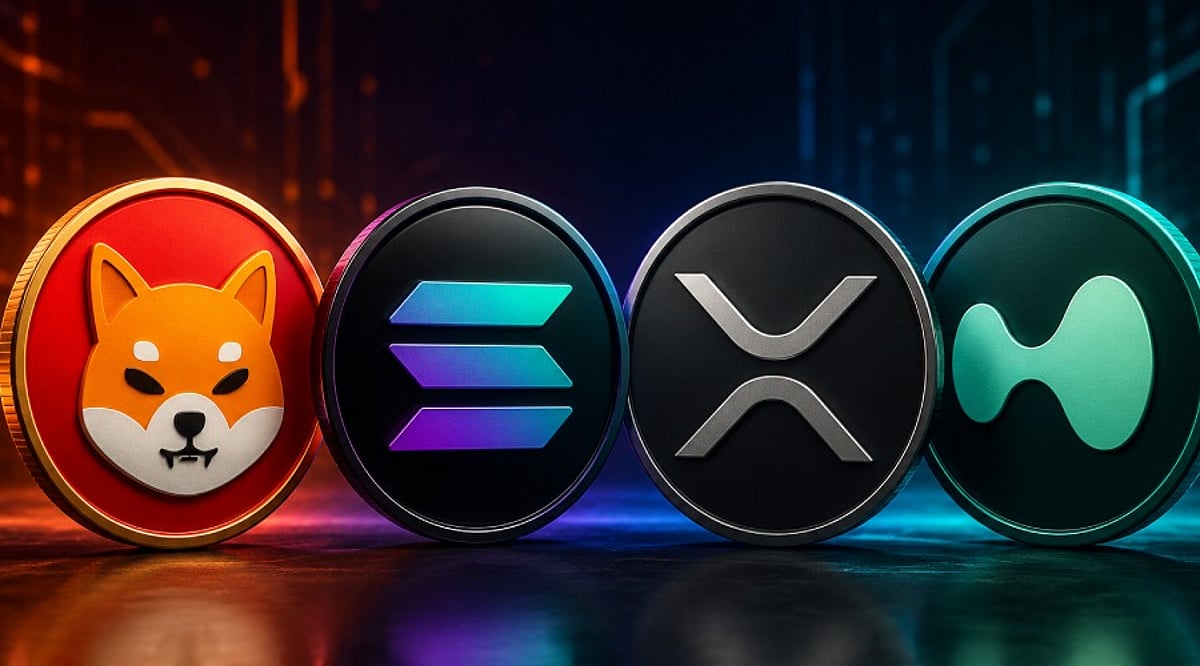
  • Mixed Momentum for SHIB, SOL, XRP, and Hyperliquid: Crypto Market Technical Analysis

    Mixed Momentum for SHIB, SOL, XRP, and Hyperliquid: Crypto Market Technical Analysis

    The cryptocurrency market is experiencing mixed price action as traders remain cautious ahead of the next major move. Bitcoin has stayed within a narrow range, limiting strong breakout opportunities for many altcoins. However, a select few cryptocurrencies have demonstrated notable strength. Hyperliquid (HYPE), Solana (SOL), XRP, and Shiba Inu (SHIB) have all moved higher, but each asset presents a distinct technical picture. Market sentiment has improved, yet global economic concerns and cautious investor behavior continue to restrict broader buying pressure.

    Hyperliquid Shows Strong Strength

    Hyperliquid has performed reasonably well during the recent market recovery. On the hourly chart, HYPE is currently priced at approximately $63.11, steadily moving away from last week’s bottom. The price has formed a clear sequence of higher highs, indicating buyers’ dominance. It remains above the middle Bollinger Band at $62.17, with the lower band near $60.89 providing major support. The Relative Strength Index (RSI) is close to 68, reflecting high buying pressure but also approaching overbought territory. If buyers push above the $63.50–$64.00 area, further upside is expected. Conversely, a break below the middle Bollinger Band could lead to a drop toward $62. Recent ecosystem growth, including increased interest in decentralized derivatives and prediction markets, has supported long-term confidence, though short-term volatility remains high.

    Shiba Inu Tries to Build More Momentum

    Shiba Inu has started to recover after several weeks of quiet trading. The token now trades near $0.00000430 and has moved above several short-term moving averages, placing SHIB near an important resistance zone. The RSI has climbed above 70, indicating very strong buying activity but also suggesting the rally may slow. Trading volume has increased, supporting the latest price rise. First resistance is near $0.00000435, while support is around $0.00000424, with stronger support near $0.00000418. Despite the positive move, SHIB still faces multiple resistance levels above current price. Market sentiment remains mixed after hopes for inclusion in a U.S. crypto ETF did not materialize.

    Solana Keeps Buyers in Control

    Solana has steadily outperformed many other major cryptocurrencies. The coin is valued at just under $78.43 on one-hour charts, maintaining upward momentum. It stays above the middle Bollinger Band at $77.59, while the upper band approaching $78.82 serves as a crucial resistance line. Buyers have consistently stepped in on minor dips, demonstrating strong market position. The price is heading toward the next milestone of $80. If sellers take over, key support lines lie at $77.60 and $76.35. Strong developer activity and ecosystem growth continue to maintain positive sentiment around Solana.

    XRP Extends Its Recovery

    XRP has continued its recent recovery and now trades near $1.1355. The latest move has pushed the price above several moving averages, improving the technical outlook. Buying volume has increased, and the price has moved above the important $1.11 resistance level. Bollinger Bands have widened, indicating rising volatility. The next resistance stands near $1.14, with first support around $1.113 and additional support near $1.10. As long as XRP stays above these levels, the current trend remains positive. Market confidence is supported by growing interest in blockchain payment solutions and improved sentiment across the broader crypto market.

    Why This Matters

    As Bitcoin consolidates, selective altcoin momentum signals a shift in trader focus toward high-conviction assets. Technical strength in Hyperliquid, Solana, XRP, and Shiba Inu reflects growing risk appetite and highlights key support levels that could launch broader market rallies.

    Market Outlook

    The overall crypto market presents a mixed picture. Hyperliquid has one of the strongest technical setups after its recent recovery. Solana continues in a healthy uptrend and remains a strong large-cap coin. XRP has built fresh momentum after breaking above key resistance. Shiba Inu shows fresh strength but faces several resistance levels before a larger recovery. The next major move will likely depend on Bitcoin’s stability. If Bitcoin holds near current levels, capital may flow into strong altcoins like HYPE, SOL, and XRP. SHIB could also move higher, but its price remains sensitive to changes in sentiment and volume.

    FAQs

    1. Which cryptocurrency has the strongest technical setup? Hyperliquid and Solana currently show the strongest bullish price structures, backed by steady momentum, key moving average support, and growing ecosystem activity.
    2. Is XRP still in an uptrend? Yes. XRP remains above key support levels and moving averages, maintaining positive short-term momentum with expanding volume.
    3. Why is SHIB’s RSI above 70 important? An RSI above 70 indicates intense short-term buying pressure, confirming bullish momentum but also warning of overbought conditions.
    4. What is Solana’s next major resistance level? Solana’s immediate resistance is near $78.80, with the $80 psychological barrier as the next target.
    5. What could decide the next move for these altcoins? Bitcoin’s price stability is key. If Bitcoin holds its range, capital flow into strong altcoins, overall market sentiment, and trading volume will determine subsequent breakouts.

    Disclaimer: This article is for informational purposes only and does not constitute financial or investment advice. Cryptocurrency investments are risky. Always conduct your own research (DYOR) before making any investment decisions.

  • Best Cryptocurrency Investments for July 2026: Top Coins by Market Cap

    Best Cryptocurrency Investments for July 2026: Top Coins by Market Cap

    As we move into July 2026, the cryptocurrency market continues to evolve, with established digital assets maintaining their dominance. Here’s a look at the largest coins by market cap that are leading the crypto world this month.

    Bitcoin (BTC)

    The world’s largest cryptocurrency continues to dominate as digital gold, offering a store of value and a hedge against inflation.

    Ethereum (ETH)

    The leading blockchain powering DeFi, NFTs, and thousands of decentralized applications remains a top investment choice.

    Tether (USDT)

    The most widely used stablecoin for trading and preserving value, providing liquidity and stability in volatile markets.

    XRP

    Designed for fast, low-cost international payments and financial institutions, XRP continues to gain traction in cross-border transactions.

    BNB

    Binance’s native token continues to power one of the world’s largest crypto ecosystems, offering utility across trading, DeFi, and more.

    Solana (SOL)

    Known for lightning-fast transactions and growing developer adoption, Solana is a strong contender for scalable blockchain solutions.

    Dogecoin (DOGE)

    The meme coin that remains popular thanks to its strong community support and increasing real-world use cases.

    Cardano (ADA)

    A research-driven blockchain focused on security, sustainability, and scalability, Cardano offers a methodical approach to development.

    These digital assets represent the top crypto investments for July 2026, each with unique strengths and growing ecosystems. For the latest news and updates, join our WhatsApp channel.

  • 5 Promising Altcoins to Consider Before Bitcoin’s Next Rally

    5 Promising Altcoins to Consider Before Bitcoin’s Next Rally

    As Bitcoin trades near $64,000 as of July 20, 2026, many investors anticipate the next major bull run. Historically, Bitcoin leads market rallies, but altcoins often deliver larger percentage gains afterward. This pattern has shifted focus toward projects with strong technology, real-world utility, and active communities. Here are five altcoins that stand out for their ecosystems and growth potential.

    Key Takeaways

    • Ethereum continues to lead smart contracts with institutional support.
    • Solana, XRP, Chainlink, and Sui each offer unique strengths in payments, infrastructure, and scalability.
    • Strong adoption and healthy ecosystems often matter more than short-term price movements.

    Ethereum (ETH) – $1,855.60

    Ethereum remains the largest smart contract blockchain, powering thousands of decentralized applications, DeFi platforms, and NFT projects. Layer-2 solutions have improved speed and reduced fees, while major financial institutions continue to build tokenization projects on the network. Analysts expect Ethereum to perform well in the next bull market due to strong retail and institutional demand.

    Solana (SOL) – $75.86

    Solana is known for its high throughput—processing thousands of transactions per second with low fees. It has attracted developers in gaming, payments, NFTs, and DeFi. After recovering from previous market challenges, the ecosystem shows healthy developer activity and new project launches, boosting investor confidence.

    XRP – $1.08

    XRP focuses on cross-border payments, enabling faster and cheaper international transfers for banks and financial institutions. Regulatory clarity in recent years has improved confidence, allowing Ripple to expand partnerships globally. If payment adoption grows, XRP could see increased demand during the next rally.

    Chainlink (LINK) – ~$18

    Chainlink provides oracle services that connect blockchains to real-world data, such as prices and weather. It is essential for DeFi and tokenized assets, where accurate data is critical. As blockchain adoption in traditional finance grows, Chainlink’s unique position attracts long-term investors.

    Sui (SUI) – $0.7499

    Sui is a fast-growing Layer-1 blockchain optimized for speed, low costs, and consumer applications like gaming. Active addresses on the network surged 92% in the past week, indicating rising user and developer interest. Strong network growth often precedes price strength in a broader market recovery.

    Latest Crypto Market News

    Despite price fluctuations, market optimism remains as Bitcoin holds near $64,000. Institutional accumulation and improving fundamentals support a potential bull run. Ethereum gains ground through tokenization, Solana stays strong in developer adoption, XRP benefits from regulatory clarity, Chainlink consolidates its oracle dominance, and Sui shows rapid network expansion.

    Final Thoughts

    While Bitcoin historically triggers rallies, altcoins with solid ecosystems, real use cases, and growing adoption often outperform. Ethereum leads smart contracts, Solana offers speed, XRP targets payments, Chainlink provides critical infrastructure, and Sui brings innovation. If Bitcoin surges again, these altcoins are well-positioned for significant gains.

    FAQs

    1. Why do altcoins usually rise after Bitcoin?

    Bitcoin attracts initial investment, and capital later flows into altcoins as market confidence grows.

    2. Which altcoin has the strongest ecosystem?

    Ethereum remains the largest smart contract platform with the biggest developer community and DeFi ecosystem.

    3. Why is Solana popular?

    Solana offers fast transaction speeds, low fees, and supports a wide range of decentralized applications.

    4. What makes Chainlink different?

    Chainlink provides real-world data to blockchain networks, essential for many decentralized applications.

    5. Is Sui a high-risk investment?

    Sui is a newer project with strong growth potential but may experience higher volatility than established cryptocurrencies.

  • Top 8 Cryptocurrencies Over $10 Billion Market Cap in 2026: Performance and Adoption

    Top 8 Cryptocurrencies Over $10 Billion Market Cap in 2026: Performance and Adoption

    The cryptocurrency market continues to evolve, with large-cap assets maintaining their dominance through strong adoption and technological innovation. In 2026, several cryptocurrencies with market capitalizations exceeding $10 billion are leading the charge. Here’s a closer look at the best performers.

    Bitcoin (BTC)

    As the world’s largest cryptocurrency, Bitcoin remains the benchmark for long-term investors. Its established track record and institutional adoption solidify its position as a store of value.

    Ethereum (ETH)

    Ethereum dominates the decentralized finance (DeFi) and smart contract space. Continuous network upgrades, including scalability improvements, enhance its utility and developer appeal.

    Solana (SOL)

    Solana is known for lightning-fast transactions and a rapidly expanding developer ecosystem. Its high throughput and low fees make it a favorite for decentralized applications.

    XRP

    XRP continues to expand cross-border payment solutions, attracting growing institutional interest. Its focus on efficient global transactions keeps it relevant in the financial sector.

    BNB

    BNB powers one of the world’s largest blockchain ecosystems, the Binance platform. It offers multiple real-world utilities, including transaction fee discounts and participation in token sales.

    Dogecoin (DOGE)

    Dogecoin remains one of the most recognized community-driven digital assets. Its widespread acceptance and active community contribute to its enduring popularity.

    Cardano (ADA)

    Cardano focuses on research-driven blockchain innovation and sustainable scalability. Its peer-reviewed approach and commitment to interoperability set it apart.

    Chainlink (LINK)

    Chainlink provides secure blockchain oracles that connect smart contracts with real-world data. Its critical role in DeFi and enterprise solutions ensures continued demand.

    These large-cap cryptocurrencies are not only performing well but also driving the next wave of blockchain adoption. Investors and enthusiasts should keep an eye on their developments throughout 2026.