
Tag: South Korea

  • SK Hynix Reduces US IPO Ambition to $28 Billion as Memory Volatility Rises

    SK Hynix Reduces US IPO Ambition to $28 Billion as Memory Volatility Rises

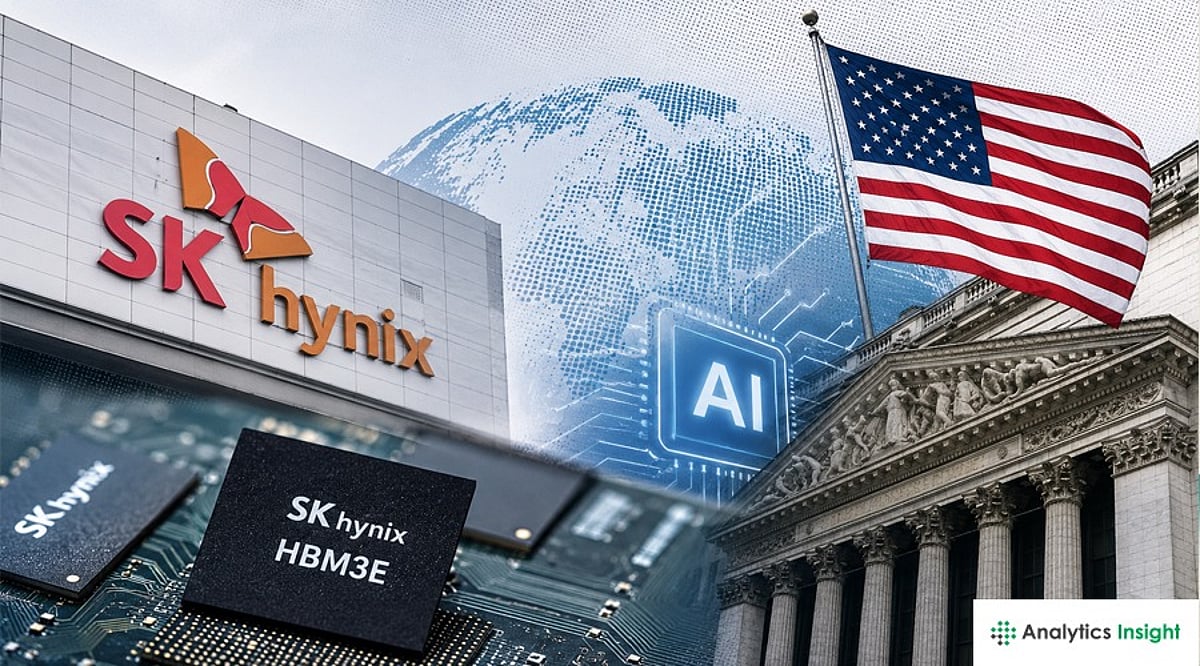
    South Korean chipmaker SK Hynix is scaling back its US listing ambitions, trimming its target to roughly $28 billion amid growing concerns about the memory chip cycle. The company plans to offer American Depositary Receipts on the NASDAQ, aiming to raise funds for factory expansion and equipment purchases while the AI-driven demand for high-bandwidth memory continues to evolve.

    According to regulatory filings, SK Hynix will issue 17.79 million new shares via depositary receipts, with ten ADRs representing one common share. The final pricing is expected on Thursday, with trading set to begin Friday. The revised target of about 43.141 trillion won ($28.21 billion) is lower than the earlier estimate of 45.453 trillion won, reflecting recent declines in the company’s Seoul-listed shares, which fell about 4% on Monday to 2,327,000 won. Broader pressure on memory chip stocks and a dip in the KOSPI index have contributed to the cautious outlook.

    If completed, the deal would rank among the largest share sales in history, trailing only SpaceX’s record US listing last month and surpassing major offerings like Saudi Aramco and Alibaba. The proceeds will be used to expand chip facilities in South Korea and acquire advanced equipment, including ASML’s extreme ultraviolet scanners, essential for cutting-edge semiconductor production.

    SK Hynix is a key supplier of high-bandwidth memory to AI infrastructure giants such as NVIDIA and Google. The company’s stock has surged this year, buoyed by AI demand, but investors remain wary of the memory cycle’s mid-stage timing. “We expect better access, but timing of the memory cycle is equally important,” said Sundeep Gantori, chief investment officer of equities at Standard Chartered. Steve Sosnick of Interactive Brokers noted that the US listing would primarily benefit individual and smaller institutional investors seeking momentum in AI-linked stocks.

    The NASDAQ listing is expected to improve access for US investors and potentially narrow the valuation gap with rival Micron Technology. It could also pave the way for inclusion in the Philadelphia Semiconductor Index, tracked by global passive funds. Dave Mazza, CEO of Roundhill Investments, described the move as “more than a liquidity event,” emphasizing that SK Hynix has been a crucial company that most US institutions could not easily own.

    South Korea’s broader semiconductor push, including a $576 billion chip and AI investment program led by President Lee Jae Myung, underscores the strategic importance of such expansions. Lee has urged officials to expedite permits and infrastructure to support the country’s advanced industry ambitions.

  • South Korea and Japan Intensify Currency Stability Talks Amid Regional FX Volatility

    South Korea and Japan Intensify Currency Stability Talks Amid Regional FX Volatility

    South Korea is strengthening exchange rate discussions with Japan and allied nations as officials monitor currency volatility and regional financial stability. Markets are now awaiting clearer signals on whether these communications could advance toward coordinated policy action.

    According to Odaily, South Korea’s deputy finance minister confirmed that Seoul is maintaining close communication with Japan and other allied countries over exchange rate issues. The official identified foreign exchange coordination as an active policy priority but announced no intervention, formal agreement, or completed joint action.

    Seoul and Tokyo Keep Currency Channels Open

    The statement described an ongoing exchange of views among finance officials. Seoul did not name the other allied countries or disclose the scope, timing, or content of the talks. South Korea and Japan rank as Asia’s second- and third-largest economies by gross domestic product. Currency swings in either market can affect regional trade, investment flows, and financial conditions.

    Finance ministries often separate communication from direct intervention. Officials may discuss market conditions without buying or selling currencies, and the latest remarks remain within that communication stage. Even so, traders monitor each change in official language. Markets often interpret a move from ‘monitoring’ to ‘communicating’ as evidence that authorities have increased their attention.

    Markets Track the Won, Yen, and Official Language

    Exchange rate concerns usually involve currency strength, weakness, or rapid volatility. Those movements can affect export competitiveness, import costs, capital flows, and broader financial stability. South Korea has historically monitored sharp moves in the won. Japan also has a record of verbal warnings and direct intervention when authorities view yen movements as excessive.

    Any move from discussion toward preparation would mark a clear change in policy messaging. Traders will therefore watch the Korean won and Japanese yen against the United States dollar. Unusual price moves could show that markets expect a greater chance of official action. Further statements from Japan’s Ministry of Finance may provide more detail. Remarks from the unnamed allied countries could also show whether the discussions remain bilateral or involve a wider group.

    Crypto Relevance Depends on Wider Risk Sentiment

    The deputy finance minister did not mention Bitcoin, cryptocurrencies, or digital assets. The statement therefore carries no direct policy link to crypto markets or domestic crypto regulation. However, foreign exchange conditions can still shape risk appetite across markets. A stronger dollar environment has historically pressured Bitcoin and other cryptocurrencies as traders reduce exposure to risk assets.

    South Korea remains one of the world’s most active retail crypto trading markets. Policy signals from Seoul can influence domestic sentiment, even when officials address traditional currencies rather than digital assets. Recent developments also show growing links between financial policy and crypto. A South Korean crypto tax petition surpassed 58,000 signatures and moved to legislative review. The country’s New Start Fund also added crypto assets to its debt relief review. Those measures remain separate from the latest exchange rate discussions.

    Officials disclosed no outcome from the talks. Markets will next examine currency movements, new government statements, and any clarification about the allied countries involved.

    What’s Next?

    South Korea’s exchange rate talks with Japan and allied nations reflect growing attention to currency volatility and regional financial stability. Although officials announced no intervention, traders should monitor the Korean won, Japanese yen, and future policy statements for signs of stronger coordination or possible action.

  • Solana Foundation and Toss Bank to Pilot Blockchain Remittance Service in South Korea

    Solana Foundation and Toss Bank to Pilot Blockchain Remittance Service in South Korea

    The Solana Foundation and South Korea’s Toss Bank have signed a memorandum of understanding to test blockchain-based remittance and settlement services. The pilot program is designed to serve the bank’s 15 million customers, aiming to deliver faster and lower-cost international payments.

    This partnership marks the first direct collaboration between a South Korean internet-only bank and the Solana ecosystem. Both organizations will explore whether blockchain infrastructure can enhance the cross-border transfer services Toss Bank currently provides across 30 countries.

    Proof-of-Concept Targets Cross-Border Payments

    The initial phase will assess Solana’s capability to support cross-border remittance and settlement. Toss Bank already handles international transfers in seven major currencies through its digital platform. The bank aims to reduce settlement costs and shorten transfer times compared with traditional correspondent banking networks.

    Executives described the initiative as an upgrade to existing financial services rather than a move into speculative cryptocurrency activity. The pilot will measure whether blockchain settlement can deliver clear operational advantages over conventional systems.

    Compliance and Stablecoin Research Take Priority

    The memorandum covers four key areas: the remittance pilot, joint research into blockchain-based payment systems, stablecoin services and digital assets, international banking links, and long-term compliance cooperation. Both organizations plan to integrate anti-money laundering and know-your-customer controls throughout the project to address regulatory duties.

    Solana continues to position its network as infrastructure for financial services beyond decentralized applications. Its low transaction fees and near-instant settlement are central to the project’s technical appeal.

    South Korea Strategy Gains a Major Banking Partner

    The agreement expands Solana’s presence in South Korea, where earlier initiatives involved local fintech companies and research into Korean won-denominated stablecoin infrastructure. Toss Bank now brings a major banking institution into that effort.

    Toss Bank is South Korea’s third-largest internet-only bank, serving about 15 million users through the broader Toss ecosystem. Its parent company, Viva Republica, is preparing for a potential public offering in the United States, with industry reports citing a valuation above $10 billion.

    South Korea is also developing additional oversight for crypto-related cross-border transactions, while the central bank continues exploring digital currency and tokenized deposit initiatives.

    What’s Next?

    The Solana Foundation and Toss Bank will test blockchain remittances for faster international payments and lower settlement costs. The initiative also covers stablecoin research, regulatory compliance, and future banking integrations. Results could guide similar partnerships between regulated financial institutions and blockchain networks.