Tag: SQL

  • Data Engineering Cheat Sheet 2026: Essential Skills, Tools, and Architecture Trends

    Data Engineering Cheat Sheet 2026: Essential Skills, Tools, and Architecture Trends

    Data engineering is the foundation of every modern data system. Every website visit, online purchase, mobile app session, payment, and business transaction creates new information. That information has little value unless it is collected, cleaned, stored, and prepared for analysis. This is exactly where data engineering plays a major role.

    The need for skilled data engineers has grown rapidly because companies depend on data for daily decisions, automation, customer service, and artificial intelligence (AI). According to IDC, the world is expected to create more than 394 zettabytes of data by 2028, a huge jump from previous years. This massive growth has pushed businesses to build stronger and smarter data platforms that can support analytics and AI at a much larger scale.

    Data engineering is no longer limited to moving data from one place to another. It focuses on speed, quality, security, and reliability so that every team can trust the information they use.

    How a Data Engineering Process Works

    The data engineering process is structured straightforwardly. The process begins with the steps where data gets collected from external sources such as websites, mobile applications, sensors, software of the company, or databases.

    After data information has been collected, a series of preparation processes are conducted. The next stage of the process is the preparation of the data, where incorrect data is deleted, missing values are repaired, and data is formatted in a valuable way. After that, the collected data is checked for quality compliance.

    Finally, the collected data is ready for use in the generation of reports, machine learning models, dashboards, and other business applications. Each step has its specific role. Any issue at any step may lead to the failure of the reports, predictions, or AI models.

    Skills that Matter Most

    Recognized as one of the most sought-after profiles within the IT industry, data engineers require a combination of technical skills and hands-on problem-solving capability. Indeed, almost every database makes use of SQL.

    Knowledge of cloud technologies has become more critical than ever as many businesses today maintain their data in the cloud rather than in-house. Experience in counteracting bottlenecks and making quick fixes has been a plus in providing better and faster systems.

    As per the 2026 hiring trends, it is evident that employers favor hiring professionals who possess knowledge in traditional data engineering methods and also have working knowledge about AI.

    Modern Data Storage

    Data storage has changed a lot during the last few years. Data warehouses such as Snowflake, Google BigQuery, Amazon Redshift, and Azure Synapse Analytics remain popular because they support fast business reporting.

    Many organizations also use data lakes like Amazon S3, Azure Data Lake Storage, and Google Cloud Storage to keep large amounts of raw information at a lower cost.

    A newer approach called the lakehouse has become one of the biggest trends. Platforms such as Databricks, Apache Iceberg, Delta Lake, and Apache Hudi combine the strengths of both data lakes and data warehouses. This design gives businesses better flexibility without sacrificing performance.

    Batch Processing and Real-Time Data

    Not every business needs data at the same speed. Some reports only require updates once a day. This method is called batch processing. It suits financial reports, historical analysis, and large scheduled jobs because it costs less and stays simple to manage.

    Other businesses cannot wait for scheduled updates. Online payments, fraud detection, recommendation systems, and live dashboards need information within seconds. This approach is known as real-time processing.

    Many companies now use both methods together. Real-time systems handle urgent tasks, while batch systems process large historical datasets.

    What Makes a Strong Data Pipeline

    A reliable data pipeline contains several connected parts. Data first enters the system through source applications. After collection, it passes through processing layers that clean and organize the information.

    The pipeline also includes monitoring tools that detect failures before they become major problems. Security controls protect sensitive information, while backup systems reduce the risk of data loss. Together, these components help the entire system stay stable even as data volumes continue to grow.

    Why Data Quality Matters

    Good decisions depend on good data. Even small mistakes can produce incorrect reports or poor AI predictions.

    Modern platforms check for duplicate records, missing values, invalid formats, unexpected schema changes, incomplete information, and inconsistent records. Freshness also matters because outdated data can lead to wrong business decisions.

    Automated quality checks have become a standard feature in enterprise data platforms because manual reviews cannot keep pace with today’s data volumes.

    Cloud Platforms Continue to Lead

    Cloud technology has become the preferred choice for new data projects. Amazon Web Services, Microsoft Azure, and Google Cloud Platform continue to dominate this market. These platforms offer storage, processing power, data warehouses, monitoring services, and workflow management without the need for expensive physical servers.

    Companies also benefit from automatic scaling, which allows systems to handle larger workloads whenever demand increases. This flexibility has made cloud infrastructure the standard choice for businesses of every size.

    Popular Open-Source Technologies

    The role of open-source apps is notable today in the field of data engineering. Apache Spark brings a solution for the processing of huge data by distributing tasks across numerous machines. Apache Kafka has made it possible to achieve speed in data transmission between applications, and Apache Airflow provides solutions for planning and organizing complex operations.

    Other common technologies are Apache Flink, dbt, Apache Iceberg, Delta Lake, and Great Expectations. Apache Spark remains one of the most popular distributed analytics engines in the world.

    Data Models that Organize Information

    A good data model makes information easier to understand and analyze. The Star Schema works well for business reports because it keeps queries simple and delivers faster results. The Snowflake Schema reduces duplicate information through normalization, which saves storage space.

    Large enterprises often choose the Data Vault model because it keeps historical records, supports business growth, and adapts more easily when new data sources appear. The best model depends on business goals rather than company size alone.

    Security Cannot be Ignored

    Every data platform must protect valuable information. Encryption keeps data safe during storage and transfer. Identity management verifies who can access the system, while role-based permissions limit access to authorized users only.

    Many companies also use multi-factor authentication, audit logs, data masking, regular backups, and compliance checks to strengthen security. As AI becomes more common, strong governance and data protection have become basic business requirements rather than optional features.

    Better Performance Saves Time and Money

    Fast systems reduce costs and improve productivity. Engineers improve performance through partitioning, compression, efficient file formats, incremental updates, query optimization, metadata indexing, automatic resource scaling, and parallel execution. These methods reduce processing time and help businesses complete large workloads with fewer computing resources.

    Metrics Every Team Should Watch

    Successful data teams measure system performance every day. Important metrics include pipeline success rate, failure rate, processing latency, throughput, storage use, query response time, data freshness, infrastructure cost, resource utilization, and overall service availability. These numbers help teams detect problems early, improve efficiency, and maintain reliable operations.

    Biggest Data Engineering Trends in 2026

    Several trends continue to reshape the industry. AI now assists pipeline development and reduces repetitive work. Agentic automation handles routine engineering tasks with minimal human effort. Lakehouse architecture has become the preferred storage approach for many organizations.

    Metadata-driven pipelines, data contracts, unified governance, streaming analytics, intelligent cost optimization, and closer integration between machine learning and data engineering have also become common across modern enterprises.

    These advances allow companies to build faster, more reliable, and more intelligent data systems than ever before.

    Final Thoughts

    Data engineering has become one of the main components of modern technology. The effectiveness of different dashboards, analytical tools, AI systems, and business reports depends on well-organized data.

    The significance of reliable data solutions will acquire new meaning as the amount of data created worldwide may reach 394 zettabytes by 2028. It is expected that organizations that concentrate on robust security systems, high data quality, contemporary cloud solutions, and scalable architecture will be much more ready for the future.


  • 10 Essential Data Science Concepts to Master in 2026

    10 Essential Data Science Concepts to Master in 2026

    Data science has evolved rapidly, and professionals who want to stay ahead must master a blend of foundational skills and emerging technologies. Here are the ten most important concepts to learn in 2026, covering Python, statistics, SQL, machine learning, generative AI, data engineering, cloud computing, MLOps, and business intelligence.

    1. Python

    Python remains the dominant language for data science due to its readability and extensive library ecosystem. Key skills include functions, classes, object-oriented programming, error handling, decorators, and context managers. Essential libraries: NumPy, Pandas, Polars, Matplotlib, Seaborn, Plotly, Scikit-learn, PyTorch, TensorFlow, and JAX.

    2. Mathematics

    Mathematics underpins every machine learning model. Focus on linear algebra (vectors, matrices, PCA), calculus (derivatives, gradient descent), probability (Bayes’ theorem, distributions), and statistics (hypothesis testing, A/B testing, ANOVA).

    3. SQL

    SQL is critical for querying databases. Beyond basic SELECT statements, learn CTEs, window functions, indexes, and views. Modern cloud data warehouses like Snowflake, BigQuery, and Redshift, plus lakehouse technologies like Delta Lake, are increasingly important.

    4. Machine Learning

    Machine learning enables pattern recognition and prediction. Supervised methods include linear regression, random forests, and gradient boosting. Unsupervised techniques include K-Means, PCA, and t-SNE. Model evaluation metrics like precision, recall, F1 score, and cross-validation are essential.

    5. Deep Learning

    Deep learning powers modern AI with architectures like CNNs for images, RNNs and LSTMs for sequences, and Transformers for language and generation. Mastering these enables advanced pattern detection and classification.

    6. Generative AI

    Generative AI builds on deep learning to create content. Key techniques include Retrieval-Augmented Generation (RAG), fine-tuning, LoRA, PEFT, and RLHF. AI agents and function calling allow models to perform autonomous tasks, making them central to business AI applications.

    7. MLOps

    MLOps ensures models are deployable and maintainable. Tools like Git, MLflow, Docker, Kubernetes, and CI/CD pipelines are vital. Cloud platforms (AWS, Azure, GCP) enable scalable deployment and monitoring for drift and performance issues.

    8. Cloud Computing

    Cloud platforms provide the infrastructure for data processing, storage, and AI at scale. Familiarity with AWS, Azure, or Google Cloud, along with services like S3, Lambda, and BigQuery, is increasingly required for data science roles.

    9. Business Intelligence

    Visualization and communication turn data into actionable insights. Tools like Tableau, Power BI, Looker, and Apache Superset help create dashboards that convey key metrics. Clear reporting supports better decision-making.

    10. Emerging Concepts

    Stay ahead with emerging fields like Responsible AI, Synthetic Data, Causal AI, Time Series AI, Multimodal AI, and AI agents. Combining these with strong fundamentals in Python, mathematics, and SQL will provide the best career opportunities in 2026.


    FAQs:

    1. Why learn data science in 2026? These skills align with current industry demands and future AI roles.
    2. Is Python still the best language? Yes, due to its simplicity and powerful libraries.
    3. Do I need math? Yes, for understanding model mechanics.
    4. What new skills matter? Generative AI, RAG, and MLOps are key.
    5. Can beginners start? Yes, begin with Python, SQL, and statistics, then progress to more advanced topics.
  • Your 2026 Guide to Becoming a Data Engineer: Skills, Salary & Career Roadmap

    Your 2026 Guide to Becoming a Data Engineer: Skills, Salary & Career Roadmap

    Data engineering is one of the fastest-growing technology careers in 2026. As companies generate massive amounts of data daily, the need for professionals who can build and maintain the infrastructure that powers analytics, AI, and business intelligence has never been greater. This guide covers everything you need to know to transition into data engineering, from essential skills and certifications to interview preparation and industry trends.

    What Does a Data Engineer Do?

    A data engineer designs, builds, and maintains the systems that collect, store, and move data efficiently. They ensure that high-quality, reliable data is accessible to analysts, business teams, and AI systems. Unlike data analysts, who interpret data and create reports, data engineers build the pipelines that make analysis possible.

    Skills You Need in 2026

    Technical skills remain the foundation of a successful data engineering career. Key areas include:

    • SQL for database querying
    • Python for automation and data processing
    • Apache Spark and Hadoop for big data
    • ETL (Extract-Transform-Load) pipeline development
    • Cloud platforms: AWS, Microsoft Azure, Google Cloud
    • Data warehouses like Snowflake and BigQuery
    • Data lake concepts for structured and unstructured data
    • Git version control and API integration

    Where Should You Learn?

    There are many quality learning resources available. Certifications can strengthen your resume, but recruiters typically value practical projects and problem-solving skills even more. Consider online courses, bootcamps, and hands-on labs.

    Career Transition Roadmap

    Switching into data engineering is increasingly common. Here’s a path for different backgrounds:

    • Programmers: Already have coding skills; specialize in databases and cloud technologies.
    • Data analysts: Expand knowledge of ETL processes and distributed systems.
    • Testers: Use automation skills to learn data engineering.
    • Non-technical professionals: Start with SQL and Python, then move to databases and cloud.

    Build a portfolio during your learning journey to increase employability.

    Build Projects That Showcase Your Skills

    A strong GitHub profile often speaks louder than certificates. Work on projects like:

    • Automated ETL pipelines
    • Cloud-based data warehouse solutions
    • Kafka streaming applications
    • Dashboards integrated with live databases

    Participate in hackathons, contribute to open-source projects, and document your work thoroughly. Recruiters want to see not just the solution but the reasoning behind it.

    Preparing for Interviews

    Data engineering interviews test practical knowledge. Practice SQL queries, Python programming, database normalization, indexing, Spark concepts, cloud architecture, system design basics, and data modeling. Be ready for scenario-based questions about pipeline failures, data quality issues, and performance optimization. Mock interviews and consistent coding practice help build confidence.

    Salary Outlook

    Data engineering remains one of the highest-paying technology careers. Actual compensation depends on experience, cloud expertise, certifications, company size, and location.

    Trends Shaping Data Engineering

    The field is evolving rapidly. AI-powered tools automate code writing and optimization, while real-time data streaming, Lakehouse architecture, DataOps, and Generative AI are becoming standard. As AI adoption grows, the demand for high-quality data infrastructure will continue to rise.

    The Bottom Line

    Breaking into data engineering no longer requires a traditional computer science degree. Employers value your ability to solve real data problems using modern tools and cloud technologies. Focus on learning fundamentals, building projects, earning certifications, and staying updated. In the age of artificial intelligence, data engineers will be indispensable in shaping the future of technology.

    Frequently Asked Questions

    What does a data engineer do?

    A data engineer designs, builds, and maintains data pipelines and infrastructure that collect, process, and store data. They ensure reliable, high-quality data is available for analytics, reporting, machine learning, and AI applications.

    Which skills are essential to become a data engineer in 2026?

    Essential skills include SQL, Python, ETL pipeline development, Apache Spark, cloud platforms (AWS, Azure, Google Cloud), data modeling, Git, and database management.

    Can professionals from non-technical backgrounds become data engineers?

    Yes. Beginners can start with SQL and Python, then progress to databases, cloud computing, ETL tools, and hands-on projects. Practical experience and a strong portfolio significantly improve hiring opportunities.

    Are certifications necessary for a data engineering career?

    Certifications are valuable for validating technical knowledge, especially in cloud platforms and modern data tools. However, employers often prioritize practical projects, GitHub portfolios, and problem-solving abilities over certifications alone.

    What is the career outlook for data engineers in 2026?

    Data engineering remains one of technology’s fastest-growing careers. Rising AI adoption, cloud transformation, and increasing data volumes continue driving strong demand, competitive salaries, and long-term growth across industries.

  • Top 10 Data Analytics Certifications to Boost Your Career in 2026

    Top 10 Data Analytics Certifications to Boost Your Career in 2026

    In 2026, data analytics certifications remain a powerful tool for professionals aiming to validate their skills and stand out in a competitive job market. Whether you’re a beginner or an experienced analyst, the right certification can sharpen your expertise in SQL, visualization, reporting, and business intelligence—while signaling to employers that you can solve real-world problems with data.

    Below, we break down the ten most valuable data analytics certifications for 2026, covering everything from entry-level credentials to advanced, cloud-focused designations. Each certification is chosen for its relevance, industry recognition, and practical, hands-on focus.

    1. Google Data Analytics Professional Certificate

    An excellent starting point for beginners, this certification covers the fundamentals: cleaning data in spreadsheets, writing SQL queries, creating basic visualizations, and translating numbers into actionable business insights. No prior technical background is required, making it a solid first step toward a career in analytics.

    2. Microsoft Power BI Data Analyst Associate

    Ideal for business intelligence professionals, this certification focuses on data preparation, modeling, dashboard creation, and DAX (Data Analysis Expressions). It’s a perfect fit for organizations already using Microsoft products and needing skilled report creators.

    3. CompTIA Data+

    A vendor-neutral certification that covers data governance, reporting, and interpretation. It’s great for beginners who want a broad, foundational understanding of analytics without being tied to a specific platform. Data+ is especially useful for analysts who value versatility.

    4. IBM Data Analyst Professional Certificate

    This project-based certificate teaches Excel, SQL, Python, and dashboard creation. It’s designed to build practical skills and a portfolio—ideal for those who want to demonstrate hands-on ability to employers.

    5. Certified Analytics Professional (CAP)

    An advanced certification for seasoned analysts, CAP validates end-to-end analytical skills: problem formulation, methodology selection, data analysis, and business impact assessment. It’s best for professionals seeking strategic recognition in analytics.

    6. aCAP (Associate Certified Analytics Professional)

    Targeted at early-career professionals, aCAP introduces core principles, standards, and professional requirements. It’s a stepping stone for those not yet ready for the full CAP certification.

    7. Tableau Certified Data Analyst

    Focused on visualization and dashboarding, this certification proves you can connect to data, prepare it, analyze it, and communicate insights using Tableau. It’s particularly valuable for roles that require clear data storytelling.

    8. AWS Certified Data Analytics – Specialty

    For cloud-focused roles, this certification covers data pipelines, storage, analytics services, and large-scale workflow management on AWS. It’s suited for engineers and data professionals working in cloud-based environments.

    9. SAS Advanced Analytics Professional

    Essential for industries heavily reliant on SAS, this certification demonstrates advanced statistical and analytical abilities. It’s highly relevant for sectors like healthcare, finance, and insurance where SAS is a standard tool.

    10. Cloudera Certified Associate Data Analyst

    Relevant for big data environments, this certification validates SQL analysis and querying on Cloudera platforms. It’s ideal for analysts working with large datasets who need to prove their competence in handling massive data volumes.

    The Road Ahead

    In 2026, data analytics certifications are valued for their practical, hands-on focus. Employers prioritize credentials that prove real skill in SQL, dashboards, cloud tools, and business thinking. While certifications alone won’t guarantee a job, they give candidates a strong edge when combined with portfolio projects and real-world experience. The best strategy: choose one focused certification, build a portfolio, and demonstrate you can solve actual business problems with data.

    FAQs

    Which data analytics certification is best for beginners?
    Google Data Analytics Professional Certificate and IBM Data Analyst Professional Certificate are excellent beginner-friendly choices because they cover SQL, spreadsheets, visualization, and practical analytics skills through hands-on projects.

    Do employers value data analytics certifications in 2026?
    Yes. Certifications remain valuable because they demonstrate verified technical skills, especially when combined with practical experience, portfolio projects, and the ability to solve real business problems using data.

    Which certification is best for Power BI professionals?
    The Microsoft Power BI Data Analyst Associate certification is ideal for professionals working with dashboards, data modeling, DAX, reporting, and business intelligence using Microsoft’s analytics ecosystem.

    Is AWS Data Analytics certification suitable for beginners?
    No. AWS Certified Data Analytics – Specialty is better suited for professionals with cloud analytics experience and knowledge of AWS services, data pipelines, and large-scale data processing environments.

    Are certifications enough to get a data analytics job?
    Certifications improve your resume, but employers also expect practical projects, SQL knowledge, visualization skills, problem-solving ability, and experience demonstrating how you analyze and communicate business insights effectively.

  • Your Complete Data Analytics Cheat Sheet: Excel, SQL, Python, and Power BI

    Your Complete Data Analytics Cheat Sheet: Excel, SQL, Python, and Power BI

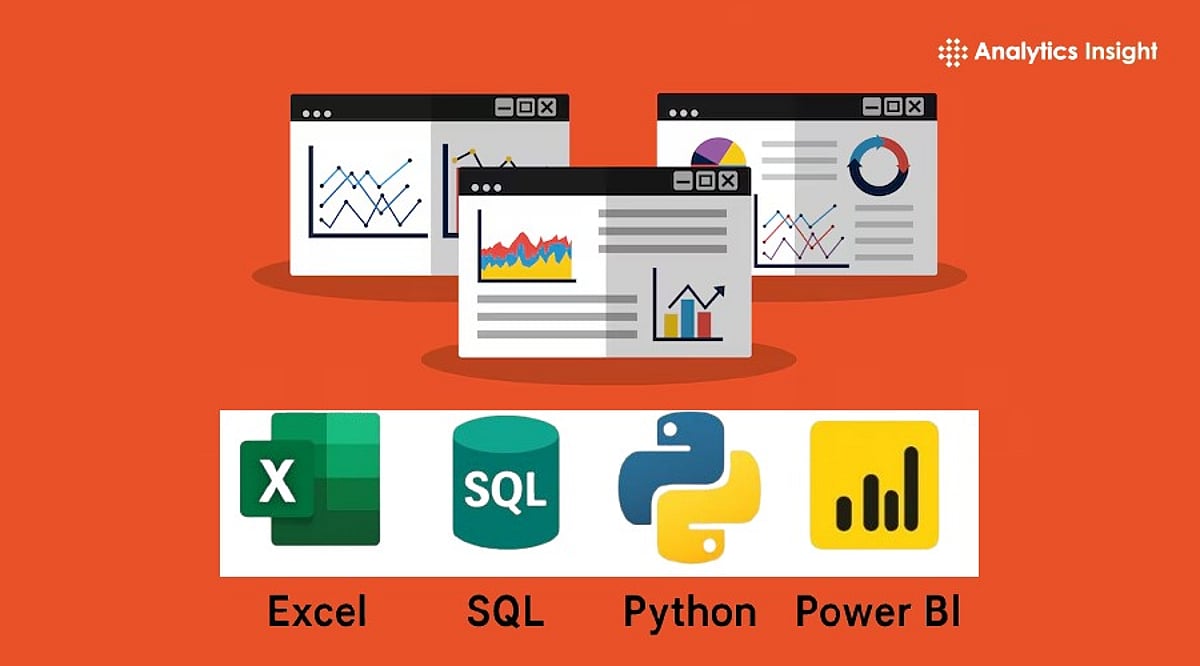
    Data analytics is the process of examining data to uncover useful insights. Every organization collects vast amounts of information daily—sales figures, customer feedback, website traffic, and growth metrics. Companies leverage this data to make smarter decisions and plan ahead. Mastering data analytics is a highly sought-after skill, and employers increasingly value professionals who can work across multiple tools. The four most popular tools in this domain are Excel, SQL, Python, and Power BI. Each serves a distinct purpose: Excel handles calculations and reporting; SQL retrieves data from databases; Power BI transforms data into visual dashboards; and Python manages large datasets and complex analyses. This guide provides a concise cheat sheet covering essential formulas, commands, and functions for these tools.

    Excel Cheat Sheet

    Excel remains a staple for everyday data analysis due to its simplicity and versatility. It is widely used for creating reports, analyzing numbers, and organizing information. Key formulas include SUM, AVERAGE, COUNT, MIN, and MAX for basic calculations; IF for conditional logic; XLOOKUP and VLOOKUP for searching large tables; and INDEX and MATCH for advanced lookups. Essential features include Pivot Tables to summarize data, Conditional Formatting to highlight key values, Power Query for data cleaning, and Data Validation to prevent input errors. Industry surveys indicate that over 75% of data professionals still use Excel daily.

    SQL Cheat Sheet

    SQL (Structured Query Language) is the standard for working with relational databases. Most businesses store critical data in databases, and SQL enables quick and efficient retrieval. Core commands include SELECT, FROM, WHERE, ORDER BY, GROUP BY, HAVING, DISTINCT, and LIMIT. Joins are crucial: INNER JOIN returns matching records; LEFT JOIN returns all records from the left table; RIGHT JOIN returns all from the right; and FULL OUTER JOIN returns all from both. Advanced features include Common Table Expressions (CTEs), CASE statements, subqueries, window functions (ROW_NUMBER, RANK, DENSE_RANK, LEAD, LAG). SQL remains indispensable because most business data resides in databases.

    Python Cheat Sheet

    Python is a powerful programming language for data analysis, valued for its readability and extensive library ecosystem. The top five libraries are Pandas (data manipulation), NumPy (numerical operations), Matplotlib and Plotly (visualization), and Scikit-learn (machine learning). Key Pandas commands include read_csv(), head(), info(), describe(), shape, columns, groupby(), merge(), sort_values(), drop_duplicates(), and fillna(). Python excels at data cleansing, automation, statistical analysis, and building AI models.

    Power BI Cheat Sheet

    Power BI, a Microsoft business intelligence tool, converts raw data into interactive charts, reports, and dashboards. Core components include Power Query (data preparation), Data Model (table relationships), DAX (formulas), Visualizations (charts), Dashboards, and Power BI Service (cloud sharing). Common chart types are bar, line, column, pie, maps, KPI cards, matrix tables, and slicers. According to Microsoft, Power BI is used by over 375,000 organizations and has more than 30 million monthly active users, reflecting its widespread adoption.

    Latest Trends in Data Analytics

    Data analytics continues to evolve with emerging technologies. Artificial intelligence accelerates analysis, enabling tools to answer business questions via natural language instead of code. Cloud technology facilitates storage and processing of massive datasets. Real-time reporting is increasingly common as organizations demand up-to-the-minute insights. Enhanced data security and self-service analytics are also top priorities. Industry experts highlight AI-powered analytics, robust data governance, and accessible business intelligence as the biggest current trends.

    Final Thoughts

    A comprehensive data analytics cheat sheet saves time and streamlines workflows. Excel handles numerical tasks and reporting; SQL retrieves database information; Python manages large-scale and advanced analysis; Power BI creates clear visual dashboards. Together, these four tools cover every essential aspect of data analytics. Mastering them builds a solid foundation for a successful career in today’s data-driven world.

    Frequently Asked Questions

    1. What is a data analytics cheat sheet? A quick reference guide summarizing important formulas, commands, and functions for popular analytics tools.
    2. Why is Excel important for data analytics? It helps organize data, perform calculations, create reports, and identify trends using simple formulas and built-in features.
    3. Why should SQL be part of data analytics skills? SQL enables access, filtering, and analysis of data stored in databases, which most businesses rely on daily.
    4. What is Python used for in data analytics? Python is used for data cleaning, task automation, visualization, statistical analysis, and building machine learning models.
    5. Why do companies use Power BI? Power BI transforms raw data into clear dashboards and reports, helping businesses understand information and make better decisions.
  • Big Data Essentials: Hadoop, Spark, Hive, and Kafka Explained Simply

    Big Data Essentials: Hadoop, Spark, Hive, and Kafka Explained Simply

    Data pours in from websites, mobile apps, online shopping platforms, banks, hospitals, factories, and smart devices. To make sense of it all, companies rely on powerful tools that store, process, analyze, and move massive datasets efficiently. Among the most popular are Hadoop, Spark, Hive, and Kafka. This guide breaks down what each tool does and how they work together.

    What Is Big Data?

    Big data refers to datasets so large that traditional software cannot handle them effectively. Every online payment, video stream, and message generates data. Businesses study this data to understand customers, improve products, detect fraud, predict trends, and make smarter decisions.

    Apache Hadoop

    Apache Hadoop is an open-source framework that stores and processes enormous datasets. Instead of saving everything on one computer, Hadoop spreads data across many machines, making the system faster and more resilient. Hadoop has three core components:

    • HDFS (Hadoop Distributed File System): Stores large files across multiple computers and keeps duplicate copies. If one machine fails, data remains safe.
    • YARN: Manages cluster resources, allocating memory and processing power to each task to ensure smooth execution.
    • MapReduce: Breaks a large task into smaller pieces, processes them simultaneously across machines, and then combines the results.

    Companies use Hadoop to store historical records, build data lakes, run ETL jobs, analyze application logs, and generate reports. It can handle petabytes of data—an almost unimaginable volume.

    Apache Spark

    Apache Spark is a lightning-fast data processing engine. It outperforms MapReduce by keeping most data in memory (RAM) rather than repeatedly reading from disk. Spark works with both stored and live data, letting organizations use one tool for diverse workloads.

    Key Spark components include:

    • Spark SQL: Enables SQL queries on structured data.
    • Spark Streaming: Processes real-time data streams.
    • MLlib: Provides machine learning algorithms.
    • GraphX: Analyzes relationships within data.

    Spark is widely used for fraud detection, customer analytics, recommendation engines, predictive modeling, and AI projects. It supports Java, Scala, Python, and R, making it accessible to many developers.

    Apache Hive

    Apache Hive is a data warehouse system built on top of Hadoop. It lets users analyze large datasets using SQL-like commands called HiveQL, which closely resembles standard SQL. This means anyone familiar with SQL can query big data without learning a new language.

    Hive uses a schema-on-read approach: data doesn’t need a predefined structure before storage. The structure is applied only when reading, offering flexibility. Organizations rely on Hive for reporting, dashboard preparation, historical analysis, and business intelligence.

    Apache Kafka

    Apache Kafka is a real-time data streaming platform. It moves data from one system to another almost instantly, triggered by events rather than batch schedules. Kafka’s architecture includes:

    • Producers: Send messages into Kafka.
    • Topics: Organize related messages.
    • Brokers: Store messages reliably.
    • Consumers: Retrieve messages when needed.

    Kafka handles enormous data volumes with minimal delay, ensures data durability, and scales easily. Common use cases include real-time analytics, online payments, website activity tracking, IoT sensor data, application logs, and event-driven architectures.

    How They Work Together

    In a typical big data pipeline, Kafka captures live data from websites, apps, machines, and devices. Hadoop stores that data safely for long-term retention. Spark processes both stored and streaming data at high speed. Hive lets business teams and analysts query the processed results using simple SQL. Together, these tools form a powerful ecosystem for managing and extracting value from massive datasets.

    Latest Developments

    The big data market continues to expand. In April 2026, Apache Hadoop released version 3.5.0, featuring hundreds of bug fixes, performance improvements, and enhanced stability. Another major trend for 2026 is the rapid growth of AI and real-time data processing. More organizations are using Spark for machine learning projects and Kafka as the backbone for fast, event-driven systems. Cloud-native data platforms, lake house architectures, improved data governance, and better monitoring are becoming standard in modern enterprises.

    Final Thoughts

    Hadoop, Spark, Hive, and Kafka each solve a distinct big data challenge. Hadoop stores massive amounts of information securely. Spark processes data with remarkable speed. Hive simplifies analysis with SQL-like commands. Kafka moves live data between systems instantly. Together, they empower businesses to manage vast information, understand their data, and make better decisions in today’s digital world.

    Frequently Asked Questions

    1. What is Hadoop used for? Hadoop splits and stores massive datasets across multiple computers. It is primarily used for long-term data storage, building data lakes, and handling heavy batch-processed workloads securely.
    2. Why is Apache Spark faster than Hadoop MapReduce? Spark processes data directly in memory (RAM) instead of constantly reading and writing to disk. This memory-first architecture can make it up to 100 times faster.
    3. What is Hive used for? Hive acts as a data warehouse layer on top of Hadoop, letting data analysts query massive stored datasets using familiar SQL-like commands called HiveQL.
    4. What is Apache Kafka? Kafka is a real-time data streaming platform that acts as a digital pipeline, instantly moving continuous streams of data from sources like apps or devices to other systems.
    5. Can Hadoop, Spark, Hive, and Kafka work together? Yes. In a typical pipeline, Kafka captures live data streams, Hadoop stores that data safely, Spark cleans and processes it rapidly, and Hive allows teams to query the final results.
  • Must-Learn Programming Languages for 2026: Python, JavaScript, Rust, and More

    Must-Learn Programming Languages for 2026: Python, JavaScript, Rust, and More

    As technology continues to evolve at a rapid pace, developers and aspiring programmers must stay ahead of the curve by learning the most in-demand programming languages. The year 2026 will see a shift toward languages that power artificial intelligence, cloud-native applications, and high-performance systems. Here are the top programming languages you should consider mastering in 2026.

    Python Dominance

    Python remains the leading language for AI, machine learning, data science, automation, and backend application development worldwide. Its simplicity and vast ecosystem of libraries make it a must-learn for any developer.

    JavaScript Popularity

    JavaScript continues to power interactive websites, web applications, and full-stack development through modern frameworks and libraries like React, Angular, and Node.js. It remains a cornerstone of web development.

    TypeScript Growth

    TypeScript enhances JavaScript with static typing, improving code quality, scalability, and maintainability for large software projects. Its adoption is rapidly increasing among enterprises and open-source projects.

    Java for Enterprises

    Java remains a preferred choice for enterprise applications, cloud services, financial systems, and Android-based development environments. Its robustness and portability keep it relevant.

    C++ for Performance

    C++ excels in game development, embedded systems, high-performance computing, and applications requiring low-level hardware control. For performance-critical tasks, C++ is indispensable.

    Go for Cloud Computing

    Go, developed by Google, offers simplicity, speed, and concurrency support, making it ideal for cloud-native applications and microservices. Its efficient performance is driving adoption in DevOps and backend systems.

    Rust for Security

    Rust is gaining adoption because it delivers memory safety, reliability, and performance without sacrificing execution efficiency. It is becoming a top choice for systems programming and security-sensitive applications.

    Swift for Apple Ecosystem

    Swift remains essential for developing iOS, iPadOS, macOS, and other applications across Apple’s ecosystem. Its modern syntax and performance make it the preferred language for Apple developers.

    SQL for Data Management

    SQL continues to be indispensable for managing, querying, and analyzing data across databases and business applications. With the rise of big data, SQL skills are more valuable than ever.

    Whether you’re a beginner or an experienced developer, investing in these languages will prepare you for the technological challenges of 2026 and beyond. Stay ahead by learning the languages that shape the future.