

Tag: startup

  • MIT Spinout Ferveret Uses Nuclear-Inspired Cooling to Slash Data Center Energy and Water Use

    MIT Spinout Ferveret Uses Nuclear-Inspired Cooling to Slash Data Center Energy and Water Use

    Data centers are expanding rapidly to support the rise of artificial intelligence, and their energy consumption is projected to account for up to 17 percent of U.S. electricity by the end of the decade. Currently, about one-third of that power goes toward cooling the chips that run AI models. A new startup founded by two MIT researchers aims to change that by adapting a technique originally designed for nuclear reactors.

    Ferveret, co-founded by former MIT postdoc Reza Azizian and MIT Professor Matteo Bucci, has developed a liquid cooling system that uses no water and significantly less electricity than traditional air-based methods. The system submerges computer servers in a specialized fluid that absorbs heat far more efficiently than air. What sets it apart from other liquid cooling solutions is the size and behavior of the bubbles it generates: Ferveret’s Adaptive Phase Cooling (APC) technology produces much smaller bubbles that detach from the server surfaces more frequently, accelerating the heat transfer process.

    The company is already testing its technology with several major players, including CleanSpark, FuriosaAI, and Switch, one of the largest data center operators in the U.S. In collaboration with UCLA’s computer science department, Ferveret demonstrated that its APC solution improves computational power efficiency by 15 percent compared to state-of-the-art liquid cooling. When combined with the startup’s power control software, the system can boost the number of tokens generated per watt by up to 35 percent, according to the company.

    “Our goal is to make data centers as sustainable as possible and help them use every single watt of power to generate tokens, which are the most useful outputs,” says Azizian. “Our system enables the operation of more powerful chips, it helps data centers waste a lot less energy, and it accomplishes all that with zero water consumption.”

    The founders’ journey began during Azizian’s postdoc at MIT in 2013, where he worked with Bucci on heat transfer in nuclear reactors. After stints at Microsoft and Nvidia, Azizian realized the cooling inefficiencies in data centers firsthand. “I thought, ‘Holy crap, this is not how you cool facilities,’” he recalls. The pair founded Ferveret in 2021, applying decades of knowledge from nuclear engineering to optimize heat removal in computing environments.

    Ferveret’s system uses a liquid with a low boiling point and no toxic PFAS chemicals. The process, inspired by subcooled boiling in reactors, creates bubbles that quickly recondense, hastening the cooling cycle. The modular design—each server fits into a small box—makes deployment easier than traditional immersion tanks. The company also offers control software that dynamically adjusts power to each server for maximum efficiency.

    Beyond energy savings, the water-free cooling opens new possibilities for data center location. “The sun shines in places where you don’t have much water, so the advantage of us being water-free is we allow you to build data centers where you have solar energy but nothing to cool the data center down,” says Bucci. This could enable data centers in regions like Africa, the Middle East, and parts of America that lack water resources.

    Ferveret is part of Nvidia’s Inception program and is in talks with major cloud computing companies. The startup plans to announce expanded partnerships later this year as it scales its technology to support the growing AI industry without straining the planet.
  • Perplexity’s Ascent: How Aravind Srinivas Built an AI Search Challenger from IIT Madras to Silicon Valley

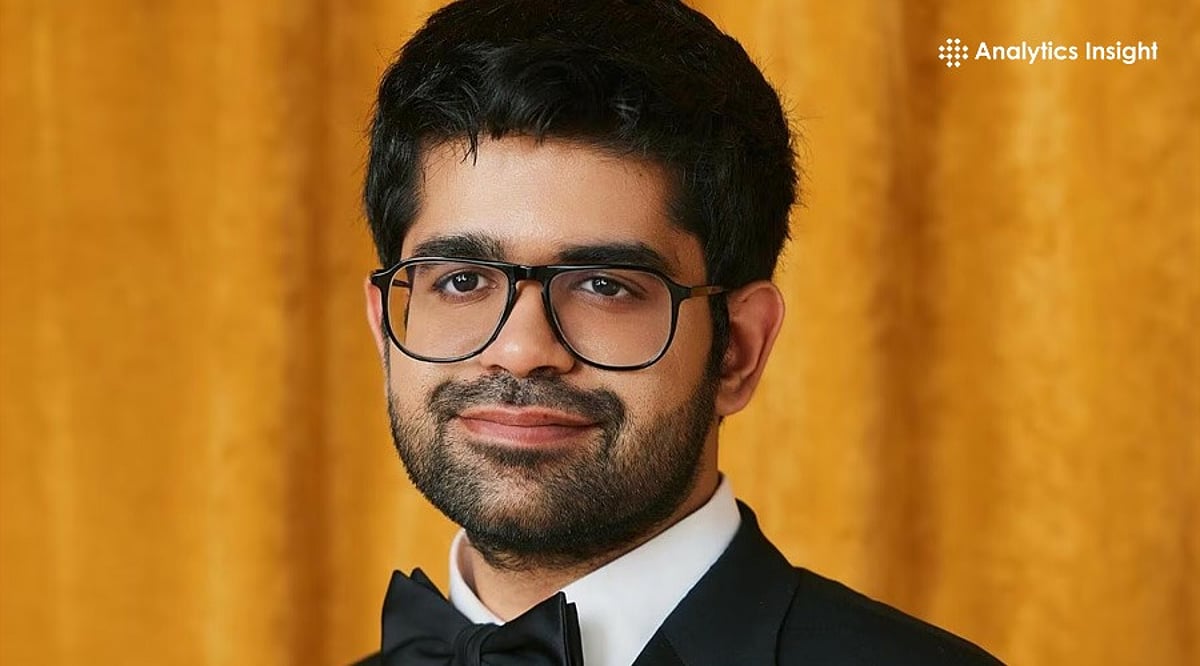
    Perplexity’s Ascent: How Aravind Srinivas Built an AI Search Challenger from IIT Madras to Silicon Valley

    In early 2025, Perplexity entered India through a major partnership with Bharti Airtel, giving millions of users access to Perplexity Pro. What looked like a routine telecom-AI deal signaled a deeper shift: a two-year-old startup was now challenging Google’s dominance in online search at scale. Leading that charge was Aravind Srinivas, a Chennai-born engineer who studied at IIT Madras and narrowly missed transferring into computer science.

    Srinivas’s journey is anything but linear. Growing up in a family that valued academic achievement, he faced the intense pressure of IIT entrance exams. When he couldn’t switch into computer science, he taught himself Python and enrolled in machine learning courses outside his department. He contributed to research at conferences like NeurIPS and ICLR while still an undergraduate, gaining early exposure to deep learning.

    He earned a PhD in computer science from UC Berkeley, interning at OpenAI, DeepMind, and Google Brain between 2019 and 2021. Those experiences revealed skill gaps he worked aggressively to close, rather than retreating from the field. In 2022, he co-founded Perplexity with Denis Yarats and Johnny Ho, positioning it as an answer engine that uses large language models to generate conversational responses with live source citations.

    Perplexity grew rapidly, attracting millions of users for research, coding, and everyday queries. The Airtel partnership underscored its strategy to expand beyond desktop search into mobile-first markets. But the company also faced sharp criticism: Forbes and WIRED accused it of plagiarizing paywalled content, and publishers raised legal concerns about scraping practices. Srinivas acknowledged early shortcomings in attribution and defended AI-powered search as an inevitable evolution.

    Today, Perplexity sits at the center of the AI search race—hailed as a promising challenger yet emblematic of the unresolved tensions around copyright and fair use. Srinivas’s story illustrates how combining research, engineering, and product instinct, even without a traditional path, can reshape an industry.

  • From IIT to AI Search: The Unconventional Rise of Perplexity’s Aravind Srinivas

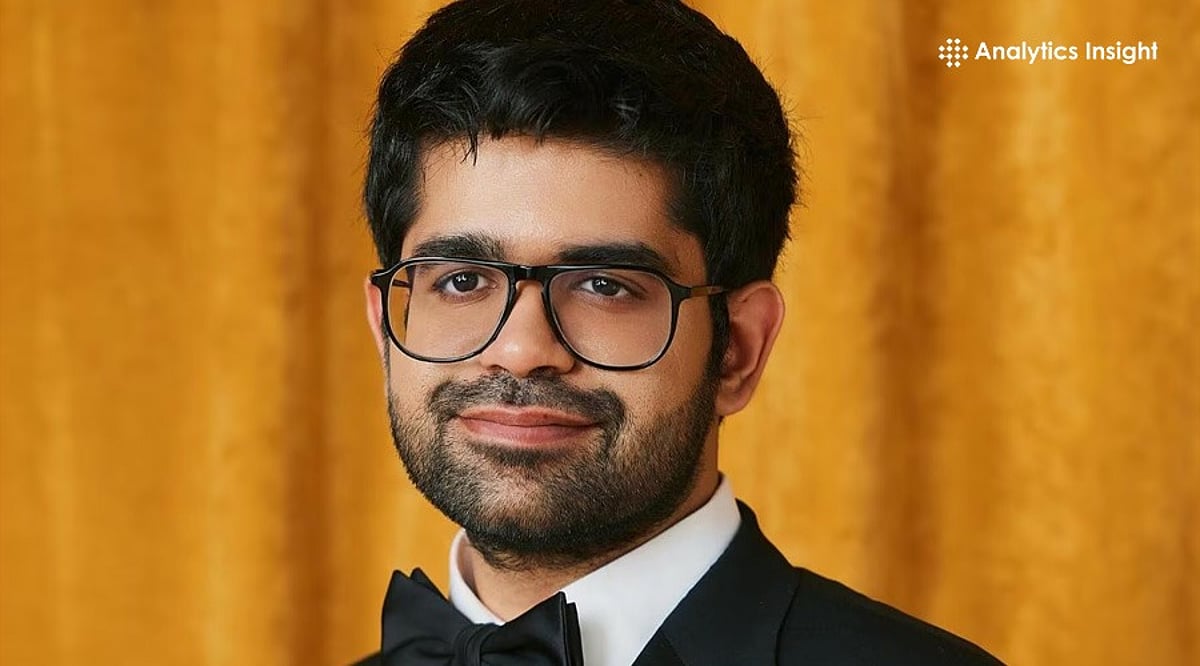
    From IIT to AI Search: The Unconventional Rise of Perplexity’s Aravind Srinivas

    In early 2025, Perplexity entered India through a major partnership with Bharti Airtel, giving millions of users access to Perplexity Pro almost overnight. On the surface, it looked like another telecom-AI announcement. Inside the technology industry, however, the deal carried a different meaning.

    A startup founded in 2022 was now entering India at a massive scale while positioning itself as an alternative to Google’s dominance in online search. Leading that company was Aravind Srinivas, a Chennai-born engineer who joined IIT Madras in electrical engineering and was unable to transfer into computer science after narrowly missing the required GPA cutoff.

    Perplexity’s rise has been unusually fast, even by Silicon Valley standards. According to reports citing investor discussions, the company reached multi-billion-dollar valuations within roughly two years of launch as investors rushed toward generative AI startups. At the same time, the company has faced growing scrutiny over attribution, scraping practices, and the legal boundaries surrounding AI-generated information products.

    What makes Aravind Srinivas’s story compelling is how imperfect and unpredictable it feels. His journey has been shaped by ambition, self-doubt, deep focus on research, strong product instinct, and constant public scrutiny, rather than a smooth path to success. Srinivas grew up in Chennai in a family where academic achievement was highly valued.

    In a conversation on the Lex Fridman Podcast, he spoke about the culture surrounding IIT admissions and the pressure attached to engineering entrance exams in India. By the time he entered the country’s competitive coaching ecosystem, academic performance had already become central to his life. That unexpected shift changed the direction of his learning.

    Instead of depending entirely on departmental coursework, he began teaching himself programming outside the classroom. He learned Python independently, enrolled in machine learning coursework available outside his department, and became involved in AI research under Professor Balaraman Ravindran.

    While still an undergraduate, Srinivas contributed to research connected to major AI conferences, including NeurIPS, AAAI, and ICLR. The experience exposed him early to deep learning research during a period when modern AI systems were still largely confined to academic labs rather than mainstream products. By the end of his undergraduate years, Srinivas had already moved across mathematics, coding, AI research, and systems thinking. The combination would later become central to his work in AI.

    He started pursuing his PhD in computer science at the University of California in 2017, where he worked on machine learning systems, generative models, and transformer-related research. Between 2019 and 2021, he interned at OpenAI, DeepMind, and Google Brain during the period just before large language models entered mainstream public attention. Those experiences became some of the most defining moments of his career.

    In podcast interviews, Srinivas said that when he entered environments filled with highly skilled engineers and researchers, he realized that he needed to improve his programming skills and ability to solve problems from the basics. He described the experience as motivating rather than discouraging.

    Instead of retreating from the field, he immersed himself more deeply in large language models and scaling systems research. The tone of those interviews felt very different from the polished image often associated with Silicon Valley founders. In those interviews, Srinivas spoke less about confidence and more about aggressively closing gaps in his own knowledge.

    In 2022, Aravind Srinivas co-founded Perplexity with Denis Yarats and Johnny Ho. Computer scientist Andy Konwinski also became an early supporter and close collaborator. The timing was important. Interest in generative AI was growing quickly, but internet search still mostly worked the same way it had for years, with users typing keywords and receiving pages of links.

    Perplexity tried to simplify that experience. Rather than functioning as a traditional search engine, the company positioned itself as an answer engine that used large language models (LLMs) to generate conversational responses while retrieving information from live web sources.

    Citations became an important part of Perplexity’s identity since many AI products were already facing criticism for hallucinations, where systems generate false or unsupported information. To separate itself from competitors, Perplexity designed its interface to display source links alongside AI-generated answers.

    Perplexity grew quickly as millions of users started using it for research, summaries, coding help, and everyday questions. Its partnership with Bharti Airtel later showed that the company’s strategy was not only focused on improving research quality but also on reaching more users through wider accessibility, especially in markets where smartphone usage was growing faster than traditional desktop search habits.

    But Perplexity’s rapid rise also brought intense criticism. In 2024, Forbes and WIRED reported that Perplexity had plagiarized paywalled content without giving enough credit to the original publishers. The Verge separately reported concerns around scraping practices that appeared to bypass publisher-set restrictions such as robots.txt preferences.

    Some publishers responded with legal threats, arguing that AI-generated summaries could reduce the value of original journalism. The issue soon grew into a larger debate about copyright, fair compensation, and the future of online publishing in the AI era.

    In posts published on X during mid-2024, Srinivas acknowledged shortcomings in Perplexity’s early attribution systems and said the company was working on improving citation visibility and publisher relationships.

    At the same time, he defended AI-powered search as an inevitable shift in how people would consume information online. That tension now sits at the center of Perplexity’s identity. The company is simultaneously viewed as one of the most promising consumer AI startups and one of the clearest examples of the unresolved conflicts shaping the modern AI industry.

    Aravind Srinivas’s rise from IIT classrooms to the center of Silicon Valley’s AI race does not offer a simple formula for success. His journey shows that the AI industry now values people who can quickly combine research, engineering, and product thinking, even without following a traditional career path.