Tag: startup

  • Why Kazuki Hayashi Treats Distribution as the Product Itself — and How Re’s Early Success Proves It

    Why Kazuki Hayashi Treats Distribution as the Product Itself — and How Re’s Early Success Proves It

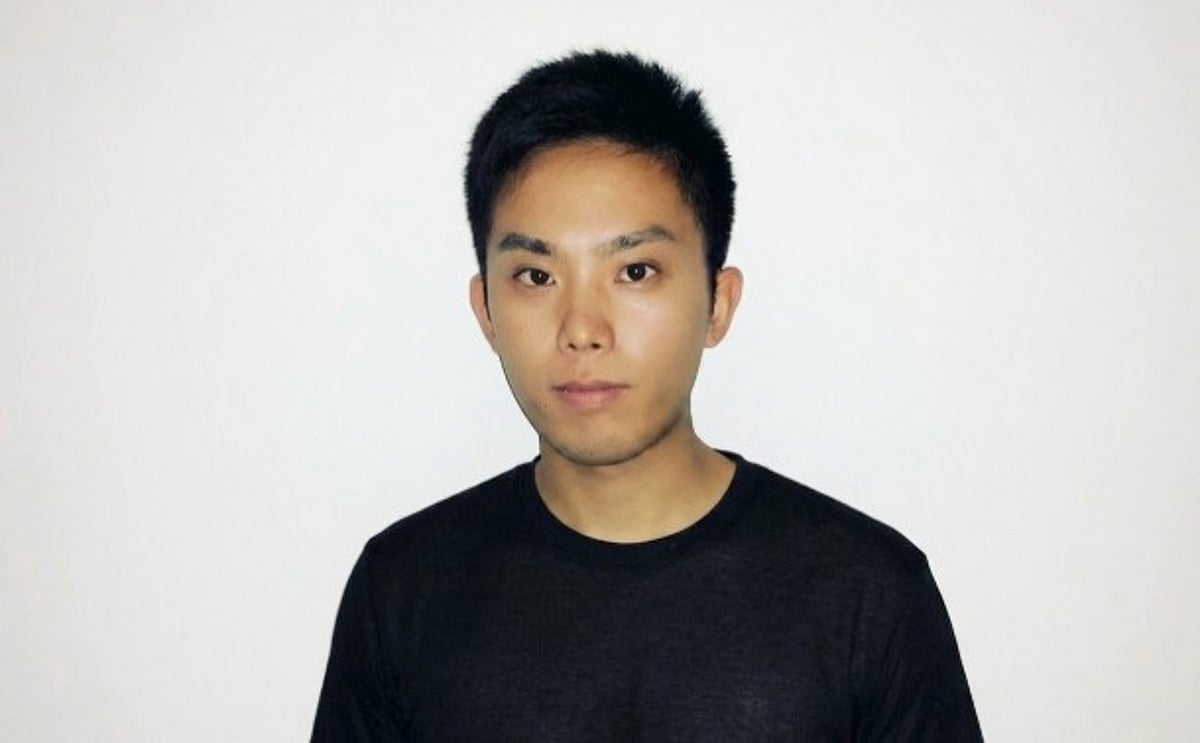
    Building a consumer social platform is one of technology’s toughest challenges. Many products grab attention early, but few sustain engagement long enough to become lasting networks. According to Kazuki Hayashi, founder of Re, the difference often isn’t the idea—it’s distribution.

    “At the beginning, distribution is not a support function,” Hayashi says. “It is the first proof that the product has a reason to exist.”

    That philosophy drives Re, a social networking platform that connects people within the same generation through shared experiences, interests, and life stages. Rather than broad launches or expensive ads, Re was built around concentrated community growth.

    Before its public expansion, Re attracted a waitlist of over 1,000 users without paid acquisition, with early interest centered on Stanford University and nearby academic communities. Hayashi views that milestone not as a marketing win but as validation that distribution itself can prove a product’s worth.

    “If nobody joins, nothing else matters,” he says. “Ideas are easy to talk about. Real products convince people to move.”

    Re’s strategy focused first on dense university communities where existing social relationships encourage conversation, recommendations, and repeated engagement. “You need an environment where adoption can compound,” Hayashi explains. “Universities already have concentration, trust, and repeated interaction.”

    That approach grew into a campus ambassador model spanning more than thirty universities. Instead of a traditional promo program, the ambassador network was designed as a repeatable system to introduce Re into new communities while preserving the same growth dynamics.

    “I never wanted a launch that became popular for one week and disappeared,” Hayashi says. “The goal was always to build a process that could be repeated.”

    Hayashi argues that distribution should never be separate from the product experience. For network-effect products, the first users determine whether future users find value. “Early social products live or die on momentum,” he says. “The product has to feel alive before the network becomes large enough to sustain itself.”

    That momentum also shapes how Hayashi thinks about retention. While many apps focus on downloads, he believes lasting products are built by improving the quality of users’ earliest interactions. Re introduces people within the same generation, creating a narrower matching environment during first use. “Retention begins with the first meaningful interaction,” he explains. “If people quickly discover conversations that feel relevant, they’re much more likely to come back.”

    Before Re, Hayashi gained experience through entrepreneurship, digital communities, and social media initiatives across Asia before relocating to Silicon Valley. Those experiences shaped a practical approach emphasizing execution, measurable user behavior, and scalable systems over short-term visibility.

    Rather than chasing viral moments, Hayashi believes long-term success comes from repeatable operating principles. “One successful community is encouraging,” he says. “A repeatable system is what eventually builds a company.”

    Industry observers recognize that consumer social remains one of tech’s most competitive categories. Product quality, user experience, community dynamics, and distribution must all succeed simultaneously before network effects emerge. Hayashi believes founders must solve distribution earlier than most expect. “The founders who solve distribution first earn the opportunity to prove everything else,” he says.

    As Re continues expanding through university communities, its early growth strategy offers an alternative perspective: thoughtful distribution should be treated as part of the product itself from the very beginning.
  • Skyroot Aerospace’s Vikram-1 Rocket Poised to Reshape India’s Private Space Sector

    Skyroot Aerospace’s Vikram-1 Rocket Poised to Reshape India’s Private Space Sector

    India’s private space industry is undergoing a transformation, and Hyderabad-based startup Skyroot Aerospace is at the forefront. With its upcoming Vikram-1 orbital rocket, the company aims to make satellite launches faster, more affordable, and accessible to customers worldwide.

    Founded in 2018, Skyroot has rapidly evolved from a small team with a bold vision into one of India’s most prominent private space companies. Unlike traditional missions focused solely on research, Skyroot’s commercial approach targets the growing demand for reliable small satellite launch services.

    From Vikram-S to Vikram-1: A Milestone Journey

    In 2022, Skyroot made history with Vikram-S, India’s first privately built rocket to reach space. Though a suborbital test flight, it validated the company’s technology and provided critical data for the development of Vikram-1.

    Vikram-1 is Skyroot’s first orbital launch vehicle, designed to carry small satellites into Low Earth Orbit (LEO) and Sun-synchronous Orbit (SSO). The rocket incorporates modern manufacturing techniques, including 3D printing and lightweight materials, to reduce costs and speed up production.

    The inaugural mission, named Mission Aagaman, will carry payloads from Indian and international customers, demonstrating confidence in Skyroot’s capabilities even before its first orbital flight.

    Why Vikram-1 Matters for India’s Space Economy

    With the global demand for satellite-based services—internet, weather monitoring, agriculture, navigation, and research—rising every year, affordable and dedicated launch options are needed. Skyroot aims to fill this gap by offering flexible launch schedules for small satellite operators who often wait months for rides on larger rockets.

    Beyond launches, Skyroot is developing debris-removal technology, including a robotic system to capture defunct satellites and orbital debris—a growing concern as Earth’s orbit becomes increasingly crowded.

    A successful Vikram-1 mission would not only be a win for Skyroot but also signal that Indian startups can compete globally. It could attract investment, create skilled jobs, and position India as a trusted hub for affordable commercial satellite launches.

    India’s Space Future: A Collaborative Ecosystem

    Skyroot’s journey highlights the maturation of India’s private space sector. While ISRO will continue to lead major national missions, companies like Skyroot complement its efforts by building a robust commercial space industry. Together, they can elevate India’s standing in the global space economy.

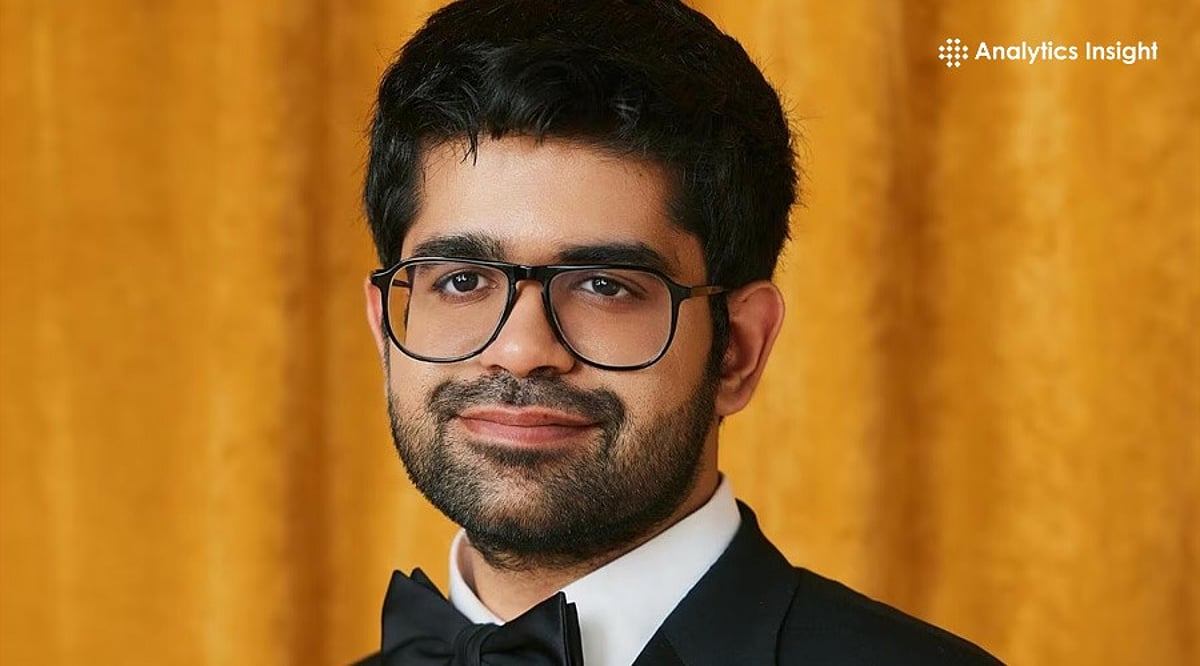
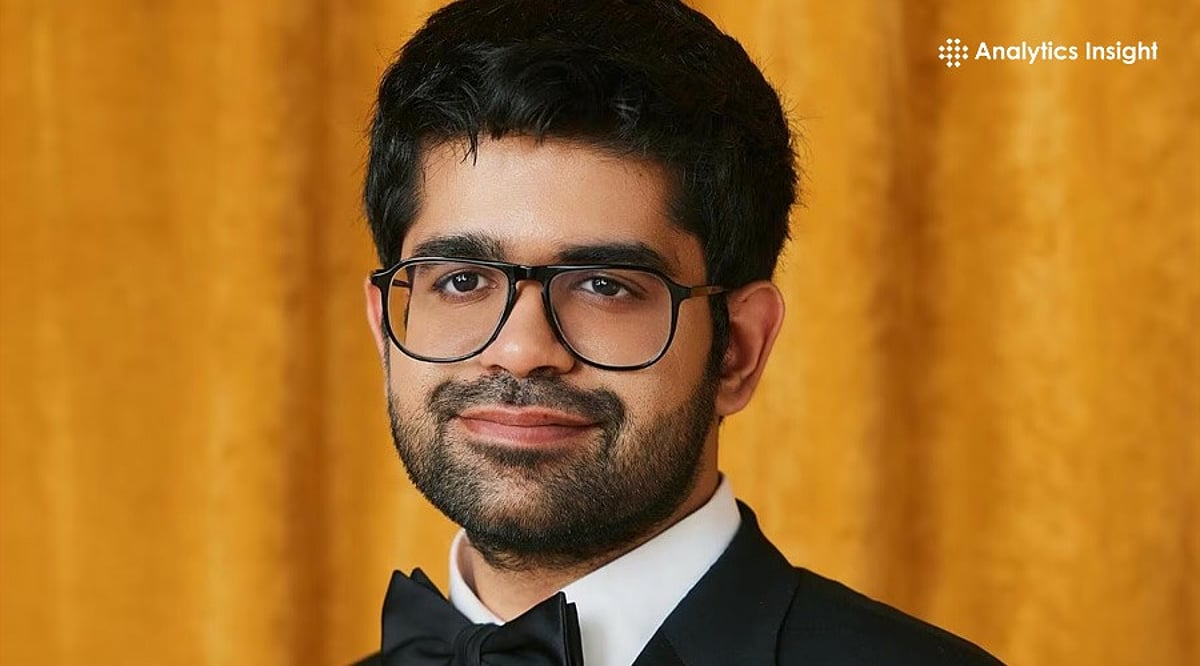
  • How Ola Kolade’s AI Is Transforming Commercial Insurance Underwriting

    How Ola Kolade’s AI Is Transforming Commercial Insurance Underwriting

    A former investment banker has built an AI system that completes in hours what traditionally takes underwriters days — and the commercial insurance industry is taking notice.

    The email arrives at 8:14 on a Tuesday morning. A broker in Dallas sends four attachments to a managing general agent in Chicago: an ACORD application, a loss run, a schedule of values, and a supplemental questionnaire. In a typical operation, an underwriter will get to it sometime today, maybe tomorrow. She opens each attachment, manually extracts the data, types it into her system, realizes the loss run is two years short of what her carrier requires, drafts a follow-up, and waits. The file might be quote-ready by the end of the week.

    In an operation running Aurora — the AI system built by Ola Kolade through his company Underflow Inc. — the same file is read, structured, gap-checked, and followed up on within minutes. By late morning, the submission is complete, enriched with external data, and sitting in the underwriter’s queue with a preliminary risk assessment attached. No human touched it.

    Kolade, 28, did not come up through insurance. He is a Canadian citizen who studied economics at McGill University, spent two years in investment banking at National Bank Financial in Toronto working on more than ten transactions across the technology sector, and then moved to San Francisco to lead strategic finance for a $400 million division of Faire, one of North America’s largest wholesale marketplaces. It was at Faire, observing the risk management processes of thousands of independent businesses, that commercial insurance first caught his attention.

    “I came from an environment where machine learning was optimizing supply chains in real time,” Kolade said. “And then I looked at how an insurance submission moves through the system, and it was email attachments and manual re-keying. The technology gap was enormous.”

    The gap is well documented. According to Capgemini’s 2024 World Property and Casualty Insurance Report, over 40 percent of commercial underwriters’ time goes to administrative tasks. Accenture’s research puts it higher, finding the average underwriter spends 70 percent of their time on non-underwriting activities. The U.S. property and casualty insurance industry generates more than $930 billion in net premiums written annually, with commercial lines representing the entry point that begins with a submission.

    Previous technology solutions — from document management platforms to OCR tools to rules-based automation — have not moved the needle. Kolade’s argument, which he laid out in a December 2025 article in Rough Notes, one of the oldest insurance trade publications in the country, is that these solutions addressed the wrong problem. They helped manage documents. They did not comprehend them.

    “OCR can read the words on a page,” Kolade said. “It cannot tell you that the loss run is two years short, or that the construction type on the application contradicts the schedule of values. That is not a reading problem. It is a comprehension problem. And that is what Aurora solves.”

    Aurora connects to a firm’s existing email. When a submission arrives, it reads every document, structures the data, performs a granular gap analysis, and follows up with the broker automatically. It also goes further than intake: writing preliminary risk assessments, flagging inconsistencies, identifying coverage opportunities, and enriching submissions with research from public databases. The underwriter receives not just a complete file but a contextualized one.

    Kolade’s instinct for building predates his finance career. At McGill, he was part of a team that created a device to prevent head trauma in football players by regulating helmet pressure. A former player who had experienced concussions as a teenager, he understood the problem firsthand. The device was recognized through the NFL’s HeadHealthTECH network, and the team placed in the top 10 percent of McGill’s entrepreneurship competition out of roughly 400 entrants.

    “The pattern is the same,” Kolade said. “Find a problem everyone has accepted as a fact of life, understand why previous attempts failed, and build something that addresses the actual root cause.”

    The timing is sharpened by demographics. Roughly one quarter of the commercial insurance workforce is aged 55 or older and heading toward retirement, taking decades of institutional knowledge with them. Kolade sees Aurora as the answer to a math problem the industry cannot solve through hiring alone.

    “You cannot train someone to have 20 years of experience,” he said. “But you can build a system that captures the repeatable parts of that expertise and makes it available from day one.”

    Underflow raised $3 million in seed funding led by Maple VC and remains in stealth. Whether Aurora can handle the full complexity of real-world insurance submissions at the reliability level working underwriters demand is the question the company now faces. Kolade says he built the product with the industry’s skepticism in mind: Aurora works inside email, requires no new systems, and does not ask brokers to change how they send submissions.

    Back in Chicago, it is 11:30 on that Tuesday. The file from Dallas is complete and sitting in the underwriter’s queue. She opens it, reads the assessment, and begins doing the work she was trained to do: evaluating risk, making a judgment call. The part of the job that actually requires a human.

    That is the argument Ola Kolade is making. Not in a pitch deck. In the product itself.

  • PayEm Sold for $500K After Raising $247M: A Cautionary Fintech Tale

    PayEm Sold for $500K After Raising $247M: A Cautionary Fintech Tale

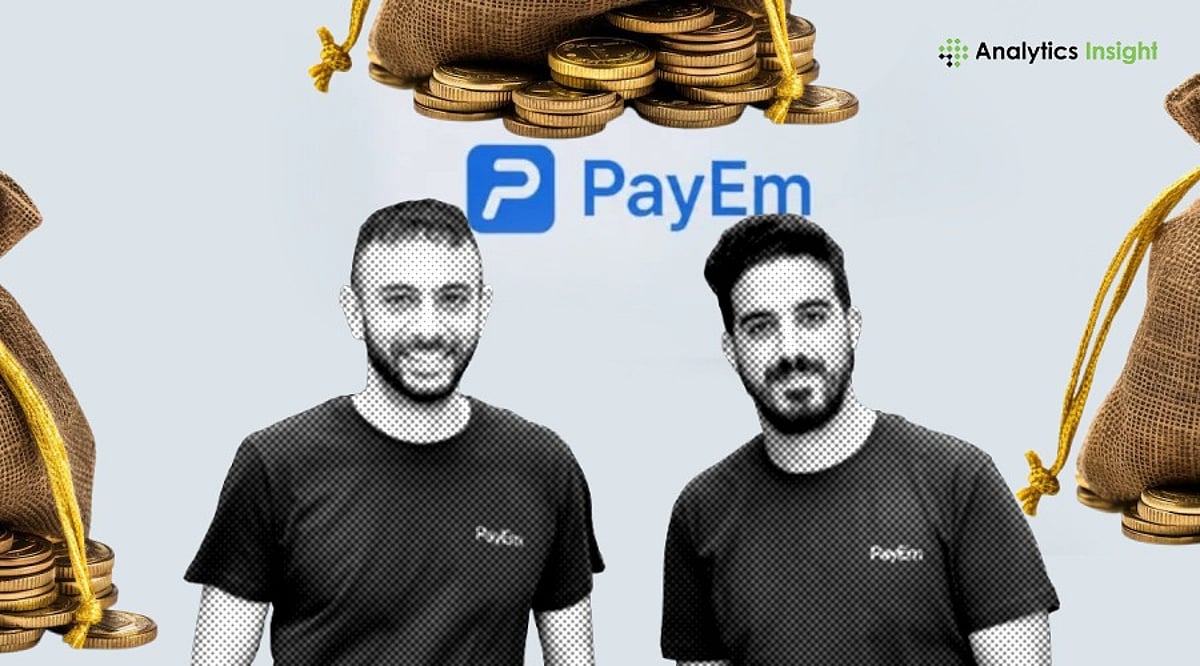
    Fintech startup PayEm has been acquired for just $500,000, despite having raised nearly $247 million in funding, marking one of the most dramatic valuation reversals in the sector. Top Group Software announced that its wholly owned subsidiary, Top Nippando, has completed the acquisition of all PayEm shares. The deal, finalized after being agreed upon in late June, reflects the recent turmoil in the fintech industry.

    Founded in 2020 by Itamar Jobani and Omer Rimoch, PayEm built a SaaS platform for corporate expense management, control, and automation. Its comprehensive solution included corporate debit and credit card issuance and management, procurement process automation, multi-currency digital wallet management, and financial connectivity with complex enterprise ERP systems.

    During the tech industry’s high-growth years, PayEm raised capital rapidly. In September 2021, it announced a $27 million Seed and Series A round led by Pitango, NFX, and Glilot Capital Partners. In early 2023, despite a market shift, the company announced another major $220 million funding round—comprising $20 million in equity and $200 million in credit lines from Viola Credit, Mitsubishi Group, and other partners to finance clients’ card usage.

    However, PayEm faced serious financial challenges in recent years. Its audited 2025 financial records show a negative equity position: total assets of NIS 47.08 million ($15.8M) against liabilities of NIS 51.1 million ($17.1M). Revenue for that year was NIS 19.1 million ($6.4M), but the net loss reached NIS 17.1 million ($5.7M).

    Under the acquisition agreement, all existing equity instruments and options will be canceled, and an aggressive efficiency drive started in 2026—including workforce reductions—will continue. These measures are expected to bring PayEm to operational break-even this year, even before considering potential synergies with Top Group and Top Nipendo. The buyer intends to fund the deal through internal resources or external financing, with a commitment to contribute up to an additional $3.5 million to reduce obligations and stabilize the company’s finances.

    The acquisition highlights the volatility in the fintech startup ecosystem, where once-high-flying companies can see their valuations collapse amid shifting market conditions and operational challenges.

  • Zomato Founder Deepinder Goyal Bets on Brain Health with New Wearable Startup Temple

    Zomato Founder Deepinder Goyal Bets on Brain Health with New Wearable Startup Temple

    Deepinder Goyal, the visionary behind India’s food-tech giant Zomato, is making a bold pivot from food delivery to brain health. His latest venture, Temple, is developing a wearable device that tracks brain blood flow in real time. The startup recently raised $54 million in its first funding round, achieving a valuation of around $190 million—a striking vote of confidence in an unproven technology.

    From Canteen Menus to Forehead Patches

    Goyal’s entrepreneurial journey began in 2008 when he and a colleague noticed office workers queuing to see lunch menus. That observation led to Foodiebay, which later became Zomato—a public company and India’s first consumer tech unicorn. In early 2026, just weeks after stepping down as Zomato’s CEO, Goyal appeared on a podcast wearing a small forehead device called Temple. It wasn’t a gimmick; it was the prototype of his new startup.

    How Temple Works

    Temple’s product is a small, patch-like wearable that sticks to the temple or forehead. It claims to continuously monitor cerebral blood flow, similar to how fitness trackers measure heart rate or Oura rings track sleep. The ultimate goal: to help slow down aging by improving brain blood flow. Goyal has shared this theory online, but the science remains unverified and has not been peer-reviewed. Medical experts are skeptical, but investors are willing to bet on Goyal’s track record.

    Investor Confidence and Risks

    The $54 million round was led by Goyal’s long-time backers—Peak XV Partners (formerly Sequoia India), Info Edge, Steadview Capital, and Nikhil and Nithin Kamath of Zerodha. These investors saw Goyal turn a simple menu directory into a multi-billion-dollar business. Now they’re backing his foray into biotech and longevity, a field far riskier than food delivery. Goyal himself describes the move as “higher-risk exploration and experimentation.”

    A New Chapter for Indian Tech

    Temple is still in development. The company is running third-party studies to validate its metrics and recruiting early adopters to refine the technology. A consumer launch is expected within months. If successful, Temple could revolutionize how athletes monitor performance and how everyday people track brain health. If it fails, it will still be a landmark story—the moment one of India’s most celebrated founders bet his reputation not on food, but on the flow of blood through the human brain.

    Temple operates independently from Goyal’s other ventures, including Continue (a health-tech project), LAT Aerospace, and Zomato’s parent company Eternal. As Indian tech evolves, Temple signals that the next big innovation may not come from delivery apps but from a small device that sticks to your forehead and tries to read your brain.

  • BrowserStack: Revolutionizing Digital Quality Assurance with Cloud and AI

    BrowserStack: Revolutionizing Digital Quality Assurance with Cloud and AI

    BrowserStack has transformed software testing through its cloud-based platform, enabling organizations to test applications across real devices, accelerate releases, enhance quality assurance, and embrace AI-driven automation.

    As businesses strive to provide flawless digital experiences across different devices, web browsers, and operating systems, software quality assurance has become critical. This has led to the rise of BrowserStack as one of the most prominent software testing tools in the cloud.

    The company was co-founded by Indian entrepreneurs Ritesh Arora and Nakul Aggarwal, who founded the firm based on a challenge that had been plaguing the development community: How do you test websites across different browsers and devices? The solution that would make testing more efficient and eliminate the need for costly testing environments led to the creation of what is now a software quality assurance tool for enterprises, startups, and technology firms.

    From Startup Vision to Global Testing Leader

    The main value offered by BrowserStack stems from its provision of access to thousands of actual mobile devices and desktop browsers via cloud technology. Instead of having to acquire and maintain expensive labs for testing, development, and QA engineers gain the opportunity to immediately begin testing on actual environments worldwide.

    The service provides a means of running both manual and automated tests across multiple platforms such as browsers, operating systems, and devices. This has turned out to be particularly useful with more and more channels being used for accessing applications. The absence of bottlenecks related to infrastructure enables companies to develop and deliver their products to market faster and more efficiently.

    Comprehensive Product Portfolio

    BrowserStack has come a long way since its initial offering, evolving into a provider of various software quality solutions. The company now provides cross-browser testing, mobile app testing, automated testing, visual testing, accessibility testing, and test management.

    For instance, tools such as Live and Automate enable companies to test their web applications, whereas products like App Live and App Automate allow users to meet the challenges of mobile app quality assurance. In addition, BrowserStack’s visual testing enables customers to find any unexpected changes to the user interface. It also helps organizations create more inclusive experiences through its accessibility testing tools. In short, BrowserStack provides a wide range of products to enable modern software quality engineering.

    The Next Phase of Testing: Leveraging AI

    As artificial intelligence continues to revolutionize software development, it becomes apparent that BrowserStack is making efforts to incorporate AI functionalities into its application. The company has developed some intelligent testing methods, whose purpose is to limit human effort, maximize efficiency in testing, and discover defects.

    With the help of artificial intelligence, the company is working to make sure that developer innovations are not slowed by manual QA processes. Indeed, efficiency has become a major trend within the software testing industry. The adoption of AI technology reflects BrowserStack’s readiness to adapt to developments in the constantly changing business environment.

    The Roadmap Ahead: Innovation and Strategic Growth

    The journey of BrowserStack has seen constant innovation and expansion. The company has diversified its technology base via acquisitions and enhancements that have sought to make software developers more efficient and productive.

    By acquiring Requestly, a developer tools platform that allows testing and debugging of APIs, BrowserStack made clear its intentions to grow into an ecosystem for software development. On the other hand, BrowserStack has maintained its focus on expanding its workforce while growing sustainably, thereby making it one of the best SaaS startup companies in India.

    A Global Impact on Software Quality

    BrowserStack caters to tens of thousands of clients spread across over 135 nations. Among their clients are startups, digital natives, and even some of the world’s largest corporations. In view of how important digital transformation has become, there is a greater need than ever before for software testing tools, creating a significant growth opportunity for BrowserStack.

    In today’s environment, where user-centric technology companies prioritize experience and reliability, BrowserStack’s importance cannot be overlooked in terms of tech’s value chain. Using its cloud infrastructure and increasing use of artificial intelligence, it has been able to make itself an essential component in enterprise-level software development.

    As software becomes integral to competitive success, BrowserStack’s vision remains clear – to help organizations create and launch superior digital experiences.

  • Lucida AI Secures €6.1M in Seed Funding as User Base Hits 3 Million

    Lucida AI Secures €6.1M in Seed Funding as User Base Hits 3 Million

    UK-based Lucida AI has raised €6.1 million in seed funding to expand its speech-native AI platform across new countries and languages. The investment will help the company improve its technology, grow its enterprise business, and accelerate product development. The latest round brings Lucida AI’s total funding to €7.24 million.

    Velocity Capital led the investment round, with participation from Next Tier Ventures, Look AI Ventures, Bogazici Ventures, Yapı Kredi Frwrd Ventures, and Ünlü & Co. Lucida AI’s founders, Mustafa Girgin and M. Sait Demirci, said artificial intelligence has become a global race, making robust voice-based technology more important than ever.

    Lucida AI Builds a Speech-First Learning Platform

    Founded in 2024, Lucida AI focuses on helping people communicate naturally through speech instead of typing. The platform allows users to have real-time conversations with artificial intelligence while receiving instant feedback on pronunciation, fluency, and speaking clarity. The system adjusts every conversation to match the user’s skill level, creating a more natural learning experience.

    The company built its platform using its own Speech Language Model, which supports smooth voice conversations without scripts or complex menus. Users simply speak with the AI, making language practice feel more like a real conversation. The platform also creates everyday situations, including ordering coffee, attending business meetings, giving presentations, and speaking with clients.

    Enterprise Growth and Global User Expansion

    Lucida AI serves both individual users and businesses. Consumers can access the platform through its mobile application, while enterprise customers receive secure deployment options with end-to-end encryption and on-premises hosting. These features make the platform suitable for organizations that need strong data security while using enterprise AI solutions.

    The startup has grown quickly since launching only fifteen months ago. Lucida AI now has more than three million users worldwide and has recorded over 2.2 billion minutes of spoken conversations across Europe, the United States, and several emerging markets. Investors believe this growth shows rising demand for practical speech AI tools that improve real-world communication.

    Look AI Ventures said Lucida AI stands out by focusing on spoken language instead of basic text-based AI systems. The investor also noted that the company’s pronunciation engine provides more accurate feedback than many general AI language tools currently available.

    Growing Demand for Speech AI Solutions

    Lucida AI’s latest funding shows investors are putting more money into AI products that solve real communication problems. Companies across education, business, and customer service increasingly need faster and more natural voice-based communication. This growing demand continues driving investment in speech-native AI and other voice technologies.

    The funding also reflects a larger trend across Europe. Several startups working in voice technology, AI-powered language learning, and conversational automation have raised major investments during 2026. This growing activity shows investors see strong long-term potential in AI platforms built for global communication instead of only text-based chat.

    Lucida AI now plans to use its new funding to enter more international markets, support additional languages, improve its speech technology, and expand its enterprise services. As competition grows in the AI sector, the company hopes its voice-first approach will help it build a stronger position in the fast-growing speech AI market.

  • MIT Spinout Ferveret Uses Nuclear-Inspired Cooling to Slash Data Center Energy and Water Use

    MIT Spinout Ferveret Uses Nuclear-Inspired Cooling to Slash Data Center Energy and Water Use

    Data centers are expanding rapidly to support the rise of artificial intelligence, and their energy consumption is projected to account for up to 17 percent of U.S. electricity by the end of the decade. Currently, about one-third of that power goes toward cooling the chips that run AI models. A new startup founded by two MIT researchers aims to change that by adapting a technique originally designed for nuclear reactors.

    Ferveret, co-founded by former MIT postdoc Reza Azizian and MIT Professor Matteo Bucci, has developed a liquid cooling system that uses no water and significantly less electricity than traditional air-based methods. The system submerges computer servers in a specialized fluid that absorbs heat far more efficiently than air. What sets it apart from other liquid cooling solutions is the size and behavior of the bubbles it generates: Ferveret’s Adaptive Phase Cooling (APC) technology produces much smaller bubbles that detach from the server surfaces more frequently, accelerating the heat transfer process.

    The company is already testing its technology with several major players, including CleanSpark, FuriosaAI, and Switch, one of the largest data center operators in the U.S. In collaboration with UCLA’s computer science department, Ferveret demonstrated that its APC solution improves computational power efficiency by 15 percent compared to state-of-the-art liquid cooling. When combined with the startup’s power control software, the system can boost the number of tokens generated per watt by up to 35 percent, according to the company.

    “Our goal is to make data centers as sustainable as possible and help them use every single watt of power to generate tokens, which are the most useful outputs,” says Azizian. “Our system enables the operation of more powerful chips, it helps data centers waste a lot less energy, and it accomplishes all that with zero water consumption.”

    The founders’ journey began during Azizian’s postdoc at MIT in 2013, where he worked with Bucci on heat transfer in nuclear reactors. After stints at Microsoft and Nvidia, Azizian realized the cooling inefficiencies in data centers firsthand. “I thought, ‘Holy crap, this is not how you cool facilities,’” he recalls. The pair founded Ferveret in 2021, applying decades of knowledge from nuclear engineering to optimize heat removal in computing environments.

    Ferveret’s system uses a liquid with a low boiling point and no toxic PFAS chemicals. The process, inspired by subcooled boiling in reactors, creates bubbles that quickly recondense, hastening the cooling cycle. The modular design—each server fits into a small box—makes deployment easier than traditional immersion tanks. The company also offers control software that dynamically adjusts power to each server for maximum efficiency.

    Beyond energy savings, the water-free cooling opens new possibilities for data center location. “The sun shines in places where you don’t have much water, so the advantage of us being water-free is we allow you to build data centers where you have solar energy but nothing to cool the data center down,” says Bucci. This could enable data centers in regions like Africa, the Middle East, and parts of America that lack water resources.

    Ferveret is part of Nvidia’s Inception program and is in talks with major cloud computing companies. The startup plans to announce expanded partnerships later this year as it scales its technology to support the growing AI industry without straining the planet.

  • Perplexity’s Ascent: How Aravind Srinivas Built an AI Search Challenger from IIT Madras to Silicon Valley

    Perplexity’s Ascent: How Aravind Srinivas Built an AI Search Challenger from IIT Madras to Silicon Valley

    In early 2025, Perplexity entered India through a major partnership with Bharti Airtel, giving millions of users access to Perplexity Pro. What looked like a routine telecom-AI deal signaled a deeper shift: a two-year-old startup was now challenging Google’s dominance in online search at scale. Leading that charge was Aravind Srinivas, a Chennai-born engineer who studied at IIT Madras and narrowly missed transferring into computer science.

    Srinivas’s journey is anything but linear. Growing up in a family that valued academic achievement, he faced the intense pressure of IIT entrance exams. When he couldn’t switch into computer science, he taught himself Python and enrolled in machine learning courses outside his department. He contributed to research at conferences like NeurIPS and ICLR while still an undergraduate, gaining early exposure to deep learning.

    He earned a PhD in computer science from UC Berkeley, interning at OpenAI, DeepMind, and Google Brain between 2019 and 2021. Those experiences revealed skill gaps he worked aggressively to close, rather than retreating from the field. In 2022, he co-founded Perplexity with Denis Yarats and Johnny Ho, positioning it as an answer engine that uses large language models to generate conversational responses with live source citations.

    Perplexity grew rapidly, attracting millions of users for research, coding, and everyday queries. The Airtel partnership underscored its strategy to expand beyond desktop search into mobile-first markets. But the company also faced sharp criticism: Forbes and WIRED accused it of plagiarizing paywalled content, and publishers raised legal concerns about scraping practices. Srinivas acknowledged early shortcomings in attribution and defended AI-powered search as an inevitable evolution.

    Today, Perplexity sits at the center of the AI search race—hailed as a promising challenger yet emblematic of the unresolved tensions around copyright and fair use. Srinivas’s story illustrates how combining research, engineering, and product instinct, even without a traditional path, can reshape an industry.

  • From IIT to AI Search: The Unconventional Rise of Perplexity’s Aravind Srinivas

    From IIT to AI Search: The Unconventional Rise of Perplexity’s Aravind Srinivas

    In early 2025, Perplexity entered India through a major partnership with Bharti Airtel, giving millions of users access to Perplexity Pro almost overnight. On the surface, it looked like another telecom-AI announcement. Inside the technology industry, however, the deal carried a different meaning.

    A startup founded in 2022 was now entering India at a massive scale while positioning itself as an alternative to Google’s dominance in online search. Leading that company was Aravind Srinivas, a Chennai-born engineer who joined IIT Madras in electrical engineering and was unable to transfer into computer science after narrowly missing the required GPA cutoff.

    Perplexity’s rise has been unusually fast, even by Silicon Valley standards. According to reports citing investor discussions, the company reached multi-billion-dollar valuations within roughly two years of launch as investors rushed toward generative AI startups. At the same time, the company has faced growing scrutiny over attribution, scraping practices, and the legal boundaries surrounding AI-generated information products.

    What makes Aravind Srinivas’s story compelling is how imperfect and unpredictable it feels. His journey has been shaped by ambition, self-doubt, deep focus on research, strong product instinct, and constant public scrutiny, rather than a smooth path to success. Srinivas grew up in Chennai in a family where academic achievement was highly valued.

    In a conversation on the Lex Fridman Podcast, he spoke about the culture surrounding IIT admissions and the pressure attached to engineering entrance exams in India. By the time he entered the country’s competitive coaching ecosystem, academic performance had already become central to his life. That unexpected shift changed the direction of his learning.

    Instead of depending entirely on departmental coursework, he began teaching himself programming outside the classroom. He learned Python independently, enrolled in machine learning coursework available outside his department, and became involved in AI research under Professor Balaraman Ravindran.

    While still an undergraduate, Srinivas contributed to research connected to major AI conferences, including NeurIPS, AAAI, and ICLR. The experience exposed him early to deep learning research during a period when modern AI systems were still largely confined to academic labs rather than mainstream products. By the end of his undergraduate years, Srinivas had already moved across mathematics, coding, AI research, and systems thinking. The combination would later become central to his work in AI.

    He started pursuing his PhD in computer science at the University of California in 2017, where he worked on machine learning systems, generative models, and transformer-related research. Between 2019 and 2021, he interned at OpenAI, DeepMind, and Google Brain during the period just before large language models entered mainstream public attention. Those experiences became some of the most defining moments of his career.

    In podcast interviews, Srinivas said that when he entered environments filled with highly skilled engineers and researchers, he realized that he needed to improve his programming skills and ability to solve problems from the basics. He described the experience as motivating rather than discouraging.

    Instead of retreating from the field, he immersed himself more deeply in large language models and scaling systems research. The tone of those interviews felt very different from the polished image often associated with Silicon Valley founders. In those interviews, Srinivas spoke less about confidence and more about aggressively closing gaps in his own knowledge.

    In 2022, Aravind Srinivas co-founded Perplexity with Denis Yarats and Johnny Ho. Computer scientist Andy Konwinski also became an early supporter and close collaborator. The timing was important. Interest in generative AI was growing quickly, but internet search still mostly worked the same way it had for years, with users typing keywords and receiving pages of links.

    Perplexity tried to simplify that experience. Rather than functioning as a traditional search engine, the company positioned itself as an answer engine that used large language models (LLMs) to generate conversational responses while retrieving information from live web sources.

    Citations became an important part of Perplexity’s identity since many AI products were already facing criticism for hallucinations, where systems generate false or unsupported information. To separate itself from competitors, Perplexity designed its interface to display source links alongside AI-generated answers.

    Perplexity grew quickly as millions of users started using it for research, summaries, coding help, and everyday questions. Its partnership with Bharti Airtel later showed that the company’s strategy was not only focused on improving research quality but also on reaching more users through wider accessibility, especially in markets where smartphone usage was growing faster than traditional desktop search habits.

    But Perplexity’s rapid rise also brought intense criticism. In 2024, Forbes and WIRED reported that Perplexity had plagiarized paywalled content without giving enough credit to the original publishers. The Verge separately reported concerns around scraping practices that appeared to bypass publisher-set restrictions such as robots.txt preferences.

    Some publishers responded with legal threats, arguing that AI-generated summaries could reduce the value of original journalism. The issue soon grew into a larger debate about copyright, fair compensation, and the future of online publishing in the AI era.

    In posts published on X during mid-2024, Srinivas acknowledged shortcomings in Perplexity’s early attribution systems and said the company was working on improving citation visibility and publisher relationships.

    At the same time, he defended AI-powered search as an inevitable shift in how people would consume information online. That tension now sits at the center of Perplexity’s identity. The company is simultaneously viewed as one of the most promising consumer AI startups and one of the clearest examples of the unresolved conflicts shaping the modern AI industry.

    Aravind Srinivas’s rise from IIT classrooms to the center of Silicon Valley’s AI race does not offer a simple formula for success. His journey shows that the AI industry now values people who can quickly combine research, engineering, and product thinking, even without following a traditional career path.