Tag: Strait of Hormuz

  • S&P 500 Holds Steady as Chip and Software Declines Offset Broader Market Gains

    S&P 500 Holds Steady as Chip and Software Declines Offset Broader Market Gains

    The S&P 500 traded near the flatline on Thursday as steep losses in chip and software stocks offset gains across most other sectors. Investors weighed corporate earnings, labor data, and ongoing negotiations over reopening the Strait of Hormuz.

    At 11:20 a.m. ET, the S&P 500 slipped 0.08% to 7,723. The Dow Jones Industrial Average added 0.49% to 54,350, while the Nasdaq Composite edged up 0.05% to 26,380.

    Western Digital and Sandisk Shares Tumble

    Western Digital shares fell 18.5% in early trading despite reporting fourth-quarter results above Wall Street estimates. Its fiscal first-quarter forecast disappointed investors. Sandisk shares dropped 11.3% after releasing its fiscal fourth-quarter results. Both companies forecast quarterly revenue above estimates, driven by demand for artificial intelligence infrastructure. However, investors focused on valuations after significant gains earlier this year — Western Digital had climbed about 200%, and Sandisk had gained around 400%.

    Hank Smith, investment strategy director at Haverford Trust, noted that expectations had reached demanding levels, calling the price action “some digestion going on in the market.”

    The Philadelphia Semiconductor Index declined 1.5% during early trading. Intel and AMD also traded lower, adding pressure to the technology sector. However, several chip stocks later recovered: Broadcom gained nearly 2%, Marvell Technology rose about 3%, and NVIDIA moved higher during the session.

    Software Earnings Add Pressure to Technology

    Software stocks also recorded steep declines following several earnings reports. Atlassian, Salesforce, Adobe, and Zscaler traded lower. AppLovin shares fell about 17% after missing quarterly revenue estimates. The stock had previously benefited from investor demand for AI-linked companies. Datadog dropped roughly 17% after management forecast slower revenue growth in the third quarter, raising questions about enterprise software demand and valuations.

    Peloton shares fell more than 14% after forecasting lower sales in the coming fiscal year, citing higher prices for equipment and subscriptions. Still, Microsoft and Amazon each gained around 1%, helping limit broader losses across major indexes.

    Most S&P 500 Sectors Trade Higher

    Despite technology weakness, nine of the S&P 500’s 11 sectors traded higher during the morning session. Energy, consumer staples, and healthcare led the gains. Parker-Hannifin rose 8.5% after forecasting annual profit above analysts’ estimates. Albemarle gained 6.7% after beating quarterly profit estimates. Diageo rose about 6% after announcing a three-year plan targeting $1.2 billion in savings.

    Restaurant Brands International reported adjusted earnings of $1.07 per share, above the expected $1.03. Revenue reached $2.52 billion, matching estimates. Burger King recorded an 8.5% increase in comparable restaurant sales, though other brands within the group delivered weaker results.

    Labor Data Sets Up July Jobs Report

    New applications for unemployment benefits increased slightly to 199,000 for the week ending August 1, below the Dow Jones estimate of 204,000. Layoffs fell to their lowest level in two years during July. Second-quarter productivity increased 1.4% (versus 0.8% prior), while unit labor costs rose 1.3% (below the 2.1% estimate). Investors will now examine Friday’s July employment report for clues about the Federal Reserve’s policy path. Fed Chairman Kevin Warsh has reduced forward guidance, increasing the market’s focus on incoming economic data.

    Iran Talks Keep Oil and Gold in Focus

    Brent crude traded near $80 per barrel as investors monitored negotiations involving Iran and Oman focused on reopening shipping routes through the Strait of Hormuz. An Iranian official said a temporary agreement would allow ships to travel without fees or tolls, but final conditions had not been settled. Deutsche Bank strategist Jim Reid noted “unresolved questions” about whether Iran could later charge vessels.

    Gold rose for a fourth consecutive session as geopolitical uncertainty supported demand. Spot gold gained 0.6% to $4,271.33 per ounce, and US gold futures rose 0.6% to $4,330.20. Earlier, spot prices reached their highest level since June 18.

    Conclusion

    Technology losses kept the S&P 500 near the flatline, despite gains across nine of its 11 sectors. Western Digital, Sandisk, AppLovin, and Datadog recorded the sharpest declines following earnings updates. Meanwhile, investors monitored Iran-Oman shipping talks and Friday’s July employment report, both of which could shape energy prices and Federal Reserve rate expectations.

  • MCX Gold Rises 0.61% to ₹1,49,401 as Softer Dollar and Strait of Hormuz Hopes Boost Sentiment

    MCX Gold Rises 0.61% to ₹1,49,401 as Softer Dollar and Strait of Hormuz Hopes Boost Sentiment

    Gold prices climbed on the Multi Commodity Exchange (MCX) on August 6, buoyed by a softer U.S. dollar, lower oil prices, and growing optimism that the Strait of Hormuz may reopen soon after U.S. President Donald Trump pledged to reach an agreement with Iran.

    August gold futures rose 0.61% to ₹1,49,401 per 10 grams, while September silver futures advanced 0.23% to ₹2,28,115. Meanwhile, Brent crude futures slipped 0.11% to $79.32 per barrel, and U.S. West Texas Intermediate (WTI) edged down 0.20% to $75.07 per barrel.

    Domestic Gold Prices

    In the domestic market, 24K gold rose by ₹398 to ₹1,49,730 per 10 grams, and 22K gold advanced by ₹365 to ₹1,37,250. City-wise rates: Mumbai and Kolkata quoted ₹1,49,730, Delhi ₹1,49,860, and Chennai ₹1,47,060.

    U.S. Gold Prices

    U.S. gold prices extended gains for a fourth consecutive session, touching their highest level in seven weeks. A soft U.S. dollar and lower Treasury yields, combined with hopes of the Strait of Hormuz reopening, supported the rally. Spot gold rose 0.5% to $4,265.22 per ounce, while U.S. gold futures gained 0.5% to $4,324.60.

    Spot silver fell 0.1% to $62.02, platinum climbed 1.2% to $1,755.18, and palladium advanced 0.8% to $1,374.33, marking its third straight session of gains.

    Key Levels to Watch

    “The sharp rally came on building optimism that a diplomatic breakthrough in the Middle East is close to being finalised. This in turn would keep downside pressure on oil prices and reduce the need for central banks to raise rates, providing a clear tailwind for gold,” said Tony Sycamore, market analyst at IG.

    Sycamore added that a sustained break above the 200-day moving average could pave the way for a stronger recovery toward the $5,000 mark.

    On MCX, gold is currently trading in a broader range of ₹1,45,000 to ₹1,52,000 per 10 grams, with a narrower range of ₹1,47,000 to ₹1,50,000. Resistance is seen at ₹1,50,000; a breakout above this level could push prices toward ₹1,52,000. Internationally, COMEX gold faces immediate resistance at $4,320 per ounce. A break above this level could target $4,350.

  • FTSE 100 Opens Higher at 10,907 as Strait of Hormuz Reopening Hopes Boost Sentiment

    FTSE 100 Opens Higher at 10,907 as Strait of Hormuz Reopening Hopes Boost Sentiment

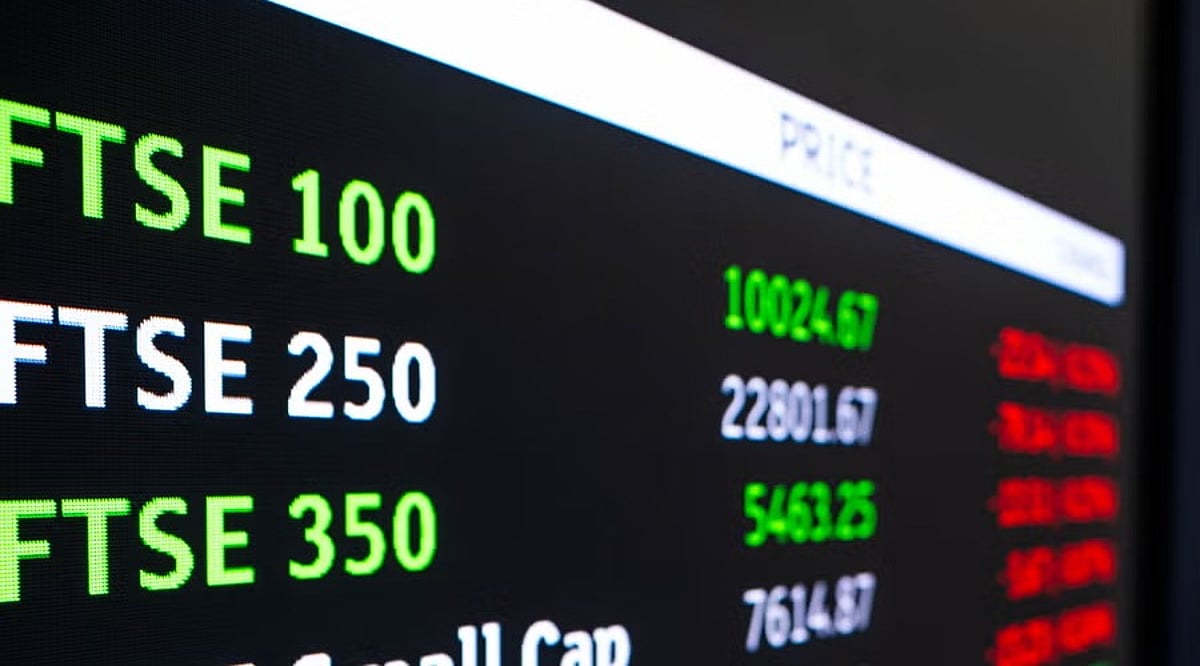
    The FTSE 100 opened 18 points higher at 10,907 on Thursday, driven by renewed optimism over a potential reopening of the Strait of Hormuz. Investors also weighed corporate earnings, oil price movements, and global market trends.

    Market Overview

    Brent crude futures edged up 0.21% to $79.52 per barrel, while US West Texas Intermediate (WTI) fell 0.24% to $75.04. Sterling traded at $1.3461 early Thursday, slightly down from $1.3466 at the London equities close on Wednesday. Against the euro, sterling slipped to €1.1654 from €1.1663 the previous day.

    Gainers and Losers

    On the upside, Admiral Group surged 5.07% to 3,894p, Metlen Energy & Metals advanced 3.88% to €50.30, and Persimmon climbed 2.45% to 1,150.5p. Vodafone Group gained 2.01% to 116.7p, Haleon rose 1.89% to 372.6p, and London Stock Exchange Group added 1.41% to 8,750p.

    On the downside, RELX fell 2.98% to 2,634p, Computacenter declined 1.58% to 4,736p, and Antofagasta slipped 1.21% to 4,001p. Halma eased 1.16% to 3,756p, Games Workshop Group dropped 0.84% to 18,850p, and Lion Finance Group edged 0.42% lower to 11,970p.

    WPP Cuts Jobs

    WPP slashed 1,267 jobs in the first half of the year, around 1.3% of its total staffing, as revenue continued to fall. Over the 12 months to June, the media group reduced its workforce by 6.4% to 104,083 employees. Revenue in the half came in at £6.4 billion, down over 3% from last year. Revenue less pass-through costs, a key metric for professional services firms, fell nearly 5% to £4.7 billion.

    Admiral’s Profit Drops

    Insurer Admiral reported an 18% drop in profit before tax to £429.2 million, down from the record £521 million in the first half of 2025. Turnover remained flat at £3.11 billion. Milena Mondini de Focatiis, group CEO, said: “Against more challenging market conditions, we are pricing for long-term sustainable growth with our UK motor business having increased rates earlier than the market, following a softer period in the cycle.”

    Wizz Air Profits Decline

    Increased fuel costs from the Middle East conflict swung Wizz Air to a €198.2 million (£170 million) loss in the first quarter of 2026. Total revenue rose 5.5% to €1,507.4 million, driven by a 25.1% increase in passengers, but revenue per available seat fell 8.1%. The budget airline expects industry challenges to persist and is reallocating capacity to popular European markets over long-haul flights to the Middle East.

    Global Market View

    In the US, the Dow Jones rose 0.5% to a record closing high, while the S&P 500 slipped 0.2% and the Nasdaq fell 0.8%. In Asia on Thursday, Tokyo’s Nikkei 225 fell 0.93% to 65,683.26, China’s Shanghai Composite gained 0.57%, Hong Kong’s Hang Seng declined 1.68%, and South Korea’s Kospi edged lower by 4.58%. In India, the Nifty 50 and the Sensex rose by 0.06% and 0.29%, respectively.

  • BASF Q2 Earnings Surpass Forecasts as Coatings Sale Boosts Profit; Abishai Financial Asia Analyzes Revised Outlook

    BASF Q2 Earnings Surpass Forecasts as Coatings Sale Boosts Profit; Abishai Financial Asia Analyzes Revised Outlook

    BASF delivered a strong second-quarter performance, clearing consensus estimates by a wide margin and raising its full-year guidance even as the company adopts a more cautious economic outlook. Adjusted EBITDA reached $2.7 billion, above the $2.4 billion consensus and the $1.8 billion reported a year earlier. Net profit surged to $4.7 billion from $90 million, driven by a $4.4 billion pre-tax gain from the sale of its coatings business to Carlyle.

    Quarterly sales came in at $19.6 billion, a 16% year-over-year increase and ahead of the $18.8 billion analysts had expected. Pricing contributed 11 points of the growth, volume added 7 points, while currency and portfolio effects each reduced a point. Strong automotive and construction demand supported cost pass-through.

    Adjusted EBITDA exceeded consensus across all segments except Surface Technologies. Reported EBITDA was approximately $2.3 billion after special charges. The coatings divestiture, now completed, is expected to incur a mid triple-digit million-dollar tax charge. According to Daniel Coventry, Director of Private Equity at Abishai Financial Asia, “the profit line flatters a quarter that was already improving on its own merits.”

    Segment performance was mixed: Materials, Industrial Solutions, and Agricultural Solutions exceeded forecasts; Nutrition and Care slightly surpassed estimates; while Chemicals and Surface Technologies fell short. Surface Technologies struggled due to the absence of prior catalyst gains, weaker Battery Materials earnings from lapsed subsidies, and the exit from Brazilian decorative paints.

    Cash generation was more cautious, with free cash flow turning negative to $0.2 billion from positive $0.6 billion a year earlier, as raw material costs absorbed working capital. Operating cash flow fell to $0.6 billion from $1.8 billion, and capital expenditure held at $0.8 billion.

    Management raised full-year adjusted EBITDA guidance to $7.9 billion to $8.8 billion, up from $7.1 billion to $8.0 billion, and nearly 17% above the previous year’s $7.5 billion. The consensus stood at $8.3 billion. Free cash flow guidance remained at $1.7 billion to $2.6 billion, and capital expenditure at $3.9 billion. Coventry described the upgrade as “delivered without loosening a single discipline on the balance sheet.”

    However, macroeconomic assumptions were trimmed: GDP growth forecast lowered to 2.5% from 2.7%, industrial production to 2.0% from 2.3%, and chemical production to 1.8% from 2.4%. The oil price assumption was raised to $87 per barrel from $70.7.

    The second-half outlook remains unusually uncertain, with the key risk being negotiations between the United States and Iran over access to the Strait of Hormuz. A prolonged closure could disrupt feedstock supply and demand, while a timely settlement could boost chemical demand. BASF maintains that neither individual risks nor their combined weight threaten its continued existence.

    Liquidity remains strong, with cash and equivalents of $3.6 billion at the end of the quarter, a $13.6 billion commercial paper program, and a $6.8 billion standby facility maturing in several years. Credit ratings from S&P, Moody’s, and Fitch are stable at A-/A-2, A3/P-2, and A/F1, respectively. Capital returns continue alongside portfolio pruning, with a buyback of up to $1.7 billion and approximately $912 million in Wintershall Dea receipts collected earlier in the year. Coventry noted that the balance sheet is “built to absorb a rougher second half rather than to chase it.”

    In summary, the quarter reflects a selective recovery, with strength in Materials, Agricultural Solutions, and Industrial Solutions offsetting weakness in Surface Technologies and Chemicals. The coatings gain dominated reported profit, capital discipline remains intact, and softer growth assumptions inject uncertainty. The Strait of Hormuz remains the key swing variable for feedstock costs and demand. Abishai Financial Asia continues to monitor segment trends, cash generation, and macroeconomic revisions.

    About Abishai Financial Asia

    Abishai Financial Asia Pte. Ltd. (UEN: 201016239E) is a Singapore-based asset manager focused on a research-first approach to capital allocation. Its strategy emphasizes risk-aware compounding in public markets, combining active equity selection, bottom-up analysis, and disciplined rebalancing with overlay tools such as systematic tilts, opportunistic hedging, and drawdown-aware controls. Governance relies on macro-aware risk budgeting with explicit limits, exposure and concentration guardrails, liquidity filters, stress testing, and transparent attribution. ESG considerations are incorporated where financially material. The firm is also exploring compliant product wrappers and distribution routes that may, subject to suitability criteria, extend selected solutions to retail-qualified investors over time. For more information, visit abishai.com. Media inquiries can be directed to Peng Joon at p.joon@abishai.com.

  • Goldman Sachs Warns Brent Crude Could Surge Past $120 on Strait of Hormuz Disruptions

    Goldman Sachs Warns Brent Crude Could Surge Past $120 on Strait of Hormuz Disruptions

    Brent crude oil prices could surge above $120 per barrel in the fourth quarter if disruptions in the Strait of Hormuz persist, according to Goldman Sachs. The investment bank, however, clarified that such a sharp rally is not its base-case expectation.

    The warning comes as global oil markets remain on edge amid renewed geopolitical tensions in the Middle East. Brent crude recently climbed above $91 a barrel following fresh hostilities involving the US and Iran, raising concerns over potential supply disruptions.

    Shipping Routes Under Pressure

    Market sentiment has also been affected by threats from Iran-backed Houthi rebels in Yemen to impose a blockade on Saudi oil shipments. The warning has added to concerns over the security of key energy routes.

    With disruptions at the Strait of Hormuz, the Red Sea has become an increasingly important alternative for transporting crude from the Persian Gulf to global markets. Any disruption along this route could further tighten supplies and push prices higher.

    In a note dated July 20, Goldman Sachs analysts said escalating tensions in the region and a sharp decline in Persian Gulf oil flows had already contributed to the recent rebound in crude prices.

    Base Case Still Points to Lower Prices

    Despite highlighting the upside risks, Goldman Sachs maintained that its central forecast assumes geopolitical tensions gradually ease. Under that scenario, the bank expects Brent crude to average around $80 per barrel in the fourth quarter and decline to about $75 per barrel next year.

    The analysts cautioned, however, that risks remain skewed to the upside because of ongoing shipping disruptions through the Strait of Hormuz and the possibility of further interruptions in the Red Sea.

    China Demand May Limit the Rally

    Goldman Sachs noted that declining global oil inventories during the second quarter have left the market more exposed to supply shocks. At the same time, weaker crude imports by China and greater demand elasticity could help contain any sustained price spike.

    For investors seeking protection from prolonged geopolitical uncertainty linked to the Middle East and Russia, the bank recommended taking a long position in the European diesel timespread between December 2026 and March 2027.

    According to the analysts, diesel markets were already tight before the latest conflict, with continued Ukrainian attacks on Russian refineries, hurricane risks, extreme summer temperatures and refinery maintenance delays adding to supply concerns.

    Brent crude futures were last trading at $88.54 per barrel. Earlier this year, prices briefly surged above $126 a barrel during the initial phase of the US-Iran conflict.

  • Indian Stock Market Update: Sensex Rises 325 Points, Nifty Settles at 24,160 as IT Stocks Rally

    Indian Stock Market Update: Sensex Rises 325 Points, Nifty Settles at 24,160 as IT Stocks Rally

    Indian equity markets ended the July 16 session on a positive note, driven by a rally in IT stocks and favorable global cues. However, gains were trimmed in the afternoon after news of Iran’s renewed blockade of the Strait of Hormuz rattled investor sentiment. The BSE Sensex closed at approximately 77,380, up 325 points (0.42%), while the NSE Nifty 50 settled near 24,160, gaining 82 points (0.34%).

    Key Market Drivers

    Markets opened strongly following lower-than-expected US inflation data and strong quarterly results from US banks, which boosted Wall Street and Asian markets. The Nifty IT sector was the best performer, surging 1.98% in morning trade, supported by TCS’s Q1 FY27 results. Broader indices also saw gains, with the Nifty Midcap 100 and Smallcap 100 rising 0.45% each in the first half.

    However, the positive momentum reversed in the afternoon after reports that Iran had shut down the Strait of Hormuz, pushing crude oil prices higher for the fourth consecutive day. This led to profit booking, with the Nifty Metal Index falling 1.11% and IT stocks giving back some gains.

    Top Gainers and Losers

    Top Gainers: IT stocks led the rally, including Infosys, TCS, and HCL Technologies. Other notable gainers included Reliance Industries and HDFC Bank.

    Top Losers: Metal stocks faced selling pressure, with Hindalco and Tata Steel among the laggards. Energy stocks also declined due to rising oil prices.

    Market Outlook

    With Sensex weekly options expiring on Thursday and ongoing geopolitical uncertainty in the Middle East, markets are expected to remain cautious. Key triggers for the rest of the week include Federal Reserve Chair Kevin Warsh’s testimony, Q1 FY27 results, and developments in the Iran-Hormuz situation.

    Disclaimer: This article is for informational purposes only and does not constitute financial advice. Always conduct your own research before investing.

  • Oil Hits One-Month High as US-Iran Conflict Disrupts Strait of Hormuz Shipping

    Oil Hits One-Month High as US-Iran Conflict Disrupts Strait of Hormuz Shipping

    Oil prices surged to their highest level in four weeks on Tuesday as renewed hostilities between the United States and Iran disrupted tanker traffic through the strategic Strait of Hormuz, raising fresh concerns over global energy supplies.

    Brent crude futures climbed 3.29% to $86.04 a barrel, while U.S. West Texas Intermediate crude gained 2.83% to $80.35, both reaching levels not seen since mid-June. The move extended a sharp rebound that began after hopes for a lasting peace agreement faded over the weekend.

    The latest rise followed a 9.6% jump in Brent during the previous session, its largest one-day gain since May 2020. Traders reacted after Washington restored its naval blockade of Iranian shipping and proposed a 20% fee for vessels using the waterway. The U.S. also carried out a third consecutive night of strikes against Iran, which responded with attacks on military sites and commercial vessels. Two United Arab Emirates tankers were hit in Omani waters, according to the UAE Ministry of Defence, resulting in the death of one Indian sailor and injuries to eight crew members.

    Shipping activity through the Strait of Hormuz dropped to a two-month low as vessel operators assessed the growing security risk. The route carries about one-fifth of global oil and liquefied natural gas supplies. MarineTraffic recorded 57 transits from Friday through Sunday, down more than 50% from the previous week, compared to roughly 130 vessels per day before the conflict escalated in late February. Iran declared the strait closed “until further notice,” while Washington said military escorts kept oil moving.

    Market analysts said the next price move would hinge on whether tanker traffic and export volumes fall further. Priyanka Sachdeva of Phillip Nova noted that a prolonged drop in vessel movement could push oil prices higher, but prices could ease if crude shipments continue through the strait. ANZ analyst Soni Kumari placed oil in an $85-to-$90 range if disruptions persist, while TD Securities strategist Bart Melek warned that Brent could approach $100 if signs of a physical shortage emerge.

    Meanwhile, Iran’s oil minister said the country’s crude exports were operating normally despite the end of a U.S. sanctions waiver. Yemen’s Houthi movement also fired missiles at Saudi Arabia after accusing the kingdom of bombing an airport under its control. In a separate development, China’s June crude imports fell 41.3% to their lowest level in almost a decade, and refinery activity reached a 10-year low amid weak domestic demand and export limits.

  • Bitcoin Holds Near $62,700 as Hormuz Tensions Lift Oil Prices, Zcash Prepares for Ironwood Upgrade

    Bitcoin Holds Near $62,700 as Hormuz Tensions Lift Oil Prices, Zcash Prepares for Ironwood Upgrade

    Bitcoin is trading in a tight band this week as geopolitical headlines take center stage. Oil prices surged after Washington signaled a renewed blockade on Iranian shipping through the Strait of Hormuz. Traders are staying cautious ahead of today’s inflation data.

    Most major tokens slipped modestly through the session, though the moves stayed shallow. Bitcoin held its footing near $62,700, and stablecoins barely budged. Attention now shifts to the CPI print and Fed Chair Kevin Warsh’s testimony for the next directional cue.

    Bitcoin Price Today

    Bitcoin trades near $62,736.94, down 0.04% over the past 24 hours. The figure reflects CoinMarketCap data tracked through today’s session. Price action remains sensitive to oil headlines and positioning ahead of today’s CPI release.

    Mudrex: Long-Term Holders Keep Accumulating

    Giving the market view, Akshat Siddhant, Lead Quant Analyst at Mudrex, said, “Bitcoin is consolidating around the $62,500 zone as renewed US-Iran tensions and concerns over the Strait of Hormuz pushed oil prices higher and revived inflation fears.” He further mentioned that “markets are now focused on today’s US CPI report and Fed Chair Kevin Warsh’s testimony, both of which could shape expectations for interest rates. However, on-chain data shows long-term holders accumulating 5,912 BTC in just two days, signalling continued conviction. Bitcoin needs to reclaim $64,000 to strengthen momentum, while $60,000 remains the key support level.”

    ETF Flows Still Inconsistent

    Vikram Subburaj, CEO of Giottus, placed Bitcoin near $62,450, down about 1.6% on the day as investors turned cautious ahead of inflation data. He noted a $239 million net ETF outflow on July 13, following modest inflows the week before. Immediate support sits near $62,000, with resistance between $63,500 and $65,000. He advised staggered entries and limited leverage until the Fed outlook clears.

    Risk-Off Setup Persists

    Riya Sehgal, Research Analyst at Delta Exchange, shared the market view, noting that global markets have shifted into an inflation-led risk-off phase after oil prices jumped amid renewed tensions in the Strait of Hormuz. Rising yields and dollar strength have pressured both gold and crypto. Bitcoin remains range-bound between $61,200 and $64,000, with a break above $64,000 opening a path toward $65,600. Ethereum continues showing relative strength, with $1,850 as its next resistance test.

    Stablecoin Supply Dips

    According to the CoinSwitch Markets Desk, “BTC slipped below $62,000 as renewed US-Iran tensions weighed on sentiment, though it closed last week above its 200-week moving average. Stablecoin supply has declined slightly, suggesting some capital rotated back into fiat. The desk views this as a temporary correction rather than a structural liquidity problem, with this week’s CPI data as the next key trigger.”

    Institutional Confidence Holds Firm

    Meanwhile, Nischal Shetty, founder of WazirX, also said that Bitcoin briefly slipped below $62,500 as rising tensions in the Middle East pushed oil higher and triggered broader risk-off flows. Despite the dip, spot Bitcoin and Ether ETFs both logged net inflows last week, ending multi-week outflow streaks. He added that XRP traders should watch the $1.03 to $1.05 support zone, while Solana’s $73 to $75 range could draw early recovery attempts.

    Crypto Prices Today: Top 10 Coins at a Glance

    Here is a look at the top crypto prices today, based on CoinMarketCap data as of July 14.

    Biggest Decliners: HYPE, TRX, SOL

    Hyperliquid led today’s losses, down 2.69% after a strong run over recent weeks. TRON followed with a 1.73% dip, while Solana slipped 1.39% amid broader profit-taking.

    Steadiest Performers: USDC, USDT, DOGE

    USDC stayed flat, holding tight to its dollar peg through the session. Tether edged up slightly, while Dogecoin held close to unchanged, down just 0.17%.

    Crypto News Today Driving Market Sentiment

    Bitcoin and Ether ETFs End Eight-Week Outflow Streak

    US spot Bitcoin ETFs pulled in $197.4 million in net inflows last week, snapping an eight-week run of redemptions. BlackRock’s IBIT led the recovery with $291.9 million in fresh capital. Spot Ether ETFs added $84.42 million over the same period, also ending eight straight weeks of outflows. Analysts note it is still early to call this a durable trend given seasonal patterns ahead.

    Oil Surges as Iran-US Tensions Reignite Over Hormuz

    Oil prices jumped sharply after Washington signaled a renewed blockade on Iranian shipping through the Strait of Hormuz. The waterway carries close to a fifth of the global oil supply. The spike revived inflation worries just as markets await today’s CPI print. Equity futures weakened, and the dollar firmed, adding pressure on risk assets heading into the session.

    Clarity Act Remains Stalled as August Deadline Approaches

    The Digital Asset Market Clarity Act remains parked on the Senate calendar with no floor vote scheduled. Disputes over ethics provisions and stablecoin yield continue blocking the votes needed for passage. The Senate returned from recess on July 13, leaving roughly three working weeks before the August break. A miss this summer would likely push the bill into the tougher midterm-election calendar.

    Zcash Stays in Focus Ahead of Ironwood Upgrade

    Zcash has drawn steady attention as traders position ahead of the July 28 Ironwood network upgrade. The update targets a shielded-pool vulnerability flagged earlier this year. Rising open interest and improving sentiment have supported the token in recent sessions. Traders are watching whether it can hold above key support while the broader market stays choppy.

    Investor and Market Outlook

    Bitcoin holds near $62,700 as traders weigh oil-driven risk aversion against improving ETF demand. A close above $64,000 would strengthen the case for a retest of $65,500, while a slip under $61,600 risks exposing $60,000. Ethereum trades near $1,787, with $1,850 acting as the next resistance test. Most major tokens stayed within a narrow range today, reflecting a cautious rather than a fearful mood.

    Today’s CPI report and Fed Chair Kevin Warsh’s testimony are the key catalysts ahead. A softer inflation print would likely support risk assets, while a hot reading could revive rate-hike bets and pressure crypto further. The Clarity Act’s stalled path in the Senate keeps a layer of regulatory uncertainty over the medium-term outlook.

    FAQs

    What is the Bitcoin price today?

    Bitcoin trades near $62,736.94, down 0.04% over the past 24 hours. The $62,000 zone remains key support for traders, with $64,000 acting as the next resistance level to watch through the CPI-driven session.

    Why did oil prices spike today?

    Oil jumped after Washington signaled a renewed blockade on Iranian shipping through the Strait of Hormuz. The move revived inflation concerns ahead of today’s CPI data, adding pressure across equities, crypto, and broader risk assets.

    What is happening with the Clarity Act?

    The Clarity Act remains stuck in the Senate with no floor vote scheduled yet. Disputes over ethics rules and stablecoin provisions continue blocking the votes needed before the August recess begins, leaving passage uncertain this year.

    Why is Zcash drawing attention right now?

    Traders are positioning ahead of Zcash’s July 28 Ironwood upgrade, which addresses a shielded-pool vulnerability flagged earlier this year. Rising open interest and improving sentiment have kept the token active through recent sessions.

    What should investors watch this week?

    Investors should track today’s CPI report, Fed Chair Kevin Warsh’s testimony, ETF flow trends, and any fresh developments around the Strait of Hormuz, since all four are likely to steer near-term crypto price action.

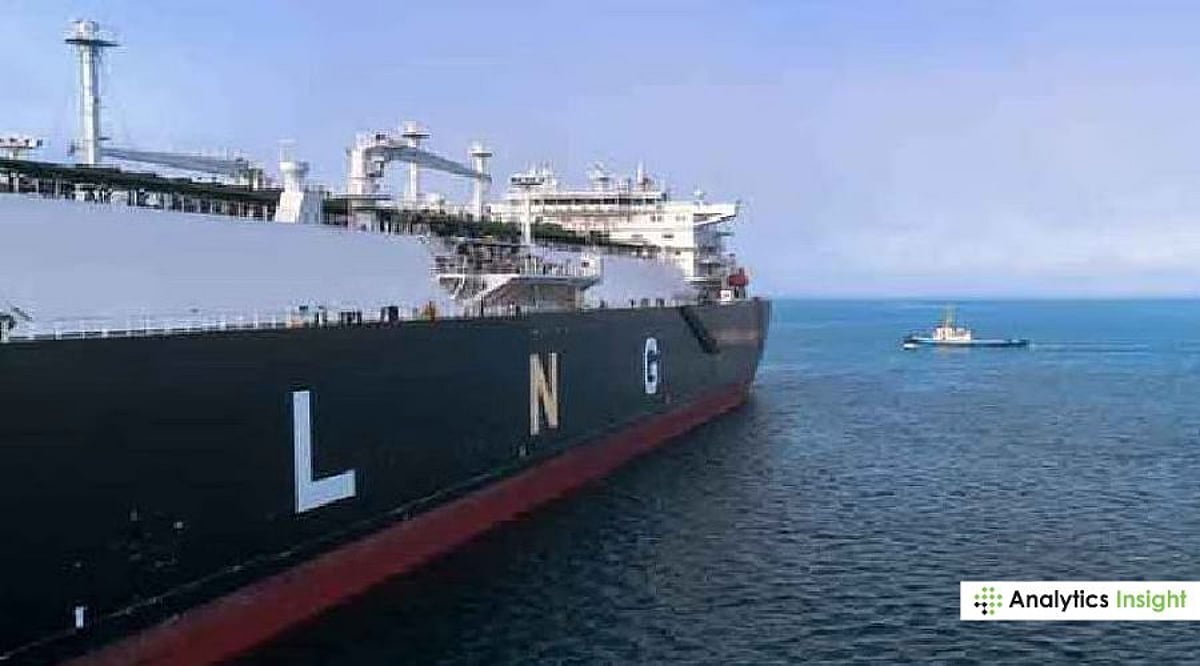
  • India Lifts Emergency Gas Restrictions as LNG Flows Through Strait of Hormuz Resume

    India Lifts Emergency Gas Restrictions as LNG Flows Through Strait of Hormuz Resume

    The Indian government has withdrawn most of the emergency natural gas regulations it imposed earlier this year, following the resumption of liquefied natural gas (LNG) shipments through the Strait of Hormuz after a ceasefire in the West Asia conflict. The Ministry of Petroleum and Natural Gas issued a notification on Saturday amending the Natural Gas (Supply Regulation) Order, 2026, removing the operational provisions that had governed how domestic and imported gas was allocated across sectors.

    What Changes Now

    With a ceasefire in place, negotiations ongoing, and maritime traffic through Hormuz restored, the ministry determined that emergency measures were no longer necessary. The notification specifically cited the resumption of sea traffic through the strait as the basis for withdrawing the priority-customer framework that had overridden existing commercial gas contracts.

    This was the last of three emergency measures introduced during the crisis to be rolled back. The government had already lifted earlier restrictions directing refiners to maximize LPG output by diverting petrochemical feedstock, and curbs on diesel sales to bulk consumers, as supply conditions eased.

    “The ongoing conflict in the Middle East that had resulted in the disruption of liquefied natural gas shipments through the Strait of Hormuz has been subject to a ceasefire, and negotiations are ongoing, as part of which, sea traffic through the Strait of Hormuz has been permitted to be resumed,” the notification stated.

    Reasons Behind the Restrictions

    The original order was issued on March 9 under the Essential Commodities Act, after fighting between the US, Israel, and Iran triggered by strikes on Iran on February 28. Tehran’s retaliation disrupted LNG shipments passing through the Strait of Hormuz. Several suppliers invoked force majeure clauses and diverted cargoes elsewhere, prompting the government to step in with sector-wise gas rationing to protect priority consumers.

    Piped natural gas for households, CNG for transport, LPG production, and pipeline operations were guaranteed full supply based on their prior six-month average consumption, while sectors like petrochemicals and select power stations absorbed the resulting cutbacks.

    Why the Strait of Hormuz Matters for India’s Energy Security

    The episode underscored how exposed India remains to disruptions along the Hormuz corridor despite years of energy diversification efforts. The country imports about 88% of its crude oil needs and roughly half of its natural gas requirement, with West Asia supplying 40-45% of its crude oil imports and nearly 65% of its LNG.

    While India was able to shift crude purchases toward other producers during the disruption, its gas imports remained far more vulnerable, since the bulk of LNG cargoes from Qatar travel through the same strait. With shipping now restored and commercial contracts in force, attention shifts to whether current ceasefire terms hold, given how quickly a fresh escalation could reintroduce the same supply risks the March order was designed to manage.

  • Crude Oil Prices Climb as US-Iran Tensions Resurface, Brent Holds Above $70

    Crude Oil Prices Climb as US-Iran Tensions Resurface, Brent Holds Above $70

    Crude oil prices rose on Monday as renewed US-Iranian conflict revived concerns over supply disruptions. Brent crude futures rose 0.67% to $72.47 a barrel, while US West Texas Intermediate (WTI) advanced 1.80% to $70.05 a barrel. The rebound followed Brent’s drop below $70 on Friday, its first move below that level since February 27, before the latest escalation involving Iran.

    The gains were modest, but traders remain focused on the risk of disruption around the Strait of Hormuz, one of the world’s key oil and liquefied natural gas shipping routes. Natural gas futures climbed 0.82% to 3.306 per MMBtu, gasoline rose 0.90% to 2.9836, and heating oil added 1.30% to 3.2499, reflecting continued concerns over energy supplies as tensions persist around the Gulf.

    US-Iran Tensions Keep Oil Market on Edge

    The jump in crude prices followed renewed military action between the US and Iran. Washington is said to have suspended talks over the conflict after an attack on commercial shipping off the coast of Iran by its military forces in the Strait of Hormuz, a move in response to Tehran’s attacks on the shipping vessels. The two sides are likely to meet in Doha on Tuesday for further discussions, according to an Axios report cited by Bloomberg. However, the weekend escalation has already slowed some oil and natural gas shipments through the region.

    The large crude carrier Kiku, which was transporting some 2 million barrels of oil, was struck and was last seen near Fujairah, a major port in the United Arab Emirates on the Gulf of Oman. US Central Command indicated that while coastal shipping traffic was continuing, some tankers reportedly abandoned attempts to exit.

    India Impact Remains Contained for Now

    Crude price remains a key macroeconomic indicator for India, since it imports around 85% of its oil requirement. A prolonged increase in crude can put pressure on the rupee, increase the import bill, and raise inflation risks. “Crude oil prices are currently trading in the $69–70 per barrel range, remaining well below the highs witnessed during the recent Middle East conflict. Although the latest flare-up in regional tensions triggered a brief bout of volatility in energy markets, crude prices have remained largely contained, providing continued relief to India’s macroeconomic outlook,” said Ponmudi R, CEO of Enrich Money.