

Tag: Technology Policy

  • Mark Zuckerberg Advocates for Open AI Development Over Restrictive Control

    Mark Zuckerberg Advocates for Open AI Development Over Restrictive Control

    Meta CEO Mark Zuckerberg has made a strong case for keeping advanced artificial intelligence open and accessible, rather than tightly controlled by a handful of companies. In a recent interview with The New York Times, he argued that open AI fosters broader participation, innovation, and competition, while excessive regulation could stifle progress.

    Zuckerberg’s remarks come amid an intensifying debate over AI safety and governance. Although he did not name specific organizations, his comments appeared to target OpenAI and Anthropic, both of which advocate for stricter safety measures and tighter control over advanced AI systems. Zuckerberg criticized what he sees as an overemphasis on fear-based narratives in the industry: “So much of the discourse from a lot of the other labs that are developing this is overwhelmingly filled with doom. There needs to be a voice or several voices that are bringing realism to this debate.”

    The Meta chief also challenged the notion of a single, all-powerful AI system that dictates what is best for everyone. He emphasized that people have diverse beliefs, goals, and needs, and that a one-size-fits-all AI model cannot fairly represent them. According to Zuckerberg, the technology sector has historically thrived when powerful tools are widely distributed, not hoarded by a select few.

    Addressing geopolitical concerns, Zuckerberg opposed efforts to block Chinese open-source AI models. He urged the United States to focus on building superior AI rather than restricting access to foreign innovations. He warned that if only a few large AI companies shape future regulations, smaller startups could face insurmountable barriers to competition.

    The interview follows Anthropic CEO Dario Amodei’s defense of stricter AI safety protocols, highlighting the growing divide between open-AI proponents and those advocating for stronger regulation. Zuckerberg’s stance reinforces Meta’s commitment to open-source AI development, positioning the company against calls for more centralized control.
  • India Unveils Rs 1.27 Lakh Crore Semicon 2.0 Program to Build Global Chip Ecosystem

    The Union Cabinet has approved Semicon 2.0, a massive Rs 1.27 lakh crore program aimed at transforming India into a global hub for semiconductor design and production. This marks the country’s largest investment yet in chip manufacturing.

    Unlike the initial phase of the India Semiconductor Mission, which focused primarily on fabrication and packaging, Semicon 2.0 expands support across the entire value chain. The program is built around six pillars: chip design, semiconductor equipment and materials, fabrication plants, packaging and testing, research and development, and talent creation.

    It also introduces incentives for companies producing critical inputs such as specialty chemicals, gases, and manufacturing equipment. The government expects international firms to manufacture chips in India while boosting domestic capabilities amid surging demand from artificial intelligence, electric vehicles, smartphones, electronics, telecommunications, and defense sectors.

    This initiative follows the successes of Semicon 1.0, which secured several chip manufacturing and packaging projects in India. Industry experts believe Semicon 2.0 will ensure supply chain resilience, create skilled jobs, and attract increased investments. As global competition for reliable chip supplies intensifies, the program anchors India’s long-term ambition to become a dominant force in the semiconductor industry.

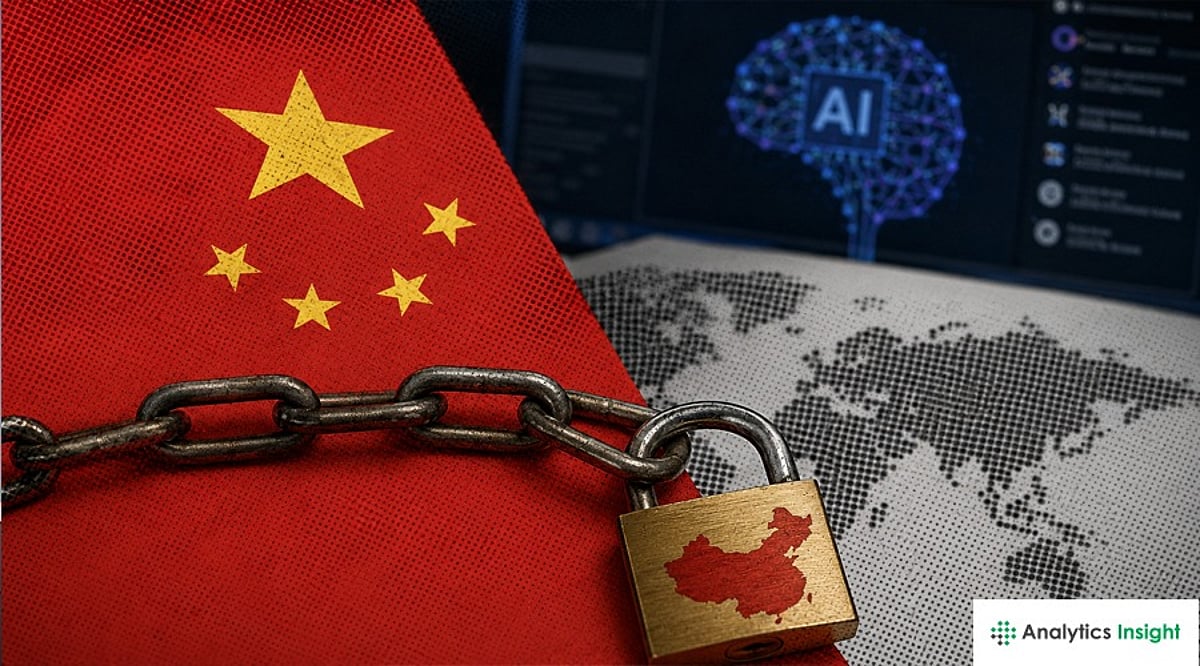
  • China Considers New Restrictions on Overseas Access to Advanced AI Models

    China Considers New Restrictions on Overseas Access to Advanced AI Models

    Beijing Reviews Frontier AI as Strategic Technology

    China is evaluating potential new controls that would restrict overseas access to its most advanced artificial intelligence models, according to sources familiar with recent government-led discussions. The talks signal that Beijing now views frontier AI systems as strategic assets rather than mere commercial software, raising the stakes for global developers and businesses that rely on Chinese AI technology.

    Over the past month, officials from China’s Ministry of Commerce and the state planning agency met with major technology firms including Alibaba, ByteDance, and Z.ai to discuss possible limits on the use of top AI models outside the country. The proposals cover both closed-source systems and open-weight models, which allow users to download and modify parts of the technology. Sources told Reuters that the plans remain under review and that no final decision has been made.

    National Security Concerns Drive the Initiative

    The Ministry of Commerce led the meetings, with one proposal suggesting that leaks or theft of proprietary AI technology could be treated as an offense under China’s national security law. Officials also discussed tightening controls on who can fund domestic AI startups, adding another layer of oversight around sensitive technology and data.

    Chinese authorities are reportedly worried about advanced US AI systems, such as Anthropic’s Mythos model, and their potential use in finding software vulnerabilities. This mirrors US concerns that foreign actors could misuse frontier AI tools for military or intelligence purposes. The talks reflect a growing mutual anxiety between the two countries over AI security.

    Scope of Restrictions Remains Unclear

    Alibaba’s Qwen, ByteDance’s Doubao, and Z.ai’s GLM-5.2 are among the Chinese models that have gained global attention for their lower costs and strong performance. However, officials indicated that any new rules may apply only to future models, leaving existing systems unaffected. The scope and timeline remain uncertain, creating ambiguity for companies that integrate Chinese AI tools into software, research, automation, and customer service.

    Legal experts in China have already discussed a tiered approach for open-source AI. Under one proposal, basic tools would require simple filing, more powerful systems would face security reviews, and the most sensitive frontier models could be limited to domestic use only.

    Global Developers Face Potential Disruption

    Chinese AI models, particularly DeepSeek’s R1, have become a low-cost alternative for developers worldwide. If Beijing proceeds with restrictions, foreign companies may lose access to affordable AI options, potentially shifting to US or European alternatives or seeking domestic solutions. Costs could rise for businesses that have come to rely on Chinese AI systems.

    For now, formal rules have not been announced. Sources said it is not clear when, or even whether, the curbs will take effect. The global AI community continues to watch closely as China’s advanced models become central to national technology policy.