Tag: Threat Detection

  • How AI Is Transforming Cybersecurity: Record Breach Costs, Behavioral Detection, and Emerging Risks to AI Systems

    How AI Is Transforming Cybersecurity: Record Breach Costs, Behavioral Detection, and Emerging Risks to AI Systems

    Artificial intelligence is reshaping cybersecurity from both sides—attackers use it to accelerate breaches, while defenders deploy it to detect anomalies faster. IBM’s 2026 Cost of a Data Breach Report reveals a record global average breach cost of USD 4.99 million, a 12% increase from the previous year. One in four malicious breaches now involves AI, marking a 56% rise from 2025. These AI-involved breaches average about USD 6 million, often leveraging deepfake impersonation or AI-enabled malware.

    Why Traditional Defenses Fall Short

    Older security tools rely on signature-based detection—matching new activity against a database of known attack patterns. This approach fails against novel malware, altered code, or stolen credentials that don’t match any existing signature. Security teams also face alert fatigue, with thousands of daily alerts that overwhelm analysts, leaving genuine threats unnoticed for hours.

    How AI Detects What Signatures Cannot

    AI-based threat detection works by learning normal behavior over time—studying logins, file access, network traffic, and device activity. Any sharp deviation from this baseline triggers an alert, a method known as anomaly detection. For example, a finance employee logging in from a new country at 3 a.m. and downloading thousands of files would raise an immediate flag, even though no signature exists for that specific action. Machine learning systems apply this same logic across email, devices, and cloud accounts.

    Key Findings from IBM’s 2026 Report

    The study analyzed 602 organizations that experienced breaches between March 2025 and February 2026. Organizations using AI and automation extensively in their security operations saw average breach costs about USD 1.93 million lower than those using none—though IBM notes this association does not prove causation. Still, one in four organizations have yet to adopt AI-powered security tools.

    AI agents are used unevenly across the security lifecycle: about half of breached organizations apply them to threat hunting, response, and containment, but only 18% use them for vulnerability management. This suggests many enterprises still deploy AI reactively, after suspicious activity emerges.

    The New Frontier: Attacks on AI Itself

    AI systems are becoming direct targets. Among breached organizations, 21% reported an incident involving an AI model or application—up from 13% a year earlier. These incidents averaged USD 5.33 million. Cloud misconfigurations and compromised connected applications, APIs, or plug-ins each appeared in 27% of AI-related breaches. Data poisoning, prompt injection, and model inversion followed at 24–26%. IBM’s analysis warns that weaknesses around a model can matter as much as attacks on the model itself.

    Access controls are a major vulnerability: 92% of organizations with an AI-related breach lacked proper AI access controls, and only 40% of all organizations report using such controls on AI models and data.

    The India Scenario

    IBM’s India data mirrors global trends. The average breach cost reached Rs. 25.5 crore, up 15.9% from Rs. 22 crore. AI-generated attacks accounted for 26% of malicious breaches in India. Only 32% of Indian organizations use AI and security automation extensively; those without such tools averaged Rs. 31.6 crore per breach, compared to Rs. 21.3 crore for extensive users.

    What Security Teams Should Do

    Effective AI security starts with clean, high-quality log data—models learn from what they receive. Phishing-resistant authentication adds a strong layer of identity control. Teams must closely monitor APIs and cloud configurations around AI workloads. Models also produce false positives, so humans should retain control over containment decisions.

    A useful benchmark is the time between first malicious activity and first actionable alert, measured using production data. This metric often reveals more than vendor accuracy scores from controlled lab environments. When paired with clear controls and human review, AI can accelerate response without sacrificing accountability.

    Final Thought

    Every new AI agent also represents a new identity with access to data and systems. IBM’s X-Force analysis found that fewer than half of organizations actively secure these non-human identities. Establishing proper access controls and accountability for AI agents is the next critical task for security teams.


  • AI-Driven Threats Force Companies to Overhaul Their Network Defense Strategies

    AI-Driven Threats Force Companies to Overhaul Their Network Defense Strategies

    Artificial intelligence is transforming cybersecurity from both sides. Organizations now leverage AI to monitor activity, automate repetitive security tasks, and uncover patterns that are nearly impossible for humans to detect manually. At the same time, attackers harness the same technology to operate faster and at a larger scale. This dual impact is reshaping what businesses must defend, how quickly they need to react, and what skills their security teams require. Merely adding AI tools to an existing security framework is no longer enough; the entire strategy itself needs a fundamental redesign.

    Security Operations Must Keep Pace with Automated Threats

    As attacks become more rapid and automated, organizations need security operations that can identify unusual behavior without relying solely on manual review. Many companies now turn to managed cybersecurity services to provide continuous monitoring, threat detection, and incident response expertise that internal teams may struggle to maintain around the clock. This external support becomes especially valuable when internal IT departments are already stretched thin managing cloud systems, user accounts, software, devices, and daily technical issues. The ultimate objective is to establish enough visibility and response capability so that suspicious activity never sits unnoticed in a queue.

    AI heightens the need for this capacity because attackers can use automation to conduct reconnaissance, test stolen credentials, generate persuasive phishing messages, and adjust their tactics in real time. No longer does an attacker have to manually execute every step of an intrusion to affect thousands of targets. Defenders must deploy systems that can process vast volumes of activity and help analysts prioritize what truly requires immediate action. Human judgment remains indispensable, but people increasingly depend on technology to filter and highlight the most critical signals.

    Phishing Is Becoming Harder to Spot by Appearance Alone

    For years, employees were taught to detect phishing by looking for awkward grammar, spelling mistakes, odd formatting, or phrasing that seemed off. Generative AI erodes many of those clues because attackers can now craft polished, professional emails tailored to a specific audience in seconds. They can also customize messages to target a particular role, industry, or situation using data gathered from public sources. A suspicious email may now look every bit as legitimate as a routine corporate communication.

    This shift means organizations must move beyond training workers to recognize poorly written scams. Employees should learn to evaluate requests based on context, urgency, unusual payment instructions, unexpected credential demands, and changes to established procedures. Companies can also reduce reliance on human recognition by enforcing stronger authentication and verification steps for sensitive actions. An employee should never have to decide alone whether a convincing message from an executive requesting a major financial transfer is genuine.

    Identity Is Becoming More Central Than the Traditional Network Perimeter

    Companies have long concentrated on securing the boundary between their internal network and the outside world. That boundary has become increasingly blurred as employees use cloud applications, remote devices, mobile technology, third-party platforms, and systems that never reside inside a conventional corporate network. Attackers recognize that compromising a legitimate user account may be far easier than breaking through a technical barrier. Consequently, identity has emerged as one of the most valuable targets in modern cybersecurity.

    AI amplifies identity-based attacks by helping cybercriminals generate convincing social-engineering messages or process stolen data at scale. Defensive strategies therefore now emphasize multifactor authentication, privileged-access controls, device trust, unusual-login detection, and limiting what each account can access. Companies should also routinely audit whether users still hold permissions they no longer need as roles evolve. A compromised account becomes far less damaging if it cannot reach systems that are not essential to its normal function.

    Security Teams Need Help Distinguishing Signals from Noise

    Modern organizations generate an overwhelming volume of security data. Firewalls, cloud platforms, identity systems, applications, endpoints, email servers, and countless other tools each produce alerts. The challenge is no longer about collecting more information; it is about understanding which combinations of activities indicate something genuinely suspicious.

    AI can assist by correlating events and highlighting patterns that might be overlooked when each alert is examined in isolation. A login from an unfamiliar location may not be alarming on its own, and a large file download could have a plausible explanation. But when those events occur together on a privileged account shortly after a suspicious authentication attempt, the situation warrants immediate investigation. Context transforms individual datapoints into actionable insight.

    However, organizations should remain cautious about assuming AI can eliminate false positives or make security decisions without human oversight. Automated systems can misinterpret legitimate behavior, and attackers may deliberately try to evade or manipulate detection mechanisms. The most effective approach combines AI-driven analysis with skilled human judgment to create a resilient and adaptive defense.

  • New AI Predictive Model Aims to Shift Cybersecurity from Reactive to Proactive for Critical Infrastructure

    New AI Predictive Model Aims to Shift Cybersecurity from Reactive to Proactive for Critical Infrastructure

    For most public institutions, cybersecurity follows a predictable sequence: an incident occurs, a tool detects it, an alert is generated, and a team responds. According to Dr. Naga Venkata Aswini Pavan Kumar Inguva, a researcher and senior software developer at a U.S. state government agency, that order fundamentally puts organizations behind attackers from the start.

    Inguva argues that while this reactive approach may work for private companies, the stakes are far higher for public utilities such as water systems, hospitals, transit authorities, and power grids. In these sectors, a breach doesn’t just cost data or money; it disrupts essential services that people rely on with no alternative. He believes cybersecurity must move beyond rapid response toward anticipation.

    To address this, Inguva developed a conceptual framework for AI-driven predictive cyber threat intelligence. Unlike traditional detection systems that look for known attack patterns, his framework emphasizes contextual analysis—understanding the sequence and relationships between events to predict where an attack is heading. The research, which is a structured foundation rather than a deployed product, focuses on enterprise and critical infrastructure environments. It analyzes which machine learning techniques are genuinely applicable to threat prediction and provides recommendations for implementation.

    Public institutions, Inguva notes, present the hardest case: they often run aging technology, operate under tight budgets, and carry obligations private firms don’t. Their security spending tends to focus on monitoring, which produces volume but not foresight. His prescription is for a proactive, intelligence-driven, and context-aware posture paired with secure architecture, continuous monitoring, employee awareness, and proactive risk management.

    Inguva emphasizes that this is not solely a technical challenge. Protecting critical infrastructure requires shared responsibility across researchers, industry, and policymakers. His broader research record includes published work on generative adversarial networks, deep learning for threat detection, and machine learning for attack classification, some of which earned best paper awards. He is also a published author and co-founder of Thaapasi Smart Infratech Pvt. Ltd.

    Looking ahead, Inguva expects advances in artificial intelligence, graph analytics, threat intelligence, and automation to help organizations recognize attack progression earlier and prioritize genuine threats. But he stresses that these tools will not eliminate the need for skilled personnel, sound governance, and continuous learning.

    The core idea is a shift in sequence: a system built to react will always answer the attacker’s question first. Changing that order, Inguva argues, is the work worth doing.

  • Top AI-Powered Cybersecurity Solutions Every Business Should Implement

    Top AI-Powered Cybersecurity Solutions Every Business Should Implement

    Cyber threats are evolving rapidly, and companies must adopt advanced defenses to stay protected. Artificial intelligence (AI) has become a cornerstone of modern cybersecurity, enabling real-time threat detection, automated response, and proactive risk management. Below are the essential AI-powered cybersecurity tools that every organization should consider integrating into their security stack.

    CrowdStrike Falcon

    Uses AI to detect, prevent, and respond to cyber threats in real time across endpoints, effectively reducing security risks.

    Microsoft Defender XDR

    Combines AI-driven threat detection with automated investigation and response across devices, identities, email, cloud applications, and enterprise networks.

    Darktrace

    Learns normal network behavior using AI to identify unusual activity, insider threats, ransomware, and emerging cyberattacks before significant damage occurs.

    Palo Alto Cortex XSIAM

    Automates security operations with AI by correlating alerts, detecting threats, investigating incidents, and accelerating response across enterprise environments.

    SentinelOne Singularity

    Delivers autonomous endpoint protection using AI to identify malicious behavior, stop attacks instantly, and simplify enterprise security management processes.

    Google Security Operations

    Uses AI-powered analytics to detect threats, investigate incidents, correlate security data, and improve enterprise security operations with greater efficiency.

    Cisco XDR

    Integrates security data from multiple sources, applies AI-powered analytics, and automates threat detection, investigation, and coordinated incident response across organizations.

    IBM QRadar Suite

    Combines AI-assisted threat intelligence, security analytics, and automated workflows to identify vulnerabilities and accelerate enterprise incident response capabilities.

    Sophos Intercept X

    Uses deep learning and behavioral AI to block malware, ransomware, exploit attacks, and suspicious activities before they compromise business systems.

  • Sophos Fusion: How AI-Native Cybersecurity Unifies Threat Detection and Response

    Sophos Fusion: How AI-Native Cybersecurity Unifies Threat Detection and Response

    Sophos has launched Sophos Fusion, an AI-native cybersecurity platform designed to unify threat detection, prevention, and response across enterprise environments. The system aims to help organizations defend against increasingly sophisticated AI-powered cyberattacks through coordinated, real-time security operations.

    As cybercriminals increasingly use artificial intelligence to automate phishing, malware creation, and ransomware attacks, cybersecurity companies are rethinking how digital defenses should work.

    A Unified Platform Instead of Isolated Security Tools

    Typically, enterprise cybersecurity utilizes separate tools for endpoint security, firewalls, email, cloud, and identity solutions. Sophos claims that such a dispersed model creates gaps that are increasingly attractive to hackers.

    Fusion unites all security components in a single platform using artificial intelligence to share threats detected throughout all the systems. The company states that this platform incorporates adaptive controls, machine learning, automation, and real-time intelligence from Sophos X-Ops – Sophos’s threat intelligence team. It means that suspicious activity detected at one level of the infrastructure will instantly increase protection across other parts of the network.

    Moreover, the company stressed that the platform is compatible not only with the products from Sophos but with third-party security software as well.

    AI is Becoming a Security Teammate, Not a Replacement

    Sophos Fusion’s distinctive feature is its focus on the combination of AI and human intelligence. Even though automation takes care of simple tasks, including anomaly detection, alert prioritization, and response initiation, security analysts still deal with complicated investigations and decision-making processes.

    According to the latest operations data from Sophos, the use of AI in MDR cases allows dealing with a considerable percentage of MDR cases, whereas human experts manage high-risk situations. The combination is intended to help minimize alert fatigue – one of the main problems for SOCs in today’s world.

    This becomes even more relevant in times of automated and fast-paced cyber attacks. AI-driven phishing, credential theft, and ransomware become increasingly challenging for enterprises to monitor.

    The Bigger Shift: Cybersecurity in AI-Native Era

    Sophos’ news shows how things are evolving in the field of cybersecurity overall. It is not enough now for security vendors just to include AI into their solutions; they need to build completely new platforms based on AI-assisted decisions.

    While older solutions could only respond once some activity raised suspicion, the AI native platforms constantly monitor behavior, connect different sources, and make recommendations and decisions on defending from any threat instantly. It allows minimizing the time available to an attacker for further movement within the corporate network.

    Experts think that this evolution is caused by the same technological race that changes other industries. With the help of generative AI, attackers can create believable emails to deceive users, develop malware, and identify vulnerabilities faster than ever before.

    “As AI increases the speed, scale and complexity of attacks, organizations need a modern, connected, intelligent and adaptive defense,” said Chief Executive Joe Levy. “Sophos Fusion is built as a defense system optimized for human-AI workflows. We bring the most complete solution to a new category, a timely advancement demanded by the AI era.”

    Security Platforms are Becoming Smart Decision Systems

    The release of Sophos Fusion is another indication of a significant shift in cybersecurity approaches within the corporate world. Instead of relying solely on separate pieces of software such as anti-virus or firewall protection, companies are moving towards adopting a platform that can make well-informed, integrated decisions about their security.

    Within enterprises, this translates into a transition of cybersecurity from a set of isolated solutions to an ecosystem of integrated defenses where artificial intelligence learns to adapt to new challenges, and at the same time, expert analysts maintain control over crucial situations.

    With further development of artificial intelligence both in terms of offense and defense in the cyber realm, Sophos Fusion demonstrates how cybersecurity might look in the future.

  • Top Endpoint Protection Platforms: A Comprehensive Comparison for 2025

    Top Endpoint Protection Platforms: A Comprehensive Comparison for 2025

    Endpoint protection platforms (EPP) have become essential for organizations defending against sophisticated cyber threats. Modern solutions combine advanced detection, automated response, and seamless integration to safeguard endpoints across distributed environments. Below is a comparison of leading platforms that offer robust protection, visibility, and operational efficiency.

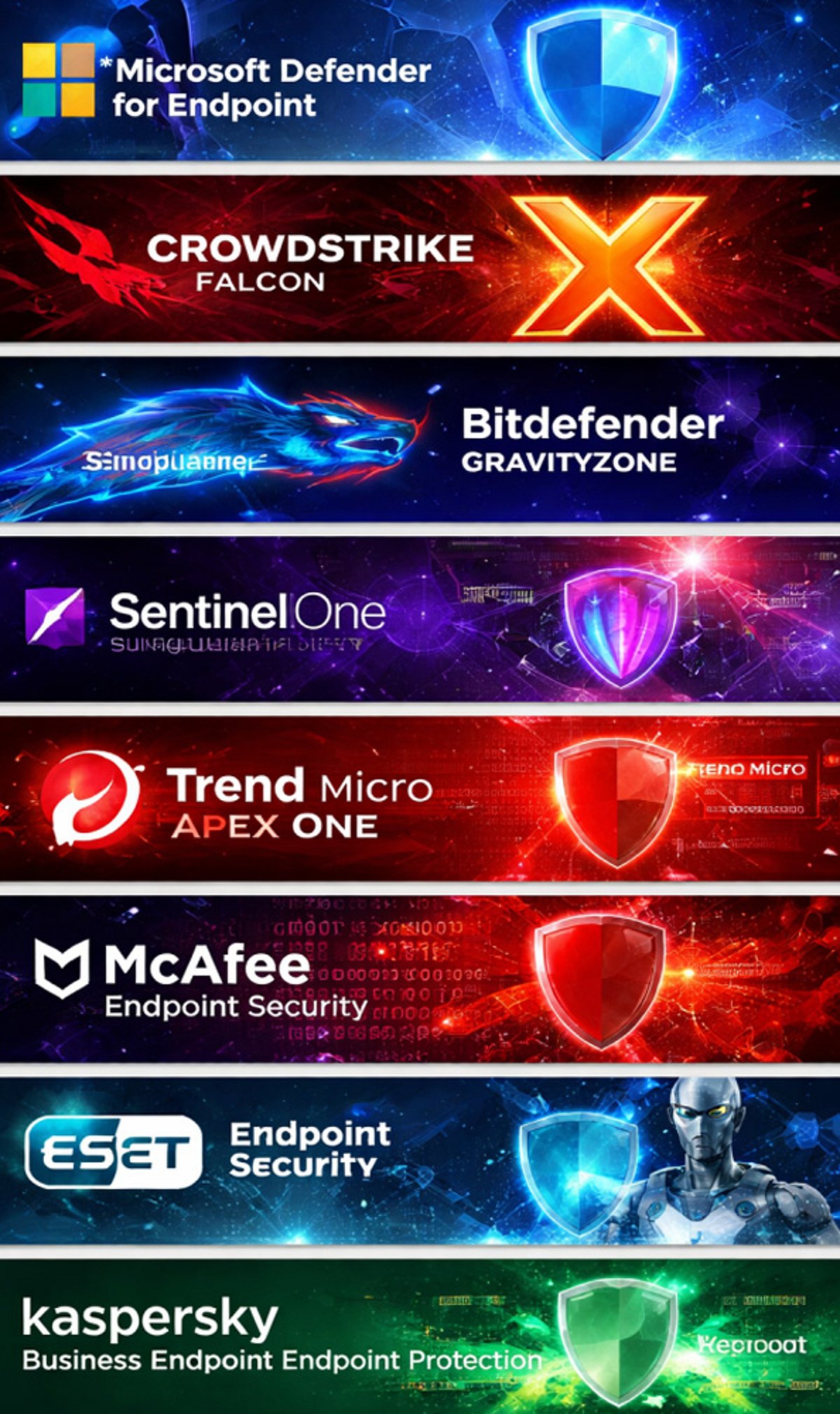
    Microsoft Defender for Endpoint

    Delivers AI-powered threat detection, endpoint visibility, automated investigation, ransomware protection, and seamless integration across Microsoft enterprise environments worldwide.

    CrowdStrike Falcon

    Uses cloud-native architecture, behavioral analytics, real-time threat intelligence, and lightweight agents to stop sophisticated cyberattacks across distributed enterprise endpoints.

    SentinelOne Singularity

    Combines autonomous AI detection, endpoint protection, threat hunting, rollback capabilities, and automated remediation to minimize cybersecurity incidents and operational workload.

    Sophos Intercept X

    Protects endpoints using deep learning, anti-ransomware technology, exploit prevention, synchronized security, and centralized management for organizations of every size.

    Trend Micro Apex One

    Provides advanced malware defense, vulnerability protection, behavioral monitoring, application control, and comprehensive endpoint visibility to reduce evolving cyber risks effectively.

    Bitdefender GravityZone

    Delivers machine learning-powered prevention, endpoint detection, risk analytics, patch management, and centralized administration for strong enterprise cybersecurity protection globally.

    VMware Carbon Black

    Offers continuous endpoint monitoring, threat hunting, incident response, behavioral analytics, and cloud-based security to defend against advanced persistent threats effectively.

    ESET PROTECT Enterprise

    Combines multilayered malware defense, endpoint detection, encryption, cloud management, and proactive threat intelligence for reliable enterprise endpoint security operations.

    Palo Alto Networks Cortex XDR

    Extends endpoint protection with AI-driven detection, cross-domain analytics, automated response, and unified security operations for complex enterprise infrastructures efficiently.

    Choosing the right endpoint protection platform depends on your organization’s specific needs, existing infrastructure, and threat landscape. Evaluate these solutions based on detection capabilities, ease of management, and integration requirements to strengthen your security posture.