Tag: Tokenization

  • Crypto Investment Strategies: From Bitcoin HODLing to DeFi, ETFs and Tokenized Assets

    Crypto Investment Strategies: From Bitcoin HODLing to DeFi, ETFs and Tokenized Assets

    Why crypto investing looks different today

    Crypto investing has moved well beyond the early model of buying Bitcoin and safeguarding private keys. Today’s market includes exchange-traded funds, staking, decentralized finance, derivatives and tokenized assets. That shift reflects technological progress, new financial infrastructure and growing institutional participation. Investors can now choose between direct ownership, yield-generating strategies and regulated investment products.

    The first playbook: buy, hold and self-custody

    In Bitcoin’s early years, investment options were limited. Investors typically bought BTC through exchanges or peer-to-peer markets and then moved it into personal wallets. Long-term holding, later widely known as HODLing, became one of crypto’s defining strategies. Investors were mainly betting on Bitcoin’s scarcity and future adoption rather than expecting income from the asset. Self-custody was therefore a central part of early crypto investment strategy.

    Altcoins and the diversification lesson

    Ethereum and other blockchain networks widened the investment universe beyond Bitcoin. Ethereum introduced programmable smart contracts, giving investors exposure to decentralized applications and blockchain infrastructure. The 2017 ICO boom then brought thousands of new tokens to market. Failed projects and severe corrections showed that spreading capital across cryptocurrencies does not automatically reduce risk when assets share similar market drivers.

    DeFi and staking add yield, along with new risks

    Decentralized finance changed how investors could use their crypto holdings. Lending, borrowing, liquidity provision and yield farming became accessible strategies. Proof-of-stake networks also expanded staking, allowing holders to earn rewards by participating in blockchain security. These approaches introduced potential income but also added risks tied to smart contracts, liquidation, validators, token incentives and protocol failures.

    ETFs bring crypto into traditional brokerage accounts

    Exchange-traded products marked another major shift by bringing crypto exposure into conventional brokerage accounts. By 2026, US-listed products extended beyond Bitcoin. SEC filings show the Grayscale Solana Staking ETF supports in-kind creations and redemptions, while its updated trust structure provides for distributions derived from staking rewards. The Bitwise Solana Staking ETF similarly seeks SOL exposure while generating additional SOL through staking. These products illustrate how traditional investment vehicles are incorporating features once associated with on-chain investing.

    Tokenization connects blockchains and traditional assets

    The latest phase increasingly links blockchain infrastructure with traditional financial assets. Solana currently indexes approximately USD 7 billion in tokenized value across nearly 2,700 assets, including equities, ETFs, Treasuries and commodities, with roughly USD 348 million in 24-hour real-world asset volume. More broadly, Bitwise reported that tokenized real-world assets reached USD 32.89 billion during 2026 after increasing 50.3% year-to-date in its Q2 review. Tokenization is also becoming more integrated with DeFi, where real-world assets can potentially serve as collateral or interact with lending and trading protocols.

    Data-driven portfolio management takes hold

    Modern crypto investors increasingly monitor ETF flows, derivatives positioning, on-chain cost bases, liquidity and macroeconomic conditions alongside traditional technical indicators. This creates strategies that combine blockchain-specific data with techniques already familiar to conventional financial markets.

    What investors should keep in mind

    Crypto investment strategies have evolved from straightforward Bitcoin holding into a multi-layered market spanning diversification, staking, DeFi, ETFs and tokenization. More options give investors greater flexibility, but they also introduce custody, liquidity, smart-contract and market risks that require careful research and risk management. This article is for informational purposes only and does not constitute investment advice.

    FAQ

    How did early crypto investment strategies work?

    Early crypto investing largely involved buying Bitcoin through exchanges or peer-to-peer markets and holding it in personal wallets. Investors generally focused on Bitcoin’s scarcity and long-term adoption rather than earning income from their holdings.

    How did Ethereum change crypto investing?

    Ethereum introduced programmable smart contracts, expanding investment opportunities beyond digital money. Investors could gain exposure to decentralized applications, tokens and eventually DeFi protocols, creating new strategies involving lending, liquidity provision and other blockchain-based financial activities.

    What role does staking play in modern crypto investing?

    Staking allows holders of proof-of-stake cryptocurrencies to participate in network security while potentially earning rewards. It provides an alternative to simply holding tokens, although investors must consider validator, liquidity, slashing and protocol-related risks.

    How have crypto ETFs changed investment strategies?

    Crypto ETFs allow eligible investors to gain digital-asset exposure through traditional brokerage infrastructure without directly managing wallets and private keys. By 2026, some products also incorporated features such as staking and in-kind creations and redemptions.

    How is tokenization changing crypto investment strategies?

    Tokenization brings traditional assets such as equities, ETFs, Treasuries and funds onto blockchain infrastructure. This increasingly connects conventional finance with crypto markets and can enable programmable transfers, on-chain trading and integration with decentralized-finance applications.


  • How XRP Ledger’s Native AMM and Order Books Could Power Institutional Tokenized Markets

    How XRP Ledger’s Native AMM and Order Books Could Power Institutional Tokenized Markets

    Why XRP Ledger Is Building for Tokenized Finance

    The XRP Ledger (XRPL) is increasingly positioning itself as a foundation for tokenized financial assets. Unlike networks that depend heavily on external smart contracts to run decentralized exchanges, XRPL embeds both an order-book DEX and an Automated Market Maker (AMM) directly into the protocol. This native integration of trading, token issuance, and permissioned access gives institutions a distinct set of tools for building compliant tokenized markets.

    Order Books and AMMs: Two Liquidity Engines on One Ledger

    XRPL’s DEX lets participants create offers that specify the exact assets and prices they are willing to trade. In parallel, the protocol’s AMMs supply liquidity through pooled reserves, with exchange rates set algorithmically. When a trade is routed through the open DEX, it can tap order-book offers, AMM liquidity, or both to find the most efficient execution path.

    Liquidity providers who deposit into an AMM receive LP tokens representing their share of the pool and earn income from trading fees. It is also worth noting that on XRPL, only one AMM is permitted for any given asset pair, a design choice that simplifies the pool landscape.

    Permissioned DEX: Adding an Institutional Gate

    Institutional markets often require strict control over who can trade with whom. XRPL’s Permissioned DEX approach uses permissioned domains and credentials to create controlled trading environments. A domain acts like an allow-list, while credentials prove that a participant meets the requirements needed to access restricted trading.

    Trades in this permissioned setting are matched only with offers in the same domain. Hybrid offers offer more flexibility by interacting with both a designated permissioned DEX and the open DEX. However, one important limitation is that permissioned trades cannot directly consume AMM liquidity. That creates a potential trade-off between regulatory compliance and unfettered liquidity access.

    Multi-Purpose Tokens: Built-In Compliance Controls

    XRPL’s Multi-Purpose Tokens (MPTs) are designed for fungible assets that need institutional-grade controls. MPTs can support supply caps, transfer fees, holder authorization, freezing, and clawbacks—capabilities that map naturally to tokenized funds, debt, or other regulated assets where issuers need meaningful oversight of ownership and transfers.

    Native MPT trading on the DEX is still being developed under the MPTokensV2 proposal. If implemented, it would extend order-book offers, cross-currency payments, and AMM support to MPT-based assets.

    Institutional Pilots Are Already Underway

    In February 2026, Aviva Investors and Ripple announced plans to explore tokenizing traditional fund structures on XRPL. The initiative marks Aviva Investors’ first foray into blockchain-based fund tokenization and signals growing interest in XRPL as a settlement layer for regulated assets.

    Technology Alone Won’t Build Institutional Markets

    Protocol features are only part of the equation. Tokenized assets still require regulated issuers, qualified custody providers, professional market makers, reliable pricing sources, clear legal frameworks, and enough buyers and sellers to sustain deep secondary-market liquidity.

    XRPL advertises settlement in roughly three to five seconds and transaction costs of fractions of a cent. But institutional adoption will ultimately hinge on whether compliant markets using those rails can achieve real depth.

    Why This Matters

    Institutional tokenization is not just about putting traditional assets on-chain. XRPL’s combination of order books, AMMs, permissioned trading, and token controls could provide the connective tissue between compliant issuance and secondary-market liquidity—making tokenized financial products more practical for institutional participants.

    The Bottom Line

    XRP Ledger brings together native order books, AMMs, credentials, and tokenization controls in one settlement environment. The tools are compelling, but their success depends on liquidity, issuer adoption, regulatory clarity, custody standards, and how smoothly permissioned and open-market infrastructure integrate.

  • Digital Wallets vs. Physical Cards: 7 Security Advantages You Need to Know

    Digital Wallets vs. Physical Cards: 7 Security Advantages You Need to Know

    Digital wallets are increasingly replacing physical cards for everyday payments, offering a range of security benefits that go beyond traditional methods. Here are seven key security advantages of using digital wallets over physical cards.

    1. Biometric Authentication Adds a Layer of Protection

    Digital wallets require authentication—such as Face ID, Touch ID, or a device passcode—before any payment can be made. This prevents unauthorized transactions even if someone gains access to your phone. For example, Apple Wallet mandates device authentication before using stored payment cards, providing an extra shield that many physical card transactions lack.

    2. Tokenization Protects Your Card Details

    Instead of sharing your actual card number with merchants, digital wallets use tokenization. A unique payment credential represents your card, and transactions include additional security codes. This makes stolen payment information far less valuable to attackers than an exposed physical card number, reducing the impact of potential data breaches.

    3. Reduced Risk of Card Skimming

    Digital wallets minimize exposure to traditional card skimming because you don’t need to insert a physical card into a payment terminal. Skimmers are designed to capture card data from physical transactions. Digital payments rely on tokenized credentials, although users should still be aware that fraudulent terminals can pose separate risks.

    4. Lost Phone Protection

    Losing your smartphone doesn’t automatically mean losing access to your payment cards. Device authentication prevents unauthorized use, and services like Apple Find My and Google Find My Device can help locate your phone or remotely disable wallet data. These controls give you additional options after a device is lost or stolen.

    5. Physical Cards Still Have Security Features

    Physical cards aren’t inherently unsafe. Modern chip and contactless payments also use tokenization and transaction-specific security mechanisms. However, physical cards can still be used through less secure magnetic-stripe systems in some situations. Digital wallets add another layer by keeping the physical card away from potentially compromised terminals.

    6. Digital Wallets Add Convenience

    Digital wallets let you carry payment cards on your smartphone or smartwatch instead of multiple physical cards. They also support payments within apps and online services. This convenience reduces dependence on a physical wallet while allowing you to authenticate transactions using the security controls built into your device.

    7. Security Still Depends on the Device

    While digital wallets offer strong security, users must still protect their devices. A strong passcode, updated software, and biometric authentication help reduce unauthorized access. Activate device-finding features and respond quickly if your smartphone is lost, stolen, or suspected of being compromised.

    Digital wallets provide robust security enhancements over physical cards, but they work best when combined with good device hygiene. By understanding these benefits, you can make informed choices about how to protect your payment information.

  • Ethereum Price Analysis: Can Institutional Demand and DeFi Strength Push ETH Past $2,570?

    Ethereum Price Analysis: Can Institutional Demand and DeFi Strength Push ETH Past $2,570?

    Ethereum (ETH) is attempting to extend its recovery as institutional adoption, exchange-traded funds (ETFs), staking, and tokenization strengthen its market narrative. However, ETH’s ability to break higher increasingly depends on whether institutional infrastructure translates into sustained capital flows and on-chain activity.

    ETH trades at USD 2,478.08 on September 18 after recovering from a sharp two-day pullback. Traders are watching roughly USD 2,570 as an important resistance area, with a sustained move above it potentially opening the way toward higher technical levels.

    ETF Flows Turn Volatile

    Institutional ETF demand strengthened during parts of 2026, but the latest data show that flows are not consistently positive. Ethereum ETFs attracted USD 1.75 billion in August, their strongest month since August 2025. Momentum has since reversed. US spot Ethereum ETFs recorded USD 39.24 million in net outflows on September 17, marking a third consecutive session of withdrawals. Combined outflows over those three trading days reached approximately USD 405.4 million, according to SoSoValue. The reversal shows why institutional interest alone cannot guarantee a sustained ETH rally.

    Ethereum Maintains Deep On-Chain Liquidity

    Ethereum retains a major structural advantage in decentralized finance (DeFi). According to DeFiLlama, USD 50.28 billion in Ethereum DeFi total value is locked. The ecosystem also supports about USD 172 billion in stablecoin value across mainnet and Layer 2 networks and approximately USD 21 billion in real-world assets. Ethereum’s Layer 2 ecosystem includes 102 live networks with around USD 37.5 billion in average daily TVL. These figures matter as institutional blockchain adoption increasingly involves stablecoin settlement, tokenized securities, and financial applications rather than cryptocurrency trading alone.

    Tokenization Gains Regulatory Momentum

    Institutional tokenization received another boost on September 17 when the US Securities and Exchange Commission (SEC) announced a five-year exemption framework for qualifying tokenized-stock trading platforms and liquidity providers. According to Reuters, eligible tokenized stocks must provide shareholders the same economic and governance rights as conventional shares, while synthetic tokens merely tracking stock prices are excluded. Ethereum is positioned to participate, as its institutional portal reports that 37% of on-chain real-world assets (RWAs) are deployed across Ethereum and its Layer 2 ecosystem.

    What Could Drive ETH Higher?

    A sustainable breakout would likely require several factors to align: renewed ETF inflows, resilient DeFi liquidity, increasing stablecoin and RWA activity, and supportive broader risk sentiment. Conversely, persistent ETF withdrawals or tighter financial conditions could limit upside even if institutional infrastructure continues expanding.

    Final Thoughts

    Ethereum’s institutional foundation is becoming broader, particularly across DeFi, stablecoins, and tokenization. However, recent ETF outflows show infrastructure growth and investment demand can diverge. ETH still needs sustained capital inflows and network usage to convert institutional interest into durable price momentum.

    FAQs

    1. What price is Ethereum trading at?
    Ethereum was trading around USD 2,478.08 on September 18. ETH has recovered from its recent pullback, with traders closely monitoring the USD 2,570 region as an important near-term resistance level.

    2. What is the key resistance level for Ethereum?
    The USD 2,570 area represents an important technical resistance zone. A sustained move above this level could improve ETH’s technical structure, although broader market conditions and institutional capital flows would remain important.

    3. Are institutional investors still buying Ethereum ETFs?
    ETF demand has become more volatile. Ethereum ETFs attracted around USD 1.75 billion in August, but US spot ETH ETFs subsequently recorded three consecutive sessions of outflows totaling approximately USD 405.4 million through September 17.

    4. How large is Ethereum’s DeFi ecosystem?
    Ethereum currently holds approximately USD 50.28 billion in DeFi total value locked, according to DeFiLlama data cited in the article. Its ecosystem also supports substantial stablecoin and tokenized real-world asset activity.

    5. What could help Ethereum break higher?
    A stronger ETH move could be supported by renewed ETF inflows, resilient DeFi liquidity, expanding stablecoin usage, and increased tokenized-asset activity. Conversely, persistent institutional outflows and tighter financial conditions could restrict upside momentum.

    Disclaimer: Analytics Insight does not provide financial advice or guidance on cryptocurrencies and stocks. Also note that the cryptocurrencies mentioned/listed on the website could potentially be risky, i.e., designed to induce you to invest financial resources that may be lost forever and not be recoverable once investments are made. This article is provided for informational purposes and does not constitute investment advice. You are responsible for conducting your own research (DYOR) before making any investments. Read more about the financial risks involved here.

  • Ethereum Price Outlook: Institutional Adoption Grows, but ETF Outflows Temper Breakout Hopes

    Ethereum Price Outlook: Institutional Adoption Grows, but ETF Outflows Temper Breakout Hopes

    Ethereum (ETH) is attempting to extend its recovery as institutional adoption, exchange-traded funds (ETFs), staking, and tokenization strengthen its market narrative. However, ETH’s ability to break higher increasingly depends on whether institutional infrastructure translates into sustained capital flows and on-chain activity.

    Current Price Action and Key Resistance

    ETH trades at USD 2,478.08 on September 18 after recovering from a sharp two-day pullback. Traders are watching roughly USD 2,570 as an important resistance area, with a sustained move above it potentially opening the way toward higher technical levels.

    ETF Flows Turn Volatile

    Institutional ETF demand strengthened during parts of 2026, but the latest data show that flows are not consistently positive. Ethereum ETFs attracted USD 1.75 billion in August, their strongest month since August 2025.

    Momentum has since reversed. US spot Ethereum ETFs recorded USD 39.24 million in net outflows on September 17, marking a third consecutive session of withdrawals. Combined outflows over those three trading days reached approximately USD 405.4 million, according to SoSoValue. The reversal shows why institutional interest alone cannot guarantee a sustained ETH rally.

    Ethereum Maintains Deep On-Chain Liquidity

    Ethereum retains a major structural advantage in decentralized finance (DeFi). According to DeFiLlama, USD 50.28 billion in Ethereum DeFi total value is locked. The ecosystem also supports about USD 172 billion in stablecoin value across mainnet and Layer 2 networks and approximately USD 21 billion in real-world assets. Ethereum’s Layer 2 ecosystem includes 102 live networks with around USD 37.5 billion in average daily TVL. These figures matter as institutional blockchain adoption increasingly involves stablecoin settlement, tokenized securities, and financial applications rather than cryptocurrency trading alone.

    Tokenization Gains Regulatory Momentum

    Institutional tokenization received another boost on September 17 when the US Securities and Exchange Commission (SEC) announced a five-year exemption framework for qualifying tokenized-stock trading platforms and liquidity providers. According to Reuters, eligible tokenized stocks must provide shareholders the same economic and governance rights as conventional shares, while synthetic tokens merely tracking stock prices are excluded. Ethereum is positioned to participate, as its institutional portal reports that 37% of on-chain real-world assets (RWAs) are deployed across Ethereum and its Layer 2 ecosystem.

    What Could Drive ETH Higher?

    A sustainable breakout would likely require several factors to align: renewed ETF inflows, resilient DeFi liquidity, increasing stablecoin and RWA activity, and supportive broader risk sentiment. Conversely, persistent ETF withdrawals or tighter financial conditions could limit upside even if institutional infrastructure continues expanding.

    Final Thoughts

    Ethereum’s institutional foundation is becoming broader, particularly across DeFi, stablecoins, and tokenization. However, recent ETF outflows show infrastructure growth and investment demand can diverge. ETH still needs sustained capital inflows and network usage to convert institutional interest into durable price momentum.

  • Tokenization Goes Mainstream: 7 Real-World Assets Moving to the Blockchain

    Tokenization Goes Mainstream: 7 Real-World Assets Moving to the Blockchain

    Blockchain-based tokenization is no longer an experimental niche. From real estate to carbon credits, real-world assets are being converted into digital tokens, unlocking liquidity, transparency, and programmability. Here are seven asset classes leading the shift.

    1. Real Estate

    Property tokenization divides ownership into smaller digital units recorded on blockchain networks. This model makes traditionally illiquid real estate more accessible, enabling programmable ownership, automated transfers, and faster settlement. Tokenized property can represent residential, commercial, or infrastructure assets, depending on platform rules and legal frameworks.

    2. Government Bonds

    Government securities are increasingly being issued as blockchain-based tokens, letting investors access familiar fixed-income instruments through digital infrastructure. Tokenized bonds support faster settlement, automated compliance, and greater transaction transparency. They also show how traditional financial instruments can integrate with blockchain networks without requiring investors to hold volatile cryptocurrencies directly.

    3. Private Credit

    Private credit and lending assets can be tokenized to create digital representations of loans, receivables, or debt instruments. Blockchain provides transparent ownership records, automates servicing processes, and improves settlement efficiency. For financial institutions, tokenization can streamline fragmented markets and open new ways to distribute credit assets to eligible investors.

    4. Gold

    Physical gold can be represented through blockchain-based tokens, with each digital unit linked to a specified quantity of underlying metal. Tokenized gold offers digital transferability while preserving exposure to a traditional commodity. Depending on the issuer and custody arrangements, holders receive claims to stored bullion rather than owning a cryptocurrency with independently determined value.

    5. Art and Collectibles

    Artwork, luxury goods, and collectibles can be represented digitally through tokens, creating blockchain records tied to physical or digital items. Tokenization helps establish provenance, ownership records, and transfer histories, and can enable fractional ownership in certain structures. Legal rights attached to these tokens depend heavily on contracts, custodianship, and the issuing platform.

    6. Investment Funds

    Traditional investment funds can issue blockchain-based tokens representing shares or units, moving fund administration and ownership records onto digital networks. Tokenized funds can automate transfers, improve settlement, and provide more transparent transaction records. This approach connects established investment products with programmable blockchain infrastructure and digital settlement systems.

    7. Carbon Credits

    Carbon credits can be tokenized to create digital representations of verified environmental instruments on blockchain networks. Tokenization makes ownership and transaction histories easier to track while supporting automated transfers. However, the technology itself does not verify whether a carbon credit reflects genuine emissions reductions, so robust standards, registry integration, and credible projects remain essential to the asset’s value.

    As these examples show, tokenization is moving rapidly into mainstream finance and beyond. The ability to digitize real-world assets on blockchain networks is creating new opportunities for liquidity, efficiency, and transparency across industries.

  • Beyond Bitcoin: 7 Blockchain Technologies Driving the Digital Asset Revolution

    Beyond Bitcoin: 7 Blockchain Technologies Driving the Digital Asset Revolution

    The cryptocurrency landscape is evolving rapidly beyond Bitcoin’s original vision of peer-to-peer digital cash. A new wave of technologies is expanding what blockchain networks can do—from automating financial agreements to tokenizing real-world assets. Here are seven key innovations powering the next era of digital assets.

    Smart Contracts

    Smart contracts enable blockchain networks to automatically execute predefined instructions when specific conditions are met. They underpin decentralized applications, token exchanges, lending protocols, and numerous other digital-asset services. By replacing some intermediary functions with programmable code, smart contracts expand blockchain technology beyond Bitcoin’s focus on simple payments, creating infrastructure for increasingly complex financial and digital transactions.

    Stablecoins

    Stablecoins are digital tokens designed to maintain relatively stable values, typically by referencing fiat currencies or other assets. They have become essential infrastructure for crypto trading, payments, transfers, and decentralized finance. Their growth connects traditional money with blockchain networks, while different models use reserves, collateral, or algorithms to maintain their intended value and support cross-border digital transactions.

    Layer-2 Networks

    Layer-2 networks operate alongside underlying blockchains to process transactions more efficiently while relying on the base network for security or settlement. They can increase transaction capacity and reduce costs, helping blockchain ecosystems support applications requiring frequent activity. Their development is central to scaling digital assets as networks seek to accommodate broader usage without sacrificing decentralization entirely.

    Zero-Knowledge Proofs

    Zero-knowledge technology allows one party to prove information is valid without revealing the underlying data itself. In blockchain systems, these cryptographic techniques can improve privacy, verification, and scalability. They are increasingly relevant to digital-asset infrastructure because applications can verify transactions or computations while limiting the amount of sensitive information publicly exposed on a blockchain network.

    Tokenization

    Tokenization converts ownership or claims connected to assets into blockchain-based digital representations. The technology can bring securities, funds, property, commodities, and other assets onto programmable networks. Tokenization may enable fractional ownership, automated settlement, and transparent transaction records, creating connections between traditional financial markets and blockchain infrastructure while introducing new questions around custody, regulation, and legal ownership.

    Decentralized Identity

    Decentralized identity systems aim to give individuals greater control over digital credentials and personal information through cryptographic wallets and blockchain-based infrastructure. Instead of repeatedly sharing sensitive information with different platforms, users could present verifiable credentials when needed. Such systems could support digital-asset applications requiring identity verification, compliance checks, and secure access without placing every credential on a public blockchain.

    Decentralized Physical Infrastructure (DePIN)

    Decentralized physical infrastructure networks use blockchain-based incentives to coordinate participation in real-world services such as wireless networks, computing resources, storage, and other infrastructure. Participants can potentially earn digital tokens for contributing resources, creating new economic models around physical networks. The technology broadens blockchain applications beyond purely financial products by connecting digital assets with measurable activity in the physical world.

  • How Contactless Payments Work: The Technology Behind the Tap

    How Contactless Payments Work: The Technology Behind the Tap

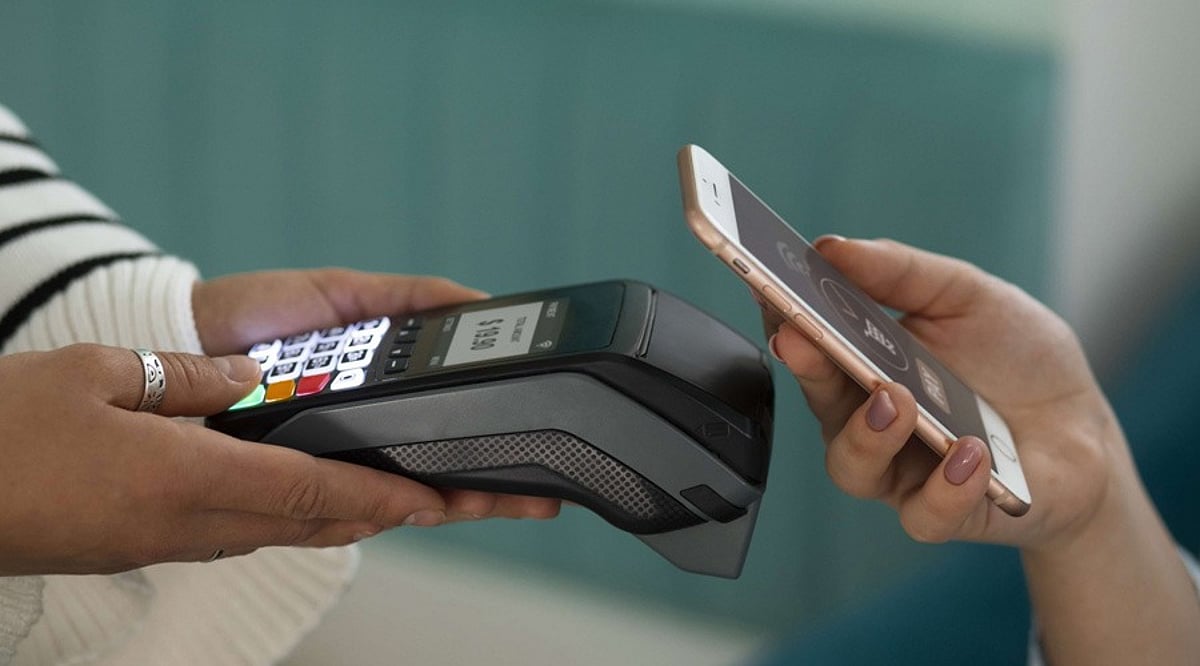
    Contactless payments feel instant, but layers of security work underneath. NFC connects the device to the terminal. EMV and tokenization protect card credentials. Cryptography authenticates each transaction. Issuers apply fraud checks before approval. Credentials are steadily fading from view, becoming identity systems.

    A tap takes a moment. Behind that moment sits a stack of technology built over two decades, involving radio waves, cryptography, and a chain of banking infrastructure most people never see.

    Contactless payment has become routine at grocery counters, metro gates, and coffee shops. Few people using it understand what happens between the tap and the beep. The customer sees tap, beep, done. The payment system performs several steps in rapid succession: connection, credential exchange, cryptographic authentication, authorization, and fraud screening. That contrast is the real story.

    Near Field Communication Starts the Transaction

    Every contactless transaction begins with Near Field Communication (NFC). This is a short-range radio technology that activates only within a few centimeters. The card or phone contains a small antenna and chip. The payment terminal generates a low-power magnetic field. When the two come close, the card’s chip draws power from that field itself, without needing a battery.

    A contactless card has no power source. The terminal effectively wakes the chip during the tap, powers it briefly, and exchanges data before the field disappears. NFC communication itself happens in milliseconds, though the full authorization that follows depends on the payment network, the issuer, and the terminal.

    What the Card or Phone Actually Sends

    Physical cards use EMV chip security to generate transaction-specific authentication data during each tap, while digital wallets can add tokenization to protect the underlying card number. These are related but distinct systems. A physical contactless card and a phone-based wallet protect the transaction differently, even though both work to prevent the raw card number from being freely exposed.

    This distinction matters for anyone comparing payment methods. A lost physical card still carries some exposure risk tied to its chip data. A lost phone, by contrast, typically exposes only a token linked to that one device, not the underlying account number itself.

    Cryptography Makes Each Transaction Different

    The payment chip, whether on a card or in a wallet, uses cryptographic processes to generate transaction-specific authentication data. Because that data is tied to the individual transaction, simply copying information captured from one payment does not produce a valid second transaction.

    On the device side, contactless cards use secure chips to hold and protect payment credentials. Some phones use dedicated secure hardware, while other payment architectures use different combinations of tokenization, trusted execution environments, and software-based security. The exact setup varies by device manufacturer and payment system, and no single architecture applies across all devices.

    From Tap to Bank Approval

    The tap is only the first step. The terminal reads the payment credentials and transaction data, then sends an authorization request through the merchant’s payment infrastructure. The payment network routes that request to the card issuer, which checks the account and applies fraud controls before returning an approval or decline. Settlement, where funds actually move between banks, happens later. The instant beep at checkout marks approval, not completion of the full payment cycle.

    Why Some Payments Still Ask for a PIN

    Many contactless systems apply a transaction-value limit before requiring additional verification, such as a PIN. Some issuers can also require verification after a series of contactless transactions. These controls limit the potential exposure from repeated low-friction payments while keeping everyday purchases fast. Card networks and regulators typically review these limits periodically based on fraud data and regional banking rules, rather than fixing them permanently.

    Fraud Detection Works Behind the Scenes

    Fraud protection does not stop at the tap. Issuers and payment providers watch for patterns during authorization, checking things like past transaction behavior, the device being used, and where the merchant sits in the risk spectrum. This means security is not resting on a single moment. It is spread across a system built to catch problems before approval happens.

    That same thinking now fits on a wrist or a finger. Contactless payments have moved into rings and smartwatches, letting people pay without pulling out a card or phone at all. What stands out is not the new form factor itself, but how easily the same protection travels with it. The hardware keeps changing shape. The security underneath stays consistent.

    The Future of Payments Is Becoming Credentialless

    Contactless payment succeeds by moving complexity away from the customer, not by eliminating it. NFC provides the connection, EMV and tokenization protect payment credentials, and cryptographic processes authenticate the transaction. The next shift is making those credentials even less visible to users. A card number may already be hidden behind a phone, watch, or other device, turning payment into an identity and authentication process rather than a simple exchange of card details.

    Final Thought

    The physical card is slowly losing its importance, even though it still looks the same at checkout. Biometrics and device identity are already doing more of the verification behind the scenes. So the tap itself won’t change much for a while. But what’s happening underneath it will keep getting quietly upgraded.

  • Blockchain Adoption Across Industries: 10 Sectors Revolutionized by Distributed Ledger Technology

    Blockchain Adoption Across Industries: 10 Sectors Revolutionized by Distributed Ledger Technology

    Blockchain technology has moved far beyond its cryptocurrency roots. Businesses worldwide are now embedding distributed ledgers into daily operations to gain stronger transparency, tighter security, and fewer costly intermediaries. MarketsandMarkets projects the global blockchain market will reach USD 248.9 billion by 2029, up from just USD 20.1 billion in 2024. The expansion spans banking, healthcare, agriculture, real estate, and more. Here are ten sectors where blockchain is reshaping business models and raising accountability standards.

    1. Banking and Financial Services

    Banks adopted blockchain early to accelerate cross-border payments. Ripple’s payment network settles transfers in seconds, not days. JPMorgan’s Onyx platform now processes billions daily through blockchain-based repo transactions. This shift has cut costs and lowered settlement risks.

    2. Supply Chain and Logistics

    Blockchain gives companies full visibility into product movement. Walmart uses IBM’s Food Trust system to trace food origins within seconds—a process that used to take days. Key benefits include real-time tracking across borders, reduced paperwork, and faster dispute resolution.

    3. Healthcare

    Patient records are often scattered across hospitals and insurers. Blockchain enables secure data sharing while protecting privacy. Estonia has used blockchain since 2016 to guard millions of health records from tampering and unauthorized access.

    4. Real Estate

    Property deals involve heavy paperwork and many middlemen. Blockchain allows tokenized ownership, letting buyers purchase fractions of properties. Propy has already facilitated blockchain-based real estate sales across several US states.

    5. Insurance

    Claims processing suffers from delays and fraud. Smart contracts automate verification and trigger instant payouts. Etherisc offers parametric crop insurance that uses real-time weather data for settlements, helping farmers in Africa and Asia.

    6. Voting and Governance

    Election security is a global concern. Blockchain-based voting creates immutable records. West Virginia tested the system for overseas military voters, proving remote voting can remain secure and verifiable.

    7. Energy Sector

    Blockchain enables peer-to-peer energy trading. Homeowners with solar panels can sell surplus power directly. Power Ledger, an Australian firm, runs such platforms in Japan and the US, reducing reliance on centralized utilities.

    8. Entertainment and Media

    Royalty distribution has long frustrated artists. Blockchain tracks content use and automates fair payments. Audius lets musicians earn directly without record labels. Non-fungible tokens also allow creators to hold verifiable proof of ownership for digital art.

    9. Agriculture

    Buyers question claims about organic or sustainable farming. Blockchain verifies the true origin of products. AgriDigital in Australia manages grain transactions via blockchain, giving farmers faster payments and greater transparency.

    10. Government and Public Records

    Land registries and identity systems benefit from blockchain permanence. Sweden has tested blockchain land registries since 2016, cutting transaction times from months to days. Georgia’s public registry agency also secures property titles this way.

    Challenges Remaining

    Scalability limits affect transaction speed. Unclear regulations across countries, high energy use in some consensus models, and difficulty integrating with legacy systems remain hurdles. Companies must weigh these before scaling blockchain projects further.

    Final Words

    Blockchain now secures medical records, simplifies supply chains, and automates financial transactions. Businesses once hesitant are investing in serious pilots. As regulations mature and scalability improves, adoption will accelerate. Companies acting now will likely lead their industries later.

  • Blockchain-Powered Grain Receipts: Arya.ag Tests Tokenized Loans for India’s $2B Farm Assets

    Blockchain-Powered Grain Receipts: Arya.ag Tests Tokenized Loans for India’s $2B Farm Assets

    Arya.ag, a major agricultural commodity network in India, is piloting tokenized grain receipts on the Avalanche blockchain. The initiative aims to digitize collateral verification and streamline lending for farmers, leveraging approximately $2 billion in stored agricultural commodities.

    Tokenized Receipts Link Physical Assets to Digital Loans

    The pilot converts verified warehouse receipts and related data into blockchain-based digital records. Working with Finternet, Arya.ag connects grain deposits, collateral commitments, warehouse receipts, and loan status on a single digital ledger. Each tokenized receipt represents ownership of stored commodities, creating a transparent link between physical assets and lending records.

    Devika Mittal, head of Ava Labs India, confirmed that testing is underway for the tokenized warehouse receipt system. The goal is to improve collateral verification and create more efficient lending workflows for agricultural borrowers.

    Potential Benefits for Agricultural Lending

    Traditional farm lending often requires banks to manually verify ownership, inventory, insurance, and existing collateral claims. Tokenized records could consolidate these details, reducing redundant checks and giving lenders clearer visibility. Banks could verify stored crops faster and check whether another lender already holds claims against those assets. Farmers could approach multiple lenders with a single verified digital record.

    Greater lender competition could eventually improve loan terms, processing times, and financing flexibility. The model also supports post-harvest financing, allowing stored crops to secure working capital so farmers can avoid immediate crop sales when market prices are unfavorable.

    Challenges and Infrastructure Focus

    Blockchain cannot independently prove that physical grain exists inside a warehouse. Reliable inspections, accurate warehouse records, legal ownership, and strong data controls remain essential. Digital access is another hurdle, as many farmers face limited connectivity, devices, or digital literacy.

    Arya.ag’s pilot therefore focuses on building infrastructure rather than promising immediate cheaper or faster credit. The company notes that faster approvals and broader credit access are potential outcomes that require real-world validation.

    Future Opportunity: Composite Digital Records

    The larger opportunity involves composite digital records that combine farmer, commodity, insurance, and loan information. Such systems could eventually create a portable financial identity for agricultural assets and lending decisions. For Indian agriculture, tokenization could become less about cryptocurrency and more about trusted collateral infrastructure.