Tag: tokenized stocks

  • New Coalition Targets True Shareholder Rights for Tokenized Stocks

    New Coalition Targets True Shareholder Rights for Tokenized Stocks

    A coalition led by Bullish, Equiniti, Alpaca, Apex Fintech Solutions, and DriveWealth has formed the Issuer Sponsored Token Coalition. The group aims to develop issuer-sponsored tokenized shares that preserve shareholder rights and strengthen links between blockchain markets and traditional equities.

    The coalition will focus on creating standards, infrastructure, and operating frameworks for tokenized securities tied directly to companies’ official shareholder registers. This approach addresses a key issue: some products marketed as tokenized equities may not grant investors the same rights as traditional shares.

    Coalition Targets Shareholder Rights in Tokenized Stocks

    Under the proposed issuer-sponsored model, tokenized securities would connect directly with an issuer’s authoritative shareholder register. This structure could preserve voting rights, dividends, and corporate-action entitlements. Investors holding qualifying tokenized securities would maintain the ownership protections associated with ordinary public shares, while blockchain technology provides new infrastructure without separating shareholders from issuers.

    DriveWealth CEO Naureen Hassan noted that much of what markets describe as tokenized equity does not represent direct equity ownership. The coalition intends to address that gap. An issuer-sponsored model can retain voting rights and corporate-action entitlements as market infrastructure moves onchain.

    SEC Framework Shapes Emerging Onchain Equity Market

    The coalition’s launch follows the U.S. Securities and Exchange Commission’s September 17 Innovation Exemption, which permits limited onchain trading of U.S.-listed equities. The SEC framework requires venues to verify that tokenized stocks provide holders with the same rights and privileges as their traditional equivalents. This requirement places shareholder treatment at the center of onchain equity development. The relief will remain available for five years while the SEC seeks public comments on how the framework should evolve.

    Bullish CEO Tom Farley emphasized that public companies should remain central to relationships with their shareholders. He said market participants need to establish the right architecture as tokenization develops, describing tokenization as a way to turn static assets into more active and transparent digital shares while preserving existing market protections.

    Market Infrastructure Firms Focus on Interoperability

    Alpaca will contribute infrastructure to connect traditional securities markets with onchain systems, building on its Instant Tokenization Network. Arush Sehgal, Alpaca’s Head of Digital Assets, said tokenization creates new ways to connect issuers and investors, but shareholder protections must remain intact.

    Apex Fintech Solutions will contribute experience spanning issuers, broker-dealers, and investors. Global Head of Digital Markets Travis McGhee said connective infrastructure will determine whether tokenized securities can scale, and that standards must preserve existing relationships and investor protections.

    Equiniti and Bullish will work with other participants on the wider standards and frameworks needed for issuer-sponsored securities. The coalition plans to address technical standards, operating structures, and market connections as tokenized public securities develop.

    Final Thoughts

    The Issuer Sponsored Token Coalition aims to connect tokenized stocks directly with company shareholder registers while preserving voting, dividend, and corporate-action rights. Its members will develop standards and infrastructure as the SEC’s five-year framework opens limited onchain trading for U.S.-listed equities.
  • Solana Emerges as a Settlement Hub for Tokenized Stocks as RWA Activity and xStocks Adoption Accelerate

    Solana Emerges as a Settlement Hub for Tokenized Stocks as RWA Activity and xStocks Adoption Accelerate

    Tokenization is steadily pulling traditional equities onto public blockchains, and Solana has become one of the more consequential venues for that shift. Tokenized stocks are blockchain-based instruments tied to conventional shares or ETFs, offering fractional ownership, round-the-clock transfers and compatibility with decentralized finance. The network’s combination of fast settlement and deep liquidity is now being tested by real capital.

    Real-World Assets on Solana Reach New Milestones

    Solana’s real-world asset (RWA) footprint now spans equities, ETFs, Treasuries, commodities and investment funds. According to on-chain data, the network’s RWA value reached $4.6 billion on September 23, with distributed assets at $4.49 billion — an 11.47% increase from the prior month.

    Ownership breadth grew even faster than headline value. RWA holder wallets climbed 94.86% over 30 days to 685,850, while transfer volume rose 95.56% to $6.89 billion, suggesting that assets are not just being minted but actively moving between participants.

    Metric Figure Change
    Solana RWA value (Sept 23) $4.6 billion —
    Distributed RWA assets $4.49 billion +11.47% month over month
    RWA holder wallets 685,850 +94.86% (30 days)
    RWA transfer volume $6.89 billion +95.56% (30 days)
    Stablecoin market cap on Solana $16.58 billion —

    Stablecoin market capitalization on Solana stood at $16.58 billion, far exceeding the network’s distributed RWA value — a reminder that the settlement layer for tokenized assets is still dominated by dollar-denominated cash instruments.

    xStocks Brings Tokenized Equity Into Focus

    Among tokenized-equity frameworks, xStocks has become one of the most visible. The platform says it now covers more than 800 stocks and ETFs and has processed over $40 billion in transaction volume across supported networks.

    On Solana specifically, xStocks crossed $500 million in assets under management with roughly 190,000 holders by August. Its product lineup includes exposure to NVIDIA, Tesla, SPY and QQQ. Each xStock is designed to be backed 1:1 by the corresponding underlying asset, though availability, redemption conditions and investor rights vary by product and jurisdiction.

    Why Solana Is Being Used for Tokenized Equities

    Tokenized markets demand infrastructure that can absorb frequent transfers without making each transaction prohibitively expensive. Solana’s high-throughput architecture and rapid settlement make it a natural fit for trading and moving tokenized instruments at scale.

    The network’s DeFi stack adds a second layer of utility:

    • Raydium provides decentralized trading venues for tokenized assets.
    • Jupiter routes swaps and tokenized-asset transactions across liquidity sources.
    • Kamino supports lending and collateral strategies built around these instruments.

    The result is that tokenized stocks can function inside DeFi rather than sitting as isolated representations of securities.

    Yield Vaults Extend the Model

    The design is evolving beyond simple holding. On September 14, xStocks launched vaults for SPYx, QQQx and NVDAx on Kraken. The strategies rely on lending protocols including Kamino on Solana and allow eligible holders to earn variable yield while retaining exposure to the underlying xStock.

    Tokenized Equities Keep Expanding

    CoinDesk Research reported that tokenized stocks and equities reached a record $4.45 billion on August 26, after rising 11.3% during the month. xStocks has also announced plans to tokenize internationally listed shares, starting with Hong Kong and later extending toward the UK, EU and South Korea.

    What Investors Should Keep in Mind

    Tokenized exposure is not the same as directly owning conventional shares. Products can differ in voting rights, dividend treatment, custody arrangements, redemption terms and geographic availability. Regulatory protections may also vary considerably depending on the issuer and the investor’s location.

    Outlook

    Solana is positioning itself as core infrastructure for tokenized stocks by pairing fast settlement with DeFi liquidity and programmable assets. How far adoption goes will depend on regulation, issuer credibility, available liquidity and whether tokenized products can deliver advantages that traditional brokerage systems cannot match.

    Frequently Asked Questions

    What are tokenized stocks on Solana?

    They are blockchain-based instruments designed to provide exposure to traditional equities or ETFs. On Solana, they can be transferred on-chain and, depending on the product, plugged into decentralized trading, lending and other DeFi applications.

    What are xStocks?

    xStocks are tokenized products linked to traditional stocks and ETFs, including assets tracking NVIDIA, Tesla, SPY and QQQ. They are designed to be backed by the corresponding underlying assets, though investor rights and availability differ by jurisdiction.

    Why is Solana used for tokenized equities?

    Its high transaction throughput, relatively low costs and fast settlement support frequent transfers and trading, while allowing tokenized assets to interact with DeFi protocols.

    How do tokenized stocks interact with Solana DeFi?

    Platforms such as Raydium offer decentralized trading, Jupiter routes swaps, and Kamino supports lending and collateral strategies — letting eligible tokenized assets move beyond simple ownership into broader on-chain financial applications.

    Are tokenized stocks the same as owning traditional shares?

    Not necessarily. Tokenized products can differ from brokerage-held shares in voting rights, dividends, custody, redemption and regulatory protections. Investors should review the specific issuer and product structure before treating them as equivalent.

  • SEC’s Five-Year Innovation Exemption Sets New Rules for Tokenized Stock Markets

    SEC’s Five-Year Innovation Exemption Sets New Rules for Tokenized Stock Markets

    SEC Creates Regulatory Path for Tokenized Stocks on Public Blockchains

    The U.S. Securities and Exchange Commission has introduced a five-year regulatory exemption for trading tokenized stocks on public blockchains. Known as the Innovation Exemption, this framework imposes strict conditions on trading venues, liquidity providers, and the tokens they support. The goal is to foster innovation while maintaining investor protections.

    Key Conditions for Tokenized Securities Venues

    The exemption applies to Tokenized Securities Venues that use automated market maker (AMM) pools to match buyers and sellers. These venues receive temporary relief from registering as national securities exchanges, and certain firms using their own capital to provide liquidity also get relief from dealer registration. However, every venue must operate as a U.S. person and control access to its pools. Federal anti-fraud and market manipulation rules continue to apply. SEC Chair Paul Atkins stated that the measure aims to support new market systems while upholding investor protection standards.

    Permissioned AMMs Required, Open DeFi Excluded

    While public blockchains can host qualifying markets, the AMM pools cannot remain fully open. Each venue must screen traders and liquidity providers before granting access. This means existing pools on Uniswap, Raydium, and other decentralized exchanges do not qualify automatically. These protocols could create separate permissioned pools with identity checks and transfer controls. Raydium already supports permissioned AMMs, giving it some suitable infrastructure, but its stock tokens must meet the SEC’s ownership and issuer requirements before a U.S. venue can list them.

    Full Shareholder Rights Required, Synthetic Tokens Banned

    Eligible tokens must provide the same rights as traditional shares, including dividends and voting rights. The SEC does not permit synthetic products that merely track a stock’s price without conferring ownership rights. According to regulatory conditions reported by Reuters, “Synthetic tokens offering exposure to a stock through a derivative or another product would not be permitted.” This requirement excludes several offshore products from the U.S. framework.

    Securitize and Coinbase Well Positioned

    Securitize appears well placed because it already works with issuers, transfer agents, and regulated financial firms. Its model focuses on tokens that represent legally recognized securities rather than instruments offering price exposure alone. Ethereum could also benefit as it hosts much of this regulated tokenization infrastructure. Coinbase may gain through its U.S. presence, compliance systems, and Base blockchain. However, neither company receives automatic approval; each venue must meet the exemption’s conditions, and every listed token must carry shareholder rights and follow required trading controls.

    Robinhood, Kraken, and Ondo Face Rebuilding

    Robinhood’s overseas stock tokens currently provide economic exposure through securities issued by a Jersey-based entity, meaning token holders do not directly become shareholders in the referenced companies. Kraken’s xStocks and several Ondo Global Markets products also use offshore structures serving non-U.S. users. These providers must create U.S.-compliant products to use the exemption. That process may require new custody arrangements, shareholder record systems, and issuer-approved token structures. Their strong positions on Solana, BNB Chain, and Robinhood Chain do not remove those legal requirements.

    Issuers also receive notice before a venue lists their tokenized shares and may object. This condition could limit listings involving companies that oppose third-party stock tokens. As a result, established market size will not decide which platforms lead the regulated U.S. market. Compliance with ownership, access, and issuer rules will determine which projects can enter.

  • MEXC Launches Annual ‘0808’ Brand Event with Stock Season and $500,000 Prize Pool

    MEXC Launches Annual ‘0808’ Brand Event with Stock Season and $500,000 Prize Pool

    MEXC, a pioneer in zero-fee digital asset trading, has announced the launch of MEXC 0808: Stock Season, the first edition of its annual brand celebration centered on the themes of 0 Fees and Infinite Opportunities. Early bird registration is now open ahead of the main campaign launch on August 8, giving participants a chance to compete for a share of a $500,000 prize pool.

    What is MEXC 0808?

    MEXC 0808 is an annual brand milestone that underscores MEXC’s commitment to zero-fee trading and expanding market access. Zero fees are not limited to a single campaign period; they represent a core value MEXC delivers year-round by reducing trading costs and opening more markets. Each August 8, MEXC will spotlight this commitment through new products, market opportunities, and user rewards. In 2025 alone, MEXC’s 0-fee strategy saved 3.44 million users over 1.1 billion USDT in trading fees.

    Stock Season: The First Theme

    This year, MEXC introduces Stock Season as the inaugural 0808 theme, reflecting the rapid growth of stock trading on crypto exchange infrastructure. A recent report by MEXC and CoinGecko found that U.S. stock trading volume across six major centralized exchanges surged 337.4% month-over-month to $189.84 billion in June 2026. U.S. stocks now account for 48.3% of total TradFi trading volume, making them the largest traditional asset category on these platforms.

    “0808 brings together the two values at the center of MEXC: 0 Fees and Infinite Opportunities. It is a celebration of the values that define MEXC,” said Vugar Usi Zade, CEO of MEXC. “Our commitment to 0 Fees is about removing barriers, while Infinite Opportunities is about helping users access more markets, more products, and more ways to participate in the global financial system. Through Stock Season, we are giving users more ways to discover and participate in opportunities across the global equity market.”

    Expanded Stock Offerings

    MEXC has broadened its stock offering to include multiple product formats and investment stages. Alongside RealStocks, which provides access to more than 7,000 U.S. stocks and ETFs, the platform offers over 200 stock and index futures products, more than 200 tokenized U.S. equities, and Pre-IPO Launchpad opportunities. This allows users to trade real shares, derivatives, tokenized exposure, and early-stage investments through a single account. In June 2026, MEXC’s stock and index futures trading volume increased approximately 261% month-over-month, highlighting growing demand for stock-related products among crypto investors.

    Campaign Details

    To celebrate Stock Season, MEXC will offer 0 fees across Stock Futures, Tokenized Stocks, and RealStocks, enabling users to participate in global stock opportunities at minimal cost during one of the year’s most active market periods.

    • Early bird registration: August 5, 08:08 UTC to August 8, 08:07 UTC. Users can invite friends through referral actions (registration or initial deposit) to earn raffle tickets, up to three per user.
    • Main campaign: August 8, 08:08 UTC to August 28, 23:59 UTC. Participants explore an Opportunity Map with eight tasks (sharing the campaign page, trading stock products, inviting friends, etc.) to earn additional raffle tickets. Tickets are used to draw rewards including an ∞ Dream Fund of up to $3,888, an $88 Stock Futures position, APR boosters up to 888%, and other exclusive prizes.

    For more details and to participate, visit the official MEXC campaign page.

    About MEXC

    MEXC is one of the world’s fastest-growing cryptocurrency exchanges, trusted by over 40 million users across 170+ markets. Built on a user-first philosophy, it offers industry-leading 0-fee trading and access to more than 3,000 digital assets. As the Gateway to Infinite Opportunities, MEXC provides a single platform where users can trade cryptocurrencies alongside tokenized assets including stocks, ETFs, commodities, and precious metals.

  • KuCoin Web3 Wallet Now Supports Robinhood Chain for Tokenized Asset Self-Custody

    KuCoin Web3 Wallet Now Supports Robinhood Chain for Tokenized Asset Self-Custody

    For most people holding both crypto and traditional investments, managing the two has meant managing two separate worlds. That divide is narrowing slightly with KuCoin Web3 Wallet’s newly added support for Robinhood Chain, which lets users bring tokenized real-world assets into the same self-custodial wallet they already use for onchain activity.

    With the update live, users can add Robinhood Chain directly within the wallet, track and manage assets native to the network, and tap into the ecosystem’s early applications, all without handing custody of their assets to a third party. It is a modest technical step with a larger implication. KuCoin Web3 Wallet is now one of the first Web3 wallets to support the chain, putting its users at the front of a still forming ecosystem instead of catching up to one that has already matured.

    The timing is not incidental. Tokenized stocks, ETFs, and other instruments tied to traditional markets are moving onchain faster than most wallets were originally designed to handle. A Web3 wallet used to be judged mainly on how safely it stored a handful of tokens. Increasingly, it is judged on how well it helps users make sense of a messier picture: crypto assets, tokenized equities, and everything in between, spread across chains that do not always talk to each other.

    KuCoin Web3 Wallet has spent its past several updates trying to close that gap. Support for tokenized U.S. stocks and ETFs, the addition of xStocks, in-wallet perpetuals, and steady multi-chain expansion have all pointed in the same direction. Robinhood Chain support fits that same pattern rather than arriving as a standalone feature.

    What is happening on Robinhood Chain itself adds another detail worth noting. Beyond the tokenized assets one might expect, the network has already seen community members creating their own assets and experimenting onchain, activity that was not centrally organized. That kind of organic behavior tends to show up before an ecosystem’s growth curve, not after it, suggesting Robinhood Chain is generating real usage patterns of its own.

    There is also a quieter benefit at play. Every additional chain a user has to track individually is another login, another interface, and another place things can go wrong. Bringing Robinhood Chain into an existing multi-chain structure reduces that sprawl instead of adding to it, letting a single wallet stand in for what used to require several.

    The result is two different audiences getting something useful from the same update. Web3 native users get an early foothold in an emerging RWA and stock token ecosystem. Traditional finance investors testing crypto for the first time get a gentler on ramp, a way to see the kind of assets they already understand represented onchain, without giving up the self-custody that drew them to Web3 in the first place.

  • MEXC Expands Tokenized Stock Offerings with Nine New Ondo Trading Pairs Focused on AI Infrastructure

    MEXC Expands Tokenized Stock Offerings with Nine New Ondo Trading Pairs Focused on AI Infrastructure

    Victoria, Seychelles — MEXC, a leading zero-fee digital asset exchange, has announced the addition of nine tokenized stock and ETF trading pairs from Ondo Finance to its spot market. The listings, effective July 8, 2026, expand the range of on-chain U.S. equity exposure available to users, targeting companies involved in data centers, semiconductors, and power supply chains—key sectors driven by rising AI infrastructure demand.

    The new pairs include tokenized versions of stocks and ETFs such as Bloom Energy (BEON/USDT), Astera Labs (ALABON/USDT), Credo Technology (CRDOON/USDT), the Roundhill Memory ETF (DRAMON/USDT), Innodata (INODON/USDT), and Celestica (CLSON/USDT). Full listing times are available in MEXC’s official announcement.

    Ondo Finance specializes in bringing traditional financial assets onto blockchain networks through compliant infrastructure. Each tokenized asset is backed by the underlying security held via regulated custodial brokers. This latest batch further strengthens MEXC’s lineup of tokenized stocks, reinforcing the platform’s commitment to offering “Infinite Opportunities” for its users.

    Beyond Ondo’s products, MEXC also provides “RealStocks,” which allows users to hold actual share ownership and receive dividends. The integrated trading experience enables users to access a wide range of investment products without switching platforms.

    About MEXC
    MEXC is one of the fastest-growing cryptocurrency exchanges globally, trusted by over 40 million users across 170+ markets. It offers industry-leading zero-fee trading and access to more than 3,000 digital assets, including cryptocurrencies, tokenized stocks, ETFs, commodities, and precious metals.

    Risk Disclaimer: This content does not constitute investment advice. The cryptocurrency market is highly volatile; investors should conduct their own research before making any trading decisions.

  • MEXC Expands Tokenized Stock Offerings with Ondo’s Strategy Preferred Stock Listing

    MEXC Expands Tokenized Stock Offerings with Ondo’s Strategy Preferred Stock Listing

    MEXC, a leading zero-fee digital asset exchange, has announced the listing of Ondo’s tokenized Strategy preferred stock (STRCON) on its spot market, further broadening its suite of tokenized U.S. equity products.

    The STRCON token tracks Strategy Pref (STRC), the preferred stock of Strategy—formerly known as MicroStrategy—which is the world’s largest corporate holder of bitcoin, with 847,363 BTC as of June 21, 2026. The STRCON/USDT trading pair went live at 14:00 (UTC) on June 30, 2026, with deposits opening earlier the same day at 08:00 (UTC).

    Ondo Global Markets, the tokenization platform behind this offering, specializes in bringing real-world assets onto blockchain networks. It provides non-U.S. investors with instant access to tokenized U.S. stocks, ETFs, and other securities. According to RWA.xyz data, Ondo Global Markets surpassed $1 billion in total value locked in May 2026 and now accounts for over 70% of the tokenized equity issuer market.

    This listing continues MEXC’s collaboration with Ondo to democratize access to U.S. stock markets through tokenized assets. MEXC also offers “RealStocks,” a product that enables users to hold actual share ownership and receive dividends within the crypto trading environment.

    MEXC is the world’s fastest-growing cryptocurrency exchange, trusted by more than 40 million users across 170+ markets. The platform provides access to over 3,000 digital assets and a user-first philosophy with industry-leading zero-fee trading.

    Risk Disclaimer: This content does not constitute investment advice. Cryptocurrency markets are highly volatile. Investors should conduct their own research before making any trading decisions.

  • SPCX Perpetual Liquidations Surpass $50 Million as SpaceX Stock Tests Nasdaq Debut

    SPCX Perpetual Liquidations Surpass $50 Million as SpaceX Stock Tests Nasdaq Debut

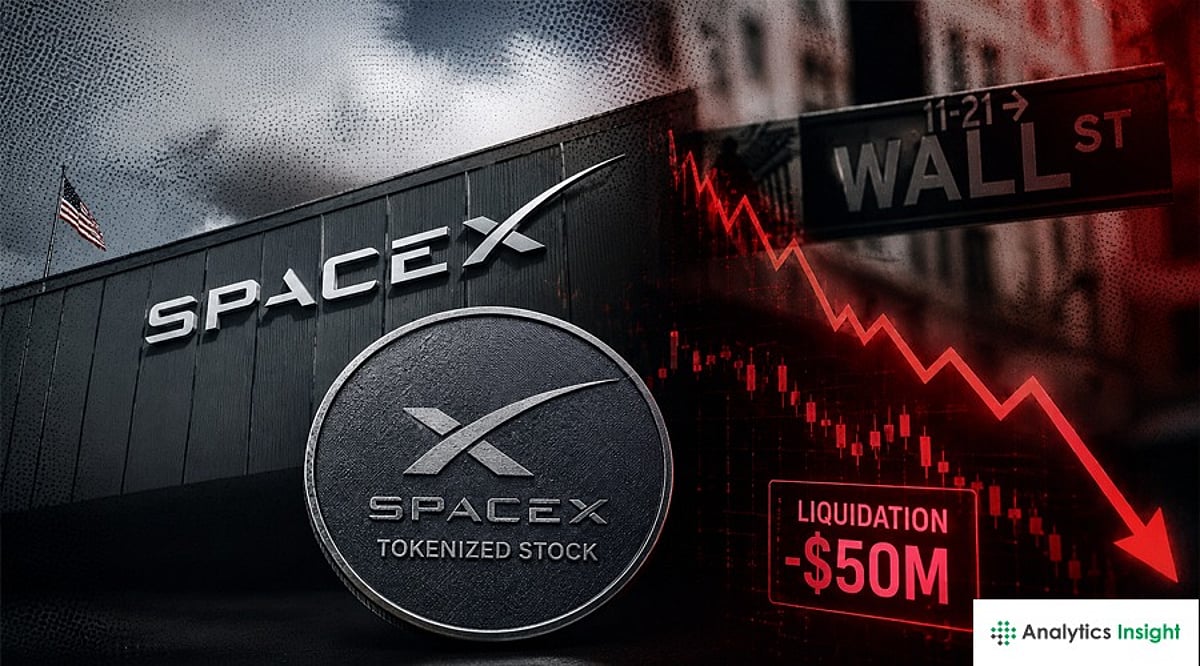
    SPCX perpetual contracts have witnessed over $50 million in liquidations within 48 hours as SpaceX shares dipped below their $150 Nasdaq opening price. The event underscores the heightened volatility and risk inherent in leveraged tokenized stock products, which can react far more aggressively than traditional equity markets.

    What Happened

    According to market data, SPCX-linked perpetual contracts recorded more than $50 million in forced closures, trailing only Bitcoin and Ethereum in liquidation volume among crypto derivatives during that period. The liquidations followed a sharp decline in SpaceX stock, which fell below its Nasdaq debut price after a major drawdown. Investors who bought shares above the company’s $135 initial public offering price are now facing losses.

    How SPCX Differs from Traditional Stock Ownership

    SPCX products are pre-IPO or equity perpetual contracts that offer leverage, cash settlement, and funding mechanisms. Unlike owning actual shares, these instruments provide price exposure without ownership rights, voting rights, or share delivery. Binance lists SPCXUSDT as a USDT-settled pre-IPO perpetual contract, while Coinbase explains that such products settle entirely in cash. Crypto.com describes a structure allowing conversion between SpaceX pre-IPO perpetuals and equity perpetuals depending on platform mechanics.

    This structure places traders in a derivatives-driven environment where margin requirements and funding rates dictate outcomes. If prices move sharply against a position, exchanges can liquidate traders automatically at any time—without waiting for a market close.

    Liquidation Pressure Builds Around Leveraged Exposure

    The $50 million liquidation figure is a notable signal because Bitcoin and Ethereum typically dominate liquidation rankings due to deep liquidity and large leveraged positions. SPCX joining that group reflects strong demand for SpaceX-linked exposure. Liquidation risk does not require a total collapse in the underlying asset—a combination of leverage, open interest, and adverse price movement can easily trigger forced exits.

    While traditional investors may still be evaluating whether the decline reflects temporary weakness or fundamental concerns, perpetual contract markets react instantly, closing positions as soon as collateral support drops.

    Tokenized Stock Perpetuals Face a Different Risk Cycle

    Tokenized stock perpetuals trade around the clock, using venue-specific mark prices and funding systems while enforcing margin requirements continuously. This continuous trading can amplify disagreements over value into sudden liquidation pressure, even as traditional investors are still assessing the stock’s outlook.

    These products may ultimately serve as effective risk-transfer markets, but that will require improved liquidity and reduced leverage. Until then, high open interest and persistent volatility will likely sustain heavy market stress.

    What’s Next

    SpaceX stock slipped below its Nasdaq opening price, triggering the $50 million liquidation wave for SPCX. The event highlights how tokenized stock perpetuals can lead to rapid forced exits when leverage and margin rules kick in. Market participants are now watching to see if the asset stabilizes and whether open interest, funding rates, and liquidation activity will flatten out.