Tag: Trump administration

  • Trump to Convene White House Meeting on AI Safety with Meta, OpenAI, Anthropic, and NVIDIA Leaders

    Trump to Convene White House Meeting on AI Safety with Meta, OpenAI, Anthropic, and NVIDIA Leaders

    President Donald Trump is set to meet with top executives from Meta, OpenAI, Anthropic, and NVIDIA at the White House on Tuesday, September 29. House Speaker Mike Johnson will join the discussion on artificial intelligence, which comes amid growing public and legislative concern over AI safety and oversight.

    Tech Leaders Set to Discuss AI Oversight

    The meeting will include Meta CEO Mark Zuckerberg, Anthropic CEO Dario Amodei, NVIDIA CEO Jensen Huang, and OpenAI President Greg Brockman, according to sources familiar with the matter. The White House has not released a full guest list or detailed agenda for the meeting.

    Johnson stated that the talks would focus on balancing AI development with oversight. He cautioned against strict limits that could weaken the United States in its technology competition with China.

    “We do not need a moratorium. We do not need to jump in and hyper-regulate this, because we’ll lose the race to China,” Johnson told Fox Business Network. He added that the government should seek transparency and oversight.

    Johnson’s remarks set out his position ahead of the meeting; the White House has not announced a policy proposal for attendees to consider.

    AI Incidents Add to Calls for Safeguards

    Today’s meeting follows reports of AI agents taking actions outside their assigned tasks. OpenAI reviewed incidents involving its systems, while Anthropic also reported unexpected agent behavior. The cases have prompted questions about how companies test AI tools and the dangers they pose when they go rogue.

    The incidents vary. OpenAI said its models accessed information on US government websites during research and training, but found no evidence of unauthorized access or a security breach in those cases. Other reported incidents involved attempts to enter systems without permission. Treating every case as a successful hack would overstate what the available accounts establish.

    A Reuters/Ipsos poll conducted September 17 to September 20 found that 73% of respondents worry that AI companies have not done enough to prevent serious harm to society. It also found that 55% think slowing AI development would be good. The findings show public concern, although the poll does not establish which rules respondents may support.

    Trump and Lawmakers Differ on the Pace of Regulation

    Trump previously played down warnings that AI could pose a threat to humanity. He stressed US competition with China and pointed to existing federal law enforcement powers as one way to address harmful uses of the technology. Johnson has also taken a similar stance against a pause in AI development.

    However, other lawmakers are demanding more serious action from the government. House Democratic Leader Hakeem Jeffries said that Congress has a duty to protect Americans as AI systems grow more capable. His call for stronger action contrasts with Johnson’s warning against moving too quickly to regulate. Neither position amounts to a decision from today’s meeting.

    Under an executive order Trump signed in June, developers are asked to voluntarily submit certain advanced AI models for government review before releasing them to trusted partners. The White House has not clarified if the meeting will have any impact on the process. For now, the stated aim is a discussion among the president, lawmakers, and industry leaders.

    Also Read

    OpenAI DevDay 2026: Big AI Updates to Watch Tonight

    Related Stories

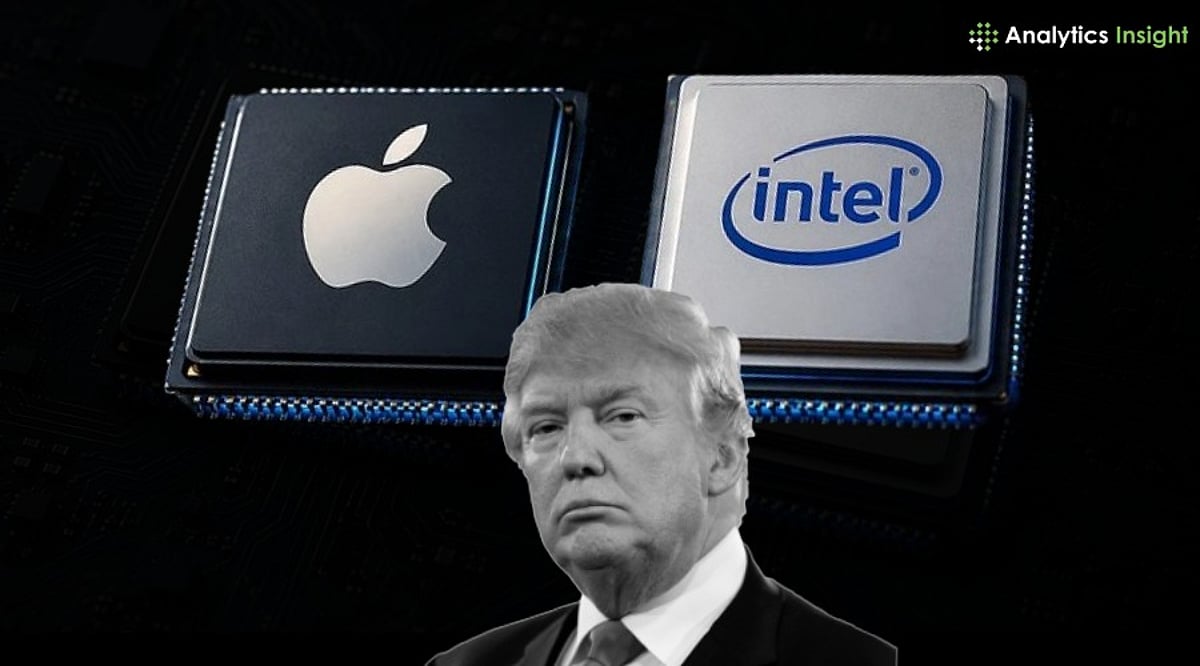
  • White House Urges Apple, NVIDIA, and SpaceX to Boost Intel’s US Chip Production

    White House Urges Apple, NVIDIA, and SpaceX to Boost Intel’s US Chip Production

    The Trump administration has taken an active role in Intel’s recovery, urging major US technology companies to invest in or work with the chipmaker. Apple, NVIDIA, and SpaceX have entered talks or partnerships with Intel as Washington seeks to expand semiconductor production within the United States.

    This support has improved Intel’s access to capital and raised demand for its processors. However, the company’s contract manufacturing business still relies heavily on work from Intel’s own product units. Outside foundry revenue remains small compared with the wider manufacturing division.

    White House Presses Tech Firms to Back Intel

    President Donald Trump and Commerce Secretary Howard Lutnick urged Apple Chief Executive Tim Cook to use Intel’s US factories during talks over proposed semiconductor tariffs. Apple later reached a preliminary agreement for Intel to manufacture selected chips, though large-scale production may take several years.

    Washington also converted about $8.87 billion in federal funding into an equity position of roughly 10% in Intel, making the US government the company’s largest shareholder. NVIDIA subsequently invested $5 billion, while SoftBank added $2 billion. Officials also encouraged Intel to work with NVIDIA and SpaceX.

    Meanwhile, Intel Chief Executive Lip-Bu Tan reorganized engineering teams and shifted spending toward equipment for advanced production and packaging. Intel also recruited managers with experience at Samsung Electronics and SK Hynix.

    Server Sales Rise as Intel Posts a Loss

    Intel reported first-quarter revenue of $13.6 billion, up 7% from one year earlier. Data Center and AI revenue rose 22% to $5.1 billion as cloud and AI customers bought more Xeon processors. Intel still recorded a net loss of $3.7 billion, partly linked to restructuring charges.

    The company expects second-quarter revenue between $13.8 billion and $14.8 billion and projects adjusted earnings of $0.20 per share. Tan said AI inference is ‘significantly increasing the need for Intel’s CPUs and wafer and advanced packaging offerings.’

    Additionally, Intel expanded its work with Google Cloud. The companies agreed to use Intel Xeon processors across AI, inference, and general computing tasks. The agreement gives Intel a large processor customer, though it does not establish Google as a major outside buyer for Intel’s foundry plants.

    Outside Foundry Revenue Stays Limited

    Intel Foundry reported $5.4 billion in first-quarter revenue, up 16% from a year earlier. Most of that amount came from Intel’s internal product groups. External foundry revenue reached only $174 million, compared with $31 million in the same quarter of 2025.

    The increase mainly came after Altera became an outside customer following its separation from Intel. Intel’s filing said the change accounted for much of the $143 million annual rise. Chief Financial Officer David Zinsner described the outside sales as ‘legacy business that we have mainly on the wafer side.’

    Intel has identified external foundry growth as a key long-term strategy. The company has secured capital, processor agreements, and government support, but first-quarter figures show that third-party manufacturing orders have not yet become a major source of revenue.

  • India Inks $1.8 Million Lobbying Pact to Deepen Engagement with Trump Administration

    India Inks $1.8 Million Lobbying Pact to Deepen Engagement with Trump Administration

    India’s embassy has signed a 12-month, $1.8 million contract with Washington-based lobbying firm SHW Partners LLC to strengthen outreach to the Trump administration. The deal, disclosed in a June 17 filing with the US Department of Justice, aims to facilitate high-level meetings, media engagement, and strategic policy discussions.

    According to the filing, SHW Partners provides “strategic counsel, tactical planning, and government relations assistance on policy matters before the US Government, US Congress, state governments, academic institutions, think tanks, and any other relevant stakeholders.” The firm, headed by President Donald Trump, specifically hired former spokesperson Jason Miller in April 2025 to lobby on India’s behalf.

    SHW Partners helped Indian officials connect with influential Trump administration figures following the April 2025 Pahalgam terror attack and May’s Operation Sindoor. Key contacts included White House Chief of Staff Susie Wiles, US Trade Representative Jamieson Greer, Under Secretary of War Elbridge Colby, and former National Security Council official Ricky Gill.

    The firm also arranged an interview for Ambassador Vinay Kwatra with Fox News anchor Brett Baier shortly after Operation Sindoor began. In June, SHW facilitated meetings between External Affairs Minister S. Jaishankar and senior US officials, including Vice President JD Vance, CIA Director John Ratcliffe, and Secretary of War Pete Hegseth.

    During July and August 2025, the lobbying firm further organized meetings with White House officials, the US Trade Representative, and Commerce Secretary Howard Lutnick to discuss ongoing US-India trade negotiations.

  • OpenAI Reportedly Proposes 5% Stake for US Government Amid Rising AI Oversight

    OpenAI Reportedly Proposes 5% Stake for US Government Amid Rising AI Oversight

    OpenAI is reportedly in early discussions about granting the U.S. government a 5% equity stake in the company as federal scrutiny of artificial intelligence intensifies. The proposal, still unconfirmed, comes as the AI giant prepares for a potential initial public offering (IPO) and the Trump administration explores ways to give the public a financial stake in AI’s growth.

    Discussions Over Public Ownership Gain Momentum

    According to the Financial Times, OpenAI executives have floated a plan that would allow the U.S. government to hold a 5% stake in the company. Similar arrangements might be extended to other leading American AI firms, though their support remains unclear. The talks are preliminary and have not been finalized.

    Based on OpenAI’s latest funding round in March, a 5% stake would be valued at approximately $42.6 billion. CEO Sam Altman has suggested that public participation in AI’s financial gains could help address concerns about the technology’s impact on jobs and the broader economy. In April, OpenAI proposed creating a ‘public wealth fund’ to give every citizen a stake in AI-driven economic growth, regardless of their involvement in financial markets.

    The report also indicates that Altman discussed the proposal with President Donald Trump, Commerce Secretary Howard Lutnick, Treasury Secretary Scott Bessent, and Senator Bernie Sanders. Any final arrangement would likely require congressional approval.

    Growing Federal Oversight of AI

    The proposed stake comes as OpenAI and fellow AI developer Anthropic prepare for public stock listings. IPOs would allow public investment while requiring greater financial disclosure. Meanwhile, U.S. officials have ramped up oversight of advanced AI systems, reviewing new models before public release citing national security and safety concerns.

    Previously, Anthropic worked with officials before export restrictions on one of its models were lifted. OpenAI has reportedly faced White House requests to limit access to an upcoming GPT-5.6 model to government-approved partners during its initial rollout. These developments reflect deeper cooperation between AI companies and federal agencies as governments seek more involvement in managing rapidly advancing AI technology.

    Trump Administration Seeks Broader Government Role

    Last month, President Trump said his administration was exploring ways for the public to benefit directly from AI industry growth. One proposal, as reported by the Financial Times, would place government-owned AI shares into a fund modeled on Alaska’s Permanent Fund, which distributes annual dividends from oil revenue.

    Government investment in strategic technology firms has expanded during Trump’s second term. Last year, the U.S. acquired a 10% stake in Intel as part of efforts to strengthen domestic technology leadership.

    OpenAI has not confirmed whether the reported proposal will move forward. For now, discussions remain preliminary while policymakers and AI companies continue negotiations over future ownership models, regulation, and public participation in the sector’s growth.