
Tag: Trump

  • Trump’s Bitcoin Reserve Plan Stalled by Legal and Agency Disputes

    Trump’s Bitcoin Reserve Plan Stalled by Legal and Agency Disputes

    President Donald Trump’s ambitious Strategic Bitcoin Reserve, established via Executive Order 14233 in March 2025, is facing significant delays as federal agencies grapple with unresolved legal questions and a turf war over control. The initiative aims to bolster the United States’ position in the cryptocurrency sector, but more than a year later, the reserve lacks a clear operating structure.

    At the heart of the impasse is a dispute between the Treasury Department and the Commerce Department over which agency should manage the reserve. The original plan placed the reserve under Treasury, which already oversees numerous federal assets. However, officials have raised doubts about Treasury’s legal authority to handle a large Bitcoin reserve, prompting the Commerce Department to emerge as a potential alternative. The Justice Department’s Office of Legal Counsel is now mediating, working with both agencies to identify “legally available options” for the reserve’s creation.

    Another critical issue is whether the government can hold seized Bitcoin indefinitely. The executive order prohibits the sale of Bitcoin placed into the reserve, with the White House arguing that past early sales cost taxpayers approximately $17 billion. Yet Bitcoin’s price volatility introduces legal and practical challenges, requiring a framework that allows the government to hold the asset through major price swings without creating budget pressure.

    Congress is also stepping in to provide a clearer legal foundation. The BITCOIN Act, introduced by Senator Cynthia Lummis and Representative Nick Begich in March 2025, proposes buying up to 1 million Bitcoin over five years through budget-neutral methods. This bill has been tied to broader market structure legislation, the Clarity Act, which has faced delays over stablecoin and decentralized finance regulations. A second bill, the American Reserve Modernization Act, introduced in May 2026, would place the Bitcoin reserve directly under the Treasury Department and create a separate stockpile for other digital assets.

    According to Arkham Intelligence, the federal government currently holds more than $20 billion in Bitcoin, making the United States one of the largest known sovereign Bitcoin holders. Yet the reserve still lacks a final legal framework, a named lead agency, and a clear long-term management plan. White House spokesperson Liz Huston stated that the administration continues to evaluate the best structure for the reserve and the separate US Digital Asset Stockpile, reflecting the ongoing uncertainty.

  • Trump’s $1.4 Billion Crypto Income Fuels Conflict-of-Interest Concerns

    Trump’s $1.4 Billion Crypto Income Fuels Conflict-of-Interest Concerns

    President Donald Trump reported earning at least $1.4 billion in cryptocurrency-related income over the past year, according to a Bloomberg review of his latest annual financial disclosure. The filing connects his personal wealth to major digital asset ventures while his administration shapes federal crypto policy.

    Filing Details Trump’s Crypto Revenue

    The disclosure covers income linked to the TRUMP memecoin, World Liberty Financial tokens, Bitcoin, and other digital assets, though it does not provide a complete breakdown for every source. The TRUMP memecoin alone generated hundreds of millions of dollars, with its market price reacting to Trump’s public remarks, political events, and signals about federal crypto policy. World Liberty Financial, a Trump-linked decentralized finance project, also contributed heavily to the reported income and operates within policy areas covering stablecoins, token classification, trading access, and digital asset oversight. The project has pursued plans to make its governance token tradable, placing it within current debates on liquidity, digital asset trading, and regulatory classification.

    Policy Decisions Draw Greater Scrutiny

    The disclosure comes as the administration supports stablecoin legislation, tokenization, Bitcoin mining, and a softer approach toward federal crypto enforcement. The SEC and CFTC remain central to those policy decisions. Previously, BTCUSA reported that more than 20% of Trump administration officials held crypto assets, increasing attention on how officials manage investments while developing rules for the same market. Trump’s support for Bitcoin mining also attracted scrutiny after the purchase of MARA Holdings shares. The latest filing provides a broader view of his financial exposure to the cryptocurrency industry.

    The question now follows decisions involving enforcement, exemptions, token rules, and product approvals: How can federal regulators preserve public trust when presidential wealth depends heavily on the industry they oversee?

    Markets Monitor Political and Regulatory Links

    Crypto markets reacted cautiously to the disclosure, with the response following confirmation of the scale of Trump’s crypto income rather than any new revelations. The filing also renewed attention on links between Trump’s policy agenda and his family’s crypto ventures, covering memecoins, decentralized finance, stablecoins, token trading, and direct digital asset holdings. Critics have previously described the administration’s crypto-friendly approach as a potential conflict between policymaking and private financial interests. The disclosure gives lawmakers a specific income figure for further examination.

    The TRUMP memecoin gala had already drawn attention to the relationship between political access and cryptocurrency ownership. Now, the annual filing adds detailed financial context before the 2026 midterm elections. Meanwhile, federal agencies continue handling rules that can affect Trump-linked ventures and the wider market, including stablecoins, token classifications, enforcement priorities, trading permissions, and approvals for new crypto products.

    What’s Next?

    Trump’s $1.4 billion crypto income connects his personal wealth to memecoins, DeFi, Bitcoin, and federal digital asset policy. The disclosure increases scrutiny of regulatory independence and potential conflicts of interest. Investors and lawmakers should closely assess how future decisions may affect both public policy and Trump-linked ventures.

  • Trump’s Beijing Visit Opens Door for Nvidia Chips to Power Chinese AI Giants

    Trump’s Beijing Visit Opens Door for Nvidia Chips to Power Chinese AI Giants

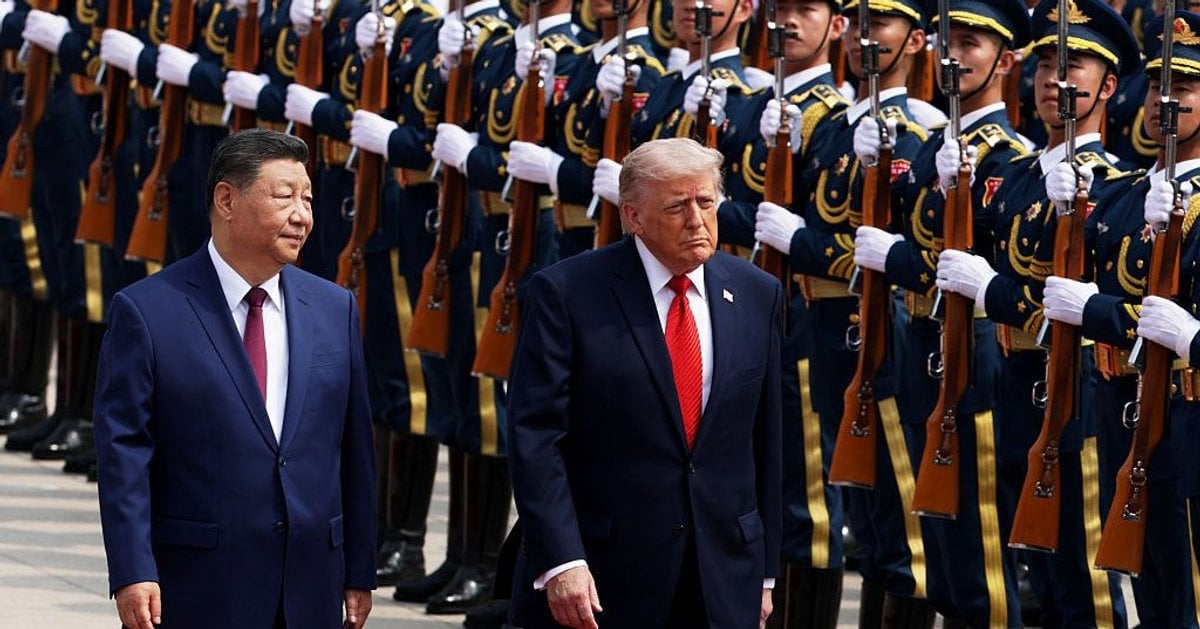
    President Donald Trump’s recent trip to Beijing, accompanied by a delegation including Apple’s Tim Cook, Tesla’s Elon Musk, and Nvidia’s Jensen Huang, signals a potential reset in AI supply chains between the U.S. and China. The visit, focused on high-level negotiations, suggests a shift toward a transactional relationship where American semiconductor technology may support Chinese AI development.

    At the state banquet, President Xi Jinping emphasized the possibility of common cause between China’s rejuvenation goals and America’s “Make America Great Again” agenda. Behind the diplomatic smiles, however, lies a strategic contest: Beijing’s “new productive forces” policy prioritizes AI, advanced manufacturing, and robotics, exemplified by the transformation of Chongqing into a high-tech megacity. Yet China remains dependent on U.S.-controlled high-end accelerators for training frontier AI models.

    Nvidia’s Jensen Huang’s presence is particularly significant. After years of tightening export controls, Washington is now considering case-by-case reviews for advanced AI compute exports. Nvidia is positioned to ship H200 data center GPUs to major Chinese cloud platforms like Alibaba and Tencent. Although not the top-tier Blackwell-class chips, the H200 is roughly six times more powerful than any domestic Chinese alternative, potentially compressing AI training timelines for Chinese firms.

    For Apple and Tesla, the mission focuses on supply chain stability and regulatory clarity. Apple aims to protect its manufacturing resilience and consumer base, where the iPhone 17 has seen success. Tesla views China as crucial for production and full self-driving deployment, seeking clarity on mapping and data policies to compete with domestic rivals.

    This delegation represents an attempt to reverse the 20% decline in U.S. imports from China. By leveraging tech leaders for targeted access—compute in exchange for market openness and IP protections—both nations may enter a more transactional era. The true metrics of success will be the speed of Chinese hyperscalers building H200 clusters and the regulatory wins secured by Apple and Tesla. Ultimately, compute access shapes capability, and this visit suggests a hard-nosed accommodation that keeps the AI flywheel spinning on both sides of the Pacific.