Tag: underwriting

  • Checkr Debuts AI Verification Platform for U.S. Auto, Life, and Home Insurers

    Checkr Debuts AI Verification Platform for U.S. Auto, Life, and Home Insurers

    Checkr, an AI-powered verification platform for high-stakes decisions, has launched a new insurance solution for U.S. auto, life, and home insurance carriers. The platform is designed to give insurers faster access to verified applicant information during the quoting and underwriting process.

    Why Insurers Need Faster Verification

    Consumers are shopping around more before buying coverage. According to J.D. Power’s 2026 Insurance Shopping Study, U.S. consumers now get an average of 3.5 quotes before purchasing a policy — the highest level the study has recorded.

    Digital purchasing is also climbing. Nearly 48% of new auto insurance policies are now purchased online, up from 36% five years ago. That shift means insurers must evaluate more prospective customers before knowing which applicants will eventually become policyholders.

    Traditionally, insurers had to choose between conducting detailed checks early in the process or relying on applicant-supplied information and verifying it later.

    What the Platform Offers

    • Direct access to identity records, criminal information, public records, and driving data from more than 2,400 government sources.
    • Daily data refreshes and classification across more than 250 offense categories.
    • Coverage of more than 260 million profiles, representing 96% of U.S. adults.
    • Up to 20% more driving, criminal, and public records than legacy verification providers.
    • Improved applicant matching to reduce manual review and provide more structured information for underwriting decisions.

    Pay-Per-Bind Pricing Model

    The commercial model differs from conventional per-transaction verification. Carriers pay when an applicant becomes a policyholder, not each time a check is requested.

    Hippo is among the insurers using additional Checkr data during underwriting. Hippo Chief Underwriting Officer Ilya Shnol said the additional data signals are provided earlier in the assessment process and support more consistent underwriting decisions.

    Checkr has made the insurance platform available to carriers across the United States.

  • 10 AI-Powered Insurtech Companies Reshaping Insurance in 2026: A Deep Dive

    10 AI-Powered Insurtech Companies Reshaping Insurance in 2026: A Deep Dive

    Overview

    Ten companies made this list on verified deployments, named carrier partners, and reported metrics, not marketing claims. Coverage spans claims computer vision, repair workflows, fraud detection at two different stages, underwriting, actuarial pricing, cyber risk, and full-lifecycle AI insurance. Every figure below traces to a company report, carrier statement, or 2026 industry filing.

    A cyber insurer that stops seven in ten attacks before they land. A claims platform that settles a policy in two seconds flat. These are production numbers from carriers running AI as the core engine of underwriting, claims, and fraud detection, not a support feature bolted onto old workflows. The ten companies below made this list on verified deployments, named carriers, and outcomes anyone can check. A few well-known names got left out, since nothing tied their claims to a specific carrier result or a sourced number.

    What Makes These Insurtechs Leaders in 2026

    Three things separate a genuine leader from a company that simply mentions AI in its pitch deck. AI has to run a core operation, not sit beside it as a support tool. A named carrier, broker, or regulator has to confirm the result in public. And the deployment has to run at scale, across thousands of policies or claims, not a small cohort of early testers. Model sophistication barely matters here. What matters is how much of a workflow AI now finishes without a person stepping in.

    Claims and Damage Assessment: Tractable

    Millions of vehicle and property photos, collected since 2014, taught Tractable’s computer vision system to read collision damage the way a seasoned appraiser would, only faster. The platform reviews car damage with roughly 95% accuracy and turns a photo into a repair estimate in seconds, work that once took 30 minutes. GEICO and 25 of the world’s top 100 insurers now run claims through it, an adoption that pushed Tractable past a $1 billion valuation.

    Claims and Repair Workflow: CCC Intelligent Solutions

    Where Tractable reads the damage, CCC manages what happens next: repair shop, parts, and paperwork between insurer and body shop. Its Mobile Jumpstart tool already initiates 98% of repair estimates for one of the largest multi-store repair operators in the country. This quarter, a top-five insurer became CCC’s biggest customer yet for its AI-based subrogation tool, which automates the reimbursement claims carriers file against each other.

    Fraud Detection After the Claim: Shift Technology

    Claims fraud rarely announces itself, which is the problem Shift Technology’s Paris-built platform was designed to catch. AXA extended its partnership with Shift for five more years to widen fraud detection and underwriting checks across its global business, and Covéa signed on in early 2026 for a fraud framework spanning the entire policy lifecycle. Shift runs its models on Azure OpenAI Service, so carriers get newer AI without losing the compliance layer around it.

    Fraud Screening at the Point of Application: FRISS

    Shift catches fraud after a claim gets filed. FRISS catches it earlier, scoring an application for risk before a policy is even issued. Canadian insurer SGI brought the platform on in January 2026 to flag suspicious requests while speeding up legitimate ones, and a partnership with ForMotiv now folds in behavioral data captured during the application itself.

    Underwriting Built Around Continuous Risk: Cytora

    Commercial underwriting used to work off a single snapshot: an application filled out once, reviewed once, and revisited a year later. Cytora tore that model up with a platform that keeps absorbing broker emails, documents, and calls as new risk data shows up. Zurich Insurance is rolling it out across more than 20 markets over 16 months, and manual triage time there has already dropped from 75 minutes to 15 per submission. Markel and Travelers have adopted it too.

    Underwriting for Workers Comp and Group Health: Gradient AI

    Most insurtechs chase auto or property. Gradient AI went after a line most competitors ignore: workers’ compensation and group health risk scoring. Managing general underwriter BTIS adopted the platform for sharper workers’ comp pricing. One regional carrier running Gradient’s model cut its average quote turnaround from three days to under four hours by pre-scoring every submission and sending only the borderline cases to a human.

    Pricing and Actuarial Modeling: Akur8

    Pricing has always been the hardest place to trust a black box, since regulators expect an actuary to explain exactly why a rate moved. Akur8 built its platform around that constraint, offering machine learning transparent enough to survive review. More than 300 insurers across 40 countries now use it, including AXA, Generali, and Tokio Marine, and over 3,000 actuaries build pricing and reserving models in the system daily.

    Cyber Insurance’s AI-Native Leaders: Coalition and At-Bay

    Cyber risk changes by the hour, which is why Coalition built its ‘Active Insurance’ model around continuous scanning of a policyholder’s exposed systems instead of a one-time application. The company covers roughly 110,000 active policyholders and says they see about 70% fewer claims than the broader cyber market. At-Bay takes a similar approach to early warning. Its 2026 InsurSec Report, built from more than 100,000 policy years, recorded an all-time high average claim severity of $221,000, a figure it now uses to sharpen pricing before renewal.

    The Fully AI-Native Insurer: Lemonade

    No company on this list runs AI through more of the policy lifecycle than Lemonade. Its chatbots take 96% of first notices of loss without a person involved, and 55% of all claims settle from start to finish in seconds. The underwriting side backs that up: Lemonade’s gross loss ratio fell to 62% in the first quarter of 2026, down from 83% two years earlier, an improvement solid enough that the company now keeps more risk on its own books instead of handing it to reinsurers.

    Comparison Table

    Company Focus Area Key Metric Notable Partner
    Tractable Claims & Damage Assessment 95% accuracy, seconds to estimate GEICO
    CCC Intelligent Solutions Claims & Repair Workflow 98% estimates initiated via AI Top-five insurer
    Shift Technology Fraud Detection (post-claim) Extended partnership with AXA AXA, Covéa
    FRISS Fraud Screening (pre-issue) Real-time risk scoring SGI
    Cytora Continuous Underwriting Manual triage: 75 min to 15 min Zurich Insurance
    Gradient AI Workers Comp & Group Health Quote turnaround: 3 days to <4 hours BTIS
    Akur8 Pricing & Actuarial Modeling 300+ insurers, 40 countries AXA, Generali
    Coalition Cyber Insurance 70% fewer claims 110,000 policyholders
    At-Bay Cyber Insurance $221,000 avg claim severity 100,000+ policy years
    Lemonade Full-Lifecycle AI 55% claims settled in seconds Gross loss ratio 62%

    Final Thoughts

    Strip away the branding, and a pattern sits underneath all ten companies. Each one picked a single narrow job — reading a damaged photo, scoring a fraud risk, filing a rate change — and letting AI carry that job from start to finish instead of just assisting the person doing it. Regulators are starting to ask carriers to explain an AI decision, not just report it, and that shift will reward platforms built for scrutiny over ones chasing the broadest AI story. Watch which companies can show their work.

    FAQs

    1. What are AI-powered insurtech companies?

    AI-powered insurtech companies use artificial intelligence to improve insurance operations such as underwriting, claims processing, fraud detection, customer service, and risk assessment. Their technologies help insurers make faster, more accurate decisions while enhancing customer experience.

    2. Which are the leading AI-powered insurtech companies in 2026?

    Some of the leading AI-powered insurtech companies in 2026 include Lemonade, Coalition, At-Bay, Cytora, Akur8, Gradient AI, Tractable, Shift Technology, and FRISS, each specializing in different AI-driven insurance solutions.

    3. How is AI transforming the insurance industry in 2026?

    AI is enabling insurers to automate claims, improve underwriting accuracy, detect fraud in real time, personalize policy pricing, and streamline customer interactions. These advancements reduce costs while improving operational efficiency and customer satisfaction.

    4. What makes an AI-powered insurtech company a market leader?

    Leading AI-powered insurtech companies combine advanced AI capabilities with insurance expertise, strong partnerships, scalable platforms, and proven business impact. Their solutions deliver measurable improvements in risk assessment, claims management, and policy administration.

    5. What are the biggest AI trends shaping insurtech in 2026?

    Key trends include agentic AI for workflow automation, AI-assisted underwriting, computer vision for damage assessment, real-time fraud detection, embedded insurance, and personalized pricing powered by predictive analytics.

  • How Explainable AI Restores Transparency in Insurance Underwriting

    How Explainable AI Restores Transparency in Insurance Underwriting

    Underwriting functions have experienced their highest level of transformation through artificial intelligence, which currently dominates the financial services sector. Insurers and financial institutions are increasingly relying on machine learning models to accelerate risk assessment processes while improving predictive accuracy and making decision-making more efficient. However, the growing complexity of these systems raises significant concerns about transparency, fairness, and regulatory compliance.

    Organizations face major reputational damage when automated systems fail to provide proper justifications for their results. Customers demand clear explanations behind negative outcomes, and regulators require businesses to maintain auditability. As a result, explainability systems have become essential for both business operations and ethical standards.

    Within this evolving landscape, Jalees Ahmed has been working at the intersection of AI innovation and governance, focusing on validating explainable AI systems in underwriting environments. While data scientists design models and business teams deploy them, his role ensures that automated decisions remain transparent, consistent, and defensible under regulatory scrutiny. His work centers on validating AI outputs so underwriting decisions can be clearly explained, audited, and trusted.

    “AI in underwriting cannot simply be accurate, it must be accountable,” Jalees explains. “If a customer receives an adverse decision, the organization must be able to clearly explain why, how, and based on which validated factors. Accuracy without transparency creates risk.”

    Recognizing that traditional QA approaches were insufficient for probabilistic machine learning systems, Jalees developed structured validation frameworks specifically tailored for AI-driven underwriting. These frameworks focus on feature attribution testing, decision traceability, explanation consistency, and reproducibility controls. Rather than merely verifying outputs, his approach examines behavioral stability, fairness metrics, and governance alignment to ensure models operate within ethical and regulatory boundaries.

    The measurable impact of this work has been significant:

    • Production defects in AI underwriting models reduced by 37% through structured explainability validation testing.
    • Zero major audit findings recorded by implementing traceability validation controls and strengthening documentation standards.
    • AI feature validation coverage expanded from 57% to 82%, reducing data-driven decision errors by 21%.
    • Automated explainability test scripts shortened model validation cycle time by 32%.
    • Improved clarity and consistency in adverse action explanations contributed to a 30% reduction in underwriting decision disputes.

    These improvements addressed one of the most persistent challenges in AI adoption: the “black box” problem. Machine learning systems often generate decisions that are difficult to interpret or validate, creating uncertainty for regulators and business leaders alike. Jalees responded by establishing structured validation controls for feature influence analysis and decision logging, transforming opaque systems into auditable and defensible solutions.

    He also confronted the absence of standardized AI testing practices. Traditional functional testing does not adequately address model drift, probabilistic variability, or fairness risks. By introducing repeatable governance strategies for model stability, bias testing, and explanation validation, he helped embed discipline and accountability into AI lifecycle management. Fairness testing and disparate impact analysis became ongoing processes rather than one-time compliance exercises, reducing ethical, legal, and reputational risks.

    Equally important was bridging communication gaps between data science teams, underwriting professionals, compliance officers, and IT stakeholders. By translating complex model outputs into business-aligned validation criteria, Jalees strengthened collaboration and decision accountability across departments.

    “Explainability is not purely technical,” he notes. “It requires alignment between engineering precision and business responsibility. If teams cannot understand or defend a model’s reasoning, innovation becomes a liability rather than an advantage.”

    From his perspective, the role of Quality Assurance in AI underwriting has evolved into a strategic function that safeguards trust. Data quality and feature integrity, he emphasizes, are often the hidden vulnerabilities in automated systems. Without rigorous validation, explainability can become superficial—technically present but practically insufficient.

    Looking ahead, he anticipates greater regulatory scrutiny, more advanced automated AI testing frameworks, continuous model monitoring, and deeper validation of human-AI decision interactions. As underwriting becomes increasingly automated, governance and transparency will define sustainable innovation.

    “The future of underwriting will not be defined by how quickly decisions are made,” Jalees concludes. “It will be defined by how responsibly they are made. Transparency is not slowing AI adoption—it is ensuring that it endures.”

    As financial institutions continue to integrate advanced AI into core decision-making processes, the importance of explainability and structured validation is becoming unmistakable. In reinforcing transparency and accountability within automated underwriting systems, Jalees Ahmed’s work reflects a broader industry realization: technological progress must be matched by governance discipline, or trust—the foundation of financial services—begins to erode.

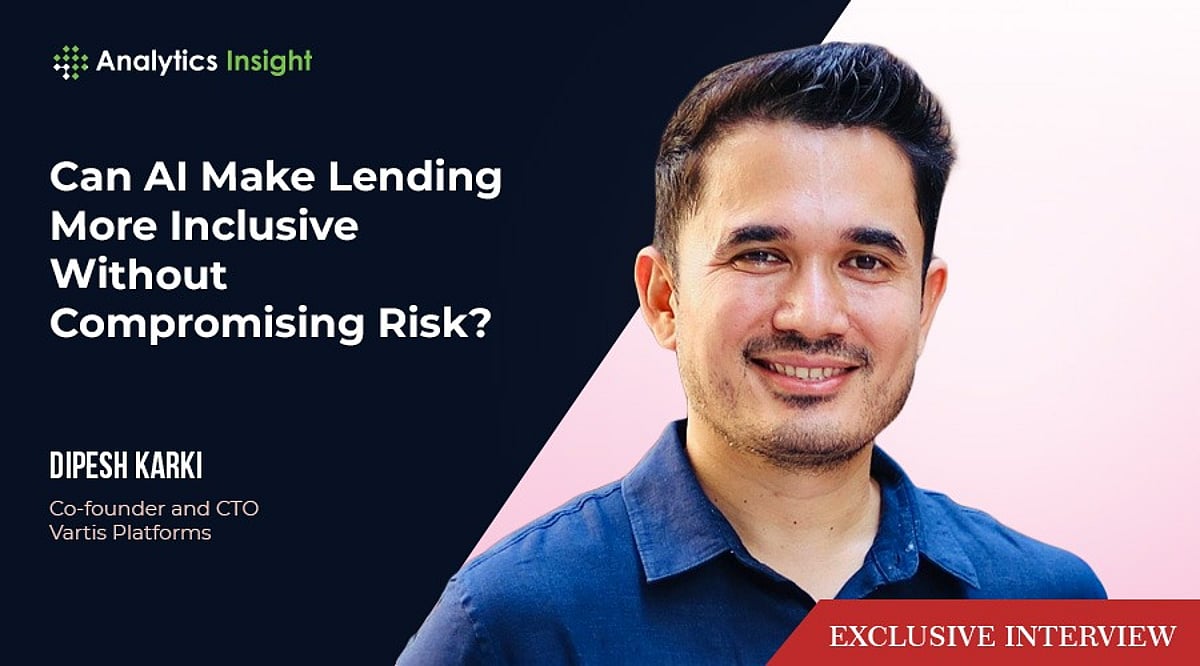
  • How AI-Native Lending Is Reshaping Credit Delivery: An Interview with Vartis Platforms’ Dipesh Karki

    How AI-Native Lending Is Reshaping Credit Delivery: An Interview with Vartis Platforms’ Dipesh Karki

    Artificial intelligence, machine learning, predictive analytics, and automation are transforming India’s digital lending ecosystem. Lenders are shifting from traditional assessments to data-driven decision-making, enhancing underwriting, fraud detection, collections, and portfolio monitoring. This technological evolution supports broader financial inclusion by allowing lenders to assess underserved and new-to-credit borrowers through alternative data and a comprehensive view of financial behavior.

    Dipesh Karki, Co-founder and CTO of Vartis Platforms, emphasizes that the future of lending lies in AI-native ecosystems that embed intelligence throughout the credit delivery process. In an exclusive interview with Analytics Insight, he discusses the impact of these technologies on underwriting, risk management, compliance, and how Vartis Platforms is using data science to foster a more efficient and inclusive lending environment. Here are the excerpts from the interview:

    How are AI, Machine Learning, and Automation Transforming Underwriting and Risk Management in Digital Lending?

    The biggest shift we are seeing in digital lending is the move from static, rules-based underwriting to intelligent, data-driven decision-making. Traditionally, lending decisions relied heavily on bureau scores and predefined eligibility criteria. While those remain important, they often provide only a partial view of a borrower’s financial profile.

    AI and machine learning allow lenders to analyse a much broader set of signals and identify patterns that are difficult to detect through conventional methods. These models can continuously learn from repayment behaviour, portfolio performance, and changing market conditions, helping improve risk assessment over time.

    From a risk management perspective, AI is enabling more proactive monitoring. Rather than assessing risk only at the point of loan origination, lenders can continuously evaluate portfolio health, identify early warning signals, and take corrective action before risks escalate.

    Automation complements this by streamlining operational processes such as application screening, verification, fraud checks, and policy enforcement. This not only improves efficiency but also ensures greater consistency in decision-making. Ultimately, the combination of AI, machine learning, and automation is helping the industry build lending systems that are faster, more scalable, and better equipped to manage risk.

    Why is Alternative Data Becoming Increasingly Important in Expanding Credit Access Beyond Traditional Bureau-Led Assessment Models?

    India has made significant strides in expanding access to formal credit, but a large segment of the population remains either new-to-credit or underrepresented in traditional credit bureau systems. If lenders rely solely on bureau data, they risk excluding many creditworthy individuals who simply lack an extensive borrowing history.

    Alternative data helps address this challenge by providing additional insights into a borrower’s financial behaviour and repayment capacity. With the growth of digital financial services, lenders today can evaluate indicators such as cash-flow patterns, income consistency, transaction behaviour, and other consent-based financial data points to build a more comprehensive risk profile.

    The emergence of digital public infrastructure and frameworks that enable secure data sharing is further accelerating this shift. Instead of assessing borrowers based only on their past credit history, lenders can increasingly evaluate their current financial health and behavioural patterns.

    This approach creates a win-win outcome. Borrowers gain access to formal credit opportunities, while lenders can make more informed risk decisions and expand responsibly into previously underserved segments. In many ways, alternative data is becoming a key enabler of financial inclusion at scale.

    What Role does Predictive Analytics Play in Improving Borrower Assessment, Repayment Forecasting, and Collections Efficiency?

    Predictive analytics has become a critical component of modern lending because it allows organisations to move from reactive decision-making to proactive risk management.

    In underwriting, predictive models help estimate the likelihood of repayment by analysing relationships between historical borrower behaviour and future outcomes. This enables lenders to make more accurate credit decisions and improve portfolio quality.

    Beyond loan origination, predictive analytics plays an important role in portfolio monitoring and repayment forecasting. By identifying behavioural patterns and early indicators of financial stress, lenders can anticipate potential delinquencies and take preventive measures before accounts deteriorate.

    Collections is another area where predictive analytics is creating significant value. Rather than applying a uniform collections strategy across all borrowers, lenders can prioritise accounts based on risk levels, predict repayment propensity, and optimise engagement strategies accordingly. This improves operational efficiency while also creating a better borrower experience.

    As lending portfolios become larger and more complex, predictive analytics will continue to be a foundational capability for improving decision-making across the entire credit lifecycle.

    How is Automation Helping Reduce Turnaround Times While Ensuring Consistency, Governance, and Regulatory Compliance?

    Historically, lending operations involved multiple manual touchpoints, which increased processing times and introduced variability in outcomes.

    Today, automated workflows can manage activities such as onboarding, KYC verification, document validation, eligibility checks, underwriting workflows, and loan servicing with far greater speed and accuracy. This significantly reduces turnaround times and improves the customer experience.

    Equally important is the role automation plays in governance and compliance. Automated systems ensure that policies are applied consistently across all applications and that decisions are made within predefined risk and regulatory frameworks. This reduces the possibility of operational errors and strengthens control mechanisms.

    From a regulatory standpoint, automation also improves transparency by creating clear audit trails and documentation for every stage of the lending process. As lending volumes continue to grow, automation will remain critical for balancing operational efficiency with accountability and compliance.

    How Could AI-Native Lending Models Reshape the Future of Credit Delivery in India?

    We are moving towards a future where AI is not simply supporting lending processes but is becoming embedded across the entire lending lifecycle. That is what defines an AI-native lending model.

    In such a model, intelligence is integrated into customer acquisition, underwriting, risk assessment, fraud detection, servicing, collections, and portfolio management. Decisions become more dynamic because models can continuously learn from new data and adapt to changing borrower behaviour and build foresights.

    For India, the opportunity is particularly significant. The combination of digital public infrastructure, increasing digital adoption, and access to richer financial datasets creates a strong foundation for AI-driven innovation in credit delivery. AI-native lending can help reduce friction in the borrowing journey, improve risk assessment accuracy, and enable a better personalization tailored to their need. At the same time, the industry must ensure that AI adoption is responsible and transparent. Explainability, fairness, data privacy, and regulatory compliance will be critical considerations as these models become more prevalent. The goal should not simply be faster lending, but smarter and more inclusive lending that benefits both borrowers and financial institutions.

    How is Vartis Platforms Leveraging Technology and Data Science to Create a More Efficient, Inclusive, and Sustainable Lending Ecosystem?

    At Vartis Platforms, technology and data science are at the core of how we build financial products and scale lending operations. With LenDenClub, InstaMoney, and Vartis One operating within a unified ecosystem, we could leverage shared technology infrastructure, AI-driven credit intelligence, and advanced analytics across multiple parts of the lending value chain.

    Our focus is on creating systems that enable faster decision-making, stronger risk management, and improved customer experiences. We use data science and machine learning to enhance credit assessment, monitor portfolio performance, strengthen fraud detection capabilities, and drive operational efficiencies.

    Through Vartis One, we are also investing in scalable technology architecture that supports both current business needs and future growth opportunities. This allows us to build modular, adaptable platforms capable of supporting evolving lending models and increasing transaction volumes.

    A key objective for us is to make lending more accessible without compromising risk discipline. By combining technology, data-driven insights, and automation, we aim to expand responsible credit access, improve operational efficiency, and create a more sustainable lending ecosystem. We believe the future of lending will be defined by organisations that can successfully balance innovation, risk management, and financial inclusion, and that is the direction we are building towards at Vartis Platforms.