
Underwriting functions have experienced their highest level of transformation through artificial intelligence, which currently dominates the financial services sector. Insurers and financial institutions are increasingly relying on machine learning models to accelerate risk assessment processes while improving predictive accuracy and making decision-making more efficient. However, the growing complexity of these systems raises significant concerns about transparency, fairness, and regulatory compliance.
Organizations face major reputational damage when automated systems fail to provide proper justifications for their results. Customers demand clear explanations behind negative outcomes, and regulators require businesses to maintain auditability. As a result, explainability systems have become essential for both business operations and ethical standards.
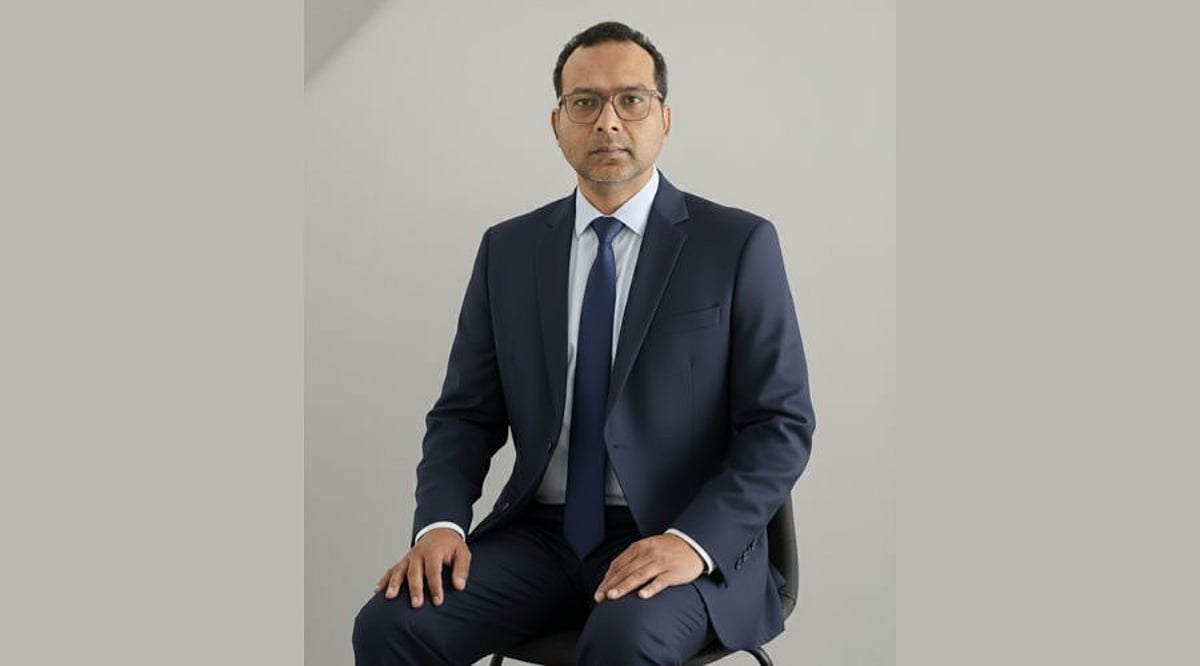
Within this evolving landscape, Jalees Ahmed has been working at the intersection of AI innovation and governance, focusing on validating explainable AI systems in underwriting environments. While data scientists design models and business teams deploy them, his role ensures that automated decisions remain transparent, consistent, and defensible under regulatory scrutiny. His work centers on validating AI outputs so underwriting decisions can be clearly explained, audited, and trusted.
“AI in underwriting cannot simply be accurate, it must be accountable,” Jalees explains. “If a customer receives an adverse decision, the organization must be able to clearly explain why, how, and based on which validated factors. Accuracy without transparency creates risk.”
Recognizing that traditional QA approaches were insufficient for probabilistic machine learning systems, Jalees developed structured validation frameworks specifically tailored for AI-driven underwriting. These frameworks focus on feature attribution testing, decision traceability, explanation consistency, and reproducibility controls. Rather than merely verifying outputs, his approach examines behavioral stability, fairness metrics, and governance alignment to ensure models operate within ethical and regulatory boundaries.
The measurable impact of this work has been significant:
- Production defects in AI underwriting models reduced by 37% through structured explainability validation testing.
- Zero major audit findings recorded by implementing traceability validation controls and strengthening documentation standards.
- AI feature validation coverage expanded from 57% to 82%, reducing data-driven decision errors by 21%.
- Automated explainability test scripts shortened model validation cycle time by 32%.
- Improved clarity and consistency in adverse action explanations contributed to a 30% reduction in underwriting decision disputes.
These improvements addressed one of the most persistent challenges in AI adoption: the “black box” problem. Machine learning systems often generate decisions that are difficult to interpret or validate, creating uncertainty for regulators and business leaders alike. Jalees responded by establishing structured validation controls for feature influence analysis and decision logging, transforming opaque systems into auditable and defensible solutions.
He also confronted the absence of standardized AI testing practices. Traditional functional testing does not adequately address model drift, probabilistic variability, or fairness risks. By introducing repeatable governance strategies for model stability, bias testing, and explanation validation, he helped embed discipline and accountability into AI lifecycle management. Fairness testing and disparate impact analysis became ongoing processes rather than one-time compliance exercises, reducing ethical, legal, and reputational risks.
Equally important was bridging communication gaps between data science teams, underwriting professionals, compliance officers, and IT stakeholders. By translating complex model outputs into business-aligned validation criteria, Jalees strengthened collaboration and decision accountability across departments.
“Explainability is not purely technical,” he notes. “It requires alignment between engineering precision and business responsibility. If teams cannot understand or defend a model’s reasoning, innovation becomes a liability rather than an advantage.”
From his perspective, the role of Quality Assurance in AI underwriting has evolved into a strategic function that safeguards trust. Data quality and feature integrity, he emphasizes, are often the hidden vulnerabilities in automated systems. Without rigorous validation, explainability can become superficial—technically present but practically insufficient.
Looking ahead, he anticipates greater regulatory scrutiny, more advanced automated AI testing frameworks, continuous model monitoring, and deeper validation of human-AI decision interactions. As underwriting becomes increasingly automated, governance and transparency will define sustainable innovation.
“The future of underwriting will not be defined by how quickly decisions are made,” Jalees concludes. “It will be defined by how responsibly they are made. Transparency is not slowing AI adoption—it is ensuring that it endures.”
As financial institutions continue to integrate advanced AI into core decision-making processes, the importance of explainability and structured validation is becoming unmistakable. In reinforcing transparency and accountability within automated underwriting systems, Jalees Ahmed’s work reflects a broader industry realization: technological progress must be matched by governance discipline, or trust—the foundation of financial services—begins to erode.
Leave a Reply