Tag: venture capital

  • Personal AI Agent Developer Instinct Secures $1 Billion Series C at $10 Billion Valuation

    Personal AI Agent Developer Instinct Secures $1 Billion Series C at $10 Billion Valuation

    Instinct, a San Francisco-based startup building personal AI agents, has raised $1 billion in a Series C funding round, pushing its valuation to $10 billion. The round was backed by Sequoia Capital, Benchmark Capital, and Coatue, signaling strong investor confidence in autonomous AI assistants.

    The company previously raised $250 million, bringing total pre-Series C funding to $350 million. Reports earlier this month hinted at the $1 billion raise at a $10 billion valuation. Instinct is developing an AI agent that goes beyond answering questions — it can autonomously perform everyday tasks like booking trips, ordering groceries, canceling subscriptions, and making phone calls through its new Concierge service.

    Instinct has also introduced inter-agent communication, allowing multiple Instinct agents to coordinate plans and share files such as documents, images, and spreadsheets. The company remains in early access but has already attracted over 100,000 users, facing capacity pressure from rising demand. The fresh capital will help expand infrastructure and bring the product to more consumers.

    Competition in the personal AI space is heating up. Meta recently launched Muse, a task-oriented AI assistant. Instinct’s funding gives it substantial resources to develop privacy and security measures, including isolated environments, temporary credentials, and execution controls. The company aims to turn its early-access product into a widely used consumer service as demand for truly autonomous personal agents continues to grow.

  • AI Infrastructure, Biotech, and Enterprise Startups Secure Major Funding This Week

    AI Infrastructure, Biotech, and Enterprise Startups Secure Major Funding This Week

    This week’s venture capital activity demonstrates that investor enthusiasm for artificial intelligence extends well beyond foundational models. Five startups spanning optical connectivity, drug discovery, procurement, enterprise workflows, and retail automation collectively raised significant funding, highlighting a broadening of AI investment into infrastructure and practical applications.

    PicoJool Raises USD 27.5 Million for AI Optical Connectivity

    PicoJool, a developer of optical connectivity products for AI data centers, closed a USD 27.5 million Series A round led by Socratic Partners, with participation from Hudson River Trading. The company’s total funding now stands at USD 39.5 million, following an earlier USD 12 million seed round. PicoJool’s portfolio includes 200G VCSELs, microVCSELs, and optical links designed for hyperscale AI workloads. The new capital will be used to expand teams and facilities in the United States and Taiwan, as well as to boost manufacturing capacity to meet demand from hyperscalers and data-center operators.

    BigHat Biosciences Closes USD 75 Million Series C for AI-Designed Therapeutics

    Biotech startup BigHat Biosciences secured a USD 75 million Series C round co-led by DFJ Growth and Premji Invest, bringing its total funding to USD 223 million. The company leverages an agentic data platform to design protein therapeutics using artificial intelligence. Its pipeline includes BHB810, an antibody-drug conjugate currently in Phase 1 trials. BigHat plans to use the fresh capital to advance its clinical-stage pipeline and further develop its protein-design data generation platform.

    Axya Lands USD 17 Million CAD to Expand AI Procurement Platform

    Montreal-based Axya raised USD 17 million in Series A funding, led by McRock Capital with participation from Yamaha Motor Ventures and existing investors. The company offers AI-powered procurement software for manufacturers, covering sourcing and purchasing workflows. Axya intends to invest the proceeds in product development, AI capabilities, geographic expansion, and scaling its engineering and go-to-market teams.

    Ema Adds USD 77 Million in Series B for Enterprise AI Agents

    Enterprise AI company Ema raised USD 77 million in a Series B round led by Creaegis, with additional investments from Accel, Section 32, and Prosus. This brings Ema’s total funding to USD 140 million. The company’s platform deploys AI agents to automate corporate functions such as HR, IT, and finance, helping enterprises streamline operations.

    Thri5 Secures USD 5.4 Million Seed Round for Retail AI Execution

    Retail-focused startup Thri5 closed a USD 5.4 million seed round co-led by Whitecap Venture Partners and Mistral Venture Partners. Its AI execution platform converts retail data and recommendations into actionable in-store actions. A nine-week pilot with Wild Fork Foods reportedly delivered gains in sales, profit, and inventory accuracy, leading the retailer to expand the deployment.

    Together, these deals reflect a maturing AI funding cycle where capital is moving beyond model development into the hardware, data, biotech, and enterprise workflows that make AI operational. For startups, the challenge remains turning investment into products that deliver measurable, real-world results.

  • The Startup Playbook: Scaling, Raising Capital, and Preparing for an IPO

    The Startup Playbook: Scaling, Raising Capital, and Preparing for an IPO

    Every startup begins with a vision and a founder’s willingness to invest time, effort, and often personal funds. The journey from that humble bootstrap to a public listing on a stock exchange is complex, demanding, and full of critical decisions. Along the way, startups must prove their viability, attract the right type of capital at each stage, and build the operational and governance infrastructure that public market investors expect.

    Bootstrapping: The Foundation of Proof

    Bootstrapping means relying primarily on founder capital and revenue from early customers rather than external funding. This approach keeps control in the founder’s hands and forces a laser focus on cash management, pricing, customer demand, and product quality. It also builds the first layer of proof that the business can survive and grow organically.

    Once repeat customers appear and revenue starts to climb, the company demonstrates clear market demand. At that point, outside capital—like venture funding—can accelerate expansion into new hires, product development, sales, technology, and market entry. However, each subsequent funding round demands stronger evidence than the last.

    How Capital Needs Evolve

    The funding landscape for startups has shifted dramatically. In the first quarter of 2026, Carta reported that startups on its platform raised USD 30.4 billion. Over 60% of that capital flowed into artificial intelligence companies, highlighting a major divergence between AI startups and other sectors in private-market valuations.

    While the traditional path from Seed to Series A, B, and beyond still exists, the bar rises at every stage. Early investors may be satisfied with product-market fit and initial traction. Later investors look at revenue growth, margins, cash flow, market size, and competitive positioning. The key is to show consistent, measurable progress that justifies the next round of funding.

    The IPO Market Rebounds

    After a quiet period, the global IPO market has reopened with vigor. According to EY, the first half of 2026 saw 483 global IPOs—down slightly from 546 in the same period of 2025—but total proceeds jumped to USD 186.8 billion, nearly triple the USD 62.1 billion raised a year earlier. This indicates that fewer companies are going public, but those that do are raising substantially more capital.

    AI, infrastructure, and technology firms have attracted the strongest investor interest. For startups, this means the public markets offer access to major capital pools, but coming to market with merely a compelling story is no longer enough. Investors demand financial rigor and sustainable business models.

    India’s Growing IPO Pipeline

    India has emerged as a hotbed of startup activity with a robust IPO pipeline. Inc42 reported on September 20, 2026, that 29 Indian startups had filed draft prospectuses with SEBI, and more than 25 others were at various stages of IPO preparation. The focus has shifted noticeably toward profitability and responsible cash management.

    A perfect example is RentoMojo, which posted a profit after tax of Rs. 104.3 crore in FY26, up from Rs. 43.1 crore in FY25. Revenue grew 45.5% to Rs. 387 crore from Rs. 266 crore in the same period. Such figures show why public investors look beyond customer growth or valuation buzzwords; they want proof of revenue quality, profit, and disciplined use of capital.

    IPO Readiness Begins Long Before Filing

    Becoming a public company involves far more than a high valuation. It requires accurate financial records, robust internal controls, clear ownership documentation, legal compliance, and strong corporate governance. The finance team must be capable of producing reliable reports on a strict schedule. Employee equity records must match company records, intellectual property must sit with the correct legal entity, and related-party transactions need tight controls.

    The board of directors must have a formal structure with defined responsibilities. The U.S. Securities and Exchange Commission emphasizes dependable accounting systems, internal controls, experienced advisers, sufficient cash reserves, and a clear growth strategy as essential to IPO readiness. Waiting until the last minute to put these in place is a recipe for disaster.

    Multiple Paths to Capital

    The startup-to-IPO journey is no longer a single, linear track. Companies can blend customer revenue with venture capital, debt, strategic investment, private equity, and other funding sources. Secondary sales and tender offers allow early shareholders and employees to cash out part of their stakes before a public offering. This flexibility lets founders decide when and how to raise capital based on their specific circumstances and market conditions.

    Some startups may choose to postpone an IPO to improve profitability, expand their customer base, strengthen governance, or wait for a more favorable market window. The ability to pivot funding strategies is a valuable advantage in an unpredictable economic landscape.

    Public Markets Demand a Stronger Business

    An IPO marks a fundamental shift in how a company is evaluated. Private investors might focus on a startup’s growth potential and future prospects, but public investors scrutinize quarterly financials and operational performance. There is little tolerance for errors. The company must go beyond rapid growth; it must demonstrate sustainable revenue generation, sound unit economics, strong governance, and a compelling reason for investors to own its shares.

    In essence, the transition from bootstrapping to IPO is about building a resilient, well-managed enterprise. The role of money is central, but so is the discipline to spend it wisely and the foresight to prepare for a public lifecycle.

    Key Takeaways

    • Capital evolves with growth: startups can move from bootstrapping to VC, debt, strategic investment, and private equity as needs change.
    • Proof matters at every stage: investors scrutinize revenue quality, profitability, cash flow, market opportunity, and competitive strength.
    • IPO readiness starts early: strong financial reporting, internal controls, governance, and legal compliance are essential well before listing.

    Frequently Asked Questions

    What is bootstrapping in a startup?

    Bootstrapping means building a company using primarily founder capital and customer revenue rather than relying heavily on external funding.

    When should a startup consider venture capital?

    A startup may seek venture capital after demonstrating meaningful customer demand and a business model where additional funding can accelerate growth.

    What factors do later-stage investors evaluate?

    They often look at revenue growth, margins, cash flow, market size, customer quality, competitive position, profitability, and the ability to scale operations.

    What does a startup need before an IPO?

    Key areas include reliable financial reporting, internal controls, corporate governance, legal compliance, accurate ownership records, intellectual-property ownership, and experienced advisers.

    Does a startup have to follow a fixed path from seed funding to IPO?

    No. Companies can combine customer revenue with venture capital, debt, strategic investment, private equity, and secondary transactions, depending on their objectives and circumstances.


  • AI-Powered Startups Raise $310.7 Million in Latest Venture Capital Roundup

    AI-Powered Startups Raise $310.7 Million in Latest Venture Capital Roundup

    This week, five startups across artificial intelligence, semiconductor verification, enterprise software, HR technology, and interactive content collectively raised $310.7 million in fresh venture funding. The largest deals included a $200 million round for software development company Factory and a $53 million seed extension for enterprise AI services startup Hang Ten Systems. Investors continue to back applied AI solutions, with deals ranging from seed to Series B.

    Factory Leads with $200 Million at $5 Billion Valuation

    Software development startup Factory secured the largest disclosed round this week, raising $200 million at a $5 billion valuation. The financing included Blackstone, Khosla Ventures, Sequoia Capital, Insight Partners, Evantic Capital, Sound Ventures, NEA, Mantis VC, and Clearlake. The company said total funding now exceeds $400 million. Factory develops autonomous software-engineering systems for enterprises and plans to use the new capital for research, product development, and global expansion. Customers include NVIDIA, Blackstone, RBC, Palo Alto Networks, Adobe, and T-Mobile.

    Hang Ten Systems Adds $53 Million for Enterprise AI

    Enterprise AI services startup Hang Ten Systems, founded by former Infosys CEO Vishal Sikka, raised an additional $53 million in seed funding. The round was led by Xora Innovation, backed by Singapore’s Temasek, with participation from Mayfield and Aramco Ventures. This brings Hang Ten’s total funding to $85 million after its $32 million seed round in June. The company helps large enterprises apply AI to software development, migrations, finance, and analytics. The new funds will support engineering and consulting expansion, increased customer delivery capacity, and further development of its AI platform and reusable skills library.

    Flam Secures $40 Million Series B for AI Interactive Content

    AI interactive-content startup Flam raised $40 million in Series B funding led by QED Investors. Other participants included Claypond Capital, Martin Chavez, Olivier Pomel, Venky Harinarayan, and Shah Rukh Khan, with existing investors RTP Global and Dovetail increasing their stakes. Flam plans to direct the funding toward AI research, product development, and international enterprise expansion. The company reports more than 100 enterprise customers, including Google, Emirates, and KFC, using its technology for marketing, product visualization, learning, entertainment, and customer engagement.

    BoomerangHR Raises $12.7 Million for AI-Powered HR Platform

    AI-powered HR platform BoomerangHR raised $12.7 million in seed funding from Kalos Ventures, Album Ventures, Monta Vista Capital, Capital Eleven, and Strada Education Foundation. The company focuses on employee offboarding and maintaining relationships with former employees, enabling businesses to identify potential candidates for future roles. Its platform combines automated offboarding processes with verified alumni profiles, job matching, and reporting. BoomerangHR said the funding will support building long-term talent networks and expanding adoption among employers.

    VerifAIX Raises $5 Million for AI-Driven Semiconductor Verification

    AI-native semiconductor verification company VerifAIX raised $5 million in seed funding co-led by Endiya Partners and Bluehill VC. The company plans to use the capital for product development, customer deployments, and expansion of its engineering teams across the US, India, and Israel. VerifAIX is developing a verification platform for increasingly complex chip designs. Its technology, built around what the company calls a ‘Formal Brain’, combines AI with formal verification methods to help engineers assess whether chip designs meet intended specifications. The startup was founded in 2024 by Madhulima Tewari, Kenneth Roe, and Avner Landver.

    Closing Note

    Together, the week’s $310.7 million in disclosed funding shows continued investor interest in applied AI across multiple sectors, from enterprise software and chip verification to HR technology and interactive content. Capital is flowing into companies at various stages seeking to turn AI capabilities into commercial products and services.

  • India’s Deep Tech Rise: Lino Gandola on Investment, Talent, and the Future of Frontier Technology

    India’s Deep Tech Rise: Lino Gandola on Investment, Talent, and the Future of Frontier Technology

    India’s Deep Tech Momentum

    India is entering a transformative phase in deep technology, with artificial intelligence, space tech, robotics, quantum computing, and advanced manufacturing driving change. Strong government backing, a skilled workforce, and global investment are fueling opportunities for Indian tech companies.

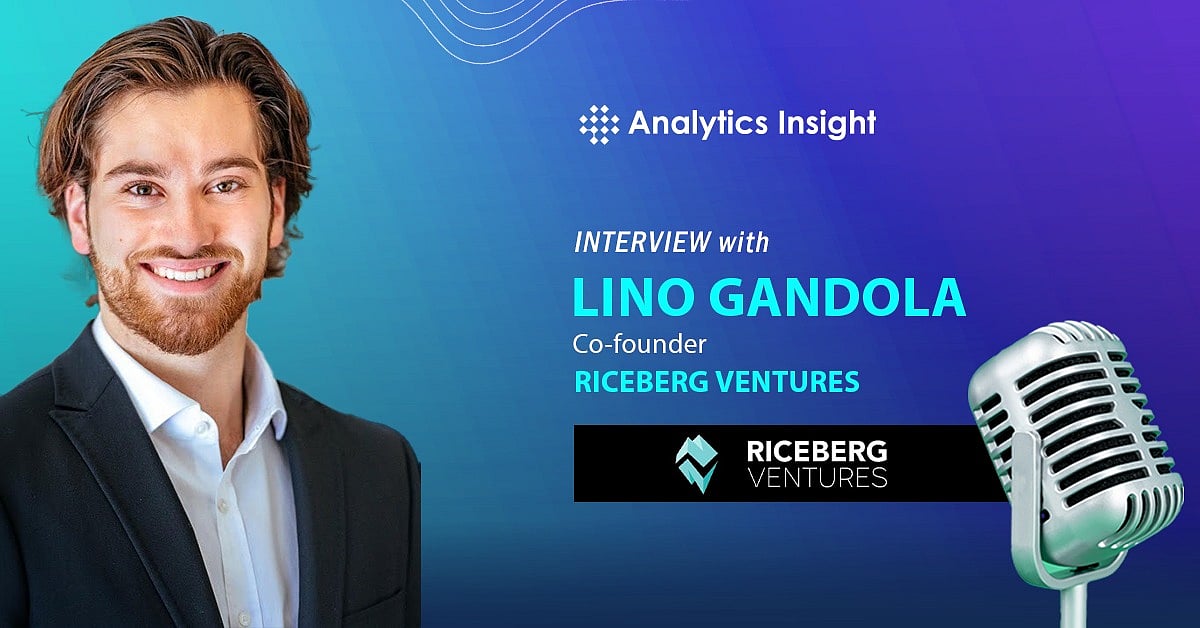
    In a recent episode of Analytics Insight Conversations, host Priya Dayalani sat down with Lino Gandola, co-founder of Riceberg Ventures, to explore India’s deep tech ascent, investment trends, and the future of frontier technology.

    Building a Global Deep Tech Fund

    Gandola explained that Riceberg Ventures is an early-stage deep tech fund investing across India, Europe, and the US, primarily at pre-seed and seed stages — sometimes before a company is even incorporated. The firm’s global approach recognizes that breakthrough tech can emerge from any hub, not just Silicon Valley.

    Why Deep Tech Now?

    Gandola noted that ChatGPT fundamentally altered the software landscape, making traditional software investing less attractive and pushing investors toward deep tech. For him, deep tech isn’t just better hardware; it’s about breakthrough technologies that can transform industries — citing fusion energy as an example of a technology with the potential to reshape energy and global supply chains.

    India’s Deep Tech Potential

    Talent is India’s greatest strength, according to Gandola. The country has a highly educated, ambitious workforce, and many Indians already lead global tech companies. He sees a growing trend of talent returning to India to build companies. Progress in the space sector — recent orbital launches and Chandrayaan-3 — is also shifting mindsets, showing that ambitious tech can be developed in India.

    Policy and Global Trends

    Government support has become crucial. The space sector, once closed to private players, now allows 100% foreign direct investment. Meanwhile, the China-plus-one strategy is bringing manufacturing and supply-chain opportunities to India, boosting its broader tech ecosystem.

    The Next Inflection Point

    Gandola pointed to industrial robotics as a technology nearing an inflection point. While humanoid household robots may still be distant, robots handling routine factory tasks could become common as companies invest heavily in the space.

  • Weekly Startup Funding Roundup: AI, Legal Tech, and Mobility Attract $5.8 Billion in Fresh Capital

    Weekly Startup Funding Roundup: AI, Legal Tech, and Mobility Attract $5.8 Billion in Fresh Capital

    Startup funding remained robust this week as investors poured capital into artificial intelligence, infrastructure, and specialized technology sectors. Five companies—Positron AI, Inspiren, Motive, The Boring Company, and Harvey—collectively announced nearly $5.8 billion in fresh funding, spanning AI chips, senior care, fleet management, underground transport, and legal technology.

    Positron AI Raises $875 Million at $5 Billion Valuation

    AI chip startup Positron AI secured $875 million in a new funding round, pushing its valuation to $5 billion, according to The Wall Street Journal. This marks a sharp increase from its $1.06 billion valuation earlier this year. Based in Reno, Nevada, Positron develops specialized processors for running AI models, focusing on inference. Its upcoming Asimov chip uses a memory-first architecture and can offer up to 2.3 terabytes of memory per chip. The company has already shipped around 50 Atlas servers to customers including Oracle, Jump Trading, and Parasail.

    Inspiren and Motive Bring AI into the Physical World

    Senior-living technology company Inspiren raised $70 million in Series C funding at a valuation exceeding $500 million. NewView Capital led the round, bringing Inspiren’s total funding to $225 million. The company develops technology that combines ambient awareness with resident data to help care teams identify emergencies and changes in residents’ conditions.

    Meanwhile, physical-operations platform Motive secured more than $1.3 billion in growth financing from General Catalyst’s Customer Value Fund. Motive said its annual recurring revenue has crossed $600 million, having grown 30% year over year. The company plans to use the capital to expand its AI platform, product development, and go-to-market operations.

    UAE Leads $3 Billion Round for The Boring Company

    Elon Musk’s tunneling company, The Boring Company, raised $3 billion in a Series D funding round led by the United Arab Emirates, taking the company’s valuation to $23 billion. Other participants included Andreessen Horowitz, Sequoia Capital, Human Capital, Vy Capital, and Valor Equity Partners. The funding will support plans to develop more than 150 kilometers of tunnels in the UAE, while also helping the company expand projects in Las Vegas, Nashville, and Dubai.

    Harvey Reaches $15.5 Billion Valuation

    Legal AI startup Harvey raised another $550 million, valuing the company at $15.5 billion. Diffusion and Lightspeed Venture Partners co-led the round, with existing investors including Sequoia, Kleiner Perkins, Andreessen Horowitz, and GIC also participating. According to Harvey, 80% of Am Law 100 firms now use its platform. The fresh funding will support its push to help legal and professional-services teams develop and control their own AI capabilities.

    Closing Note

    The week’s funding deals show investors continuing to back startups tackling large, specialized markets—from AI computing and senior care to fleet management, legal technology, and urban transport. With billions flowing into these companies, the focus is increasingly shifting from raising capital to turning ambitious technology into scalable businesses.

  • The Best Startup Podcasts for Entrepreneurs in 2026: Insights on AI, Funding, and Growth

    The Best Startup Podcasts for Entrepreneurs in 2026: Insights on AI, Funding, and Growth

    In 2026, startup podcasts have become an indispensable resource for entrepreneurs, investors, and business professionals. These shows offer a wealth of knowledge on company building, market trends, funding strategies, and technology shifts. As startups continue to explore artificial intelligence, automation, fintech, and other emerging sectors, podcasts provide accessible conversations with industry leaders and experienced founders.

    Founder Experiences Inspire New Entrepreneurs

    Founder-focused podcasts remain a magnet for audiences by sharing authentic stories of building companies from early ideas to successful businesses. Entrepreneurs openly discuss challenges such as raising capital, developing products, managing teams, and entering competitive markets. These conversations help aspiring founders understand the realities of entrepreneurship and learn practical lessons from those who have navigated the journey.

    AI Takes Center Stage in Startup Discussions

    Artificial intelligence continues to dominate startup podcasts in 2026. Founders and investors are exploring AI-powered businesses, automation tools, intelligent software, and the new opportunities created by generative AI. These discussions help entrepreneurs understand how emerging technologies can boost productivity, create innovative products, and transform traditional industries.

    Investors Share Funding Insights

    Podcasts are giving entrepreneurs unprecedented access to venture capital perspectives and funding strategies. Investors discuss shifting market conditions, startup valuations, business models, and what makes a company attractive for investment. As funding environments become more focused on strong fundamentals, founders are learning how to build sustainable businesses and craft better fundraising pitches.

    New Technologies Open Startup Opportunities

    Technology innovation is unlocking new possibilities across industries. Podcasts highlight developments in cybersecurity, robotics, climate technology, healthcare, blockchain, and enterprise software. These conversations help audiences understand how entrepreneurs are leveraging advanced technologies to solve real-world problems and create businesses designed for the future.

    Growth Strategies Take the Spotlight

    Modern startup discussions increasingly focus on efficient growth and long-term success. Entrepreneurs share strategies for customer acquisition, automation, team building, product development, and operational improvements. With businesses seeking smarter ways to scale, podcasts help founders discover methods to enhance performance while adapting to evolving market conditions.

    The Evolution of Startup Media

    Startup podcasts are set to remain a valuable resource for entrepreneurs and business enthusiasts as the ecosystem continues to evolve. By blending expert opinions, founder stories, and industry analysis, these platforms offer a window into the future of business. As new technologies emerge, startup conversations will keep shaping how companies are created and expanded globally.

  • Samsung Reportedly Plans €1 Billion Investment in AI Startup Mistral at €20 Billion Valuation

    Samsung Reportedly Plans €1 Billion Investment in AI Startup Mistral at €20 Billion Valuation

    Samsung Electronics is reportedly in discussions to invest approximately €1 billion in French artificial intelligence company Mistral, a deal that could value the startup at around €20 billion. The potential investment signals deepening ties between the world’s leading memory chip maker and one of Europe’s most prominent AI developers, with implications for AI chip supply, model development, and the continent’s push for greater technological independence.

    Talks Underway, No Confirmed Agreement Yet

    According to the Financial Times, which first reported the talks, Samsung’s possible investment could be part of a larger funding round that also includes Sweden’s EQT Scaleup Europe Fund. Reuters later confirmed the discussions, noting that the commitment could reach hundreds of millions of euros. Some reports place the figure near €1 billion, though neither Samsung nor Mistral has publicly confirmed a deal.

    A €20 billion valuation would place Mistral among Europe’s most valuable private technology companies, up from its previous reported valuation of about €11.7 billion. The companies already have an existing relationship: Samsung’s venture capital unit previously invested in the Paris-based AI startup. Mistral CEO Arthur Mensch visited Samsung’s semiconductor campus in Hwaseong, South Korea, in April, where he met senior executives and discussed AI chip supply chains.

    Chip Access and Strategic Benefits

    Samsung produces high-bandwidth memory (HBM) chips essential for training large AI models, as well as advanced logic chips through its foundry business. Demand for such hardware is soaring as AI companies scale up their models, while supply remains constrained. A closer partnership could give Samsung a major customer for its AI hardware, while Mistral would gain more reliable access to the chips needed to train and run its systems.

    Reports suggest Samsung may also seek a seat on Mistral’s board, and the two companies could explore integrating Mistral’s models into Samsung devices or AI services. These terms have not been confirmed and would depend on negotiations, regulatory approvals, and corporate sign-offs.

    Europe’s Push for AI Sovereignty

    Mistral, founded in Paris in 2023, develops large language models that can be downloaded and operated independently. It has positioned itself as a European counterweight to major American AI providers and even supplies technology to the French military. European governments and companies are increasingly seeking more control over AI infrastructure, especially after recent restrictions on access to advanced American AI models.

    Mistral has already expanded its commercial partnerships. Microsoft recently agreed to spend billions on European computing infrastructure linked to the company. Meanwhile, competition from Chinese AI developers, such as Moonshot AI, is intensifying. Mensch has stated that Mistral expects annual recurring revenue to exceed $1 billion by the end of 2026, reflecting growing enterprise demand.

    Any Samsung investment would likely face European regulatory review. For now, the reported talks continue without a confirmed agreement or public funding timeline.

  • India’s Semicon 2.0 Program to Take Equity Stakes in Chip Startups, Shifting from Grants to Venture-Style Funding

    India’s Semicon 2.0 Program to Take Equity Stakes in Chip Startups, Shifting from Grants to Venture-Style Funding

    The Indian government is preparing to take equity stakes in semiconductor startups under the newly approved Semicon 2.0 program, signaling a major shift in how it supports the country’s chip industry. Instead of relying primarily on one-time grants, the Centre plans to co-invest alongside venture capital (VC) firms, providing funding to promising startups while allowing founders to retain operational control. The move aims to strengthen India’s semiconductor design ecosystem and attract greater private investment into one of the country’s most strategic sectors.

    The policy is part of the broader India Semiconductor Mission (ISM) 2.0, which received Cabinet approval earlier this week with an outlay of Rs. 1.27 lakh crore to expand domestic semiconductor manufacturing, chip design, packaging, research, and supply-chain capabilities.

    From Grants to Venture-Style Funding

    Under the new scheme, eligible semiconductor startups that obtain funding from private venture capital firms would also receive matching investment from the government on an equity basis. Unlike conventional government funding schemes, the government will not seek board representation or management control in these startups.

    The Centre also plans to exit its investments as the companies mature or obtain additional funding, recycling the capital into other semiconductor firms. More mature and larger companies would be supported through royalty payments.

    Semicon 2.0 Expands Beyond Chip Manufacturing

    Semicon 2.0 emphasizes developing every link in the semiconductor value chain, including design, packaging, materials, equipment manufacturing, research, and skilled labor. The Indian government anticipates this will build a robust ecosystem at home, reduce reliance on foreign technology, and position India as a competitive player in the global semiconductor market.

    Speaking at a media interaction on Wednesday, India Semiconductor Mission (ISM) CEO Amitesh Kumar Sinha said, The government will also match the amount brought in by investors. The Centre would invest on the same commercial terms and hold the same class of equity as private investors. He added, We don’t want to interfere in their day-to-day working, clarifying that the government would remain a financial investor without board representation. Detailed operational guidelines will be issued separately.

    Sinha also noted, When the revenue starts flowing, we’ll take back 1.5 times the amount the government has given.

    A Confidence Boost for India’s Startup Ecosystem

    This move reflects an understanding that semiconductor R&D requires patient, long-term investment. Semiconductor companies often take years to become profitable as they develop innovative products. By having the government share risks with VC funds, the program is expected to increase private financing for young enterprises and provide more stable financial conditions during the startup stage. It may also encourage more entrepreneurs to pursue semiconductor development, leveraging India’s large engineering workforce.

    Bigger Than Startup Funding

    Beyond funding individual firms, the policy signals a fundamental shift in India’s industry approach. Rather than simply offering incentives, the Indian government is positioning itself as a long-term ecosystem builder by making equity investments that foster innovation and recycle public money back into the economy.

    If the strategy succeeds, it could create a steady pipeline of domestic semiconductor firms capable of supplying products for industries such as artificial intelligence, electric vehicles, telecommunications, and defense. At a time when global competition for stable chip supplies is intensifying, India is aiming to become not just a manufacturing hub but also an innovation center.

  • DeepSeek Weighs New Funding Round Weeks After Record $7 Billion Raise

    DeepSeek Weighs New Funding Round Weeks After Record $7 Billion Raise

    Chinese artificial intelligence startup DeepSeek is already exploring another funding round, barely a month after completing its first-ever external fundraising. The move underscores the soaring capital demands of the global AI race, where companies are spending aggressively on computing infrastructure and custom chips to stay ahead.

    According to a Financial Times report, DeepSeek has begun preliminary discussions with potential investors for a new funding round that could value the company at about $71 billion before the investment. If completed, the proposed valuation would mark a sharp rise from the roughly $52 billion post-money valuation it secured after raising nearly $7 billion in late May.

    The fresh capital is expected to support expansion plans, particularly the construction of proprietary data centers and the purchase of additional AI processors needed to power next-generation models and AI agents.

    New fundraising efforts can be viewed as a large amount of money needed to build the complex infrastructure that would enable the development of cutting-edge artificial intelligence technology. Due to increased competition, more money will be spent on building computational power, not only via third-party cloud infrastructure.

    DeepSeek also builds AI chips for the inference stage, which involves the reaction of already-trained models to user queries. The firm intends to reduce its dependence on foreign hardware, optimize performance, and lower costs. It was previously reported that DeepSeek used Huawei Ascend processors alongside its existing hardware.

    DeepSeek has quickly gained a reputation as one of the most-watched Chinese AI startups because of the attention and appreciation of V3 and R1 models both internationally and among experts in the field. This success raised doubts about China’s ability to compete with leading US-based AI companies and made the startup a representative of China’s AI developers.

    With the successful completion of the proposed fundraising, DeepSeek will have significantly more financial resources to invest in infrastructure construction and chip development in the competitive AI environment.