Tag: workforce transformation

  • How AI Is Revolutionizing Business Operations in 2026: Automation, Insights, and Strategy

    How AI Is Revolutionizing Business Operations in 2026: Automation, Insights, and Strategy

    AI Becomes an Everyday Business Tool

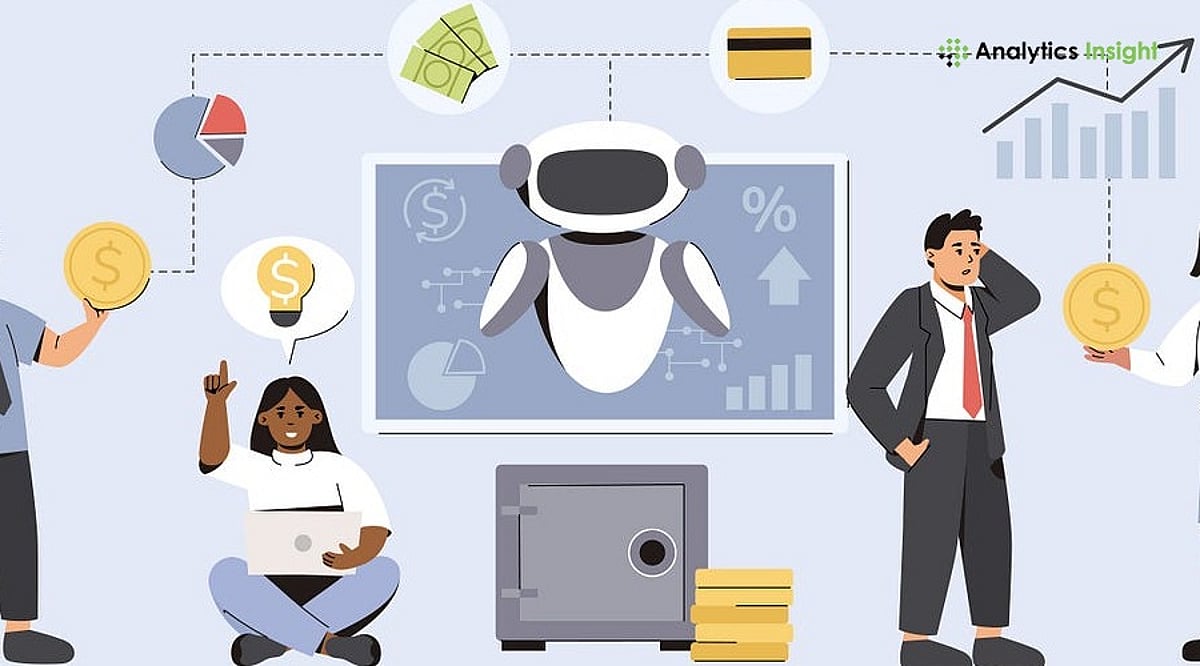
    By 2026, artificial intelligence has moved far beyond experimental projects and into the core of daily business operations. Companies across industries are embedding AI into workflows to automate repetitive tasks, analyze vast datasets, improve customer interactions, and support faster, more informed decision-making. Rather than a standalone technology, AI now functions as an integrated capability that augments human effort.

    Automation and Operational Efficiency

    One of the most visible impacts of AI is automation. Routine activities such as data entry, scheduling, paperwork, and handling common customer inquiries are increasingly handled by AI systems without direct human involvement. This frees employees to focus on higher-value work that requires judgment, creativity, and interpersonal skills. Machine learning algorithms also analyze operational data to uncover patterns that might escape human notice, helping teams optimize processes and reduce inefficiencies.

    Transforming Customer Service

    Customer support has been reshaped by AI-powered chatbots and virtual assistants that provide round-the-clock assistance. These tools handle high-volume, repetitive queries, while more complex issues are escalated to human representatives. Generative AI further empowers support teams by drafting responses, summarizing conversations, and quickly retrieving relevant information, enabling faster resolution and improved customer satisfaction.

    Data-Driven Decision-Making

    AI-driven analytics platforms turn raw operational, financial, and customer data into actionable insights. Predictive analytics help businesses forecast demand, identify risks, and optimize supply chains through inventory tracking and threat detection. While AI enhances decision-making with richer information, human judgment remains essential for evaluating options and making strategic choices.

    Generative AI in the Workplace

    Generative AI tools have expanded the range of tasks that can be accelerated or automated. Employees use them to draft emails, compile reports, brainstorm ideas, and support research. Software developers leverage AI for code generation and documentation, while marketing teams create campaign content more efficiently. However, AI-generated outputs require human review to ensure accuracy and relevance, as errors or misleading information can occur.

    Evolving Workforce Roles

    Rather than replacing jobs, AI is transforming roles by taking over routine components. Employees now need new skills such as data literacy, critical thinking, AI tool management, and validation of machine-generated outputs. Organizations are rethinking workforce planning to determine which tasks remain human-led and which can be automated, balancing efficiency with the need for human oversight.

    Challenges and Considerations

    The widespread adoption of AI brings significant challenges. Data privacy, cybersecurity, accuracy, transparency, and responsible use are top concerns. Companies must establish clear policies on what data can be fed into AI systems and how to protect sensitive information. Employee training and ongoing human oversight are critical to mitigate risks and ensure ethical deployment.

    AI as a Strategic Capability

    By 2026, leading organizations view AI not merely as a technology but as a core business capability that influences automation, customer service, data processing, content creation, and personnel management. Success depends not only on adopting AI but on integrating it thoughtfully into processes while preserving human decision-making and education. The result is a partnership where AI handles routine tasks and people focus on strategic, creative, and relational work.

    Frequently Asked Questions

    • How is AI changing business operations in 2026? AI automates repetitive tasks, analyzes data, improves customer service, and supports faster, informed operational decisions across departments.
    • Which business functions are using AI? AI is deployed in customer service, finance, marketing, human resources, supply chains, and other operational areas.
    • How does AI improve customer service? AI-powered chatbots handle routine queries around the clock, allowing human representatives to focus on complex issues.
    • Can AI replace human employees completely? No. AI primarily supports employees by automating repetitive work, while human judgment, creativity, and decision-making remain essential.
    • What challenges do businesses face when adopting AI? Key challenges include data privacy, cybersecurity, accuracy, transparency, responsible usage, employee training, and maintaining human oversight.

  • Former Microsoft Security Chief Warns Employee Disengagement Could Undermine Insurance AI Adoption

    Former Microsoft Security Chief Warns Employee Disengagement Could Undermine Insurance AI Adoption

    Insurance companies racing to adopt artificial intelligence are overlooking a critical threat: employee apathy. Sarah Armstrong-Smith, former chief security advisor at Microsoft and now executive director at Secure Horizons, issued this warning while opening the Dive In Festival 2026 on Tuesday.

    AI Adoption Creates New Workforce Risk

    Armstrong-Smith emphasized that the speed of AI adoption is forcing companies to confront the human impact of technological change faster than during previous industrial revolutions.

    “The real difference is speed. The speed of change is at a rate we have never experienced before,” she said.

    Insurance brokers and agents are increasingly pressured to use AI for quoting, customer service, marketing, and administrative tasks while still maintaining the advice and relationships central to the intermediary channel.

    A September survey commissioned by the Independent Insurance Agents & Brokers of America found that 61% of consumers were more likely to choose an agent using AI for faster, more personalized service. However, 87% said having a human agent remained important when making insurance decisions.

    Adoption among agencies remains uneven. First Connect’s 2026 survey of 238 independent agents found only 35% were using AI in day-to-day operations, though 53% were optimistic about its impact. Meanwhile, 77% reported increased client expectations around quote and binding speed.

    ‘The Most Dangerous Thing is Apathy’

    Armstrong-Smith said companies must balance moving quickly enough to stay competitive with adopting technology faster than employees can adapt. She warned that employees concerned about automation replacing their jobs could become less willing to contribute knowledge, test systems, or redesign workflows.

    “The most dangerous thing that happens to our organization is not AI. It’s apathy, because people stop caring,” Armstrong-Smith said.

    Human Judgment Remains Critical

    Armstrong-Smith stressed that AI does not remove human accountability. People decide how the technology is used, the authority given to it, and how its decisions affect others.

    “The human is always in that value chain,” she said.

    Gabby Joyner, head of WTW’s employee experience business for Europe, echoed that human judgment, connection, and collaboration will remain critical as technology takes on a greater role in insurance.

    Dive In 2026 marks the 12th and final edition of the global insurance festival focused on diversity, inclusion, culture, and talent. Since its launch, the event has brought together nearly 200,000 people worldwide.

  • How AI Is Transforming Jobs, Leadership, and Business Strategy for the Future of Work

    How AI Is Transforming Jobs, Leadership, and Business Strategy for the Future of Work

    Artificial intelligence is reshaping business strategy, workforce planning, and leadership priorities. While many organizations have yet to realize measurable gains from AI, others are seeing significant improvements in productivity and job redesign. This article explores expert insights and the latest research on AI’s growing impact on jobs, business strategy, and the future of work.

    Two Tracks Are Opening — and They’re Pulling in Opposite Directions

    PwC’s research describes a two-track labor market. Some roles are being ‘professionalized’ by AI — made more expert, complex, and valuable. These roles are growing twice as fast as those being ‘democratized,’ made simpler and accessible to less-skilled workers. The wage gap between the two tracks has widened 42% since 2021. For business leaders, the strategic read is uncomfortable: AI is amplifying the gap between high-value and low-value work, not compressing it.

    The most striking data point from PwC: junior roles in the most AI-exposed jobs are now seven times more likely to require skills traditionally associated with senior-level work — leadership, strategic thinking, and stakeholder management. The career ladder is compressing. Entry-level roles in AI-exposed organizations are no longer genuinely entry-level in terms of the demands they entail.

    Why Most Organizations Are Getting Zero Return

    Despite the $40 billion investment in generative AI, 95% of organizations are getting zero return as of 2025. The limiting factor isn’t model quality or access to tools — it’s leadership structure. Microsoft’s Work Trend Index, surveying 20,000 workers across ten countries, found that organizational factors (culture, management support, governance) account for twice the variance in AI impact compared to any individual skill or effort.

    According to the WEF Chief Strategy Officers Dialogue 2026, the future of jobs will be shaped less by technology than by leadership choices — particularly around inclusive reskilling, responsible AI, and the ability to anticipate signals from technology, policy, and labor markets.

    What the Research Actually Agrees On

    BCG’s April 2026 workforce analysis makes a point that cuts through both optimism and alarm: task automation is not the same as job loss. Most roles will remain, but their content will shift substantially. A BCG framework distinguishes between roles where AI absorbs expert tasks (which tends to lower wages and increase employment) versus roles where AI absorbs routine tasks (which tends to raise wages and reduce headcount). The accounting clerk versus inventory clerk comparison illustrates this precisely: both roles saw routine task automation, but accountants saw wages rise and headcount fall, while inventory clerks saw wages fall and headcount grow.

    The implication for strategy: organizations that treat AI as a simple automation question — ‘what can we eliminate?’ — will get the wrong answer. The correct question, which MIT researchers frame explicitly, is whether a given task should be automated at all — and what happens to the expertise level of the remaining work if it is.

    Where the Leadership Gap Actually Sits

    Only 26% of AI users surveyed by Microsoft said their leadership is clearly aligned on AI strategy. That statistic has stayed roughly constant for two years. Leadership teams that talk about AI in strategy documents but haven’t changed performance metrics, incentive structures, or onboarding programs are experiencing what Microsoft calls the Transformation Paradox: employees ready to work differently, inside systems still rewarding the old way.

    The WEF’s blueprint is blunt on what closes this gap: connecting strategy to skills, shifting from services to IP-led value creation, and redesigning work so people and AI perform together. The organizations getting results aren’t treating AI as a cost-cutting project. They’re treating it as a capability redesign — and building the human skills that make the AI capabilities worth having.

    Why This Matters

    Artificial intelligence is no longer just a technology initiative — it has become a business transformation priority. Leaders who successfully integrate AI into strategy, talent development, and operations will be better positioned to improve productivity, strengthen competitiveness, and prepare their organizations for the evolving future of work.

    Frequently Asked Questions

    How is artificial intelligence changing the future of work?

    Artificial intelligence is changing the nature of work by automating repetitive tasks, supporting better decision-making, and increasing demand for skills such as leadership, creativity, and critical thinking. Most experts believe AI will redesign jobs rather than replace them entirely, requiring continuous learning and workforce adaptation.

    Will AI replace jobs or create new opportunities?

    Current research suggests AI is more likely to transform existing roles than eliminate them. While certain routine tasks may be automated, organizations are also creating new positions focused on AI management, governance, data analysis, and human-AI collaboration, resulting in evolving career opportunities.

    What skills will become more valuable in an AI-driven workplace?

    Leadership, communication, strategic thinking, creativity, emotional intelligence, problem-solving, and collaboration are becoming increasingly valuable. As AI automates routine work, employees who can make complex decisions, manage teams, and apply human judgment will become even more important to organizations.

    How should business leaders prepare their workforce for AI?

    Business leaders should invest in continuous learning, reskilling programs, responsible AI governance, and organizational change management. Preparing employees to work alongside AI technologies helps improve productivity while ensuring businesses remain competitive as technology continues to evolve rapidly.

    What industries are experiencing the biggest impact from AI?

    Industries including finance, healthcare, manufacturing, retail, customer service, technology, and professional services are experiencing significant AI-driven transformation. These sectors are using AI to improve operational efficiency, automate repetitive tasks, enhance customer experiences, and support better business decisions.

  • Why Adaptive Leadership Is the Key to Business Survival in 2026

    Why Adaptive Leadership Is the Key to Business Survival in 2026

    Adaptive leadership has become a critical business capability in 2026 as organizations navigate AI disruption, economic uncertainty, workforce transformation, and rapidly changing market conditions. Unlike traditional leadership models that rely on fixed plans and hierarchical decision-making, adaptive leadership emphasizes learning, agility, trust, and informed judgment. Leaders who can respond effectively to evolving challenges, align teams during uncertainty, and make decisions with incomplete information are better positioned to drive long-term business success.

    Executive coaching programs are reporting a strange pattern this year. Leaders arrive wanting certainty: a clear answer, a fixed plan, a five-year strategy they can defend at the board level. Most of them leave wanting something different: a faster way to learn when the plan breaks. That shift, from certainty-seeking to learning-seeking, is the actual story behind adaptive leadership now.

    The term itself is not new. Ronald Heifetz and Marty Linsky developed adaptive leadership at Harvard decades ago, building on a specific distinction: technical problems have known solutions that you can delegate to an expert, while adaptive challenges require the people facing the problem to change how they think and work. What has changed is not the framework. It is how badly organizations are failing to apply it, at exactly the moment they need it most.

    The Problem Isn’t Information. It’s Attention.

    Most executives are not short on data now. They are short on the mental space to use it well. Research from Microsoft and the University of London found that constant digital interruptions can reduce effective IQ in the moment by 10 to 15 points, roughly equivalent to functioning on no sleep. Layer that onto a senior leader’s week and the math gets uncomfortable fast: Harvard Business School research shows executives spend up to 23 hours a week in meetings, and rate more than half of that time as low-value.

    This is not a productivity complaint. It is a leadership capability problem. Adaptive leadership depends on judgment, noticing what’s changed, naming the real problem before reaching for a familiar fix. That judgment requires attention; most leaders’ calendars are actively stripping away from them, one recurring meeting at a time.

    Why AI Is Exposing Leadership Gaps, Not Closing Them

    Half of CEOs reportedly believe their jobs are on the line if AI does not deliver a return, and companies plan to roughly double AI spending as a share of revenue this year. That pressure is producing a predictable but telling gap: frontline leaders are three times more likely than executives to express real concern about AI, according to DDI’s research; a readiness divide that stalls transformation precisely where it needs traction most, on the ground, not in the boardroom.

    As AI takes on more routine execution and analysis, the actual value a leader provides shifts upstream toward judgment, not authority. A better model does not rescue a leader who cannot adapt their thinking. They get exposed by one, faster than they would have been five years ago.

    What Adaptive Leadership Actually Requires

    Strip away the conference-circuit language, and the practical requirements are fairly specific. A 20,000-executive study from Wharton researchers identified six concrete skills that separate leaders who navigate uncertainty well from those who don’t: the ability to anticipate, challenge assumptions, interpret ambiguous signals, decide without full information, align people around a direction, and learn fast from what goes wrong.

    None of those six is about technology fluency. They are about judgment under incomplete information, which is precisely the skill traditional, hierarchy-based leadership models were never built to develop, because they assumed someone above you already had the answer.

    The Trust Gap Sitting Underneath All of This

    Adaptive leadership cannot function without trust, and current data suggests that trust is thin. Only one in ten employees believes their feedback ever leads to visible action, a gap that quietly tells teams their input doesn’t matter, regardless of what’s said in town halls. More than half of leaders globally report feeling “used up” by the end of an average day, and DDI’s research names this pattern “quiet cracking,” a slow erosion of motivation that looks fine on the surface until performance drops without warning.

    That combination of exhausted leaders, unconvinced employees, and AI pressure compounding both is the real 2026 leadership environment. Adaptive leadership is not a competitive advantage layered on top of business as usual. For a growing number of organizations, it is the only model left standing once the certainty-based one stops working.

    Why It Matters

    Organizations today are facing challenges that cannot be solved through traditional management practices alone. AI, shifting market conditions, changing workforce expectations, and global economic uncertainty require leaders to make decisions without having complete information. In this environment, the ability to learn quickly and adapt becomes more valuable than the ability to predict every outcome. Adaptive leadership helps businesses respond faster to emerging risks, identify opportunities earlier, and build stronger trust across teams. It encourages continuous learning, open communication, and greater organizational flexibility. Companies led by adaptive leaders are often better equipped to manage transformation initiatives, navigate disruption, and maintain employee engagement during periods of change.