Tag: XRP

  • Top Altcoins to Watch in July 2026: Beyond the Altcoin Season Slowdown

    Top Altcoins to Watch in July 2026: Beyond the Altcoin Season Slowdown

    Key Takeaways

    • Bitcoin dominance remains high, delaying a broad altcoin season.
    • AI, RWA, DeFi, and Layer-1 ecosystems continue to attract the strongest investor interest.
    • Ethereum, Solana, Chainlink, Sui, Ondo Finance, TAO, Render, Hyperliquid, Avalanche, and XRP are among the top projects to watch.

    As of July 2026, Bitcoin continues to dominate the cryptocurrency market, with many altcoins unable to match its recent performance. The long-anticipated altcoin season has yet to materialize. Experts note that Bitcoin dominance remains near 58–60%, while the Altcoin Season Index hovers around 30–35. A true altcoin season typically begins only when at least 75% of leading altcoins outperform Bitcoin over a 90-day period—a condition that has not been met. This suggests that most investors still favor Bitcoin over smaller cryptocurrencies. Market analysts believe the next rally may benefit only a select group of strong projects rather than the entire altcoin sector.

    Ethereum Holds Its Lead

    Ethereum continues to rank among the strongest altcoins despite the slow market. The blockchain supports decentralized finance (DeFi), stablecoins, and tokenized real-world assets. Its Layer-2 networks help lower transaction fees and improve speed. Large financial firms continue to choose Ethereum due to its trusted network and vast developer community. Although its price has lagged behind Bitcoin recently, Ethereum retains strong long-term value. Many experts believe it could be one of the biggest winners once market activity picks up.

    Solana Continues to Impress

    Solana has established a strong foothold through fast transaction speeds and low costs. It serves a growing variety of decentralized applications, including DeFi, NFT collectibles, blockchain gaming, and other user-facing services. New applications are constantly being built on Solana, fostering an ecosystem that thrives despite bearish sentiment. Institutions are also becoming more engaged with Solana, making it a highly discussed cryptocurrency heading into July 2026.

    Chainlink Benefits From Strong Demand

    Chainlink has become one of the most important infrastructure projects in blockchain. Its oracle system enables smart contracts to receive secure real-world data. The project also plays a key role in cross-chain communication and tokenized real-world assets. As banks and financial companies show greater interest in blockchain technology, demand for Chainlink’s services is likely to increase. Strong utility and widespread adoption continue to support its long-term outlook.

    Sui and Ondo Finance Stay Among Top Picks

    Sui has gained attention as one of the fastest-growing Layer-1 blockchains. The network has attracted many developers, blockchain games, and staking users. Strong ecosystem growth has helped Sui earn a place among leading altcoins this year. However, scheduled token unlocks may create short-term price pressure.

    Ondo Finance has become a major name in the real-world asset (RWA) sector. The platform offers tokenized Treasury products, bonds, and other financial assets. Since tokenized assets have become a hot trend in 2026, Ondo Finance continues to receive strong support from market analysts.

    AI Projects Keep Market Interest Alive

    Artificial intelligence remains one of the strongest themes in crypto. Bittensor (TAO) has attracted attention through its decentralized AI network that connects machine learning models with developers. Render has also become important by providing decentralized GPU power for AI, 3D graphics, and digital content creation. As AI technology expands across industries, both cryptocurrencies continue to attract investors seeking long-term opportunities beyond traditional blockchain projects.

    Hyperliquid, Avalanche, and XRP Stay Relevant

    Hyperliquid has emerged as one of the fastest-growing decentralized futures trading platforms. High trading volume and strong liquidity have helped the project gain popularity in DeFi.

    Avalanche remains an important blockchain focused on enterprise solutions, gaming, and custom blockchain networks. Many companies continue to test its technology for large-scale business use.

    XRP still holds a strong position due to its focus on cross-border payments. Financial institutions continue to explore its payment technology, while investors closely follow legal developments that may influence future adoption. Although price performance has been mixed, XRP remains among the largest cryptocurrencies by market cap.

    Strong Narratives Shape the Market

    In July 2026, the market is more selective than in prior cycles. Instead of a broad rally across hundreds of assets, capital is flowing into projects with tangible value and advanced technology. Areas that have outperformed—and are likely to continue if sentiment shifts—include artificial intelligence, tokenization of real-world assets, blockchain infrastructure, decentralized finance, and high-performance Layer-1 networks.

    Final Outlook

    July 2026 presents a cautious but promising outlook for altcoins. Bitcoin continues to dominate, yet several established projects stand out for their strong technology, active ecosystems, and practical use cases. Ethereum, Solana, Chainlink, Sui, Ondo Finance, Bittensor, Hyperliquid, Render, Avalanche, and XRP remain among the top cryptocurrencies to watch. A full altcoin season has not arrived, but these projects appear well-positioned to benefit if market conditions improve during the second half of the year.

    Frequently Asked Questions

    1. Why hasn’t the altcoin season started yet?

    Bitcoin dominance remains around 58–60%, and the Altcoin Season Index is well below the level typically associated with a broad altcoin rally.

    2. Which sectors are expected to lead the next crypto rally?

    Artificial intelligence (AI), real-world assets (RWA), DeFi, blockchain infrastructure, and high-performance Layer-1 networks are considered the strongest narratives.

    3. Why is Ethereum still a top altcoin?

    Ethereum continues to lead in DeFi, stablecoins, tokenized assets, and developer activity, making it one of the most established blockchain ecosystems.

    4. Which emerging altcoins are gaining momentum?

    Sui, Ondo Finance, Hyperliquid, Bittensor (TAO), and Render have attracted attention due to ecosystem growth, AI adoption, and real-world utility.

    5. Should investors expect all altcoins to rally together?

    Not necessarily. Current market conditions suggest capital is likely to favor fundamentally strong projects rather than the entire altcoin market.

  • XRP Price Today: Breakout Setup Strengthens as SEC and CFTC Classify It as a Digital Commodity

    XRP Price Today: Breakout Setup Strengthens as SEC and CFTC Classify It as a Digital Commodity

    XRP traded near $1.08 after a difficult first half of 2026, while technical indicators pointed to a possible breakout and U.S. regulators formally classified the token as a digital commodity. The token lost 27.1% in the first quarter and another 22.4% in the second quarter, yet analysts now identify a rare alignment of chart signals and seasonal trends that could support a recovery. At the same time, a joint SEC-CFTC interpretive release removed long-running uncertainty over XRP’s status under U.S. law.

    Technical Setup Points to a Breakout Attempt

    On the daily TradingView chart, XRP remains inside a descending broadening wedge. Traders often view that pattern as a late-stage accumulation formation. The Relative Strength Index has also formed a bullish divergence. Meanwhile, buyers continue to defend the local bottom near $1.05.

    Historical data from CryptoRank shows that XRP has not posted a negative third-quarter close in the past seven years. July has gained 4.19% so far, and previous summer reversals produced sharp rebounds after weak June performance. In July 2023, XRP rallied 47.6% after an early-summer decline. Likewise, a similar reversal in July 2025 produced a 35% return.

    To confirm a breakout from the wedge, buyers must push the price above the $1.12-$1.18 resistance zone. A successful move could open a path toward medium-term targets between $1.45 and $1.60, representing a projected upside of about 50%.

    Nevertheless, broader market weakness and slower inflows into U.S. spot XRP ETFs could limit short-term gains. Even so, the current consolidation continues to build a base ahead of the next directional move.

    The SEC and CFTC Formally Classify XRP as a Commodity

    On March 17, 2026, the Securities and Exchange Commission and the Commodity Futures Trading Commission published a joint interpretive release that named XRP as a digital commodity. The agencies issued the document under Release Numbers 33-11412 and 34-105020.

    The 68-page release divides crypto assets into five categories: digital commodities, digital collectibles, digital tools, payment stablecoins, and digital securities. Only digital securities fall fully under SEC jurisdiction, while the CFTC oversees digital commodities.

    The release also listed Bitcoin, Ether, Solana, Dogecoin, Cardano, Avalanche, Chainlink, Polkadot, Hedera, Litecoin, Bitcoin Cash, Shiba Inu, Stellar, Tezos, and Aptos in the digital commodity category. Reports counted either 16 or 18 named assets, depending on how examples in the document were interpreted.

    According to the release, a digital commodity derives its value from the programmatic operation of a functional crypto system and from supply and demand dynamics rather than from expectations tied to managerial efforts. The agencies applied that standard to XRP since the XRP Ledger operates independently of Ripple’s managerial control.

    Read More: XRP Slips to $1.10 Despite XRPL Crossing 8 Million Accounts

    A Broader Policy Shift Takes Shape

    The release also addressed when a non-security crypto asset may become part of an investment contract and when that status may end. In addition, it discussed airdrops, protocol mining, protocol staking, and wrapped versions of non-security assets.

    The guidance followed the SEC’s creation of the Crypto Task Force in January 2025 and the launch of Project Crypto as a joint SEC-CFTC initiative in January 2026. The agencies also announced a memorandum of understanding shortly before issuing the release.

    SEC Chair Atkins stated at the DC Blockchain Summit that the agency is not the ‘securities and everything commission anymore.’ CFTC Chair Selig said the wait was over and pledged to establish rules that would allow the crypto industry to operate onshore.

    What’s Next?

    XRP continues to trade within a key technical pattern as buyers target a breakout above the $1.12–$1.18 resistance zone. At the same time, the SEC and CFTC have officially classified XRP as a digital commodity, removing a major regulatory uncertainty while market participants watch for the next price move.

    Join our WhatsApp Channel to get the latest news, exclusives and videos on WhatsApp

  • XRP Price Analysis: Can Ripple Recover Amid Slowing Whale Activity and ETF Demand?

    XRP Price Analysis: Can Ripple Recover Amid Slowing Whale Activity and ETF Demand?

    XRP is trading near $1.09 as whale activity and ETF demand weaken, leaving investors questioning its next move. The cryptocurrency has dropped about 2% in the last 24 hours, with daily trading volume above $1.1 billion and a total market value close to $68 billion. Despite the decline, XRP remains the sixth-largest cryptocurrency by market capitalization.

    Large investors, known as whales, have historically played a major role in XRP price movements. However, recent blockchain data shows Binance whale withdrawals have dropped to around 885 million XRP, the lowest level in over two months. This suggests major holders are becoming more cautious. Additionally, large XRP transactions have become less common, coinciding with weaker institutional interest. While this does not guarantee a sharp decline, it removes a key source of buying support.

    Exchange-traded funds (ETFs) have been a major topic in the crypto market, but recent figures show XRP investment products recorded about $7.18 million in net outflows. This marks a shift from stronger inflows earlier in the year, reflecting a cautious mood across the wider market. Many investors are waiting for better conditions before committing new capital.

    Technically, XRP is near a crucial support zone between $1.08 and $1.10. Buyers have defended this range multiple times in recent months. If XRP stays above this level, a recovery could target $1.20, then $1.35, and potentially $1.50. On the downside, $1.00 remains the key support; a break below could increase selling pressure.

    Despite market weakness, Ripple continues to expand its global payment network and develop the XRP Ledger. Recent projects focus on tokenized assets, decentralized finance, stablecoins, and business solutions. Regulatory approvals in Europe could accelerate adoption among banks and financial institutions.

    Market sentiment around XRP is mixed. Some investors are optimistic about Ripple’s business growth, while others remain cautious due to slowing whale activity and ETF demand. The broader crypto market also influences XRP, with Bitcoin and other major assets often setting the direction.

    For XRP to recover, several conditions need to improve: a return of strong whale buying, better ETF inflows, and clearer regulatory frameworks. The next few weeks will be critical. If the $1.08–$1.10 support holds, a move toward $1.20 is possible. If it breaks, sellers may gain control.

    Key Takeaways:

    • XRP holds a crucial support zone between $1.08 and $1.10 despite recent selling pressure.
    • Whale activity and ETF inflows have slowed, reducing short-term bullish momentum.
    • Ripple continues to expand its payment network and XRP Ledger, supporting long-term growth.

    FAQs

    1. What is XRP’s current price?
    The token trades near $1.09. It remains the sixth largest cryptocurrency by market capitalization despite a 2% decline over the last 24 hours.

    2. Why has XRP come under pressure?
    Reduced whale activity and a drop in large transactions have weakened buyer support. Additionally, institutional investors have pulled money out, leading to $7.18 million in net ETF outflows.

    3. What is the key support level for XRP?
    The immediate support zone lies between $1.08 and $1.10. If sellers break this range, the next vital psychological and technical floor to watch rests at $1.00.

    4. Can XRP recover in the coming weeks?
    A recovery remains entirely possible. However, the market first needs to see a return of aggressive whale buying, positive institutional ETF inflows, and improved momentum across the broader cryptocurrency landscape.

    5. What could drive XRP higher?
    Future gains depend on renewed whale accumulation and stronger institutional investment. Long-term growth could also be triggered by clearer global regulations and the ongoing expansion of Ripple’s cross-border network.

  • XRP Sentiment Hits Five-Week High as Whales Accumulate and Institutional Interest Grows

    XRP Sentiment Hits Five-Week High as Whales Accumulate and Institutional Interest Grows

    XRP has seen a clear improvement in market sentiment, with trader confidence reaching its highest level in five weeks. After a long phase of slow price movement and cautious trading, many investors now expect the digital asset to recover. The latest market data shows that conversations around XRP have become much more positive, which has helped improve the overall mood across the crypto market.

    Better Market Mood Brings Fresh Hope

    The recent change in sentiment comes after XRP spent several weeks below its earlier highs. During that time, many traders waited on the sidelines as the market lacked strong momentum. Now, the situation has started to change as buying interest slowly returns.

    Many analysts believe that improving confidence could support a price recovery if the broader cryptocurrency market remains stable. A stronger market mood often attracts more buyers, especially when other important indicators also begin to improve.

    Institutional Interest Remains Strong

    Another reason behind the growing optimism is the continued interest from large financial players. Ripple’s payment network and blockchain services continue to attract attention from institutions that see long-term value in the ecosystem.

    Reports also show that investment products linked to XRP continue to receive fresh capital. This steady flow of money suggests that professional investors still view XRP as an asset with long-term potential, even after recent price weakness. Their confidence has helped support the market during periods of high volatility.

    Large Investors Continue to Accumulate XRP

    On-chain data also paints a positive picture. Large XRP holders, often called whales, have continued to add more tokens to their wallets during the recent market slowdown. The number of wallets that hold large amounts of XRP remains close to record levels.

    This trend is important since major investors usually make decisions based on long-term expectations rather than short-term price swings. Their continued accumulation suggests that they expect higher prices in the future instead of preparing to sell.

    Lower Exchange Supply Supports the Market

    Another encouraging signal comes from cryptocurrency exchanges. Recent data shows that fewer XRP tokens remain available on exchanges compared to earlier periods. This means more investors have moved their holdings into private wallets instead of keeping them ready for sale.

    A lower exchange balance can reduce selling pressure as fewer coins are immediately available for trading. If buying demand continues to grow while available supply remains lower, prices may receive additional support.

    Futures Market Shows Rising Confidence

    The derivatives market also reflects stronger interest in XRP. Futures trading volume has increased, while open interest has continued to move higher. Rising open interest means that new money has entered the market rather than existing traders simply closing and reopening positions.

    Technical Picture Begins to Improve

    Technical analysts have also noticed signs of strength. XRP has managed to hold several important support levels after weeks of sideways trading. Buyers have repeatedly stepped in whenever the price moved close to these areas.

    As long as these support zones remain intact, many analysts believe XRP has a better chance of testing higher resistance levels. A successful move above those barriers could attract additional buyers and increase upward momentum.

    Stronger Crypto Market Adds More Support

    The wider cryptocurrency market has also played an important role in improving XRP’s outlook. Bitcoin and Ethereum have both attracted fresh buying interest after earlier corrections. When the two largest cryptocurrencies perform well, investors often move part of their capital into large altcoins such as XRP.

    This rotation of funds has historically benefited XRP during previous market recoveries. If overall market confidence continues to improve, XRP could receive additional support from broader investor demand.

    Ripple Expands Its Ecosystem

    Ripple has also continued to strengthen its business outside of price action. The company recently joined projects that focus on open payment standards for artificial intelligence and digital payment systems. This step highlights Ripple’s effort to expand the real-world use of blockchain technology.

    Risks Still Remain

    Despite the stronger sentiment, risks have not disappeared. Cryptocurrency markets remain highly volatile and continue to react to global economic conditions, interest rate expectations and regulatory news.

    Market experts also warn that very high optimism can sometimes lead to short-term price corrections. When too many traders expect prices to rise, the market may pause before the next major move. For that reason, investors continue to watch trading volume, on-chain activity and institutional demand for confirmation that the recent optimism has solid support.

    Why This Matters

    Retail euphoria historically serves as a contrarian indicator; thus, the stark divergence between XRP’s five-week sentiment peak and its stagnant price action demands immediate caution, despite a 3.02 bullish ratio.

    Outlook Remains Positive

    Several indicators can influence XRP’s trajectory in the next few weeks. Some of the primary drivers of further progress include continued institutional inflows, a broader adoption of the technology, the formation of new payment partnerships and favorable regulatory updates. Simultaneously, higher levels of activity and a break above the critical resistance thresholds would strengthen arguments for a sustained rally.

    FAQs

    1. Why has XRP sentiment improved? Positive social media discussions, whale accumulation, and stronger market activity have boosted investor confidence.
    2. What does the 3.02 bullish-to-bearish ratio mean? It means there are about 3.02 positive comments for every negative comment about XRP on social media.
    3. Why are whale wallets important? Large investors often make long-term investment decisions, so their accumulation is viewed as a positive market signal.
    4. How do lower exchange balances affect XRP? Fewer coins on exchanges can reduce selling pressure if buying demand continues to increase.
    5. Can positive sentiment guarantee a price rally? No. Positive sentiment supports optimism, but price movements also depend on market conditions, trading volume, and broader economic factors.
  • XRP Dips to $1.10 as XRP Ledger Surpasses 8 Million Accounts

    XRP Dips to $1.10 as XRP Ledger Surpasses 8 Million Accounts

    XRP traded near $1.10 after falling 1.71% in 24 hours, tracking Bitcoin’s 1.89% decline and a broader crypto market pullback. The move occurred without major XRP-specific negative news, leaving broader risk sentiment as the primary driver.

    Meanwhile, the XRP Ledger crossed eight million activated accounts, a milestone that has renewed debate over whether rising adoption can support the XRP price while technical resistance and regulatory uncertainty limit short-term gains.

    XRP Price Tracks Bitcoin During Market Pullback

    XRP’s daily loss closely matched Bitcoin’s decline, showing the token still moves with the wider market during risk-off periods. Bitcoin traded around the mid-$64,000 range on July 16 as softer inflation data competed with geopolitical concerns. XRP lacked a separate catalyst strong enough to break that market link.

    Technical pressure also limited recovery attempts. XRP failed to move above a group of moving averages near $1.14 to $1.15, where sellers have blocked recent rallies. The $1.10 level now acts as an important short-term pivot. A hold could support another test of $1.13 to $1.15, while a break may expose the $1.06 area.

    XRP Ledger Crosses 8 Million Accounts

    The XRP Ledger Foundation said the network crossed eight million activated accounts. An activated account holds the minimum XRP reserve needed to send transactions and use services on the ledger. The figure measures funded accounts, but it does not equal 8 million individual users since one person or company may control several addresses.

    Network use has expanded beyond payments. The ledger now supports tokenized assets, stablecoins, decentralized finance tools, and automated transactions. Reports cited by the foundation place tokenized real-world assets on the network above $4 billion, while AI agents have completed more than one million transactions. Still, daily active addresses and new account growth have slowed from earlier peaks.

    XRP Forecasts Split Between $3 and Higher Targets

    The account milestone has brought XRP price predictions back into focus. Motley Fool analyst Dominic Basulto said the token’s upside ‘might be capped at $3,’ partly due to competition from dollar-backed stablecoins in cross-border payments. From $1.10, XRP would need to rise about 173% to reach that target.

    Technical analyst Javon Marks has presented a much stronger forecast. He said XRP ‘can be setting up’ for a move toward $21 and raised a longer-term level above $152. Those targets depend on XRP repeating parts of its 2017 price structure. A $21 price would require a gain of about 1,809% from $1.10, while $152 would require an increase above 13,700%.

    Regulation remains another near-term factor. The Senate Banking Committee advanced the CLARITY Act by a 15-9 vote in May, but the full Senate vote has not yet been scheduled. The bill still needs bipartisan support, while lawmakers discuss ethics and stablecoin provisions.

    Near-term charts offer a mixed view. Some analysts point to a bull flag and falling wedge breakout after months of consolidation, with $1.24 as a possible target if former resistance becomes support. Analysts also highlighted a possible head-and-shoulders pattern with a neckline near $1.06. A daily close above $1.18 could weaken the bearish setup, while a high-volume break below $1.10 may increase downside pressure over coming sessions.

  • Bitcoin ETFs See $107M Inflows, XRP Whales Accumulate 70M Tokens, and Flex Raises $70M: Crypto News Roundup

    Bitcoin ETFs See $107M Inflows, XRP Whales Accumulate 70M Tokens, and Flex Raises $70M: Crypto News Roundup

    The crypto market saw several key developments today, with Bitcoin spot ETFs recording significant inflows, XRP whales making a major purchase, and stablecoin banking platform Flex closing a substantial funding round. Here’s a detailed look at the latest crypto news.

    Bitcoin Spot ETFs See $107.80 Million in Net Inflows

    According to data from SoSoValue, Bitcoin spot exchange-traded funds (ETFs) recorded a total net inflow of $107.80 million yesterday. BlackRock’s IBIT led the pack with a daily net inflow of $80.82 million, bringing its historical total to $60.32 billion. Fidelity’s FBTC followed with a net inflow of $16.94 million, accumulating a historical net inflow of $9.94 billion.

    The total net asset value of Bitcoin spot ETFs now stands at $78.47 billion, with an ETF net asset ratio of 6.02%. The historical cumulative net inflow has reached $51.14 billion.

    XRP Whales Scoop Up 70 Million Tokens

    XRP whale wallets holding at least 1 million tokens have been actively accumulating over the past seven days, despite a sell-off from U.S. spot ETF issuers. Between July 9 and July 15, these whales purchased 70 million XRP tokens, according to data from Santiment shared by analyst Ali Martinez on July 16.

    At press time, the purchased XRP was valued at over $77 million. XRP whales now hold approximately 3.8 billion tokens, worth about $4.18 billion. This accumulation comes amid rising bullish sentiment, with technical analysis suggesting XRP could be forming an inverse head and shoulders pattern, a potential reversal indicator.

    Volvo Group Tests Proprietary Cryptocurrency

    Volvo Group has tested a proprietary cryptocurrency as part of an internal blockchain project aimed at simplifying transactions with its suppliers. Ivan Branco, Head of Information Management, AI and Analytics at Volvo Group, discussed the project in a recent interview with the Cardano Foundation.

    The experiment focused on a closed blockchain environment connecting Volvo with material and transport suppliers, rather than creating a publicly traded cryptocurrency. Branco explained that Volvo explored whether blockchain could create a shared transaction system for its supply chain partners.

    Flex Raises $70 Million for Stablecoin Banking Expansion

    California-based fintech company Flex raised $70 million in a Series B1 funding round led by Halo Fund, according to Forbes. The company plans to use the funds to expand its stablecoin-based cross-border banking platform, Flex Global, which offers multi-currency accounts supporting 32 currencies across 170 countries and regions.

    Flex’s core customers have annual revenues ranging from $3 million to $200 million and are primarily concentrated in the construction, wholesale, and import/export industries.

    CoinGecko Q2 2026 Report: Market Cap Declines

    CoinGecko’s Q2 2026 Crypto Market Report revealed that the total cryptocurrency market capitalization declined by 12.6% in the quarter, reaching $2.1 trillion by the end of June. The stablecoin market capitalization fell by 1.6% to $30.51 billion, marking the first quarterly decline since Q3 2023.

    Nominal trading volume is projected to rise 48.7% quarter-on-quarter to $113.8 billion. However, centralized exchange (CEX) spot trading volume dropped 27.9% to $1.95 trillion, hitting a monthly low of $620 billion in May. CEX perpetual contract trading volume also declined 10.0% quarter-on-quarter to $12.7 trillion.

  • XRP Bullish Sentiment Surges as XRP Ledger Exceeds 8 Million Active Accounts

    XRP Bullish Sentiment Surges as XRP Ledger Exceeds 8 Million Active Accounts

    The XRP Ledger (XRPL) has achieved a significant milestone, surpassing 8 million activated accounts for the first time. This growth comes amid rising bullish sentiment, increased DeFi activity, and a notable shift in stablecoin liquidity toward alternative Layer-1 networks.

    Market Rotation Fuels Altcoin Interest

    Current market data indicates conditions typical of an altcoin season. While Bitcoin dominance has risen above 59% for three consecutive weeks, Ethereum dominance has also gained, lifting the ETH/BTC ratio by over 10% in the past three weeks. This suggests capital is rotating beyond Bitcoin, spreading to other major cryptocurrencies.

    According to AMBCrypto, fear of missing out (FOMO) surrounding XRP and Ethereum has reached its highest level in five weeks, while Bitcoin sentiment remains neutral. XRP currently leads Ethereum in bullish discussions, with a 3.02-to-1 bullish-to-bearish comment ratio compared to Ethereum’s 2.31-to-1.

    On-Chain Activity Strengthens

    The XRP/BTC ratio has been consolidating around the 0.000015 level for nearly 10 weeks, indicating potential long-term accumulation rather than short-term speculation. Meanwhile, on-chain metrics are improving. DeFiLlama data shows total value locked (TVL) on XRPL increased by over 3% in the last 24 hours, while stablecoin supply on the network grew by more than 6%, bringing nearly $1 billion back into the ecosystem.

    In contrast, over $2 billion in stablecoins left the Ethereum network during the same period, suggesting liquidity is shifting toward XRPL and other Layer-1 alternatives. If this trend continues, XRP could benefit from stronger network participation beyond mere sentiment.

    XRPL Crosses Historic User Milestone

    The XRP Ledger has officially exceeded 8 million activated accounts, reaching 8,000,688 wallets. According to XRPScan, these wallets collectively hold 67.526 billion XRP, representing the token’s circulating supply. Unlike previous reports that counted all ever-created wallets (including deleted ones), this milestone counts only activated accounts, marking the first official time the network has achieved this level of active participation.

    With improving DeFi metrics, growing stablecoin liquidity, and extended XRP/BTC consolidation, the network is drawing increased attention. Investors will watch closely to see if these fundamentals translate into sustained market strength.

  • XRP Crash Risk: Key Factors That Could Trigger a 50% Drop

    XRP Crash Risk: Key Factors That Could Trigger a 50% Drop

    XRP has always been one of the most talked-about cryptocurrencies. Its price often moves faster than many other digital coins as traders closely follow every update related to Ripple, regulation, and the overall crypto market.

    As of mid-July 2026, XRP trades between $1.00 and $1.18, almost 48% below its earlier 2026 high. This sharp fall has once again raised an important question: could XRP lose another 50% of its value?

    The answer is not simple. XRP still has strong supporters since Ripple continues to expand its payment business around the world. At the same time, several risks could push the price much lower if market conditions become worse. A closer look at these risks helps explain why many investors remain cautious.

    XRP Price Has Already Faced Strong Pressure

    XRP enjoyed a solid rally earlier in 2026 after positive news around Ripple and better confidence in the crypto market. That excitement pushed the token much higher. However, the rally did not last forever. Selling pressure soon returned, and the price started to fall.

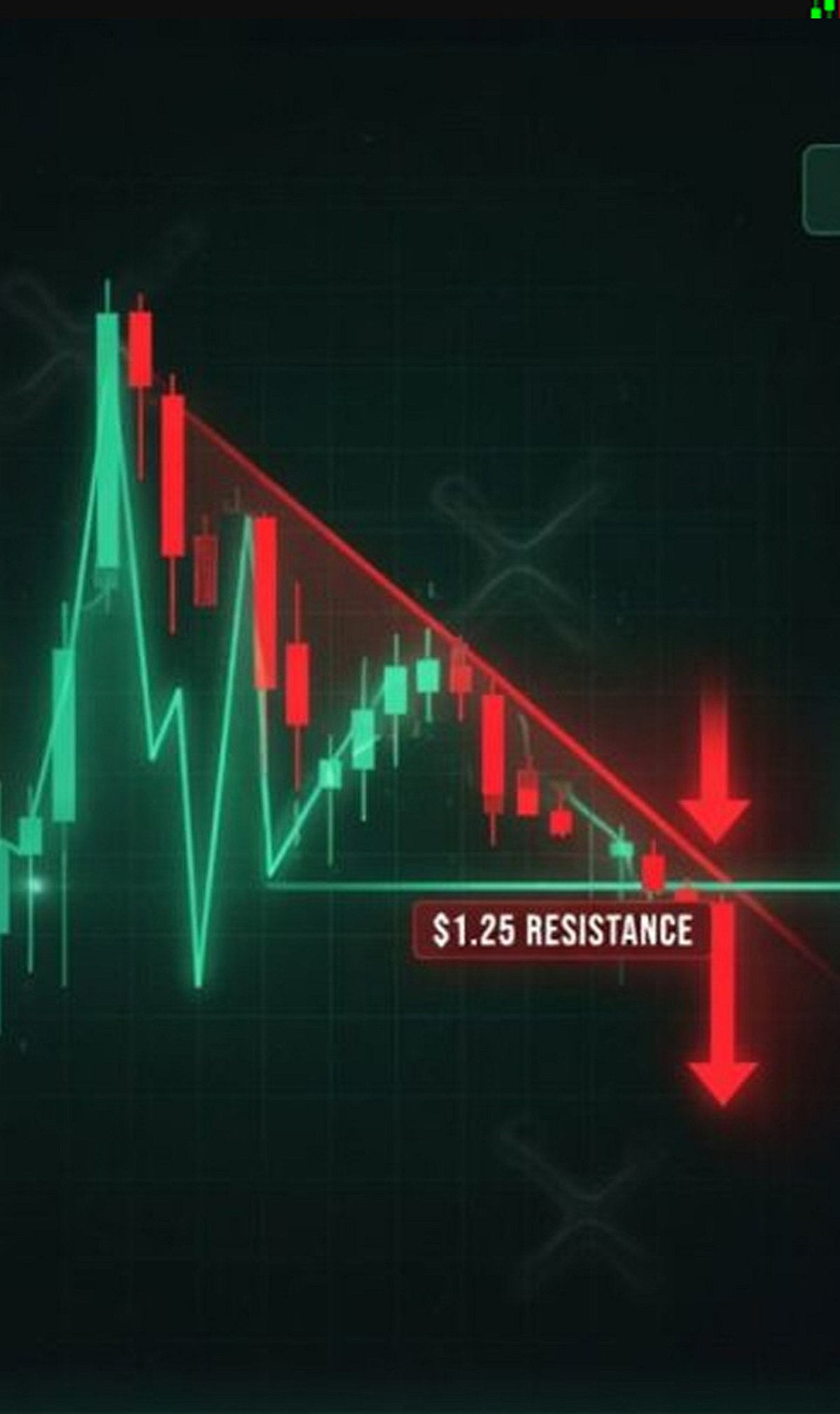
    Today, XRP trades around $1.00 to $1.18, which is nearly 48% lower than its 2026 peak. The area between $1.15 and $1.20 has become a strong resistance zone where buyers struggle to push the price higher. On the downside, the $1.00 level has become an important support. If this support breaks, market sentiment could become much more negative.

    The Overall Crypto Market Remains the Biggest Risk

    XRP seldom experiences extended independent movement. Bitcoin largely dictates the direction of the broader cryptocurrency market. When Bitcoin tumbles down steeply, it appears that almost every altcoin loses some value—XRP does the same.

    Global economic conditions may worsen the situation. Periods of economic uncertainty often bring higher interest rates, weaker investor confidence, and broader market declines, reducing demand for high-risk assets such as cryptocurrencies. A sharp decline in Bitcoin could push XRP back into a prolonged bear market.

    Profit Booking Could Increase Selling Pressure

    After a large price increase, many traders decide to sell part of their holdings instead of waiting for even higher prices. This creates extra supply in the market. If buyers fail to absorb that supply, prices usually move lower.

    This pattern has appeared several times in XRP’s history. Large rallies often attract heavy selling from long-term holders, which makes it difficult for the token to maintain upward momentum for a long period.

    Regulation Still Creates Uncertainty

    Ripple has achieved important legal victories over the past few years, but regulation remains one of the biggest factors that could affect XRP.

    Many countries still work on new cryptocurrency laws. Governments continue to study digital assets, stablecoins, and cross-border payment systems. Future rules could either help or slow the adoption of XRP.

    Competition Has Become Much Stronger

    Ripple no longer operates in a market with only a few competitors. Today, many blockchain projects offer fast payment networks and digital asset solutions for banks and financial institutions.

    Several companies also focus on tokenized assets, while stablecoins have become a popular option for cross-border payments. At the same time, many traditional financial firms now build their own blockchain systems instead of depending on public cryptocurrencies.

    Technical Levels Could Trigger a Bigger Drop

    The $1.00 price level has become one of the strongest support areas for XRP. If sellers push the token below this level, many automatic trading systems could activate sell orders at the same time.

    Leverage adds another layer of risk. Many crypto traders borrow money to increase their positions. When prices fall quickly, exchanges force these traders to close their positions. This creates additional selling pressure and can turn a normal decline into a much larger crash within a short period.

    Reasons XRP May Avoid a 50% Crash

    Ripple continues to expand its global payment network and works with businesses that want faster international transactions. The company has also joined projects that explore AI-powered payment standards, which shows its interest in future financial technology.

    Activity on the XRP Ledger has also increased, with a noticeable rise in transaction volume. Strong network usage often reflects healthy ecosystem growth.

    Institutional interest also remains an important factor. More professional investors now pay attention to blockchain payment systems than they did during earlier crypto cycles. If this trend continues, XRP could receive stronger long-term support.

    High Volatility is Normal for XRP

    Large price swings have always been part of the cryptocurrency market. A move of 10% to 20% within a single week is not unusual, especially during periods of uncertainty.

    Fear and excitement often control investor decisions. Good news can push prices higher very quickly, while negative headlines can produce equally sharp declines. XRP has experienced both situations many times over the years.

    Can XRP Really Fall Another 50%?

    A deep Bitcoin correction, weaker global markets, lower crypto investment, unexpected regulatory action, and a break below the important $1.00 support level could together create enough pressure for another major decline.

    However, the opposite scenario also deserves attention. Better regulation, continued business expansion by Ripple, higher institutional interest, and stronger demand across the crypto market could help XRP recover instead of falling further.

    Why This Matters

    With XRP hovering near its make-or-break $1.00 support level, understanding these risks is critical. A potential 50% crash isn’t just about Ripple—it’s a warning sign of how macroeconomic pressure and intense institutional competition can impact your portfolio.

    Final Thoughts

    XRP remains one of the best-known cryptocurrencies given Ripple’s focus on global payments and financial technology. Even after the recent correction, the project continues to attract attention from both retail and institutional investors.

    The current price between $1.00 and $1.18 shows that the market remains cautious after a 48% drop from the 2026 high. Another 50% decline cannot be ignored, especially if several negative market events occur together. At the same time, Ripple’s business growth, higher network activity, and steady institutional interest could provide support over the long term.

    The next few months may prove critical. The strength of the $1.00 support level, the direction of Bitcoin, global economic conditions, and Ripple’s future progress will likely decide whether XRP enters another sharp correction or begins its next recovery phase.

    FAQs

    1. What is XRP’s current price?
    As of mid-July 2026, XRP actively trades between $1.00 and $1.18. The price fluctuates dynamically in real time based on active crypto market conditions.

    2. Can XRP really fall another 50%?
    Yes. A combination of a Bitcoin crash, weak market sentiment, regulatory setbacks, and a break below key support could trigger a major decline.

    3. Why is the $1.00 level important?
    It is a major support zone. If XRP falls below this level, selling pressure could increase significantly.

    4. What could help XRP recover?
    Better crypto market sentiment, stronger institutional demand, Ripple’s business expansion, and positive regulatory developments could support higher prices.

    5. Is XRP still a long-term investment?
    Many investors still see long-term potential for Ripple’s payment technology and growing enterprise adoption, although price volatility remains high.

  • XRP Faces Intensifying Selling Pressure as Binance Data Signals Weak Demand; Ripple CTO Defends College Sports Ads

    XRP Faces Intensifying Selling Pressure as Binance Data Signals Weak Demand; Ripple CTO Defends College Sports Ads

    XRP continues to face strong selling pressure, with Binance data pointing to subdued buying demand across the broader crypto market. Meanwhile, Ripple CTO Emeritus David Schwartz has publicly defended the company’s advertising campaign in college sports, arguing that truthful commercial speech for lawful products is protected under the First Amendment.

    Over the past week, XRP lost about 2% of its value, and its 30-day decline stands at roughly 2.5%. The token’s sideways movement mirrors similar price patterns seen in Ether and Solana, with analysts linking the weakness to wider crypto liquidity conditions that continue to favor sellers. Institutional capital has also moved away from several leading altcoins, adding to the pressure.

    Binance Data Reveals Weak XRP Buying Demand

    Data from CryptoQuant shows rising XRP sales across centralized exchanges, tracking trading activity and liquidity movements during a period of negative market sentiment. In particular, Binance’s Cumulative Volume Delta (CVD) has fallen to negative 6.93 million. The CVD metric compares buying and selling volume to assess which force dominates the market. A negative reading indicates that selling has exceeded buying, meaning XRP lacks the sustained demand needed to support a stronger price recovery.

    XRP previously traded above $3 before falling toward $1.10. It has also dropped from third to sixth place among cryptocurrencies ranked by market capitalization. While the token’s 30-day average has remained relatively stable, negative whale activity and retail exits have limited signs of a lasting bullish reversal. CryptoQuant analysts noted that continued negative CVD readings increase the likelihood of weak short-term momentum, while a sustained CVD recovery could signal fresh liquidity and renewed buying demand.

    Whale Activity Offers Mixed Signals

    Some large holders increased their XRP positions earlier this year. In May, wallets holding about 10 million XRP accumulated more tokens while smaller traders reduced their exposure. This suggests that whales absorbed coins sold by retail participants, a move that traders interpreted as a possible shift from consolidation toward market expansion. However, XRP failed to hold above a key support line, weakening its medium-term outlook despite earlier signs of a potential breakout.

    More recently, XRP spot activity on Binance turned positive. Weekly figures rose to $406 million after standing near $42 million in May. The token also posted double-digit gains during that period, following recoveries across several other altcoins, although broader selling pressure remained. Institutional participation remains central to XRP’s performance in the current quarter, and the text points to relatively improved macroeconomic conditions as a possible source of market support.

    Schwartz Defends XRP College Sports Advertising

    Separately, David Schwartz defended XRP advertising after critics questioned Ripple’s college sports sponsorships. The debate followed a partnership with the University of Kansas athletics program, a multi-year agreement that places XRP branding on university team uniforms. Critics compared the promotion with advertising linked to gambling, tobacco, and alcohol, arguing that universities should limit digital asset marketing aimed at students and younger sports audiences.

    Schwartz responded on July 15 via a post on X, focusing on legal protections for commercial speech rather than XRP’s investment prospects. He argued that governments cannot broadly suppress truthful advertising for lawful products, relying on First Amendment protections. Schwartz stated that officials cannot restrict truthful commercial speech simply because consumers may make poor but lawful decisions. He also separated regulation from advertising restrictions, noting that governments may regulate an activity without banning truthful speech about that lawful activity.

    What’s Next for XRP?

    XRP remains under pressure as negative Binance CVD data signals weak demand, while whale activity and institutional flows offer mixed support. Meanwhile, David Schwartz continues to defend lawful XRP advertising in college sports. Traders should watch liquidity trends and institutional participation for signs of renewed market strength.

  • XRP Price Analysis: Crucial Support and Resistance Levels Traders Must Monitor

    XRP Price Analysis: Crucial Support and Resistance Levels Traders Must Monitor

    XRP’s price action is approaching a critical juncture, with several technical and on-chain indicators offering clues about its next major move. Traders should keep a close watch on these key levels and signals to navigate potential volatility.

    Major Support Zone

    Strong buying interest has been observed near recent support levels, which may help prevent deeper declines. However, losing this zone could trigger increased selling pressure and heightened volatility.

    Key Resistance Level

    A decisive close above resistance, accompanied by rising trading volume, could confirm renewed bullish momentum and attract additional institutional and retail participation.

    Trading Volume

    Higher trading volumes during price moves typically validate breakouts, while weak volume often indicates false moves and short-lived momentum. Always confirm breakouts with volume.

    Moving Averages

    Watch the 50-day and 200-day moving averages closely. Crossovers often signal trend changes and provide important dynamic support or resistance levels.

    Relative Strength Index (RSI)

    The RSI helps identify overbought and oversold conditions, enabling traders to anticipate possible trend reversals or continuation before major price movements.

    Market Sentiment

    Regulatory developments, ETF expectations, and broader cryptocurrency sentiment significantly influence XRP’s price direction and short-term trading opportunities.

    Whale Activity

    Large wallet transactions and exchange inflows often precede significant price swings, making on-chain monitoring essential for active XRP traders.

    Bitcoin Correlation

    XRP frequently follows Bitcoin’s broader market trend. Strong Bitcoin rallies or corrections can quickly impact XRP’s momentum and investor confidence.

    Breakout Confirmation

    Traders should wait for sustained price action above resistance or below support, supported by strong volume, before confirming a new trend.