Tag: YouTube

  • Google Search Console Now Tracks Social Media Profiles: Insights for Instagram, YouTube, TikTok, and X

    Google Search Console Now Tracks Social Media Profiles: Insights for Instagram, YouTube, TikTok, and X

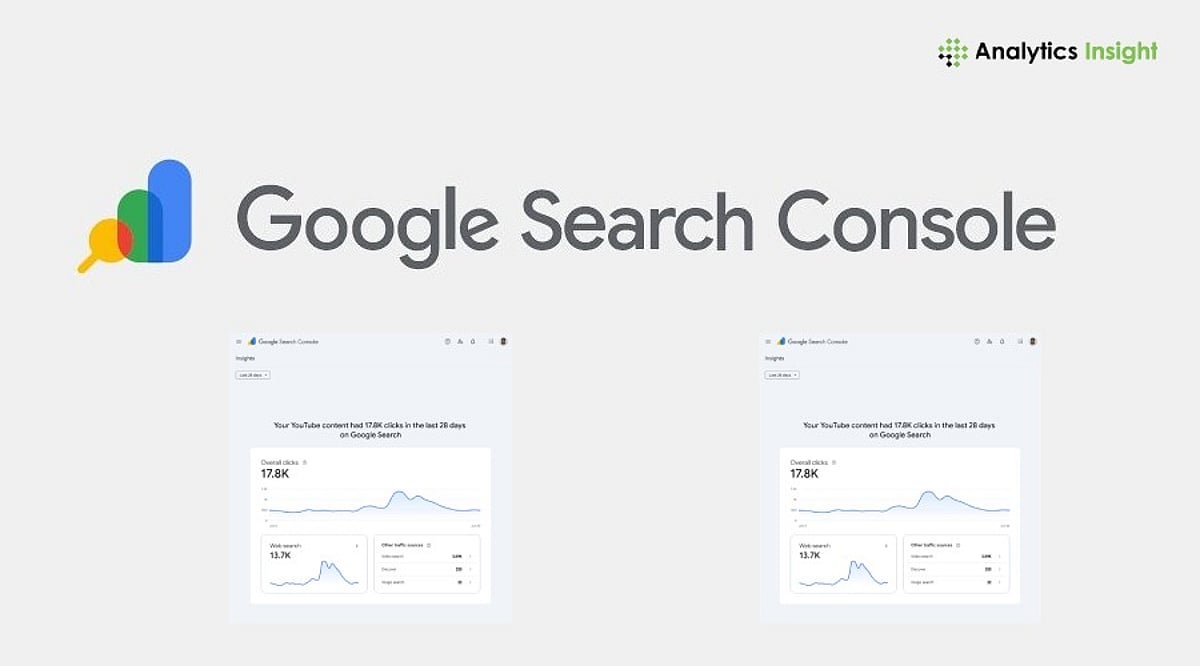
    Google has rolled out a significant update to Search Console, enabling businesses to monitor search performance for their social media profiles directly within the platform. The new feature supports Instagram, TikTok, X, and YouTube, allowing marketers and content creators to see how these accounts appear in Google Search and how users discover them.

    Search Console Adds Social Platform Reports

    With this update, Google Search Console introduces three dedicated reporting tools for social media profiles. The Performance Report delivers clicks, impressions, and other metrics, filterable by search queries or individual posts, with export capabilities. The Insights Report offers a high-level view of recent traffic trends, top-performing posts, and user discovery paths via Google Search. The Achievements Section lets creators track growth milestones, such as reaching new click thresholds in the last 28 days.

    To use the feature, users add a platform property in Search Console, select a supported platform, authorize the connection, and complete verification. This move signals that Google now considers social profiles a vital component of a brand’s online presence.

    Bridging Search and Social Data

    While many marketing teams rely on tools like Sprout Social, Hootsuite, or Buffer for cross-platform planning and tracking, Google’s new feature offers something distinct: it reveals how Google Search drives traffic to social accounts. This data was previously scattered and hard to consolidate. When combined with existing social media analytics, businesses gain a clearer picture of their overall online discoverability.

    This update brings search and social data closer together, helping marketers understand what truly brings audiences to their brand.

    Social Profiles as Digital Storefronts

    Google’s message is clear: social media pages are no longer just for posting content—they are essential digital storefronts. Many users search for a company’s Instagram page or YouTube channel before visiting its website. Businesses that keep these profiles active and optimized may improve their search visibility. The lesson for brands is straightforward: a strong social profile is not only about engagement but also about being easily found on Google.

  • Apple Seeks Dismissal of AI Lawsuit Over YouTube Video Training – Here’s Why It Matters

    Apple Seeks Dismissal of AI Lawsuit Over YouTube Video Training – Here’s Why It Matters

    Apple has asked a US court to dismiss a lawsuit filed by three YouTube creators who accuse the company of using millions of copyrighted YouTube videos to train its artificial intelligence systems without permission. The case centers on whether publicly available online content can be legally used for AI development.

    The lawsuit, filed in April in the US District Court for the Northern District of California, was brought by the channels h3h3Productions, MrShortGame Golf, and Golfholics. They claim Apple bypassed YouTube’s download restrictions and violated the Digital Millennium Copyright Act (DMCA) by scraping their videos. The creators also argue that technology companies should not profit from creators’ work without sharing benefits or seeking consent.

    Apple’s Defense: Public Is Public

    Apple’s response emphasizes that the videos were accessible to anyone without a password, payment, or special permission. The company contends that public videos are fundamentally different from private or protected content, and that YouTube’s Terms of Service do not prohibit accessing public videos. Apple therefore argues the lawsuit lacks legal grounding and should be dismissed before proceeding to discovery.

    Legal observers note that the case could become a landmark test for copyright law in the age of artificial intelligence. A ruling could help define how companies may use public online material when training AI models, and what responsibilities they have toward content creators.

    Broader Implications for AI and Copyright

    The same trio of creators has also filed similar lawsuits against Meta, Nvidia, ByteDance, and Snap. All raise the same fundamental questions about the legality of using YouTube content for AI training. As AI companies increasingly rely on publicly available data, creators, publishers, and artists continue to push for stronger protections and fair compensation.

    The court will now decide whether to dismiss Apple’s case or allow it to proceed. Its decision could shape future rules for AI training and copyrighted content, influencing both industry practices and legislative efforts.

  • YouTube Launches ‘America 250’ Hub for Fourth of July with Creator Content and Live Streams

    YouTube Launches ‘America 250’ Hub for Fourth of July with Creator Content and Live Streams

    As the United States approaches its 250th Independence Day, YouTube has unveiled a dedicated ‘America 250’ hub designed to bring the celebration to screens nationwide. The platform is curating a mix of creator-led recipes, crafts, historical deep-dives, and live streams of fireworks and parades, making it easy for viewers to join the festivities from home or their local neighborhoods.

    The hub features a wide array of content, from educational videos exploring the nation’s founding and iconic landmarks to DIY tutorials for patriotic decorations and party crafts. Popular history creators are contributing videos that highlight significant milestones tied to the 250th anniversary, while lifestyle creators share practical ideas for hosting Independence Day gatherings. Interactive elements, such as coloring books themed around national parks, add a family-friendly touch.

    YouTube’s initiative is part of a broader strategy to turn national moments into digital events. By livestreaming concerts, parades, and user-uploaded clips, the platform aims to engage millions of users in one of America’s most important anniversaries. The hub also supports the official America 250 celebration, encouraging broader participation through community-driven content and real-time event mapping.

    Whether you’re looking for historical insights, festive recipes, or simply want to watch fireworks from across the country, YouTube’s America 250 experience offers something for everyone this Fourth of July.

  • Top Cameras for Content Creators and YouTubers in 2026: Expert Picks and Buying Guide

    Top Cameras for Content Creators and YouTubers in 2026: Expert Picks and Buying Guide

    The creator economy is more competitive than ever, with social media driving demand for high-quality video. The best creator cameras in 2026 offer excellent image quality, reliable autofocus, advanced video recording, and creator-friendly features like flip screens and microphone inputs. Whether you are starting a YouTube channel, filming travel vlogs, hosting livestreams, or producing independent films, choosing the right camera can dramatically improve your content.

    Best Cameras for Content Creators & YouTubers in 2026

    Sony ZV-E10 II

    Approximate Price: Rs. 85,000
    Best For: Beginner YouTubers, vloggers, lifestyle creators

    The Sony ZV-E10 II is a top entry-level mirrorless camera. It features an APS-C sensor that delivers high-quality images and oversampled 4K video with great color. Real-time Eye Autofocus excels when shooting solo, and the lack of IBIS makes it easy to pair with a gimbal.

    Sony ZV-E1

    Approximate Price: Rs. 1,90,000
    Best For: Professional YouTubers and filmmakers

    The Sony ZV-E1 uses a full-frame sensor for excellent low-light performance and cinematic-quality shots. Its AI-powered autofocus detects people, and 5-axis stabilization ensures smooth handheld footage. It records in 4K, though battery life is average for its class.

    Canon EOS R50 V

    Approximate Price: Rs. 78,000
    Best For: Social media creators and vloggers

    Designed specifically for video content, the Canon EOS R50 V offers impressive 4K recording and Dual Pixel CMOS Autofocus. Its lightweight build makes it easy to carry while traveling or shooting on the go. Electronic image stabilization reduces shake, and built-in livestreaming features appeal to online creators.

    Canon EOS R6 Mark II

    Approximate Price: Rs. 1,75,000
    Best For: Hybrid photography and video creators

    With a full-frame sensor, the EOS R6 Mark II delivers excellent image quality and sharp oversampled 4K video. Canon’s autofocus reliably tracks faces, eyes, and moving subjects. Image stabilization works well handheld, but the camera requires expensive RF lenses.

    Fujifilm X-M5

    Approximate Price: Rs. 90,000
    Best For: Travel creators and creative filmmakers

    The Fujifilm X-M5 is a compact camera known for Fujifilm’s color science, producing natural-looking stills and video. Its APS-C sensor handles both photo and video with automatic focusing. Digital image stabilization aids handheld recording but doesn’t replace a full IBIS system.

    DJI Osmo Pocket 4

    Approximate Price: Rs. 70,000
    Best For: Travel vloggers and daily content creators

    The DJI Osmo Pocket 4 emphasizes mobility with a built-in 3-axis gimbal that provides extremely stable video without extra equipment. Fast tracking and high-resolution capture make it perfect for solo creators. The lack of a removable lens limits creativity but suits travel, walk, and social media videos.

    Panasonic Lumix S5 II

    Approximate Price: Rs. 1,70,000
    Best For: Independent filmmakers and advanced creators

    The Panasonic Lumix S5 II remains a favorite among filmmakers for its full-frame sensor, exceptional 6K recording, and advanced phase-detection autofocus. In-body stabilization keeps handheld shots steady, and battery life is extended. The larger body makes it less convenient for traveling light.

    How to Choose the Right Camera

    When buying a camera, consider where and how you will shoot. A larger sensor captures better in low light. Reliable autofocus is essential for solo shooting. Image stabilization improves handheld footage. For beginners, the Sony ZV-E10 II offers the best overall performance. Social media creators will love the Canon EOS R50 V. The Fujifilm X-M5 suits intermediate users, while the Sony ZV-E1 and Canon EOS R6 Mark II deliver professional video quality. Travel creators should consider the DJI Osmo Pocket 4, and filmmakers may prefer the Panasonic Lumix S5 II.

    Frequently Asked Questions

    1. Which is the best camera for YouTube beginners in 2026? The Sony ZV-E10 II remains a top choice for its APS-C sensor, excellent autofocus, interchangeable lenses, and user-friendly video features at a competitive price.
    2. Is a full-frame camera necessary for content creation? No. APS-C cameras produce outstanding 4K video for most creators. Full-frame models offer better low-light performance, dynamic range, and background blur for professional productions.
    3. Which camera is best for travel vloggers? The DJI Osmo Pocket 4 is ideal due to its compact size, built-in three-axis gimbal, reliable stabilization, long battery life, and quick setup.
    4. Should creators prioritize image stabilization or autofocus? Both are important, but reliable autofocus is essential for solo creators. Good stabilization reduces the need for a gimbal during everyday shooting.
    5. What accessories should new content creators buy with a camera? Invest in a quality microphone, fast memory cards, spare batteries, a tripod, an LED light, a protective camera bag, and an external SSD for efficient video storage.