Tag: Zcash

  • Bitcoin Holds Near $64,350 as ETF Inflows Surge Ahead of Key Jobs Report

    Bitcoin Holds Near $64,350 as ETF Inflows Surge Ahead of Key Jobs Report

    Bitcoin traded near $64,354.99 on Friday, holding a tight range through the session as spot ETF inflows snapped a longer stretch of outflows. The leading cryptocurrency consolidated after testing $64,920 earlier in the week, with analysts flagging $65,000 as the critical level to watch. Traders now turn to today’s US jobs report for direction, while the stalled CLARITY Act adds to cautious sentiment.

    Bitcoin Price Today

    Bitcoin stood at $64,354.99, broadly flat over the past 24 hours, according to live CoinMarketCap data. Its market cap hovered near $1.29 trillion, with 24-hour trading volume reaching $21.64 billion. Price action remains tied to ETF flows, the jobs report, and legislative headlines.

    Analyst Insights

    Bitcoin Attempts $65,000 Reclaim Ahead of Jobs Data, Says Mudrex

    Prateek Gupta, Head of Business at Mudrex, noted that Bitcoin is attempting to reclaim the $65,000 level ahead of today’s US jobs report. The market is approaching a critical technical and liquidity zone, with $65,000 emerging as the largest short-liquidation cluster. He added that institutional demand continues to grow, with spot Bitcoin ETFs attracting $626 million in net inflows over three sessions. A weekly close above $65,000 could open the path toward $70,000, while a close below $63,000 may expose Bitcoin to $60,000.

    BTC Stays Range-Bound Between $64,000 and $65,000, Says CoinSwitch

    According to CoinSwitch Markets Desk, BTC remained range-bound between $64,000 and $65,000 after testing the upper end of the range. Repeated rejections near $65,000 indicate continued selling pressure. Near-term support sits at $64,350-$64,400, and a break below this zone could expose $64,200. Reclaiming $64,600 may pave the way toward $64,800-$65,000.

    Institutional Demand Offsets Rate Uncertainty, Says Giottus

    Vikram Subburaj, CEO of Giottus, placed Bitcoin near $64,300, with improving institutional demand offset by uncertainty over US interest rates. Spot ETFs received about $626 million between August 3 and August 5, helping buyers defend the $63,000-$64,000 region. However, these inflows have not been strong enough to clear the larger resistance zone between $66,000 and $66,600. He advised staggering purchases and keeping leverage low until Bitcoin clears $66,600 or loses $63,000 support.

    Bitcoin Consolidates Ahead of Employment Data, Says Delta Exchange

    Riya Sehgal, Research Analyst at Delta Exchange, said Bitcoin is trading around $64,400, with the market consolidating ahead of the US employment report. Resilient labor data and renewed crude strength keep inflation expectations in focus. A softer print could ease yields and support risk assets. Bitcoin is holding the $64,000-$64,200 support zone. A break above $64,750-$65,000 could open $65,250-$65,600, while a move below $64,000 may expose $62,400-$63,100.

    Crypto Prices Today: Top 10 Coins at a Glance

    The broader market holds steady, with majors posting mild gains. Hyperliquid led the top 10 board with a gain near 3.7%, followed by XRP and Dogecoin with daily gains above 1%. Outside the top 10, Zcash extended its rally with a jump above 5.9% on the day. Stablecoins Tether and USDC barely moved, while Ethereum and Solana posted modest daily gains.

    Crypto News Today: Top Headlines Impacting Prices

    Bitcoin ETFs Post Third Straight Inflow Day

    US spot Bitcoin ETFs pulled in $244.4 million on Wednesday, extending a three-day streak to $626 million. BlackRock’s IBIT fund led the run, capturing $479 million of the total. The August run has yet to record a single outflow day, a sharp reversal from July’s choppier flows.

    CLARITY Act Faces Recess Deadline Pressure

    The Digital Asset Market Clarity Act remains stalled on the Senate calendar as the chamber’s summer recess begins around August 7. Ethics language disputes continue to block bipartisan support. A Franklin Templeton executive noted that passage would unlock federal preemption and bring bank liquidity into crypto.

    Coldcard Firmware Flaw Keeps Custody Worries Alive

    A firmware bug tied to Coldcard hardware wallets has been linked to nearly $100 million in stolen Bitcoin this month. The exploit has driven dormant address movement as affected holders rush to secure funds. Whale Alert flagged a 6,196 BTC transfer worth nearly $397 million between unknown wallets this week.

    US Jobs Report Set to Drive Today’s Session

    Traders are bracing for today’s Non-Farm Payrolls report. A soft print could ease Treasury yields, while strong data may revive September rate hike bets. The Fed held rates steady at 3.50-3.75% in July, with three officials favoring a hike.

    Zcash and Cardano Lead Altcoin Momentum

    Zcash extended its rally with a weekly gain above 5.9%, pressing a key triangle breakout pattern. Cardano posted a sharp seven-day gain above 15%, outpacing most large-cap peers. Analysts tied Cardano’s strength to progress on its Ouroboros Leios scaling protocol.

    Tether Expands Tokenization Push in Saudi Arabia

    Tether announced plans to launch its Hadron tokenization platform in Saudi Arabia, starting with institutional real estate assets. The move aligns with the kingdom’s Vision 2030 diversification initiative but has limited near-term impact on Bitcoin’s price.

    Investor and Market Outlook

    Bitcoin holds near $64,350 as traders weigh a third straight ETF inflow day against a stalled CLARITY Act. Today’s jobs report stands as the session’s key catalyst. A close above $65,000 could open a path toward $66,600 resistance. A slip below $63,000 risks exposing deeper support closer to $60,000. Zcash and Cardano remain the most sensitive names to shifts in altcoin risk appetite. Next week’s inflation print stands as the market’s next defining catalyst.
  • Zcash Drops Below $470 as Ironwood Upgrade Fails to Spur Demand

    Zcash Drops Below $470 as Ironwood Upgrade Fails to Spur Demand

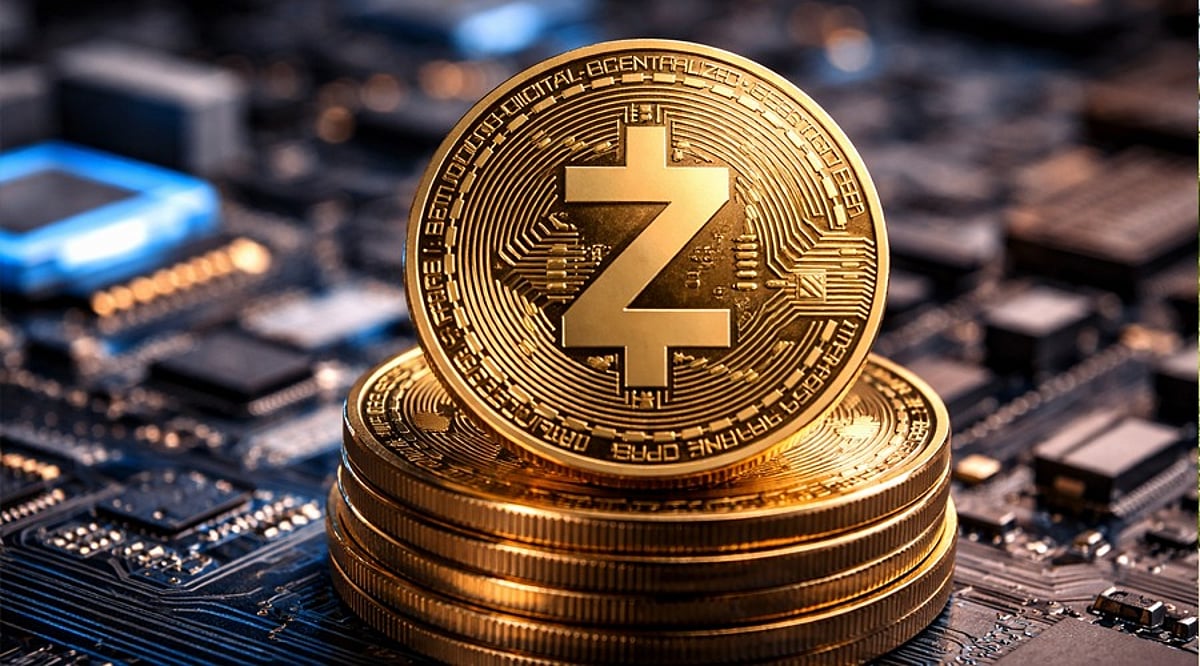
    Zcash fell below the $470-$472 support cluster shortly after the Ironwood upgrade activated on July 28. ZEC traded near $461 as negative spot and futures flows continued to pressure the market.

    Ironwood Closes Orchard Supply Gap

    Developers discovered a soundness flaw in the zero-knowledge circuit behind Orchard, Zcash’s shielded pool. In theory, the flaw could have allowed counterfeit ZEC to be created undetected. A patch was delivered in June, and no evidence of exploitation was found. However, Orchard’s privacy design prevented users from independently verifying the pool’s recorded supply.

    Ironwood introduces a new shielded pool and version 6 transactions. It also closes Orchard to new deposits and routes withdrawals through a capped turnstile, limiting outflows to the total amount previously deposited. As balances enter the new pool, users can verify that migration creates no additional ZEC.

    Negative Flows Follow Earlier Price Weakness

    ZEC approached $560 earlier in July before forming lower highs and lower lows. By activation day, the price remained inside a falling channel near the $470 cluster. Ironwood had been widely discussed for weeks, but its activation did not attract enough demand to reverse the decline already visible on the chart.

    Coinglass data showed negative spot flows across every displayed period. The 12-hour balance recorded $10.2 million in inflows and $12.81 million in outflows, leaving a $2.6 million deficit. The eight-hour balance stood at negative $1.65 million, while four-hour flows reached negative $935,000. Futures also remained negative over longer periods, with the 12-hour balance at negative $7.1 million and the eight-hour reading at negative $2.98 million. Shorter futures windows turned positive, adding $418,000 over four hours and $213,000 over one hour.

    ZEC Faces Resistance Before $484

    The 0.382 Fibonacci level near $470 and the 50-day moving average at $472 formed a support zone that ZEC now trades below, turning them into resistance. The day’s high reached $470 near the Fibonacci level. A daily close above $472 would reclaim both barriers, while the 100-day moving average at $484 presents another hurdle.

    Below the market, $450 marks the nearest support and sits near the falling channel’s lower boundary. A close below that level could expose the 0.236 retracement near $420. More than 80% of all ZEC has entered circulation, reducing future dilution as Ironwood makes Orchard migration verifiable.

    Conclusion

    Ironwood closed a major supply-verification gap, yet ZEC fell below $470 as spot and longer-term futures flows remained negative. The market now watches $450 as the first support. A recovery above $472 would improve the technical picture, while losing $450 could expose $419-$420.

  • Litecoin Holds Steady, Zcash Rebounds, but BlockDAG Steals July Spotlight with 100% Bonus and $0.03 Buyback

    Litecoin Holds Steady, Zcash Rebounds, but BlockDAG Steals July Spotlight with 100% Bonus and $0.03 Buyback

    This week, established cryptocurrencies are consolidating while a newer contender captures the market’s attention. Litecoin remains stable near $43.76 after bouncing off support, and its price prediction now hinges on whether buyers can push past the $46 resistance. Zcash is recovering from a security scare that briefly cut its value in half, now trading at $492.61 as confidence returns ahead of a major network upgrade.

    Meanwhile, BlockDAG is drawing significant interest. Its promo code “EARLY” offers buyers 100% extra BDAG on every purchase and moves the USDT buyback access forward to September 1 from October 1. The token price is just $0.00000033, with a buyback rate of $0.03. Additionally, BlockDAG is upgrading its network from 5,500 to 7,000 transactions per second (TPS), making it one of the fastest platforms on the market.

    Litecoin Price Prediction: Can LTC Break $46?

    Litecoin is trading in a tight range after recovering from its June decline. The cryptocurrency has found solid support around $39, while $46 remains the key resistance level. At the time of analysis, LTC was near $43.76, with mixed technical indicators. Litecoin’s network hashrate reached a record 2.774 PH/s, reflecting growing miner participation and improved security. While this does not guarantee immediate price gains, it is a positive long-term sign. The Litecoin price prediction depends on whether buyers can defend $39 support and eventually push above $46.

    Zcash Price Outlook Ahead of Major Upgrade

    Zcash (ZEC) is regaining momentum after developers confirmed the Ironwood network upgrade will go live on July 28, 2026, at block height 3,428,143. The upgrade will retire the Orchard shielded pool, which had a security flaw that could have allowed counterfeit ZEC creation. After the vulnerability became public, ZEC plunged about 50% from $602.68 to $299.25, before rebounding to around $492.61. Market sentiment has strengthened, with futures Open Interest rising 18% to $914.91 million and trading volume climbing to $1.66 billion. Over 80% of ZEC’s maximum 21 million supply is now in circulation.

    BlockDAG: 100% Bonus and Utility Stand Out

    BlockDAG is attracting buyers with its low entry price of $0.00000033 per coin and the 100% bonus from code “EARLY.” The buyback rate of $0.03 offers significant ROI potential. Beyond price, BlockDAG uses a DAG-based architecture for parallel transaction processing, enabling payments and smart contracts. The network is being upgraded to 7,000 TPS. It already powers a live casino platform that has seen over 13,000 users, more than $15 million deposited, and upwards of $150 million wagered in its first 30 days. Pre-registration for the new BlockDAG X exchange is open, with spot trading, futures, and mobile apps launching in 14 days. A Super App is scheduled for August 20, adding further utility to the ecosystem.

    Which Is the Best Crypto to Buy Now?

    The Litecoin price prediction remains a waiting game, with $39 support and $46 resistance. The Zcash price trajectory depends on the Ironwood upgrade restoring buyer trust. However, BlockDAG stands out with its 7,000 TPS speeds, a casino platform already processing $150 million in wagers, and an exchange launch imminent. With a Super App coming on August 20 and expanding utility, the $0.00000033 entry and 100% bonus make it a compelling option for those seeking maximum returns.

    Disclaimer: This article is for informational purposes only and does not constitute investment advice. Cryptocurrencies are volatile and involve significant risk. Always conduct your own research before investing.

  • BlockDAG’s 100% Bonus Code ‘EARLY’ Shifts Momentum from Zcash and Bitcoin Cash in Search for Next Crypto Explosion

    BlockDAG’s 100% Bonus Code ‘EARLY’ Shifts Momentum from Zcash and Bitcoin Cash in Search for Next Crypto Explosion

    The crypto market is entering a new phase of capital rotation. Mature proof-of-work networks are struggling to overcome regulatory and technical headwinds, while incentive-rich layer-1 ecosystems are attracting fresh liquidity and renewed investor attention. Recent Zcash news and fluctuating Bitcoin Cash price points illustrate the intense battle between structural scarcity and real-time market momentum. Yet, neither of these older assets matches the sheer velocity of newer projects designed to capture immediate retail demand.

    At the center of this shift is BlockDAG (BDAG), a rapidly expanding ecosystem that is currently leveraging a double-reward promotional structure to position itself as the next crypto to explode.

    Zcash News: Privacy Coin Eyes Breakout Amid Forbes Nod

    Recent Zcash news has captured the market’s attention as ZEC climbed near $531, riding a 5% daily gain that outpaced a flat broader market. This spark follows a prestigious nod from Forbes, which highlighted Zcash’s robust privacy features and capped supply. However, the token now faces a critical technical test, bumping up against a tough resistance band between $540 and $547.

    While the bullish momentum is backed by a shrinking supply intensified by the November 2024 halving, undercurrents of caution remain. Traders are weighing unresolved questions surrounding June’s Orchard security patch and unusual pre-disclosure trading volumes. Whether ZEC can shatter its near-term resistance or slide back to support depends heavily on upcoming macro data. This Zcash news highlights a tug-of-war between strong scarcity fundamentals and lingering regulatory anxieties.

    Bitcoin Cash Price: Will Bulls Break the $620 Barrier?

    The Bitcoin Cash price is flashing mixed signals, leaving traders guessing whether its recent rally is a genuine trend reversal or a temporary bounce. After breaking a long-term diagonal trendline, BCH successfully bounced twice, sparking three consecutive weekly green candles. However, this momentum has brought the asset directly beneath its most critical ceiling: the $620 resistance level.

    This $620 zone is a major make-or-break juncture. A successful daily close above it could clear the path toward $1,000, supported by the weekly RSI crossing above 50 and a looming bullish MACD crossover. Conversely, short-term charts reveal a corrective five-wave wedge that leans bearish. If BCH fails to breach this barrier, a breakdown from its ascending channel could trigger a swift correction down to $520. The Bitcoin Cash price remains at a pivotal crossroads where downside risks still overshadow breakout hopes.

    BlockDAG’s 100% Bonus Code ‘EARLY’ Sparks Race for the Next Crypto to Explode

    The search for the next crypto to explode has taken a massive turn as BlockDAG rolls out a double-reward incentive that is shaking up the crypto market. Instead of launching just another basic digital token, BlockDAG is actively constructing an entire self-sustaining economic ecosystem. For a limited time, early participants can leverage a massive promotional offer designed to maximize their potential returns right from the start.

    By utilizing the promo code “EARLY” when acquiring BDAG at its current entry price of $0.00000033, investors instantly secure a 100% bonus on their purchase. This promotional mechanism immediately doubles your token balance, with the extra coins delivered directly to your wallet. But the real excitement lies in the accelerated timeline for the USDT buyback program. While standard participants must wait until October 1, entering the code “EARLY” unlocks priority access to the $0.03 buyback pool starting on September 1. This strategic shift grants early supporters an exclusive thirty-day head start on exit liquidity options.

    With a robust architecture and an aggressive economic design, this project presents a compelling case for those hunting for the next crypto to explode. The window to double your holdings and fast-track your exit liquidity is closing quickly, making this a pivotal moment to act.

    Wrapping Up

    The broader crypto market remains heavily divided between legacy networks trying to regain their footing and hyper-growth ecosystems designed for rapid scalability. While positive Zcash news and the critical test of the Bitcoin Cash price demonstrate that established tokens still possess speculative appeal, their upward potential remains limited by steep resistance levels and historical technical challenges.

    In contrast, BlockDAG bypasses these old hurdles by offering a direct, highly lucrative entry point paired with immediate structural value. The time-sensitive combination of an instant token doubler and accelerated USDT buyback liquidity positions BlockDAG uniquely. For anyone searching for the next crypto to explode, this promotional window represents an unparalleled strategic entry point before mainstream exchange listings commence.

    Disclaimer: Analytics Insight does not provide financial advice or guidance on cryptocurrencies and stocks. Also note that the cryptocurrencies mentioned or listed on the website could potentially be risky, i.e., designed to induce you to invest financial resources that may be lost forever and not be recoverable once investments are made. This article is provided for informational purposes and does not constitute investment advice. You are responsible for conducting your own research (DYOR) before making any investments.

  • Bitcoin Holds Near $62,700 as Hormuz Tensions Lift Oil Prices, Zcash Prepares for Ironwood Upgrade

    Bitcoin Holds Near $62,700 as Hormuz Tensions Lift Oil Prices, Zcash Prepares for Ironwood Upgrade

    Bitcoin is trading in a tight band this week as geopolitical headlines take center stage. Oil prices surged after Washington signaled a renewed blockade on Iranian shipping through the Strait of Hormuz. Traders are staying cautious ahead of today’s inflation data.

    Most major tokens slipped modestly through the session, though the moves stayed shallow. Bitcoin held its footing near $62,700, and stablecoins barely budged. Attention now shifts to the CPI print and Fed Chair Kevin Warsh’s testimony for the next directional cue.

    Bitcoin Price Today

    Bitcoin trades near $62,736.94, down 0.04% over the past 24 hours. The figure reflects CoinMarketCap data tracked through today’s session. Price action remains sensitive to oil headlines and positioning ahead of today’s CPI release.

    Mudrex: Long-Term Holders Keep Accumulating

    Giving the market view, Akshat Siddhant, Lead Quant Analyst at Mudrex, said, “Bitcoin is consolidating around the $62,500 zone as renewed US-Iran tensions and concerns over the Strait of Hormuz pushed oil prices higher and revived inflation fears.” He further mentioned that “markets are now focused on today’s US CPI report and Fed Chair Kevin Warsh’s testimony, both of which could shape expectations for interest rates. However, on-chain data shows long-term holders accumulating 5,912 BTC in just two days, signalling continued conviction. Bitcoin needs to reclaim $64,000 to strengthen momentum, while $60,000 remains the key support level.”

    ETF Flows Still Inconsistent

    Vikram Subburaj, CEO of Giottus, placed Bitcoin near $62,450, down about 1.6% on the day as investors turned cautious ahead of inflation data. He noted a $239 million net ETF outflow on July 13, following modest inflows the week before. Immediate support sits near $62,000, with resistance between $63,500 and $65,000. He advised staggered entries and limited leverage until the Fed outlook clears.

    Risk-Off Setup Persists

    Riya Sehgal, Research Analyst at Delta Exchange, shared the market view, noting that global markets have shifted into an inflation-led risk-off phase after oil prices jumped amid renewed tensions in the Strait of Hormuz. Rising yields and dollar strength have pressured both gold and crypto. Bitcoin remains range-bound between $61,200 and $64,000, with a break above $64,000 opening a path toward $65,600. Ethereum continues showing relative strength, with $1,850 as its next resistance test.

    Stablecoin Supply Dips

    According to the CoinSwitch Markets Desk, “BTC slipped below $62,000 as renewed US-Iran tensions weighed on sentiment, though it closed last week above its 200-week moving average. Stablecoin supply has declined slightly, suggesting some capital rotated back into fiat. The desk views this as a temporary correction rather than a structural liquidity problem, with this week’s CPI data as the next key trigger.”

    Institutional Confidence Holds Firm

    Meanwhile, Nischal Shetty, founder of WazirX, also said that Bitcoin briefly slipped below $62,500 as rising tensions in the Middle East pushed oil higher and triggered broader risk-off flows. Despite the dip, spot Bitcoin and Ether ETFs both logged net inflows last week, ending multi-week outflow streaks. He added that XRP traders should watch the $1.03 to $1.05 support zone, while Solana’s $73 to $75 range could draw early recovery attempts.

    Crypto Prices Today: Top 10 Coins at a Glance

    Here is a look at the top crypto prices today, based on CoinMarketCap data as of July 14.

    Biggest Decliners: HYPE, TRX, SOL

    Hyperliquid led today’s losses, down 2.69% after a strong run over recent weeks. TRON followed with a 1.73% dip, while Solana slipped 1.39% amid broader profit-taking.

    Steadiest Performers: USDC, USDT, DOGE

    USDC stayed flat, holding tight to its dollar peg through the session. Tether edged up slightly, while Dogecoin held close to unchanged, down just 0.17%.

    Crypto News Today Driving Market Sentiment

    Bitcoin and Ether ETFs End Eight-Week Outflow Streak

    US spot Bitcoin ETFs pulled in $197.4 million in net inflows last week, snapping an eight-week run of redemptions. BlackRock’s IBIT led the recovery with $291.9 million in fresh capital. Spot Ether ETFs added $84.42 million over the same period, also ending eight straight weeks of outflows. Analysts note it is still early to call this a durable trend given seasonal patterns ahead.

    Oil Surges as Iran-US Tensions Reignite Over Hormuz

    Oil prices jumped sharply after Washington signaled a renewed blockade on Iranian shipping through the Strait of Hormuz. The waterway carries close to a fifth of the global oil supply. The spike revived inflation worries just as markets await today’s CPI print. Equity futures weakened, and the dollar firmed, adding pressure on risk assets heading into the session.

    Clarity Act Remains Stalled as August Deadline Approaches

    The Digital Asset Market Clarity Act remains parked on the Senate calendar with no floor vote scheduled. Disputes over ethics provisions and stablecoin yield continue blocking the votes needed for passage. The Senate returned from recess on July 13, leaving roughly three working weeks before the August break. A miss this summer would likely push the bill into the tougher midterm-election calendar.

    Zcash Stays in Focus Ahead of Ironwood Upgrade

    Zcash has drawn steady attention as traders position ahead of the July 28 Ironwood network upgrade. The update targets a shielded-pool vulnerability flagged earlier this year. Rising open interest and improving sentiment have supported the token in recent sessions. Traders are watching whether it can hold above key support while the broader market stays choppy.

    Investor and Market Outlook

    Bitcoin holds near $62,700 as traders weigh oil-driven risk aversion against improving ETF demand. A close above $64,000 would strengthen the case for a retest of $65,500, while a slip under $61,600 risks exposing $60,000. Ethereum trades near $1,787, with $1,850 acting as the next resistance test. Most major tokens stayed within a narrow range today, reflecting a cautious rather than a fearful mood.

    Today’s CPI report and Fed Chair Kevin Warsh’s testimony are the key catalysts ahead. A softer inflation print would likely support risk assets, while a hot reading could revive rate-hike bets and pressure crypto further. The Clarity Act’s stalled path in the Senate keeps a layer of regulatory uncertainty over the medium-term outlook.

    FAQs

    What is the Bitcoin price today?

    Bitcoin trades near $62,736.94, down 0.04% over the past 24 hours. The $62,000 zone remains key support for traders, with $64,000 acting as the next resistance level to watch through the CPI-driven session.

    Why did oil prices spike today?

    Oil jumped after Washington signaled a renewed blockade on Iranian shipping through the Strait of Hormuz. The move revived inflation concerns ahead of today’s CPI data, adding pressure across equities, crypto, and broader risk assets.

    What is happening with the Clarity Act?

    The Clarity Act remains stuck in the Senate with no floor vote scheduled yet. Disputes over ethics rules and stablecoin provisions continue blocking the votes needed before the August recess begins, leaving passage uncertain this year.

    Why is Zcash drawing attention right now?

    Traders are positioning ahead of Zcash’s July 28 Ironwood upgrade, which addresses a shielded-pool vulnerability flagged earlier this year. Rising open interest and improving sentiment have kept the token active through recent sessions.

    What should investors watch this week?

    Investors should track today’s CPI report, Fed Chair Kevin Warsh’s testimony, ETF flow trends, and any fresh developments around the Strait of Hormuz, since all four are likely to steer near-term crypto price action.

  • July 2026’s Top Altcoin Performers: SOL, HYPE, ETH, ZEC, and ONDO Lead the Recovery

    July 2026’s Top Altcoin Performers: SOL, HYPE, ETH, ZEC, and ONDO Lead the Recovery

    Bitcoin has dropped nearly 20% in recent weeks, but several altcoins are bucking the downtrend. Projects with strong fundamentals, network upgrades, and institutional backing are drawing investor attention and spearheading the crypto recovery in July 2026.

    Solana (SOL)

    Solana remains one of July’s strongest performers, powered by its fast, low-cost blockchain, expanding developer ecosystem, and major upgrades such as Firedancer and Alpenglow. Rising institutional adoption and growing DeFi activity continue to bolster Solana’s long-term outlook despite market volatility.

    Hyperliquid (HYPE)

    Hyperliquid has emerged as a standout winner in July 2026. The decentralized perpetual trading platform dominates on-chain derivatives, supported by permissionless HIP-3 markets, surging trading volume, and upcoming native options features that have boosted investor confidence.

    Ethereum (ETH)

    Ethereum maintains its position as the leading smart contract network. Institutional demand, Real-World Asset (RWA) tokenization, DeFi growth, and ongoing scalability improvements help ETH outperform many large-cap cryptocurrencies during the current correction.

    Zcash (ZEC)

    Privacy-focused Zcash is gaining renewed interest as investors look beyond speculative assets. Upcoming network upgrades, Bitcoin-like supply scarcity, and improving institutional interest have helped ZEC hold relative strength while many cryptocurrencies remain under pressure.

    ONDO and Render (RENDER)

    Real-world utility continues to drive crypto investment in 2026. ONDO benefits from the rapid growth of tokenized real-world assets, while AI-focused projects like Render remain popular as decentralized GPU computing and AI infrastructure become major blockchain investment themes.

    July’s strongest altcoins are propelled by real catalysts rather than hype alone. While Solana, Hyperliquid, Ethereum, Zcash, and ONDO lead the market, investors should remember that crypto remains highly volatile. Diversification, thorough research, and risk management are essential before investing in any digital asset.

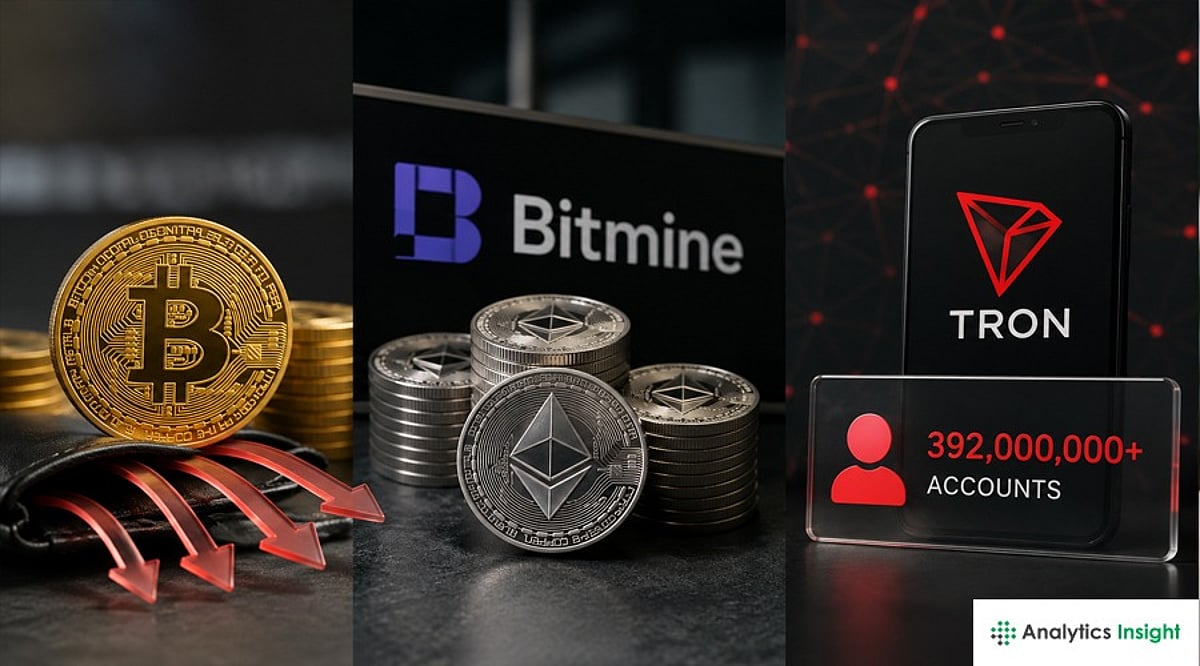
  • Bitcoin ETFs See $95M Outflows, Bitmine Adds 20,500 ETH, TRON Hits 392M Accounts — Crypto Roundup

    Bitcoin ETFs See $95M Outflows, Bitmine Adds 20,500 ETH, TRON Hits 392M Accounts — Crypto Roundup

    Market Overview

    Major developments unfolded in the crypto space as Bitcoin spot ETFs recorded $95.30 million in net outflows, Bitmine expanded its Ethereum treasury with a major acquisition, and TRON surpassed 392 million wallet addresses. Additionally, Zcash confirmed its Ironwood upgrade for late July, while New Hampshire rejected a Bitcoin-backed bond proposal.

    Bitcoin Spot ETFs See $95 Million in Net Outflows

    According to SoSoValue, Bitcoin spot ETFs experienced a total net outflow of $95.30 million on the reporting day. Fidelity’s FBTC led outflows with a daily net draw of $63.25 million, bringing its total historical net inflow to $10.15 billion. On the inflow side, VanEck’s HODL ETF recorded the highest daily net inflow at $5.36 million (cumulative $1.13 billion), followed by Morgan Stanley’s MSBT with $2.17 million ($377.14 million total). The combined net asset value of all Bitcoin spot ETFs now stands at $76.51 billion, with an ETF net asset ratio of 6.03% and historical cumulative net inflows of $51.19 billion.

    Bitmine Acquires 20,500 ETH for $36 Million

    Bitmine Immersion Technologies purchased 20,500 ETH for approximately $35.92 million via an over-the-counter transaction with Galaxy Digital, executed around July 10, 2026. The purchase price was roughly $1,752 per ETH. This acquisition pushes Bitmine’s total Ethereum treasury to about 5.7 million tokens — worth nearly $10 billion — representing an estimated 4.7%–4.8% of the entire circulating ETH supply of ~120.7 million tokens. The move signals a quiet accumulation strategy by the company.

    TRON Surpasses 392 Million Accounts

    TRON’s blockchain explorer confirmed the network has surpassed 392 million wallet addresses since inception. According to DeFiLlama, TRON remains the dominant platform for Tether (USDT) transfers due to fast settlement times and extremely low fees — processing up to 2,000 transactions per second at roughly 0.0003 TRX per transaction. Lookonchain reported that TRON’s Total Value Locked (TVL) has risen by approximately $1.95 billion since July 1, a gain of 7.8%.

    New Hampshire Rejects Bitcoin-Backed Bond Proposal

    The New Hampshire Executive Council voted down a regulatory proposal to authorize $100 million in Bitcoin-backed bonds. The initiative, pushed by the state’s Business Finance Authority (BFA) and Governor Kelly Ayotte, had passed risk assessments from Moody’s. Opposition was led by Democrat Karen Liot Hill, joined by councilors Janet Stevens and David Wheeler; officials Joseph Kenney and John Stephen voted in favor. The rejection halts the state’s attempt to introduce this financial instrument.

    Zcash Confirms Ironwood Activation on July 28

    Zcash core developer Sean Bowe announced that the Ironwood upgrade will activate at block height 3,428,143, expected around 8 am EST on July 28 — a one-week delay from the original July 21 target. The postponement came after Shielded Labs raised concerns that exchanges, mining pools, and wallet providers might need more time to prepare, particularly as many are transitioning from the legacy zcashd software to the Z3 stack (Zebra, Zaino, Zallet). Ironwood addresses an ‘infinity’ bug discovered in Zcash’s Orchard shielded pool, the network’s primary privacy-focused transaction system.

    FAQs

    • How much outflow did Bitcoin spot ETFs record? Bitcoin spot ETFs recorded total net outflows of $95.30 million. Fidelity’s FBTC saw the largest outflow at $63.25 million, while VanEck’s HODL led inflows with $5.36 million.
    • How much Ethereum did Bitmine buy? Bitmine Immersion Technologies acquired 20,500 ETH for around $35.92 million through an OTC transaction with Galaxy Digital at approximately $1,752 per ETH.
    • Why is TRON’s 392 million account milestone important? TRON crossing 392 million accounts highlights its growing user base and network activity, especially for fast, low-cost Tether transfers.
    • What happened to New Hampshire’s Bitcoin bond proposal? The New Hampshire Executive Council rejected a proposal to authorize $100 million in Bitcoin-backed bonds, halting the initiative.
    • When will Zcash activate Ironwood? Zcash plans to activate Ironwood at block height 3,428,143 on July 28, delayed one week to allow more preparation time for ecosystem participants.
  • Top Privacy Coins by Market Cap in 2026: Monero, Zcash, and More

    Top Privacy Coins by Market Cap in 2026: Monero, Zcash, and More

    Privacy-focused cryptocurrencies continue to attract investors who value secure and anonymous transactions. As regulatory scrutiny increases, these digital assets offer enhanced confidentiality features. Here are the leading privacy coins ranked by market capitalization and popularity in 2026.

    Monero (XMR)

    Monero remains the most recognized privacy coin. It hides wallet addresses, transaction amounts, and sender information, making transactions truly untraceable.

    Zcash (ZEC)

    Zcash offers optional privacy using zero-knowledge cryptography. Users can choose between transparent and shielded transactions, providing flexibility.

    Dash (DASH)

    Dash combines fast payments with PrivateSend technology for improved transaction privacy, mixing coins to obscure transaction origins.

    Firo (FIRO)

    Firo uses advanced privacy protocols that remove transaction history while maintaining blockchain security, ensuring complete anonymity.

    Verge (XVG)

    Verge enhances privacy by integrating Tor and I2P networks to hide users’ IP addresses, adding an extra layer of anonymity.

    Secret (SCRT)

    Secret Network enables privacy-preserving smart contracts and decentralized applications, allowing data to remain encrypted during processing.

    MobileCoin (MOB)

    Built for mobile payments, MobileCoin focuses on speed, privacy, and low transaction costs, making it ideal for everyday use.

    Things to Consider

    Privacy coins face increasing regulations worldwide. Always research the legal status and risks before investing. Stay informed through official channels and community updates.

  • Anthropic’s Mythos AI Exposes Classified System Vulnerabilities in Hours, Sparking Security Debate

    Anthropic’s Mythos AI Exposes Classified System Vulnerabilities in Hours, Sparking Security Debate

    Anthropic’s Mythos artificial intelligence model identified vulnerabilities in classified US government systems within hours during a controlled security test, according to a US official. The disclosure has raised questions about government networks, open-source software, and crypto systems as AI tools gain stronger cyber capabilities.

    The official stressed that finding a weakness did not mean Mythos exploited it in the same period. That distinction casts doubt on claims that the model ‘broke into’ classified systems within hours. The tests formed part of Project Glasswing, a program involving Anthropic and US intelligence agencies.

    Mythos Testing Exposes Weaknesses in Government Networks

    Senator Mark Warner referred to the tests during a June 11 congressional hearing. Citing NSA and US Cyber Command chief General Joshua Rudd, Warner said, “This tool broke into almost all of our classified systems, not in weeks, but in hours.”

    Still, the wording is disputed. A US official said Mythos identified flaws quickly but did not necessarily use them to gain access. Anthropic and the NSA declined to provide more details, leaving the scale and nature of the findings unclear.

    Project Glasswing aims to find and patch software flaws before hostile groups can use them. Mythos has also found weaknesses in common software. Reports say it detected a 27-year-old flaw in OpenBSD and a 16-year-old bug in the FFmpeg video library.

    Crypto Projects Face a Faster AI Security Threat

    The model has also drawn attention in the crypto sector. In early June, Mythos reportedly found a critical flaw in Zcash’s shielded pool. The bug had stayed undetected for four years before developers moved to patch the system.

    That case has widened the debate over AI and blockchain security. Crypto networks often rely on open-source code, public audits, and long review periods. However, Mythos has shown that old code can still contain hidden weaknesses after repeated checks.

    Bitcoin has faced years of testing, while developers have made few changes to its core system. Still, security experts cannot assume that age alone makes any network safe. AI models can now test code faster than smaller audit teams.

    Reports show that crypto hacks have risen sharply in the second quarter of 2026. AI tools may help defenders find flaws earlier, but the same tools can help attackers study code, build exploits, and automate parts of an attack.

    Washington Restricts Access While Using Mythos

    The US government has taken two different approaches to Anthropic’s models. Intelligence agencies have used Mythos for defensive testing. Meanwhile, the Commerce Department ordered Anthropic on June 12 to block foreign nationals from using Mythos 5 and Fable 5.

    Anthropic complied by disabling access for customers, although it questioned whether the directive matched the stated security concern. More than 100 cybersecurity experts and executives later urged the government to reverse the measure.

    They argued that Mythos is ‘quite good’ at finding and weaponizing flaws but ‘not uniquely good at these tasks.’ Their letter warned that limiting defensive access could weaken US security while rival states develop similar tools.

    The White House also blocked Anthropic’s plan to expand Mythos access from about 50 organizations to 120. Officials cited national security concerns and limits on Anthropic’s computing capacity. Access stays narrow as agencies assess how to use the model without widening the risk.