
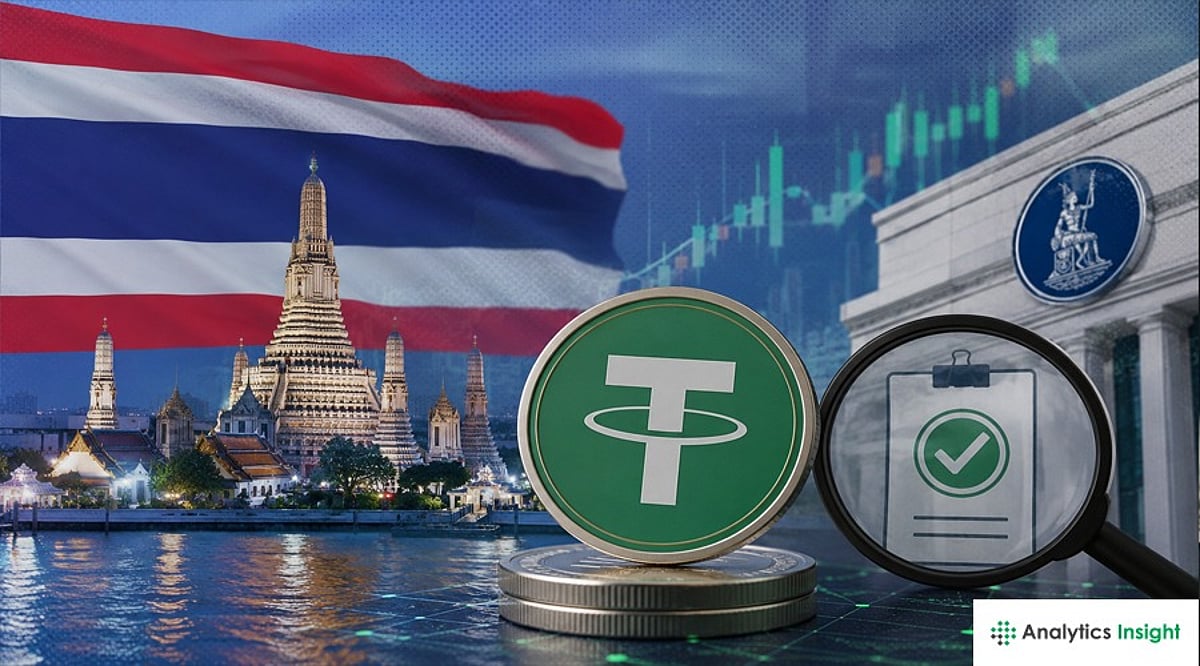
Thailand’s central bank is joining forces with the Securities and Exchange Commission to tighten oversight of large Tether (USDT) transfers, responding to a sharp rise in stablecoin adoption worldwide. The move targets potential gray-economy flows as businesses increasingly turn to crypto for everyday payments.
Stablecoin Demand Expands Across Global Markets
Market data shows USDT usage reached 35.1% by July 2026, surpassing the 29.0% recorded in the same period of 2021 and far exceeding 2024 levels. This shift reflects growing investor preference for stability over speculative assets.
Blockchain activity further confirms the trend: ERC-20 stablecoin addresses have climbed sharply since 2025, with daily active addresses ranging between 400,000 and 700,000 across supported networks.
Corporate adoption is also accelerating. Visa, Mastercard, PayPal and Stripe now integrate stablecoins into cross-border payment systems, enabling businesses to settle transactions more efficiently. The stablecoin market has grown to nearly $312 billion, signaling demand that extends beyond crypto-native users into mainstream commercial activity.
Thailand Targets USDT in Gray Economy Crackdown
The Bank of Thailand will work closely with the Securities and Exchange Commission to monitor large stablecoin transfers, foreign exchange transactions and high-value cash movements. Authorities aim to reduce activity linked to the country’s gray economy, which operates outside formal regulatory systems and often facilitates money laundering, tax evasion and other financial crimes.
USDT remains a primary focus as the world’s largest stablecoin by market capitalization. Its cross-border accessibility and widespread use make it attractive for remittances, trading and value storage, but regulators believe those same features allow significant fund transfers to bypass traditional banking oversight.
New Reporting Rules Increase Compliance Requirements
Thailand introduced cryptocurrency regulations in 2018, but stablecoins have largely remained outside direct regulatory attention until now. Under the new initiative, crypto exchanges and financial institutions must report large USDT transfers and suspicious transaction patterns. Authorities will also monitor high-value cash deposits, withdrawals and qualifying foreign exchange transactions.
Consequently, businesses and individuals using USDT in Thailand will face stronger transparency requirements. Exchanges may strengthen know-your-customer procedures and transaction reporting standards. The approach mirrors similar regulatory developments in the United States, Europe and Japan.
Thailand has previously raised concerns about the gray economy’s effect on tax revenue and financial stability. If the monitoring program proves effective, neighboring Southeast Asian countries may consider adopting similar measures as stablecoin use continues expanding across regional payment networks.
Leave a Reply