Author: vitorcherulli

  • Free Fire MAX Redeem Codes September 14: Unlock Exclusive Rewards Before They Expire

    Free Fire MAX Redeem Codes September 14: Unlock Exclusive Rewards Before They Expire

    Free Fire MAX players can unlock fresh rewards with today’s active redeem codes before they expire. From weapon skins to premium bundles, September 14 brings plenty of free loot for battle royale fans.

    Active Free Fire MAX Redeem Codes are valid for only 24 hours, so players must act quickly to claim rewards before they expire. Each code can be redeemed only once per account, so you can’t use the same code twice for the same item.

    Today’s lineup includes codes like S9QK2L6VP3MR, FFR4G3HM5YJN, and more, which can grant rewards such as premium outfits, weapon skins, and diamond vouchers.

    Garena Free Fire MAX, the widely played battle royale title, has consistently kept up the excitement for players with multiple exclusive in-game rewards, bundles, and emotes. One of the main benefits of receiving premium content for free is the ability to redeem codes. On September 14, 2026, Garena released the latest batch of redeem codes for Free Fire MAX, allowing players to claim rewards such as skins, characters, emotes, and weapon loot crates at no extra cost. Let’s look at how to redeem the codes, what rewards are available, and the range of redeem codes available for Free Fire MAX.

    Redeem Codes for September 14, 2026

    Below are today’s active redeem codes. Use them quickly before they expire:

    • 4N8M2XL9R1G3
    • H8YC4TN6VKQ9
    • UPQ7X5NMJ64V
    • S9QK2L6VP3MR
    • FFR4G3HM5YJN
    • 6KWMFJVMQQYG
    • FF6YH3BFD7VT
    • B1RK7C5ZL8YT
    • FP9O1I5U3Y2T
    • FM6N1B8V3C4X
    • FA3S7D5F1G9H
    • FK3J9H5G1F7D
    • FU1I5O3P7A9S
    • 4ST1ZTBZBRP9
    • BR43FMAPYEZZ
    • FZ5X1C7V9B2N
    • FT4E9Y5U1I3O
    • F7F9A3B2K6G8
    • FE2R8T6Y4U1I

    Note: These codes are region-specific and time-limited. Redeem them as soon as possible to ensure you don’t miss your rewards.

    How to Redeem Codes?

    Garena Free Fire MAX releases new codes daily, but since each set expires within 24 hours, quick redemption is key. Follow the simple steps below to claim your in-game rewards successfully:

    1. Visit the official code redemption site for Free Fire MAX.
    2. Navigate there and sign in using your preferred method (Facebook, Twitter, or Google). Just ensure the game is linked to that account.
    3. A designated text box will appear to enter codes. The code must be entered correctly to be redeemed.
    4. Enter the code, click on Confirm, and submit it. A confirmation message will appear if the code is valid and successfully redeemed.
    5. After receiving the confirmation message, wait 24 hours, and the rewards will be credited to your in-game mail.

    The redeem codes mechanism is one of the most reliable ways to earn in-game rewards, such as:

    • Legendary Weapon Skins
    • Premium Character Outfits
    • Diamond Vouchers
    • Emotes
    • Pet Skins
    • Exclusive Loot Crates

    Why do Redeem Codes Expire Quickly?

    Redeem codes are generally time-sensitive. This helps maintain excitement among players. Garena rolls out small batches to prevent code misuse and rewards only active players who log in daily and stay up to date. Codes are replaced with a new batch of fresh codes every day. Keep in mind that regional restrictions usually apply. For instance, a redeem code for the Indian server may not work for players in Indonesia or Brazil. Always check the source before redeeming codes.

    Final Thoughts

    If you’re wondering how to increase your chances of earning exclusive rewards by redeeming codes, the answer is commitment and awareness. You should stay engaged with Free Fire MAX’s official platforms on Instagram, Facebook, and YouTube, where Garena announces new redeem codes and events. These redeem codes not only increase the value and enjoyment of the game but also increase excitement and rewards for all Free Fire MAX players of all skill levels.
  • Weekend Walmart TV Deals: Save on TCL, VIZIO, Hisense, and Philips 4K TVs

    Weekend Walmart TV Deals: Save on TCL, VIZIO, Hisense, and Philips 4K TVs

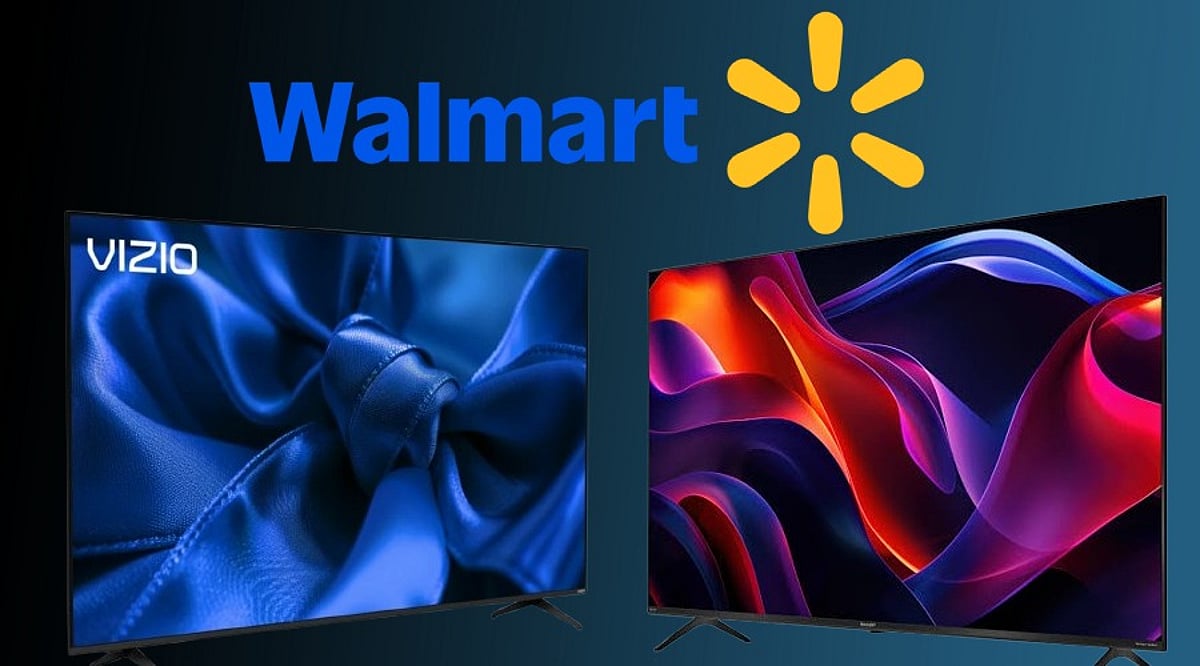
    Walmart’s weekend TV deals include 4K QLED and Mini-LED models from TCL, VIZIO, Hisense, and Philips. The selection ranges from 55-inch televisions to a massive 100-inch display. Whether you’re looking for an affordable upgrade or a home-theater centerpiece, these deals offer something for every budget and space.

    Top Walmart TV Deals This Weekend

    TCL 55-Inch QM51L

    The TCL 55-inch QM51L offers a strong balance of size and display technology. It combines QLED color with Mini-LED backlighting, delivering 4K UHD resolution for detailed movies and streaming content. Google TV provides smart entertainment access. This model suits bedrooms and medium-sized living rooms, and works well for gaming setups with limited space. Mini-LED technology enhances contrast, while QLED produces richer, more vibrant colors.

    Buy Now

    TCL 75-Inch QM51L

    The 75-inch QM51L brings the same series into larger living spaces. Its bigger panel creates a more immersive viewing experience, featuring QD-Mini LED technology and 4K UHD resolution. Google TV provides access to supported streaming apps. This model is ideal for dedicated entertainment rooms or replacing an older large-screen television. The larger display benefits movies, sports, and streaming content.

    Buy Now

    VIZIO 55-Inch Quantum QLED

    The VIZIO 55-inch Quantum QLED stands out on price. Walmart currently lists it at USD 228, down from USD 298. It features a 55-inch 4K QLED display with 3,840 × 2,160 resolution, supporting Dolby Vision, HDR10+, HDR10, and HLG. It includes Wi-Fi 6 for connected streaming and gaming features like Auto Low Latency Mode. VIZIO’s smart platform provides built-in apps and WatchFree+, plus Apple AirPlay 2 and Google Cast support. For value-conscious shoppers, this is a standout deal.

    Buy Now

    Hisense 65-Inch M7

    The Hisense 65-inch M7 offers a more advanced display package, combining Mini-LED technology with QLED color. The 2026 model supports Dolby Vision and HDR10+, with Full Array Local Dimming for improved contrast. Game Mode Pro enhances gaming performance, while AI Picture adjusts image settings based on content. AI Smooth Motion improves fast-moving visuals, and a built-in subwoofer adds audio depth. Walmart lists the model at USD 374, reduced from USD 418, making it an appealing choice for feature-focused shoppers.

    Buy Now

    Philips 100-Inch QLED+

    The Philips 100-inch QLED+ display is designed for a home-theater experience. It offers 4K UHD resolution and a native 144Hz refresh rate, benefiting fast-paced gaming and sports. Its matte screen reduces glare, and Google TV provides access to thousands of entertainment apps. The TV also supports Google Cast and Bluetooth connectivity, with EyeCare technology and an anti-bacterial remote. This model demands considerable wall and floor space, suiting large rooms with enough viewing distance.

    Buy Now

    Which Walmart TV Deal Should You Choose?

    Each television serves a different type of buyer. The VIZIO makes sense for shoppers prioritizing affordability. The Hisense M7 offers a strong mix of size and display features. The TCL 55-inch works well for smaller entertainment spaces. The TCL 75-inch suits buyers wanting a larger Mini-LED experience. Philips targets shoppers seeking an enormous home-theater display. Prices and availability can change quickly during weekend promotions. Before ordering, check the current price, seller information, and your room dimensions. For most shoppers, display technology and size should guide the decision—a good deal matters, but the right screen matters more.

    FAQs

    What are the best Walmart TV deals this weekend?
    The best choice depends on your budget and viewing needs. The VIZIO 55-inch Quantum QLED stands out for affordability. The Hisense 65-inch M7 offers more advanced display features. The Philips 100-inch QLED+ targets buyers seeking a large home-theater screen.

    Is the Hisense 65-inch M7 a good TV?
    Yes, it offers a strong feature combination with Mini-LED and QLED technology, Full Array Local Dimming, Dolby Vision, HDR10+, Game Mode Pro, and AI Smooth Motion for gaming and fast-moving content.

    Is the Philips 100-inch QLED+ worth considering?
    It is designed for large-room entertainment with a 100-inch matte display, 4K resolution, QLED technology, and a 144Hz native refresh rate. Best for buyers with enough space.

    Is TCL Mini-LED better than regular QLED?
    Mini-LED and QLED improve different parts of the viewing experience. Mini-LED uses smaller backlights for more precise brightness control. QLED uses quantum dots to enhance color performance. A combination offers strong contrast and vibrant colors.

    Which Walmart TV is best for gaming?
    The VIZIO supports Auto Low Latency Mode and up to 120fps at 1080p. The Philips 100-inch model offers a native 144Hz refresh rate. Check HDMI specifications for your console or PC.

  • Apple Holds iPhone 18 Pro Discounts as Jio, Airtel, and Vi Stay Silent on Pre-Order Offers

    Apple Holds iPhone 18 Pro Discounts as Jio, Airtel, and Vi Stay Silent on Pre-Order Offers

    iPhone 18 Pro and Pro Max pre-orders are now live in India, but customers hoping for carrier deals from Jio, Airtel, or Vodafone Idea (Vi) will be disappointed — at least for now. None of the three telecom operators have listed any offers for Apple’s latest flagship models on their websites as of September 13, leaving Apple’s own discounts as the primary savings option.

    When checking the homepages of Reliance Jio, Airtel, and Vi, there were no promotions or banners related to the iPhone 18 Pro or Pro Max. Jio’s homepage highlighted its Rs. 3,599 annual plan, a Rs. 299 mobile plan, and JioHome services. Airtel promoted Wi-Fi, postpaid, prepaid, DTH, banking, and business services, while Vi’s homepage similarly showed no iPhone-related deals.

    In contrast, Apple is offering up to Rs. 7,000 instant cashback on purchases made with eligible American Express, Axis Bank, or ICICI Bank cards, along with up to six months of No Cost EMI. The iPhone 18 Pro starts at Rs. 1,64,900, and the Pro Max starts at Rs. 1,79,900.

    This silence from Indian carriers stands in stark contrast to the U.S. market, where AT&T and Verizon are already promoting trade-in deals and credits for the new iPhones. However, Jio, Airtel, and Vi may still announce offers before the September 18 sale date. For now, the most attractive deals come directly from Apple, and buyers can choose between bank cashback and No Cost EMI instead of waiting for a telecom discount.

  • Leading Modernization Engineering Services Firms for Legacy Technology Transformation

    Leading Modernization Engineering Services Firms for Legacy Technology Transformation

    Modernizing legacy technology is no longer just an IT upgrade—it has become a strategic necessity for enterprises aiming to keep applications secure, reduce technical debt, and prepare systems for cloud computing, automation, and artificial intelligence. Businesses are increasingly turning to engineering and IT services companies that can assess legacy systems, migrate workloads, rebuild applications, and introduce modern architectures without disrupting daily operations. Industry research highlights several global technology providers for their capabilities in application and legacy modernization.

    10 Leading Firms Transforming Legacy Technology

    Here are ten companies that stand out in the modernization engineering services space:

    Accenture

    Accenture offers a broad application modernization practice covering legacy assessment, architecture planning, cloud migration, application transformation, and mainframe modernization. The company also uses automation and AI-assisted approaches to help enterprises modernize large application estates.

    Tata Consultancy Services (TCS)

    TCS works with large enterprises on application modernization, cloud transformation, and legacy technology upgrades. Its scale and global delivery network make it a major provider for organizations managing complex technology environments. TCS was named a Leader in Forrester’s 2024 assessment of application modernization and migration services.

    Infosys

    Infosys takes an AI- and cloud-first approach to modernization. Its services cover legacy applications, mainframes, databases, cloud migration, technology upgrades, and the transition of monolithic applications to microservices.

    Capgemini

    Capgemini helps businesses modernize applications and technology environments while moving toward cloud-native architectures. The company has been recognized among the leading providers in application modernization and migration services.

    HCLTech

    HCLTech is a major player in legacy and application modernization. Its services focus on helping enterprises move away from older technology environments while adopting cloud, automation, and modern engineering practices. HFS Research included HCLTech among its 2025 Market Leaders.

    Cognizant

    Cognizant offers end-to-end modernization services, from application assessment and migration to cloud-native transformation. Its Skygrade platform uses automation, modern tooling, and generative AI to support large-scale cloud modernization programs.

    IBM

    IBM Consulting focuses strongly on hybrid cloud and AI-led application modernization. Its services include migrating and modernizing existing applications, containerizing legacy systems, and incrementally improving older applications rather than replacing everything at once.

    Wipro

    Wipro provides modernization through rehosting, re-platforming, refactoring, and rearchitecting applications. Its services also cover integration and data modernization, with GenAI being used to speed up parts of the transformation process.

    EPAM Systems

    EPAM has an engineering-focused modernization practice covering applications, platforms, and data. It also uses AI for legacy code migration and documentation, alongside cloud, containerization, and platform engineering capabilities.

    LTIMindtree

    LTIMindtree is a notable provider for enterprises looking to modernize legacy and mainframe environments. The company has been included among major application modernization providers assessed by industry research firms.

    Final Take

    Modernization engineering is becoming a long-term technology strategy rather than a one-time migration project. Companies need to balance legacy systems with cloud adoption, AI, security, and the need to release software faster. The right modernization partner depends on the size of the technology estate, the complexity of legacy applications, and the organization’s cloud and AI roadmap. For large-scale transformation, companies such as Accenture, TCS, Infosys, Capgemini, HCLTech, and Cognizant remain prominent names, while IBM, Wipro, EPAM, and LTIMindtree offer additional options across different modernization needs.

    Frequently Asked Questions

    What are modernization engineering services?

    Modernization engineering services help businesses upgrade legacy applications, migrate systems to cloud platforms, improve architecture, introduce automation, and integrate artificial intelligence while maintaining business continuity and reducing technical debt.

    Why do companies need modernization engineering services?

    Companies use modernization engineering services to address outdated technology, improve application performance, strengthen security, reduce maintenance costs, support scalability, and create technology environments capable of adapting to changing business requirements.

    Which companies provide modernization engineering services?

    Leading providers include Accenture, Tata Consultancy Services, Infosys, Capgemini, HCLTech, Cognizant, IBM, Wipro, EPAM Systems, and LTIMindtree, offering different combinations of application, cloud, mainframe, data, and digital engineering modernization capabilities.

    How does AI support application modernization?

    AI can assist modernization by analyzing legacy code, generating documentation, identifying dependencies, suggesting code improvements, automating testing, and accelerating migration activities, helping engineering teams modernize applications more efficiently.

    How should businesses choose a modernization engineering partner?

    Businesses should evaluate a provider’s legacy technology expertise, cloud capabilities, engineering experience, security practices, AI adoption, industry knowledge, delivery scale, modernization methodology, and ability to support long-term transformation goals.

  • Indian Markets Pause for Ganesh Chaturthi: Key Global Events to Watch This Week

    Indian Markets Pause for Ganesh Chaturthi: Key Global Events to Watch This Week

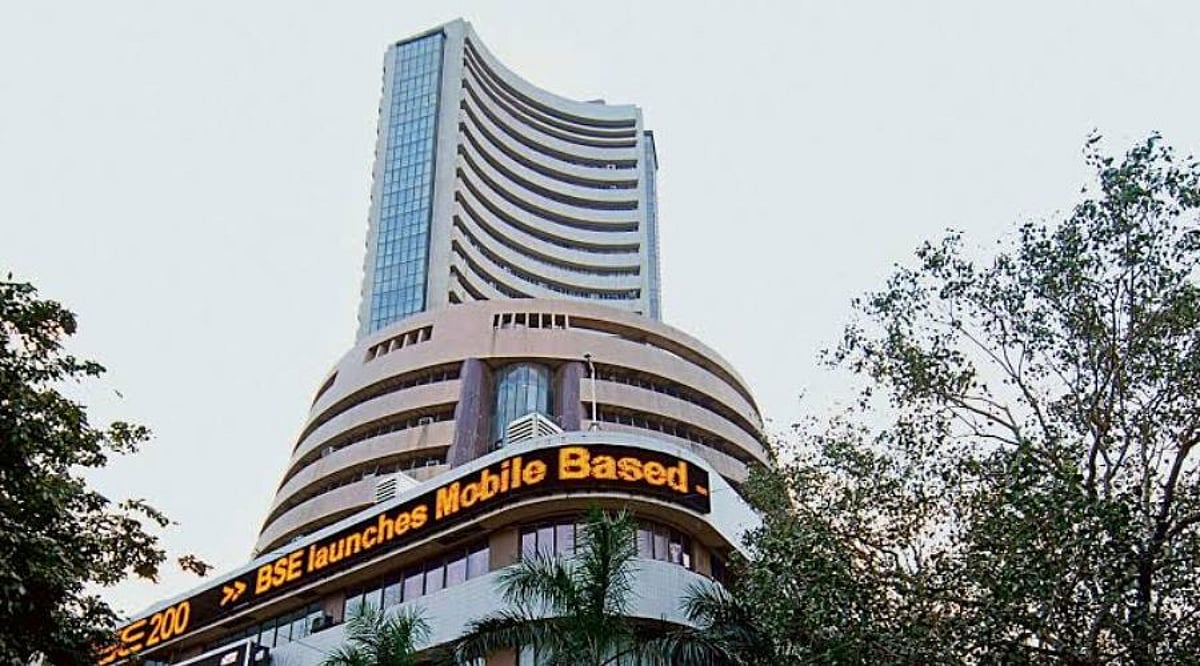
    The Indian stock market is closed today, September 14, in observance of Ganesh Chaturthi. Both the BSE and NSE are shut for trading in equity, derivatives, and securities lending and borrowing. The holiday follows the weekend, granting investors a three-day break.

    Trading will resume on Tuesday, September 15. The pre-open session begins at 9:00 AM, followed by normal trading from 9:15 AM to 3:30 PM. The market closing session runs between 3:40 PM and 4:00 PM on trading days.

    Upcoming market holidays include Mahatma Gandhi Jayanti (October 2), Dussehra (October 20), Diwali-Balipratipada (November 10), Prakash Gurpurb (November 24), and Christmas (December 25).

    The extended break arrives amid heightened global market activity. Oil prices have surged over USD 3 following fresh strikes involving Saudi Arabia and the Strait of Hormuz. Gold remains volatile as investors monitor crude prices, the US dollar, US-Iran tensions, and the US Federal Reserve’s upcoming rate decision. The Fed meeting is scheduled for September 15 and 16.

    A Pivotal Week for Investors

    Gold is traditionally viewed as a safe haven during uncertainty. However, rising oil prices are altering this dynamic. The global conflict has pushed crude higher, leading investors to expect the Fed to maintain elevated interest rates for longer.

    Higher rates can reduce gold’s appeal since the metal does not pay interest. This creates downward pressure on gold, even as broader market instability drives investors toward safe-haven assets.

    The market holiday offers a short pause, but the upcoming trading session is likely to be active. Oil price movements, the Fed’s decision, and gold trends will be critical signals for investors before making fresh decisions.

  • Building PayPal’s Invisible Support Layer: An Interview with Senior Engineer Nishanthi Yuvaraj on Agentic AI

    Building PayPal’s Invisible Support Layer: An Interview with Senior Engineer Nishanthi Yuvaraj on Agentic AI

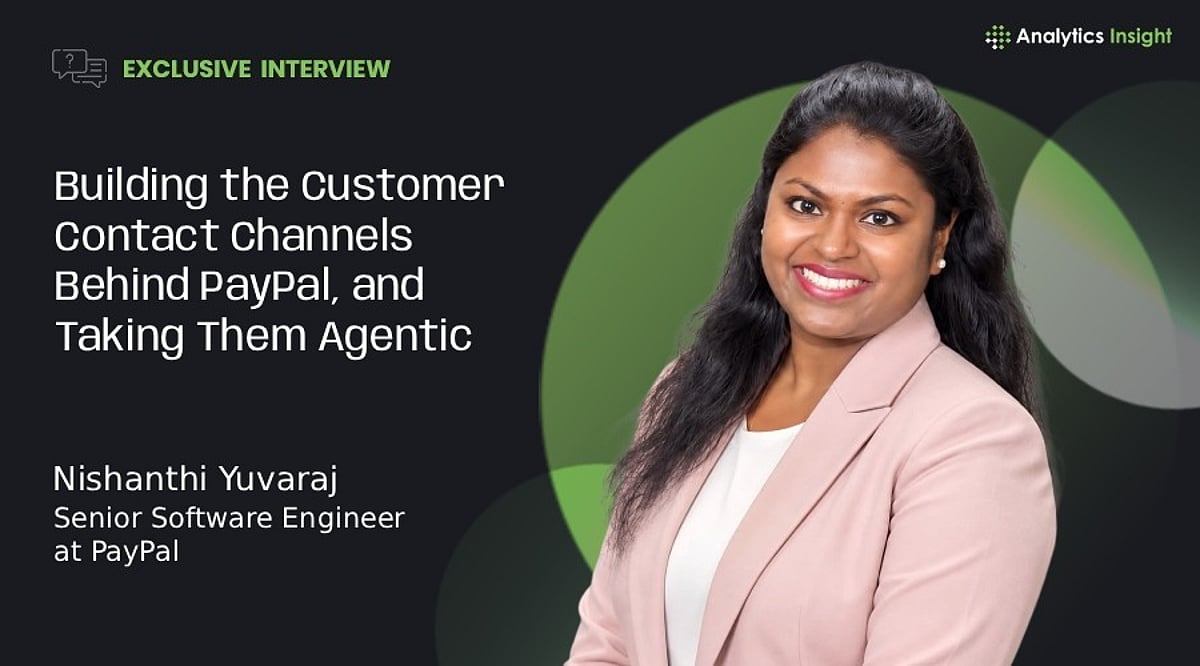
    When a customer opens a chat window and their issue resolves before they finish typing, there’s a complex invisible layer making that possible. Nishanthi Yuvaraj, a Senior Software Engineer at PayPal, has spent over a decade building and scaling the contact channels that power that seamless experience. From her early days as an intern in 2013 to earning multiple patents and delivering a keynote on autonomous customer service, Yuvaraj’s career is a masterclass in infrastructure, innovation, and governed autonomy.

    The Evolution of Customer Servicing at PayPal

    Yuvaraj began at PayPal as an intern and has since worked on nearly every customer contact channel: call support, secure messaging, live chat, bot-driven systems using IBM Watson and Google Dialogflow, and the omnichannel layer that recognizes intent across all of them. She notes that the domain has transformed completely—from disconnected, single-channel support to an integrated system where a customer’s history is treated as one continuous conversation.

    Key Platforms: Message Hub, Nudge Hub, and the Customer Journey Platform

    Message Hub serves as the system of record for conversations with over 230 million customers. Nudge Hub uses real-time event streaming to proactively reach out before a customer asks for help. Together with the Customer Journey platform, these systems enable PayPal to treat a customer’s history as a continuous thread. The challenge, Yuvaraj explains, is operating at a scale where downtime is unacceptable—and the redesign of Message Hub alone significantly increased abatement rates without customers noticing the transition.

    Patents and Research: From Proactive Error Resolution to Agentic Systems

    Yuvaraj holds three granted U.S. patents, with two more pending. Her first patent covers proactive error resolution—recognizing failures before the customer does and routing them to help automatically. Another family of patents focuses on making shared transaction data useful by using machine learning to surface relevant offers. Her pending applications include a multimodal agentic resolution framework, which aligns with her current research on self-healing customer experience systems. She has also authored a dozen peer-reviewed papers on data governance, AI-driven customer experience, and agentic systems.

    The Research Instinct: From Undergrad to International Recognition

    Yuvaraj’s research instinct dates back to her bachelor’s degree at College of Engineering Guindy, Anna University, where she built an e-learning platform for visually impaired students. That project taught her to design for users who are often overlooked—a lesson that has stuck with her. At Cognizant, she worked on localizing PayPal.com for India and created “PayPal Parivar,” a family-based payment concept that emerged from observing how Indian families manage money jointly. That experience reinforced her belief that the best innovations come from understanding user behavior, not starting with technology.

    Infrastructure Work That Unlocks Innovation

    Early in her PayPal career, Yuvaraj built an automated end-to-end testing framework that cut the regression cycle from five days to two. While unglamorous, that infrastructure work enabled faster, safer shipping and gave the team room to experiment. She emphasizes that innovation often sits at the seams between technologies, and being well-versed across languages and platforms is crucial.

    Writing to Fill a Gap

    Yuvaraj began publishing peer-reviewed papers because she saw a gap in the literature around the connective tissue between data governance and AI-driven customer experience. She writes about preparing enterprise data for LLM-assisted issue analysis and governed autonomous systems. Her advice to engineers: “Stay hungry, stay foolish—publish your work before you feel like enough of an expert.”

    The Future: Zero-Touch Customer Experience with Governed Autonomy

    Yuvaraj’s recent work focuses on agentic AI for zero-touch customer experience. She envisions systems that resolve issues and heal themselves without human intervention, but can explain every decision to a compliance reviewer. In her KalingaConf keynote, she presented a closed-loop framework combining autonomous agents, predictive analytics, event-driven orchestration, and reinforcement learning. The system detects problems before the customer does, diagnoses root causes, remediates automatically, and learns from outcomes—escalating only when risk is high. This approach improved customer satisfaction and reduced mean time to recovery while maintaining compliance.

    Leadership and Mentorship

    As a woman in backend engineering, Yuvaraj believes reliability earns leadership opportunities. She mentors students and colleagues by giving them real ownership of hard technical problems early. Her philosophy during production incidents: “Fix first, understand second, blame never.” She views 2 a.m. calls as learning opportunities that reveal how systems behave under real conditions.

    Advice for Aspiring Engineers

    Yuvaraj encourages engineers to stay curious about every layer of the stack, including unglamorous areas like data governance. She advises building end-to-end systems and publishing work even when you don’t feel ready. “The moment you stop being curious about the layer just below or just above the one you’re comfortable in is the moment you stop growing.”

  • How Contactless Payments Work: The Technology Behind the Tap

    How Contactless Payments Work: The Technology Behind the Tap

    Contactless payments feel instant, but layers of security work underneath. NFC connects the device to the terminal. EMV and tokenization protect card credentials. Cryptography authenticates each transaction. Issuers apply fraud checks before approval. Credentials are steadily fading from view, becoming identity systems.

    A tap takes a moment. Behind that moment sits a stack of technology built over two decades, involving radio waves, cryptography, and a chain of banking infrastructure most people never see.

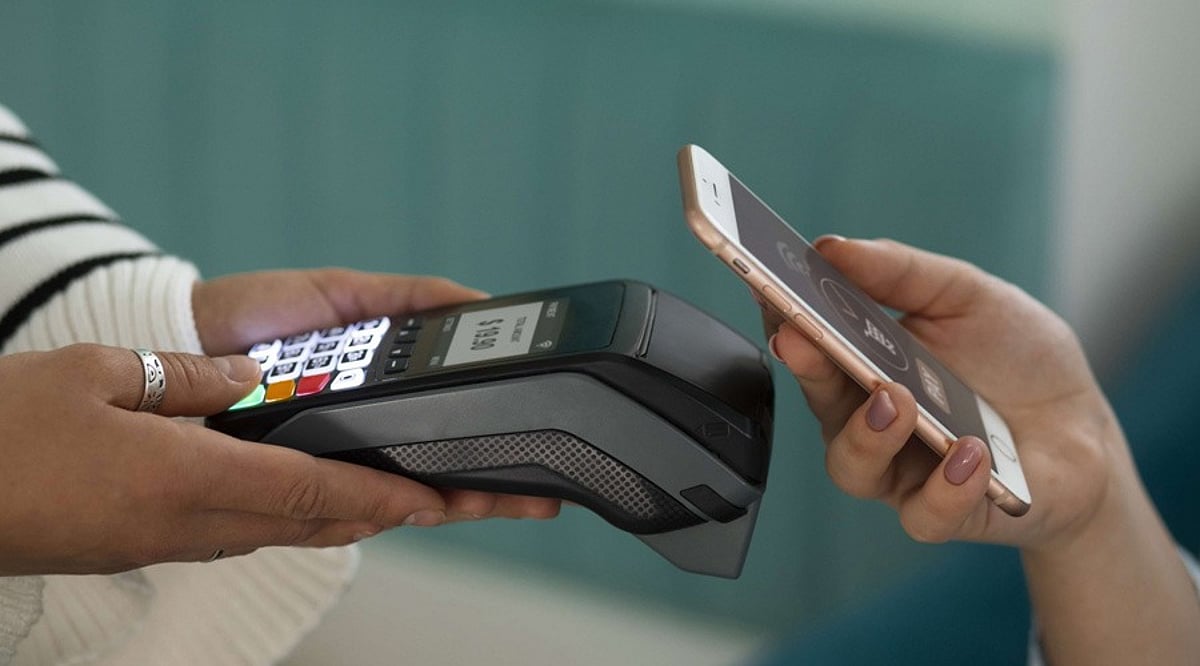
    Contactless payment has become routine at grocery counters, metro gates, and coffee shops. Few people using it understand what happens between the tap and the beep. The customer sees tap, beep, done. The payment system performs several steps in rapid succession: connection, credential exchange, cryptographic authentication, authorization, and fraud screening. That contrast is the real story.

    Near Field Communication Starts the Transaction

    Every contactless transaction begins with Near Field Communication (NFC). This is a short-range radio technology that activates only within a few centimeters. The card or phone contains a small antenna and chip. The payment terminal generates a low-power magnetic field. When the two come close, the card’s chip draws power from that field itself, without needing a battery.

    A contactless card has no power source. The terminal effectively wakes the chip during the tap, powers it briefly, and exchanges data before the field disappears. NFC communication itself happens in milliseconds, though the full authorization that follows depends on the payment network, the issuer, and the terminal.

    What the Card or Phone Actually Sends

    Physical cards use EMV chip security to generate transaction-specific authentication data during each tap, while digital wallets can add tokenization to protect the underlying card number. These are related but distinct systems. A physical contactless card and a phone-based wallet protect the transaction differently, even though both work to prevent the raw card number from being freely exposed.

    This distinction matters for anyone comparing payment methods. A lost physical card still carries some exposure risk tied to its chip data. A lost phone, by contrast, typically exposes only a token linked to that one device, not the underlying account number itself.

    Cryptography Makes Each Transaction Different

    The payment chip, whether on a card or in a wallet, uses cryptographic processes to generate transaction-specific authentication data. Because that data is tied to the individual transaction, simply copying information captured from one payment does not produce a valid second transaction.

    On the device side, contactless cards use secure chips to hold and protect payment credentials. Some phones use dedicated secure hardware, while other payment architectures use different combinations of tokenization, trusted execution environments, and software-based security. The exact setup varies by device manufacturer and payment system, and no single architecture applies across all devices.

    From Tap to Bank Approval

    The tap is only the first step. The terminal reads the payment credentials and transaction data, then sends an authorization request through the merchant’s payment infrastructure. The payment network routes that request to the card issuer, which checks the account and applies fraud controls before returning an approval or decline. Settlement, where funds actually move between banks, happens later. The instant beep at checkout marks approval, not completion of the full payment cycle.

    Why Some Payments Still Ask for a PIN

    Many contactless systems apply a transaction-value limit before requiring additional verification, such as a PIN. Some issuers can also require verification after a series of contactless transactions. These controls limit the potential exposure from repeated low-friction payments while keeping everyday purchases fast. Card networks and regulators typically review these limits periodically based on fraud data and regional banking rules, rather than fixing them permanently.

    Fraud Detection Works Behind the Scenes

    Fraud protection does not stop at the tap. Issuers and payment providers watch for patterns during authorization, checking things like past transaction behavior, the device being used, and where the merchant sits in the risk spectrum. This means security is not resting on a single moment. It is spread across a system built to catch problems before approval happens.

    That same thinking now fits on a wrist or a finger. Contactless payments have moved into rings and smartwatches, letting people pay without pulling out a card or phone at all. What stands out is not the new form factor itself, but how easily the same protection travels with it. The hardware keeps changing shape. The security underneath stays consistent.

    The Future of Payments Is Becoming Credentialless

    Contactless payment succeeds by moving complexity away from the customer, not by eliminating it. NFC provides the connection, EMV and tokenization protect payment credentials, and cryptographic processes authenticate the transaction. The next shift is making those credentials even less visible to users. A card number may already be hidden behind a phone, watch, or other device, turning payment into an identity and authentication process rather than a simple exchange of card details.

    Final Thought

    The physical card is slowly losing its importance, even though it still looks the same at checkout. Biometrics and device identity are already doing more of the verification behind the scenes. So the tap itself won’t change much for a while. But what’s happening underneath it will keep getting quietly upgraded.

  • Mastering Sensex and Nifty: A Practical Guide to Interpreting Market Movements

    Mastering Sensex and Nifty: A Practical Guide to Interpreting Market Movements

    The headline number of the Sensex or Nifty can be misleading. Real market strength reveals itself through breadth, sector leadership, and the extent to which a move spreads beyond a handful of large stocks. Volume, India VIX, and the underlying trigger add crucial context. Persistence is what separates noise from a genuine trend.

    What Sensex and Nifty Actually Measure

    The Sensex tracks 30 major companies listed on the BSE, while the Nifty 50 tracks 50 major companies on the NSE. Both use free-float market capitalization weighting, giving larger companies more influence over the index. A sharp move in a heavyweight stock like Reliance Industries or HDFC Bank can noticeably affect the index, even if many smaller stocks barely react. This is why the headline index can sometimes look stronger or weaker than the broader market.

    Start with the Size of the Move

    First, check the percentage change and point movement against the previous close. This shows the scale of the move but says nothing about its cause or quality.

    Check Whether the Move Is Broad

    Market breadth compares advancing stocks against declining ones. If Nifty rises while more stocks fall than rise, the rally is riding on a few large names. If the index gains only a little while a large number of stocks move up, the market underneath is healthier. For example, a 0.5% Nifty gain with a negative advance-decline ratio indicates a narrow, top-heavy move. The same gain with a strongly positive ratio signals genuine, broad-based buying. Narrow rallies unwind quickly; broad advances tend to hold up better.

    Find Which Sectors Are Leading

    Sector indices for banking, IT, auto, and pharma often move for different reasons. Banking stocks respond to interest-rate expectations, credit growth, and earnings. IT stocks react to global technology spending and currency shifts. Watching which sector leads or lags explains what is really driving the day’s number. The index is a mix of moving parts, not one uniform block.

    Use Volume and India VIX for Context

    Volume provides context. A sharp move on unusually heavy trading deserves more attention than a similar move on a quiet, low-volume day. India VIX measures expected volatility. A higher VIX does not predict direction—it simply means bigger swings are on the table. The real question is whether that jump in uncertainty is tied to a specific event or reflects a deeper shift in investor sentiment.

    Connect the Move to Its Trigger

    Big single-day swings almost always have a specific cause: earnings from index heavyweights, RBI policy calls, inflation data, crude oil prices, or overnight moves in US markets. Markets trade on expectations, not just the news. A strong earnings report can still lead to a stock decline if investors expected even better. Conversely, weak economic data can spark a rally if it raises hopes of rate cuts. Foreign institutional flows also matter, especially in large-cap names, but they work best as one piece of the puzzle.

    Separate Noise from a Trend

    A single day’s swing often reflects one news event. A steady move across several weeks usually points to a broader shift in sentiment or earnings expectations. Treating every daily fluctuation as meaningful leads to overreaction. Watching the trend over weeks gives a clearer picture.

    A Framework for Reading Sensex and Nifty

    Running through these six checks turns a single index number into a fuller picture of what actually happened and why.

    Final Thought

    The index shows what happened; breadth and leadership reveal how widely the move was shared. Volatility and the trigger explain the market’s immediate response, while persistence shows whether the move has turned into a real trend. That is the difference between watching the market and actually reading it.

  • Top Dolby Atmos Laptops for Immersive Audio in 2026: Expert Picks

    Top Dolby Atmos Laptops for Immersive Audio in 2026: Expert Picks

    Immersive audio is becoming a key factor in laptop buying decisions, with premium models integrating advanced speaker systems and Dolby Atmos support. However, a Dolby Atmos label alone doesn’t guarantee superior sound—speaker placement, chamber design, amplification, and tuning all shape the listening experience.

    This guide compares the best Dolby Atmos laptops across different designs, use cases, display qualities, and price ranges, focusing on what actually delivers richer built-in sound.

    How We Selected These Laptops

    Every laptop on this list required manufacturer-confirmed Dolby Atmos support, real multi-speaker hardware, a strong display, and a verifiable India price. Certification alone wasn’t enough—speaker placement, amplifier design, chassis build, and tuning partner all mattered. Movie-focused use received extra weight: speaker placement, low-end capability, display quality, and soundstage width were key. Any model that couldn’t be cross-checked against a live, manufacturer-confirmed spec sheet was excluded. That’s why this list holds four laptops instead of five.

    Comparison Table

    *Prices marked with an asterisk are indicative and depend on configuration, retailer discounts, and availability. Always check the live price on the retailer page before purchase.

    Dell XPS 13 (2026): Best Compact Dolby Atmos Laptop

    XPS 13 comes with Dolby Atmos built in, not as an add-on. It features four speakers, a 13.4-inch screen with up to 120 Hz, and weighs close to 1 kg. Battery life reaches up to 17 hours, lasting through long viewing sessions. It costs less than every other laptop here and still offers a touchscreen.

    Lenovo Yoga 9i 2-in-1 (Gen 10, 14-inch): Best Premium 2-in-1 for Audio

    Lenovo Yoga 9i has strong speakers: woofers on the sides and tweeters near the hinge. Bowers & Wilkins tunes the sound, and a Smart Amplifier powers it. Music sounds fuller and wider than on most thin laptops. Note that Lenovo now sells a newer Gen 11 model with different specs, so check which generation you’re buying.

    ASUS Zenbook Duo (2025): Best Dual-Screen Experience

    Zenbook Duo has two 14-inch OLED screens, unlike any other laptop on this list. Harman Kardon speakers sit across its wide body and support Dolby Atmos. That width helps spread the sound. It suits anyone who wants two screens and good audio together.

    Samsung Galaxy Book5 Pro (2025): Best Battery and Audio Balance

    Galaxy Book5 Pro has four speakers split between woofers and tweeters, tuned for Dolby Atmos. It also has a 14-inch AMOLED screen at 120Hz. Battery life reaches 25 hours, the best on this list. Samsung phone owners get extra perks like Quick Share and using their phone as a webcam.

    Final Thoughts

    Dolby Atmos on a laptop works best as a starting point rather than a promise. What actually shapes the listening experience is the hardware behind the badge: speaker count, placement, amplifier design, and the tuning partner. The Dell XPS 13 leads on portability, the Yoga 9i on premium 2-in-1 audio, the Zenbook Duo on its dual-screen format, and the Galaxy Book5 Pro on the balance of battery and sound. Before assuming two laptops with the same Dolby Atmos label will sound alike, check what sits behind that label.

    FAQs

    1. Are laptops with Dolby Atmos good for watching movies? Yes. Laptops with Dolby Atmos can deliver a wider and more immersive soundstage than basic stereo laptop speakers. The actual experience depends on speaker placement, driver size, amplifier power, and audio tuning.
    2. Does Dolby Atmos mean a laptop has better speakers? Not necessarily. Dolby Atmos is an audio technology, but it does not determine the physical quality of the speakers. A laptop with better speaker hardware and tuning can sound better than another laptop carrying the same Dolby Atmos support.
    3. Which laptop is best for immersive audio in 2026? The best choice depends on the use case. The Dell XPS 13 is a strong compact option, while the Lenovo Yoga 9i is better suited to buyers seeking a premium 2-in-1 with enhanced audio. The Samsung Galaxy Book5 Pro is a strong choice for users who also prioritize battery life.
    4. Can Dolby Atmos laptop speakers replace headphones? For movies, music, video calls, and casual gaming, a good Dolby Atmos laptop can reduce the need for headphones. However, headphones or external speakers remain better when you need stronger bass, higher volume, or more precise positional audio.
    5. What should I check before buying a Dolby Atmos laptop? Look beyond the Dolby Atmos label. Check the number of speakers, their placement, amplifier technology, driver configuration, display quality, and the manufacturer’s audio tuning. These factors have a major effect on the laptop’s real-world sound quality.
  • 5 Intentional Culture Moves That Make Employees Want to Stay

    5 Intentional Culture Moves That Make Employees Want to Stay

    Most culture initiatives fail for the same reason most ad campaigns fail: they try to be liked by everyone and end up meaning nothing to anyone. A mission statement written by committee reads like it was written by committee, and employees can tell the difference between language built to be approved and language built to be true.

    According to The Fascination Factor, the new book from André Martin and Mark Fitzloff, there are five things leaders can actually do to build a culture people don’t want to leave. None of them cost money. All of them require nerve, because all of them mean giving up some control over how the company is perceived.

    1. Put Quirks on Display

    Every organization has a founding story that’s a little embarrassing: a garage, a failed first product, an early client who almost said no. Communications teams tend to bury that history in favor of something more polished, which is exactly backward. It’s the quirks no focus group could invent that make a brand, or a company, feel human instead of generic. Celebrate the garage. Celebrate the failed product. The rough edges are the only part of the story a competitor can’t copy.

    2. Be Honest About How the Place Actually Runs

    Every workplace has its own brand of crazy: the unwritten rule that real decisions happen on a walk instead of in a conference room, that nothing serious gets discussed before the second cup of coffee, that the best ideas show up during a Tuesday night working session nobody put on the calendar. Don’t sweep any of that under the rug. Spell it out on purpose, before someone joins rather than after they’ve already signed the offer and found out the hard way. Giving people an accurate preview doesn’t scare off the right candidates. It scares off the wrong ones, which is a feature, not a bug, and it does filtering work no values statement ever will.

    3. Treat Long-Tenured People Like the Asset They Are

    Most companies spotlight the newest hire and let the 20-year veteran fade quietly into the org chart, as if longevity were something to apologize for. Flip that. Let the person who started as an intern and now runs a department that didn’t exist when they arrived tell their own story.

    4. Be Specific About Who Thrives There and Who Doesn’t

    Vague values language—”we value innovation and collaboration”—attracts nobody in particular, because it could describe literally any company’s careers page. A precise description of the kind of person who does well, including an honest description of the kind who doesn’t, does self-selecting work no interview process can replicate. “The people who succeed here love fast pivots and aren’t afraid to fail twice before winning” tells a very different person to apply than a generic list of adjectives ever could, and it tells the wrong person to look elsewhere before either side wastes six months finding out.

    5. Say Out Loud What You Love About the Place, and Mean It

    This sounds soft. It isn’t. A leader’s enthusiasm, or the visible lack of it, sets the ceiling for everyone underneath them. Take the time to remember why you fell for the organization in the first place: the week you saw the work actually change something for someone. Say that out loud instead of keeping it to yourself. It gives everyone else permission to feel the same way without sounding naive for admitting it.

    Fitzloff has run creative departments long enough to recognize the version of this that fails: a values statement stapled to the employee handbook, unread, unfelt, contradicted by how the place actually operates the moment someone new walks in. The five moves above work because they’re specific enough to be tested against reality. A vague value can’t be contradicted, because it doesn’t actually claim anything. A specific one can, which is exactly what makes it credible the moment it holds up.

    None of these five moves require a budget line or a task force. What they require is a leader willing to describe the company as it actually is, warts included, instead of the version that reads best in a recruiting deck. That’s a harder discipline than it sounds like, and most organizations never attempt it, which is exactly why the ones that do stand out so clearly to the people deciding whether to stay.

    This isn’t a campaign so much as it’s editing: cut what’s generic, keep what’s true, and let what’s left do the work.