Author: vitorcherulli

  • NYT Strands #922 Hints and Answers: ‘Harbour View’ Theme for September 11, 2026

    NYT Strands #922 Hints and Answers: ‘Harbour View’ Theme for September 11, 2026

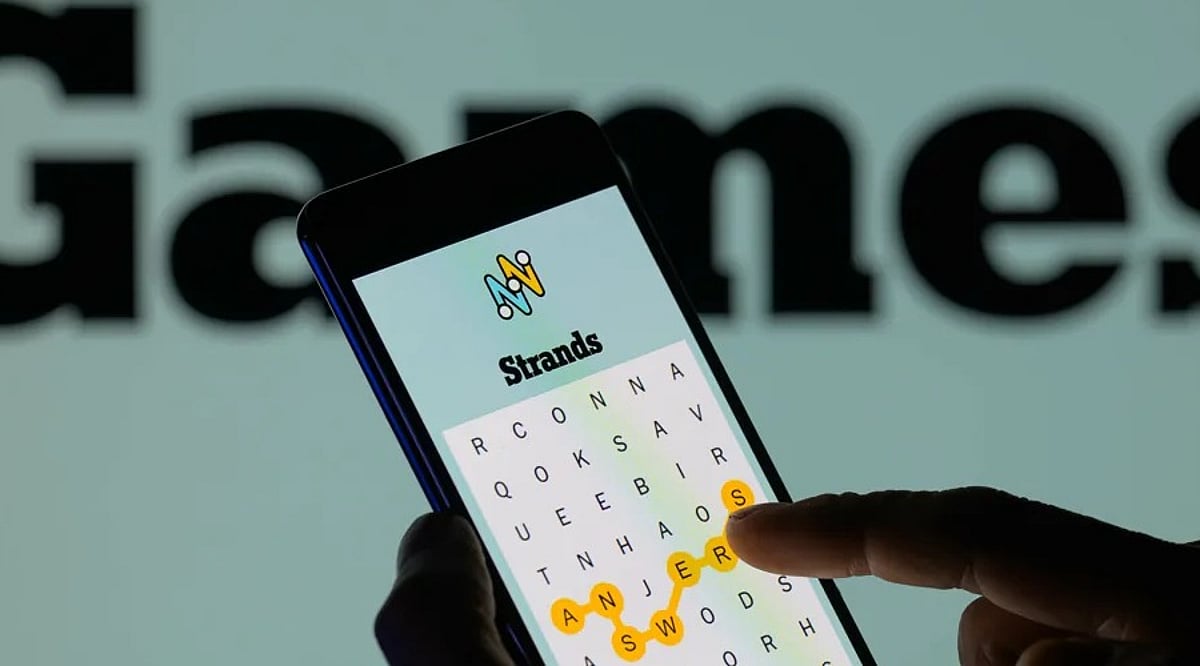
    Another NYT Strands puzzle is here for Friday, September 11, 2026. Today’s challenge follows the theme “Harbour View” and asks players to find words linked to life around the waterfront. The clues below offer a way to make progress without revealing every answer immediately.

    Understanding Today’s NYT Strands Theme

    The theme focuses on things commonly associated with life around the water. If you are still searching for the right direction, the additional clue is “life by the water.”

    How NYT Strands Works

    NYT Strands is a word-search puzzle where players find theme-related words hidden across a letter grid. Words can move horizontally, vertically and diagonally.

    Players can also find unrelated words of four letters or more. Finding three such words earns an in-game hint that reveals letters from a theme answer.

    The spangram is the key word or phrase that connects the puzzle’s theme. It stretches from one side of the grid to another.

    NYT Strands Hint for September 11, 2026

    Today’s main theme hint is: “Harbour View”. A more direct clue is: “Life by the water.” These clues point towards boats, structures and other sights associated with a waterfront setting.

    NYT Strands Spangram Hint

    Still looking for the longest answer? Today’s spangram connects the waterfront theme and runs across the grid. Players looking for it can start from the O near the bottom of the far-left vertical row.

    NYT Strands Spangram Answer Today

    The September 11, 2026 spangram is: ONTHEWATERFRONT. The phrase captures the central idea of the puzzle and connects the remaining answers to the waterfront setting.

    NYT Strands Answers for September 11, 2026

    The complete answer list for today’s puzzle includes:

    • DOCK
    • PIER
    • SHIP
    • BARGE
    • BRIDGE
    • LIGHTHOUSE
    • ONTHEWATERFRONT (Spangram)

    The six theme words describe different objects and places that players can associate with a harbour or waterfront view.

    Why Today’s Puzzle May Take Some Time

    Several answers belong to the same waterfront setting, which can make the grid easier to understand once the theme clicks. The spangram may still require more searching as it follows a winding route across the board. Players who get stuck can also look for unrelated four-letter words. Three valid words can unlock a hint and reveal letters from one of the theme answers.

    Another Daily Word Challenge

    NYT Strands offers a fresh theme each day, with the spangram often providing the strongest clue to the puzzle. Today’s “Harbour View” theme takes players through a collection of familiar waterfront sights. For players stuck on Strands #922, the hints and answers provide a clear route through the grid. A new puzzle will bring another theme and another set of hidden words tomorrow.


  • US Stock Futures Climb Ahead of August CPI Report; Oracle Surges, Adobe Slides

    US Stock Futures Climb Ahead of August CPI Report; Oracle Surges, Adobe Slides

    US stock futures moved higher on Friday as investors prepared for the August consumer price index report. Oil prices eased from recent highs, while Treasury yields stayed close to multiyear peaks. Markets remained cautious after Wall Street recorded four straight sessions of losses.

    At 5:31 a.m. ET, Dow E-minis rose 276 points, or 0.53%. S&P 500 E-minis gained 0.54%, while NASDAQ 100 E-minis increased 0.57%. The gains followed another weak session on Thursday, when the Dow fell more than 300 points, the S&P 500 dropped 0.6%, and the NASDAQ Composite declined 0.7%.

    Investors now await the August CPI report. Economists expect consumer prices to rise 0.4% from July and 3.4% from a year earlier. Core CPI is expected to rise 0.2% monthly and 2.4% annually. The data arrives after a hotter producer price index, which increased 0.4% in August and rose 5.4% from a year earlier.

    The inflation readings come ahead of the Federal Reserve’s Sept. 15-16 meeting. Futures markets assign roughly a two-thirds to 70% chance of a 25-basis-point rate increase. Christopher Hodge, chief US economist at Natixis CIB Americas, said an inflation reading near expectations could reduce pressure on the Fed to raise rates.

    Oil prices moved lower on Friday but remained above $104 a barrel for Brent and near $100 for West Texas Intermediate. Shipping activity through the Strait of Hormuz has fallen sharply, and markets continue to monitor Middle East tensions. Bill Adams, chief US economist at Fifth Third Commercial Bank, noted that the surge in energy prices creates new upside risk for inflation.

    Treasury yields stayed elevated, with the 10-year near 4.94% after approaching 5% on Thursday. The 30-year yield reached about 5.3%. Higher bond yields can reduce demand for stocks as investors shift to lower-risk fixed-income assets.

    Oracle shares jumped about 7% in premarket trading after the company reported stronger quarterly revenue and profit. Its cloud infrastructure sales more than doubled, and it added more than $30 billion in AI cloud contracts during the quarter. Remaining performance obligations reached $664 billion. Adobe shares fell more than 2% after issuing a fourth-quarter revenue forecast below Wall Street expectations, though its adjusted earnings of $6.13 per share beat estimates.

    Nvidia gained in premarket trading, while ACV Auctions surged after Copart agreed to acquire it for nearly $1.9 billion. Friday’s market direction will depend heavily on the CPI reading as investors assess inflation, Treasury yields, oil prices, and expectations for the Federal Reserve’s next move.

  • How Ethereum’s Quantum-Safe Roadmap Protects ETH Investors: What You Need to Know

    How Ethereum’s Quantum-Safe Roadmap Protects ETH Investors: What You Need to Know

    Quantum computing remains a long-term rather than immediate threat to Ethereum, but developers are already preparing for a world where today’s cryptography may no longer be sufficient. For ETH investors, the key question is whether Ethereum can migrate safely before quantum computers become powerful enough to break existing protections.

    Why Ethereum Needs Quantum Resistance

    Ethereum currently relies on several cryptographic systems that future quantum computers could threaten. These include ECDSA signatures used by accounts, BLS signatures used by validators, KZG commitments for data availability, and some zero-knowledge proof systems.

    No quantum computer today can break Ethereum’s cryptography, but research from Google Quantum AI (March 2026) indicates that breaking 256-bit elliptic-curve cryptography may require roughly 1,200 logical qubits — about 20 times fewer than earlier estimates. This has accelerated Ethereum’s planning.

    Ethereum’s Post-Quantum Roadmap

    The Ethereum Foundation has established a dedicated post-quantum team and a structured roadmap targeting approximately 2029 for core post-quantum infrastructure. The upgrade is phased:

    • Milestone I: A post-quantum key registry for validators.
    • Milestone J: Post-quantum signature-verification precompiles, designed as a minimal viable post-quantum Layer 1 safeguard that could keep Ethereum operating through a potential “Q-day” — when cryptographically relevant quantum computers emerge.
    • Later milestones: Post-quantum attestations, real-time consensus proofs, signature aggregation, and quantum-safe blob commitments.

    Ethereum’s September 2026 protocol update explicitly identifies Milestone J as a temporary safeguard to bridge the gap until a full transition.

    Testing is Already Underway

    The roadmap isn’t just theoretical. More than 10 client teams are participating in weekly post-quantum interoperability devnets. Open-source projects including leanXMSS, leanVM, leanSig, and leanMultisig are under active development.

    Funding signals commitment: The Poseidon Prize offers $1 million for improvements to hash-based cryptographic primitives, and the Foundation continues to support post-quantum consensus and signature research.

    What This Means for ETH Investors

    Quantum readiness matters as Ethereum secures far more than ETH itself. Stablecoins, DeFi protocols, tokenized assets, and smart contracts all depend on the network’s cryptographic security.

    Migration will be complex. Post-quantum signatures tend to be larger and harder to aggregate efficiently than existing ones, potentially increasing bandwidth and computation. Ethereum must also offer a practical migration path for existing accounts. Its 2026 protocol priorities highlight native account abstraction as one route away from ECDSA-based authentication.

    Ethereum does not face an immediate quantum emergency. Its advantage is preparation time. The 2029 roadmap, active devnets, and dedicated research funding show that quantum resistance is moving from discussion to implementation. For ETH investors, progress on these milestones could become an increasingly important measure of Ethereum’s long-term security.

  • BHIM UPI App Review: Features, Benefits, and Challenges of India’s Government-Backed Digital Payments Platform

    BHIM UPI App Review: Features, Benefits, and Challenges of India’s Government-Backed Digital Payments Platform

    General Information

    Here are some known facts about BHIM:

    • Launched in: 2016
    • Platform Support: Android, iOS
    • Download: Click Here

    Main Features of BHIM

    Below are some important BHIM features.

    • Provides quick transfer of money between bank accounts based on mobile numbers, UPI ID, or account numbers with authenticated transactions.
    • Supports payments by QR code to merchants, online as well as offline purchases with ease of payment.
    • Provides features like utility bill payment, mobile top-ups, account balance checking, and transaction history viewing all in one application.
    • Provides digital transaction capability via multiple bank accounts through the Unified Payments Interface.
    • Brings together UPI payments, merchant transactions, bill payments, and banking services all in one reliable UPI Payment App.

    Benefits of BHIM

    Below are some BHIM benefits.

    • Ensures quick and safe UPI payments, making it possible for people to transfer and receive money instantly without divulging sensitive personal bank details.
    • Supports multiple banks to allow customers to make digital payments from one application.
    • Facilitates routine financial tasks through features such as QR code payments, bill payments, mobile recharges, and viewing transaction history.
    • Offers an easy-to-use platform that enables digital payments for users with or without experience in using UPI payments.
    • UPI Payment App brings together safe money transfers, payments at merchants, bank payments, and bill payments into one convenient application.

    Challenges of BHIM

    Some BHIM challenges users may experience while using the platform.

    • Transactions might sometimes be delayed during times of heavy UPI traffic or when there are banking network problems.
    • Some aspects of features and banking services are provided by the participating bank and may be different for various banks.
    • Internet connectivity is necessary for executing UPI payments, synchronizing the account details, and providing payment services.
    • Users might sometimes face problems with login, bank linking, and transaction verification after updates and peak usage times.
    • The UPI Payment App offers secure digital payment services, but transactions can only be successful when the bank and UPI network are active.

    Subscription Information

    The BHIM app is free to download, and there are no subscription fees associated with using the app for making payments through UPI. Banking costs and transaction limits will vary from bank to bank.

    Support Options

    Help Center and Learning Resources: FAQs, user guides, BHIM Help Center, UPI resources, safety tips, NPCI documentation, product updates, and knowledge base.

    Customer Support: In-app support, email support, customer care assistance, Help Center resources, technical support, grievance redressal, and documentation.

    Conclusion

    The BHIM app offers an easy-to-use and safe digital payments solution by integrating UPI-based transactions, merchant payments, bill payments, and bank account management in one app. It is an ideal digital payments option for regular usage because of its government-backed app, banking support, and simplicity of use. While there might be problems due to network connection or any bank-related problems that can slow down the transaction process, it still works effectively.

  • 7 Key Differences Between XRP and Bitcoin: Speed, Supply, and Use Cases

    7 Key Differences Between XRP and Bitcoin: Speed, Supply, and Use Cases

    While both XRP and Bitcoin are prominent cryptocurrencies, they differ significantly in design, purpose, and underlying technology. Here are seven critical distinctions that set XRP apart from Bitcoin.

    • Transaction Speed: XRP settles payments in 3–5 seconds, far faster than Bitcoin’s 10-minute block times, making XRP better suited for real-time cross-border transfers and high-frequency remittance applications.
    • Supply Cap: XRP has a fixed total supply of 100 billion tokens, most of which were pre-mined. Bitcoin’s capped supply is 21 million coins, mined gradually through proof-of-work mining rewards and halvings over decades.
    • Consensus Mechanism: XRP uses the Ripple Protocol Consensus Algorithm, which relies on trusted validators, while Bitcoin uses energy-intensive proof-of-work mining to secure its decentralized, permissionless network.
    • Primary Use Case: XRP targets fast, low-cost international payments for banks and financial institutions. Bitcoin primarily serves as a decentralized store of value and peer-to-peer digital cash.
    • Transaction Costs: XRP transactions cost fractions of a cent, significantly cheaper than Bitcoin’s often volatile network fees (especially during congestion). This makes XRP more economical for microtransactions and frequent transfers.
    • Governance Structure: XRP’s development is heavily influenced by Ripple Labs, a centralized company. Bitcoin evolves through decentralized community consensus, with no single entity controlling protocol upgrades or direction.
    • Mining Requirement: XRP requires no mining — all tokens were pre-created at launch. Bitcoin depends on continuous mining to issue new coins and maintain network security through computational work.

    Understanding these differences helps investors and users choose the right cryptocurrency for their specific needs, whether it’s fast remittances (XRP) or a robust store of value (Bitcoin).

  • How to Invest in IT Sector Stocks: Key Metrics, Risks, and Long-Term Strategies

    How to Invest in IT Sector Stocks: Key Metrics, Risks, and Long-Term Strategies

    IT sector stocks are influenced by global technology spending, currency movements, workforce costs, and client demand. Investors need to assess company fundamentals, valuation, business cycles, and risks. A disciplined approach can help identify stronger long-term investment opportunities.

    What Makes IT Sector Stocks Different?

    Three forces are particularly important when analyzing IT stocks: overseas client spending, currency movement, and talent costs. IT companies earn most of their revenue from clients in the United States and Europe, so their fortunes rise and fall with technology budgets in those regions. Infosys and TCS earn most of their revenue in foreign currencies. Rupee movement can shift their reported numbers even when client demand has not changed. On the talent side, IT is a people-driven business. How a company manages hiring and retention feeds directly into its margins. This exposure does not exist in sectors that sell mainly within India, such as consumer goods or utilities. An investor moving from those sectors into IT stocks needs to track more moving parts than usual.

    Which Numbers Should You Check Before Buying?

    Revenue growth alone does not tell the full story. Deal wins, often called Total Contract Value (TCV), show where growth is heading. A company can report flat quarterly revenue but strong deal wins — that signals growth arriving in future quarters rather than the current one. TCV should not be treated as immediate revenue, though. Large contracts are usually delivered over multiple quarters or years.

    Attrition rate matters too, but not as a fixed threshold. Direction matters more than a universal target. Falling attrition can indicate improving employee stability. A sudden increase can raise delivery and hiring costs.

    Client concentration is the third figure worth checking. A company that depends heavily on a small number of large clients can face sharper revenue swings when one customer cuts technology spending.

    Operating margin is another important measure. It shows how much profit an IT company retains from its core operations after operating costs. A falling margin can point to wage pressure, weaker pricing, lower employee utilization, or a shift toward lower-margin services. The trend over several quarters is more useful than one quarter in isolation.

    Large-Cap vs. Mid-Cap IT Stocks

    Large IT companies such as TCS, Infosys, and HCLTech offer stability. They serve hundreds of clients across regions, so a slowdown in one industry rarely sinks their overall numbers. Their growth tends to be steady rather than explosive.

    Mid-sized firms such as Persistent Systems or Coforge often grow faster in percentage terms. They start from a smaller base and can win niche, high-value contracts in areas like cloud migration or specialized engineering. The trade-off is higher volatility. Growth also needs to be judged against valuation. A smaller company growing faster is not automatically the better investment if its share price already reflects that growth.

    Understand the IT Business Cycle

    IT stocks tend to move in cycles tied to global technology spending. When clients abroad raise their budgets, Indian IT firms benefit through more outsourced work. When budgets tighten, deal signings slow, and stock prices often fall before earnings confirm the slowdown. This makes IT stocks forward-looking in nature. Prices can drop on cautious management commentary about client budgets months before the impact shows up in reported revenue.

    Look Beyond One IT Company

    Holding several IT companies reduces company-specific risk, but it does not remove sector risk. If global technology spending falls, several IT stocks can decline together. Diversification across sectors matters, not only within IT. Sector-focused mutual funds or index funds tracking IT indices offer one route for those who prefer not to track individual companies closely.

    A Good Company Is Not Always a Good Stock

    The valuation point applies beyond company size. A strong IT company is not automatically a strong investment at every price. A business can grow revenue, win large contracts, and maintain healthy margins while its stock delivers weak returns if investors have already priced in years of future growth. Business quality and valuation need to be assessed together. The real question is not only whether the company can grow, but also whether its expected growth justifies the current share price.

    Build an Investment Approach for the Long Term

    The IT sector rewards patience more than quick trades. Large IT contracts can run across multiple years, so the financial benefits of a major deal usually appear gradually across several quarters rather than immediately. Investors who track deal wins, attrition trends, margins, and currency movement together build a clearer picture than those relying on headline growth figures alone.

    Final Thought

    The better way to invest in IT sector stocks is to connect three things: business growth, earnings quality, and valuation. Technology trends may create the opportunity, but a company’s ability to convert those trends into sustainable earnings at a reasonable price determines whether the stock deserves a place in the portfolio.

  • Google Accelerates Chrome Updates to Every Two Weeks Beginning September 2026

    Google Accelerates Chrome Updates to Every Two Weeks Beginning September 2026

    Overview

    Google is overhauling Chrome’s release schedule, moving from a four-week update cycle to a two-week cycle starting with Chrome 153 on September 8, 2026. This change affects desktop, Android, and iOS users, delivering faster security patches, quicker feature rollouts, and simpler bug fixes. Enterprise users and Chromebooks will continue on an eight-week extended stable schedule.

    History Behind Chrome’s Release Schedule

    Chrome hasn’t always updated this fast. Five years ago, Google shifted from a six-week cycle to a four-week cycle, a move that most Chromium-based browsers (including Microsoft Edge) followed. Mozilla Firefox also adopted a similar rhythm. In 2023, Google introduced weekly security updates and an early stable release option, laying the groundwork for this acceleration.

    What Actually Changes from September 2026

    Chrome 153 marks the start of the new schedule. Its stable release lands on September 8, 2026. Key details include:

    • New beta and stable versions ship every two weeks.
    • Chrome Beta versions release three weeks before each stable version.
    • Dev and Canary channels remain unchanged.
    • Extended Stable retains its eight-week cycle for enterprise use.
    • Chromebooks continue receiving updates after separate platform testing.

    Under the old system, Chrome 153’s stable cut was set for October 6. Under the new system, that date moved to September 8 — nearly a month earlier.

    Why Google Made This Decision

    Google’s stated reason: the web platform evolves rapidly, and a four-week wait no longer fits the pace. Developers need faster access to new capabilities, and users need quicker protection against emerging threats.

    Smaller Updates Reduce Complications

    Shorter cycles mean each update carries fewer changes, making them easier to test and fix. Engineers can pinpoint problems faster when fewer changes ship at once. This reflects a common software principle: frequent, smaller releases cause less disruption than large, infrequent ones.

    Faster Security Response

    Security is a major driver. A shorter cycle narrows the window between finding a vulnerability and patching it. Combined with the weekly security updates from 2023, this two-week cycle strengthens Chrome’s overall defense. Hackers often exploit known flaws before users update; cutting the cycle in half reduces that exposure significantly.

    Meeting Developer Demands

    Web developers build for a fast-changing internet. New APIs, performance tools, and browser capabilities emerge constantly. A four-week wait often felt slow. By halving the cycle, Google aligns Chrome more closely with developer expectations and pressures other browser makers to consider similar changes.

    How to Update Chrome Properly

    With updates arriving twice as often, knowing how to update matters more. Automatic updates remain the easiest option. For manual updates:

    1. Open Chrome and click the three-dot menu.
    2. Select Help, then About Google Chrome.
    3. Let Chrome check for and download any update.
    4. Click Relaunch to finish installing.

    Checking manually once in a while helps avoid missing important patches.

    What This Means for Enterprises

    Enterprise administrators still rely on Extended Stable, which keeps its eight-week cycle. Large organizations need time to test updates before wide deployment. Chromebooks follow a similar pattern, receiving updates after dedicated platform testing to protect schools and businesses.

    Final Words

    Google’s decision to shorten the Chrome update cycle reflects a browser built for speed. This is not a small technical tweak — it represents a shift in how Google views its responsibility toward users and developers. The change follows a familiar pattern: from six weeks to four, and now from four to two. Each step aims at faster fixes and quicker access to new features. For regular users, keep automatic updates on. For developers, the shorter beta window means testing schedules need more discipline. As Chrome tightens its release rhythm, Google intends to keep pace with the web, not lag behind it.

    FAQs

    1. When does Chrome’s new two-week update cycle start?

    The new cycle begins with Chrome 153’s stable release on September 8, 2026, replacing the four-week schedule.

    2. Does this update cycle apply to mobile Chrome users as well?

    Yes, the two-week cycle covers desktop, Android, and iOS platforms equally.

    3. Will enterprise users also receive updates every two weeks?

    No, Extended Stable keeps its eight-week cycle for enterprise administrators and Chromium embedders.

    4. What is the easiest way to keep Chrome updated automatically?

    Chrome updates automatically when the browser restarts periodically. You can also check manually via the three-dot menu, Help, About Google Chrome, then Relaunch.

    5. Why did Google choose to shorten the Chrome release schedule?

    Google wants developers and users to access new features, improvements, and security fixes faster, as the evolving web platform made the older four-week cycle feel increasingly slow.

  • Crypto Market Update: Bitcoin ETF Outflows, Ethereum’s Glamsterdam Upgrade, and SKY Token Price Target

    Crypto Market Update: Bitcoin ETF Outflows, Ethereum’s Glamsterdam Upgrade, and SKY Token Price Target

    Overview

    The crypto market saw major developments as spot Bitcoin ETFs recorded $282 million in net outflows, while Ethereum targets October 6 for the Glamsterdam upgrade. Also, Standard Chartered predicts SKY token to rise to $0.325 and HYPE’s protocol revenue rises by 83.3%.

    Bitcoin Witnessed $282 Million in Net Outflow

    According to SoSoValue, the Bitcoin spot ETFs saw a total net outflow of $282.56 million yesterday. The Bitcoin Spot ETF with the highest net inflow yesterday was Morgan Stanley’s ETF MSBT, with a daily net inflow of $3.98 million, and the total historical net inflow of MSBT currently stands at $524.87 million.

    The Bitcoin Spot ETF with the highest net outflow yesterday was Ark Invest and 21Shares’s ETF ARKB, with a daily net outflow of $164.32 million, and the total historical net inflow of ARKB currently stands at $1.22 billion.

    The total net asset value of Bitcoin Spot ETFs is $97.49 billion, with an ETF net asset ratio of 6.28%. The historical cumulative net inflow has reached $55.17 billion.

    Ethereum Targets October 6 for Glamsterdam Upgrade

    Ethereum developers have tentatively scheduled the Glamsterdam upgrade for activation on Sepolia at 13:53 UTC on October 6, 2026. ACDC #186 meeting notes and subsequent reporting from Ethereum protocol researcher Christine D. Kim show that the date remains conditional. Developers had not completed a stable Glamsterdam activation on a private development network when they selected the Sepolia schedule.

    The testing plan has since moved forward by another iteration. Kim said on September 11 that attention had turned to Glamsterdam-Devnet-11, which is expected to launch on Monday, September 14. Earlier plans had identified Devnet-10 as the next major test.

    Nasdaq Puts $100 Million in Kraken

    Nasdaq, one of the world’s most important stock exchange operators, has announced a $100 million investment in Payward, the parent company of crypto exchange Kraken, to jointly build the infrastructure that will bring publicly listed shares onto the blockchain. This Nasdaq-Kraken tokenized stock deal marks a genuine reversal of the narrative: traditional finance is not watching from the sidelines while crypto exchanges experiment with equity tokens. Wall Street is putting its own capital directly into crypto infrastructure.

    Nasdaq now owns equity in the venue it has picked to distribute its own tokenized shares outside the United States, and the deal lands nine days after Payward struck a comparable arrangement with the London Stock Exchange.

    Standard Chartered Expects SKY Token to Rise to $0.325

    Standard Chartered has issued its first coverage of Sky’s SKY token, setting a target price of $0.325 by the end of 2028, which is five times higher than the current $0.065. The bank expects that as USDS adoption and lending capacity expand, the value delivered to SKY token holders by Sky will exceed five times its current level by 2028. Data from DeFiLlama shows that USD Sky’s yield-bearing sUSDS token has a total value locked of $4.5 billion with an annualized yield of 3.6%.

    Geoff Kendrick, Global Head of Digital Assets Research at Standard Chartered, said Sky is a decentralized finance (DeFi) platform originally named MakerDAO, capable of issuing stablecoins, establishing governance frameworks, and charging wholesale interest rates to borrowers making it akin to a ‘federal bank.’

    HYPE’s Protocol Revenue Rises

    In the past 30 days, Hyperliquid protocol revenue amounted to approximately $59.84 million, a growth of 83.3% compared to the previous 30 days; revenue in the most recent 7 days reached about $11.57 million, a 12.7% decrease compared to the prior period.

    From August 12 to September 11, the cumulative HYPE burned by the Assistance Fund increased to 47.123 million tokens, with approximately 775.4 thousand newly burned in the past 30 days, valued at around $62.08 million. According to the official mechanism, the Assistance Fund automatically converts transaction fees allocated to it into HYPE, and HYPE within the fund is permanently removed from circulation and total supply.

    FAQs

    1. How much money flowed out of Bitcoin spot ETFs?

    Bitcoin spot ETFs recorded approximately $282.56 million in net outflows for the day. ARKB led withdrawals with $164.32 million, while MSBT recorded $3.98 million in inflows.

    2. When is Ethereum’s Glamsterdam upgrade expected on Sepolia?

    Ethereum developers have tentatively targeted October 6, 2026, at 13:53 UTC for Glamsterdam’s Sepolia activation. The schedule remains conditional on successful development-network testing.

    3. Why is Nasdaq investing $100 million in Kraken’s parent company?

    Nasdaq is investing in Payward as the companies work together on infrastructure for tokenized publicly listed equities. The partnership highlights growing integration between traditional capital markets and blockchain-based financial infrastructure.

    4. What is Standard Chartered’s SKY token price target?

    Standard Chartered has reportedly set an end-2028 SKY price target of $0.325, around five times the stated current price of $0.065. The outlook is tied partly to USDS adoption and lending growth.

    5. How much revenue is Hyperliquid generating?

    Hyperliquid generated approximately $59.84 million in protocol revenue over the past 30 days, representing an 83.3% increase from the preceding period. Seven-day revenue stood at roughly $11.57 million.

  • Céline Dion Makes Triumphant Return to Live Music with Paris Residency

    Céline Dion Makes Triumphant Return to Live Music with Paris Residency

    Céline Dion Announces Highly Anticipated Paris Residency

    Céline Dion is finally ready to grace the stage again. On September 12, 2026, the legendary singer kicks off a major residency at the Plenitude Arena in Paris (formerly Paris La Défense Arena), marking her first full concert series in years.

    A Residency Expanded Due to Overwhelming Demand

    Initially planned for 10 shows, the residency has been expanded to 16 performances running through late October. An additional 10 shows are scheduled for May 2027, a testament to the massive demand from fans worldwide.

    Overcoming Health Challenges

    Dion stepped away from touring after being diagnosed with stiff-person syndrome in 2022, a rare neurological condition that affects mobility and singing. Her recovery process has been long, but she has worked tirelessly to regain her strength.

    Months of Dedicated Preparation

    To make this comeback possible, the singer trained extensively in Pilates, ballet, physiotherapy, and voice therapy. This comprehensive approach has helped rebuild her physical and vocal capabilities, ensuring she is ready to deliver the performances her fans expect.

    Unprecedented Fan Excitement

    The anticipation is astronomical. Over nine million people registered in the lottery for tickets, and after the first batch sold out, additional dates were quickly announced. Fans from around the globe are eager to see the music icon live once more.

    A Setlist Full of Beloved Hits

    Dion’s repertoire will feature many of her most famous songs, both in English and French. Global anthems like “The Power of Love,” “Because You Loved Me,” “It’s All Coming Back to Me Now,” and “My Heart Will Go On” are expected to be highlights. Her French hits will also have a special place in the show.

    From the Olympics to the Stage

    While this residency marks her return to regular concerts, Dion did perform at the Paris Olympics opening ceremony in July 2024, singing “Hymne à l’amour.” That performance showed a glimpse of her enduring talent, and now she is ready to embrace her full stage presence again.

    A New Chapter for a Legend

    This residency is more than just a series of concerts; it represents a triumphant comeback after years of uncertainty. It is a powerful reunion between Dion and her audience in one of the most celebrated music cities in the world. Opening night on September 12 is poised to be one of the most significant musical events of the year.

  • Why Startups Should Prioritize a Chief Product Officer Over a Chief Technology Officer

    Why Startups Should Prioritize a Chief Product Officer Over a Chief Technology Officer

    Many founders believe that a strong startup begins with a strong Chief Technology Officer (CTO). This idea sounds correct on the surface, yet it misses a simple truth. A startup doesn’t fail because of weak code. It fails because it builds the wrong product for the wrong people. This is why a Chief Product Officer often matters more in the early stage than a CTO.

    A Chief Product Officer (CPO) decides what a company should build and who it should serve. A CTO decides how that product gets built and how it stays stable. Both roles matter, yet timing changes everything. A startup with no clear product direction gains little from a strong technical leader, since strong engineering cannot fix a weak strategy.

    What a CPO Actually Does

    A CPO owns the product vision from start to finish. This person studies the market, speaks with customers, and turns raw feedback into a clear plan. Their main task is to answer one question with confidence: what should the team build next, and for whom.

    A CPO also connects different departments under one shared goal. Sales, marketing, design, and engineering often move in separate directions without a central voice guiding them. The CPO brings structure to this chaos. They also make hard choices about what the team should avoid building, protecting focus and saving resources that a young company cannot waste.

    What a CTO Actually Does

    A CTO focuses on execution. Their attention stays on the technical stack, system architecture, and engineering output. They handle server stability, security, and how well the product performs under pressure. A CTO answers a different question: how do we build this, and how do we keep it running smoothly?

    This role demands great technical skill, yet it works best only after a company knows its direction. Without a defined product plan, a CTO ends up guessing what the business needs, spending engineering hours on features that customers never wanted.

    The Common Mistake Startups Make

    Many founders hire a CTO early, thinking technical strength solves everything. A skilled engineer joins the team, writes clean code, and builds fast. Yet six months later, the product still misses the mark. Customers stay away. Sales teams struggle to explain the product’s value. Engineers keep shipping features that nobody uses.

    This pattern repeats across the startup world. The table below shows why the confusion happens so often.

    Role Primary Focus Best Time to Hire
    CPO Product direction, customer needs, market fit When strategy and direction are unclear
    CTO Technical execution, architecture, scalability When product direction is stable and technical demands increase

    This table shows that both roles solve very different problems. A startup struggling with direction needs a CPO. A startup struggling with technical delivery needs a CTO.

    Signs a Startup Needs a CPO First

    • The team ships features regularly, yet user engagement stays flat.
    • Sales and marketing describe the product differently from what engineering builds.
    • Customer feedback keeps piling up without a clear system to act on it.
    • Leadership struggles to explain the product roadmap to investors.
    • Every department pulls the company in a separate direction.

    When these signs appear, adding a technical leader will not fix the core issue. The company first needs someone who can translate market needs into a focused plan.

    When a CTO Becomes the Right Hire

    A CTO becomes essential once product direction is stable and technical demands grow heavier. Scaling infrastructure, managing larger engineering teams, and handling security risks all require dedicated technical leadership. At this stage, the CPO and CTO work side by side, each covering ground the other cannot manage alone.

    Some startups combine both roles into a single position called CPTO, particularly at very early stages with tight budgets. This works only for a short window. As the company grows past thirty or fifty employees, the workload for each role expands so much that one person cannot handle both without one side suffering.

    Making the Right Choice

    Founders can ask a simple question to guide this decision: what is failing more often, our ability to decide what to build, or our ability to build it well? If the answer points to direction and strategy, a CPO should come first. If the answer points to technical execution and stability, a CTO takes priority.

    Hiring the wrong leader at the wrong time wastes months of runway and creates internal confusion that takes even longer to repair. A thoughtful, honest assessment of the company’s current gap saves both time and money.

    Final Thought

    Startups often assume technical talent solves every early struggle, yet the real gap frequently sits in product direction rather than product execution. A Chief Product Officer brings clarity, structure, and a customer-focused lens that many young companies lack in their first stages of growth. This clarity often matters more than technical firepower when a company still searches for its footing in a competitive market.

    A CTO remains vital for long-term technical health, security, and scalability, yet their impact grows strongest once product direction is already clear. Founders who understand this order of priority position their startups for stronger growth, fewer wasted resources, and a product that truly matches what customers want.