
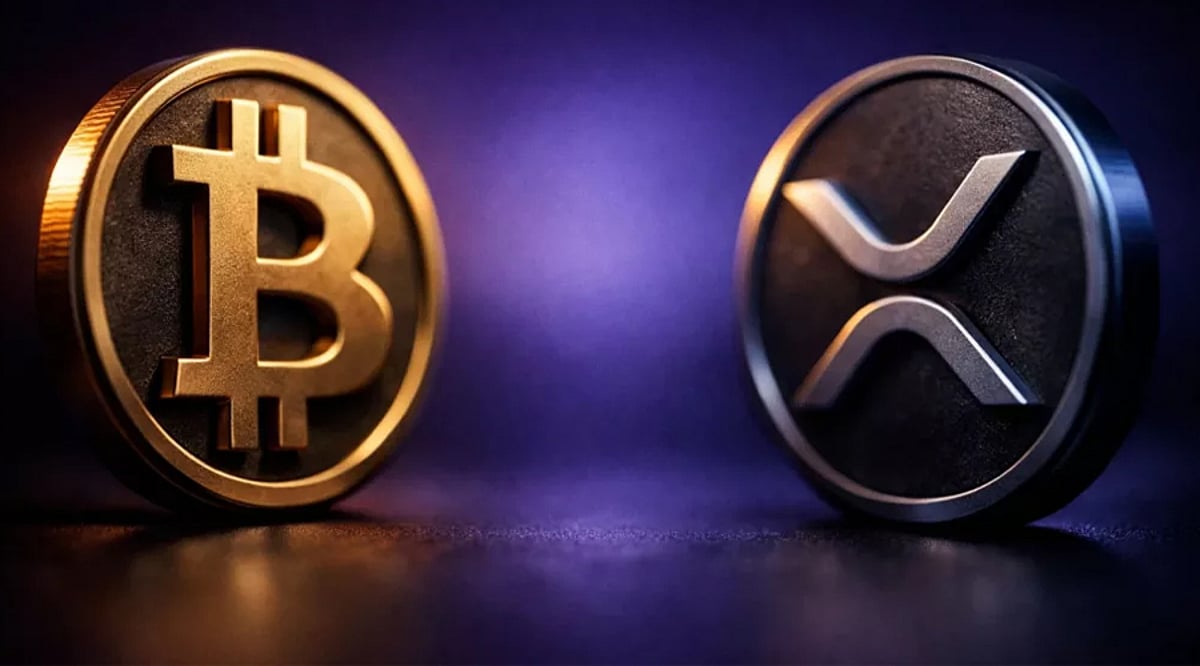
While both XRP and Bitcoin are prominent cryptocurrencies, they differ significantly in design, purpose, and underlying technology. Here are seven critical distinctions that set XRP apart from Bitcoin.
- Transaction Speed: XRP settles payments in 3–5 seconds, far faster than Bitcoin’s 10-minute block times, making XRP better suited for real-time cross-border transfers and high-frequency remittance applications.
- Supply Cap: XRP has a fixed total supply of 100 billion tokens, most of which were pre-mined. Bitcoin’s capped supply is 21 million coins, mined gradually through proof-of-work mining rewards and halvings over decades.
- Consensus Mechanism: XRP uses the Ripple Protocol Consensus Algorithm, which relies on trusted validators, while Bitcoin uses energy-intensive proof-of-work mining to secure its decentralized, permissionless network.
- Primary Use Case: XRP targets fast, low-cost international payments for banks and financial institutions. Bitcoin primarily serves as a decentralized store of value and peer-to-peer digital cash.
- Transaction Costs: XRP transactions cost fractions of a cent, significantly cheaper than Bitcoin’s often volatile network fees (especially during congestion). This makes XRP more economical for microtransactions and frequent transfers.
- Governance Structure: XRP’s development is heavily influenced by Ripple Labs, a centralized company. Bitcoin evolves through decentralized community consensus, with no single entity controlling protocol upgrades or direction.
- Mining Requirement: XRP requires no mining — all tokens were pre-created at launch. Bitcoin depends on continuous mining to issue new coins and maintain network security through computational work.
Understanding these differences helps investors and users choose the right cryptocurrency for their specific needs, whether it’s fast remittances (XRP) or a robust store of value (Bitcoin).
Leave a Reply