Author: vitorcherulli

  • US Seizes $52 Million in Crypto and Shuts Down Xinbi Telegram Channels in Major Crackdown

    US Seizes $52 Million in Crypto and Shuts Down Xinbi Telegram Channels in Major Crackdown

    U.S. authorities have restrained approximately $52 million in scam-related cryptocurrency and seized Telegram channels operated by Xinbi Guarantee, a Chinese-language marketplace that served scam-center operators and vendors. The coordinated action involved Treasury sanctions, Department of Justice wallet seizures, and raids in Madagascar.

    Blockchain analytics firm Elliptic revealed that years of tracking Xinbi wallets enabled the U.S. Secret Service to act against the marketplace, which provides fraud websites, money laundering services, and recruitment for scam compounds in Southeast Asia. Elliptic first exposed Xinbi in May 2025 and now estimates at least $24 billion in transactions since 2022, ranking behind Huione Guarantee’s $31 billion.

    Xinbi Pay, a related payments platform, processed an additional $6 billion, mostly using Tether’s USDT on the TRON blockchain. The United Kingdom sanctioned Xinbi in March 2026, and prosecutors seized two payment wallets holding about $12 million, targeting 47 more wallets. The Justice Department credited Tether for assisting the operation.

    In response to the freezes, Xinbi exchanged roughly $2.8 million in remaining USDT for Decentralized USD (USDD), which lacks an issuer freeze function. However, Elliptic noted that USDD’s backing includes USDT, which issuers can freeze. The Telegram channel seizures disrupted a key communication and commerce route for merchants.

    Separately, Strike Force agents spent two weeks in Madagascar assisting local authorities against 13 Chinese-run scam compounds, leading to nearly 400 arrests and the seizure of over 3,200 electronic devices. About 30 detainees were identified as Chinese leaders and repatriated. The Strike Force has restrained about $938 million in cryptocurrency since its launch in November 2025, with the Xinbi action adding approximately $52 million in one day.

  • Ledger Consolidates Security and IT Leadership Amid Surging AI Crypto Attacks

    Ledger Consolidates Security and IT Leadership Amid Surging AI Crypto Attacks

    Ledger SAS has appointed Oded Blatman as chief information officer and chief security officer, combining technology and security oversight in a single leadership role as AI-driven threats expand across the crypto industry. The Paris-based hardware wallet maker said Blatman will oversee cyber and infrastructure security, product security, physical and workplace security, internal IT, and enterprise risk.

    One Role for Security and Technology

    Blatman joins Ledger after five years as CIO and CISO at Fireblocks. He previously served as global CISO at Bank Hapoalim and held both CIO and CISO roles at ClickSoftware. At Fireblocks, he led global security and enterprise technology during a period of international expansion and rising operational complexity, experience Ledger says fits its broader effort to strengthen organizational resilience.

    Ledger described the combined CIO and CSO structure as a deliberate organizational change. The company said information systems and security now require closer coordination as tokenization, AI agents, and institutional digital-asset use develop together.

    AI Makes Crypto Attacks Faster and More Scalable

    Blatman said artificial intelligence is reducing the cost and time attackers need to search for weaknesses, while also allowing attacks to become more sophisticated and operate at greater scale. As phishing campaigns and deepfake impersonation schemes become more advanced, Ledger said security teams must evolve at a comparable pace.

    The appointment follows a rise in reported crypto security incidents. Data from DefiLlama cited by Ledger shows hackers stole about $1.4 billion across 250 attacks in 2026 so far, after losses reached $2.7 billion across 146 attacks in 2025.

    Recent Incidents Add Pressure on Digital Asset Defenses

    Several high-profile incidents have put digital-asset companies on alert. About $320 million in Bitcoin left the Liquid Network during a hack earlier this week. Trezor also disclosed a breach involving one of its shipping providers last week, exposing personal information belonging to tens of thousands of customers. Earlier this year, a Coldcard hack raised further questions about offline wallet security.

    Ledger said hardware-backed verification remains central to protecting high-value digital ownership, and pointed to secure software, resilient operations, and verifiable human intent as additional layers of protection.

    Leadership Backed by Deep Security Experience

    Blatman said Ledger’s hardware-security work, user trust, and Donjon research team provided a strong foundation for the role, and that he joined to connect product security, enterprise technology, and resilience. Chairman and CEO Pascal Gauthier said Ledger considers security central to its business and that Blatman’s experience protecting systems at Fireblocks and Bank Hapoalim prepared him to oversee both information technology and security.

  • MCX Gold Prices Slide 0.12% to ₹1,53,950 as Oil Rises and US Inflation Data Looms

    MCX Gold Prices Slide 0.12% to ₹1,53,950 as Oil Rises and US Inflation Data Looms

    Gold futures on the Multi Commodity Exchange (MCX) edged lower on Wednesday, September 10, as market participants adopted a cautious stance ahead of key US inflation data and the Federal Reserve’s upcoming policy decision. The October gold contract fell 0.12% to ₹1,53,950 per 10 grams, while September silver futures declined 0.34% to ₹2,43,375.

    In the energy markets, Brent crude futures slipped 0.16% to $101 per barrel, while US West Texas Intermediate (WTI) edged up 0.06% to $96.11 per barrel. Rising oil prices often fuel inflation concerns, adding to the uncertainty surrounding gold’s short-term direction.

    According to the CME FedWatch Tool, markets are currently pricing in a 39.8% probability that the Fed will hold rates steady in September and a 60.2% chance of a rate hike. Higher interest rates typically weigh on gold, a non-yielding asset.

    Domestic Gold Prices

    Despite the dip in futures, spot gold prices in India moved higher. 24K gold rose by ₹120 to ₹1,55,510 per 10 grams, and 22K gold advanced by ₹110 to ₹1,42,550. Regionally, Mumbai and Kolkata quoted 24K gold at ₹1,55,510, Delhi at ₹1,55,660, and Chennai at ₹1,55,510.

    US Gold Prices

    In international markets, spot gold traded 0.3% higher at $4,412.84 per ounce, supported by a softer dollar. However, US gold futures for December delivery edged 0.1% lower to $4,457.10. Spot silver rose 0.2% to $67.42 per ounce, platinum fell 0.6% to $1,885.02, and palladium gained 0.2% to $1,355.50.

    “For now, the geopolitical developments in the Persian Gulf are of secondary importance to gold. Gold instead is teeing off on a weaker dollar, which notably is not moving up despite the fact that US rates are going higher,” said Edward Meir, analyst at Marex.

    Daniel Hynes, senior commodities strategist at ANZ, noted that gold is supported “as US fiscal pressures continue to undermine confidence in the long-term value of government debt and the currency used to finance it.”

    Key Levels to Watch

    On MCX, gold has support at ₹1,52,500 and ₹1,51,650, while resistance is seen at ₹1,54,400 and ₹1,55,500. For silver, support lies at ₹2,41,400 and ₹2,39,100, with resistance at ₹2,45,800 and ₹2,48,000.

  • Claim Free Fire MAX Rewards: September 10 Redeem Codes for Diamonds, Emotes, and More

    Claim Free Fire MAX Rewards: September 10 Redeem Codes for Diamonds, Emotes, and More

    Garena Free Fire MAX redeem codes for September 10, 2026, are now available, offering players free skins, bundles, emotes, and other exclusive rewards. These codes are a limited-time giveaway, so redeem them quickly before they expire or reach redemption limits.

    Active Redeem Codes for September 10, 2026

    If you’re looking for today’s Free Fire MAX codes, here is the full list:

    • FFNFSXTPVQZ9
    • FFMTYKQPFDZ9
    • FFMTYQPXFGX6
    • FFRSX4CYHXZ8
    • FFPURTQPFDZ9
    • FFNRWTQPFDZ9
    • NPTF2FWSPXN9
    • RDNAFV2KX2CQ
    • FF6WN9QSFTHX
    • FF4MTXQPFDZ9
    • FVTCQK2MFNSK
    • FFM4X2HQWCVK
    • FFDMNQX9KGX2

    Note: Codes are often region-specific and time-sensitive. Codes dedicated to Indian servers may not work on other servers.

    How to Redeem the Codes

    Free Fire MAX codes expire after a specific period, so players must redeem them as soon as possible. Follow these steps:

    1. Visit the official Rewards Redemption website.
    2. Log in using your Gmail, Facebook, Twitter (X), or VK ID.
    3. Copy and paste the code into the designated box.
    4. Click the Confirm button, then press ‘OK’.

    If a code is successfully redeemed, rewards will be credited to your in-game mailbox within 24 hours. This applies to emotes, skins, and other premium items. Diamonds and in-game currencies update instantly.

    How to Get Extra Diamonds

    Diamonds are the premium in-game currency in Free Fire MAX. Here are ways to obtain them:

    • Purchase directly from the in-game store or through authorized third-party websites.
    • Participate in in-game events that reward diamonds for completing tasks.
    • Trade diamonds with other players or squadmates.

    Final Thoughts

    While these redeem codes may seem like simple giveaways, they are part of Garena’s effective marketing strategy to maintain an active player base. The codes come with restrictions but remain a convenient way for newcomers to obtain gear, save money, and extend their gameplay.

  • AI Regulation and Government Policy Are Rewriting India’s Data Science Curriculum

    AI Regulation and Government Policy Are Rewriting India’s Data Science Curriculum

    Governments worldwide are moving AI education from the margins to the center of national policy. Infrastructure, curriculum, and regulation are now being built together to expand the AI talent pool. Nowhere is this shift more visible than in India, where the IndiaAI Mission and the National Education Policy (NEP) 2020 are working as parallel engines, while regulators like AICTE and UGC determine how quickly institutions can respond.

    Why AI Education Has Become a Policy Priority

    As AI creates new demand for skilled workers, governments need people who can develop, apply, and manage AI systems across the economy. Education has therefore become a central pillar of national AI strategy. Governments are restructuring data science and AI courses, improving access to technical education, and working with industry to identify the skills employers actually need. The real challenge is no longer whether countries should build AI talent, but how policy can build that talent at scale — and whether it can reach beyond the institutions that already lead.

    Three Models, One Direction

    Three broad approaches to AI talent development are emerging around the world. Each starts from a different point, but all are moving toward the same goal: growing the supply of AI-capable professionals.

    India’s Two Engines: Infrastructure and Curriculum

    India is pursuing AI education through two engines moving side by side. The first is infrastructure. Launched in 2024 with an outlay of Rs. 10,372 crore over five years, the IndiaAI Mission supports computing infrastructure, datasets, and innovation ecosystems. Its education layer includes AI Centers of Excellence and efforts like the IndiaAI-Meta ‘Srijan’ Center at IIT Jodhpur, which turns national compute spending into practical student skills.

    The second engine is curriculum. NEP 2020 provides the broader framework for spreading AI and data science across higher education. IITs and NITs have moved from AI electives to full degree specializations, and the SWAYAM platform now offers more than 370 AI and analytics courses with more than 4,10,000 enrollments.

    Regulation as a Speed Mechanism

    Regulators are shaping how quickly institutions can adapt. AICTE sets curricular direction through Model B.Tech programs in AI and Data Science, pushing AI concepts into branches outside computer science. UGC promotes flexibility by allowing students to earn roughly 40% of their credits through online learning. Together, these policies give universities room to add emerging AI content without waiting for a full policy cycle. Regulation, in this sense, is not just about limits. It is about speed.

    Why Government Needs Industry

    Government provides scale, universities add academic structure, and industry brings current tools and workplace relevance. Digital platforms then extend access to a much wider audience. None of these can replace the others. Policy can fund compute and set standards, but it cannot supply live datasets or current hiring expectations at the pace that industry can.

    NASSCOM’s FutureSkills PRIME, which has trained over 1.6 million learners, along with ties to firms like Microsoft, IBM, Google, and SAP, keeps the policy framework current in practice rather than as an add-on.

    The Capacity Gap

    When AI infrastructure grows faster than institutions can absorb it, leading institutions have a clear advantage. They have stronger faculty, better access to computing resources, and closer industry connections. Smaller institutions face faculty shortages, weaker infrastructure, and less room to update curricula at pace. A national AI strategy can look successful on paper — with more courses and more funding — while still producing uneven outcomes across institutions.

    Final Thoughts

    India is not short on AI policy. It is short on reach. The mission is funded, the curriculum reforms are in place, and industry ties are growing. But none of that matters much if it stays confined to the same handful of top institutes. The real test is whether ordinary colleges get a fair shot too, or whether the gap between India’s best and everyone else keeps growing.

  • Ashutosh Kulkarni: Elastic CEO Driving Enterprise AI and Cybersecurity Innovation

    Ashutosh Kulkarni: Elastic CEO Driving Enterprise AI and Cybersecurity Innovation

    Ashutosh Kulkarni is a seasoned technology executive and strategic business leader, best known as the Chief Executive Officer of Elastic. He has made significant contributions to artificial intelligence, enterprise search, cybersecurity, and cloud technologies. Prior to becoming CEO, Kulkarni held senior management roles at McAfee, Akamai Technologies, Informatica, and Sun Microsystems.

    Early Life and Education

    Kulkarni developed an early passion for engineering and technological innovation. He earned a Bachelor of Engineering degree from the University of Mumbai and a Master of Science in Computer Engineering from The University of Texas at Austin. He also holds an MBA in Marketing & Finance from the University of California, Berkeley.

    Professional Career

    Ashutosh Kulkarni began his career at Sun Microsystems before moving to Informatica, where he spent a decade leading cloud product initiatives. He then joined Akamai Technologies and later McAfee, holding various leadership roles. In 2021, he became Elastic’s Chief Product Officer, and in 2022, he was appointed CEO.

    Business Intervention in AI

    Under Kulkarni’s leadership, Elastic is advancing enterprise AI through an intelligent ecosystem that combines generative AI, agentic capabilities, AI-powered search, observability, performance monitoring, and cybersecurity to deliver scalable, secure, and high-performance digital experiences.

    AI Ecosystem

    Elastic’s unified AI ecosystem leverages Elasticsearch with leading AI platforms to provide vector search, RAG, safe deployment, and cloud-native capabilities, enabling businesses to build efficient and intelligent AI applications.

    Agentic Observability

    Agentic AI improves observability through log analysis, event detection, and natural language investigations. AI-driven insights accelerate root cause analysis, helping teams detect and resolve issues faster.

    AI Performance Monitoring

    AI enhances observability with distributed tracing, automated diagnostics, and AI-based troubleshooting, aiding in problem detection and improving application reliability.

    Agentic Security

    AI-powered security systems strengthen cyber defense through intelligent threat detection, automated investigations, explainable AI reasoning, and rapid incident response, improving visibility and minimizing response times.

    AI-Powered XDR Platform

    The AI-based XDR platform integrates automation, continuous monitoring, and intelligent threat analysis to effectively detect, investigate, and mitigate cyber threats.

    AI Infrastructure Intelligence

    AI-driven infrastructure observability provides anomaly detection, predictive insights, automated remediation, and natural language processing, speeding root cause analysis and increasing system resilience while reducing downtime.

    Business Achievements

    Ashutosh Kulkarni has expanded Elastic’s capabilities in AI, enterprise search, observability, and cybersecurity through innovative products and acquisitions. He has built strategic relationships with top technology companies such as OpenAI and NVIDIA. His leadership has driven consistent revenue growth and widespread enterprise adoption of Elastic’s software.

    Controversies

    As of now, there are no known controversies surrounding Ashutosh Kulkarni. He is widely respected for his expertise in enterprise AI, cloud computing, search technology, and observability. His leadership and technical skills have earned him an excellent reputation in the technology sector.

  • Gaming Giants in 2026: The Industry’s Highest Market Valuations

    Gaming Giants in 2026: The Industry’s Highest Market Valuations

    Microsoft leads the gaming industry in market capitalization as of 2026, despite gaming representing only a fraction of its overall technology business. Its gaming operations encompass Xbox, Activision Blizzard, and a portfolio of major franchises. The company’s cloud infrastructure, subscription services, and expansive gaming ecosystem give it substantial influence across the global interactive entertainment landscape.

    Tencent remains one of the world’s largest gaming companies, supported by a diverse portfolio of popular online and mobile games. Its operations span major international franchises and Chinese titles, while its broader technology ecosystem enhances distribution and player engagement. Tencent’s scale makes it a dominant force in global gaming.

    Sony holds a strong position through PlayStation, one of the industry’s most recognizable platforms. Its business combines consoles, software, subscriptions, and exclusive franchises to create a broad entertainment ecosystem. Major first-party titles and the PlayStation brand continue to drive Sony’s importance in the global gaming market and its overall corporate valuation.

    NetEase has emerged as a major player with a wide array of online and mobile titles. The company has expanded internationally while continuing to serve Chinese audiences. Its gaming division remains a key contributor, supported by established franchises, live-service models, and ongoing investment in game development.

    Sea Limited’s Garena gaming division has made the company a significant force in Southeast Asian and international digital entertainment. Garena operates popular online games and benefits from Sea’s broader digital ecosystem. Gaming remains a core component alongside e-commerce and digital financial services across multiple markets.

    Nintendo continues to be one of gaming’s most recognizable and valuable companies, built on distinctive hardware and iconic franchises. Mario, Zelda, and Pokémon-related properties attract generations of players, while Nintendo’s dedicated platforms create a tightly integrated ecosystem. Its unique hardware-software approach sets it apart from other gaming giants.

    Take-Two Interactive is among the largest pure-play gaming publishers, with a portfolio featuring globally recognized franchises. Its businesses include Rockstar Games and 2K, covering blockbuster releases and ongoing digital experiences. The company’s valuation reflects investor expectations around major franchises, recurring revenue, and the continued growth of interactive entertainment worldwide.

    Electronic Arts remains a major global publisher with an extensive portfolio spanning sports, action, and multiplayer games. Franchises such as EA Sports FC, Madden NFL, and Battlefield contribute to its worldwide reach. Its recurring live-service revenue model and established player communities give it an important position in the competitive gaming industry.

    Roblox occupies a unique niche by combining gaming, social interaction, and user-generated content. Its platform allows creators to build experiences while users explore games and virtual environments. This community-driven model gives Roblox a different growth profile from traditional publishers and highlights the rising importance of creator ecosystems in gaming.

    Aristocrat has a significant presence across gaming and casino technology, with businesses spanning physical gaming machines and digital entertainment. Its operations extend beyond conventional console and PC gaming, reflecting the broader definition of the gaming industry. The company’s digital expansion and established gaming technology business contribute to its position among major publicly traded gaming companies.

  • Is a Chromebook Ready for Everyday Use? Key Considerations for 2026

    Is a Chromebook Ready for Everyday Use? Key Considerations for 2026

    Chromebooks have evolved far beyond their reputation as simple web-only devices. With the introduction of the Chromebook Plus line, improved hardware, long software support, and integrated AI tools, they now present a compelling option for daily computing. However, software compatibility with Windows and macOS applications remains a critical factor to evaluate before making a purchase.

    ChromeOS has matured into a robust platform for web research, email, document editing, video calls, media consumption, and cloud storage. Google services like Gmail, Drive, Docs, Sheets, and Slides work offline after initial setup—a vital feature for travelers, students, and professionals in areas with unreliable internet. The simplicity of the desktop, centered around the browser, appeals to users who rely primarily on online tools rather than heavy local software.

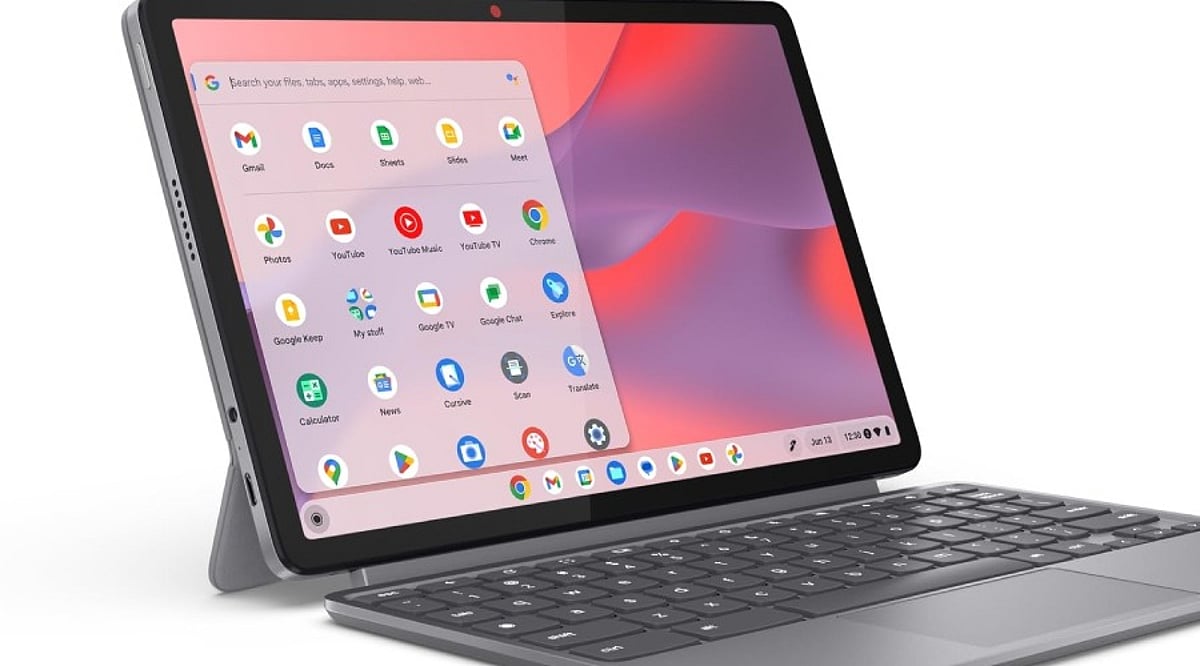
    The Chromebook Plus category represents a significant step forward. Models such as the Lenovo Chromebook Plus 14, equipped with MediaTek Kompanio Ultra 910 chips, 16GB of RAM, OLED displays, and over 13 hours of battery life, rival premium laptops. These devices handle multitasking with ease and offer a premium experience, making them suitable as a primary computer.

    AI features are now integral to Chromebook Plus. Gemini integration enables complex topic explanations, article summarization, cross-page comparisons, and in-browser task assistance. The “Help me Read” tool can summarize pages, answer questions about content, and simplify selected text. “Help me Write” assists in drafting, rewriting, shortening, or adjusting tone. While not a replacement for a creative workstation, these tools boost productivity in office, academic, and research contexts.

    Long-term value is another strength. Google now offers up to 10 years of automatic updates for eligible Chromebooks. Older models (pre-2021) may receive extended updates at the cost of losing Android app and Google Play Store access, but newer devices avoid this trade-off. Models with update support through 2033, 2035, or 2036 justify a higher initial investment.

    However, software limits persist. ChromeOS excels with web apps, Android apps, Linux tools, and cloud services. Applications built exclusively for Windows or macOS—such as Adobe Photoshop, Premiere, DaVinci Resolve, specialized CAD tools, certain enterprise software, and many local PC games—remain hurdles. Web versions of Microsoft 365 and cloud gaming services can cover some gaps, but they don’t replace every desktop application. A thorough check of essential apps before purchase is essential.

    Hardware recommendations for a primary Chromebook: at least 8GB of RAM and 128GB of storage, a 1080p webcam for quality video calls, a comfortable keyboard and trackpad, USB-C charging, and Wi-Fi 6E or Wi-Fi 7 support. Display quality matters more on a daily driver than on a secondary device. A premium configuration could include 8–16GB RAM, 256GB storage, a 14-inch 16:10 display, and robust build quality. Prices for premium Chromebooks can reach over $800.

    In summary, the Chromebook Plus lineup offers strong hardware, AI capabilities, and long-term support. The decision hinges on software: if all critical applications have viable web, Android, or Linux alternatives, ChromeOS provides a smooth, efficient daily experience. If not, a traditional laptop remains the safer choice.

    Frequently Asked Questions

    Q: Can a Chromebook be used as a main computer?
    A: Yes—it handles browsing, email, documents, video calls, media, cloud storage, and many productivity tasks effectively.

    Q: Is Chromebook Plus better than a regular Chromebook?
    A: Generally yes for demanding daily use; Plus models offer stronger hardware, better multitasking, and additional AI capabilities.

    Q: How long do Chromebooks receive updates?
    A: Google provides eligible ChromeOS devices with up to 10 years of automatic updates, depending on the model.

    Q: Can Chromebooks run Windows applications?
    A: Not all Windows apps have native ChromeOS versions. Web, Android, Linux, and cloud services cover some needs but not every desktop program.

    Q: What should I check before buying a Chromebook?
    A: Verify essential software compatibility first, then consider RAM, storage, display, webcam, keyboard, trackpad, ports, wireless connectivity, battery life, and the device’s update-support period.

  • Why Live Casino Games Are Winning Over RNG Titles: Authenticity, Interaction, and Trust

    Why Live Casino Games Are Winning Over RNG Titles: Authenticity, Interaction, and Trust

    Online casino newcomers may only be familiar with digital slot machines and automated gaming tables, where random number generators (RNGs) dictate every outcome. While RNG titles remain staples of online casinos, a growing number of players are gravitating toward live dealer games. Thanks to advances in streaming technology, these games deliver an experience that closely mirrors the atmosphere of a real casino — without the commute.

    A More Authentic Casino Experience

    Many players seek live casino games for an authentic experience that doesn’t require visiting a brick-and-mortar venue. They can watch dealers shuffle cards in real time and chat with fellow participants via text or audio between rounds. These social features serve as a compelling substitute for the in-person interactions of a physical casino. While computer-generated animations from RNG titles can be entertaining, they lack the immersive feel that live games provide.

    Real Human Interaction

    Playing an RNG title can feel solitary due to its solo nature. In live casino streams, dealers greet participants, answer reasonable questions, and engage in light conversation while keeping the game moving. Some platforms even allow players to chat with the dealer via text or audio, and some let participants interact with each other during the livestream. This social dynamic makes live games a friendlier, more human experience. Exploring live options can reveal how these games create a more personable atmosphere. Congratulating a fellow player on a win or asking a rules-based question enhances overall engagement, and many players cite the social elements as a key reason they keep returning to virtual tables.

    More Transparency Builds Player Confidence

    RNGs operate on algorithms that ensure every blackjack hand or roulette spin yields a different outcome, but this electronic-driven feature leaves some players skeptical. Although RNG titles are regularly tested for accuracy, that doesn’t always quell doubts about fairness. Live casino games feel more transparent because players can see the dealer shuffling cards or spinning the roulette wheel in real time. This visibility builds confidence. Professional dealers follow strict fairness guidelines, and their accountability is evident through the live stream. Every shuffle, card hand, and wheel spin is visible on camera, allowing players to witness the action from start to finish. This firsthand transparency offers greater assurance than relying on independently tested software to generate outcomes.

    Slow, Relaxed Pace

    RNG titles cater to fast-paced gamers who want multiple blackjack hands or roulette spins in under five minutes — ideal for quick entertainment during a work break or a busy schedule. Live casino games, by contrast, are naturally slower because a dealer facilitates every action. Physical cards are dealt to virtual players, and roulette wheels take time to spin and display results. This relaxed tempo appeals to those who prefer a more leisurely gaming session.

    The Role of Mobile Technology in Live Casino Gaming

    Live casino games have become more accessible as most players now log in from mobile devices. Modern video streaming platforms deliver high-quality live experiences with responsive interfaces that let players place bets, chat with the dealer, and interact with participants without lag. Optimized streaming technology ensures a viable experience on the go, and improved internet speeds enhance player satisfaction from session to session. Switching between tables and customizing bets can be done with an instant tap, making live gaming convenient and enjoyable anywhere.

    The Best of Both Worlds

    Many casino gamers enjoy alternating between live experiences and RNG titles. Live casino games attract players who value realism and social interaction, offering an engaging alternative to the solo nature of RNG games. Whether you prefer the speed of automated play or the authenticity of a live dealer, the modern online casino landscape provides something for everyone.

  • AI-Driven Surveillance: How Artificial Intelligence Is Reshaping Crypto Security and Monitoring

    AI-Driven Surveillance: How Artificial Intelligence Is Reshaping Crypto Security and Monitoring

    Blockchain networks are transparent by design, but artificial intelligence (AI) is turning that transparency into a powerful surveillance tool. Instead of manually tracing wallet addresses, AI systems can now analyze millions of transactions, identify behavioral patterns, and flag suspicious activity in near real time. This is creating a new layer of oversight across the global cryptocurrency economy.

    Automated Blockchain Monitoring

    Every public blockchain transaction generates data: wallet addresses, values, timestamps, token movements, and smart contract interactions. Analytics firms combine this information with known exchange wallets, sanctioned addresses, hack incident records, and criminal clusters. Machine learning models then search for patterns that would be difficult for human analysts to detect manually.

    The scale of blockchain security incidents remains substantial. CertiK reported more than $1.31 billion in losses across 344 incidents during the first half of 2026. Wallet compromises caused approximately $444.5 million in losses, while phishing accounted for another $366.3 million. Automated monitoring is becoming essential to keep pace with such threats.

    Detecting Hidden Wallet Relationships

    Criminals rarely leave stolen funds in one address. They might split assets across hundreds of wallets, swap tokens, use bridges, and eventually move funds toward exchanges or other liquidity venues. AI can analyze transaction timing, recurring counterparties, and asset flow patterns to infer whether seemingly separate addresses belong to the same operation.

    This capability proved crucial after the Liquid Network exploit in September, when approximately 4,000 BTC (worth around $320 million) were initially withdrawn. Chainalysis tracked the incident as funds moved through the Bitcoin ecosystem, and about 85% of the funds were ultimately returned. Real-time monitoring can help exchanges identify suspicious deposits before criminals complete the laundering process.

    AI in Security Auditing

    Surveillance increasingly begins before money is stolen. CertiK launched an AI Auditor system in 2026 designed for protocol upgrade reviews, pre-deployment testing, and post-audit verification. In testing against 35 real-world Web3 security incidents from 2026, it reported an 88.6% cumulative exact hit rate. AI agents can scan smart contracts for unusual state changes or vulnerabilities and combine that with live blockchain behavior.

    The Privacy Trade-Off

    Greater monitoring creates tension between security and financial privacy. Blockchains originally attracted users partly because they could transact without exposing identities to every intermediary. However, once analytics companies combine wallet histories with exchange Know Your Customer data, pseudonymous addresses can sometimes be linked to real people. AI makes this process faster and more scalable.

    Final Thoughts

    Crypto surveillance is evolving from retrospective investigation into continuous risk detection. That could help exchanges freeze stolen assets, identify sanctions exposure, and stop attacks earlier. But it also means public blockchain activity may become increasingly traceable.

    The next debate will focus on balance: how far automated financial surveillance should go before security gains begin undermining the privacy that originally attracted many users to crypto.

    Frequently Asked Questions

    How is AI used in crypto surveillance?

    AI systems analyze blockchain transactions, wallet behavior, and fund movements to identify suspicious patterns. They can connect seemingly unrelated addresses based on timing, counterparties, and transaction flows.

    Can AI help detect crypto hacks faster?

    Yes. Real-time monitoring can flag unusual withdrawals, transfers, or smart contract activity shortly after an exploit begins, enabling faster responses.

    How is AI applied to smart contract security?

    AI auditing systems scan protocol code, upgrades, and transaction logic for vulnerabilities. CertiK’s AI Auditor reported an 88.6% cumulative exact hit rate across 35 real-world 2026 security incidents.

    Why does AI surveillance raise privacy concerns?

    Public blockchain addresses are pseudonymous, not fully anonymous. Combining wallet histories with Know Your Customer data and AI analysis can make it easier to link blockchain activity to real individuals.

    What is the future of AI-powered blockchain monitoring?

    Crypto security is moving toward continuous monitoring rather than relying only on post-incident investigations. The challenge lies in improving fraud detection without excessive surveillance or weakened user privacy.

    Disclaimer: This article is for informational purposes only and does not constitute investment advice. Cryptocurrencies are risky assets, and you should conduct your own research before making any investment decisions.