Author: vitorcherulli

  • Top Smart Plugs for Home Automation in 2026: Reviews and Buying Guide

    Top Smart Plugs for Home Automation in 2026: Reviews and Buying Guide

    Smart plugs are one of the easiest and most affordable ways to start automating your home. Whether you want to control lamps, fans, or outdoor lights, the right smart plug can save energy and add convenience. Here are the best smart plugs for 2026, covering a range of ecosystems and budgets.

    TP-Link Kasa KP125M (Matter)

    This Matter-certified plug offers energy monitoring and works with HomeKit, Alexa, and Google. The Kasa app shows live watts, daily/monthly totals, and cost estimates, making it ideal for tracking energy usage.

    Amazon Smart Plug

    The simplest option for Alexa users: plug-and-play pairing, a compact design, and reliable voice response. Perfect for Echo households that want easy scheduling and routines.

    TP-Link Tapo P125M (Matter)

    A beginner-friendly Matter plug that works with Apple Home, Alexa, Google, and SmartThings. Its compact body requires no hub and offers strong reliability across multiple ecosystems.

    Kasa HS103P4 (4-Pack)

    Best value 4-pack with robust Wi-Fi, a polished Kasa app, and support for Alexa and Google. Great for automating lamps, fans, and small appliances room by room.

    Eve Energy (Matter/Thread)

    A premium HomeKit-focused plug with Thread technology. Features include energy monitoring, schedules, and Away mode. Seamless Apple Home integration for iPhone-centric smart homes.

    Govee Smart Plug (4-Pack)

    A budget-friendly 4-pack with Wi-Fi and Bluetooth, Alexa and Google support, and ETL certification. A good entry option for testing automation across multiple outlets.

    Kasa Outdoor Smart Plug EP40

    Weather-resistant dual-outlet plug with independent control, schedules, and voice commands. Perfect for garden lights, pumps, and festive outdoor decorations.

    Whether you’re building a full smart home or just starting out, these smart plugs offer reliable performance, broad compatibility, and useful features for 2026.

  • Quordle September 10, 2026: Hints and Answers to Conquer Today’s Puzzle

    Quordle September 10, 2026: Hints and Answers to Conquer Today’s Puzzle

    If you’re stuck on today’s Quordle puzzle for September 10, 2026, you’re not alone. This popular word game challenges you to solve four five-letter words simultaneously across four grids. Use the hints below to get closer to the answers without spoiling the challenge completely.

    Hints for Today’s Quordle

    Each hint corresponds to one of the four words. Try to solve them before checking the answers.

    • Word 1 (Top Left): Who is James Bond?
    • Word 2 (Top Right): To banish or force someone completely out of their home country.
    • Word 3 (Bottom Left): A person or company of immense power in their industry.
    • Word 4 (Bottom Right): The official unit of currency used in India, as well as the green gems found in ‘The Legend of Zelda’ games.

    Answers for September 10

    If you’re still stuck, here are the four answers for today’s Quordle:

    • AGENT
    • EXILE
    • TITAN
    • RUPEE

    Difficulty Analysis

    Today’s puzzle features words with familiar meanings and everyday references. The starting letters A, E, T, and R can help narrow down each answer. None of the words contain repeated letters, which is a useful clue. If you solved all four without looking at the answers, congratulations on completing today’s Quordle challenge!

  • FTSE 100 Opens Flat at 10,670 Ahead of ECB Decision; Brent Crude Holds Above $100

    FTSE 100 Opens Flat at 10,670 Ahead of ECB Decision; Brent Crude Holds Above $100

    The FTSE 100 opened flat at 10,670.04 ahead of a European Central Bank decision, as a US Treasury announcement on bond buybacks failed to impress. Brent crude futures rose 0.09% to USD 101.3 per barrel. US West Texas Intermediate (WTI) advanced 0.22% to USD 96.26 per barrel.

    Sterling traded at USD 1.3354 on Thursday, falling from USD 1.3548 at the time of the London equities close on Tuesday. Versus the euro, it fell to EUR 1.1641.

    Gainers & Losers

    On the upside, Whitbread climbed 1.98% to 2,366p. Compass Group advanced 1.87% to USD 31.10, while Aberdeen Group gained 1.53% to 252.40p. JD Sports Fashion rose 1.21% to 80.60p, Fresnillo added 1.08% to 3,082p, and ICG increased 0.94% to 1,943p.

    On the downside, Associated British Foods fell 9.31% to 1,832p. Computacenter declined 2.99% to 5,035p, while Endeavour Mining dropped 1.39% to 4,605p. Rio Tinto slipped 0.84% to 7,538p, Lion Finance Group lost 0.74% to 13,350p, and Games Workshop Group edged 0.51% lower to 17,480p.

    Q1 Recorded 7% Sales Increase

    Currys reported like-for-like revenue growth of 7% in Q1, with UK and Ireland sales up 6% and the Nordics up 9%. The retailer said it is “comfortable with market consensus” and left full-year guidance unchanged. Despite this, shares in the group fell 1.3%. Recurring Services revenue continued to grow, with flexpay adoption up 30 basis points year-on-year to 23.6% and iD Mobile subscribers rising 16% to more than 2.7 million.

    In the Nordics, sales growth was led by white goods and mobile, supported by continued momentum in new categories, B2B and Services, with market share gains in most countries against soft comparatives.

    KKR Acquired Eleco

    Private equity firm KKR has snapped up construction software provider Eleco in a deal that values the company at around GBP 208 million. The takeover gives shareholders GBP 235 per share, representing a 74.7% premium over the previous day’s closing price. Investors holding just over 45.2% have already pledged support for the takeover, which is expected to close in early 2027.

    THG Recorded Revenue Rise

    Ecommerce company THG posted a 7% rise in revenue in the first half of the year after a boost in sales in both its beauty and nutrition divisions. The company said revenue across the group was GBP 828.7 million in the period, up 7.2% year on year and above guidance of 6.5%. THG Beauty, which includes brands like Lookfantastic and Cult Beauty, delivered 5.9% revenue growth while THG Nutrition sales rose 9.2%.

    Global Market View

    In the US, the Dow Jones Industrial Average dropped 405.41 points, or 0.77%, to end at 52,380.66. The S&P 500 shed 0.48% to close at 7,636.36, while the Nasdaq Composite fell 0.64% to 26,253.34. In Asia on Thursday, Tokyo’s Nikkei 225 advanced 0.2% to 65,270.95, while China’s Shanghai Composite fell 0.43%. Hong Kong’s Hang Seng declined 1.26%, and South Korea’s Kospi declined 0.25%. In India, both the Nifty 50 and the Sensex rose by 0.03% and 0.047%, respectively.

    Also Read: Stock Market Update: Nifty 50 Opened 0.06% Higher, Sensex Fell 21.69 Points Amid Rising Oil Prices

    Join our WhatsApp Channel to get the latest news, exclusives and videos on WhatsApp.

    Disclaimer: Analytics Insight does not provide financial advice or guidance on cryptocurrencies and stocks. Also note that the cryptocurrencies mentioned/list on the website could potentially be risky, i.e. designed to induce you to invest financial resources that may be lost forever and not be recoverable once investments are made. This article is provided for informational purposes and does not constitute investment advice. You are responsible for conducting your own research (DYOR) before making any investments. Read more about the financial risks involved here.

  • How AI Is Transforming GPA Standardization for Fairer University Admissions

    How AI Is Transforming GPA Standardization for Fairer University Admissions

    A 3.7 GPA, an 82% average, and an 8.6 CGPA may all represent strong academic performance. But they do not mean the same thing. Universities reviewing international applications must interpret academic records created under different grading scales, credit systems, transcript formats, and institutional policies. That makes GPA evaluation more than a calculation problem; it is a data-processing problem.

    Artificial intelligence, document intelligence, and automation are beginning to change how universities handle this complexity. Instead of relying entirely on manual review, institutions can use technology to extract transcript data, apply predefined evaluation rules, calculate GPAs, and flag unusual records for further review. The goal is not to create one global grading formula. It is to make academic evaluation more consistent, scalable, and explainable.

    Why GPA Standardization Is a Data Problem

    Academic transcripts contain more than a final GPA. They may include course names and codes, credits or credit hours, letter, numerical, or percentage grades, semester-level results, repeated courses, withdrawals, pass/fail subjects, transfer coursework, and institutional grading notes. The challenge is that this information appears differently across universities and countries. One transcript may present courses in a table. Another may group them by semester. Some institutions use percentages, while others use letter grades or numerical scales. Credit values may also be expressed differently. Before a GPA can be calculated, this information must first be identified, interpreted, and converted into a format that software can process. That is why modern GPA automation depends on document processing as much as mathematics.

    How AI Reads Academic Transcripts

    Academic transcripts are traditionally designed for human readers, not software systems. Document intelligence changes that by combining several technologies. Optical Character Recognition (OCR) converts text from scanned transcripts, images, and PDFs into machine-readable content. Document AI goes beyond recognizing text; it can identify relationships between fields, such as connecting a course name with its corresponding grade and credit value. Machine learning models can help recognize patterns across different transcript formats, which matters because an admissions office may receive records from hundreds of institutions, each using a different document structure. Natural Language Processing (NLP) can help interpret variations in terminology—terms such as “credit hours,” “units,” “credits attempted,” and “semester units” may refer to related concepts even though the wording differs. Together, these technologies help convert complex academic documents into usable data.

    How an Automated GPA Workflow Works

    Once transcript information has been extracted, the system can move through a defined workflow. A typical process may look like this: Transcript Upload → Data Extraction → Validation → Grade Normalization → Rules Processing → GPA Calculation → Exception Review. Each stage has a distinct role. Data extraction identifies relevant fields such as courses, grades, credits, terms, and academic periods. Validation checks extracted values for missing information, unexpected formats, or conflicting data. Grade normalization maps different grading formats into a structure that the institution’s evaluation rules can understand. Rules processing applies the university’s own policies, determining how repeated courses, failed subjects, weighted classes, transfer coursework, or excluded subjects should be treated. GPA calculation uses the validated data and the institution’s configured methodology. Exception review routes records that fall outside predefined rules to an admissions professional instead of being processed automatically.

    Why Simple Conversion Formulas Fall Short

    A common misconception is that GPA standardization can be handled with a single conversion equation. In practice, two students with similar average grades can produce different evaluated GPAs depending on the institution’s policies. Factors may include credit weighting, repeated courses, failed subjects, pass/fail courses, honors or advanced coursework, transfer credits, course exclusions, and minimum academic requirements. This is why a fixed percentage-to-GPA formula may not be sufficient. Modern systems can instead use configurable rules engines. A rules engine allows institutions to define how specific academic situations should be handled, while software applies those policies consistently across applications. This also creates a useful separation between AI and deterministic automation. AI is well suited to interpreting variable documents, while rules-based systems are better suited to applying clearly defined academic policies.

    AI and Rules-Based Automation Serve Different Roles

    A reliable GPA automation system does not need one AI model to perform every task. Different technologies can handle different stages. This architecture can make the process easier to audit because each GPA result can be connected to the extracted values and rules used in the calculation.

    Human-in-the-Loop AI Handles Uncertainty

    Not every transcript will be suitable for fully automated processing. A system may encounter poor-quality scans, missing grading information, unusual credit formats, unfamiliar transcript layouts, conflicting values, or low-confidence text extraction. Instead of forcing a result, the system can use confidence thresholds. A record with clearly extracted information may continue through the automated workflow, while a record with uncertain data can be sent to a reviewer. This allows universities to automate routine cases without treating every document as equally predictable. Human review therefore becomes an exception-handling layer rather than the default method for every application.

    GPA Calculators Are Evolving Into Admissions Automation Systems

    GPA technology is moving beyond standalone calculators. Newer systems combine document extraction, data validation, configurable rules, and workflow automation in a single process. For example, EDMO’s AI GPA Calculator extracts academic information from transcripts and applies institution-defined GPA rules, helping admissions teams automate parts of the evaluation workflow while retaining reviewer oversight. This reflects a broader trend in enterprise AI: intelligent tools are increasingly being embedded inside operational workflows rather than used as isolated applications.

    APIs Can Connect GPA Processing With Existing University Systems

    Automation creates the most value when it integrates with the university’s existing technology stack. Admissions teams may already use CRM platforms, student information systems, application portals, document management systems, and admissions review platforms. APIs can allow these systems to exchange information automatically. For example, an application platform can send a transcript to a processing service. The service can extract academic data, calculate the GPA, and return the result to the admissions system. This reduces the need for staff to manually move information between platforms and makes GPA calculation part of a broader admissions workflow rather than a separate administrative task.

    Technical Challenges Still Remain

    AI-powered transcript processing is not without limitations. Document quality issues such as low-resolution scans, rotated pages, compression, and image artifacts can reduce extraction accuracy. Format diversity across institutions makes it difficult to rely on a limited set of templates. Grading complexity requires support for institution-specific policies rather than assuming a one-size-fits-all methodology. Explainability is crucial—admissions teams need to understand how a GPA was derived. Data privacy concerns mean institutions must consider encryption, access control, data retention, and regulatory requirements. Confidence management systems must be able to identify uncertain outputs and route them for review instead of treating every result as equally reliable. These issues will influence how quickly universities can adopt GPA automation at scale.

    What Comes Next for AI-Powered GPA Standardization

    Several technology developments could make GPA processing more capable in the coming years. Multimodal document AI may improve the interpretation of transcripts that combine text, tables, symbols, and complex layouts. Confidence-based workflows could allow institutions to automate straightforward records while directing unusual cases to specialists. Explainable processing could give reviewers a clear record of the grades, credits, rules, and calculations behind each result. API-first architecture could make GPA evaluation easier to integrate into CRM, SIS, and application-management environments. The larger shift is from isolated GPA calculation to automated academic-record processing.

    Conclusion

    Global universities are unlikely to adopt one universal grading system. The more realistic opportunity is to build technology that can interpret different academic records while allowing institutions to retain control over their evaluation methods. AI can help read complex transcripts. Document intelligence can identify academic fields. Rules engines can apply university-defined policies. Automation can process large application volumes. Human reviewers can handle exceptions. Used together, these technologies can make GPA evaluation more consistent and scalable without removing institutional judgment. AI may not make university admissions fair on its own, but it can make one important part of the process more structured, transparent, and manageable.


  • Today’s Tech Roundup: India’s Chip Plant, Mistral’s €3B Raise, Karnataka Job Openings, and Crypto Regulation Update

    Today’s Tech Roundup: India’s Chip Plant, Mistral’s €3B Raise, Karnataka Job Openings, and Crypto Regulation Update

    Good morning! Here’s your quick roundup of today’s biggest developments across semiconductor manufacturing, European AI funding, government recruitment, crypto policy, and banking technology.

    Fast-Track Insights

    • PM Modi virtually laid the foundation stone for the HCL-Foxconn joint venture, India Chip Pvt. Ltd, at the Yamuna Expressway Industrial Development Authority in Jewar, Greater Noida, marking a key step in India’s semiconductor self-reliance push.
    • Mistral raised €3 billion in a Series D round at a post-money valuation of over €21 billion, led by Samsung Electronics with Scaleup Europe Fund and PSG Equity as co-leads, the largest equity round ever closed by a European tech company.
    • Karnataka’s School Education Department released the GPSTR Recruitment 2026 notification for 15,000 teaching vacancies across government primary and secondary schools, with district-wise notices published between 10 and 12 August.
    • Coinbase CEO Brian Armstrong said the Clarity Act is likely to pass given broad backing from crypto firms, law-enforcement groups and banks, even as the bill remains stalled in the Senate.
    • A 2026 study by Cambridge Judge Business School, BIS, IMF and WEF found that 81% of financial firms now use AI in some form, though only 14% consider it transformational to their strategy.

    PM Modi Lays Foundation Stone of Semiconductor Unit in Uttar Pradesh

    Prime Minister Narendra Modi today virtually laid the foundation stone of the HCL-Foxconn Joint Venture project – India Chip Pvt. Ltd. at the Yamuna Expressway Industrial Development Authority in Jewar in Greater Noida of Uttar Pradesh. The establishment of the HCL-Foxconn semiconductor facility marks a significant milestone in India’s journey towards technological self-reliance and reflects the Prime Minister’s vision of positioning India as a trusted global destination for high-end electronics and semiconductor manufacturing.

    Mistral Raises €3B to Advance Sovereign, Open-Weight AI

    Mistral today announced that it has raised €3 billion in a Series D funding round at a post-money valuation of more than €21 billion, the largest equity fundraising round ever completed by a European technology company, three years after the company’s launch. Samsung Electronics led the round, joined by co-leads Scaleup Europe Fund, managed by EQT, and existing investor PSG Equity. The round will significantly expand Mistral’s frontier research, scale compute capacity, and accelerate commercial growth and international footprint. The company now operates across 20 countries and supports 125+ global enterprises’ mission-critical AI transformation, including Airbus, ASML, and HSBC.

    GPSTR Recruitment 2026: 15,000 Teaching Vacancies in Karnataka

    The Karnataka School Education Department has officially released the GPSTR Recruitment 2026 Notification. A total of 15,000 vacancies have been announced for teaching positions across government primary and secondary schools in Karnataka for the 2026–27 academic session. The notification was issued on 12 August 2026, with district-wise recruitment notices published through the Karnataka Gazette (e-Rajyapatra) portal between 10 and 12 August 2026, along with amended Karnataka Education Department Services (Department of Public Instruction) Recruitment Rules, 2026.

    Coinbase CEO Sees U.S. Crypto Regulation Advancing Regardless of Clarity Act Vote

    The Clarity Act, which seeks to establish a U.S. federal framework for digital assets, is likely to pass given broad support from crypto firms, law-enforcement groups and several banks, Coinbase CEO Brian Armstrong said. The legislation was ready to be supported by the Senate, Armstrong told CNBC’s “Squawk Box Asia” on Thursday, saying people he has spoken with are on board with the legislation.

    How AI Is Transforming Banking and Financial Services in 2026

    AI now plays a growing role in core banking work, from fraud checks and credit decisions to customer support and market research. A 2026 global study from Cambridge Judge Business School, the Bank for International Settlements, the International Monetary Fund, and the World Economic Forum found that 81% of financial firms use AI at some level. Only 14% consider AI transformational for strategy and competitive advantage. The gap shows that adoption has spread, but big change remains limited.

  • 7 Must-Have Travel Gadgets Under ₹20,000: September Sale Picks

    7 Must-Have Travel Gadgets Under ₹20,000: September Sale Picks

    Whether you’re planning a weekend getaway or a long-haul trip, the right travel gadgets can make all the difference. This September sale, several popular travel accessories are available under ₹20,000 — from power banks and cameras to organizers and routers. We’ve rounded up seven top-rated devices that combine portability, performance, and value.

    1. Anker 20,000mAh Power Bank (33W–65W PD)

    This high-capacity power bank delivers fast charging via Power Delivery (33W to 65W) for phones, tablets, and cameras. Despite its large capacity, it remains compact and is airline-safe. Perfect for long flights or multi-day trips where you need reliable backup power.

    2. Fujifilm Instax Mini 12

    Capture instant memories with this pocket-sized camera. Features include auto exposure, a close-up mode, and a variety of fun film formats. Ideal for road trips, parties, and family holidays where you want physical prints right away.

    3. Universal Travel Adapter (All-in-One, USB‑C PD)

    A single adapter covering US, EU, UK, and AU plugs with fast USB‑C PD and USB‑A ports. Essential for international travel, work trips, and backpacking across borders. No need to carry multiple adapters.

    4. Apple AirTag 4-Pack + Key Ring

    Precision Find My tracking for bags, keys, and luggage. Long battery life, a loud speaker, and water resistance make these ideal for frequent flyers and busy commuters who want to keep tabs on their belongings.

    5. Hard-Shell Gadget Organizer Case

    A compact case with padded compartments for cables, chargers, earbuds, and small gadgets. Keeps your backpack tidy and protects gear during flights, trains, and cabs. A simple way to stay organized on the go.

    6. Portable Bluetooth Speaker (IPX7, 12–24h Battery)

    This rugged, water-resistant speaker offers strong bass and all-day battery life. Great for hotel rooms, beach outings, picnics, and group travel entertainment. Durable enough to handle outdoor conditions.

    7. Wi‑Fi Portable Travel Router / Pocket Hotspot

    Create your own private Wi‑Fi network from hotel Ethernet or public networks. Supports multiple devices and is VPN-friendly. Useful for remote work and secure browsing while on the road.

    These gadgets cover the essentials for modern travelers: power, connectivity, organization, and fun. Check the September sale for discounts and bundle deals to save even more.

  • How to Recover Your WhatsApp Chats from iCloud Backup

    How to Recover Your WhatsApp Chats from iCloud Backup

    Losing WhatsApp chats can be stressful, especially when old messages, photos, documents, or group conversations are important. If you have an iCloud backup, you can restore that chat history on your iPhone, but only if a valid backup exists and account details match. This guide walks you through checking backups, reinstalling WhatsApp, troubleshooting common issues, and protecting future conversations with automatic backups.

    Key Takeaways

    • Verify the latest WhatsApp iCloud backup, phone number, iCloud account, and available storage before reinstalling WhatsApp.
    • Only data included in the latest successful backup can be restored; videos require the video backup option to have been enabled.
    • If iCloud restoration is not possible and your old iPhone still works, use WhatsApp’s direct Chat Transfer feature.

    Check the iCloud Backup Before WhatsApp Restore

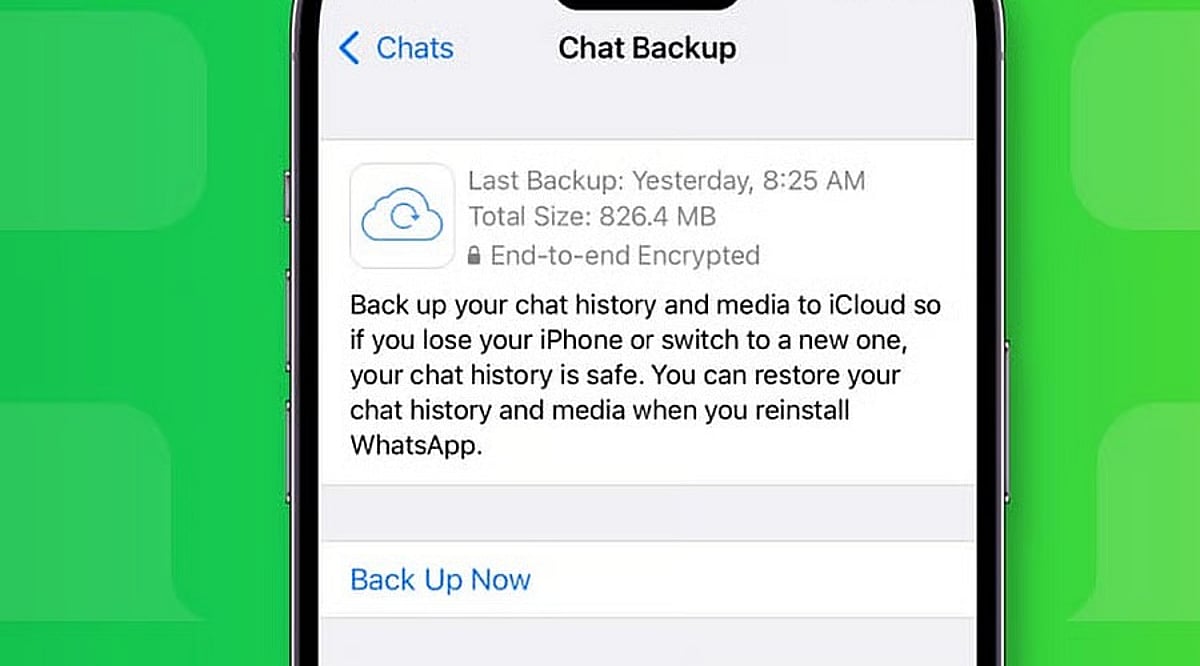
    Open WhatsApp on your iPhone and go to Settings > Chats > Chat Backup. The screen shows the date and size of the latest backup if a valid iCloud copy exists. The same phone number and iCloud account used for the original backup must match.

    Ensure enough free space is available on both iCloud and your iPhone. WhatsApp recommends having at least 2.05 times the backup size available as free storage on both. Limited storage can cause a failed or partial restore.

    If the backup is encrypted, you will need the associated password, passkey, or 64-digit encryption key. Without these recovery details, WhatsApp cannot provide access to the encrypted copy.

    Reinstall WhatsApp and Start the Chat Restore

    Once the backup details are confirmed, delete WhatsApp from your iPhone and install it again from the App Store. Open WhatsApp after the fresh install and complete account setup with the same phone number used for the backup.

    WhatsApp will then ask for the Apple ID linked to the backup. After account verification, a Restore Chat History option appears. Tap that option to start the restore. Extra identity checks may appear; a text message or call can provide a verification code if required.

    Restore time depends on backup size and chat media. A large history with many photos, documents, and videos takes longer than a small text-only history. Keep enough free space on both your iPhone and iCloud account.

    What the iCloud Backup Can Restore

    WhatsApp restores data from the latest successful backup. Any messages or media added after that backup date cannot be recovered from that backup. Videos require an extra condition: the Include Videos option must have been active before the latest backup. Without that option, chat history can return but videos will remain absent.

    Messages and media from WhatsApp communities may also be included in the backup. Channel updates can exist, but channel media returns only for accounts with an admin role. Note that WhatsApp does not keep complete chat history on company servers for manual recovery; an iCloud backup or direct chat transfer is the only route back to old conversations.

    Fix Common Restore Problems

    Failed restores often point to storage, account details, or the backup itself. Check free iCloud space and iPhone storage first. Confirm the same phone number and iCloud account used for the original backup, then verify the latest backup date inside WhatsApp.

    If storage caused the failure, free up space, then delete WhatsApp and repeat the restore. For encrypted backups, ensure you have the correct password, passkey, or 64-digit key.

    If no usable iCloud backup exists and your old iPhone still works, use WhatsApp’s Chat Transfer feature for an iPhone-to-iPhone move. Both phones need the latest iOS and WhatsApp versions, Wi-Fi, internet access, and a power source. The old phone can send the chat history directly to the new iPhone without an iCloud restore.

    Protect Future WhatsApp Chats

    A successful restore can recover a large part of your chat history, but the backup date sets the limit. WhatsApp offers automatic backup schedules under Chats > Chat Backup, with daily, weekly, or monthly options.

    An end-to-end encrypted backup can be protected with a password, passkey, or 64-digit encryption key. Keep the chosen recovery detail safe; a forgotten password or lost key can block access to the encrypted backup.

    The safest restore starts before the reinstall: check the backup date, confirm the phone number and iCloud account, verify storage, and protect any encryption key. Once those details match, WhatsApp can restore your saved chat history with far less risk of an incomplete recovery.

    Frequently Asked Questions

    Can I restore WhatsApp chats from iCloud?
    Yes, if a valid WhatsApp iCloud backup exists and you use the same phone number and iCloud account.
    Will WhatsApp restore messages received after the backup?
    No. Messages and media added after the latest successful backup cannot be recovered from that backup.
    Why are my WhatsApp videos missing after restoration?
    Videos are restored only if the Include Videos option was enabled before the backup was created.
    What if my encrypted WhatsApp backup asks for a password?
    You need the correct password, passkey, or 64-digit encryption key associated with the encrypted backup.
    Can I restore WhatsApp without an iCloud backup?
    If your old iPhone still works, WhatsApp’s Chat Transfer feature can transfer chat history directly to another iPhone.
  • Crypto ETFs: The Bridge Bringing Digital Assets to Everyday Investors

    Crypto ETFs: The Bridge Bringing Digital Assets to Everyday Investors

    Crypto ETFs are changing how everyday investors access digital assets. Instead of buying cryptocurrencies directly, investors can purchase ETF units through traditional brokerage accounts, making crypto investing feel more familiar, accessible, and integrated with established financial markets.

    What is a Crypto ETF?

    A crypto ETF is an exchange-traded fund designed to provide exposure to cryptocurrency prices or related assets. Like other ETFs, it trades on a stock exchange, allowing investors to buy and sell units during market hours without holding cryptocurrency directly.

    Bitcoin Leads the Way

    Bitcoin ETFs have become an important gateway for mainstream investors. They let market participants gain exposure to Bitcoin through conventional investment accounts, potentially reducing the complexity of setting up crypto wallets, managing private keys, and navigating cryptocurrency exchanges.

    Ethereum Expands Investor Choice

    Ethereum-focused ETFs broaden options for investors seeking digital-asset exposure. Ethereum’s role in decentralized applications, smart contracts, and blockchain infrastructure gives these investment products a different proposition from Bitcoin-focused funds, although both remain exposed to significant cryptocurrency market volatility.

    Familiar Investing Experience

    Crypto ETFs fit into investment habits people already understand. Investors can research funds, compare performance, monitor prices, and place trades through brokerage platforms. This familiar structure may make digital assets less intimidating for people who have avoided direct cryptocurrency ownership.

    Risks Still Remain

    Accessibility does not eliminate risk. Crypto ETFs can experience substantial price swings because underlying digital assets remain volatile. Investors should also consider fees, tracking differences, regulatory developments, market conditions, and the possibility of significant losses before allocating money to these products.

    A Bridge to Digital Assets

    Crypto ETFs could bridge traditional finance and the cryptocurrency ecosystem. By combining regulated market infrastructure with digital-asset exposure, they may help broaden participation while giving investors a simpler route into an increasingly mainstream investment category.

  • XRP Ledger DEX Poised to Power Tokenized Institutional Asset Markets

    XRP Ledger DEX Poised to Power Tokenized Institutional Asset Markets

    XRP Ledger’s (XRPL) native decentralized exchange (DEX) was designed to let assets issued on XRPL trade without relying on a centralized platform. As tokenized bonds, funds, and other real-world assets migrate on-chain, this built-in market structure could become increasingly relevant for institutions seeking continuous settlement and deep liquidity.

    XRPL Combines Order Books and AMMs

    XRPL supports native on-chain order books alongside Automated Market Maker (AMM) pools. According to Ripple, this structure aggregates liquidity at the protocol level, potentially reducing fragmentation and improving execution for tokenized assets. This differs from networks where issuers must deploy separate smart-contract exchanges before an asset can trade. On XRPL, issued assets can connect directly to built-in trading infrastructure, cutting operational layers required for secondary markets.

    Tokenized Assets Need Secondary Markets

    Issuing a tokenized Treasury or fund is only the first step. Institutional investors also need to buy, sell, redeem, pledge, and possibly borrow against those assets. Ripple and Boston Consulting Group estimate tokenized assets could reach nearly USD 19 trillion by 2033. XRPL already supports tokenized products from institutions including Ondo Finance and Société Générale, while its stack includes escrow, metadata, and compliance-oriented controls.

    In May 2026, Ondo, Kinexys by JPMorgan, Mastercard, and Ripple completed a cross-border redemption of tokenized US Treasuries. The asset leg settled on XRPL in under five seconds, demonstrating how public blockchain infrastructure can connect with traditional banking rails.

    Institutional Compliance Is Being Built In

    Traditional institutions cannot trade regulated assets anonymously. XRPL therefore includes Credentials and Permissioned Domains that restrict access to verified participants. Single Asset Vaults can also be configured as private, allowing only accounts with valid credentials to deposit. This creates a potential framework for institutional liquidity pools that remain compliant with regulatory requirements.

    Liquidity Is Expanding Beyond Trading

    Credit is another part of XRPL’s roadmap. XLS-66 proposes fixed-term, uncollateralized lending using pooled funds from Single Asset Vaults, with off-chain underwriting and risk management. Ripple’s August investments in ZILO and Licuido also added transfer-agency, issuance, and collateral-mobility capabilities to the XRPL ecosystem, extending its institutional infrastructure beyond payments.

    Why This Matters

    Institutional tokenization needs more than issuance; it requires compliant liquidity, secondary trading, and credit infrastructure. XRPL’s native DEX could become part of that stack if institutional volume, order-book depth, and AMM liquidity grow alongside tokenized asset adoption.

    Final Thoughts

    XRPL is increasingly positioning itself as infrastructure for tokenized capital markets rather than solely for payments. The real test is whether pilots, vaults, and lending tools translate into sustained institutional trading, settlement, and credit activity. If adoption grows, its advantage will come from combining issuance, compliance, liquidity, and credit within one ledger — not from tokenization announcements alone.

    FAQs

    1. What is the XRP Ledger DEX?
    The XRPL DEX is a native decentralized exchange built directly into the XRP Ledger. It combines on-chain order books and Automated Market Makers to provide liquidity without relying on a centralized exchange.

    2. Why could XRPL matter for tokenized institutional assets?
    Institutions need more than token issuance; they also require trading, settlement, compliance, and liquidity. XRPL combines these functions within the same ledger, which could simplify secondary-market infrastructure.

    3. How does XRPL support institutional compliance?
    XRPL includes Credentials and Permissioned Domains that can restrict access to verified participants. Private Single Asset Vaults can also limit deposits to accounts meeting specific eligibility requirements.

    4. What role could XLS-66 play on XRP Ledger?
    XLS-66 proposes fixed-term lending using pooled liquidity from Single Asset Vaults. The model combines on-chain liquidity with off-chain underwriting and risk management for institutional credit markets.

    5. Are institutions already using XRPL for tokenized assets?
    Yes. XRPL supports tokenized products involving institutions such as Ondo Finance and Société Générale. In May 2026, a tokenized US Treasury redemption involving Ondo, J.P. Morgan’s Kinexys, Mastercard, and Ripple settled on XRPL in under five seconds.

  • From Zero to Millions: 6 Self-Made Millionaires Who Started With Almost No Capital

    From Zero to Millions: 6 Self-Made Millionaires Who Started With Almost No Capital

    From Almost Nothing to Millions

    Big businesses do not always begin with big bank accounts. Some entrepreneurs started with tiny shops, personal skills, borrowed resources, or early customer revenue. Their stories show how execution and persistence can sometimes matter more than having a huge starting budget.

    Sara Blakely: Solving a Simple Problem

    Sara Blakely started Spanx with about $5,000 of her own savings. She handled much of the early work herself and focused on solving a simple problem for women. Spanx eventually became a major shapewear brand, turning Blakely into a billionaire entrepreneur.

    Daymond John: From Queens to Global Fashion

    Daymond John started FUBU from his mother’s house in Queens with limited resources. He and his partners began making and selling clothing themselves. The brand eventually grew into a major fashion business, while John became a well-known entrepreneur and investor.

    Jan Koum: Building WhatsApp Without Expensive Ads

    WhatsApp co-founder Jan Koum came from a modest immigrant background and experienced financial hardship while growing up. He later built WhatsApp with Brian Acton, focusing on simple messaging rather than expensive advertising. Facebook eventually acquired the company in a multibillion-dollar deal.

    Richard Branson: Reinvesting His Way to a Virgin Empire

    Richard Branson began building his Virgin business empire with relatively modest resources, starting with a student magazine before entering the music business. He repeatedly reinvested earnings into new ventures. Virgin later expanded into airlines, telecom, media, and numerous other industries.

    Michael Dell: Selling Directly From a Dorm Room

    Michael Dell began selling upgraded computers from his university dorm room. Instead of building a traditional retail network, he focused on selling directly to customers. The direct-sales model helped Dell grow rapidly and eventually created one of the world’s best-known computer companies.

    John Paul DeJoria: $700 and a Hair-Care Vision

    John Paul DeJoria had limited financial resources when he entered the beauty business with Paul Mitchell. The pair reportedly started with about $700 and sold their products directly to salons. The business grew into a global hair-care company, making DeJoria a billionaire.

    Conclusion

    These founders prove that starting capital is not the only predictor of success. Resourcefulness, focus, and the ability to move quickly can turn a modest beginning into a major enterprise.