Author: vitorcherulli

  • 2026 Guide to Measuring Crypto AI Visibility: Essential Metrics and Tracking Tools

    2026 Guide to Measuring Crypto AI Visibility: Essential Metrics and Tracking Tools

    A crypto AI visibility tracker measures how often an answer engine names an exchange, wallet, or protocol when someone asks a buying question, and which sources it cites when it does. Collecting that number is the easy part. Knowing whether it means anything is harder, because the same prompt run twice can return a different answer.

    This is what to measure, where crypto answers actually come from, and how to tell a tracking figure that survives scrutiny from one that does not.

    What Does Crypto AI Visibility Tracking Actually Measure?

    Three different things, and they get reported interchangeably, which is where most of the confusion in this category starts.

    • Mention rate is how often a brand is named in the answer text.
    • Citation share is how often a page the brand controls, or a page that talks about it, appears in the engine’s source list.
    • Position is where the brand sits against competitors when the engine returns a ranked set.

    These move independently. A large exchange can be named in most answers and cited almost never, which happens when engines know the brand from training but reach for third-party pages when they need a source. The reverse happens to smaller protocols carrying one strong write-up.

    When a tool reports a single visibility score, the question to ask is which of the three it is built from and how they are weighted. The weights behind the citeOS score are published at citeos.io/methodology. Most vendors do not publish theirs, which is not disqualifying, but it does mean two scores are not comparable.

    Where Do AI Engines Actually Get Their Crypto Answers?

    Almost entirely from pages the brand does not own, and the mix is specific to this category.

    Across a corpus of 39,948 citation events covering 72 crypto brands between April and August 2026, spanning 17,276 pages and 4,395 source domains, 92.22% of citations pointed at pages the brand does not control. Its own domain accounted for 7.78%.

    The rest of the map, as a share of all citations recorded:

    • Long tail of independent sites: 79.09%
    • The brand’s own domain: 7.78%
    • YouTube: 4.49% (appears for all 72 brands)
    • Mid-tier crypto press: 2.27%
    • Aggregators such as CoinGecko and CoinMarketCap: 2.26%
    • Reddit: 2.19%
    • Other community sources: 1.34%
    • Top-tier crypto press: 0.36%
    • X: 0.29%

    This is what a horizontal tool built for B2B software cannot supply. It can report that a brand is invisible. It cannot say where to go, because it holds no map of which sources answer crypto buying questions.

    What Is Crypto Press Actually Worth for AI Visibility?

    Far less at the top than the rate cards imply, and this is the most checkable claim in the dataset.

    The four outlets crypto teams pay most for — CoinDesk, Cointelegraph, The Block and Decrypt — returned 143 citations between them across the entire corpus, which is 0.36%. A basket of 21 mid-tier outlets returned 907, or 2.27%, cited 6.34 times more often at a fraction of the placement cost. CryptoSlate on its own returned 312, more than double all four top-tier outlets combined.

    That basket is a judgement call and it is published on request.

    The mechanism looks like format rather than prestige. Mid-tier outlets publish more roundups, comparisons and “best X for Y” pages, and those are the pages engines quote. A single announcement piece, however good the masthead, is rarely the page that answers a buying question.

    None of this makes top-tier placement worthless. It buys trust transfer and human readers, and both are real. It is simply not what moves citations.

    Why Do Two Trackers Report Different Numbers for the Same Exchange?

    Because answer engines are non-deterministic. The same prompt, same engine, same day, can return a different answer and a different source list.

    On top of that sits personalisation. Account history, geography and logged-in state all shape what an individual sees. There is no single correct number for how visible a brand is in ChatGPT, only a distribution.

    Two tools can both be honest and still disagree, because they sampled different draws from the same distribution.

    What this rules out is spot-checking. Asking ChatGPT about an exchange, seeing a competitor named instead, and concluding there is a visibility problem is not measurement. It is one draw.

    How Many Samples Does a Crypto Tracking Number Need?

    Enough that the noise averages out, and the tool should say what it used.

    For reference, a single citeOS audit is 20 buyer-style prompts across 5 engines, which is 100 observation points per brand. The corpus behind the figures above is 39,948 events across 72 crypto brands.

    Evidence that sampling noise averaged out sits inside the data rather than in a claim about it. Citations scale with the number of pages that mention a brand at a rate of 1.48 per page, with a correlation of 0.80 and a coefficient of variation of 9.5% across brands of very different sizes. A constant that stable does not appear if per-answer randomness is driving the result.

    The practical test for any tracker is to ask how many times it probes each prompt per engine per cycle. If the answer is once, the output is a trend line drawn through noise. If the vendor cannot answer, that is also an answer.

    Appearance Rate Is Not Share of Citations

    This is the most common error in published AI visibility research, and it inflates numbers by an order of magnitude.

    Appearance rate asks: in what percentage of prompts did this source show up at all? Share of citations asks: of all citations recorded, what percentage went to this source?

    Reddit is the standard example. In this corpus Reddit appears for 71 of the 72 brands, which is close to universal, while accounting for 2.19% of citation volume. Both numbers are real and they describe different things. Published figures putting Reddit at 40% or more of AI citations are almost always appearance rates reported as volume shares.

    When a tracker reports a percentage, the only question that matters is which denominator it used. If the documentation does not say, treat the number as directional.

    What Should a Crypto Project Track That a General Tool Will Not?

    Three things, and they are why crypto teams usually outgrow a horizontal tool.

    • The category source map. Covered above. Without it, a low score is a diagnosis with no treatment.
    • Vertical-correct prompts. “Best crypto exchange” and “safest crypto wallet” are different buyer questions drawing on different source pools. A tracker that accepts typed prompts but holds no view on which prompts matter in a given vertical is a spreadsheet with an API attached.
    • Page treatment, not just page count. Being the subject of a page earned 6.22 citations in the data. Being one name inside someone else’s ranked list earned 3.78. Being mentioned nearby without making the list earned 3.39. Dedicated coverage converts better per page, while lists still carry more total volume because there are far more of them and one list serves many brands at once. A tracker that counts mentions without distinguishing these is measuring the wrong unit.

    Which AI Visibility Trackers Are Worth Looking At for Crypto?

    The category has a long tail of thin products. These are the ones with either real adoption or a published method behind them. citeOS publishes this page and appears in the list, placed where the same criteria put it rather than at the top.

    • Profound is the enterprise default and the most widely adopted tool in the category. Deep prompt coverage and reporting built for a team where this is somebody’s actual job. Overkill, and overpriced, for a five-person crypto marketing team.
    • Otterly.AI is the practical choice for small teams that want tracking running the same day. Less depth than Profound, materially cheaper, and enough to answer the basic question of whether a brand is being named.
    • Peec AI is built around competitive benchmarking, so it suits a team whose real question is not “are we visible” but “why is that exchange being recommended instead of us”.
    • Crawlux is the strongest crypto-native option. It covers ChatGPT with browsing, Perplexity and Claude, maps categories across DeFi, exchange, NFT, wallet and L1, and ships a token schema validator for FinancialProduct and CryptoExchange markup that no general platform offers. Free first audit, Pro at $25, Team at $49 for five seats.
    • citeOS runs 20 buyer prompts across 5 engines for 100 observation points per audit, scored against a database of 500+ ranked crypto outlets across 10 verticals, with the weights published. It has no schema validator, and it covers fewer engines than several tools in this list. What it holds that the others do not is the ranked crypto source database, which is what turns “you are invisible” into a named list of places to go.

    The wider general-purpose comparison is at best AI visibility tools, and the crypto-specific one at crypto AI visibility.

    What No Crypto Visibility Tracker Can Tell You Yet

    Citation counts are not traffic and they are not revenue. No tool in this category can currently connect a cited page to a deposit or a swap.

    Personalisation is unmeasured. Every figure above describes a clean baseline. A logged-in user with history in a different jurisdiction sees something else, and no published study yet quantifies how far that moves it.

    Five months is a short window in a retrieval landscape that keeps changing, and this source map is crypto only. It does not transfer to other categories.

    Frequently Asked Questions

    What is a crypto AI visibility tracker?

    A tool that runs buyer-style crypto prompts against answer engines on a schedule and records whether a brand is named, which sources are cited, and where it sits against competitors.

    How often should a crypto project track AI visibility?

    Weekly is enough for most teams. Daily tracking mostly buys noise unless the tool takes many samples per prompt.

    Can I check crypto AI visibility for free?

    Yes. Crawlux and citeOS both offer a free first scan, and DABLOCK publishes a free public index.

    Why does my exchange appear when I ask ChatGPT but not in the tracker?

    Non-determinism and personalisation. A logged-in session with history is not the same draw as a clean probe, which is why a single self-check is not measurement.

    Is AI visibility tracking different for crypto?

    The mechanics are the same. The source pool is not. Crypto answers lean on aggregators, mid-tier crypto press and YouTube in proportions that do not match other categories, and top-tier crypto press returns far less than its price implies.

    Does crypto PR improve AI visibility?

    Mid-tier placement does, measurably more than top-tier. In this corpus the four most expensive outlets returned 0.36% of citations against 2.27% for a basket of 21 mid-tier outlets.

  • How CrewAI Structures AI Agents into Role-Based Teams for Complex Workflows

    How CrewAI Structures AI Agents into Role-Based Teams for Complex Workflows

    CrewAI gives each AI agent a role, a goal, and a backstory that shapes how it handles its task. The framework separates orchestration from model reasoning. Developers control sequencing, delegation, and verification. Its real strength is not more intelligence per agent. It is a clearer way to divide, check, and trace complex AI work.

    Complex AI workflows rarely fail from a lack of intelligence. They fail from a lack of clear responsibility. A single model asked to research, verify, analyze, decide, and write in one pass tends to blur all five steps together. The output becomes hard to check at any single stage.

    CrewAI is an open-source Python framework. It organizes multiple AI agents into a ‘crew,’ where each agent carries a defined role, a specific goal, and access to a set of tools. This is not a chatbot with extra steps. It structures collaboration the way a newsroom or a consulting team would. An editor does not write every paragraph. A researcher does not format the final report. Each contributor handles one slice of the problem. The outputs combine into something more coherent than a single pass could produce.

    How CrewAI Divides Responsibility

    CrewAI rests on four parts: Agents, Tasks, Tools, and Processes. An agent is defined by a role, such as ‘Financial Analyst,’ a goal, such as identifying undervalued assets in quarterly filings, and a backstory. Role, goal, and backstory work as behavioral instructions. They shape how the underlying model approaches its task. They do not turn the model into an actual specialist.

    Tasks are discrete units of work assigned to an agent, each with an expected output format. Tools extend an agent beyond text generation. An agent can query a database, browse the web, or run code. Processes govern how tasks flow. In a sequential process, one agent’s output feeds the next. In a hierarchical process, a manager agent delegates and reviews work from other agents. This separation matters. If a report comes out wrong, the question becomes which agent, task, or tool produced the faulty step. The whole system does not have to be treated as one opaque generation.

    One Workflow, Four Responsibilities

    Picture a competitive intelligence workflow that starts when a rival launches a new product. A Research Agent collects product details, pricing, and positioning from public sources. Its output feeds a Verification Agent, which checks each claim against the sources cited and flags anything unsupported. The verified data then passes to a Strategy Agent, which weighs what the launch means for the company’s own roadmap. Finally, an Executive Writer Agent turns the analysis into a briefing a decision-maker can read in two minutes.

    The value here does not come from having four agents. It comes from giving each stage a distinct responsibility, where the output of one stage becomes controlled context for the next. Splitting the stages keeps research from sliding into speculation and speculation from sliding into recommendation.

    Why Role Design Matters More Than Agent Count

    A tightly scoped role can narrow a model’s attention, tools, and expected output. Its responses end up more consistent with the job assigned to that role. A poorly scoped role tends to produce vague, generic output, no matter how many agents surround it.

    The real advantage of multi-agent AI is not extra intelligence. It is a clearer way to divide responsibility so complex work can be structured, evaluated, and controlled. Four narrowly defined agents can outperform one broadly defined agent, but only when the task genuinely contains distinct responsibilities that call for separate reasoning, tools, or checks. Coordination overhead, duplicated reasoning, and errors passed from one agent to the next can just as easily make a multi-agent setup perform worse.

    Where CrewAI Fits in Production

    CrewAI can support content workflows where research, drafting, and editing run as separate agents, with a final agent checking facts against source material before publication. A software team can use a similar structure, with one agent scanning for security issues, another checking style rules, and a third summarizing findings for a human reviewer. In customer support, a triage agent can sort incoming tickets by intent and route each one to a specialized agent for billing, technical, or account issues. In financial services, the same pattern could apply to earnings call analysis, with one agent pulling figures, a second checking them against prior quarters, and a third drafting a plain summary for analysts short on time.

    Where Multi-Agent Systems Break Down

    CrewAI does not fix reasoning errors on its own. If an agent’s underlying model produces a false claim, the crew catches it only when another agent is specifically tasked with checking it. A five-agent crew running sequential tasks can call the underlying model five or more times per request, adding both latency and spend compared with a single prompt. Debugging a multi-agent system is harder as well. An error in one agent’s output may only show up as a strange result several stages later. Production deployments should log each task boundary so teams can trace exactly where a chain of reasoning went wrong.

    CrewAI vs. AutoGen vs. LangGraph

    CrewAI’s role-based structure suits teams that think in terms of job functions rather than graph theory. It can be less flexible for workflows where the sequence of steps cannot be set in advance. These frameworks move fast, and the lines between their design philosophies keep shifting.

    Final Thought

    As AI agents move into production, the key question will not be how many agents a team can deploy. It will be whether their responsibilities can be separated, their outputs checked, and their decisions traced. CrewAI treats those needs as an architectural problem, offering a way to split complex AI work into specialized responsibilities while keeping the overall workflow coordinated. The next real gain in agentic AI may come less from building smarter agents and more from designing better systems around them.

    FAQs

    1. What is CrewAI? CrewAI is an open-source framework for building multi-agent AI systems. It lets developers assign different roles, tasks, tools, and responsibilities to AI agents and coordinate their work.
    2. How does CrewAI work? CrewAI organizes AI agents into teams called crews. Each agent receives a defined responsibility, while tasks and processes determine how their work is completed and how outputs move through the workflow.
    3. What is a role-based AI agent in CrewAI? A role-based AI agent is an agent given a specific responsibility, goal, and behavioral context. For example, one agent can handle research while another verifies information or analyzes the results.
    4. Is CrewAI a large language model? No. CrewAI is an orchestration framework, not a language model. It coordinates agents, tasks, tools, and workflows while an underlying language model provides the reasoning and text-generation capabilities.
    5. What are the limitations of CrewAI? CrewAI does not eliminate hallucinations or reasoning errors. Multi-agent workflows can also increase API costs, latency, coordination complexity, and debugging challenges, particularly when many agents are involved.
  • NYT Strands Hints and Answers for September 10, 2026 (#921): Victory Lap Theme

    NYT Strands Hints and Answers for September 10, 2026 (#921): Victory Lap Theme

    NYT Strands #921 – September 10, 2026

    Today’s NYT Strands puzzle carries the theme “Victory lap,” featuring the spangram WE HAVE A WINNER and six answers tied to awards and symbols of winning.

    Understanding Today’s Theme

    The official theme is “Victory lap,” pointing to objects and honors that represent a win or celebrate a champion. A secondary clue is “A take-home reminder,” which suggests the answers are mementos of success.

    How NYT Strands Works

    NYT Strands is a word‑search game where you connect letters horizontally, vertically, or diagonally. Every letter on the board belongs to one answer, and you must also find the special spangram that summarizes the theme and touches two opposite sides of the grid.

    Hint for September 10, 2026

    Main hint: “Victory lap”
    Direct clue: “A take-home reminder”

    Spangram Hint

    Still searching for the longest answer? Today’s spangram has 13 letters (spaces removed) and begins with W.

    Spangram Answer

    WE HAVE A WINNER – This phrase ties together the winning theme.

    Complete Answer List

    • CROWN
    • LAURELS
    • MEDAL
    • PENNANT
    • PRIZE
    • TROPHY
    • WE HAVE A WINNER (spangram)

    All six theme words relate to rewards, honors, or symbols associated with victory. The puzzle can be tricky because several answers describe similar ideas: PRIZE, MEDAL and TROPHY indicate rewards, while CROWN and LAURELS carry ceremonial significance.

    The initial letters of the theme words are P, P, C, T, M, and L, which can help narrow your search on the board. The spangram “WE HAVE A WINNER” provides a strong clue about the relationship between the hidden words.

    NYT Strands continues to deliver a fresh theme and letter grid each day. Puzzle #921 uses familiar symbols of achievement for its “Victory lap” challenge. For players stuck today, the answers above offer a direct path through the puzzle.

    Also read: NYT Strands Hints, Spangram, Answers for September 9, 2026 (#920)

  • Apeing Blazes Through Two Presale Stages in Under Six Hours as Meme Coin Momentum Builds

    Apeing Blazes Through Two Presale Stages in Under Six Hours as Meme Coin Momentum Builds

    Meme Coin Market Heats Up as Apeing’s Presale Gains Traction

    The cryptocurrency market is buzzing as meme coins continue to capture trader attention. While established tokens like Cheems and Shiba Inu show positive price action, Apeing ($APEING) is making waves with its accelerated presale stages. In less than six hours, Apeing blasted through two presale stages, quickly moving into Stage 3, dubbed “Paper Hand Panic,” at a price of $0.0004 per token. This rapid progress positions Apeing as a standout contender in the current meme coin presale wave.

    Apeing’s Presale: Stage 3 Live with Strong Early Metrics

    Apeing is built on Ethereum as an ERC-20 token and follows a structured 33-stage presale model. Currently in Stage 3 at $0.0004, the project reports over $68,000 raised, more than 211 token holders, and over 380 million $APEING tokens sold. Stage 4, set at $0.0005, represents a 25% increase from the current price, offering early participants a clear entry point before costs rise. Apeing’s stated listing price of $0.01 implies a potential upside of 2,400% from Stage 3 and 9,900% for Stage 1 investors who entered at $0.0001.

    DEX-First Strategy and Exchange Expansion Plans

    Apeing’s roadmap begins with a decentralized exchange (DEX) first listing, ensuring a smooth transition from presale to open-market trading. The project plans to expand to additional exchanges after the initial DEX listing, creating a clear path from early token distribution to broader market availability. This approach, combined with Ethereum’s robust network, underpins Apeing’s long-term ecosystem development.

    How to Participate in the Apeing Presale Before Stage 4

    To join the presale, users connect a compatible Ethereum wallet to Apeing’s official platform, select Stage 3, enter the desired purchase amount, and confirm the transaction. Participants need sufficient ETH for gas fees. After purchase, tokens can be claimed per project instructions. Apeing also offers a staking system with tiers from “Chimp” to “Giga Ape.” A minimum $25 purchase unlocks a referral code, rewarding referrers with 10% of the referred buyer’s spending and giving buyers an extra 10% in tokens.

    Cheems and Shiba Inu: Recent Price Movements

    Cheems ($CHEEMS) gained 4.94% over the past 24 hours, trading at $0.00007680, while Shiba Inu ($SHIB) rose 1.15% to $0.000005452. These moves highlight ongoing interest in meme coins, though Apeing draws attention through its presale momentum rather than exchange trading. The combined activity underscores a dynamic split in the meme coin market: established tokens rely on price action, while newer projects like Apeing build narratives through structured sales.

    Apeing’s 33-Stage Presale: A Unique Structure

    The 33-stage model is a key differentiator. With each stage setting a fixed price, early buyers benefit from lower entry points. Stage 3 is active now, and Stage 4 at $0.0005 is the next major milestone. Apeing’s ecosystem includes staking, a referral program, and a dedicated community on Telegram and Twitter. The project’s transparent, stage-based approach appeals to traders seeking structured opportunities in the crypto presale 2026 landscape.

    Frequently Asked Questions About the Meme Coin Presale

    What is a meme coin presale?

    A meme coin presale is an early token offering that allows investors to buy meme-based cryptocurrency before it lists on exchanges, often featuring staged pricing and community incentives.

    How does a meme coin presale work?

    Users connect a compatible wallet, select the active stage, enter a purchase amount, and confirm the transaction. Tokens are distributed according to project terms after the presale.

    What is Apeing’s current presale price?

    Apeing is in Stage 3 at $0.0004. The next stage, Stage 4, is priced at $0.0005.

    What is Apeing’s stated listing price?

    Apeing’s planned listing price is $0.01, representing significant potential upside from current presale stages.

    Conclusion: Meme Coin Presale Momentum Continues

    As Cheems and Shiba Inu post gains, Apeing is rapidly advancing through its presale stages. With over $68K raised, 211+ holders, and Stage 3 live at $0.0004, the project offers a compelling entry point before Stage 4’s 25% price increase. Apeing’s 33-stage structure, DEX-first strategy, and ecosystem features make it a notable player in the crypto presale 2026 scene. For more information, visit the official Apeing website or join their Telegram and Twitter channels.

    Disclaimer: This article is for informational purposes only and does not constitute financial advice. Cryptocurrencies are risky investments; always do your own research before participating.

  • Meta Muse: How Meta’s New AI Agent Moves from Answers to Action

    Meta Muse: How Meta’s New AI Agent Moves from Answers to Action

    Meta has unveiled Muse, an AI agent built not just to chat but to act. Unlike conventional virtual assistants that answer questions or generate text, Muse is designed to understand user goals and execute the steps needed to achieve them. This marks a significant shift from passive conversation to active task completion.

    AI That Takes Action

    Traditional AI assistants primarily generate responses, offer recommendations, or retrieve information. Muse represents a different philosophy: it interprets instructions, decides on the required sequence of actions, and performs tasks within digital environments. The goal is to reduce the manual steps users must take for everyday activities, making digital assistance more proactive and useful.

    From Answers to Execution

    Muse highlights the broader transition from conversational AI to agentic AI. Instead of stopping after delivering an answer, an agent can keep working toward a specific outcome. This means future AI systems could handle complex workflows, requiring less frequent guidance or supervision from the user.

    Meta’s AI Ambitions

    Muse fits squarely into Meta’s wider investment in artificial intelligence. The company has been embedding AI across its social platforms, consumer products, and research initiatives. Agentic systems could become a cornerstone of that strategy, enabling more interactive, responsive, and capable AI experiences.

    Understanding User Goals

    A key capability of Muse is its focus on understanding what users ultimately want to accomplish. Rather than treating each command in isolation, the agent is designed around completing broader objectives. This allows it to determine appropriate actions, adapt when circumstances change, and reduce unnecessary back-and-forth between users and digital systems.

    Potential Everyday Uses

    Agentic AI could eventually assist with tasks such as organizing information, completing digital workflows, managing routine chores, and navigating applications. The real value lies in reducing manual effort rather than merely generating another response. As these systems mature, their usefulness will hinge on reliability, permissions, privacy, and appropriate human oversight.

    The Next AI Shift

    Meta Muse represents a broader transition in artificial intelligence—from generating content to performing tasks. As AI agents become more capable, competition may increasingly focus on execution, reliability, and trust. The technology has the potential to reshape how people interact with software, letting AI handle more steps on their behalf.

  • How Generative AI Is Reshaping Developer Responsibility and Code Ownership

    How Generative AI Is Reshaping Developer Responsibility and Code Ownership

    Generative AI accelerates software development, but it does not absolve developers of accountability. Speed does not transfer responsibility. Developers must still understand, secure, and architecturally validate AI-generated output. Accountability now spans licensing, feature behavior, and disclosure, reinforced by team-level governance.

    Ownership Does Not Transfer to the Tool

    A generative model can suggest a function, but it cannot be held accountable for what that function does in production. When a developer accepts AI-generated code, the responsibility for its correctness, security, and behavior moves with it. Earlier tools like autocomplete carried little independent judgment. Generative systems produce plausible-looking output that can still contain flawed logic or hidden security gaps. Treating AI output as a finished product rather than a draft is where most downstream problems begin.

    Developers Must Understand What They Ship

    Reviewing AI-generated code is not the same as understanding it. Review implies inspection. Understanding implies accountability. A developer who cannot explain why a piece of AI-written logic works should not merge it simply for passing automated checks. This means testing the code against edge cases the model never saw, tracing how it connects to existing systems, and confirming its assumptions match the real environment it runs in. Automated tests catch known failure patterns. They do not catch a gap in a developer’s own understanding.

    Security Review Cannot Be Skipped

    A model can reproduce insecure patterns, misread security requirements, or generate code that looks sound while failing under specific attack conditions. It has no built-in sense of which practices are outdated or unsafe. It can reproduce insecure patterns or generate plausible solutions without understanding the security conditions in which they will operate. Developers who accept AI-written authentication logic or API integrations without a dedicated security pass are handing a security decision to a system never built to make one. Static analysis, manual review, and testing for credential exposure remain necessary steps, not optional extras.

    Developers Must Protect Architectural Integrity

    AI can generate working code quickly, but working code is not always compatible code. A generated solution might pull in another library when an approved one already exists, duplicate logic that lives elsewhere, or apply inconsistent error handling across a codebase. None of this shows up as a bug on the first run. It surfaces months later as technical debt that slows every developer who touches the system after. Protecting architectural integrity means checking whether AI output fits the system’s existing patterns, dependencies, and long-term maintenance needs, not just whether it runs. Otherwise, AI can make individual development faster while making the codebase harder to change.

    Provenance and Licensing Still Matter

    Developers generally cannot inspect the training data behind a foundation model. What they can do is understand the provider’s terms of use, the organization’s policy on AI-assisted contributions, and where licensing exposure could arise if generated code closely resembles protected material. This responsibility sits at the level of policy awareness and documentation, not direct inspection of training data.

    Developers Own the Behavior of AI-Powered Features

    Responsibility extends past the code itself to the features it builds. When generative AI powers a recommendation engine, a chatbot, or a decision-support tool, developers answer for how that system treats the people using it, including whether it produces unfair outcomes for particular groups. Testing against varied and adversarial inputs often reveals more than average accuracy scores, since averages can hide the edge cases most likely to cause harm.

    Transparency Should Match Consequence

    Developers should decide when users need clear disclosure that AI is involved, particularly when generated output shapes a decision that could affect them directly. This is not a blanket rule. It scales with consequence. A drafting assistant and a triage tool carry different obligations, and treating them the same dilutes the cases where disclosure genuinely matters.

    Responsible AI Includes Resource Decisions

    Responsible use is not only about picking the most capable model available. It is about matching model capability to task consequence. The same logic applies to inference frequency, context size, and agent autonomy. Spending computational resources where they create real value beats defaulting to the largest model out of habit.

    Responsibility Must Extend Beyond the Individual Developer

    Individual diligence works best when backed by team practice: clear rules on which tasks can rely on AI output, defined review gates before merging, and a documented path for tracing an error back to its source. Without this structure, accountability spreads thin, and no one person answers for what goes wrong.

    Final Thought

    As AI takes over more of the mechanics of software development, the developer’s role increasingly becomes deciding what a system should do, proving it does so safely, and staying accountable when it does not.

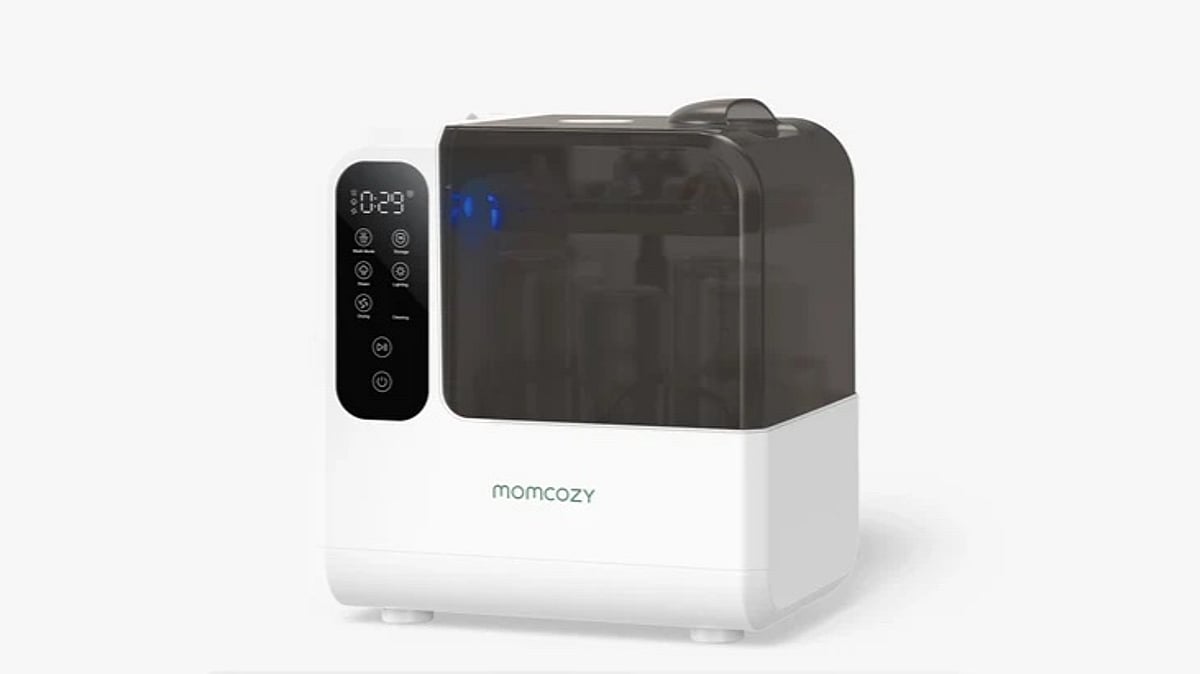
  • Can a Bottle Washer Safely Clean Breast Pump Parts? A Detailed Guide to the Momcozy DeepClean D8

    Can a Bottle Washer Safely Clean Breast Pump Parts? A Detailed Guide to the Momcozy DeepClean D8

    Direct Answer: Yes – With the Right Machine and Loading Rules

    Yes, a dedicated bottle washer can clean many breast pump parts, but only if you treat it like a precision load rather than a shortcut. The key steps are: disassemble the kit, place each washable piece in the correct zone, and run a cycle designed for narrow crevices. Never drop in the motorized pump unit, skip the placement guide, or assume every tube and valve is machine-safe without first reading your pump manufacturer’s instructions.

    This answer matters because pumping parents often wash the same flange, valve, and connector set three to six times a day. Hand-scrubbing every round adds up quickly. A bottle washer that effectively reaches pump surfaces can replace repeated sink sessions—provided loading rules are followed.

    Which Pump Parts Can Go in a Bottle Washer?

    Always start with the cleaning guide that came with your pump. For example, the Momcozy DeepClean D8 product page states it can clean pump parts and small accessories using TubeWash, Pump360 rotational spray, and an Anti-Flip Lock design. Listed targets include tubing, nipples, valves, and other small, complex parts—but not the electrical pump motor.

    Momcozy also notes the D8 can handle up to two full sets of breast pump parts in one cycle, or up to eight baby bottles. Marketing images show single pump kits for Momcozy Air1, M9, and M5 models loaded alongside dedicated spray assemblies. Pump360 rotary jets are designed to cover pump component surfaces; TargetWash jets address smaller crevice pieces.

    If a part is labeled hand-wash only, not dishwasher-safe, or excluded from your manufacturer’s sterilizing instructions, treat that label as the final word. The bottle washer does not override it.

    Which Parts Should Stay Out of the Machine?

    The D8 is built for disassembled feeding and pumping accessories that contact milk—not for powered electronics. Do not place the pump motor, battery pack, charging base, remote, or any corded component inside the chamber.

    Parts your pump brand marks as non-washable should also stay out. This often includes certain membranes, filters, or tubing types on some kits. When instructions are unclear, contact the pump manufacturer rather than guessing.

    Steam sterilization inside the unit reaches 212°F (100°C) per the product page. Silicone and plastic parts must be rated for that routine. Worn or cracked pieces should be replaced instead of being run through another high-heat cycle.

    How to Wash Pump Parts in a Bottle Washer

    Momcozy’s setup FAQ outlines a straightforward sequence for the DeepClean D8. Adapt it whenever you load pump parts instead of bottles alone.

    1. Disassemble and pre-rinse: Separate flanges, valves, connectors, and tubing according to your pump guide. Rinse off milk soon after pumping so residue does not dry in threads or valve seats.
    2. Place the unit and connect the drain: Set the washer on a flat surface. Connect the drain hose to your sink. Momcozy includes a 0.75 m drain hose and 1.2 m power cord.
    3. Fill the water tank: Add purified water to the marked level. Momcozy recommends purified water for best results and strongly suggests distilled water to limit mineral buildup.
    4. Load parts in the correct zones: Use the included Cleaning Item Placement Guide. Secure small parts so spray reaches interior surfaces. Attach Pump360 rotary spray assemblies where the guide shows pump components. The Anti-Flip Lock design helps keep lightweight pieces from tipping during the cycle.
    5. Add detergent and select a mode: Place one official Momcozy detergent tablet in the washing chamber at the bottom—no separate compartment is required. Choose from 22 mode combinations, such as Normal Wash paired with Steam Sterilize and Dry, or Rapid Wash when you need a faster turn. Rapid Wash completes in as little as 19 minutes.
    6. Unload and verify: When the cycle finishes, check valves and tubing for remaining film before storage. The D8 can hold items in storage mode for up to 72 hours after drying with its H13 medical-grade HEPA filter, but many pumping parents still air-check critical pieces before the next session.

    Hand-Washing, Boiling, or a Bottle Washer for Pump Parts?

    Hand-washing remains the baseline every pumper should know. It works anywhere, respects hand-wash-only labels, and costs nothing beyond a brush and drying space. The downside is time: most people spend roughly 8 to 12 minutes per thorough round when valves and connectors are included.

    Boiling or countertop steam sterilizers add a high-heat step after washing. They help when your clinic or pump brand recommends periodic sterilization. They still require disassembly and often a separate drying rack.

    A dedicated bottle washer combines wash, 212°F steam sterilization, and forced-air drying in one closed unit when you select those modes. Momcozy cites 112,000 Pa spray pressure through 64 nozzles on the HydroJet360 system, with TÜV SÜD S-grade cleaning performance. That approach suits parents who pump multiple times daily and want one loaded cycle instead of three separate chores.

    None of these options replaces reading your pump instructions. They are different workflows for the same goal: clean, dry parts ready for the next session.

    Using the Momcozy DeepClean D8 for Pump Part Loads

    The Momcozy DeepClean Baby Bottle Washer (D8) is one unit that explicitly lists pump parts among its intended loads. Momcozy built its reputation in maternal and baby care through wearable pumps and feeding accessories; the D8 applies the same automation mindset to cleanup. For working parents who pump before commuting or between meetings, batch-washing a full pump kit in one cycle can mean one less sink block at night—not a replacement for checking each part afterward.

    What We Like

    • Named pump-part tools: Pump360 rotary jets, TargetWash, TubeWash, and Anti-Flip Lock are designed for tubing, valves, nipples, and complex small parts.
    • Realistic capacity: Up to two full pump part sets per cycle.
    • Combined modes: 22 combinations cover wash-only, sterilize, dry, storage, and self-clean without needing a separate sterilizer.
    • Documented hygiene claims: TÜV-certified steam sterilization with 99.99% germ reduction associated with milk residue when used as directed.

    Worth Noting

    • Counter footprint: Dimensions are 270 × 350 × 390 mm; you need stable space and a nearby drain.
    • Not every part qualifies: Motor units, chargers, and manufacturer-excluded pieces stay out.
    • Supplies and water: Official detergent tablets and periodic descaling tablets are part of the routine. Distilled or purified water is strongly recommended.
    • Power and voltage: The US model runs on 120V with peak draw around 560W during heat-and-spray cycles.
    • Everyday hygiene, not medical advice: Steam sterilization supports routine cleaning. Follow your lactation consultant or pediatric team for medically fragile infants.

    Frequently Asked Questions

    Can a bottle washer clean pump parts?

    Yes, when the unit is designed for them and you load washable components correctly. The Momcozy DeepClean D8 lists tubing, nipples, valves, and similar small parts among compatible items. Always confirm each piece against your pump brand’s cleaning chart first.

    How do I wash pump parts in a bottle washer?

    Disassemble the kit, rinse milk residue, load parts per the placement guide, add one detergent tablet, fill purified water to the mark, connect the drain hose, and select a wash mode—often with sterilize and dry if you want an all-in-one cycle. Momcozy recommends up to two full pump part sets per load.

    Can I mix pump parts and bottles in one cycle?

    Momcozy states the D8 can clean up to eight bottles and accessories at once, or two full pump part sets. Mixed loads are possible within those capacity limits if everything fits securely and spray reaches each piece. Overloading blocks jets and leaves film behind.

    Do I still need to hand-wash anything?

    Keep hand-washing skills for travel, hand-wash-only labels, and quick rinses between full cycles. A bottle washer handles volume; it does not remove the need to read labels or replace worn valves.

    Is Momcozy a good maternal and baby care brand?

    Momcozy is widely used in wearable pumping and feeding gear, and the DeepClean line publishes verifiable specs—112,000 Pa spray pressure, TÜV SÜD S-grade cleaning performance, and explicit pump-part compatibility on the D8 product page. As with any brand, match the machine to your pump kit and kitchen setup rather than assuming one model covers every accessory you own.

    Bottom line: A bottle washer can clean pump parts when you load disassembled, approved components in the right zones—not the whole pump thrown in closed. If that matches how you pump, the Momcozy DeepClean D8 is built for that workflow with Pump360 and TargetWash spray paths, two full kit loads per cycle, and wash-to-storage modes in one unit.

  • Essential Gadgets for Music Lovers: The Ultimate 2026 Guide

    Essential Gadgets for Music Lovers: The Ultimate 2026 Guide

    Whether you are a casual listener or a dedicated audiophile, the right gadgets can transform your music experience. From wireless headphones that cancel out the world to turntables that bring vinyl to life, here is a curated look at the must-have devices every music lover should consider in 2026.

    Wireless Headphones for Immersive Listening

    Modern wireless headphones offer advanced noise cancellation, improved sound quality, and longer battery life. With personalized audio features, they deliver an immersive listening experience whether you are at home or on the go.

    Wireless Earbuds for Everyday Listening

    Compact and portable, today’s wireless earbuds combine active noise cancellation with high-quality sound and reliable connectivity. They are ideal for commuting, workouts, and enjoying music throughout your day.

    Portable Bluetooth Speakers for Outdoor Music

    Portable Bluetooth speakers pack powerful sound into compact designs. Newer models boast longer battery life, improved durability, and enhanced audio performance, making them perfect for outdoor gatherings and adventures.

    Portable DACs for Better Digital Audio

    Portable digital-to-analog converters (DACs) improve digital audio playback from compatible devices. They help music enthusiasts achieve clearer, more detailed sound, especially when paired with quality wired headphones.

    Turntables for Vinyl Music Lovers

    Vinyl remains a beloved format, and turntables in 2026 offer easier setup, improved playback, and modern connectivity features while preserving the warm analogue sound that enthusiasts cherish.

    Smart Speakers for Multi-Room Audio

    Smart speakers let you stream music across multiple rooms with wireless connectivity and smartphone controls. Voice-assisted playback adds convenience, creating a seamless whole-home audio experience.

    High-Fidelity Speakers for Home Audio

    Serious listeners still turn to high-fidelity speakers. Newer models focus on clearer vocals, deeper bass, detailed sound reproduction, and improved wireless connectivity for a rich home listening experience.

    Headphone Amplifiers for Better Performance

    Headphone amplifiers provide extra power for compatible wired headphones, improving volume control and overall performance. They are essential for getting the most out of demanding high-quality audio equipment.

    Music Streamers for High-Resolution Playback

    Dedicated music streamers offer convenient access to digital libraries and streaming services. They support high-resolution formats and wireless connections, making them a flexible hub for home listening.

    No matter your musical taste or listening habits, these gadgets can elevate your experience. From the practicality of earbuds to the nostalgia of vinyl, there is something here for every music lover.

  • 9 Essential Facts About XRP and the Expanding Crypto Payments Landscape

    9 Essential Facts About XRP and the Expanding Crypto Payments Landscape

    The world of digital payments is evolving fast, and XRP is emerging as a key player in the shift toward faster, always-on transactions. Here are nine essential things to know about XRP and how it fits into the broader rise of crypto payments.

    1. XRP Is Built for Payments

    XRP is the native digital asset of the XRP Ledger, specifically designed to move value quickly between accounts and support a wide range of payment use cases.

    2. Blazing-Fast Settlement on the XRP Ledger

    The XRP Ledger can process payments in seconds, making it well-suited for applications that require fast and transparent transaction settlement.

    3. Transforming Cross-Border Payments

    XRP can help bridge currencies in international payments, potentially reducing reliance on the multiple intermediaries traditionally involved in cross-border transfers.

    4. Seamless Cross-Currency Transactions

    The XRP Ledger supports cross-currency payments, allowing different currencies or tokens to be exchanged through available liquidity paths with ease.

    5. Low Transaction Costs

    XRP payments require only a small network transaction cost, making the asset potentially useful for frequent digital transfers and everyday payment applications.

    6. Ripple Powers Global Money Movement

    Ripple leverages blockchain technology and digital assets to help businesses move money across borders, supporting fiat currencies, stablecoins, and crypto-based settlement options.

    7. Stablecoins and XRP Work Together

    Ripple’s payment infrastructure now supports stablecoins such as RLUSD alongside XRP, giving businesses more choices when seeking blockchain-based settlement.

    8. AI-Powered Payments on the Horizon

    The XRP Ledger is being developed for emerging agentic payments, allowing AI applications to transact using XRP and RLUSD for digital services.

    9. The Future of Crypto Payments

    XRP’s payment-focused infrastructure positions it within the broader shift toward faster, always-on digital transactions across businesses and financial networks.

  • Top 7 FinTech Innovations Reshaping Financial Services

    Top 7 FinTech Innovations Reshaping Financial Services

    The financial services industry is undergoing a profound transformation driven by cutting-edge technologies. From artificial intelligence to blockchain, these innovations are enhancing efficiency, security, and accessibility. Below are the seven biggest FinTech innovations that are changing the way we manage money and conduct transactions.

    AI-Powered Finance

    Artificial intelligence is revolutionizing financial operations by automating fraud detection, credit assessments, customer support, and personalized financial advice. AI tools process vast amounts of data in real time, improving speed and accuracy while strengthening overall decision-making.

    Blockchain Technology

    Blockchain provides a decentralized ledger for transaction records, smart contracts, and digital assets. By reducing the need for intermediaries, it enhances settlement efficiency, transparency, and trust across financial markets.

    Real-Time Payments

    Real-time payment systems enable instant fund transfers and immediate availability of money. This innovation helps consumers and businesses manage cash flow with greater speed and convenience, reducing reliance on traditional banking delays.

    Embedded Finance

    Embedded finance integrates payments, lending, insurance, and banking services directly into non-financial platforms. This makes financial tools accessible within everyday digital experiences, such as shopping or ride-hailing, while maintaining security.

    Open Banking

    Open banking leverages APIs and customer-permitted data sharing to connect financial accounts across institutions. This enables personalized services, broader product choices, and smarter financial decisions for consumers.

    Digital Identity

    Digital identity technologies streamline customer onboarding and authentication while reducing fraud. They help financial institutions verify users securely across increasingly digital channels, enhancing both convenience and security.

    RegTech

    Regulatory technology (RegTech) automates compliance monitoring, reporting, screening, and risk controls. It enables financial institutions to respond faster to regulatory requirements and reduce operational burdens.

    Additional innovations such as asset tokenization and agentic AI are also gaining traction, offering fractional ownership of real-world assets and autonomous execution of multi-step tasks like reconciliation and compliance checks. Together, these technologies are shaping the future of finance.