Author: vitorcherulli

  • iPhone Duo Global Price Comparison: Cheapest Markets and How Much You Can Save

    iPhone Duo Global Price Comparison: Cheapest Markets and How Much You Can Save

    Apple’s first foldable iPhone, the iPhone Duo, launched with a starting price of USD 1,999 in the United States, while India’s price tag is significantly higher at Rs. 2,99,900. A global price comparison reveals that the US offers the lowest listed price, with several other major markets also undercutting India’s cost.

    The 256GB model costs USD 1,999 in the US, roughly Rs. 1.90 lakh before state sales tax. Canada follows at around Rs. 2.06 lakh, and Hong Kong at approximately Rs. 2.12 lakh. Dubai (AED 8,499 ≈ Rs. 2.20 lakh), Singapore (≈ Rs. 2.33 lakh), and Germany (≈ Rs. 2.54 lakh) also offer substantial savings over India.

    India’s pricing includes the highest premium among compared markets. The 256GB variant is Rs. 2,99,900, while 512GB costs Rs. 3,24,900, 1TB at Rs. 3,74,900, and 2TB at Rs. 4,49,900. The gap between the US and India is nearly Rs. 1.10 lakh — a difference that remains meaningful even after accounting for US sales taxes.

    Apple has not explained the regional price disparity. Factors such as taxes, import duties, distribution costs, and currency fluctuations likely drive the higher Indian price. However, international buyers should consider customs charges, warranty limitations, and eSIM compatibility, which can reduce actual savings when returning to India.

    For buyers focused purely on the lowest upfront cost, the US leads. Dubai and Hong Kong remain attractive alternatives, while India demands the steepest premium among the markets surveyed.

  • Apple iPhone Duo: How Its Foldable Display Stands Out from Competitors

    Apple iPhone Duo: How Its Foldable Display Stands Out from Competitors

    Apple has taken a distinct approach to the display on its first foldable iPhone, the iPhone Duo. The device features a 7.6-inch inner folding display with a resolution of 1878 x 2670 pixels and 430 ppi, alongside a 5.4-inch outer display offering 460 ppi. Both screens support ProMotion at up to 120Hz and achieve a peak outdoor brightness of 3,000 nits.

    iPhone Duo Display Specifications

    The 7.6-inch Super Retina XDR inner OLED display packs approximately 5.01 million pixels, while the 5.4-inch outer display (1398 x 2034 resolution) delivers around 2.84 million pixels. Apple states that the inner display is 50% larger than the display on the iPhone 18 Pro Max, and the outer display provides 90% of the iPhone 18 Pro’s screen area.

    Both displays offer 1,000 nits typical brightness, 1,600 nits for HDR content, and 3,000 nits peak brightness outdoors, with a minimum brightness of 1 nit. Additional features include a 2,000,000:1 contrast ratio, Always-On display, Dynamic Island, HDR, True Tone, and P3 wide color gamut.

    The inner display’s 430 ppi is the highest pixel density among current folding screens. For comparison, the Galaxy Z Fold 8 has 404 ppi, Honor Magic V6 has 403 ppi, Motorola Razr Fold reaches 412 ppi, Oppo Find N6 has 413 ppi, and the Pixel 10 Pro Fold comes in at 374 ppi.

    A Closer Match Between the Two Screens

    Apple says both displays share the same aspect ratio. The actual resolutions have a disparity of only 2.34% (1:1.4217 for the inner display vs. 1:1.4549 for the outer). This is a relatively small difference compared to the Galaxy Z Fold 8, whose two displays have a 20.8% disparity.

    Nano-Texture Finish Tackles the Crease

    The iPhone Duo introduces a nano-texture matte finish to a folding display. The surface scatters reflections rather than reflecting them directly, reducing the visual prominence of the crease. Apple did not claim the crease disappears completely, but says the matte surface minimizes its visibility. The display uses 10 ultrathin layers, while viscoelastic adhesives allow the layers to move against each other during folding, helping reduce bend stress.

    More than 100 Components in the Hinge

    Apple designed the hinge system with over 100 components manufactured from titanium and aluminum. This hinge mechanism holds the center portion of the display in place. Carbon fiber support plates provide a stiff, lightweight base, and Apple uses machine-learning software during production to pair individual hinges with the housings they fit best. The iPhone Duo measures 9.5mm when folded.

    Glass, Polymer and Ceramic Shield 2

    Apple placed high-strength glass above and below the folding panel, along with a titanium plate and carbon fiber support structure. The custom polymer cover is rated up to 40% stiffer than materials used across the industry. The outer display is protected by Ceramic Shield 2, which Apple says offers three times the scratch resistance of the previous generation. The phone also carries an IP68 rating, putting it among the most protected announced foldables.

    While the specifications indicate a quantum leap from previous models, the long-term viability of the device will only become clear after several years of constant use have tested the performance of the display and the hinge design.

  • Samsung Mocks Apple’s iPhone 18 Launch with a Series of Social Media Jabs

    Samsung Mocks Apple’s iPhone 18 Launch with a Series of Social Media Jabs

    Samsung turned Apple’s latest iPhone launch into an opportunity for some pointed social media banter, taking several digs at the company during the unveiling of the iPhone 18 Pro, iPhone 18 Pro Max, and its first foldable iPhone, the iPhone Duo.

    The Samsung Mobile US account on X posted a series of reactions during Apple’s September 9 launch, targeting everything from the iPhone 18 Pro design and Apple’s entry into the foldable smartphone segment to the name of its new device.

    One post read, “So far, so same. #ItsTimeToSwitch”, taking a swipe at the similarities between the new iPhone 18 Pro models and their predecessors. Another post targeted the design, saying, “Not the bed side clock. It’s giving groundhog day.”

    The company also used Apple’s long-awaited entry into the foldable smartphone market as another opportunity to promote its own experience in the segment. “Making us wait? Fine. We’ll be over here, folding 3 ways,” Samsung posted, referring to its foldable smartphone lineup.

    Apple’s launch of the iPhone Duo drew another sharp response. Samsung posted, “Let us know when you’re done reheating our leftovers” and followed with another jab: “It’s feeling very familiar. Is this a Sims sequel…”

    The iPhone Duo marks Apple’s first entry into the foldable segment, featuring a 5.4-inch outer display and a 7.6-inch internal display, with a starting price of USD 1,999 in the US.

    The name ‘Duo’ gave Samsung another opening. The company tagged language-learning platform Duolingo and wrote, “I’m so sorry, @DuoLingo. They copied us too #Solidarity”.

    Samsung also took a swipe at Apple’s accessories, posting, “Accessories? It’s giving condiments and no food. #ItsTimeToSwitch”.

    Together, the posts formed Samsung’s running commentary on Apple’s launch, using humor and comparisons to highlight its lead in foldable smartphones and position its devices as an alternative to Apple’s latest offerings.

  • Google Commits $15 Billion to AI Infrastructure in Finland in Landmark European Investment

    Google Commits $15 Billion to AI Infrastructure in Finland in Landmark European Investment

    Google has announced plans to invest at least EUR 13 billion (USD 15.1 billion) in Finland over 2027 and 2028, marking its largest single investment in Europe to date. The massive expenditure will fund new data centers, artificial intelligence infrastructure, and low-carbon energy projects across the Nordic nation.

    The investment will support expansion in the cities of Hamina, Kajaani, Muhos, and Vaala, where Google will build three new data centers in northern Finland. The region’s cool climate reduces energy needed for cooling, while its robust electricity grid and access to low-carbon power make it an ideal location for energy-intensive AI operations.

    Google’s existing Hamina facility, converted from a former paper mill in 2009, will be complemented by the new sites. The company has operated in Finland for over 15 years and sees the country as a strategic hub for its European AI ambitions.

    Economic and Employment Impact

    The initial construction phase is expected to support more than 37,000 jobs nationwide during the two-year period and contribute approximately EUR 3.6 billion annually to Finland’s GDP. Once operational, the facilities will sustain thousands of permanent positions. Google will also allocate EUR 31 million over four years to community initiatives in the four locations, focusing on education, research, and economic development.

    Energy Partnerships: Nuclear and Wind

    To power its expanding operations, Google has signed a 22-year power purchase agreement with Fortum covering up to 50% of the output from the Loviisa nuclear power plant from 2030 to 2049. The deal provides long-term certainty for extending the plant’s operations. Additionally, Google is backing new onshore wind capacity and a 94 MW battery system near Kajaani to help balance Finland’s electricity grid and stabilize prices during peak demand or low wind generation.

    Finland’s abundant low-carbon electricity, cool climate, and relatively uncongested power grid have made it a prime destination for data center investments. The country’s established infrastructure supports Google’s goal of running its AI workloads on clean energy.

    Community and AI Training Programs

    Beyond infrastructure, Google plans to provide AI training for more than 4,400 workers through local partnerships and fund programs for students preparing for data center careers. Environmental projects, including forest and wetland restoration, will also be implemented around its Finnish sites. The existing Hamina data center already uses seawater for cooling and supplies heat recovery to the local district heating network.

    “This is Google’s largest single investment in Europe and a testament to Finland’s leadership in responsibly building AI infrastructure,” the company stated. Finland’s Prime Minister Petteri Orpo added, “Google’s decision is a clear testament to our strengths.”

    The expansion reflects Google’s broader strategy to secure the computing capacity and energy needed to meet surging AI demand while building closer ties with local communities and energy providers.

  • UPI or Forex Card: What’s the Cheaper Way to Pay Internationally?

    UPI or Forex Card: What’s the Cheaper Way to Pay Internationally?

    Travelers now have more ways than ever to pay abroad, and UPI is expanding into international markets. The Unified Payments Interface is available across 11 countries, letting users scan QR codes and confirm payments in seconds without carrying large amounts of foreign cash or relying on plastic cards.

    But convenience doesn’t always mean lower cost. The true expense of an international UPI transaction depends on several factors beyond the payment fee itself. Exchange rates, currency conversion charges, bank fees, and the account linked to UPI can all shift the final amount you pay.

    What Drives the Cost of International UPI Payments?

    When you pay with UPI abroad, the transaction is processed using the exchange rate available at that moment. Currency conversion charges may be embedded in the rate or appear as a separate fee on your statement. The linked bank account matters too, since financial institutions apply different markups and service charges.

    Akshay Mehrotra, MD and Group CEO of Fibe, told NDTV that consumers should compare the total cost of a transaction rather than assuming one method is always cheaper. The cheapest option depends on the merchant, the destination country, and the amount being spent.

    Exchange Rates Can Change the Final Bill

    The amount debited from your bank account is the number that matters most. A checkout screen may show a foreign-currency amount, but the final INR equivalent depends on the exchange rate applied by your provider. Even a small rate difference can become significant across hotel stays, restaurant meals, shopping, and other large payments.

    Before completing a payment, compare the offered rate with the prevailing market rate. Check whether your bank or payment provider adds a separate forex markup on top of the conversion.

    Forex Cards Offer More Certainty

    Forex cards can give travelers greater predictability. When you load foreign currency onto the card, the exchange rate is generally locked in, protecting you from unfavorable rate movements during the trip. That makes forex cards appealing for longer holidays or planned expenses where budget certainty matters.

    However, forex cards are not automatically cheaper. Issuance fees, reload charges, ATM withdrawal costs, and maintenance fees can add up quickly. Travelers should compare these charges against the total cost of UPI payments before choosing a method.

    Cards and Cash Still Have a Place

    International credit and debit cards can compete with UPI, especially cards offering low or zero forex markup. Travelers should also watch for dynamic currency conversion at the point of sale and try to pay in the local currency whenever possible to avoid extra fees.

    Cash remains essential for taxis, small shops, local markets, and vendors that do not accept digital payments. But cash comes with its own drawbacks, including exchange spreads, ATM withdrawal fees, and security risks.

    Why Travelers Shouldn’t Rely Only on UPI

    UPI’s international expansion adds flexibility, but acceptance varies by country, city, and merchant. Before traveling, users should confirm that international UPI is enabled on their account, review transaction limits, and understand the currency conversion process.

    Security is just as important as cost. Travelers should use legitimate merchant QR codes, verify merchant names and transaction amounts, never share their UPI PIN, and avoid approving unexpected payment requests. Comparing the full cost of each payment option will help travelers get the best value without sacrificing safety.


  • India’s Next Industrial Boom: Six Sectors Powering a New Technology Economy

    India’s Next Industrial Boom: Six Sectors Powering a New Technology Economy

    India’s Technology Economy Takes Shape

    India is undergoing a major transformation in how it builds and uses technology. According to a recent Jefferies report, six key industries are driving this shift: semiconductors, electronics, space, data centers, solar equipment, and aerospace.

    The numbers underline the momentum. India’s space industry has grown fivefold and is projected to reach USD 40-45 billion by 2030. Semiconductor investments have hit around USD 20 billion, with an additional USD 13 billion incentive plan in the works. Data centers have also seen explosive growth, expanding fivefold over the past five years and expected to hit 10 gigawatts in the next half-decade.

    Solar power remains one of India’s strongest sectors. The country is the world’s second-largest photovoltaic manufacturer, and by 2030, it aims to cover 90% of the entire solar value chain.

    Dipal Dutta, CEO of RedoQ, encapsulated the shift: “By expanding deep-tech capabilities across semiconductors, space systems, and next-generation data centers, the nation isn’t just participating in the global supply chain, it is actively rewiring it.”

    From IT Services to Building Technology

    India’s traditional technology story was centered on IT services, software, and outsourcing. Companies built software for global clients and handled tech work for businesses worldwide. The new model is broader and more ambitious. India is now striving to manufacture more of the technology it uses—chip plants underpin a local semiconductor industry, electronics factories move beyond assembly, data centers support cloud and AI services, and space and aerospace firms push deeper into global markets.

    The fundamental change is clear: India is transitioning from being a provider of technology services to becoming a builder of the hardware and systems that power them. If this growth trajectory continues, these six sectors could elevate India’s role in the global technology market significantly.

  • iPhone 18 Pro Unveiled: Variable-Aperture Camera, A20 Pro Chip, and Extended Battery Life

    iPhone 18 Pro Unveiled: Variable-Aperture Camera, A20 Pro Chip, and Extended Battery Life

    Apple officially unveiled the iPhone 18 Pro and iPhone 18 Pro Max on September 9 at its Cupertino event, marking the first major iPhone launch under new CEO John Ternus. In India, the iPhone 18 Pro starts at Rs. 1,64,900, while the Pro Max starts at Rs. 1,79,900. Apple’s first foldable model, the iPhone Duo, is priced at Rs. 2,99,900. Pre-orders open on September 12, with sales beginning September 18.

    Variable-Aperture Camera Leads the Upgrades

    The biggest change is in the camera. The iPhone 18 Pro features a 48MP Fusion main camera with a mechanical variable aperture — a first for any iPhone. Six laser-cut blades adjust automatically or through four manual stops, opening as wide as f/1.48 for low-light shots. A new Pro Controls panel lets users manually adjust shutter speed, white balance, and aperture, along with an on-screen histogram.

    A20 Pro Chip and Battery Life

    The phone runs on Apple’s A20 Pro chip, built on a 2-nanometre process, delivering significant speed and efficiency gains. Battery life also improves, with the Pro Max offering up to 43 hours of video playback — the longest on any iPhone to date.

    Six More Enhancements

    • The Dynamic Island shrinks in size, freeing up more display space.
    • An image-authentication feature cryptographically signs each photo to verify authenticity.
    • Siri now runs on Apple Intelligence, providing more natural, conversational responses through on-device processing and Private Cloud Compute.
    • Storage options extend up to 2TB for the first time on a Pro model.
    • Video recording gains post-capture Cinematic effects at up to 60fps and 4K Dolby Vision HDR time-lapse.
    • The phones come in four finishes, including a new Burgundy option.
  • Elon Musk Dismisses Former Anthropic Researcher’s AI Extinction Warning as a ‘Setup’

    Elon Musk Dismisses Former Anthropic Researcher’s AI Extinction Warning as a ‘Setup’

    Elon Musk publicly challenged a former Anthropic researcher who resigned and warned that artificial intelligence could pose an existential threat to humanity. Jacob Coxon, who claims to have spent three years working at both Anthropic and OpenAI, posted a series of messages on X expressing alarm over the rapid pace of AI development.

    Musk responded directly on the platform, calling the posts “seems like a setup” and later suggesting they appeared to be part of a coordinated “psy op.” The exchange unfolded over several hours through public posts on X, with both men trading remarks.

    In his initial posts, Coxon accused Anthropic and OpenAI of “racing straight to self-improving superintelligence and gambling with our lives.” He stated that people working on AI development believe the technology could kill people by the end of the decade and insisted his warning was not a “marketing stunt.”

    Coxon’s posts reportedly garnered over 120 million views within a day. Musk questioned the sudden reach, noting that he had never seen such attention on a new account with little prior activity. Reports also indicated that Coxon had spent only four months at Anthropic, leaving two months before his stock options would have vested.

    Coxon fired back at Musk on X, writing, “I’m real, and these are my real beliefs. You could ask your xAI researchers about me if you hadn’t fired them.” Billionaire investor Bill Ackman also weighed in, reacting to a post suggesting Coxon’s warning could be the start of a “sophisticated and well-funded PR operation” aimed at pushing AI regulation.

    The exchange comes amid growing scrutiny of safety practices at major AI labs. Anthropic recently stated it is prioritizing safety over speed whenever the two goals conflict, as both it and OpenAI prepare for high-profile public listings while competing to build increasingly powerful AI systems.

  • iPhone 18 Pro Global Pricing: Why Turkey and India Pay a Premium for 2TB Models

    iPhone 18 Pro Global Pricing: Why Turkey and India Pay a Premium for 2TB Models

    Apple’s iPhone 18 Pro carries significantly different price tags depending on the market, with Turkey and India emerging as the most expensive regions for the 2TB flagship models. While US buyers can snag the 256GB version for $1,199, Turkish consumers face a starting price of 149,999 lira, and the 2TB variant soars to 255,999 lira. The iPhone Duo, Apple’s foldable offering, commands even higher premiums—starting at 229,999 lira in Turkey and reaching 335,999 lira for the 2TB configuration.

    India also presents steep costs. The base iPhone 18 Pro starts at ₹1,64,900, but the 2TB version of the iPhone Duo climbs to ₹4,49,900—placing India third globally for Duo pricing. Other markets like the UAE (AED 5,099), Japan (JPY 219,800), and Canada (CAD 1,749) offer more moderate price points.

    The price gaps stem from local taxes, import duties, and currency weakness. Turkey’s minimum wage for 2026 is set at 28,075.50 lira per month, meaning the standard iPhone 18 Pro costs roughly 4.9 months of minimum wage. Deutsche Bank data shows Istanbul’s average monthly net salary at $1,173, equating to about 2.4 months of take-home pay for the phone. The 2TB storage upgrade adds a significant premium, making it a luxury only for deep-pocketed buyers.

    For those seeking the best value, the US remains the cheapest market, while Turkey and India impose the heftiest surcharges—especially for the 2TB variants.

  • Acutaas Chemicals Stock Surges 7% on JM Financial ‘Buy’ Rating and Rs 3,800 Target

    Acutaas Chemicals Stock Surges 7% on JM Financial ‘Buy’ Rating and Rs 3,800 Target

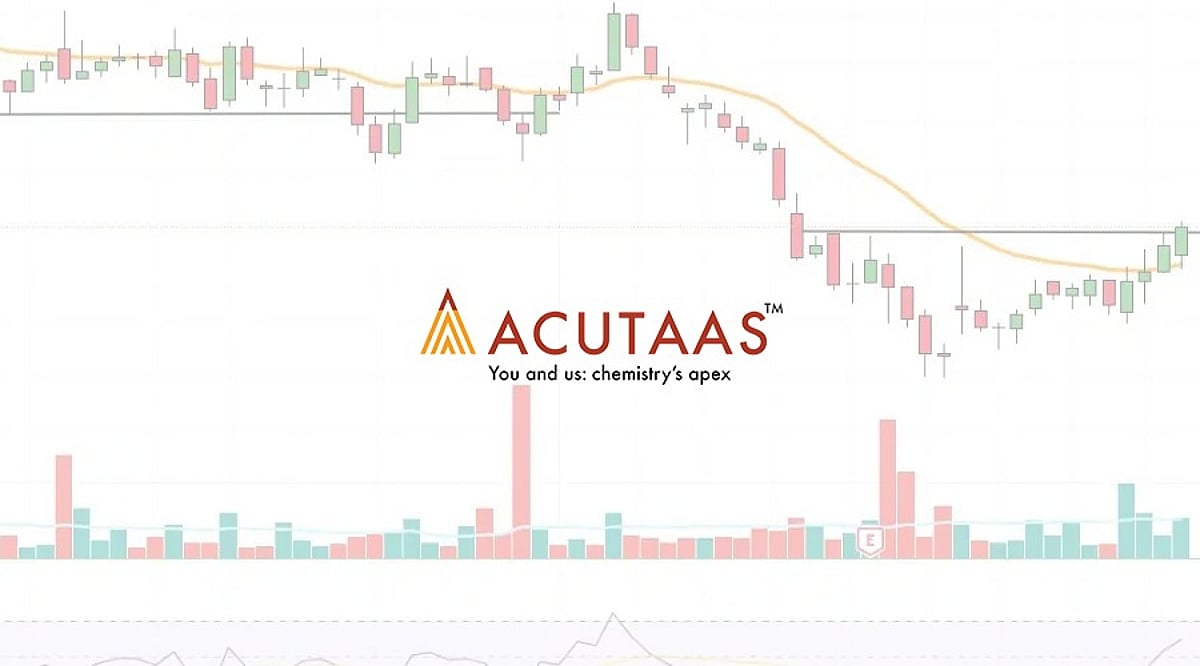
    Acutaas Chemicals Ltd shares surged nearly 7% on Thursday after JM Financial resumed coverage on the specialty chemicals firm with a ‘Buy’ rating. The brokerage upgraded its previous ‘Add’ call and set a target price of Rs 3,800 per share, indicating roughly 17% upside from the level considered in its report.

    The Acutaas Chemicals share price rose as much as 6.73% to Rs 3,451.05 during the session. JM Financial based its rating on expected growth in the company’s contract development and manufacturing organization (CDMO) business and new chemical segments.

    JM Financial Sees Growth in Specialty Chemicals Business

    Acutaas Chemicals has started shifting its specialty chemicals business away from products such as methyl paraben and salicylic acid. Instead, the company is expanding into electrolyte additives, semiconductor chemicals, and electronic chemicals.

    JM Financial said, “Electrolyte additives could address a 150,000 MTPA global market by CY30E.” The brokerage added that Acutaas has already contracted capacity for VC and FEC. Along with two other additives, JM expects these products to generate about Rs 400 crore in revenue by FY30.

    The brokerage also expects semiconductor chemicals to support growth. Acutaas has exposure to photoresist chemicals through BFC and Indichem. However, the revenue forecast depends on the planned ramp-up of the Korean facility, according to JM Financial.

    JM expects specialty chemicals revenue to rise from around Rs 170 crore in FY26 to Rs 730 crore by FY30, representing a compound annual growth rate of about 45%. The brokerage expects electrolyte additives and semiconductor chemicals to account for much of this expansion.

    CDMO Business Expected to Support Acutaas Chemicals Earnings

    JM Financial expects the Acutaas Chemicals CDMO business to grow at a compound annual rate of about 28% between FY26 and FY30. The brokerage linked this forecast to existing operations and new molecules entering the company’s portfolio.

    Acutaas currently has four new CDMO molecules across cardiovascular and oncology applications. According to JM Financial, each molecule could generate annual revenue of Rs 50 crore to Rs 100 crore.

    The brokerage expects combined revenue from these four molecules to reach about Rs 320 crore by FY30. These estimates remain forecasts and depend on commercial scale-up, customer demand, and execution during the period.

    Apixaban Opportunity Could Aid Legacy Pharma Business

    JM Financial also expects the legacy pharmaceutical intermediates business to recover as Pfizer’s Apixaban approaches patent expiry in November 2026. The brokerage estimates a potential opportunity for Acutaas Chemicals if demand for related intermediates increases.

    “Assuming Pfizer retains 20 per cent market share, we estimate an addressable opportunity of Rs 440 crore for Acutaas,” JM Financial said.

    The brokerage expects Apixaban intermediates to help support the legacy pharma segment after the company’s portfolio changes. It forecasts this business could grow at a 12% compound annual rate between FY26 and FY30.

    JM Financial estimates legacy pharma revenue could reach about Rs 880 crore by FY30. Meanwhile, the brokerage expects newer businesses, CDMO products, and specialty chemicals to contribute more to Acutaas Chemicals’ revenue mix over the coming years.

    The Rs 3,800 share price target reflects JM Financial’s forecasts and assumptions. Actual revenue growth, margins, and the Acutaas Chemicals share price may vary based on business performance and market conditions.