Author: vitorcherulli

  • BNY Mellon to Offer In-Custody Crypto Staking for Institutions via Galaxy Partnership

    BNY Mellon to Offer In-Custody Crypto Staking for Institutions via Galaxy Partnership

    BNY Mellon has announced plans to integrate crypto staking into its digital asset custody platform through a collaboration with Galaxy, the bank confirmed on August 4, 2026. The proposed service would allow eligible institutional clients to earn staking rewards while keeping their assets within BNY’s custody system, pending regulatory approval.

    Under the arrangement, Galaxy will provide the staking infrastructure and technical support, enabling clients to participate in proof-of-stake blockchain networks without transferring their tokens to a third party. BNY said the service would maintain the same controls, governance standards, and asset protections expected by institutional investors.

    “As digital assets continue to evolve, clients want more than safekeeping alone — they want a broader set of capabilities delivered through an institutional-grade model,” said Carolyn Weinberg, BNY’s chief product and innovation officer.

    Galaxy will also serve as a design partner for BNY’s broader digital asset platform, contributing to infrastructure development beyond staking. The Nasdaq-listed firm, which already uses BNY’s custody platform as an early client, brings expertise in proof-of-stake networks and digital asset operations.

    Steve Kurz, Galaxy’s global co-head of digital assets, said: “The future of financial markets will be built on open, programmable rails, and the institutions that move first will define the era that follows.”

    BNY launched its digital asset custody service in 2022 and continues to expand blockchain-related services. The bank manages tens of trillions of dollars in assets under custody and administration. It also plans to move core transfer agency record-keeping onto blockchain, enable around-the-clock settlement for U.S. Treasuries by 2027, and test tokenized Treasuries on a private blockchain before the end of 2026.

    Ethereum, the largest proof-of-stake network by market value, remains a key reference point for staking services. At press time, Ethereum traded near $1,868, with a market value of about $225 billion. However, BNY did not specify which networks or tokens the staking service would support, nor did it provide a launch date, fee structure, or client eligibility details.

  • Galaxy Digital Stock Drops 14% on $85M Q2 Loss Despite Helios Data Center Revenue Growth

    Galaxy Digital Stock Drops 14% on $85M Q2 Loss Despite Helios Data Center Revenue Growth

    Galaxy Digital shares fell 14% on Wednesday after the crypto and AI infrastructure company reported an $85 million net loss for the second quarter. The stock closed at $19.07, down from $22.14, as declining digital asset prices overshadowed progress at its Texas data center business.

    Crypto Weakness Pressures Quarterly Results

    Galaxy narrowed its net loss from $216 million in the first quarter, but quarterly revenue declined 15% to $8.7 billion from $10.2 billion. The company reported an adjusted diluted loss of $0.09 per share, with adjusted EBITDA reaching negative $77 million. Total equity stood at $2.7 billion. The Treasury and Corporate segment recorded a $42 million adjusted gross loss during the quarter.

    Digital Assets Unit Shows Higher Gross Profit

    Galaxy’s Digital Assets division generated $66 million in adjusted gross profit, up 34% from the prior quarter, though trading volumes fell 7% due to reduced market activity. The division posted an adjusted EBITDA loss of $11 million despite the stronger gross profit. Combined, Digital Assets and Data Centers produced $86 million in adjusted gross profit and $1 million in combined adjusted EBITDA. However, investors focused on the net loss and continued exposure to crypto price volatility.

    Helios Data Center Begins Revenue Generation

    Galaxy’s Data Centers segment reported revenue for the first time after delivering capacity to CoreWeave. The segment generated $20 million in adjusted gross profit and $11 million in adjusted EBITDA. By quarter-end, Galaxy had delivered all 133 megawatts of critical computing load under the first phase of its 15-year CoreWeave lease. The company expects approximately $80 million in quarterly revenue starting in the third quarter.

    Galaxy targets a project-level adjusted EBITDA margin above 90% at Helios. The recurring AI infrastructure revenue may help reduce exposure to swings in crypto trading. Construction has started on Helios Phase II, which will add 260 megawatts of critical IT capacity, with initial data hall deliveries expected in the second quarter of 2027.

    The company raised $3.5 billion through senior secured notes due in 2031 on July 28, directing proceeds toward Helios I Phase II construction. After the quarter, Galaxy acquired three additional Texas development sites, lifting its potential power pipeline beyond 5.7 gigawatts.

    Key Takeaways

    Galaxy’s second-quarter results showed a narrower net loss, lower revenue, and continued pressure from digital asset prices. Meanwhile, Helios began producing revenue, completed its first 133-megawatt delivery, and moved into a larger expansion funded by $3.5 billion in new debt.

  • Google Maps Brings Hindi Support and Live Transit Updates to Ask Maps in India

    Google Maps Brings Hindi Support and Live Transit Updates to Ask Maps in India

    Google has expanded its Ask Maps feature in India with Hindi language support, live transit updates, and a new Personal Intelligence layer powered by Gemini. The updates, announced on the company’s India blog, aim to transform Google Maps into a smarter daily assistant for commuting, local discovery, and travel planning.

    Hindi Support and Natural Language Queries

    With Hindi support, users can ask travel questions in a more familiar language, search for places, compare routes, and request local recommendations. Ask Maps uses Gemini to handle detailed natural language queries and can even remember earlier conversations when history settings are enabled, allowing travel plans to continue seamlessly.

    Real-Time Transit Information

    The update brings live bus, metro, and train schedules, including delay information, through a new widget. For example, searches around ISBT Kashmere Gate can show departure times, connecting routes, and changing wait times. This real-time data helps commuters make better decisions on the go.

    Personal Intelligence via Gmail Integration

    Personal Intelligence adds another layer of trip planning by optionally connecting to Gmail. With user permission, Ask Maps can access flight, hotel, or restaurant reservations to suggest nearby activities and suitable departure times. Google keeps Gmail access off by default, giving users full control over the connection.

    Beyond Navigation: Traffic, Weather, and Crowd Data

    Ask Maps also provides live traffic, weather, and crowd level information at restaurants or shops. These details help users choose better travel times and avoid crowded locations, making Maps more practical for everyday Indian commutes and short trips.

    Google first launched Ask Maps in India and the United States, positioning it as a conversational layer for Maps. The latest India updates combine language support, live mobility data, and personalized planning in one place, strengthening Maps as an everyday assistant beyond basic navigation.

  • Bitcoin Holds Near $64,600 as S&P 500 Surges $2.1 Trillion on AI Rally

    Bitcoin Holds Near $64,600 as S&P 500 Surges $2.1 Trillion on AI Rally

    The S&P 500 has added $2.1 trillion in market value this month, driven by an AI-led rally, while Bitcoin trades near $64,600 with limited gains. Crypto-specific pressures, rising bond yields, shrinking stablecoin supplies, and uneven ETF demand have restrained Bitcoin’s upside despite stronger sentiment across US equities.

    The S&P 500 has gained 3.12% this month, boosting its market cap by about $2.1 trillion—almost matching the entire global cryptocurrency market. Bitcoin, however, has risen only 2% in the same period, hovering near $64,600. Analysts attribute the divergence to AI-focused stock demand, crypto market headwinds, higher bond yields, and cautious trader positioning.

    AI Stocks Drive Wall Street’s Gains

    The S&P 500 now holds a record market value near $70.5 trillion, with the index around 7,723 points. The Nasdaq and Dow have also advanced as investors pour capital into large technology companies.

    Adam Haeems, head of asset management at Tesseract Group, noted that the equity rally centers on sectors with limited ties to Bitcoin. “Partly because the equity rally is being driven by areas to which bitcoin has little direct exposure, particularly AI and semiconductor stocks,” he said.

    Lower oil prices have provided additional support to listed companies through reduced operating costs. Haeems suggested Bitcoin may benefit later from softer inflation expectations and potential Federal Reserve policy changes, though uncertainty around the September outlook limits that path.

    Paul Howard, senior director at Wincent, linked the gap to concentrated equity demand. “The stock rally is biased towards AI and mega-caps which doesn’t necessarily translate into crypto flows,” he said.

    Crypto Pressures Limit Bitcoin Demand

    Bitcoin faces sector-specific challenges that do not affect equities directly, including the $120 million Coldcard exploit, uncertainty surrounding the CLARITY Act, and Strategy’s recent Bitcoin sales.

    Haeems said these events have weakened sentiment without triggering a wider credit crisis or forced selling cycle. Strategy has sold Bitcoin for three consecutive months, adding concern for traders monitoring corporate demand.

    Rising bond yields also make government debt more attractive than non-yielding crypto assets. Real Treasury returns are at their highest since 2008, encouraging some capital to stay outside digital asset markets.

    Stablecoin supplies reflect the same pressure. Haeems noted that USDT supply dropped from about $190 billion in April to $183 billion, while USDC supply declined from $79.5 billion to $72 billion over the same period.

    Traders Watch October, ETF Flows

    Markus Thielen, founder of 10x Research, said many traders expect Bitcoin’s four-year cycle to produce an October bottom, prompting them to wait rather than build positions during the equity rally.

    However, Thielen said Bitcoin’s ability to hold steady despite the Federal Reserve’s firm stance could support another reading. “Traders are underestimating the upside risk from a less hawkish Fed, and overlooking the possibility that the four-year cycle has already bottomed,” he said.

    ETF activity has been mixed. US spot Bitcoin funds recently recorded $61.53 million in outflows, ending three weeks of modest inflows. They then attracted $626 million this week, their strongest total since early May.

    Giottus CEO Vikram Subburaj said several consecutive inflow days would help confirm stronger institutional demand. He identified Bitcoin support between $63,000 and $63,400, with resistance from $64,500 to $66,000.

    Wintermute noted that some ETF demand may reflect arbitrage rather than direct bullish positioning. Analysts expect possible fourth-quarter catalysts from regulatory progress and renewed stablecoin growth.

  • Etsy Lays Off 220 Employees to Streamline Product and Engineering Operations

    Etsy Lays Off 220 Employees to Streamline Product and Engineering Operations

    E-commerce marketplace Etsy has announced plans to eliminate approximately 220 jobs, representing roughly 10% of its workforce, as part of a major organizational restructuring led by CEO Kruti Patel Goyal. The layoffs primarily affect employees in product, engineering, design, research, and analytics teams. According to the company, the move is intended to streamline decision-making, improve collaboration, and accelerate product development rather than reduce costs.

    More Focused Structure Needed: CEO

    In a message to employees, CEO Kruti Patel Goyal stated that Etsy is redesigning its organizational structure to remove complexity and create smaller, more agile teams. She noted that the company has grown significantly over the years, leading to overlapping responsibilities and slower execution across key business functions. The reorganization is expected to reduce the number of management layers and improve coordination between engineers, product, and design departments. Management hopes the restructure will enable Etsy to deliver new features faster and respond more quickly to changing market demands.

    Etsy Seeks Long-Term Growth

    This move comes at a time when Etsy is trying to build on its marketplace after experiencing sluggish consumer spending and reduced demand for discretionary items in some key markets. The company has been under pressure from shifting shopping behaviors and increased competition from other online players. Etsy stated that the restructuring is designed to position the company for its next phase of growth by improving operational efficiency and increasing the speed at which products are developed and delivered. Affected employees will receive severance packages, extended healthcare benefits where applicable, career transition assistance, and support in finding new employment opportunities.

    Focus on Innovation and Marketplace Expansion

    Etsy emphasized that it remains committed to investing in its marketplace, seller tools, and customer experience. The company plans to develop new features that help independent sellers connect with buyers and provide an improved search and discovery system. Unlike cost-saving measures, Etsy’s latest steps are strategic actions aimed at simplifying internal processes and enhancing effectiveness as the global e-commerce industry becomes increasingly competitive.

  • 8 Key Facts About Tewolde Gebremariam, Air India’s New CEO

    8 Key Facts About Tewolde Gebremariam, Air India’s New CEO

    Aviation Veteran: Tewolde Gebremariam brings decades of airline leadership experience and global recognition for strategic planning and operational excellence.

    Former Ethiopian Airlines CEO: He transformed Ethiopian Airlines into one of Africa’s most successful and profitable aviation groups during his tenure.

    Global Aviation Experience: His expertise spans fleet expansion, international partnerships, operational efficiency, and sustainable airline growth across global markets.

    Proven Business Leader: Known for driving profitability while expanding passenger networks and strengthening airline competitiveness in challenging market conditions.

    Focus on Innovation: Supports digital transformation, operational modernization, and technology adoption to improve airline efficiency and customer experiences.

    Strategic Expansion Vision: Expected to strengthen Air India’s international presence through network expansion, improved services, and fleet modernization initiatives.

    Customer Experience Priority: Emphasizes service quality, operational reliability, and passenger satisfaction as essential pillars for long-term airline success.

    Leading Air India’s Next Chapter: His appointment marks a significant milestone as Air India accelerates its transformation into a globally competitive full-service carrier.

  • Reliance Jio Launches JioTag 2 in India: Dual-Platform Tracker Priced at ₹1,249

    Reliance Jio Launches JioTag 2 in India: Dual-Platform Tracker Priced at ₹1,249

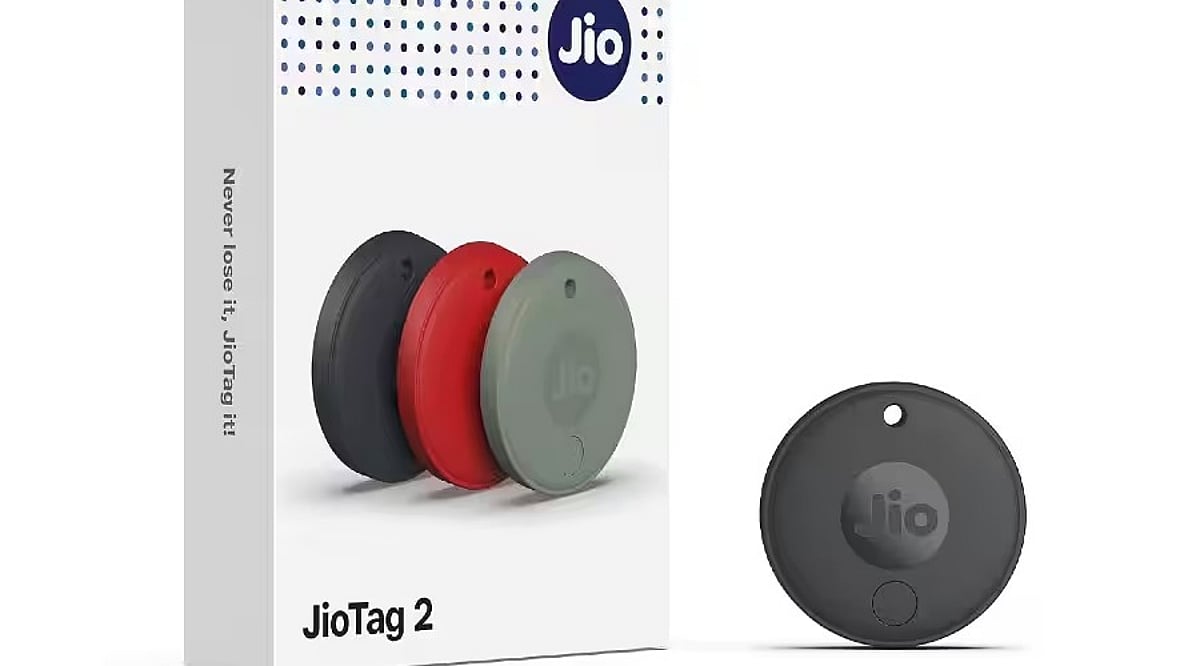
    Reliance Jio has introduced the JioTag 2 in India, a Bluetooth item tracker that now supports both Android and iPhone users. Priced at Rs. 1,249, the device is available on Amazon India and offers a practical solution for locating everyday essentials like keys, wallets, and bags.

    Key Features at a Glance

    • Dual-platform support: Works with Google Find Hub (Android) and Apple Find My (iPhone) networks.
    • Loud speaker: Built-in 120 dB speaker for easy location of nearby items.
    • Durable design: IP64 rating for dust and water resistance, with a polycarbonate body.
    • Affordable price: Launch price of Rs. 1,249, with an effective price of Rs. 1,199 after eligible bank discounts.
    • Color options: Available in Black, Red, and Green.

    Cross-Platform Compatibility Stands Out

    The major upgrade in JioTag 2 is its support for both major smartphone ecosystems. Android users can connect via Google’s Find Hub network, while iPhone users can use Apple’s Find My service. This removes the platform limitation of the earlier model, making the tracker suitable for a much wider audience.

    The tracker displays the location of connected items on a map through these networks, helping users locate misplaced belongings even beyond standard Bluetooth range. The large network of connected devices increases the chances of finding lost items in various locations.

    Loud Alert and Robust Build

    JioTag 2 includes a 120 dB speaker that produces a loud alert, making it easy to find items in homes, offices, or crowded public spaces. The IP64 rating provides protection against dust and water splashes, ensuring reliable performance during daily outdoor use. The polycarbonate body keeps the device lightweight while maintaining strength.

    Design Refresh and Everyday Utility

    Jio has refreshed the design with a cleaner, more compact appearance that is easy to carry. The tracker is ideal for locating keys, wallets, backpacks, handbags, and luggage. Travelers can attach it to luggage, students to backpacks, and office workers to laptop bags. Quick location access saves time and reduces stress during busy schedules.

    Competitive Pricing in the Tracker Market

    While premium trackers like Apple AirTag and Samsung Galaxy SmartTag2 cost more, JioTag 2 enters the segment at a lower price while offering dual-platform support and essential features. This balance makes it attractive for buyers who want modern tracking functions without paying a premium.

    The combination of dual-platform support, map-based tracking, a loud speaker, IP64 protection, and a compact design gives JioTag 2 a strong position in the affordable tracker category. The launch reflects Jio’s focus on delivering practical features that meet everyday needs while keeping costs accessible.

    FAQs

    1. What is the price of JioTag 2 in India?
    JioTag 2 is priced at Rs. 1,249, with an effective price of Rs. 1,199 after eligible bank discounts.

    2. Does JioTag 2 work with both Android and iPhone?
    Yes. It supports Google Find Hub (Find My Device) for Android and Apple Find My for iPhone.

    3. What items can I track with JioTag 2?
    You can attach it to keys, wallets, handbags, backpacks, laptop bags, and luggage.

    4. Is JioTag 2 water-resistant?
    Yes. It comes with an IP64 rating, offering protection against dust and water splashes.

    5. Where can I buy JioTag 2?
    JioTag 2 is available for purchase on Amazon India.

  • Unlock the Best KOReader Features: A Complete Guide for E-Book Enthusiasts

    Unlock the Best KOReader Features: A Complete Guide for E-Book Enthusiasts

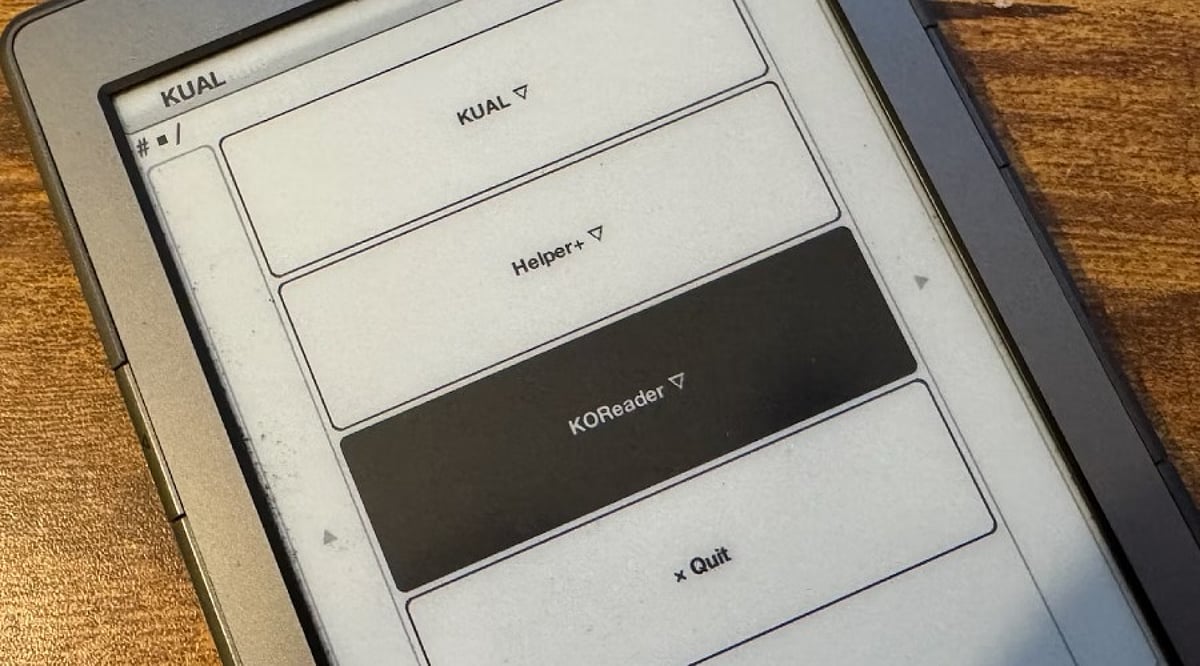
    KOReader is a free, open-source e-book reading application that goes far beyond basic reading tools. Supporting over 15 document formats and packed with advanced features like smart PDF cropping, cloud synchronization, and deep customization, it delivers an exceptional reading experience across Kindle, Kobo, PocketBook, reMarkable, Android, Linux, and Cervantes devices. Regular monthly updates keep it compatible with new hardware and add useful improvements. This guide covers the top 10 features that make KOReader a must-have for casual readers, students, and professionals alike.

    Key Takeaways

    • Read virtually any e-book format with support for over 15 popular document types.
    • Enjoy superior PDF reading using smart cropping, reflow, zoom, and optimization tools.
    • Stay productive anywhere with cloud sync, annotations, dictionaries, and customizable reading features.

    Wide Support for Many Book Formats

    KOReader’s most significant advantage lies in its capability to open numerous formats without using third-party applications. The program supports EPUB, PDF, DjVu, FB2, MOBI, DOC, CHM, TXT, HTML, RTF, CBZ, CBT, ZIP, XPS, and PDB formats. Most other e-book applications are limited to EPUB or several other formats, whereas KOReader can open and work with more than 15 formats in one application. This makes it possible for users to keep a whole library without converting files.

    Excellent PDF Reading Experience

    PDF files often create problems on small e-book screens, yet KOReader offers several tools that solve those issues. Smart margin cropping removes empty space around pages and creates a larger reading area. Multiple zoom options, landscape mode, multi-column reading, and PDF reflow improve readability on compact displays. Support for scanned PDF optimization through K2pdfopt also helps older documents appear much clearer. These features make KOReader a strong option for research papers, technical manuals, and textbooks.

    Deep Reading Customization

    Every reader has different preferences, and KOReader offers many ways to adjust the appearance of each page. Font style, font weight, line spacing, margins, paragraph spacing, text alignment, and screen contrast all remain easy to change. The application also includes multilingual hyphenation dictionaries that improve text layout across different languages. A choice of themes adds another layer of comfort for long reading sessions.

    Smart Book Map for Better Navigation

    The Book Map feature gives readers a complete visual view of a book. Instead of simple page numbers, the map displays finished chapters, reading progress, highlights, notes, and the overall book structure. Navigation becomes much faster, especially in long novels or large reference books. Readers can quickly return to important sections without endless page turning.

    Powerful Highlight and Note Tools

    KOReader also serves as a practical study companion. Highlights can span multiple pages, which helps when important text continues across page breaks. Notes stay linked to selected passages for quick review later. Export options allow easy access to saved annotations, while sync support keeps important notes available across compatible devices. This feature proves useful for students, researchers, and anyone who enjoys careful reading.

    Reading Progress Across Multiple Devices

    Many readers switch between different devices during the day. KOReader keeps reading progress and metadata synchronized across supported platforms. A book opened on a Kindle can continue later on an Android tablet or Kobo reader without manual page tracking. Recent updates replaced the older SyncService with a more advanced Cloud Storage plugin that supports upload, download, delete functions, and improved WebDAV compatibility. This upgrade offers a smoother synchronization experience.

    Built-In Dictionary and Translation Tools

    KOReader includes several language tools that help readers understand unfamiliar words without leaving the current page. Support covers StarDict dictionaries, Wikipedia, Google Translate, and custom online dictionaries. Quick word lookups save time and help readers stay focused on the book. Language learners and readers of academic material often find this feature especially valuable.

    Easy Access to Online Book Libraries

    Finding new books becomes much simpler with built-in OPDS catalog support. KOReader connects directly to OPDS servers, custom OPDS catalogs, Calibre libraries, and RSS feeds. Recent releases also introduced basic OPDS 2.0 support, which improves compatibility with modern online book collections. This feature allows readers to browse and download content through a single application.

    Flexible Plugin Support and Shortcuts

    KOReader offers many options for personalization through its plugin system. Recent updates introduced single-key hotkeys that allow faster access to common actions. Plugin management also became easier with built-in plugin deletion support, which removes the need for manual file cleanup. These improvements help readers create a setup that matches personal reading habits without extra effort.

    Built for E-Ink Displays

    Many reading applications target phones and tablets first, while KOReader focuses on e-ink devices from the start. Fast page turns, adjustable refresh settings, high-contrast themes, battery-friendly design, paginated menus, and minimal visual effects all suit electronic paper displays. This careful design keeps navigation smooth even on older hardware with limited processing power. Regular monthly releases also add support for newer devices, including Kobo V5 models, PocketBook Era Lite, expanded Kindle compatibility, and improvements for recent Onyx Android readers.

    Final Thoughts

    KOReader differentiates itself with its extensive functionalities, a variety of devices compatibility, and strong emphasis on ensuring a high level of reading comfort. Its features include support for more than 15 types of document formats, modern PDF tools availability, various customization options, intelligent navigation capabilities, notation abilities, possibility of synchronization with the cloud, the ability to use various languages while reading, and other options making KOReader one of the most comprehensive reading software applications at the present moment.

    Frequently Asked Questions

    1. What is a KOReader?

    KOReader is a free, open-source e-book reading application designed for e-ink devices, Android, and Linux platforms.

    2. Which file formats does KOReader support?

    It supports over 15 formats including EPUB, PDF, MOBI, FB2, DOC, TXT, HTML, RTF, CBZ, DjVu, CHM, XPS, PDB, ZIP, and more.

    3. Is KOReader good for reading PDFs?

    Yes. It offers smart margin cropping, PDF reflow, zoom options, landscape mode, multi-column reading, and scanned PDF optimization.

    4. Can KOReader sync reading progress across devices?

    Yes. Its Cloud Storage plugin supports syncing reading progress, metadata, and annotations across compatible devices.

    5. Is KOReader free to use?

    Yes. KOReader is completely free, open-source, and receives regular updates with new features and device support.


  • Indian Stock Market Opens Higher: Nifty 50 Edges Up, Sensex Gains Over 200 Points

    Indian Stock Market Opens Higher: Nifty 50 Edges Up, Sensex Gains Over 200 Points

    The Indian stock market opened on a positive note Thursday, tracking mixed global cues. The benchmark Nifty 50 index opened 16.35 points, or 0.07%, higher at 24,641, while the Bank Nifty climbed 75.05 points, or 0.13%, to start at 57,815. The Sensex opened 201.43 points above the previous close of 78,581, reaching 78,782.43.

    Among broader indices, the Nifty midcap index rose 0.18%, while the smallcap index gained 0.76%. The Indian rupee opened flat at Rs. 95.13 per dollar against the previous close of Rs. 95.13.

    Foreign institutional investors (FIIs) turned net sellers on August 5, offloading shares worth Rs. 943.42 crore. In contrast, domestic institutional investors (DIIs) remained net buyers, investing Rs. 2,883.17 crore.

    Sensex Outlook

    Technically, the Sensex witnessed range-bound activity. Short-term support is placed at 78,200–78,000, while 78,900–79,000 remains the crucial resistance area for the bulls. According to Shrikant Chouhan, Head of Equity Research at Kotak Securities, “We believe that, as long as the market is trading between these ranges, a range-bound texture is likely to continue. On the higher side, a breakout above 79,000 could push the market towards 79,300–79,500. On the flip side, a dismissal of 78,000 could push the market towards 77,500.”

    Nifty 50 Outlook

    The Nifty 50 formed a bullish hammer-like candle on the daily chart, indicating buying interest at lower levels. Bajaj Broking Research stated, “We expect the index to extend the last two sessions’ consolidation and form a base at higher levels. The overall structure is positive; we believe the current breather should be used to accumulate quality stocks in a staggered manner.” The brokerage expects the benchmark index to gradually move towards the 25,000–25,200 zone over the coming weeks. Immediate support is placed in the 24,400–24,500 range. As long as the Nifty remains above this zone, analysts expect a pullback towards 24,720 and 24,800 in the near term. Stronger short-term support is now seen around 24,200–24,000, where key Fibonacci retracement levels coincide with the 20-day and 50-day exponential moving averages (EMAs).

    Bank Nifty Outlook

    Bank Nifty traded within a narrow range during Wednesday’s session and formed an inside-bar candle, reflecting indecision after recent profit booking. Bajaj Broking noted, “The index continues to consolidate within the broader 56,500–58,700 range that has been in place over the past seven weeks. A decisive breakout above 58,700 would signal a resumption of the uptrend, opening the door towards 59,300 and 60,000 in the coming sessions. Until then, the index is likely to remain range-bound with a stock-specific bias.” According to the brokerage, immediate support for Bank Nifty is near 57,400, followed by the 57,000–56,800 zone. On the upside, resistance is seen around 58,000–58,100, while a sustained move above the 58,500–58,700 range could strengthen bullish momentum.

    Disclaimer: This article is for informational purposes only and does not constitute investment advice. Please conduct your own research before making any financial decisions.

  • Disha AI Health Coach: Personalized AI-Powered Health Management App

    Disha AI Health Coach: Personalized AI-Powered Health Management App

    Disha AI Health Coach Overview

    Disha Health is an AI-assisted application designed to help individuals manage their health through intelligent digital solutions. The platform combines health assessments, symptom analysis, wellness advice, and healthcare assistance into a single mobile app. Its features focus on enhancing preventive healthcare and simplifying health management. Benefits include personalized advice, digital health monitoring, and wellness resources. While there are some challenges, the AI Health App proves highly useful for many users.

    General Information

    • Launched: 2025
    • Platform Support: Android, Web
    • Download: Click Here

    Main Features of Disha AI Health Coach

    • Uses artificial intelligence to deliver personalized health insights and wellness suggestions based on individual health data and preferences.
    • Provides symptom-checking tools that help users understand potential health issues before consulting professionals.
    • Enables digital health tracking, allowing users to monitor health data, wellness achievements, and important medical information in one place.
    • Offers preventive healthcare assistance through personalized recommendations that promote healthier practices and informed decision-making.
    • Features an intuitive UI for managing healthcare via the AI Health App.

    Benefits of Disha AI Health Coach

    • Delivers health-related information and advice via AI, making it easier to comprehend health conditions and adopt healthy lifestyle choices.
    • Simplifies health management by integrating symptom analysis, health status tracking, and wellness recommendations into one platform.
    • Encourages preventive healthcare through regular health monitoring and personalized recommendations that promote well-being.
    • Provides an intuitive interface for easy access to healthcare information.
    • Combines intelligent software with practical healthcare solutions.

    Challenges of Disha AI Health Coach

    • Access to advanced services or healthcare advice may depend on the user’s geographical location and other factors.
    • AI-generated health insights are meant to support decision-making, not replace professional medical diagnosis and treatment.
    • Some tools require an internet connection for real-time assessments and access to healthcare resources.
    • Certain healthcare services and online consultations may be region-specific based on agreements.
    • Despite the value of AI advice, consultation with certified medical professionals remains essential.

    Subscription Information

    Disha Health offers access to essential healthcare services through its mobile platform. Some specialized consultations, wellness programs, or premium services may involve additional charges. Feature availability varies by healthcare provider, region, and service plan.

    Support Options

    • Help Center and Learning Resources: FAQs, Help Center, health guides, wellness resources, blog articles, educational content, documentation, knowledge base.
    • Customer Support: Email support, customer assistance, technical support, appointment support, Help Center resources, contact assistance, documentation.

    Conclusion

    The Disha Health application offers a modern approach to healthcare by integrating AI with practical wellness and health management tools. Its personalization, preventive focus, and user-friendly design make it suitable for individuals looking to take control of their health. Although some services depend on location and professional consultations remain important, the app provides significant value in health management.