Author: vitorcherulli

  • How AI Agents Are Reshaping Infrastructure Engineering Without Replacing Engineers

    How AI Agents Are Reshaping Infrastructure Engineering Without Replacing Engineers

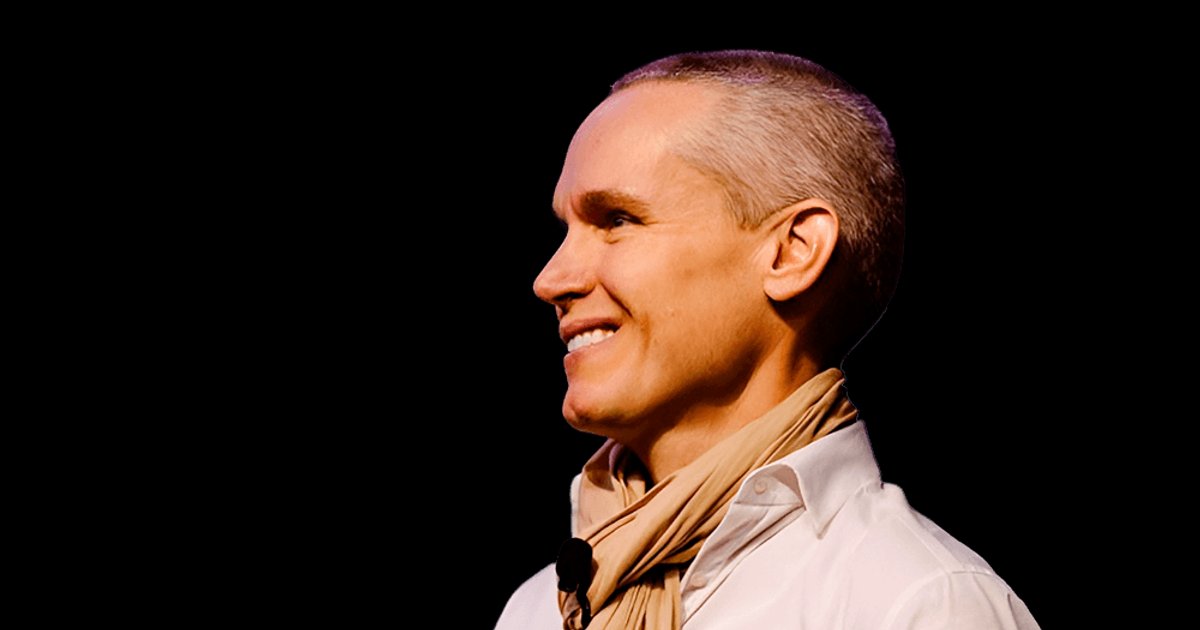
    Julien Moutte, Chief Technology Officer at Bentley Systems, explains how artificial intelligence is transforming infrastructure engineering by augmenting human expertise rather than replacing it. In an exclusive interview, Moutte details how AI agents are helping engineers work faster, smarter, and more collaboratively on complex projects like Crossrail and Heathrow Airport expansions.

    AI as a Force Multiplier for Civil Engineering

    With a growing global demand for infrastructure driven by climate change, population growth, and geopolitical instability, the shortage of civil engineers is becoming critical. Moutte argues that AI can serve as a “force multiplier,” enabling fewer engineers to achieve more, faster, and to higher standards.

    Collaboration at Scale with Common Data Environments

    Bentley Systems’ software underpins major projects worldwide, including London’s Crossrail (now the Elizabeth line). The company’s common data environment allows multiple engineering firms to share 3D models, drawings, and data in a single platform. AI agents now extend this capability by automatically running quality validations, detecting inconsistencies, and flagging issues before they escalate.

    Smarter Scheduling at Heathrow

    At Heathrow Airport, Bentley’s SYNCHRO+ software uses AI to optimize construction scheduling. The system automatically assigns tasks in logical order and recalculates programs in real time when conditions change, factoring in variables like weather forecasts that affect concrete pouring.

    Giving AI an Engineering License

    Moutte emphasizes that AI outputs must be validated by proven engineering tools. Bentley’s approach pairs AI agents with established structural analysis software, ensuring that AI-generated designs meet professional standards. Engineers remain accountable for final designs, with AI acting as a capable assistant.

    AI as Orchestrator

    Bentley’s portfolio spans structural analysis, geotechnical modeling, and evacuation simulations. AI agents can draw on all these domains simultaneously, running checks across multiple engineering disciplines. This allows engineers to focus on high-level decisions while AI handles routine tasks like technical drawing annotations, which can consume 30-50% of project time.

    Open Standards for Long-Term Accessibility

    Moutte advocates for open standards, open APIs, and open source to ensure infrastructure data remains accessible for decades. He argues that governments should mandate open approaches for publicly funded projects, enabling future generations to understand and maintain today’s designs.

    The Engineer of the Future

    As AI takes on more routine work, Moutte sees civil engineers becoming orchestrators who manage teams of AI agents while retaining decision-making authority. This shift allows engineers to focus on more meaningful and rewarding work, applying human intelligence to critical infrastructure decisions.


  • AI Industry Leaders Share Insights on Strategy, Agents, and Transformation

    AI Industry Leaders Share Insights on Strategy, Agents, and Transformation

    Artificial intelligence continues to reshape industries, and a recent round of interviews with top AI executives reveals the key trends driving adoption. From infrastructure engineering to automotive manufacturing and energy management, leaders from Bentley Systems, Schneider Electric, Stellantis, and more shared their perspectives on how AI is being deployed responsibly and at scale.

    Julien Moutte, Bentley Systems

    Julien Moutte, CTO at Bentley Systems, discussed how AI agents are transforming infrastructure engineering. He emphasized that these tools augment engineers rather than replace them, enabling faster and more accurate design and analysis.

    Philippe Rambach, Schneider Electric

    Philippe Rambach, Chief AI Officer at Schneider Electric, highlighted the importance of critical thinking and a business-first approach when scaling AI across factories. He stressed that technology must align with operational goals to deliver real impact.

    Kaynaz Behdin, Stellantis

    Kaynaz Behdin, SVP of Digital, Data & AI at Stellantis, detailed how the automotive giant turns AI strategy into measurable business performance, focusing on data-driven decision-making across the enterprise.

    Johnson Agogbua, Kasi Cloud

    Johnson Agogbua, co-founder and CEO of Kasi Cloud, shared his vision for bringing hyperscale, AI-ready data centers to Africa, leveraging his three decades of experience building internet infrastructure.

    Emilio Tenuta, Ecolab

    Emilio Tenuta, SVP and Chief Sustainability Officer at Ecolab, discussed water resilience and AI-driven cooling, noting that data centers must rethink resource strategy to meet sustainability goals.

    Sunil Dadlani, Atlantic Health

    Sunil Dadlani, EVP at Atlantic Health, explained how putting human mission at the heart of AI innovation is redefining healthcare technology and improving patient outcomes.

    Moe Haidar, Nexthink

    Moe Haidar, Head of Agentic AI and Engineering at Nexthink, spoke about his passion for products and the breakneck speed of AI development, particularly in the agentic AI space.

    Ivana Bartoletti, Wipro

    Ivana Bartoletti, VP and Global Chief Privacy & AI Governance Officer at Wipro, detailed the foundational steps every organization must take to build trustworthy AI systems, emphasizing governance and ethics.

    Sasha Rubel, AWS

    Sasha Rubel, Head of AI Policy for EMEA at AWS, highlighted the urgent need for Europe to move from AI experimentation to large-scale transformation, addressing policy and innovation challenges.

    These interviews underscore a common theme: AI is not just about technology—it’s about strategy, governance, and human-centric implementation. As organizations across sectors embrace AI, the insights from these leaders offer a roadmap for responsible and effective adoption.

  • AWS Chief Matt Garman Says AI Will Reshape Jobs, Not Erase Them

    AWS Chief Matt Garman Says AI Will Reshape Jobs, Not Erase Them

    AWS CEO Matt Garman has pushed back against fears that artificial intelligence will lead to widespread job displacement, arguing instead that AI will transform white-collar roles and create new opportunities. In a recent appearance on the Platformer podcast, Garman said that while half of all white-collar jobs “may change” due to AI, that does not mean they will disappear.

    Drawing a historical parallel, Garman compared AI’s impact to the introduction of Microsoft Excel. “Wipe out and change are different,” he explained. “The key thing is not to look at a still picture of the world and say that job’s not going to exist. New jobs will be created.”

    Garman emphasized that entry-level employees remain highly valuable. “They come in with an energy and excitement, a new view on things,” he said. Amazon plans to hire more than 11,000 software development engineering interns and early-career engineers globally in 2026, underscoring its commitment to nurturing new talent.

    According to Garman, adaptability will become more important than specific technical skills. “I actually think one of the things we start to look for in employees is not what skill set you have, but whether you have the ability to learn,” he stated.

    Amazon continues to invest heavily in AI, with AWS generating roughly $130 billion in annual revenue. The company is developing AI-powered tools for coding, security, productivity, and recruitment, signaling that the transformation Garman describes is already underway.

  • Top AI Stories This Week: Anthropic Halts Claude, SpaceX Acquires Cursor, Meta Admits Mistakes

    Top AI Stories This Week: Anthropic Halts Claude, SpaceX Acquires Cursor, Meta Admits Mistakes

    Anthropic Disables Claude Models After US Export Control Order

    Anthropic recently launched Claude Fable 5, touted as the world’s most powerful cybersecurity model. However, just days after its release on June 9, the US government issued a sudden export control order over concerns that the model’s automated hacking capabilities were evading regulatory boundaries. Both Mythos 5 and Fable 5, the two variants of Anthropic’s advanced AI tier, were affected. While Mythos 5 remains restricted for government use under Project Glasswing, the public-facing Fable 5 was recalled on June 12, leaving users and developers questioning the balance between AI power and safety.

    SpaceX to Acquire Cursor Developer Anysphere for $60 Billion

    Following its blockbuster Nasdaq debut, SpaceX is making a bold move into enterprise AI by acquiring Anysphere, the company behind the popular AI coding agent Cursor. The deal, valued at $60 billion in SpaceX shares, is expected to close by September 2026. This acquisition comes shortly after SpaceX’s IPO, which valued the company at over $2 trillion and propelled it past Amazon to become the world’s fifth-largest company by market cap. The move signals SpaceX’s ambition to integrate cutting-edge AI tools into its operations.

    Meta CEO Acknowledges Mistakes in AI Restructure

    Meta CEO Mark Zuckerberg has admitted to internal missteps during the company’s aggressive reorganization toward an AI-native structure. In a company memo, he acknowledged the friction caused by rapid changes and consecutive layoffs, but assured employees that no more company-wide layoffs are expected this year. Meta has invested billions in AI technology to optimize operations, mirroring industry trends, but the speed of transformation has created unprecedented challenges. Zuckerberg emphasized his focus on providing stability while acknowledging that mistakes were made and more may follow.

    AMD Partners with Imperial College London to Boost UK AI Research

    AMD has formed a partnership with Imperial College London to advance AI research infrastructure and computational capacity in the UK. The collaboration will combine AMD’s computing platforms with Imperial’s research strengths in scientific and healthcare disciplines. Key focus areas include AI model development, sovereign computing infrastructure, and talent programs. AMD will provide access to its accelerated computing systems and ROCm open software platform, enabling researchers to optimize AI models for engineering design, multi-physics simulation, and materials discovery.

    Gartner: AI Servers Drive 26% Spike in Data Center Energy Consumption

    Global data center electricity consumption is projected to reach 565 TWh in 2026, a 26% increase from 447 TWh in 2025, according to Gartner. The surge is driven by compute-intensive AI workloads, and power availability is becoming a critical constraint for scaling AI capacity. Linglan Wang, Lead Economist at Gartner, warns that data center power security is now the new battleground for protecting margins in the global AI race.

  • Recent Breakthroughs from MIT Schwarzman College of Computing: AI, Robotics, and Beyond

    Recent Breakthroughs from MIT Schwarzman College of Computing: AI, Robotics, and Beyond

    The MIT Schwarzman College of Computing continues to drive innovation across artificial intelligence, robotics, quantum computing, and more. Here are some of the latest developments from MIT researchers and affiliates.

    LLMs Help Robots Understand Vague Instructions

    MIT researchers have developed a method using two language models: one to clarify user instructions and another to ignore irrelevant details, enabling robots to perform chores in homes and factories more effectively. (June 26, 2026)

    Exploring How Curiosity-Driven Science Fuels American Success

    Scientific American highlights the history and future of America’s scientific engine, featuring promising young scientists and icons at MIT and beyond. (June 25, 2026)

    Summer 2026 Recommended Reading from MIT

    Enjoy these recent titles from Institute faculty and staff. (June 25, 2026)

    Improving Speed and Energy-Efficiency of AI Agents

    A new system called Murakkab optimizes the design and deployment of multistep workflows that power AI applications. (June 25, 2026)

    Exploring the Societal Impacts of AI

    During the AI and Society Forum, leading MIT researchers examined critical questions about AI’s influence on employment and democracy. (June 23, 2026)

    New Chip Helps Tiny Robots Navigate Complex Environments

    Researchers combined an efficient algorithm with dedicated hardware to rapidly generate 3D maps for navigation using minimal memory and power. (June 23, 2026)

    QS Ranks MIT World’s No. 1 University for 2026-27

    Ranking at the top for the 15th consecutive year, the Institute also places first in 12 subject areas. (June 17, 2026)

    In Game Theory, Generalists Sometimes Win Out Over Specialists

    Researchers show that for certain kinds of games, an overlooked class of algorithms performs much better than expected. (June 17, 2026)

    Could AI Tell You Where You Left Your Keys?

    A new spatial memory system for robots efficiently captures details about the objects they see while exploring their environment. (June 17, 2026)

    The Tenured Engineers of 2026

    Ten faculty members have been granted tenure in five units across MIT’s School of Engineering. (June 15, 2026)

    How to Create Distinguishable States for Quantum Systems

    Researchers establish key insights for reading and writing information for quantum sensing, communication, computing, and control. (June 15, 2026)

    When It Comes to Predicting People’s Preferences, It Pays to Consider “The Power of Three”

    MIT researchers provide a major upgrade to the nearly century-old idea of random utility models. (June 11, 2026)

    MIT Affiliates Win 2026 Hertz Foundation Fellowships

    The fellowships in applied sciences, engineering, and mathematics recognize doctoral students pursuing solutions to pressing challenges. (June 11, 2026)

    To Study How Chips Really Work, MIT Researchers Built Their Own Operating System

    A new kernel called Fractal gives researchers a cleaner view of what’s happening inside a processor, and has already surfaced previously unknown behavior in Apple’s M1. (June 10, 2026)

    3D-Printed Devices Could Streamline Production of Drug-Delivery Microparticles

    The cost-effective devices, built in hours, leverage electrospray emitter technology to efficiently produce three-layered particles at scale. (June 9, 2026)

  • MIT School of Science News: Black Hole Echoes, Climate Adaptation, and More

    MIT School of Science News: Black Hole Echoes, Climate Adaptation, and More

    Listening for the Echoes of Black Holes

    Erin Kara employs X-ray reverberations and other astrophysical data to investigate the most extreme objects in the universe. Read full story

    MIT in the Media: Curiosity-Driven Science and National Success

    Scientific American highlights the role of curiosity-driven research in America’s achievements, showcasing young scientists and MIT icons. Read full story

    Summer 2026 Recommended Reading from MIT

    Explore recent titles authored by MIT faculty and staff for the summer reading list. Read full story

    When Environmental Change Outpaces Adaptation

    A new model links Earth’s mass extinctions to mismatches between the rate of environmental change and biological adaptation. Read full story

    Characterizing Earth’s Damping Mechanisms

    PhD candidate Perrin Davidson studies the carbon cycle to understand the planet’s response to global disturbances. Read full story

    Meet the Leader of the Biology Department’s Kitchen

    Karen O’Leary, lab associate and acting supervisor of the Glassware Sterilization Facility, has become a cornerstone of department operations. Read full story

    QS Ranks MIT World’s No. 1 University for 2026-27

    MIT tops the ranking for the 15th consecutive year and places first in 12 subject areas. Read full story

    Susan Solomon Named 2026 Tang Prize Laureate

    The MIT professor’s work on atmospheric chemistry helped pave the way for ozone layer recovery and highlighted carbon emission impacts. Read full story

    MIT Open Learning Reaches the South Pole

    John Della Costa uses OpenCourseWare to teach physics and build community among Antarctica winterovers. Read full story

    Harriet Having It All: A Career in Molecular Biology

    Harriet Latham Robinson SM ’61, PhD ’65 balanced a career at the forefront of molecular biology with family and adventure. Read full story

    MIT Affiliates Win 2026 Hertz Foundation Fellowships

    Fellowships support doctoral students tackling pressing challenges in science, engineering, and mathematics. Read full story

    Would You Return a Favor? It Depends on the Relationship

    A study shows people expect reciprocal generosity only with friends or those of equal social status. Read full story

    Advancing Stem Cell Research and Building the Next Generation

    Biology PhD student Giselle Valdes studies stem cell regeneration while mentoring aspiring researchers. Read full story

    Myriam Heiman Named Director of Picower Institute

    Heiman, who studies neurodegenerative diseases, will lead the institute starting July 1. Read full story

    Pablo Jarillo-Herrillo Wins Kavli Prize in Nanoscience

    The MIT physicist shares the honor for foundational research establishing twistronics. Read full story

    For more news, visit the MIT School of Science news page.

  • MIT Sloan School of Management: Latest Research, News, and Insights

    MIT Sloan School of Management: Latest Research, News, and Insights

    The MIT Sloan School of Management continues to drive forward-thinking research and education, as highlighted by recent news from the Massachusetts Institute of Technology. From energy efficiency in data centers to the societal impacts of artificial intelligence, MIT Sloan is at the forefront of management science and innovation.

    How Data Centers Can Better Manage Energy Use

    A new study from MIT Sloan suggests that flexibility in the timing of electricity consumption could lower consumer costs. The research emphasizes the potential for data centers to adjust their energy usage patterns, reducing strain on the grid and saving money.

    Exploring the Societal Impacts of AI

    During the AI and Society Forum, leading MIT researchers examined critical questions about AI’s influence on employment and democracy. The event brought together experts to discuss ethical considerations and the future of work in an AI-driven world.

    The Ripple Effect of Learning at MIT

    MIT Professional Education helped Ignacio Vazquez SM ’22 bridge technical mastery and strategic insight, leading to his role as MIT System Design and Management industry and certificate director. This story highlights the transformative power of MIT’s educational programs.

    QS Ranks MIT the World’s No. 1 University for 2026-27

    Ranking at the top for the 15th year in a row, the Institute also places first in 12 subject areas. This achievement underscores MIT’s continued excellence in research and education across disciplines.

    MIT’s Initiative for New Manufacturing Builds Momentum

    In its first year, INM has worked across research, workforce development, and industry engagement to help accelerate new manufacturing technologies and their real-world deployment.

    The Consequences of Relying on AI for Accurate News

    A Media Lab study shows that, much like how GPS has weakened our navigation skills, AI can make us worse at detecting fake news. This research raises important questions about the role of AI in information consumption.

    The Crucial Human Component in Computing and AI

    The MIT Ethics of Computing Research Symposium brought together experts and researchers working at the heart of ethical and social impact in technology.

    PATH to Boost AI Training and Career Opportunities

    MIT RAISE and Georgia State University announce an initiative to connect universities, community colleges, industry, and government to expand industry-aligned AI training and career pathways.

    Eleven from MIT Accept 2026 Fulbright Awards

    This year, over half of MIT’s Fulbright applicants won awards. The current students and alumni will embark on research projects and teaching abroad in 2026-27.

    A Day in the Life of MIT Sloan Fellow Alecia Asiamigbe

    The MBA student and entrepreneur is learning to lead a more resilient future with her renewable energy company.

    MIT Affiliates Elected to National Academy of Sciences for 2026

    Six MIT faculty, along with 10 additional alumni, are recognized by their peers for their outstanding contributions to research in the natural and social sciences.

    MIT Asia Real Estate Initiative Expands Its Footprint

    The initiative plans to engage industry leaders and MIT alumni with hubs in Tokyo, Dubai, and Hong Kong.

    A Day in the Life of MIT MBA Student Patrick Yeung

    MIT Sloan’s Sustainability Initiative provides opportunities to lead in ways that will help build a more sustainable future.

  • MIT School of Humanities, Arts, and Social Sciences: Latest News and Research Highlights

    MIT School of Humanities, Arts, and Social Sciences: Latest News and Research Highlights

    The MIT School of Humanities, Arts, and Social Sciences (SHASS) continues to drive interdisciplinary research and education, with recent stories highlighting faculty appointments, groundbreaking studies, and community engagement. Below is a roundup of notable updates from the school.

    Faculty and Leadership

    David Autor, a leading researcher in artificial intelligence and the future of work, has been named head of the Department of Economics. A faculty member since 1999, Autor’s work has shaped policy debates on automation and labor markets.

    Research and Innovation

    In Ghana, new research reveals how semi-communal ‘compound houses’ influence political participation, demonstrating architecture’s impact on civic engagement. Meanwhile, MIT’s AI and Society Forum explored the societal impacts of AI on employment and democracy, bringing together top researchers to address critical questions.

    PhD student Chelsea Mitchell studies the economic forces shaping shipping ports, crucial for global supply chains. Thomas Levenson’s new book traces the long history of vaccine hesitancy, offering context for current public health debates. Innovative projects funded by MIT’s Climate Project are tackling extreme heat with low-cost cooling and emissions-free air conditioning.

    Community and Global Reach

    MIT Open Learning reaches the South Pole, where John Della Costa uses OpenCourseWare to engage fellow Antarctica ‘winterovers’ in physics and build community. The MIT Ethics of Computing Research Symposium highlighted the human component in computing and AI. Professor Sonya Atalay, a leader in community-based archaeology, links local knowledge with academic inquiry globally.

    A new study shows that a locally adjusted policy with tradeable offsets and taxes can preserve wetlands without halting development. The Living Climate Futures Symposium explored community-level climate challenges and solutions. Eleven MIT affiliates accepted 2026 Fulbright awards for research and teaching abroad.

    Rankings and Recognition

    QS ranked MIT the world’s No. 1 university for the 15th consecutive year, placing first in 12 subject areas. The Institute also featured in Scientific American for its role in curiosity-driven science.

    For more stories, visit the MIT News SHASS page.

  • MIT School of Engineering: Latest Research and Innovations (June 2026)

    MIT School of Engineering: Latest Research and Innovations (June 2026)

    The MIT School of Engineering continues to drive breakthroughs across multiple disciplines. Recent highlights include a hands-on photonics boot camp at MIT.nano for community college students, new AI systems that help robots interpret vague instructions, and a chip design that enables tiny robots to navigate complex environments with minimal power. Researchers have also developed a computer model for more material-efficient bridges and buildings, and a new approach to modeling metal alloys at the atomic level. In game theory, generalists have been shown to outperform specialists in certain scenarios. The Institute was ranked the world’s No. 1 university by QS for the 15th consecutive year, and MIT’s Initiative for New Manufacturing is gaining momentum. Ten engineering faculty members were granted tenure in 2026. These stories reflect the breadth and impact of engineering research at MIT.

  • Best Gaming Headsets Under Rs. 5,000: Top 10 Budget Picks for 2026

    Best Gaming Headsets Under Rs. 5,000: Top 10 Budget Picks for 2026

    A good gaming headset is no longer a luxury. Today, even budget models can deliver clear sound, a decent microphone, and enough comfort for hours of gaming. Whether you’re playing fast-paced shooters, story-driven adventures, or simply chatting with friends online, the right headset can make every session more enjoyable.

    In every game, at one point, sound matters more than visuals. A distant footstep, a teammate’s callout, or the sound of an approaching vehicle can completely change the outcome of a match. That’s where a good gaming headset makes all the difference.

    However, you don’t have to spend a fortune to get a good headset. Renowned brands, including JBL, Sony, ASUS, and Cosmic Byte, now offer budget-friendly gaming headsets with clear audio, comfortable ear cushions, and reliable microphones. If the selection process seems confusing, don’t worry, we have sorted it out for you.

    Our team has compared the most popular models from different brands based on comfort, sound quality, price, and user feedback. Below are the ones that we have found worth recommending to hardcore and casual gamers within Rs. 5,000.

    Top Gaming Headsets Under Rs. 5,000 Compared

    Whether you are playing an RPG or fighting enemies in a battle royale, a good gaming headset can help you avoid the trickiest moments. So, here are the models that come within Rs. 5,000, but offer premium features:

    • Razer BlackShark V2 X – Best overall for competitive gaming
    • HyperX Cloud Stinger 2 Core – Most comfortable for long sessions
    • Sony INZONE H3 – Premium audio and build
    • JBL Quantum 100 – Best budget pick
    • ASUS TUF Gaming H3 – Durable and reliable
    • Cosmic Byte GS410 – Great value with RGB lighting
    • Cooler Master MH630 – Balanced sound and comfort
    • Logitech G335 – Lightweight and colorful
    • SteelSeries Arctis 1 – Versatile for multi-platform
    • Corsair HS35 – Solid entry-level choice

    Which Gaming Headsets Would I Recommend?

    Now, if I have to recommend a model from my experience, I would pick Razer BlackShark V2 X. This headset gets almost everything right. The sound is detailed, the microphone is clear, and the headset stays comfortable even after long gaming sessions. For gamers like me who play FPS games most of the time, this headset is one of the best options.

    My second pick would be HyperX Cloud Stinger 2 Core. What’s great about this model? Well, its comfort level is extraordinarily soothing. The headphone is light, fits well in the ears, and even if you play for hours, it won’t feel heavy even for a moment. The sound quality is also balanced.

    The third and final option that I would recommend is the Sony INZONE H3. Sony’s renown is undeniable, and the headphone proves it again. Though the models sit at a slightly higher price range, the overall experience feels more premium. The audio is rich, the ear cushions are soft, and it is a headset I wouldn’t mind wearing for several hours.

    Now, those on a tight budget can easily consider the JBL Quantum 100. Based on my testing experience, this doesn’t have the premium features of the previous ones I mentioned, but it offers much more than the price suggests.

    Final Thoughts

    A gaming headset can change the way we enjoy games. Better sound quality helps gamers notice even the slightest sounds coming from afar. Additionally, in multiplayer games, they help team communication.

    However, spending on random ones doesn’t offer any of the perks you want from the device. Thus, before buying, think about what matters most to you. If you play for hours every day, comfort should be your top priority. If you enjoy competitive games, look for better sound positioning and a clear microphone. Ultimately, if you simply want a reliable headset without spending too much, there are plenty of good choices under Rs. 5,000.

    FAQs

    1. Which is the best gaming headset under Rs. 5,000?
      Ans: The Razer BlackShark V2 X is one of the strongest choices in this price range. It offers excellent sound, a comfortable fit, and a clear microphone.
    2. Are wireless gaming headsets good for gaming?
      Ans: Yes. Wireless models with low-latency connections provide smooth audio and freedom of movement.
    3. What should I look for before buying a gaming headset?
      Ans: Focus on sound quality, microphone performance, comfort, and compatibility with your gaming device.
    4. Can I use a gaming headset for music and movies?
      Ans: Absolutely. Most gaming headsets work well for music, movies, and video calls.
    5. Which gaming headset is the most comfortable for long sessions?
      Ans: The HyperX Cloud Stinger 2 Core is among the most comfortable options under Rs. 5,000.