Author: vitorcherulli

  • From IIT to AI Search: The Unconventional Rise of Perplexity’s Aravind Srinivas

    From IIT to AI Search: The Unconventional Rise of Perplexity’s Aravind Srinivas

    In early 2025, Perplexity entered India through a major partnership with Bharti Airtel, giving millions of users access to Perplexity Pro almost overnight. On the surface, it looked like another telecom-AI announcement. Inside the technology industry, however, the deal carried a different meaning.

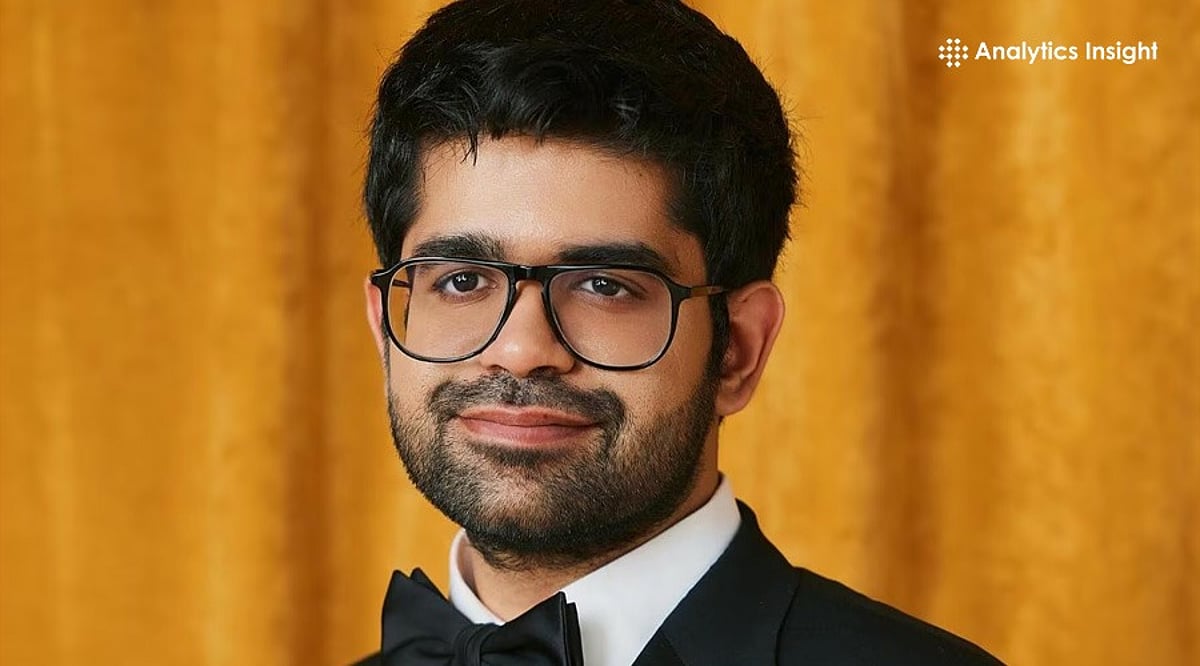
    A startup founded in 2022 was now entering India at a massive scale while positioning itself as an alternative to Google’s dominance in online search. Leading that company was Aravind Srinivas, a Chennai-born engineer who joined IIT Madras in electrical engineering and was unable to transfer into computer science after narrowly missing the required GPA cutoff.

    Perplexity’s rise has been unusually fast, even by Silicon Valley standards. According to reports citing investor discussions, the company reached multi-billion-dollar valuations within roughly two years of launch as investors rushed toward generative AI startups. At the same time, the company has faced growing scrutiny over attribution, scraping practices, and the legal boundaries surrounding AI-generated information products.

    What makes Aravind Srinivas’s story compelling is how imperfect and unpredictable it feels. His journey has been shaped by ambition, self-doubt, deep focus on research, strong product instinct, and constant public scrutiny, rather than a smooth path to success. Srinivas grew up in Chennai in a family where academic achievement was highly valued.

    In a conversation on the Lex Fridman Podcast, he spoke about the culture surrounding IIT admissions and the pressure attached to engineering entrance exams in India. By the time he entered the country’s competitive coaching ecosystem, academic performance had already become central to his life. That unexpected shift changed the direction of his learning.

    Instead of depending entirely on departmental coursework, he began teaching himself programming outside the classroom. He learned Python independently, enrolled in machine learning coursework available outside his department, and became involved in AI research under Professor Balaraman Ravindran.

    While still an undergraduate, Srinivas contributed to research connected to major AI conferences, including NeurIPS, AAAI, and ICLR. The experience exposed him early to deep learning research during a period when modern AI systems were still largely confined to academic labs rather than mainstream products. By the end of his undergraduate years, Srinivas had already moved across mathematics, coding, AI research, and systems thinking. The combination would later become central to his work in AI.

    He started pursuing his PhD in computer science at the University of California in 2017, where he worked on machine learning systems, generative models, and transformer-related research. Between 2019 and 2021, he interned at OpenAI, DeepMind, and Google Brain during the period just before large language models entered mainstream public attention. Those experiences became some of the most defining moments of his career.

    In podcast interviews, Srinivas said that when he entered environments filled with highly skilled engineers and researchers, he realized that he needed to improve his programming skills and ability to solve problems from the basics. He described the experience as motivating rather than discouraging.

    Instead of retreating from the field, he immersed himself more deeply in large language models and scaling systems research. The tone of those interviews felt very different from the polished image often associated with Silicon Valley founders. In those interviews, Srinivas spoke less about confidence and more about aggressively closing gaps in his own knowledge.

    In 2022, Aravind Srinivas co-founded Perplexity with Denis Yarats and Johnny Ho. Computer scientist Andy Konwinski also became an early supporter and close collaborator. The timing was important. Interest in generative AI was growing quickly, but internet search still mostly worked the same way it had for years, with users typing keywords and receiving pages of links.

    Perplexity tried to simplify that experience. Rather than functioning as a traditional search engine, the company positioned itself as an answer engine that used large language models (LLMs) to generate conversational responses while retrieving information from live web sources.

    Citations became an important part of Perplexity’s identity since many AI products were already facing criticism for hallucinations, where systems generate false or unsupported information. To separate itself from competitors, Perplexity designed its interface to display source links alongside AI-generated answers.

    Perplexity grew quickly as millions of users started using it for research, summaries, coding help, and everyday questions. Its partnership with Bharti Airtel later showed that the company’s strategy was not only focused on improving research quality but also on reaching more users through wider accessibility, especially in markets where smartphone usage was growing faster than traditional desktop search habits.

    But Perplexity’s rapid rise also brought intense criticism. In 2024, Forbes and WIRED reported that Perplexity had plagiarized paywalled content without giving enough credit to the original publishers. The Verge separately reported concerns around scraping practices that appeared to bypass publisher-set restrictions such as robots.txt preferences.

    Some publishers responded with legal threats, arguing that AI-generated summaries could reduce the value of original journalism. The issue soon grew into a larger debate about copyright, fair compensation, and the future of online publishing in the AI era.

    In posts published on X during mid-2024, Srinivas acknowledged shortcomings in Perplexity’s early attribution systems and said the company was working on improving citation visibility and publisher relationships.

    At the same time, he defended AI-powered search as an inevitable shift in how people would consume information online. That tension now sits at the center of Perplexity’s identity. The company is simultaneously viewed as one of the most promising consumer AI startups and one of the clearest examples of the unresolved conflicts shaping the modern AI industry.

    Aravind Srinivas’s rise from IIT classrooms to the center of Silicon Valley’s AI race does not offer a simple formula for success. His journey shows that the AI industry now values people who can quickly combine research, engineering, and product thinking, even without following a traditional career path.

  • Why India’s Next Startup Wave Is Hidden in Supply Chains: Piper Serica’s Ajay Modi on Deeptech Investing

    Why India’s Next Startup Wave Is Hidden in Supply Chains: Piper Serica’s Ajay Modi on Deeptech Investing

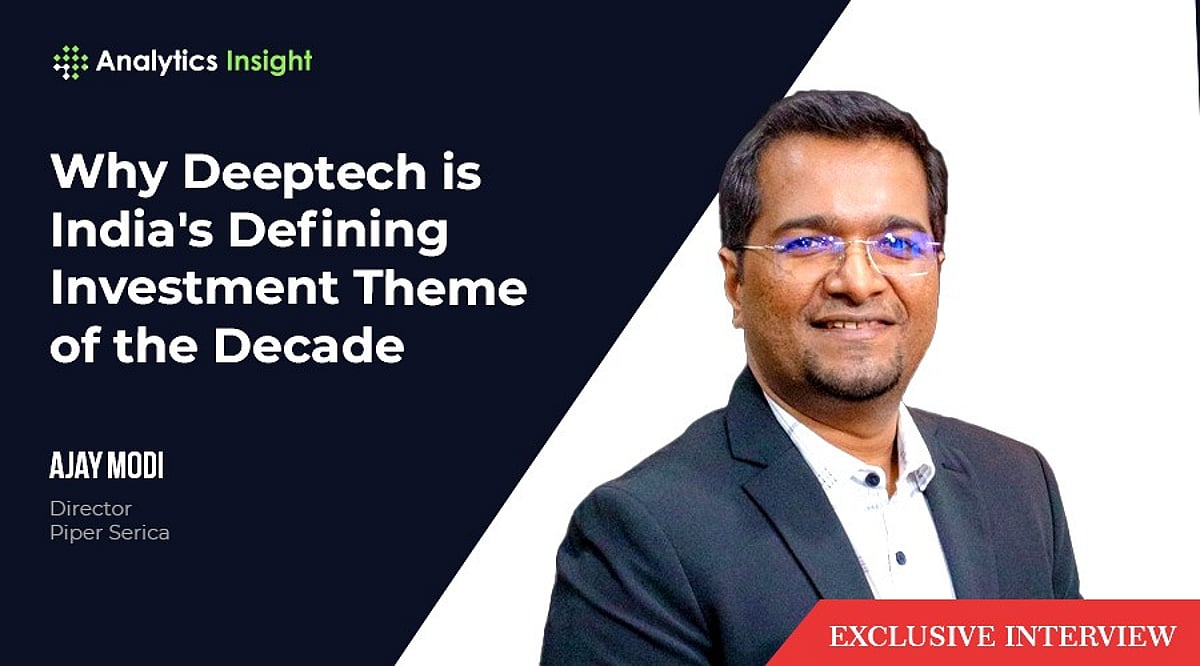
    India’s venture capital story is being rewritten. The capital that once chased consumer internet growth at any cost is now flowing toward deep engineering, sovereign technology, and industrial capability. Ajay Modi, Director at Piper Serica, has been at the center of this shift. His firm’s portfolio spans laser space communication, edge AI chips, underwater robotics, airport operating systems, and India’s first resonance-based rocket ignition system.

    In this exclusive conversation with Analytics Insight, Modi breaks down why deeptech has become the defining investment theme of India’s next economic cycle and what it takes to build companies that matter inside strategic industries.

    How Venture Capital Priorities Are Evolving in India

    Indian tech startups raised about $7.4 billion in 2024, up 23 percent from 2023, with deeptech alone drawing around $1.6 billion and growing roughly 78 percent in a year. Nasscom and Zinnov now count more than 4,000 deeptech startups within a base of 32,000–35,000 tech ventures.

    Piper Serica’s Fund I has backed over 33 companies across deeptech, spacetech, defence, semiconductors, fintech infrastructure, and mobility. Newer deals concentrate in IP-led hardware, firmware, and system software. First founder meetings now open with orbit plans, chip architectures, or reliability data—not only GMV charts.

    This shift follows a reset after the 2020–2021 liquidity cycle, when capital largely chased consumer internet businesses that scaled fast on subsidies and marketing. Investors saw that scale without defensible capability created fragile companies once acquisition costs rose and capital tightened. Deeptech has become a clear winner from this correction.

    What Drives Interest in Spacetech, Semiconductors, Robotics, Defence, and Precision Manufacturing?

    Investor interest in these sectors rises where three lines meet: national policy support, large end demand, and a rewiring of global supply chains. India’s space economy stands near $8–8.5 billion and targets $40–45 billion by the early 2030s. More than 400 space startups have attracted over $500 million. In semiconductors and electronics, the Semicon India and component PLI stack targets around $300 billion of electronics output with deeper local value addition.

    On the talent side, founders now come from ISRO, DRDO, global chip companies, and top IIT labs. Piper Serica’s portfolio reflects this mix across spacetech, chip design, mobility electronics, cyber security, and industrial software.

    How India’s Manufacturing and Self-Reliance Push Shapes VC Decisions

    Electronics output in India has grown from about $10 billion in 2014 to roughly $115 billion today. Local factories now meet close to $110 billion of the $140 billion of domestic demand. Programmes like iDEX and IN-SPACe’s Technology Adoption Fund lower early revenue risk and lengthen runway for hardware and industrial companies.

    Piper Serica now treats such programs almost like demand pipelines. For venture investors, capital is shifting from funding user acquisition to funding companies that can become long-term infrastructure layers inside strategic industries.

    Opportunities in Aviation, Infrastructure, Electronics Systems, and Advanced Industrial Tech

    The next three to five years can be India’s most important industrial buildout in decades. In aviation, real value will sit in software and airport tech. At Chennai airport, Piper Serica’s portfolio company Blunav cut runway occupancy time by 22 percent across more than 3,500 flights. Electronics systems offer a second wave, while robotics, industrial AI, and autonomous inspection represent a third wave. The most valuable companies may be those hidden inside supply chains, compounding quietly through efficiency.

    How Evaluation Frameworks Differ for Industrial and Deeptech vs. Consumer

    Consumer investing focuses on speed and metrics like CAC, retention, and growth rate. Tech investing is engineering-led—investors test whether the core system works, is defensible, and runs reliably in demanding real-world settings. Diligence goes into IP strength, field reliability, manufacturing repeatability, regulatory paths, certifications, and integration risk. Timelines differ: consumer products can ship in weeks; deeptech teams may spend years hardening hardware and software. Competitive moats come from engineering depth and long contracts embedded inside customer operations.

    Technology Depth and Industrial Relevance Over Scale-Focused Growth

    India’s “easy growth” phase is over. Profitability, resilience, and defensibility sit at the centre of investment debates. Thrustworks Dynetics, a Piper Serica portfolio company, test-fired India’s first resonance-based rocket ignition system with only about ₹7 crore of seed funding—a sharp example of deep hardware success. Scale still matters, but the most sought-after companies now pair scale with hard engineering, proprietary systems, and real industrial relevance.

  • Kasi Cloud’s Johnson Agogbua on Building Hyperscale AI-Ready Data Centers Across Africa

    Kasi Cloud’s Johnson Agogbua on Building Hyperscale AI-Ready Data Centers Across Africa

    Johnson Agogbua, Co-Founder and CEO of Kasi Cloud, has spent over three decades building internet infrastructure—from early internet protocols at UUNET Technologies to optical networking at Movaz and connecting billions at Meta and Reliance Jio. Now, he is applying that expertise to address Africa’s most critical infrastructure gap: hyperscale, AI-ready data centers.

    Founded with Mark Adams (formerly Chief Strategy Officer at Equinix), Kasi Cloud emerged from a simple question: why not Africa? The company launched in early 2020 amid the pandemic, which ironically allowed for deep market research and site selection. It acquired 4.2 hectares in Lagos, secured backing from the Nigerian Sovereign Wealth Fund and seed funding from DH Capital, and broke ground by 2022.

    Kasi differentiates itself with an “unstoppable capacity” philosophy—designing for Africa’s digital needs a decade ahead. This includes refactoring power architecture all the way to the rack level and building redundant carrier-neutral colocation space. A key partnership with Eaton cut delivery times by 50% and reimagined power for the African context. “We are not going to build a second-rate data centre in Africa,” Agogbua emphasizes. “World-class belongs in Africa as well.”

    The company’s hyperscale-first approach is a direct answer to the continent’s growing demand for cloud and AI infrastructure, positioning Kasi as a critical player in Africa’s digital transformation.

  • Kasi Cloud CEO Johnson Agogbua on Building Hyperscale AI-Ready Data Centers in Africa

    Kasi Cloud CEO Johnson Agogbua on Building Hyperscale AI-Ready Data Centers in Africa

    Johnson Agogbua, co-founder and CEO of Kasi Cloud, is leveraging three decades of internet infrastructure expertise to bring hyperscale, AI-ready data centers to Africa. In an exclusive interview, Agogbua details how his experience at UUNET Technologies, Movaz (now ADVA), Meta, and Reliance Jio has shaped Kasi Cloud’s mission to close Africa’s digital infrastructure gap.

    Founded with Mark Adams, former Chief Strategy Officer at Equinix, Kasi Cloud emerged from the simple question: why not Africa? The company formally launched in early 2020, just as the pandemic hit. Rather than stalling progress, COVID-19 allowed Agogbua to conduct deep market research while grounded in Nigeria. Kasi acquired 4.2 hectares in Lagos, secured backing from the Nigerian Sovereign Wealth Fund and seed funding from DH Capital (now Citizens Bank), and broke ground in 2022.

    Kasi Cloud differentiates itself through what Agogbua calls “unstoppable capacity”—a hyperscale-first design that anticipates Africa’s digital demands a decade ahead. The company redesigned data center power architecture from utility to rack level, partnering with global power management firm Eaton to cut delivery timelines by 50%. Kasi also built redundant carrier-neutral colocation space, with one visiting network CEO noting it was larger than any existing data center in Lagos.

    “We didn’t set out to be a data center company alone,” Agogbua explains. “We set out to solve problems… We imagined a world where the population says, ‘We are truly digital.’” He emphasizes that Kasi will not use hand-me-down technology: “World-class belongs in Africa as well.”

    The interview underscores a pivotal moment for AI and cloud infrastructure on the continent, with Kasi Cloud positioned to address an urgent need for scalable, AI-ready digital platforms.

  • Schneider Electric CAIO Philippe Rambach on Scaling AI with a Business-First Strategy and Critical Thinking

    Schneider Electric CAIO Philippe Rambach on Scaling AI with a Business-First Strategy and Critical Thinking

    In a wide-ranging interview, Philippe Rambach, Chief Artificial Intelligence Officer at Schneider Electric, shares how the global energy management and automation company is scaling AI across more than 160 factories and 140 countries. The key, he explains, is a disciplined business-first approach that prioritizes real-world value over technological novelty.

    Business Value Over Technology

    Rambach warns against “technology tourism”—the temptation to run hundreds of pilots without a clear business case. Instead, Schneider Electric starts by identifying a specific business impact, then asks if AI can help. Each use case passes through gate reviews that test both technical feasibility and business value. Projects are halted immediately if either criterion fails.

    “We do a pilot that keeps in mind what we want to deliver at scale,” Rambach notes. This rigor prevents “pilot purgatory” and ensures that lab successes translate to real factory results.

    Agentic AI and the Sera Assistant

    Schneider recently launched Sera, an AI agent that transforms how users interact with environmental data. However, Rambach cautions against overhyping generative AI. “Generative AI agents do not replace forecasting, anomaly detection, prediction or optimisation—we still need that,” he asserts. Sera adds a conversational layer, allowing operators to ask complex questions in natural language, moving beyond rigid dashboards.

    Critical Thinking as a Core Skill

    To counter blind faith in AI outputs, Schneider has introduced an “AI for All” training program with the same institutional rigor as safety training. The centerpiece is critical thinking. “We want people to keep critical thinking when AI gives an answer,” Rambach says, acknowledging that AI can be wrong or partially wrong. The company also hosts “promptathons” and a virtual “Genius Bar” for employees to share prompting strategies.

    Edge vs. Cloud: A Matter of Physics and Policy

    Deciding where to run AI depends on data sovereignty and latency. In industrial settings, sensitive data often must stay local, and real-time applications like visual inspection require edge processing for speed. Schneider’s solutions are designed to be versatile enough for both environments.

    Addressing the Energy Density Crisis

    Schneider Electric, which builds data center infrastructure, is acutely aware that AI training consumes vast energy. Rambach notes the irony: AI is part of the solution. The company uses AI to optimize power management for its own factories and partners like NVIDIA to precisely manage energy in AI factories. He also advocates treating AI as an “unreliable component,” building reliable systems with human-in-the-loop checks, as in customer care where AI drafts responses but humans verify them.

    Navigating Regulation and Ethics

    Operating under the EU AI Act, Schneider has published an external Trust Charter that explicitly bans facial recognition. Rambach says compliance with the Act does not slow the company down. The ethical framework is backed by a dedicated responsible AI team within the AI Hub.

    The Future of the CAIO Role

    Rambach admits he is “very scared of becoming the bottleneck” as AI becomes pervasive. He sees the CAIO role evolving toward defining technical policy and supporting large, bespoke use cases. His overarching message is to not forget centuries of human wisdom: “My big message is we should not forget everything we have learned in the last 2,000 years, just because there’s a new technique.”

    For industrial giants, AI is not a replacement for human engineering but its most powerful tool—and mastering it lies in the critical mind of the user.

  • Stellantis AI Chief Kaynaz Behdin on Industrializing Enterprise AI for Measurable Business Impact

    Stellantis AI Chief Kaynaz Behdin on Industrializing Enterprise AI for Measurable Business Impact

    Kaynaz Behdin, Senior Vice President of Digital, Data & AI at Stellantis, is redefining how the automotive giant approaches artificial intelligence. In a recent interview, Behdin emphasized that her focus is not on experimentation but on building AI as a disciplined enterprise capability that drives customer satisfaction, value creation, operational performance, and speed.

    Stellantis, the multinational automaker behind brands like Jeep, Peugeot, Fiat, and Vauxhall, operates a distributed global environment. Behdin’s strategy relies on a three-layer operating model: translating leadership priorities into a single execution framework, embedding AI and Data Business Hubs directly into functions, and providing global platforms and shared talent pools to industrialize delivery.

    AI is already applied across Stellantis’ full value chain, including sales conversion and retention, warranty and quality cost reduction, logistics efficiency, manufacturing uptime, and faster engineering cycles. Key criteria for prioritizing use cases include business ownership, scalability across plants and regions, and strict safety and compliance frameworks.

    Behdin identified the main barriers to AI adoption as organizational and human, not technological. To address this, Stellantis runs an AI Academy with persona-based training—from executive coaching to hands-on workshops—to embed AI literacy into daily work. She also highlighted the importance of governance as an accelerator, with risk assessment built across the data-to-AI lifecycle and observability tools tracking what agents and models do.

    Looking ahead, Behdin sees generative AI transforming in-vehicle experiences, engineering cycles, operations, and commercial performance. Stellantis has deployed an Agent Gateway—a standardized infrastructure layer for AI agents to interact with enterprise platforms—and is rolling out a system called Metabot inside Microsoft Teams to bring the agent ecosystem to employees’ daily workspace.

    Behdin’s three priorities for 2026 are embedding AI into the business, industrializing agentic AI at scale with strong abstraction layers to avoid vendor lock-in, and ensuring value measurement and compliance by design. She concluded: “It’s the year we move from ‘great use cases’ to true AI-first, enterprise-level transformation, with our customers and our people at the centre of everything we do.”

  • Schneider Electric’s CAIO on Scaling AI with Business-First Strategy and Critical Thinking

    Schneider Electric’s CAIO on Scaling AI with Business-First Strategy and Critical Thinking

    Philippe Rambach, Chief AI Officer at Schneider Electric, discusses how the company integrates artificial intelligence across its global operations while maintaining a pragmatic, business-first approach. In an interview with AI Magazine, Rambach outlines the principles guiding AI adoption in over 160 factories and 140 countries.

    Rather than chasing the latest technology trends, Schneider Electric evaluates AI use cases based on business value and technical feasibility. Every project passes through gate reviews that assess these factors, preventing what Rambach calls “pilot purgatory.” The company prioritizes solutions that can scale from the start, avoiding lab experiments that fail in production.

    The rise of agentic AI is another key topic. Schneider recently launched Sera, an AI agent that allows users to interact with environmental data using natural language. Rambach emphasizes that generative AI agents complement, not replace, classical AI methods like forecasting and anomaly detection. He warns against the common mistake of treating generative AI as a one-size-fits-all replacement.

    To prepare employees for AI adoption, Schneider has implemented a training program called “AI for All.” The curriculum emphasizes critical thinking, helping staff evaluate AI outputs rather than trusting them blindly. The company also hosts “promptathons” and maintains a prompt library to share best practices across teams.

    On the technical side, Rambach explains the decision between edge and cloud AI deployment. Factors include data sovereignty, cybersecurity, and latency—especially in high-speed manufacturing processes where millisecond delays matter. Schneider builds solutions that work in both environments.

    The interview also touches on the energy demands of large AI models. As a supplier to data centers, Schneider Electric uses AI to optimize power management in collaboration with partners like NVIDIA. Rambach views AI as both a contributor to and a solution for the energy density problem.

    Regulatory compliance under the EU AI Act is managed through a responsible AI team, and Schneider has published a public Trust Charter that excludes uses like facial recognition. Rambach notes that regulation has not slowed down innovation.

    Looking ahead, Rambach sees the CAIO role evolving from overseeing all AI initiatives to setting technical policy and supporting large-scale use cases. He warns against becoming a bottleneck and stresses the importance of leveraging existing transformation teams rather than creating new ones.

    The key takeaway: AI in heavy industry must serve real business needs, and human critical thinking remains indispensable. As Rambach puts it, “We should not forget everything we have learned in the last 2,000 years, just because there’s a new technique.”

  • MIT Forum Explores How AI Reshapes Jobs, Democracy, and Society

    MIT Forum Explores How AI Reshapes Jobs, Democracy, and Society

    At the AI and Society Forum held at MIT, leading researchers from across the Institute gathered to examine the profound ways artificial intelligence is influencing employment, democratic processes, and the very fabric of society. Co-organized by the School of Humanities, Arts, and Social Sciences (SHASS) and the Social and Ethical Responsibilities of Computing (SERC), the event featured keynote talks, panel discussions, and even a musical performance blending generative AI with live instrumentation.

    AI and the Future of Work

    Economist David Autor challenged the widespread fear that AI will simply eliminate jobs. Instead, he argued that the technology’s impact hinges on how it alters the scarcity and value of human expertise. “When I think about how technology interacts with the value of labor, I think about it in terms of how it changes the scarcity of expertise, whether it makes it more valuable or whether it makes it more of a commodity,” Autor said. He emphasized that proactive policies—like worker training, wage insurance, and broader capital ownership—are essential to navigate the coming changes.

    During a panel moderated by Rob Loughlin of McKinsey & Company, MIT experts explored the changing nature of work. Daniela Rus, director of CSAIL, envisioned AI as a collaborative assistant: “I’d like to imagine the robot as your friend and assistant… but the role of the human as the decider, as the person with good judgment, remains super important.” David Mindell added that history shows work constantly evolves, and the key is to “constantly be creating the new work.” Sendhil Mullainathan cautioned that while AI offers productivity gains, long-term growth requires careful differentiation, and we are entering a period of high variance in workforce restructuring.

    Democracy and AI

    The second session turned to AI’s impact on democratic institutions. Chara Podimata of MIT Sloan presented research auditing large language models for bias in election information. Her study of 12 major models during the 2024 U.S. presidential election revealed that responses varied dramatically based on users’ stated demographics and political leanings. A new audit is planned for the 2026 midterms.

    In a panel moderated by Songyee Yoon, experts voiced both concerns and cautious optimism. Bailey Flanigan warned that automating decision-making could strip away the procedural rituals essential to democracy. Charles Stewart III highlighted the risk of AI-induced chaos in elections, noting that “if an election is called into question, that can lead to violence.” Lily Tsai argued that AI designers must embed democratic values such as agency, equality, and mutual respect. She shared a promising example: a Socratic dialogue chatbot that helps people articulate their beliefs, which actually moderated their policy positions.

    A Call for Interdisciplinary Action

    In his opening remarks, SHASS Dean Agustín Rayo stressed that “paying attention to the societal consequences of AI is not a departure from MIT’s mission; it’s a way of ensuring that our technical leadership has maximum impact.” Dan Huttenlocher, dean of the MIT Schwarzman College of Computing, echoed the need for interdisciplinary research to avoid overreliance and unintended consequences. The forum made clear that as AI continues to advance, understanding its societal impacts is as critical as the technology itself.

  • Murakkab: New System Cuts AI Agent Energy Use and Cost by Over 70%

    Murakkab: New System Cuts AI Agent Energy Use and Cost by Over 70%

    Agentic workflows — AI-powered software systems that chain multiple models and tools to complete complex tasks — are becoming the backbone of cloud computing. But their fragmented design often wastes computation, energy, and money. Researchers from MIT and Microsoft have developed a new system called Murakkab that streamlines the design and deployment of these workflows, automatically optimizing them for speed, energy efficiency, and cost.

    With Murakkab, developers describe their application’s goal in plain language, and the system automatically selects the best AI models, tools, hardware configurations, and resource allocations. It adjusts these on the fly based on user priorities, such as minimizing costs or maximizing speed. In tests, Murakkab used only about 35% of the computation, 27% of the energy, and under 25% of the cost compared to traditional methods — without sacrificing performance.

    “Agentic workflows are getting very complicated and quickly becoming the backbone of what cloud providers are doing,” says Gohar Chaudhry, an MIT EECS graduate student and lead author of the paper presented at USENIX OSDI. “Energy usage is a huge concern, so we need to be very careful about how efficient these workflows are.”

    Murakkab also adapts dynamically when new models or hardware become available, eliminating the need for developers to manually reconfigure their systems. The researchers plan to expand the system to more complex workflows and larger computing clusters.

  • Why Curiosity-Driven Research Remains the Bedrock of American Scientific Leadership

    Why Curiosity-Driven Research Remains the Bedrock of American Scientific Leadership

    Over the past 80 years, sustained investment in basic scientific research has propelled the United States to global leadership, delivering prosperity, national security, and tangible benefits for all Americans. In a special section published June 16, 2026, Scientific American highlights this legacy in “The Young American Scientists,” profiling early-career researchers and featuring commentary from MIT faculty on why curiosity-driven science remains vital.

    MIT President Sally Kornbluth underscored that discovery “is part of our American DNA and has yielded vast returns to the citizens of this country and the world.” She called for a renewed commitment to public investment in science, noting that “investing in American science is not a gamble.” Institute Professor Robert Langer echoed that sentiment, remarking that “what American science has done over the past 50, 100 years has been remarkable.”

    At MIT, this commitment is embodied in initiatives such as Curiosity on a Mission and the Generative AI Impact Consortium, which seek to harness basic research for real-world solutions. Kornbluth observed that while the technological possibilities are “more exciting than ever,” funding uncertainty—particularly for foundational discovery science—poses an unprecedented threat to the ecosystem that fuels the economy and societal impact.

    Early Sparks of Scientific Passion

    Professor Alan Lightman recalled how the launch of Sputnik ignited his fascination with science, leading him to build his own rocket. In his essay “My childhood in science,” Lightman described how those early experiments shaped him into a writer and physicist. “We need science combined with literature, philosophy, history and art,” he wrote. “We need to discover not only the physical world but also our own humanity.”

    Former NFL player and MIT Professor John Urschel emphasized the power of interdisciplinary collaboration. “A lot of good research happens when people can draw on tools, techniques and insights from different areas,” he said, urging young scientists to build broad backgrounds and communicate across fields.

    Invention and Discovery in Action

    The section profiles MIT students and alumni tackling major challenges. Visiting Scientist Alice Stanton developed miBrain, a 3D tissue model of the human brain, and a brain-on-a-chip to test personalized treatments for Alzheimer’s and Parkinson’s. She cautioned that “the road to effective treatments is long and bumpy,” made worse by funding cuts.

    Bob Mumgaard PhD ’08, CEO of Commonwealth Fusion Systems, is working to commercialize fusion power. “Our ability to use new tools to tackle some of these big, meaty problems is super exciting,” he said. Graduate student Alex Zhang addresses “context rot” in AI language models by developing recursive language models that allow the system to reevaluate its reasoning.

    The Benefits of Collaboration

    Professor Emery Brown highlighted the MIT Health and Life Sciences Collaborative (HEALS), which brings together scientists and engineers from diverse backgrounds to address pressing health challenges. “The enthusiasm for HEALS has been contagious across the campus,” he noted.

    MIT alumna Lucy Jones PhD ’81, who created the Great ShakeOut earthquake drill, stressed the necessity of collaboration with policymakers. She also described how computing advances have transformed seismology: “My first year in grad school, I was reading paper seismograms. Now everything is computerized. Computers have changed everything, including science.”

    The State of American Science

    Many interviewees voiced concerns about federal funding instability. Professor Feng Zhang, a CRISPR pioneer, warned: “We can lose the lead rapidly if we do not protect our innovation ecosystem.” He pointed to pressures on NIH and NSF funding, immigration uncertainty, and eroding public trust in expertise.

    Professor Alan Guth expressed optimism about progress in cosmology—new techniques are helping unravel the universe—but echoed worries about future funding. Robert Langer offered a hopeful long view: “I look at the history of American innovation and education over the past 250 years, and it’s been spectacular. Plenty of times there’ve been setbacks … and people keep persisting. That gives me a lot of cause for hope.”

    The Scientific American feature underscores a simple truth: curiosity-driven science is not a luxury—it is the essential ingredient that has made America a leader and will continue to do so if the nation recommits to supporting it.