Author: vitorcherulli

  • Sony Launches True RGB TVs in India: 115-Inch Bravia 9 II and More

    Sony Launches True RGB TVs in India: 115-Inch Bravia 9 II and More

    Sony has officially launched its new True RGB televisions in India, marking a significant entry into the country’s premium TV market. The lineup includes the flagship Bravia 9 II and the Bravia 7 II, with the 115-inch Bravia 9 II leading the charge.

    The company’s proprietary RGB Backlight Master Drive Pro technology independently controls red, green, and blue LEDs, promising brighter pictures and richer, more accurate colors. Sony India introduced the Bravia 9 II via its official X account, stating, “Your home. Your cinema. Introducing BRAVIA 9 II.” The company emphasized the TV’s wide color gamut and its ability to reproduce scenes closer to the creator’s original vision.

    The 115-inch Bravia 9 II is Sony’s largest home television ever launched in India. Its listed price is Rs. 45,99,900, with a best-buy price of Rs. 28,99,990. The 75-inch version costs Rs. 8,39,900, while the 85-inch model is priced at Rs. 9,89,900.

    The Bravia 7 II also incorporates True RGB technology across multiple screen sizes, offering enhanced color control while maintaining the high brightness expected from premium Mini LED TVs.

    Both models support 4K resolution at 120Hz refresh rates, Google TV, Dolby Vision, and Dolby Atmos. For gamers, features include 4K at 120fps, variable refresh rate (VRR), and Auto Low Latency Mode (ALLM).

    Sony enters a competitive premium TV market in India, facing rivals such as Samsung, LG, TCL, and Hisense, all of which offer OLED, Mini LED, and RGB-based display technologies. While the high price points may limit these TVs to premium buyers, the new range broadens options for Indian consumers seeking large, high-end televisions.

  • India Offers Apple Up to 15 Years of Tax Stability to Boost Manufacturing

    India Offers Apple Up to 15 Years of Tax Stability to Boost Manufacturing

    India is planning to provide Apple with up to 15 years of tax certainty for its manufacturing operations, a move designed to encourage the iPhone maker to expand production, invest in new facilities, and deepen its manufacturing footprint in the country.

    Under the proposed plan, the tax certainty would extend until March 31, 2041, up from the current deadline of 2031. The existing framework was introduced in February 2026 as part of the Union Budget for 2026–27 and was registered as Clause 109 of the Finance Bill, which amended Schedule IV of the Income-tax Act 2025.

    The proposal is linked to India’s business connection rules, which determine how foreign companies are taxed when operating in the country. A predictable tax environment helps companies plan long-term investments without fear of sudden policy changes. For a business investing billions in factories and supply chains, such stability is critical.

    In India, Apple funds the high-precision machinery used by Foxconn and Tata Electronics to assemble iPhones. Building new factories is a long-term commitment that requires years to set up production, hire workers, and develop supplier networks. Stable tax rules reduce business risks and make these decisions easier.

    The initiative builds on a 2016 agreement between Apple CEO Tim Cook and Indian Prime Minister Narendra Modi to establish a production base in India that goes beyond simple assembly. If approved, the extended tax certainty could help India attract more global manufacturers, strengthen its role in Apple’s worldwide supply chain, and bring additional jobs, investment, and exports to the country.

  • On-Chain Activity Surges for Ethereum, Solana, and Avalanche Despite Steep Token Price Declines

    On-Chain Activity Surges for Ethereum, Solana, and Avalanche Despite Steep Token Price Declines

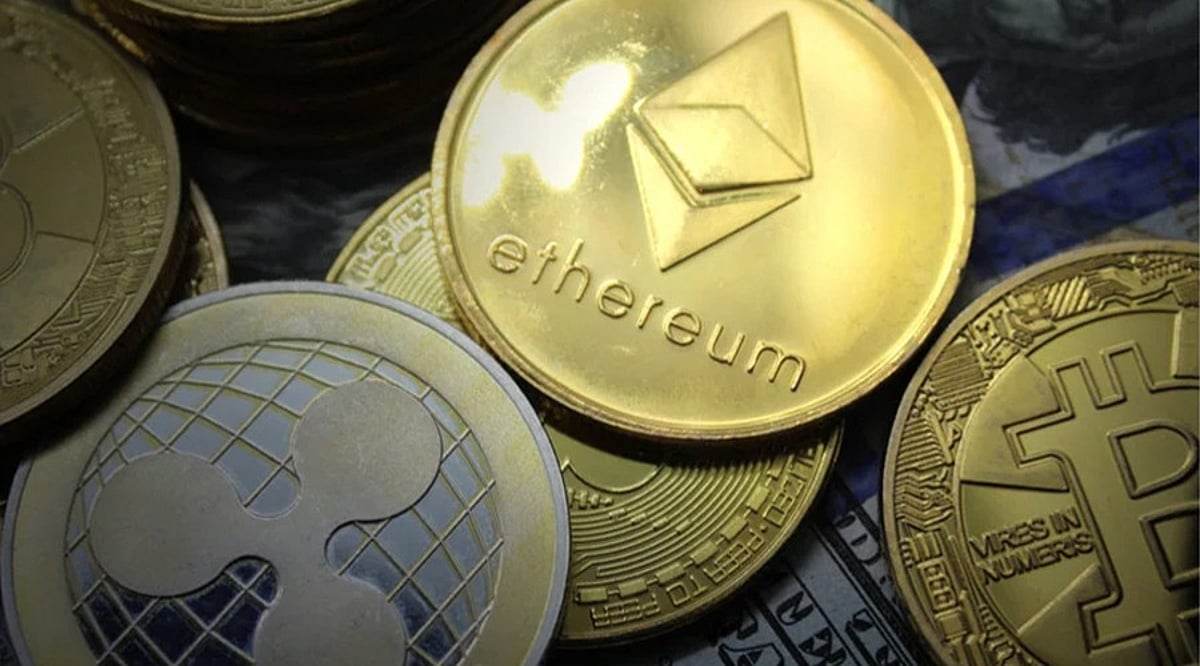
    Ethereum, Solana, and Avalanche have recorded significantly higher on-chain activity and lower transaction costs over the past year, even as their native tokens lost roughly half or more of their value. A new staking report from Bitwise attributes the improvement to larger blockspace, cheaper transactions, and rising institutional participation. However, token prices remain far below their 2025 peaks, signaling that blockchain performance and market sentiment are no longer moving in lockstep.

    More Activity at Lower Cost

    Bitwise found that activity expanded while user fees declined across all three proof-of-stake networks. The report attributes this shift mainly to protocol upgrades rather than weaker demand. Ethereum, Solana, and Avalanche increased network capacity to process more transactions at lower cost. As a result, users gained cheaper access while developers received more room to build applications.

    Previous market cycles often treated congestion and expensive transactions as signs of strong demand. Now, greater capacity allows networks to handle heavier use without creating the same fee pressure. Lower costs also reduced protocol revenue because the networks earn much of their direct income from transaction fees. Developers accepted that trade-off to improve scalability and encourage wider adoption.

    Institutional Staking, Declining Yields

    Proof-of-stake networks depend on validators who lock digital assets to secure transactions and receive staking rewards. Institutional investors drove much of the additional Ethereum entering validator pools during the second quarter. Exchange-traded products, corporate treasuries, and other large holders increased their staking exposure.

    More than 40 million ETH—roughly one-third of Ethereum’s circulating supply—had entered staking by the end of the period. BitMine, the largest public Ethereum treasury company, reported staking nearly 4.9 million ETH from total holdings of about 5.8 million ETH.

    However, staking yields continue to decline because rewards now reach a larger group of validators. More participants share the available token issuance and transaction-fee income. Bitwise estimates that about 93% of Ethereum staking rewards and more than 90% of Solana rewards came from newly issued tokens.

    That structure increases token supply and dilutes holders who do not stake. Meanwhile, lower fee revenue raises further questions about long-term staking economics.

    Liquid staking products also continue attracting attention because they let holders earn rewards while retaining usable tokenized assets. Investors can deploy those assets as collateral, supply them to lending markets, or place them in liquidity pools. Institutions can therefore combine staking income with broader capital use.

    Token Market Performance

    Developers continue launching applications, institutions add staked assets, and users remain active across decentralized finance platforms despite weaker token valuations. The trend suggests that practical blockchain use now plays a larger role in network activity. Meanwhile, token prices remain tied to market sentiment and wider economic conditions.

    For developers, lower fees and greater capacity support broader adoption. For investors, falling yields, inflation-funded rewards, and weaker fee income create different measures for assessing returns.

    Ethereum, Solana, and Avalanche processed more activity at lower costs despite sharp token-price declines. Institutional staking also expanded, although yields and protocol revenue fell. The data show that investors must evaluate network usage, token issuance, fee income, and staking returns separately from short-term market performance.

  • Karpathy’s Lord of the Rings AI Test Highlights LLM Gaps in Visual Reasoning and Planning

    Karpathy’s Lord of the Rings AI Test Highlights LLM Gaps in Visual Reasoning and Planning

    Andrej Karpathy, a prominent artificial intelligence researcher, has demonstrated a paradigm shift in how large language models (LLMs) are evaluated—moving from abstract coding benchmarks to complex, real-world software engineering tasks. In a recent experiment, Karpathy challenged Anthropic’s Claude Opus 5 to transform the opening paragraph of J.R.R. Tolkien’s The Lord of the Rings into a fully interactive 3D website, using the Three.js JavaScript library.

    Instead of requesting small code snippets or static images, Karpathy provided the model with a token limit of one million (approximately $10 in cost) and instructed it to generate a complete, browser-based 3D scene. This test goes far beyond conventional evaluation methods, which typically focus on isolated tasks like code generation or text completion. Here, the model was required to think, write thousands of lines of code, manage resources, and produce an interactive product—all in one go.

    From Benchmarks to Real-World Engineering

    Karpathy’s approach reflects an industry-wide trend: as AI models grow more capable, engineers want to assess their performance on end-to-end workflows rather than narrow tests. The experiment underscores that the frontier of AI evaluation is shifting toward holistic, production-like challenges that reveal both strengths and persistent weaknesses.

    Visual Reasoning and Scene Composition Still a Challenge

    While Claude Opus 5 succeeded in generating an interactive 3D scene, the experiment also exposed critical shortcomings. According to Karpathy, visual rendering and scene composition remain difficult for even the most advanced AI systems. Additionally, evaluating the quality of such outputs is problematic: while code can be automatically tested, visual data often requires human judgment to assess accurately.

    Raising the Bar for AI Evaluation

    Karpathy’s experiment illustrates that expectations for LLMs are expanding beyond answering questions or writing code. Developers now want AI to build complete applications, reason across multiple steps, and generate interactive digital experiences with minimal human intervention. As AI capabilities continue to improve, real-world engineering challenges like this one will play a bigger role in measuring model performance, highlighting not only what these systems can accomplish but also the technical gaps that remain before they can consistently deliver production-ready software.

  • RWA Perpetual Trading Volume Nearly Equals Bitcoin on Major Exchanges as Wright Reignites Protocol Debate

    RWA Perpetual Trading Volume Nearly Equals Bitcoin on Major Exchanges as Wright Reignites Protocol Debate

    Perpetual futures tied to tokenized stocks and commodities generated $61.7 billion in seven-day volume on Hyperliquid and Binance, nearly matching Bitcoin’s perpetual turnover. According to data from Talos, the RWA perpetual volume reached 99.2% of Bitcoin’s perpetual volume across both venues during the week ending July 31, 2026.

    Tokenized equity contracts contributed 57.8% of the tracked RWA volume, while commodities accounted for 28.2%. These contracts allow traders to gain price exposure without directly owning the underlying tokenized assets. Meanwhile, on-chain real-world asset value stood near $36.8 billion, excluding stablecoins, as reported by RWA.xyz.

    Hyperliquid recorded $25.1 billion in RWA perpetual volume from July 13 to July 19, representing about 52% of its $48.2 billion weekly total. For the first time, RWA derivatives surpassed every other perpetual category combined on Hyperliquid. The exchange relies on on-chain execution, oracle pricing, and automated liquidation systems. In contrast, Binance operates through centralized custody, exposing users to exchange counterparty risk.

    Early figures for the following week showed RWA perpetual volume reaching $37.2 billion, exceeding Bitcoin perpetual volume by about 9%, according to the Talos dashboard. Equity-linked contracts contributed $22.8 billion, commodities added $9.1 billion, and indexes produced $4.2 billion. Despite this growth, RWA perpetuals represented only about 7.5% of the broader $821.4 billion futures market tracked by Talos.

    Amid this market activity, Craig Wright revived a long-running dispute over Bitcoin governance. Wright argued that Bitcoin’s base protocol should remain permanently fixed, with competition occurring above rules that developers, miners, companies, or foundations cannot change. He accused supporters of developer-led upgrades of defending committee control while labeling fixed rules as centralized. His comments reignited debate over whether immutable rules outweigh the need to address vulnerabilities and new technical demands.

    Bitcoin traded at $63,012 on August 2, down 2.46% over seven days, with a market value near $1.26 trillion and $12.9 billion in daily volume. RWA perpetual contracts carry liquidation risks when leveraged positions move sharply against traders, and near parity with Bitcoin on two venues does not represent dominance across the entire crypto-derivatives market.

  • Pokémon Pokopia Expansion Pass: Part 2 and 3 Release Windows Leaked

    Pokémon Pokopia Expansion Pass: Part 2 and 3 Release Windows Leaked

    Pokémon Pokopia players now have a clearer picture of what’s coming next. A new report has revealed the release plans for Part 2 and Part 3 of the game’s Expansion Pass. According to the roadmap, Part 1 of the pass, Bubbly Basin, arrives on August 4, introducing a new town to explore and the new Dive skill. The next two parts are still under wraps.

    While there’s no official announcement, insider updates hint at a late 2026 release for Part 2 and an early 2027 release for Part 3. The update shows that the developers intend to keep adding new content rather than ending support after launch. These updates are also expected to bring new accessories for characters and introduce additional towns to explore.

    New characters, items, and gameplay features will likely be added in future DLC packs. The studio hasn’t announced everything yet, but the roadmap hints at a lot more content on the horizon.

    The Expansion Pass has already generated significant hype among fans. If Part 3 releases before the launch of Pokémon Winds and Waves, it could double the excitement for the upcoming mainline title.

    More Content Planned

    Pokémon Pokopia is taking a similar approach to games like Fortnite, Genshin Impact, and Disney Dreamlight Valley. These games don’t deliver everything at launch but grow over time with regular updates.

    This strategy keeps players engaged longer. Every new update adds something fresh to discover, whether it’s a new story, event, or gameplay feature. Pokémon Pokopia appears to be following the same path by spreading its Expansion Pass across multiple releases instead of delivering one large DLC.

    The latest roadmap makes it clear that Pokémon Pokopia is far from finished. The developers already have more content planned, and players can expect the game to keep evolving.

  • Ripple Backs ZILO and Licuido to Advance Tokenized Fund Infrastructure on XRP Ledger

    Ripple Backs ZILO and Licuido to Advance Tokenized Fund Infrastructure on XRP Ledger

    Ripple has made strategic investments in ZILO and Licuido, two UK-based firms, to accelerate its tokenized capital markets strategy. The deals aim to strengthen regulated fund issuance, settlement, trading, custody, and collateral mobility on the XRP Ledger (XRPL) and Ripple’s institutional infrastructure.

    Ripple Expands Regulated Fund Infrastructure

    ZILO specializes in transfer agency and fund administration systems for asset managers, wealth firms, and custodians. Its technology creates regulated digital ownership records for investors holding tokenized fund shares. The company recently announced raising $58.7 million in total equity funding. Ripple expects ZILO’s systems to support the creation and management of tokenized share classes on XRPL.

    Licuido operates an investment platform regulated by the UK Financial Conduct Authority (FCA). It facilitates the issuance, distribution, trading, and collateral use of traditional financial assets in digital form. Together, the two companies cover the full lifecycle of a tokenized fund, including investor recordkeeping, issuance, distribution, liquidity, settlement, and collateral movement.

    Nigel Khakoo, Ripple’s senior vice president for trading and markets, highlighted the importance of these investments: “ZILO and Licuido provide core capabilities that are essential to further scaling this shift: regulated digital transfer agency infrastructure and liquidity for issuance and collateral mobility.” He added, “This is just the beginning of the journey, and we see a substantial opportunity to bring huge efficiencies to the investment sector over the next decade.”

    Tokenized Funds Move Toward XRPL

    Ripple plans to integrate both companies’ services with its broader institutional infrastructure. This integration would allow financial firms to issue assets, hold them in custody, transfer ownership, and use them as collateral seamlessly. The model aims to reduce idle collateral in traditional fund structures, where newly issued fund units often face delays before becoming available for trading or financing.

    Ripple wants tokenized funds to be usable immediately upon issuance, connecting fund administration records with trading, custody, payments, and collateral systems through XRPL. This follows Ripple’s partnership with Aviva Investors, which announced plans in February to develop tokenized fund structures on XRPL. The ledger provides built-in tools for asset issuance, trading, escrow, and regulated financial activity.

    Additionally, Ripple recently launched Ripple Mint, a platform for institutional asset issuance and management. It supports the creation, redemption, and administration of tokenized securities, stablecoins, fund units, bonds, and other assets.

    RLUSD Supports Onchain Settlement

    RLUSD, Ripple’s stablecoin, is expected to serve as the cash side of transactions involving tokenized assets. Ripple plans to use RLUSD for delivery-versus-payment settlement, where the asset and payment transfer simultaneously. This reduces settlement risk, which occurs when one side of a transaction completes before the other. RLUSD already supports liquidity and settlement services for several tokenized investment products.

    XRP Price Remains Under Pressure

    Despite these positive developments, XRP’s near-term price action remains weak. XRP traded near $1.06 after falling 1.05% over 24 hours. The token has broken below a late-July symmetrical triangle and trades under key moving averages. The 50-day exponential moving average near $1.09 now acts as immediate resistance. Key support sits between $1.05 and $1.06; a break below that could bring the psychological $1.00 level into play, while a move above $1.09 may ease selling pressure.

    The broader regulatory environment also remains uncertain. The US Senate faces limited time to advance the CLARITY Act before its August recess, while lawmakers continue debating market structure, ethics, stablecoin, and consumer protection rules.


  • Coldcard Bitcoin Wallet Sweeps Top $114 Million as Replace-by-Fee Rescue Window Opens

    Coldcard Bitcoin Wallet Sweeps Top $114 Million as Replace-by-Fee Rescue Window Opens

    Early Monday, a fourth wave of sweeping attacks targeted Bitcoin addresses generated by Coldcard wallets, pushing observed losses to approximately 1,816 BTC—worth around $114 million. Researchers have identified a narrow rescue window enabled by replace-by-fee (RBF), which allows victims to override unconfirmed theft transactions by paying a higher fee.

    Narrow Rescue Window

    Galaxy Research’s Alex Thorn flagged the active wave while transactions remained in Bitcoin’s mempool. He noted that attackers enabled replace-by-fee on their pending transfers, meaning victims who detect a targeted address can move their coins first by offering miners a higher fee. Thorn urged users to check balances, remove funds from affected devices, and raise transaction fees promptly.

    Thorn had no direct victim report when he published the warning. Instead, he relied on matching transaction patterns and chose speed while users still had time to respond.

    Predictable Seed Generation

    The first sweep began July 30, removing 1,083 BTC from 1,196 addresses within 41 minutes. Two weekend waves raised observed losses to 1,367 BTC across 4,585 addresses. The fourth wave lifted the possible total to about 1,816 BTC from more than 5,200 addresses. Thorn tracked activity across blocks 960,778 through 960,792.

    Researchers counted 218 transactions that targeted 462 victim addresses. The wave averaged about 14 sweeps per block, compared with 0.3 during a pre-incident control period. The flaw traces to a March 2021 firmware build that sent seed generation to a predictable software randomizer rather than the wallet chip’s hardware randomizer. As a result, anyone who identifies the relevant range can reproduce affected keys offline.

    Coinkite released emergency firmware for all affected models after the flaw was discovered. The manufacturer also instructed users who created seeds with the flawed software to move funds and use wallet addresses generated from fresh seeds.

    Transaction Patterns

    Every spent coin arrived after the Coldcard firmware boundary was identified by researchers. The attackers also sent each victim’s funds to a fresh destination with no previous transaction history. Unlike earlier waves, the fourth used one destination per victim instead of shared collector addresses, making the new activity harder to map through common destinations.

    None of the first three waves reached multisignature setups, matching a flaw tied to single-key seeds. Researchers also removed six old destination addresses as attacker-generated addresses should lack earlier activity. According to CryptoQuant Research Head Julio Moreno, small Bitcoin holders moved 39,600 BTC on July 31—transfers under 1 BTC reached about $2.5 billion that day. The last comparable total reached 39,900 BTC on November 16, 2022, days after FTX failed. Daily active addresses also climbed from 645,000 to almost one million, marking the highest level since December 2024. The increase centered on sending addresses rather than receiving addresses as news of the Coldcard flaw spread.

    Brief Roundup

    Four Coldcard-linked sweeps may have taken about 1,816 BTC from more than 5,200 addresses. Replace-by-fee gives users a narrow chance to override pending thefts. Anyone who created a seed with affected firmware should check funds, move coins to a fresh-seed wallet, and raise fees when necessary.

  • Indian Parliamentary Panel Rejects Meta’s Apology, Demands Action Over PM Modi Video Takedown

    Indian Parliamentary Panel Rejects Meta’s Apology, Demands Action Over PM Modi Video Takedown

    Meta has apologized to a parliamentary panel in India over the removal of Prime Minister Narendra Modi’s Facebook video, but lawmakers are pushing for more than just an apology. The company described the takedown as a technical error and restored the video after government concerns were raised.

    Panel Demands Accountability

    During a meeting of the Parliamentary Standing Committee on Information Technology in New Delhi, Meta officials faced questions about the removal, its authorization, and who was responsible. Committee members, led by BJP MP Nishikant Dubey, demanded accountability and called on Meta to identify the official involved and consider legal action.

    “The committee is seeking accountability,” a senior BJP member reportedly said, adding that an apology alone would not be sufficient. The panel wants answers and stronger action against those responsible for the incident.

    Broader Scrutiny of Content Moderation

    The meeting focused on social media regulation and platform accountability, with representatives from Meta, Google, YouTube, X, Snapchat, the Union home ministry, and MeitY in attendance. The temporary restriction of PM Modi’s video—which addressed India’s youth and promised strict action against paper leaks—raised concerns about content moderation systems handling sensitive political communications.

    Meta had earlier described the restriction as a glitch, but MeitY called the explanation inadequate and demanded greater clarity. Lawmakers also questioned Meta about controversial and objectionable content remaining on its platforms, seeking details on moderation measures.

    Growing Pressure on Foreign Tech Platforms

    The incident adds to mounting pressure on Meta as Indian authorities examine platform compliance with national laws. Government sources have linked the broader debate to concerns over public order and national security. The committee’s questions now shift attention from Meta’s apology toward stronger platform accountability, highlighting the intense scrutiny foreign technology platforms face in India.

  • Japan and US Stage Rare Joint Intervention to Stabilize Yen Amid Rising Volatility

    Japan and US Stage Rare Joint Intervention to Stabilize Yen Amid Rising Volatility

    Japan and the United States have carried out a rare coordinated currency intervention to support the yen and curb disorderly market movements. Tokyo also signaled readiness for further action as a weaker currency and higher oil prices pressure Japan’s economic outlook.

    Joint Action Targets Sharp Yen Swings

    Japan’s Ministry of Finance confirmed the operation on Monday after intervention took place on Friday, July 31. Officials said both countries acted to curb excessive volatility and disorderly movements in the yen. Japan bought yen during Friday’s operation in coordination with the US Treasury. The action followed months of pressure on the currency, which recently traded near four-decade lows against the dollar.

    The ministry linked the move to the Japan-US Finance Ministers’ Joint Statement issued in September 2025. That agreement allows intervention when exchange rates show excessive volatility or disorderly movement. It also calls for transparent reporting of currency operations.

    Finance Minister Satsuki Katayama said Tokyo would keep close contact with Washington. She added, “We will not hesitate to carry out further coordinated interventions.” The United States also signaled support for further action. Treasury Secretary Scott Bessent said Washington backed Japan’s measures and stood ready to join another operation. The coordinated action was the first involving both countries since 2011.

    Meanwhile, the yen strengthened after Japan confirmed the intervention. It moved above 155 per dollar before giving back part of the gain. Traders continued to watch for more official buying. Markets now remain alert to further policy signals from both governments.

    FIMA Facility Adds Another Funding Option

    Japan also plans to use the Federal Reserve’s Foreign and International Monetary Authorities (FIMA) Repo Facility. The FIMA facility gives approved foreign monetary authorities access to short-term dollar funding. Under the program, authorities can temporarily exchange US Treasury securities for dollars, providing liquidity without forcing them to sell Treasury holdings directly in the open market.

    Japan’s ministry stated, “Japan plans to utilize the Federal Reserve’s FIMA Repo Facility in the future.” Tokyo can use the program to manage dollar needs during market stress. Additionally, the facility may support future intervention operations when authorities need dollar liquidity. However, access depends on the amount of eligible Treasury securities pledged as collateral. The ministry said it would maintain regular communication with the US Treasury and keep monitoring foreign exchange conditions to respond to disorderly moves.

    Weak Yen Adds Pressure on Japan’s Economy

    The intervention comes as Japan faces weaker growth and higher import costs. A soft yen raises the local cost of crude oil, food, and other imports. Japan recently cut its fiscal 2026 growth forecast to 0.9% from 1.3%, citing higher energy costs linked to Middle East tensions and pressure on household spending and company earnings.

    Moreover, the government lowered its private consumption forecast to 0.9% from 1.3% and reduced its capital spending growth estimate to 2.3% from 2.8%. Japan depends heavily on imported energy, so high oil prices and a weak currency can raise costs across transport, manufacturing, and household budgets.

    The Bank of Japan also faces close market attention. It kept its policy rate unchanged at 1% last week but left room for another increase. However, currency intervention and interest-rate policy serve different roles: the finance ministry manages exchange-rate operations, while the central bank sets monetary policy.