Author: vitorcherulli

  • Bitcoin Under Siege: Geopolitical Tensions and ETF Withdrawals Weigh on August Outlook

    Bitcoin Under Siege: Geopolitical Tensions and ETF Withdrawals Weigh on August Outlook

    Bitcoin entered August under renewed selling pressure, slipping to a two-week low of $62,400 after repeated failures near $65,000. The decline followed fresh geopolitical escalation in the Middle East, significant ETF outflows, and a bearish technical signal from the TD Sequential indicator. However, a sharp rally in global stock markets provided a counterbalance, offering the cryptocurrency a potential path to recovery.

    Geopolitical Risks Intensify

    Iran claimed it attacked two oil tankers attempting to cross the Strait of Hormuz under US military escort, while turning back four other vessels. The attacks raised concerns about energy supply disruptions through the critical waterway. The US escort also heightened the risk of a direct military confrontation and broader market instability.

    Additionally, Iran launched drones toward US-linked military facilities in Kuwait and Bahrain. Kuwait intercepted the drones, reporting no casualties. President Donald Trump convened cabinet members at Camp David to review options, but no formal military operation was announced. Reports from The Wall Street Journal and CBS News indicated that the US could target Iranian energy assets in a potential weekend escalation.

    The US Senate voted 49–50 against advancing a measure that would restrict Trump’s authority to continue hostilities, leaving the administration’s military options largely unchanged.

    ETF Outflows and Post-FOMC Pressure

    The Federal Reserve left interest rates unchanged on Wednesday, and Bitcoin dropped roughly $3,000 over the following days, extending a pattern analysts have tied to recent FOMC meetings. Rising oil prices revived inflation concerns, adding pressure across risk markets.

    A stronger dollar and higher Treasury yields further weighed on Bitcoin, as both trends can reduce demand for non-yielding assets during economic uncertainty. Spot Bitcoin ETFs reversed a three-week inflow streak, recording $61.53 million in net outflows for the week. Friday saw particularly heavy withdrawals of more than $265 million, erasing the impact of Thursday’s $233 million net inflow.

    A reported US-Israeli proposal for a land blockade of Iran is also under discussion, aiming to restrict Iranian imports and exports with help from neighboring countries.

    Technical Warning Amid Equity Rebound

    Analyst Ali Martinez noted that the TD Sequential indicator flashed a major sell signal on Bitcoin’s three-day chart, a tool traders use to identify possible price direction changes. Martinez linked the signal to the start of August, a month that has historically brought Bitcoin pullbacks, though the pattern does not guarantee future moves.

    Michaël van de Poppe offered a contrasting view, pointing to Bitcoin’s historical correlation with the NASDAQ and South Korea’s KOSPI. Both indexes surged late in the week—the KOSPI rose about 18%, and US technology shares strengthened. Van de Poppe noted that Bitcoin rallied toward $83,000 after a similar market move in the past.

    The question now is whether stronger global equities can offset war risks, Bitcoin ETF outflows, and the latest technical warning. Bitcoin’s near-term direction hinges on conflicting signals entering August.

    Conclusion

    Bitcoin begins August below $65,000, facing headwinds from geopolitical escalation, post-FOMC weakness, ETF withdrawals, and a TD Sequential sell signal. At the same time, sharp gains in the NASDAQ and KOSPI support a rebound case. Market attention now turns to energy prices, fund flows, and military developments.
  • Google Halts Earth AI Tool Launch After One Day Due to Misinformation Risks

    Google Halts Earth AI Tool Launch After One Day Due to Misinformation Risks

    Google has removed its Google Earth AI tool less than 24 hours after its launch, following concerns over fake images and misinformation. The feature, introduced on July 30 via the Google Earth web platform, used the company’s Nano Banana 2 model to generate AI images overlaid on real satellite imagery. Users could input prompts to create new scenes using satellite, aerial, and 3D mapping data.

    The rapid rollback came after researchers and users shared screenshots of AI-generated images that appeared to violate Google’s policies. Open-source intelligence researchers highlighted how the tool could be used to create scenes involving sensitive locations, raising fears that fake satellite imagery could spread on social media.

    Google stated, “We know that people uniquely trust Google Earth for a reliable view of the world. We’ve also seen people sharing screenshots of generated imagery that appear to violate our policies.” The company emphasized that the generated images did not alter the main Google Earth view and that each image carried a SynthID watermark to help identify synthetic content.

    Despite these safeguards, experts warned that screenshots could still circulate misleading visuals online. Google now plans to strengthen its safety controls before deciding whether to restore the feature. This incident underscores the growing challenge for AI companies as they integrate generation tools into trusted platforms, where even a brief public test can quickly raise safety concerns.

  • Google Halts Earth AI Tool After Just One Day Over Fake Image Concerns

    Google Halts Earth AI Tool After Just One Day Over Fake Image Concerns

    Google has abruptly pulled its new Google Earth AI tool less than 24 hours after launch, following widespread concerns that the feature could produce and spread misleading fake imagery. The tool, which used the company’s Nano Banana 2 model to overlay AI-generated images onto real satellite data, was removed after researchers and users reported screenshots that appeared to violate Google’s content policies.

    Launched on July 30 via Google Earth’s web platform, the feature allowed users to enter text prompts and generate new scenes using satellite, aerial, and 3D mapping data. However, within hours, open-source intelligence researchers demonstrated how the tool could create images of sensitive locations, raising red flags about potential misinformation. Researcher Henk van Ess was among those who tested various prompts, showing that the generated content could easily be misused.

    In a statement, Google acknowledged the issue: “We know that people uniquely trust Google Earth for a reliable view of the world. We’ve also seen people sharing screenshots of generated imagery that appear to violate our policies.” The company emphasized that the generated images did not alter the main Google Earth view and that each AI-created image carried a SynthID watermark to help identify synthetic content. Additionally, Google said Gemini and Google Lens could help users detect AI-generated images.

    Despite these safeguards, experts warned that screenshots of the generated visuals could still spread misleading information across social media, bypassing the watermarks. The quick rollback underscores a growing challenge for AI companies: balancing innovation with the risk of amplifying misinformation. Google Earth holds strong public trust as a reliable source of real-world imagery, and the introduction of AI-generated scenes threatened to undermine that credibility.

    Google now plans to strengthen its safety controls before deciding whether to restore the feature. The incident highlights how rapidly AI products can face safety concerns once exposed to public testing. As AI generation tools become more common, companies will need to implement robust safeguards to prevent misuse while still delivering innovative user experiences.

  • Best Soundbar & Home Theater Weekend Deals: Save Big on Dolby Atmos Systems

    Best Soundbar & Home Theater Weekend Deals: Save Big on Dolby Atmos Systems

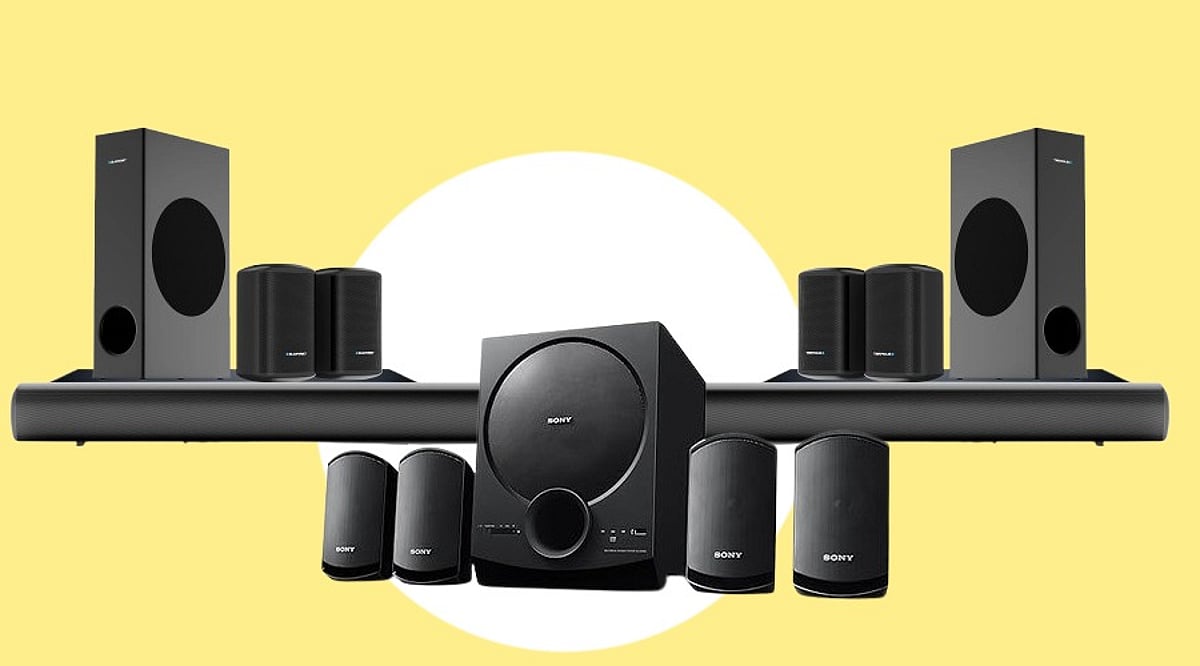
    This weekend, retailers are clearing inventory ahead of new product launches, offering rare discounts on premium soundbars and home theater systems. Flagship models typically drop 20% to 30% outside major holiday sales, and several deals below beat that margin. After verifying price history against manufacturer list prices, six models with verified markdowns of at least 20% from Amazon, Best Buy, or direct stores made the cut. The list moves from the most capable system to the simplest, helping you match a pick to your room size and budget.

    Comparison Table

    Samsung HW-Q990F 11.1.4ch Soundbar

    This 23-speaker, 756-watt system pairs the main bar with a wireless subwoofer and two up-firing rear speakers for true 11.1.4-channel surround. Sound moves around and above the room rather than just getting louder. Wireless Dolby Atmos and Q-Symphony round out the package for compatible Samsung TVs. Buy Now

    Sony BRAVIA Theater Bar 9

    Sony’s award-winning flagship rarely sees a $300 cut. It earned a What Hi-Fi? Award for clarity, and its 360 Spatial Sound Mapping creates a wide, convincing soundstage through reflection rather than raw speaker count. Buy Now

    Sony BRAVIA Theater Bar 5

    A compact 3.1-channel bar built for smaller TVs, sized so it won’t block the screen. Voice Zoom 3 sharpens dialogue automatically when paired with a compatible BRAVIA television. This price marks an all-time low for the model. Buy Now

    TCL S55H 2.1ch Soundbar

    Under $100, this bar delivers Dolby Atmos and DTS Virtual:X support alongside 220 watts of output—a spec sheet that would have counted as mid-range not long ago. Auto room calibration adjusts sound through the companion app during setup. Buy Now

    Sony HT-S400 2.1ch Soundbar

    A straightforward pick for clearer sound than your TV provides. One HDMI cable connects the bar and wireless subwoofer, and 330 watts of claimed output covers most living rooms without strain. Buy Now

    Zebronics Juke BAR 10000A 7.2.4ch Soundbar

    A 7.2.4-channel system with a claimed 1100 watts of output, rear speakers, and a wireless subwoofer included. Buyers gain full physical surround at a price most competitors reserve for virtual processing alone, though the brand has a shorter track record than Samsung or Sony. Buy Now

    Room size and connection type matter more than the discount percentage. HDMI eARC passes full Dolby Atmos, while optical and Bluetooth often compress the signal, so confirming that port exists on your TV is worth the extra minute before checkout.

    Final Thoughts

    Soundbar pricing usually rises after the sale ends. Models at or near an all-time low, like the Sony Bar 5, tend to climb back quickly. Smaller discounts leave more room to wait. Buying decisions should follow room size and connection needs first, discount size second.

    FAQs

    1. Which soundbar offers the best value this weekend? The Samsung HW-Q990F delivers the strongest overall value for a premium home theatre experience, while the TCL S55H stands out as the best budget option under $100.
    2. Is Dolby Atmos worth paying extra for? Yes. Dolby Atmos creates a more immersive audio experience by adding height effects, making movies, games, and supported streaming content sound more realistic than standard surround audio.
    3. Can I use these soundbars with any TV? Most modern soundbars work with any TV that supports HDMI ARC/eARC, optical audio, or Bluetooth. Brand-specific features may require a compatible Samsung or Sony TV, but basic functionality is universal.
    4. What’s the difference between a soundbar and a home theatre system? A soundbar is a compact audio solution that’s easy to install, while a home theatre system typically includes additional rear speakers and a subwoofer for a more immersive surround sound experience.
    5. Should I buy a soundbar now or wait for another sale? If the current discount is among the lowest recorded for the model—such as the Samsung HW-Q990F or Sony BRAVIA Theater Bar 5—it is generally a good time to buy. Premium soundbars do not always receive deeper discounts outside major shopping events.
  • Best Weekend Deals on Mesh Wi-Fi Systems: Boost Home Coverage and Eliminate Dead Zones

    Best Weekend Deals on Mesh Wi-Fi Systems: Boost Home Coverage and Eliminate Dead Zones

    Modern households rely on far more than a single laptop and smartphone. Smart TVs, security cameras, gaming consoles, and multiple work-from-home laptops now share the same internet connection across several rooms. A standalone router often struggles to maintain consistent speeds, leading to dead zones in upstairs rooms, frozen video calls, and weak signals on the balcony. Mesh Wi-Fi systems solve this by deploying multiple nodes that work together as one seamless network, automatically handing off devices as you move throughout the home.

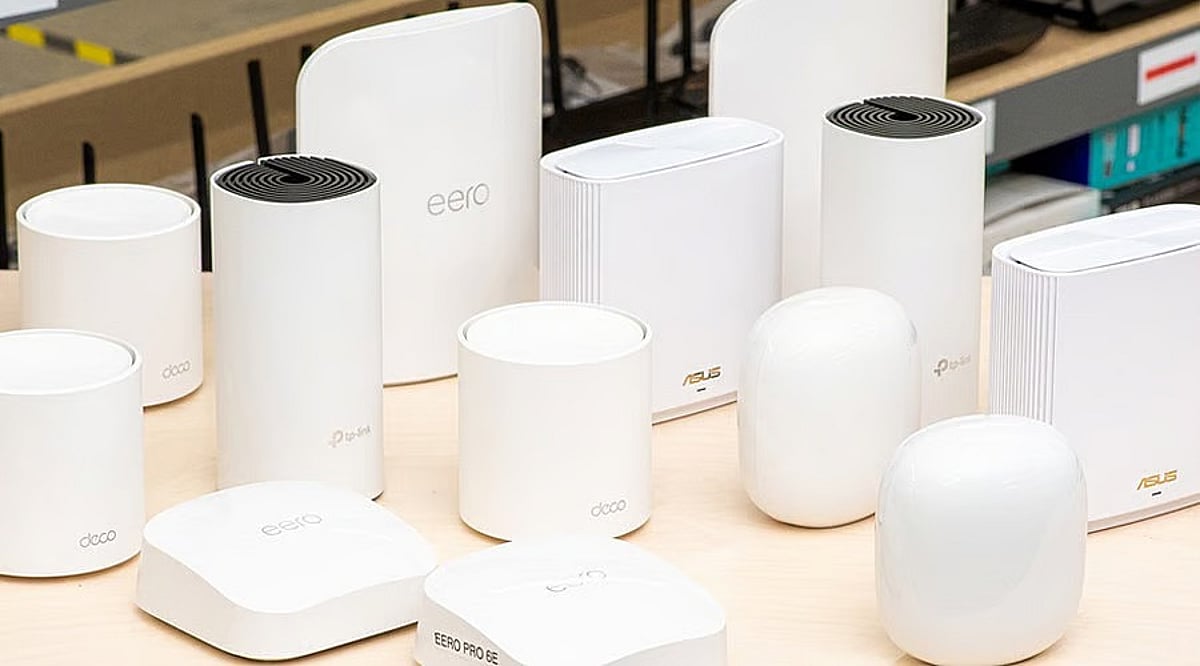
    Amazon India’s Whole Home Mesh Wi-Fi Systems section currently features three leading brands worth comparing: TP-Link Deco, Netgear Orbi, and Amazon Eero. These systems span Wi-Fi 6 and the newer Wi-Fi 7 generations, each catering to different home sizes and budgets.

    Quick Reference: Mesh Wi-Fi Systems on Amazon India

    Coverage figures are manufacturer estimates. Actual range varies with wall thickness, floor layout, and interference from neighboring networks. Prices fluctuate frequently during sales, so always check the live listing before purchasing.

    System Wi-Fi Standard Coverage (sq. ft.) Nodes Best For
    TP-Link Deco M4 Wi-Fi 5 (ac) Up to 5,500 3-pack Budget-friendly large apartments
    TP-Link Deco XE75 Wi-Fi 6E Up to 5,500 3-pack Dense buildings with interference
    TP-Link Deco BE25 Wi-Fi 7 Up to 6,000 3-pack Future-proofing with gigabit fiber
    Netgear Orbi RBK752 Wi-Fi 6 Up to 5,000 2-pack Large homes needing strong range
    Netgear Orbi RBK50 Wi-Fi 5 (ac) Up to 5,000 2-pack Cost-effective wide coverage
    Amazon Eero (latest) Wi-Fi 6 Up to 4,500 3-pack Simple, hands-off setup

    What to Compare Before Buying

    Several factors matter more than the marketing headline on the box:

    • Coverage area and node count: A two-pack usually suffices for homes under 3,000 square feet; larger or multi-story homes benefit from a three-pack.
    • Wi-Fi standard: Wi-Fi 5 for basic browsing, Wi-Fi 6 for most households, Wi-Fi 6E for dense apartments, and Wi-Fi 7 for gigabit connections with many devices.
    • Dual-band vs. tri-band: Tri-band systems dedicate an extra band to node-to-node communication, reducing congestion. Dual-band systems cost less but share bandwidth across all connected devices.
    • Wired backhaul support: Homes with Ethernet cabling can connect nodes directly for more stable long-range speeds.
    • Broadband plan speed: A Wi-Fi 7 system adds little value on a sub-200 Mbps connection, while gigabit fiber benefits from Wi-Fi 6E or 7 hardware.
    • Latency: Lower latency is critical for cloud gaming and video calls, often more noticeable than raw download speed.

    TP-Link Deco Series

    TP-Link’s Deco lineup dominates the budget and mid-range segments. The Deco M4 three-pack provides consistent coverage across large apartments at an affordable price. The Deco XE75 adds Wi-Fi 6E and the less congested 6 GHz band, ideal for dense buildings with overlapping networks. The Deco BE25 brings Wi-Fi 7 to a price point suitable for new buyers. All models include TP-Link’s HomeShield app for basic parental controls (free) with a paid tier for advanced security.

    Pros: Strong value, easy setup, wide coverage per node.
    Cons: Full security features require a subscription on higher models.
    Skip if: You need top-tier Wi-Fi 7 throughput on a gigabit fiber connection.

    Netgear Orbi Series

    Orbi systems use a dedicated wireless channel for node-to-node communication, preserving bandwidth for client devices. The RBK752 covers up to 5,000 square feet and handles 40+ devices, ideal for larger homes or duplexes. The RBK50 offers similar range at a lower cost without the newest standard. Orbi units are bulkier and pricier than Deco or Eero.

    Pros: Strongest performance at range, steady speeds across large homes.
    Cons: Bulkier hardware, higher price.
    Skip if: Price is the main concern; Orbi’s advantage shines in very large homes.

    Amazon Eero

    Eero prioritizes simplicity. The app guides you through setup in minutes, and the system handles firmware updates and self-healing network adjustments automatically. It trades some long-range throughput for that ease of use, making it ideal for apartments and mid-size homes.

    Pros: Fastest setup, reliable self-healing network, minimal maintenance.
    Cons: Fewer manual controls than Deco or Orbi.
    Skip if: You need granular network configuration options.

    Placement and ISP Compatibility

    Poor placement can undermine even the best mesh system. Nodes should sit midway between the main router and weak coverage areas, not in corners where signal is thin. Most mesh systems work with Airtel Xstream Fiber, JioFiber, ACT, BSNL, and other ISPs. Switch the ISP router to bridge mode (or access point mode) to avoid running two competing Wi-Fi networks.

    Before Buying This Weekend

    • Confirm whether the listing includes two or three nodes—base prices often cover only the smaller pack.
    • Check whether the item is sold and shipped by Amazon or a third-party seller, which affects returns and warranty.
    • Look for bank card discounts or exchange offers stacked on the listed price during weekend sales.

    Quick Decision Guide

    Let coverage area and device count drive your decision before the Wi-Fi generation on the box. A typical household of two to four people gets full value from a Wi-Fi 6 system without paying for standards their devices or broadband plan cannot use yet. Homes under 3,000 square feet usually need only a two-pack; larger or multi-story homes benefit from a three-pack or Orbi’s stronger backhaul.

    Final Thought

    Buying a mesh system that matches your home’s layout almost always delivers a bigger improvement than choosing the newest Wi-Fi standard alone. A mismatched system, even at a steep weekend discount, still leaves the same dead zone it was bought to fix.

    Frequently Asked Questions

    1. What is a mesh Wi-Fi system, and how is it different from a regular router?

    A mesh Wi-Fi system uses multiple interconnected units to create a single, seamless wireless network throughout the home. Unlike a traditional router, it eliminates dead zones and maintains a stable connection as devices move between rooms.

    2. Is a mesh Wi-Fi system worth buying for a small apartment?

    Not always. A small one- or two-bedroom apartment often gets sufficient coverage from a quality standalone Wi-Fi 6 router. Mesh systems become more beneficial in larger apartments, multi-story homes, or spaces with thick walls.

    3. Should I choose Wi-Fi 6, Wi-Fi 6E, or Wi-Fi 7?

    Wi-Fi 6 is best for most households. Wi-Fi 6E adds the 6 GHz band for reduced congestion, while Wi-Fi 7 is suited for gigabit internet connections and homes with many high-bandwidth devices.

    4. Can a mesh Wi-Fi system work with Airtel Xstream Fiber, JioFiber, ACT, or BSNL broadband?

    Yes. Most mesh systems are compatible with these ISPs. Connect them to the existing modem or ISP router, often by switching the ISP router to bridge mode.

    5. How many mesh Wi-Fi units do I need for my home?

    A two-pack is generally suitable for homes up to about 3,000 square feet. Larger or multi-story homes typically benefit from a three-pack.

  • Best SSC CGL 2026-27 Books: Subject-Wise Study Resources for Exam Success

    Best SSC CGL 2026-27 Books: Subject-Wise Study Resources for Exam Success

    Choosing the right SSC CGL books makes preparation more focused and effective. One trusted resource for each subject, paired with regular revision, delivers better results than using many guides. Previous year’s papers strengthen exam readiness. Consistency remains the key to success.

    SSC CGL 2026-27 Book List at a Glance

    SSC CGL preparation is built around four core subjects: Quantitative Aptitude, Reasoning, English Comprehension, and General Awareness. The following recommended books are drawn from resources frequently cited in topper interviews and coaching advice.

    • Best Quant Book: Rakesh Yadav 7300+
    • Best Reasoning Book: R.S. Aggarwal
    • Best English Book: S.P. Bakshi
    • Best GK Book: Lucent’s General Knowledge
    • Best PYQ Book: Kiran Publication
    • Best Current Affairs: Arihant or Pratiyogita Darpan Monthly

    Subject-Wise Book Recommendations

    Quantitative Aptitude

    Rakesh Yadav’s 7300+ Chapterwise Solved Questions is frequently recommended for its chapter-wise structure and volume of practice questions. For a solid study sequence:

    • Rakesh Yadav 7300+ for chapter-wise practice
    • R.S. Aggarwal’s Quantitative Aptitude for comprehensive concepts
    • Fast Track Objective Arithmetic by Rajesh Verma for speed techniques
    • Arun Sharma’s Quantitative Aptitude for rebuilding fundamentals

    Reasoning

    R.S. Aggarwal’s A Modern Approach to Verbal and Non-Verbal Reasoning covers analogy, classification, coding-decoding, syllogisms, blood relations, seating arrangements, and mirror/image-based reasoning. Analytical Reasoning by M.K. Pandey serves as a companion for deeper puzzle practice. Kiran’s Reasoning compilation offers additional past question practice.

    English Language

    S.P. Bakshi’s Objective General English covers cloze test, error detection, reading comprehension, and synonym-antonym practice. Wren and Martin’s English Grammar helps rebuild grammar basics. Neetu Singh’s English for General Competitions offers an exam-focused format. Word Power Made Easy fills vocabulary gaps.

    General Awareness

    Lucent’s General Knowledge is the standard resource for static GK (history, geography, polity, economics, science). It pairs best with a monthly current affairs compilation from Pratiyogita Darpan or Arihant. Kiran’s General Awareness previous-year compilation adds targeted factual question practice.

    Previous Year Papers

    Previous year papers reveal recurring question styles and topic weightage. Kiran Publication’s chapter-wise previous year compilation organizes past questions by topic for focused revision. Many toppers solve several years of papers before attempting full-length mocks.

    How to Study with These Books

    One trusted book per subject, revised multiple times, builds more exam readiness than several books read once. Quantitative aptitude and reasoning benefit from solving the full book once, then revisiting difficult questions two or three times. English grammar needs three to four revisions. Lucent’s GK rewards repeated revision for recall speed.

    Final Thoughts

    The books on this list build the foundation. Success in SSC CGL often comes from a narrow, well-revised set of resources rather than searching for better books along the way.

    FAQs

    1. Which is the best book for SSC CGL 2026 Quantitative Aptitude?

    Rakesh Yadav’s 7300+ Chapterwise Solved Questions is one of the most recommended books for SSC CGL Quantitative Aptitude due to its extensive practice questions. Beginners can also use R.S. Aggarwal or Arun Sharma to strengthen concepts before solving advanced questions.

    2. Is Lucent General Knowledge enough for SSC CGL General Awareness?

    Lucent’s General Knowledge is considered one of the best books for static GK, covering History, Geography, Polity, Economics, and Science. However, candidates should also follow monthly current affairs magazines or reliable current affairs sources for complete preparation.

    3. Which English book is best for SSC CGL preparation?

    S.P. Bakshi’s Objective General English is widely recommended for SSC CGL because it covers grammar, vocabulary, comprehension, and objective practice. Candidates looking to improve grammar basics can also refer to Wren & Martin.

    4. Are previous year question papers important for SSC CGL 2026?

    Yes. Previous year papers help candidates understand the exam pattern, question types, topic weightage, and difficulty level. Solving them regularly also improves speed, accuracy, and time management.

    5. How many books are enough for SSC CGL preparation?

    Most successful candidates rely on one trusted book for each subject, along with previous year papers and current affairs material. Revising a limited set of quality resources multiple times is generally more effective than studying from many different books.

  • Top 20 Healthcare Project Ideas for Students: From AI Diagnostics to Public Health

    Top 20 Healthcare Project Ideas for Students: From AI Diagnostics to Public Health

    Healthcare innovation is transforming disease diagnosis, remote monitoring, hospital management, and public health through AI, IoT, and digital technologies. Practical solutions such as telemedicine platforms, wearable devices, and health informatics systems improve care delivery. Responsible data handling and ethical AI remain essential for building effective healthcare solutions.

    Healthcare sits at the intersection of urgent real-world need and fast-moving technology. That combination makes it one of the few project categories where a student build can resemble something an early-stage health-tech startup might create. The twenty healthcare project ideas below span five categories: AI diagnostics, wearable and remote monitoring, telemedicine and access, hospital and health informatics systems, and public health and accessibility.

    AI Diagnostics

    A disease prediction model built on public datasets, such as the UCI Machine Learning Repository’s diabetes or heart disease records, teaches the full pipeline from cleaning to evaluation. A medical image classifier trained on the NIH Chest X-ray Dataset introduces convolutional neural networks in a context where accuracy differences carry real stakes. Brain tumor detection using MRI scans goes deep learning and image segmentation, and it remains a common final-year project in biomedical engineering programs. A skin condition scanner, built on the ISIC Skin Lesion Dataset and wrapped in a phone app, pairs a trained model with a usable interface instead of leaving it in a notebook.

    Wearables and Remote Monitoring

    A vital-sign smartwatch prototype, built on Arduino or Raspberry Pi with heart rate and oxygen sensors, teaches hardware and software integration end to end. A fall detection system for elderly users combines accelerometer data with a simple alert mechanism. This idea maps directly onto assistive technology already sold commercially. A glucose tracking app can simulate continuous monitoring and alert logic similar to tools diabetics use today. An ICU remote monitoring dashboard introduces real-time data streaming and threshold-based alerting, both core skills in health tech engineering roles.

    Telemedicine and Access

    A video consultation platform with appointment scheduling and secure record sharing covers full-stack development, along with an introduction to healthcare data privacy. An AI triage chatbot that routes patients to the right specialist combines natural language processing with a decision-tree backend. A rural health kiosk concept pairs basic vital-sign hardware with a video link to a doctor. It addresses a real access gap in regions with limited clinic coverage. An e-prescription system with pharmacy integration shows how healthcare software connects across multiple stakeholders rather than working in isolation.

    Hospital and Health Informatics Systems

    A hospital readmission predictor, built on public hospital datasets like MIMIC-IV, sits among the more research-backed categories on this list. Predictive analytics for readmissions is already deployed at many health systems, so the project mirrors real practice closely. A bed and resource allocation tool applies operations research to a scheduling problem hospitals face daily. An EHR summarizer uses natural language processing to condense long patient records into key points, addressing a documented pain point for clinicians managing heavy caseloads. A medication error checker that flags drug interactions from a prescription list combines a rules engine with a real safety use case. Students drawn to health informatics can also explore FHIR or HL7-based interoperability projects that improve secure data exchange between healthcare systems.

    Public Health and Accessibility

    A mental health check-in app, using short daily surveys and a simple analytics dashboard, offers an approachable way to work with sensitive personal data responsibly. Assistive technology for people with disabilities, such as voice-controlled home devices, blends hardware design with real accessibility research. An outbreak tracking dashboard, pulling from public health sources like WHO Open Data or the Johns Hopkins COVID-19 dataset, introduces geographic visualization and epidemiological reasoning. A nutrition planning tool for low-income families applies data science to a public health problem outside the usual hospital-centric framing.

    Working with Health Data Responsibly

    The protection of patient privacy must be built into any project that involves the use of actual or simulated patient information. Remove personal information before using the data. Apply basic principles of HIPAA and GDPR privacy as appropriate. Evaluate AI models by age and demographics for bias. The AI diagnosis or recommendations should be used to assist human decision-making, not to replace it.

    Choosing a Project

    The strongest student projects pick one clear problem and build a working version, rather than attempting an entire category at once. A disease prediction model with clean data and honest accuracy reporting outperforms an ambitious multi-feature platform left half-finished. Hosting the project on GitHub and deploying a live demo with Streamlit, Flask, or Vercel makes the work easier for recruiters and faculty to evaluate. What tends to matter most is a working prototype with clear documentation and results measured against real or well-known datasets, not a polished pitch alone.

    Final Thought

    The healthcare projects that stand out are rarely the most technically complex ones. They are the ones built around a problem the student can explain in one sentence and defend with real data. That clarity separates a project that reads well on paper from one that actually demonstrates working judgment.

    FAQs

    1. What are the best healthcare project ideas for students? Some of the best healthcare project ideas for students include disease prediction models, AI-powered medical image classifiers, telemedicine platforms, wearable health monitoring devices, hospital management systems, mental health apps, and public health dashboards. These projects combine practical technology skills with real-world healthcare applications.
    2. Which healthcare projects are suitable for final-year engineering students? Final-year engineering students can build projects such as AI disease diagnosis systems, ICU remote monitoring dashboards, electronic health record (EHR) summarizers, medication error detection tools, hospital bed allocation systems, or IoT-based wearable health devices. These projects demonstrate skills in AI, IoT, data analytics, and software development.
    3. What technologies are commonly used in healthcare student projects? Healthcare student projects often use Python, TensorFlow, Scikit-learn, OpenCV, React, Node.js, Flutter, Arduino, Raspberry Pi, Firebase, SQL databases, and cloud platforms. The choice of technology depends on whether the project focuses on AI, mobile applications, IoT, or healthcare data management.
    4. Can I build a healthcare project without access to medical equipment? Yes. Many healthcare projects can be developed using publicly available datasets, simulated patient data, or software prototypes. Examples include AI diagnostic models, telemedicine applications, hospital analytics dashboards, nutrition planning tools, and healthcare chatbots without requiring specialized medical hardware.
    5. How do I choose the right healthcare project for my skill level? Choose a project that matches your technical skills and available time. Beginners can start with healthcare apps or data visualization projects; intermediate students can build machine learning models or telemedicine platforms, while advanced learners can develop IoT-based monitoring systems or deep learning applications using medical datasets.
  • Vivo X500 Pro Leak: 144Hz Display, 2nm Dimensity 9600 Pro Chip, and September Launch

    Vivo X500 Pro Leak: 144Hz Display, 2nm Dimensity 9600 Pro Chip, and September Launch

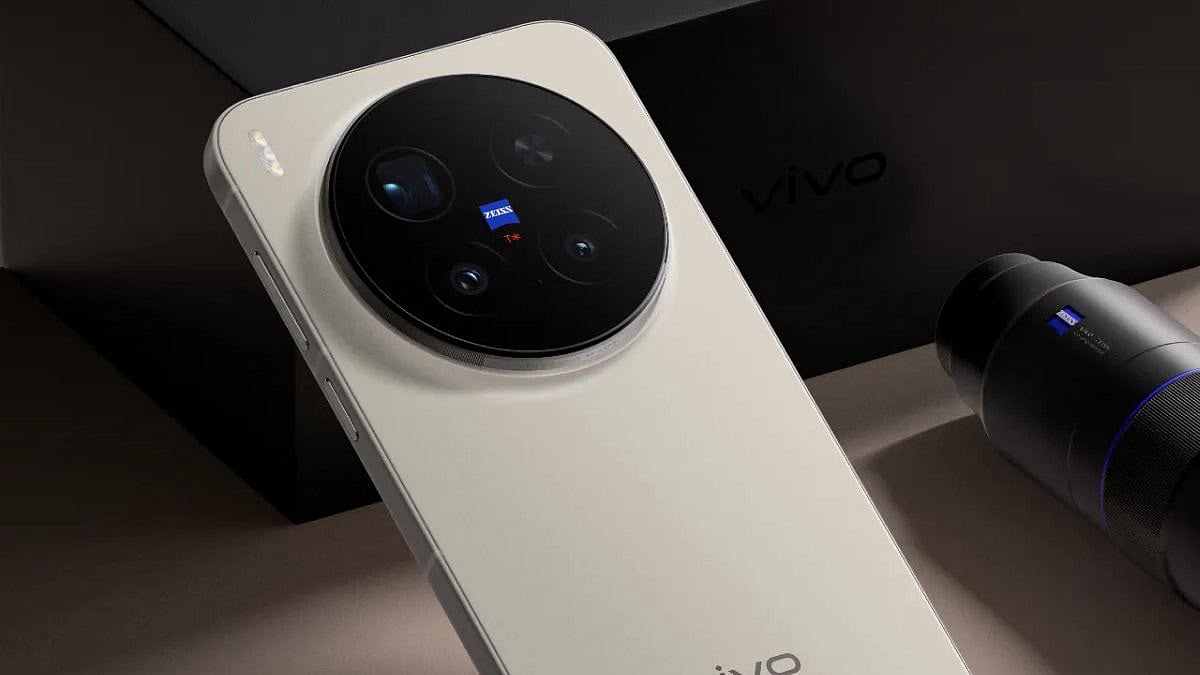
    A new leak has surfaced revealing key details about the upcoming Vivo X500 Pro, suggesting the flagship smartphone could launch in China this September. According to tipster Digital Chat Station on Weibo, the device will feature a 6.37-inch LTPO display with a 144Hz refresh rate, powered by the next-generation 2nm MediaTek Dimensity 9600 Pro chipset.

    The leak also indicates that Vivo is testing the X500 Pro with a BOE OLED panel using LIPO packaging, which would result in extremely slim bezels on all four sides. The phone is expected to retain Vivo’s signature circular rear camera design and a premium metal frame, offering a familiar aesthetic with notable refinements.

    These specifications align with earlier rumors pointing to a September launch in China. While Vivo has not officially confirmed the details, the accumulating leaks suggest the company aims to deliver enhanced performance, smoother visuals, and a more polished design with the X500 Pro.

    The Vivo X500 Pro will succeed the Vivo X300 Pro, which launched with a 6.78-inch 1.5K LTPO AMOLED display at 120Hz, a MediaTek Dimensity 9500 processor, up to 16GB RAM and 512GB storage, a triple rear camera, and a 6,510mAh battery with 90W wired and 40W wireless charging. If the leaked specs prove accurate, the X500 Pro could become one of the strongest Android flagship launches this year, combining a faster chipset, a smoother display, and a premium design.

  • Leading AI Chatbot Development Firms in India: A 2026 Guide

    Leading AI Chatbot Development Firms in India: A 2026 Guide

    India’s AI chatbot industry has evolved dramatically, moving beyond simple rule-based widgets to sophisticated, LLM-powered conversational systems. In 2026, the market offers a diverse range of solutions, from enterprise platforms to custom-built AI agents, with a strong focus on multilingual support, WhatsApp integration, and agentic AI capabilities. Choosing the right provider is a strategic decision that depends on business size, deployment needs, integration requirements, and long-term scalability.

    Key Players in India’s AI Chatbot Landscape

    The following ten companies stand out for their verified scale, technical depth, and real-world deployment history:

    1. Yellow.ai

    Founded in Bangalore in 2016, Yellow.ai has become a globally recognized platform with Indian roots. Now headquartered in San Mateo, California, it retains its engineering core in India. The platform supports over 135 languages across 35+ channels and has raised more than $100 million in funding. Its recent focus has shifted towards agentic AI, creating autonomous agents that can take action across voice and multimodal channels. Best for: enterprises needing global scale with deep Indian language support.

    2. Haptik

    Acquired by Jio Platforms, Haptik benefits from Reliance’s vast distribution network and enterprise relationships across telecom, banking, and retail. It builds AI agents and customer automation software, offering telecom-grade scale and reliability. Best for: businesses already within the Reliance/Jio ecosystem or those requiring massive, reliable deployment.

    3. Gupshup

    One of the longest-running conversational messaging businesses in India, Gupshup is built around communication infrastructure. As an early global partner of WhatsApp, it excels in high-volume delivery across WhatsApp, SMS, and RCS, rather than heavily customized conversational experiences. Its India entity reported revenue exceeding ₹1,000 crore for the year ending March 2025. Best for: businesses prioritizing reliable, high-volume messaging delivery.

    4. CoRover

    Bengaluru-based CoRover is best known for AskDISHA, the IRCTC virtual assistant that handles massive daily query volumes in Hindi, English, and Hinglish, including voice-based ticket booking. Its BharatGPT platform is a sovereign Indian LLM supporting 12+ languages for voice and 22 for text, and it was recently selected to build a sovereign AI lab for the Indian Army. Best for: government, railway, and public-sector deployments needing verified Indian-language depth and data sovereignty.

    5. Engati

    Engati’s strength is its no-code builder, enabling non-technical teams to launch and adjust bots across channels quickly. It trades some deep customization for speed and ease of iteration. Best for: startups and mid-size teams that want to move fast and manage bots in-house.

    6. Freshworks

    Freshworks integrates chatbot capabilities into its Freddy AI, embedded across Freshchat, Freshdesk, and Freshsales. Freddy AI Agent automates repetitive queries and hands off complex ones with full conversation context. Its advantage is native integration for businesses already using the Freshworks suite. Best for: companies already using Freshworks tools for support or sales.

    7. BotPenguin

    A no-code, generative AI agent platform supporting WhatsApp, Instagram, Telegram, Facebook, and websites, BotPenguin holds GDPR, HIPAA, CCPA, and ISO certifications and offers white-label options for agencies. Best for: agencies and smaller businesses wanting fast, compliant deployment without in-house engineering.

    8. Kommunicate

    Kommunicate positions itself between fully custom development and rigid off-the-shelf bots. Its builder is aimed at support teams wanting AI-assisted resolution layered onto existing human agent workflows. Best for: support-heavy businesses wanting AI and live-agent handoff working together.

    9. Teleglobal International

    A Pune-based IT consulting and cloud AI company serving over 900 clients globally, Teleglobal holds AWS AI Services Competency and builds chatbots natively on Amazon Bedrock, giving clients access to foundation models including Claude. Best for: enterprises wanting a custom-built chatbot on verified cloud infrastructure.

    10. TCS (Tata Consultancy Services)

    TCS, along with Infosys, Wipro, and HCLTech, represents India’s enterprise IT majors extending consulting relationships into governance-grade conversational AI for large, regulated clients. Their value is deep systems integration, compliance handling, and delivery infrastructure built for Fortune 500-scale rollouts. Best for: large enterprises needing a chatbot woven into existing legacy systems.

    How to Choose the Right Partner

    Healthcare, fintech, e-commerce, education, and banking currently see the strongest measurable returns from chatbot deployment in India, and WhatsApp Business API integration remains the most requested feature across sectors. The decision usually comes down to scale and control:

    • High-volume enterprise needs: Yellow.ai, Haptik, Gupshup, CoRover
    • Smaller teams wanting speed: Engati, BotPenguin
    • Custom development around proprietary systems: Teleglobal, TCS

    The Future of Chatbots in India

    The next wave of differentiation will not come from language support or channel count, as most serious players have already solved for both. It will come from how well these systems integrate with agentic workflows that take action rather than just answer, and how convincingly Indian-built models like BharatGPT can compete on sovereignty and trust.

    Frequently Asked Questions

    1. Which is the best AI chatbot development company in India?

    The best company depends on your business requirements. Platforms like Yellow.ai, Haptik, and CoRover suit large enterprises, while Engati and BotPenguin are popular for startups and small businesses seeking quick deployment.

    2. How much does AI chatbot development cost in India?

    Costs vary based on complexity, integrations, and deployment model. No-code platforms typically use subscription pricing, while custom enterprise solutions involve implementation and ongoing support costs.

    3. Which industries use AI chatbots the most in India?

    Banking, healthcare, e-commerce, retail, education, telecom, travel, and government organizations are among the largest adopters.

    4. Do Indian AI chatbot companies support WhatsApp Business API?

    Yes, many leading companies offer WhatsApp Business API integration, enabling automation of customer support, order updates, lead generation, and marketing conversations.

    5. What should businesses consider before choosing a provider?

    Evaluate multilingual support, LLM capabilities, integration with existing CRM/ERP systems, security, scalability, analytics, pricing, and post-deployment support.

  • Key Crypto Narratives Driving Market Growth in 2026

    Key Crypto Narratives Driving Market Growth in 2026

    The crypto market in 2026 has shifted away from short-term hype toward real-world adoption. Strong technology, tangible business use, and institutional involvement now define the landscape. Investors are focusing on sectors that solve genuine problems rather than projects driven by social media buzz. This transformation has opened new opportunities across digital finance, payments, infrastructure, and artificial intelligence. Below are the most compelling crypto narratives of 2026 that are shaping the next phase of industry growth.

    Real-World Asset Tokenization Leads the Market

    Real-world asset (RWA) tokenization is at the forefront of crypto in 2026. This process converts traditional assets such as government treasury bills, corporate bonds, private credit, real estate, and commodities into digital tokens on blockchain networks. Financial institutions value this approach for faster settlement, better liquidity, lower transaction costs, and 24/7 market access. Key projects like Ondo Finance, Centrifuge, Maple Finance, Ethena, and Chainlink are driving expansion in this sector. Industry experts view RWA tokenization as a long-term opportunity rather than a passing trend.

    Stablecoins Become a Global Payment Network

    Stablecoins have evolved far beyond their original trading utility. In 2026, businesses and financial firms rely on stablecoins for cross-border payments, payroll, merchant transactions, and commercial settlements. Digital dollars enable fast, low-cost transfers across borders, bypassing traditional banking delays. Major payment companies and regulated products like USDC, USDT, and Circle’s infrastructure continue to expand stablecoin services, reinforcing their role as one of the most practical examples of blockchain adoption.

    Artificial Intelligence Creates a New Crypto Economy

    AI has emerged as one of the hottest crypto narratives in 2026. Modern AI agents handle financial tasks autonomously—trading assets, rebalancing portfolios, executing payments, and interacting with decentralized finance protocols. Companies are developing AI wallets, decentralized AI marketplaces, digital identity solutions, and advanced trading systems. The convergence of blockchain and AI is creating a new digital economy where software performs financial activities with speed and efficiency.

    DePIN Expands Physical Infrastructure

    Decentralized Physical Infrastructure Networks (DePIN) link blockchain technology with physical resources. Instead of centralized control, individuals contribute computing power, wireless coverage, storage, mapping services, or energy resources and earn crypto rewards. Projects such as Render, Akash, Helium, Filecoin, and io.net are gaining traction. Demand for decentralized computing, especially from AI companies, supports continued growth. DePIN represents one of the most practical blockchain applications outside traditional finance.

    Bitcoin Strengthens Its Institutional Position

    Bitcoin continues to attract major financial institutions worldwide. Exchange-traded funds, corporate treasury investments, pension funds, and government interest have shifted the conversation. Large investors no longer question Bitcoin’s place in professional portfolios; instead, they debate the size of long-term allocations. This institutional confidence gives Bitcoin greater stability and reinforces its status as a digital store of value, often compared to traditional reserve assets.

    Bitcoin Finance Unlocks New Opportunities

    Bitcoin Finance (BTCFi) introduces innovative financial services for Bitcoin holders. Rather than leaving Bitcoin idle, users can lend, borrow, earn interest, restake, and access cross-chain solutions. This allows holders to generate returns while keeping their assets involved. BTCFi platforms are developing reliable financial products that unlock the potential of the world’s largest cryptocurrency.

    Prediction Markets and Blockchain Infrastructure Continue to Grow

    Prediction markets have expanded beyond politics to cover sports, economics, climate, AI, and business forecasts. These platforms aggregate insights from thousands of participants, often producing valuable predictions. Meanwhile, modular blockchain infrastructure is reshaping network design. Separate layers manage execution, settlement, consensus, and data availability, improving scalability, lowering costs, and giving developers more flexibility.

    Privacy Technology and Traditional Finance Move Closer Together

    Privacy remains a critical topic in crypto. Zero-knowledge (ZK) technology enables private identity verification, confidential transactions, and privacy-preserving financial applications. Financial institutions are increasingly interested in privacy solutions. At the same time, traditional finance is exploring tokenized funds, digital bonds, tokenized stocks, regulated DeFi assets, and banking custody, further bridging the gap between old and new finance.

    Why This Matters

    In 2026, the cryptocurrency market focuses on real-world use rather than speculative hype. Strong narratives help investors identify sectors with long-term potential. Understanding these trends enables informed investment decisions, reveals new opportunities, and reduces the risk of missing transformative developments.

    The Road Ahead for Crypto

    The strongest crypto narratives of 2026 share a common trait: they deliver practical value. Real-world asset tokenization, stablecoin payments, artificial intelligence, Bitcoin adoption, decentralized infrastructure, privacy technology, and stronger ties with traditional finance all reflect a maturing market. These sectors are at the forefront of digital finance’s next chapter, offering investors a clear view of where long-term innovation and adoption are developing.