Author: vitorcherulli

  • Bitcoin ETF Inflows Return, Lazarus Group Transfers BTC, and Hungary Eases Crypto Regulations

    Bitcoin ETF Inflows Return, Lazarus Group Transfers BTC, and Hungary Eases Crypto Regulations

    Crypto Market Roundup: Bitcoin ETF Inflows, Lazarus Group Activity, and Regulatory Shifts

    The crypto market saw a series of significant developments on July 30, 2026, as Bitcoin spot ETFs recorded net inflows, North Korea’s Lazarus Group moved a substantial amount of BTC, and Hungary streamlined its crypto regulations. Meanwhile, the CLARITY Act’s chances of passing in 2026 dropped to a new low.

    Bitcoin Spot ETFs See $32 Million Inflow After Outflow Streak

    According to data from SoSoValue, Bitcoin spot ETFs posted a total net inflow of $32.11 million on July 30, ending a four-session outflow streak. BlackRock’s IBIT led the charge with a daily net inflow of $89.83 million, bringing its historical net inflow to $60.42 billion. In contrast, Fidelity’s FBTC recorded the largest daily net outflow at $43.08 million, with a total historical net inflow of $9.96 billion. The combined net asset value of all Bitcoin spot ETFs now stands at $77.46 billion, representing a 6.08% net asset ratio. The historical cumulative net inflow has reached $51.36 billion, signaling renewed institutional interest in the asset class.

    Russia Detains BitRiver Founder in Fraud Investigation

    Russian authorities have escalated their case against Igor Runets, founder of the country’s largest cryptocurrency mining firm, BitRiver. The Zamoskvoretsky District Court of Moscow ordered Runets moved from house arrest to a pre-trial detention center, where he will remain for at least two months pending the investigation. Runets faces charges under Part 4 of Article 159 of the Russian Criminal Code, which covers fraud on an especially large scale committed by an organized group. Investigators allege that Runets and his company were involved in a crypto-mining equipment deal with the energy conglomerate En+ that resulted in damages of 1 billion rubles (approximately $12.5 million).

    North Korea’s Lazarus Group Moves $7.74 Million in Bitcoin

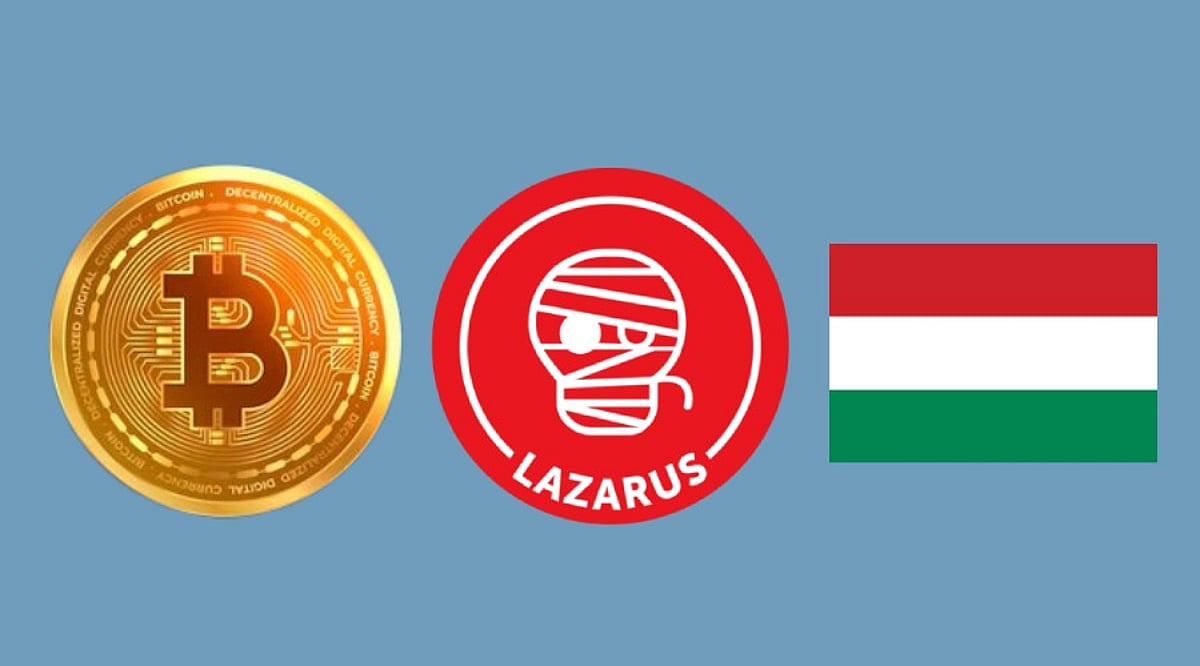
    Blockchain monitoring firm Lookonchain detected a transfer of 121.5 Bitcoin (BTC), valued at roughly $7.74 million, from a wallet associated with North Korea’s Lazarus Group to a new address. The transaction, which occurred on June 6, 2025, is part of the group’s ongoing efforts to launder funds from previous cyber heists. The Lazarus Group has been linked to major cryptocurrency thefts, including the $620 million Axie Infinity hack in 2022 and the $1.7 billion Bybit exploit in 2025.

    Hungary Streamlines Crypto Regulations Under MiCA Framework

    Hungary has taken steps to simplify its crypto regulatory environment. The Hungarian Parliament voted to repeal the country’s mandatory crypto validator rule, which had required certain crypto transactions to undergo third-party approval. This requirement, which took effect on July 1, 2025, operated alongside the European Union’s Markets in Crypto-Assets (MiCA) framework, creating a dual compliance burden for crypto asset service providers. With the repeal, Hungary has aligned more closely with MiCA, also applying a shortened transition period that required compliance by July 1, 2025—one year earlier than the EU’s maximum deadline. As a result, CoinCash has been authorized to resume operations in the country.

    CLARITY Act Odds Hit Record Low of 27%

    Prediction market Polymarket has set the probability of the CLARITY Act becoming law in 2026 at a record low of 27%, following a Senate delay. The Senate postponed action on the crypto market structure bill to consider a Russia sanctions package and federal nominees. Galaxy Digital similarly lowered its estimated probability of passage to 30%. With the Senate now focused on other legislative priorities and the August 8 recess approaching, the window for the CLARITY Act is shrinking. The Senate voted on July 28 to advance the sanctions legislation, leaving fewer working days for the crypto bill.

    Summary of Key Developments

    • Bitcoin ETF inflows: $32.11 million net inflow, led by BlackRock’s IBIT with $89.83 million.
    • Lazarus Group transfer: 121.5 BTC ($7.74 million) moved to a new wallet.
    • BitRiver founder: Igor Runets placed in pre-trial detention in Russia over alleged fraud.
    • Hungary crypto rules: Repeal of validator rule aligns with MiCA; CoinCash resumes operations.
    • CLARITY Act: Odds drop to 27% on Polymarket after Senate delay.
  • Meta Shares Drop 9% on Q2 Earnings Miss Despite Record Revenue of $60.8 Billion

    Meta Shares Drop 9% on Q2 Earnings Miss Despite Record Revenue of $60.8 Billion

    Meta Platforms shares fell approximately 9% in premarket trading after the company reported second-quarter earnings that missed Wall Street expectations. The company posted stronger-than-expected revenue growth, but lower earnings per share (EPS) and higher costs related to artificial intelligence investments pressured investor sentiment.

    Meta Q2 Earnings Miss Drives Stock Decline

    Meta reported earnings per share of $6.18 for the quarter, below analyst expectations of around $7.14. Revenue reached $60.8 billion, exceeding forecasts of $60.2 billion and marking a 28% increase from the previous year. The EPS figure included several one-time expenses that reduced quarterly profit, including a $2.4 billion charge linked to legal contingencies and $1.2 billion in severance expenses. Without these charges, Meta’s earnings performance would have been stronger. However, investors focused on the reported profit figure as the company continues to increase spending across artificial intelligence projects and data center expansion.

    Advertising Business Continues to Deliver Growth

    Meta’s advertising business continued to deliver growth during the quarter. Advertising revenue reached $59.3 billion, slightly above analyst expectations of $59.07 billion. The company’s platforms, including Facebook and Instagram, continued generating most of its revenue. Meta has also linked improvements in advertising performance to artificial intelligence tools used for recommendations and ad targeting.

    AI Spending Increases as Meta Expands Infrastructure

    Meta raised the lower end of its 2026 capital expenditure forecast as it continues investing in artificial intelligence infrastructure. The company now expects capital spending between $135 billion and $145 billion, compared with the previous range of $125 billion to $145 billion. The higher spending includes investments in data centers, servers and computing equipment needed to support AI development. Meta has also been expanding its plans to develop and provide AI products for businesses.

    CEO Mark Zuckerberg said, “AI spending is accelerating every part of our core business,” as the company continues building AI models and tools. Meta also announced a partnership with BlackRock to develop a $14 billion data center project in Texas. BlackRock will hold an 80% stake in the facility, while Meta will own the remaining 20%. Additionally, Meta introduced its Muse Spark 1.1 AI model with pricing designed to compete with other AI providers, offering lower costs for developers using its AI models.

    Meta Revenue Outlook Falls Below Wall Street Forecasts

    Meta’s third-quarter revenue forecast added pressure after the company projected revenue between $61 billion and $64 billion. The midpoint of the guidance came below Wall Street expectations of about $63.1 billion. The company’s lower forecast range increased market attention toward future revenue growth and the financial return from its AI investments.

    Meta’s free cash flow also declined during the quarter. The company reported $784 million in free cash flow, compared with $8.5 billion during the same period last year. Nevertheless, analysts continue tracking Meta’s long-term AI strategy as the company works to build new products and commercial services. Zuckerberg said the company expects AI agents and business-focused AI tools to become part of its future product offerings.

    Meta’s stock has faced pressure in 2026, with shares already trading lower before the earnings release. The latest decline followed concerns surrounding rising expenses, slower guidance growth, and the cost of expanding AI infrastructure.

  • Samsung Galaxy S26 FE Leak Reveals 45W Charging and Exynos 2500 Chip

    Samsung Galaxy S26 FE Leak Reveals 45W Charging and Exynos 2500 Chip

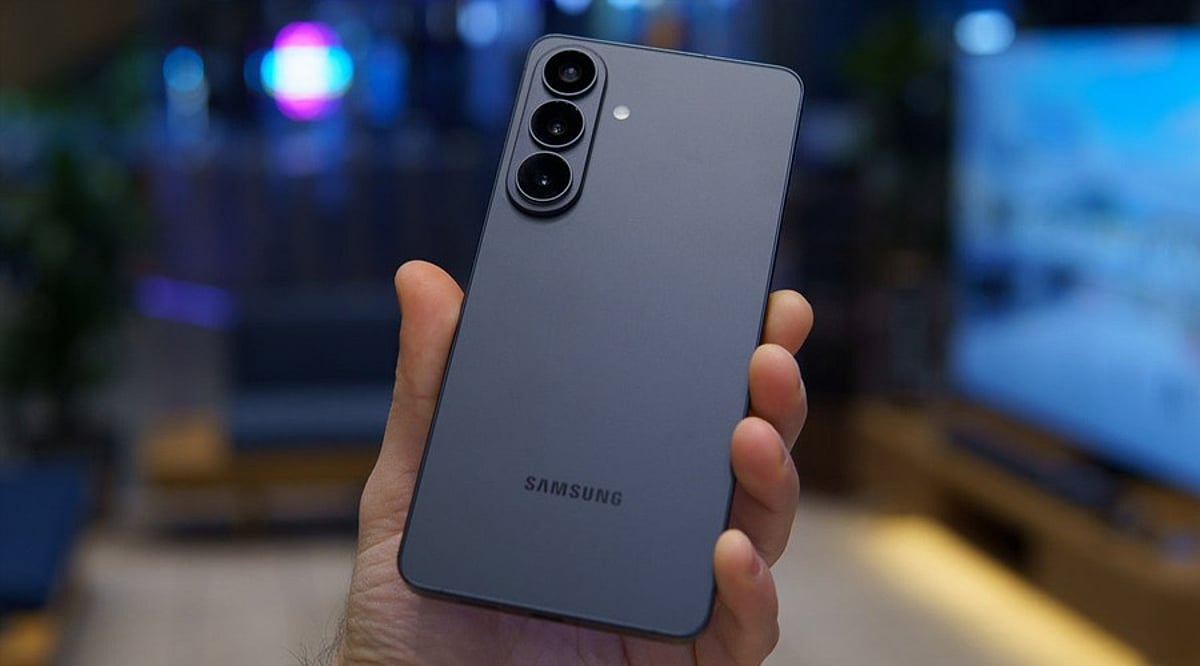
    Samsung may be gearing up to launch the Galaxy S26 FE, as fresh certification listings have unveiled key specifications. The latest leaks, building on earlier BIS and Geekbench appearances, suggest the company is in the final stages before an official announcement. While Samsung has not confirmed anything, the reports indicate support for 45W wired fast charging, the Exynos 2500 processor, and a 6.7-inch AMOLED display.

    According to multiple sources, the Galaxy S26 FE could launch around August or September. The UL Demko certification reportedly lists support for 45W fast charging, and several model numbers have appeared, hinting at different regional variants, including for India. The phone is expected to run Android 17 with One UI 9, paired with 8GB of RAM and storage options of 128GB, 256GB, and 512GB.

    Display and Performance

    The device is rumored to feature a 6.7-inch Dynamic AMOLED display with FHD+ resolution, a 120Hz refresh rate, and HDR10+ support. It is also expected to include IP68 water and dust resistance, stereo speakers, Wi-Fi 7, and Bluetooth 5.4. A 4,900mAh battery with 45W wired charging (and likely 25W wireless charging) would provide a noticeable upgrade over the standard Galaxy S26.

    Camera and Pricing

    The camera setup is expected to include a 50MP main sensor with OIS, a 12MP ultra-wide lens, and an 8MP telephoto camera with 3x optical zoom. A 12MP front-facing camera is also anticipated. Reports suggest the price in India could start at around Rs. 66,000, though higher storage models may cost more. Samsung has not officially announced launch date, price, or specifications, so details may change.

  • Consistent Infosystems Debuts Wave Wired Gaming Headphone in India at ₹1,699

    Consistent Infosystems Debuts Wave Wired Gaming Headphone in India at ₹1,699

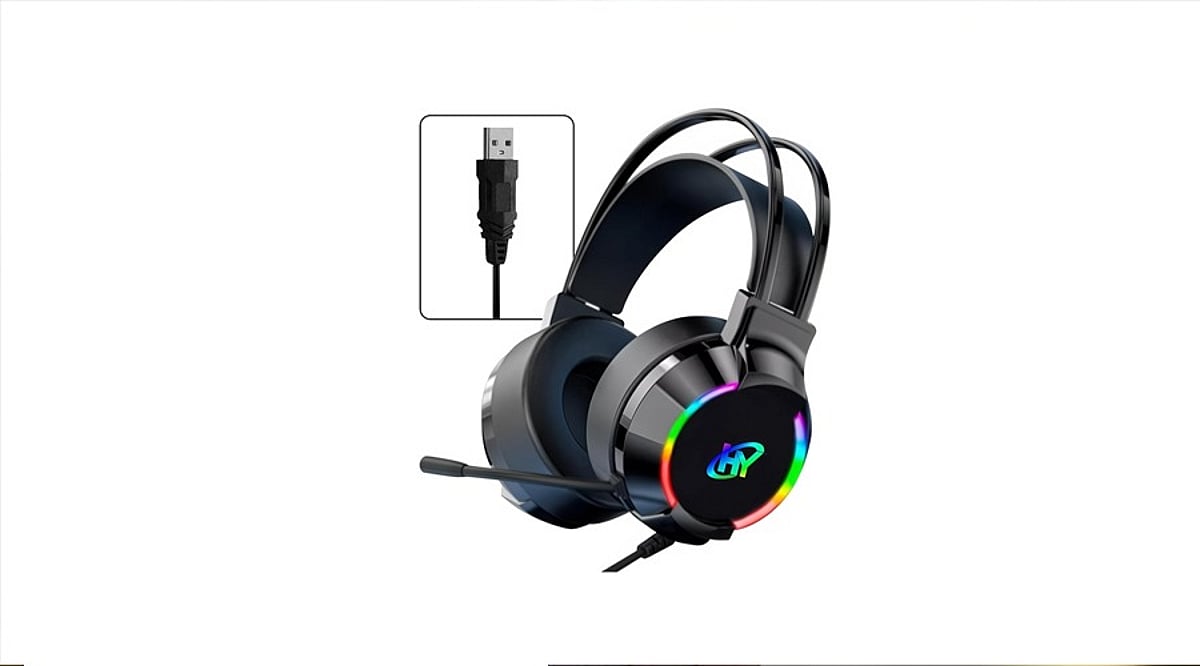
    Consistent Infosystems has launched the Wave Wired Gaming Headphone in India, offering an affordable option for gamers, streamers, and content creators. Priced at ₹1,699, the headset combines RGB lighting with 50mm drivers and a wired connection for low-latency audio.

    The headset features 40mm speaker drivers with a frequency response of 20Hz to 20kHz, delivering clear sound for gaming, movies, and streaming. An omnidirectional microphone ensures reliable voice pickup during multiplayer sessions, voice chats, and online meetings. The wired design makes it easy to connect to laptops and PCs without additional setup.

    As the Indian gaming market expands, local brands like Consistent are stepping in to provide budget-friendly accessories. Previously, many gamers relied on expensive imported gear, but now affordable options like the Wave headphone are lowering the entry barrier for new players.

    With its combination of RGB aesthetics, solid audio performance, and a sub-₹2,000 price tag, the Wave Wired Gaming Headphone is positioned to attract first-time buyers and casual gamers looking for value.

  • Dogecoin Price Outlook: Wedge Tightens as Analyst Revisits $2.82 Target

    Dogecoin Price Outlook: Wedge Tightens as Analyst Revisits $2.82 Target

    Dogecoin (DOGE) is trading near $0.07030, with its short-term chart forming a tightening wedge pattern. The memecoin remains far below its all-time high near $0.73, but renewed technical analysis from crypto analyst Javon Marks has brought a long-term target of $2.82 back into discussion. Over the past 24 hours, DOGE has dropped 1.07%, with $575.8 million in trading volume and a market capitalization of $12.02 billion.

    Wedge Pattern Tightens as Longs Absorb Losses

    On the shorter timeframe, DOGE price action has compressed into a narrowing wedge near $0.07012. Both buyers and sellers are waiting for a clear breakout. Compared to other memecoins like Shiba Inu and Pepe, which are also trading sideways, Dogecoin’s wedge has tightened more sharply. Meanwhile, long liquidations reached roughly $2.18 million over 24 hours, while short liquidations stood at about $172,900, indicating that leveraged long positions bore the brunt of recent losses.

    Binance and OKX Lead Exchange Volume

    Binance recorded the highest Dogecoin volume among major exchanges, handling approximately $295.19 million. OKX followed with $192.43 million, while MEXC and Bybit reported $89.14 million and $80.01 million, respectively. Traders continue to monitor whether increased buying activity can push DOGE above its narrowing range.

    Analyst Points to Historical Pattern for $2.82 Target

    Cryptocurrency analyst Javon Marks compared Dogecoin’s current structure with earlier altcoin cycles. He noted that DOGE previously crossed the 1.618 Fibonacci extension during major bull markets and linked that historical pattern to a possible $2.82 target. Achieving this level would require an advance of approximately 3,800% from current prices. Marks emphasized that such a move would depend on stronger sentiment, deeper liquidity, and a broad altcoin rally. Without those conditions, the projection remains a long-term technical scenario.

    Whale Movement Adds to Market Interest

    Separately, on-chain tracker dogegod reported that whales moved 900 million DOGE in a single day, valued at roughly $63 million. The purpose of the transfer was not confirmed, but large movements can signal accumulation, portfolio rebalancing, or preparation for future market activity. Despite the whale movement and renewed analyst attention, DOGE remains in a downtrend, pressured by Bitcoin’s decline and broader altcoin sentiment. Traders are watching buying volume, technical confirmation, and further whale transfers for clearer signals about Dogecoin’s next move.

  • Spider-Man: Brand New Day OTT Release Window Revealed – When and Where to Stream

    Spider-Man: Brand New Day OTT Release Window Revealed – When and Where to Stream

    Tom Holland’s Spider-Man: Brand New Day has officially swung into theaters, and fans are already eager to know when they can watch the latest Marvel adventure from the comfort of home. While no official streaming date has been confirmed, reports indicate that Netflix has secured the digital rights for the film, with a release expected in late September or early October 2026.

    OTT Release Timeline

    According to industry sources, Spider-Man: Brand New Day will likely arrive on Netflix in the latter half of September or early October 2026, following its theatrical run. This timeline aligns with typical release patterns for major Marvel films, though fans should await an official announcement from Netflix or Sony.

    Story Continues After No Way Home

    The film picks up four years after the events of Spider-Man: No Way Home. Peter Parker (Tom Holland) now lives in solitude, deliberately avoiding contact with MJ (Zendaya) and his best friend Ned (Jacob Batalon) to protect them from the dangers of his crime-fighting life. Directed by Destin Daniel Cretton, the movie explores Peter’s struggle to rebuild his identity while grappling with the consequences of Doctor Strange’s spell.

    Star-Studded Cast

    Alongside Holland and Zendaya, the film features an impressive ensemble including Mark Ruffalo, Jon Bernthal, Jacob Batalon, Sadie Sink, Liza Colón-Zayas, Tramell Tillman, Marisa Tomei, Naomi Watts, Michael Mando, Keith David, Marvin Jones III, Olivia Booth-Ford, Eman Esfandi, Leah Phillips, Billy Clements, and Zabryna Guevara.

    Strong Opening in India

    The Marvel sequel has made a strong start in India, earning an estimated net of ₹11.88 crore (gross ₹14.02 crore) by midday on its opening day. The film’s popularity suggests a significant audience eagerly awaiting its streaming debut.

    Stay tuned for official updates on the OTT release date. For more entertainment news, follow our channel.

  • Ethereum Institutional Raises Ecosystem Funding Round with Over 100 Backers

    Ethereum Institutional Raises Ecosystem Funding Round with Over 100 Backers

    Ethereum Institutional, a nonprofit organization, has completed its first ecosystem funding round, drawing support from more than 100 backers spanning the Ethereum ecosystem and regulated finance. The round was led by BitMine, SharpLink, Joe Lubin, and Mihai Alisie, though the exact amount raised remains undisclosed.

    The nonprofit aims to act as a neutral bridge connecting Ethereum with banks, asset managers, custodians, and public authorities. Its focus areas include tokenization, stablecoins, collateral systems, and on-chain market infrastructure.

    Backers Span Ethereum and Regulated Finance

    The backer list reflects broad support from across the crypto and traditional finance sectors. Decentralized finance platforms such as Aave, Compound, Morpho, and Uniswap participated, alongside Layer-2 networks like Arbitrum, Optimism, Linea, and ZKsync. Infrastructure providers Circle, Chainlink, Fireblocks, Ledger, and MetaMask also joined, as did analytics firms DefiLlama, Dune, Etherscan, and L2BEAT.

    Regulated financial firms including 21Shares, Anchorage Digital, Galaxy, Robinhood, and Securitize contributed to the round, as did Consensys and individuals such as Karl Floersch and Katherine Wu.

    Ethereum Institutional has not disclosed its budget, headcount, or first mandates, so the breadth of participation currently serves as the primary indicator of industry support.

    Nonprofit Model Targets Institutional Guidance

    The organization plans to approach institutions evaluating Ethereum, offering guidance without promoting a specific product or pursuing direct sales. Its nonprofit structure allows it to explain how tokenized bonds, fund units, and money market instruments can operate on Ethereum, as well as cover stablecoin payments and tokenized collateral.

    On-chain market infrastructure—systems supporting trading, settlement, and collateral movement directly through blockchain networks—forms another key focus area. The question remains: can a nonprofit become the trusted bridge between Ethereum and regulated finance? Future mandates will reveal whether institutions view the organization as a credible neutral adviser.

    Spin-Offs Reshape Ethereum Foundation Work

    Ethereum Institutional is one of three spin-offs linked to the Ethereum Foundation. Ethlabs focuses on protocol research, while EthSystems develops privacy tools for institutional users. EthSystems launched in mid-July 2026 under Mo Jalil, Oskar Thorén, and Aaryamann Challani. Unlike Ethereum Institutional, EthSystems operates for profit and sells privacy software.

    EthSystems’ work builds on foundational research involving central banks, regulators, and financial institutions, including projects on private bonds, confidential stablecoin transfers, and the Ethereum Privacy Map. These spin-offs follow a major foundation overhaul announced in June 2026, which cut staff by 20% and reorganized work into five clusters.

    BitMine and SharpLink support both Ethereum Institutional and EthSystems, and both public companies hold Ethereum as treasury assets, linking their balance sheets to wider institutional use of the network.

    A Brief Roundup

    Ethereum Institutional enters the market with backing from over 100 ecosystem and regulated finance supporters. Its nonprofit structure separates neutral guidance from commercial services, while EthSystems and Ethlabs handle privacy and protocol work. The next measurable step will come through disclosed mandates, staffing, and institutional projects.

  • Indian Startup Sarvam AI Builds 1-Trillion-Parameter Model to Compete Globally

    Indian Startup Sarvam AI Builds 1-Trillion-Parameter Model to Compete Globally

    Bengaluru-based artificial intelligence startup Sarvam AI is making a bold bet on a massive 1-trillion-parameter foundation model, signaling its ambition to compete with global AI leaders. The announcement came during the company’s Epoch 2026 event, where co-founder Pratyush Kumar outlined the model’s focus on coding, cybersecurity, scientific research, and simulation workloads.

    Developed from scratch, the model aims to enable developers and enterprises to build AI solutions tailored specifically for Indian languages and use cases. At the same event, Sarvam AI revealed pricing for its earlier Sarvam 105B model: $0.80 per one million blended tokens—significantly cheaper than comparable global large language models (LLMs).

    To bolster its efforts, the startup announced partnerships with three Indian Institutes of Technology (IITs) and two state governments for pilot projects in education and public service delivery. Additionally, the company has brought on board Devendra Singh Chaplot, a former xAI researcher, as a part-time advisor. Chaplot previously contributed to founding teams at Mistral AI and Mira Murati’s Thinking Machines Lab.

    However, industry observers question whether building ever-larger models remains the right strategy. The AI landscape has shifted toward efficiency, with many companies adopting architectures like Mixture-of-Experts (MoE) to deliver strong performance with lower computational costs. A large model alone will not guarantee success—Sarvam must also develop practical tools that solve real-world problems for users and businesses.

    While hiring a former xAI researcher and launching the 1-trillion-parameter project are significant steps, the startup’s biggest challenge will be turning these ambitious ideas into trusted, everyday products.

  • Flat Start for Indian Markets: Nifty 50 Steady, Sensex Edges Down 15 Points on Weak Global Sentiment

    Flat Start for Indian Markets: Nifty 50 Steady, Sensex Edges Down 15 Points on Weak Global Sentiment

    Indian equity benchmarks opened on a flat note Thursday, tracking weak global cues. The Nifty 50 started at 24,249.55, nearly unchanged from its previous close of 24,250.20, while the Sensex opened 15 points lower at 77,638.86. The Bank Nifty also declined, opening 778.85 points below its prior close.

    The rupee strengthened marginally, opening at Rs. 95.58 against the U.S. dollar compared to Wednesday’s close of Rs. 95.64. Foreign institutional investors (FIIs) remained net buyers, purchasing shares worth Rs. 2,982 crore on July 29, while domestic institutional investors (DIIs) bought stocks worth Rs. 998 crore.

    Broader market indices outperformed, with the Nifty Midcap 100 rising 0.8% and the Nifty Smallcap 100 gaining 1.5%.

    Sensex Outlook

    Technically, the Sensex stayed positive in the previous session, hitting an intraday high of 77,765.49. Buying interest across key sectors and improving momentum supported the index.

    “The 77,000 level is expected to provide immediate support and act as a crucial cushion against any short-term pullback. On the upside, 78,500 is the key resistance level, and a sustained move above this mark could strengthen bullish momentum,” said Sachin Gupta, VP – Technical Research at Choice Equity Broking.

    Nifty 50 Outlook

    The Nifty 50 remains in a consolidation phase after recent weakness. It formed a bearish candle on the daily chart, indicating continued corrective momentum.

    “Overall, the index is expected to extend consolidation in the range of 23,800-24,350. Only a breakout or breakdown will signal the next directional trend. Short-term support is placed at 23,800, being the confluence of the almost identical low of the last 5 weeks and 50 days EMA,” said Bajaj Broking Research.

    A decisive break below Wednesday’s low of 23,961 could drag the Nifty toward the 23,800 support. On the upside, the 24,200 mark is expected to act as immediate resistance.

    Bank Nifty Outlook

    Bank Nifty formed a high-wave candle with a higher high and higher low, indicating renewed buying interest after consolidation. The index has largely traded within the 56,500-58,700 range over the past six weeks.

    “The 57,500 remains the immediate hurdle, while a sustained move above this level could pave the way for an advance towards 58,000. On the downside, the 56,500-56,000 zone remains a crucial support area, reinforced by the lower band of the six-week trading range, an ascending trendline, and the 52-week EMA. The index holding above this support cluster suggests a constructive broader outlook,” said Bajaj Broking.

    Disclaimer: This article is for informational purposes only and does not constitute investment advice. Readers should conduct their own research before making any investment decisions. Analytics Insight does not provide financial guidance on stocks or cryptocurrencies.

  • Gold Prices Inch Higher on MCX as Fed Holds Rates; Brent Crude Slips Below $90

    Gold Prices Inch Higher on MCX as Fed Holds Rates; Brent Crude Slips Below $90

    Gold futures traded higher on the Multi Commodity Exchange (MCX) on July 30, despite a stronger U.S. dollar and rising 10-year Treasury yields, after the U.S. Federal Reserve decided to keep interest rates unchanged. August gold futures rose 0.26% to Rs 1,42,150 per 10 grams. In contrast, September silver futures declined 0.59% to Rs 2,16,200, while Brent crude futures fell 1.14% to $89.71 per barrel. U.S. West Texas Intermediate (WTI) crude also edged lower by 0.81% to $83.78 per barrel.

    According to the CME FedWatch Tool, market expectations for a September rate hike dropped to 63% from 81% before the Fed’s policy decision, reflecting a shift in sentiment after the central bank’s announcement.

    Domestic Gold Prices

    In the domestic spot market, 24-karat gold rose by Rs 82 to Rs 1,44,330 per 10 grams, while 22-karat gold advanced by Rs 75 to Rs 1,32,300. Prices remained consistent across major cities: Mumbai and Kolkata quoted Rs 1,44,330, Delhi Rs 1,44,480, and Chennai Rs 1,44,330.

    U.S. Gold Prices

    In the international market, gold prices edged higher on Thursday as investors assessed comments from Federal Reserve Chairman Kevin Warsh on inflation following the rate hold. Spot gold gained 0.3% to $4,076.29 per ounce, while U.S. gold futures for August delivery rose 1% to $4,073.60. Spot silver added 0.4% to $57.86 per ounce, palladium climbed 1.5% to $1,264.49, and platinum dipped 0.6% to $1,602.34.

    Key Levels to Watch

    Analysts noted that gold’s upward momentum was supported by a perceived lack of urgency from the Fed to raise rates. “I think the markets were surprised, and somewhat disappointed by Warsh and his general approach. He seemed kind of disengaged from the need to raise interest rates,” said Edward Meir, analyst at Marex. “The markets have gone up to fight inflation, but he doesn’t seem to be doing much, and so this has helped gold go up.”

    On MCX, gold is expected to find support at Rs 1,41,100 and Rs 1,40,400, with resistance at Rs 1,42,650 and Rs 1,43,300. Silver has support at Rs 2,15,500 and Rs 2,13,300, and resistance at Rs 2,20,000 and Rs 2,23,100.