Author: vitorcherulli

  • Jensen Huang: AI Boom Driven by Infrastructure Demand, Not Speculation

    Jensen Huang: AI Boom Driven by Infrastructure Demand, Not Speculation

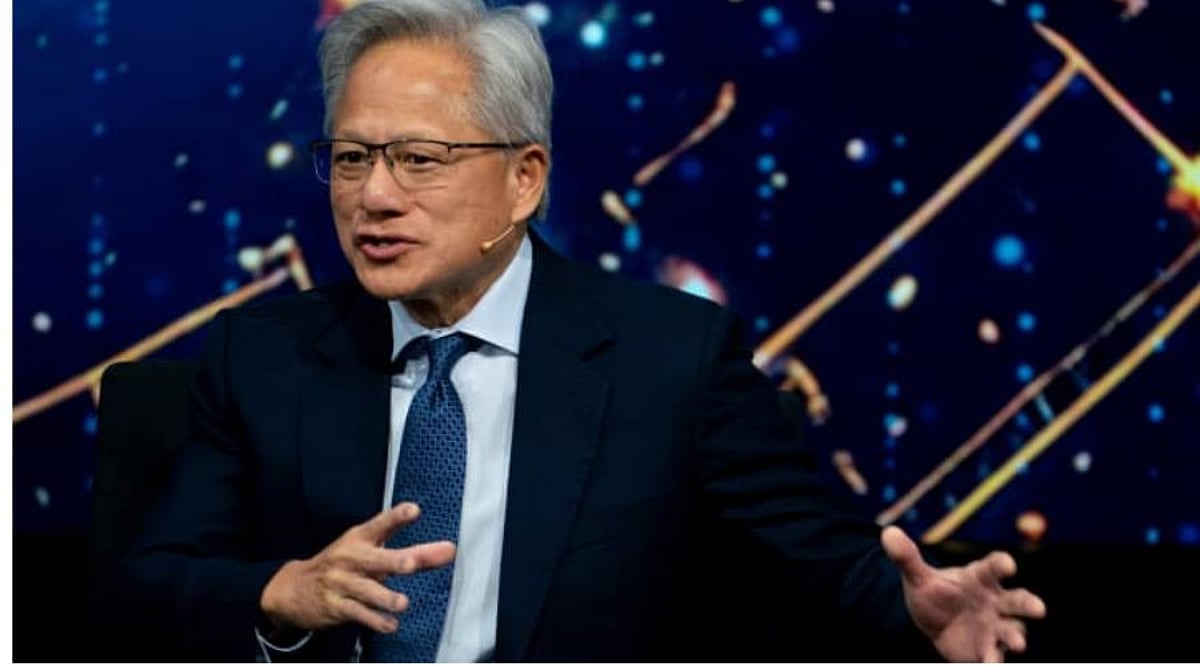
    Artificial intelligence is unlikely to experience a bubble burst anytime soon, according to NVIDIA CEO Jensen Huang, who believes the current AI boom is driven by a fundamental shift in computing rather than short-term market hype. His remarks come as investors continue to debate whether massive spending on AI infrastructure can be sustained.

    Infrastructure Shift Backs AI Demand

    Speaking during an interview with Axios co-founder Mike Allen, Huang argued that the semiconductor industry’s current growth cycle differs from previous booms. He said that the demand is not being driven by seasonal buying patterns or temporary trends but by a structural transformation in computing.

    According to Huang, AI requires an entirely new computing infrastructure, with businesses, governments, and developers investing heavily in data centers and advanced processors. He believes the industry will need to expand several times over the next decade to meet rising AI requirements.

    No Signs of a Slowdown Yet

    The NVIDIA chief highlighted that he does not expect a downturn in AI chip demand ‘for a while,’ despite concerns over rising capital expenditure by technology companies. His comments arrive after semiconductor stocks experienced volatility amid questions about whether spending on AI hardware can continue at its current pace.

    Huang maintained that customers are investing because AI infrastructure is becoming an essential part of modern computing rather than an optional technology upgrade. In his view, the industry’s growth is tied to long-term technological change instead of speculative buying.

    Bullish View from AI Chip Leader

    NVIDIA has emerged as the biggest beneficiary of the AI boom, with its graphics processors powering many of the world’s leading AI models. As the company’s chief executive, Huang has consistently defended the long-term outlook for AI investments.

    His latest comments also reinforce his broader position that AI adoption is still in its early stages. He has repeatedly argued that wider use of AI will create new opportunities across industries and continue driving demand for computing infrastructure, rather than triggering a rapid market correction.

    While some analysts remain cautious about the pace of AI spending, Huang believes the industry’s trajectory is supported by real technological needs rather than speculative enthusiasm. For NVIDIA, that translates into continued demand for AI chips as businesses build the infrastructure needed for the next generation of computing.

  • Best Smart Water Purifier Deals This Weekend: Urban Company, Aquaguard & More

    Best Smart Water Purifier Deals This Weekend: Urban Company, Aquaguard & More

    Smart water purifiers now combine advanced RO, UV, and UF purification with features such as longer filter life, copper enrichment, lower maintenance, and extended warranty support. Weekend sales bring competitive pricing, bank offers, free installation, and service benefits across popular Urban Company Native and Aquaguard models. Choosing the right purifier depends on water source, purification technology, servicing costs, and long-term ownership value rather than the discount alone.

    A water purifier can look affordable today and become expensive within a year. That is why this weekend’s best deals are not just about price cuts. Urban Company and Aquaguard offer models that combine strong discounts with lower ownership costs. The five models below are live on major platforms right now, checked against multiple listings rather than a single source. Prices on these sale windows move often, sometimes within the same day, so a quick confirmation at checkout is worth the extra minute before adding anything to the cart.

    This Weekend’s Deal Highlights

    Select Aquaguard models are discounted up to 50 percent against the listed price. Free installation comes included on all five models covered here. Bank card discounts apply on select Amazon and Flipkart listings. Aquaguard’s Sure Delight NXT bundles a free service plan worth. Urban Company’s Native range waives annual maintenance contract fees, the recurring servicing charge most purifiers carry, for two years on every model.

    Urban Company Native M1

    Native M1 pairs a 10-stage RO, UV, and UF stack with copper and alkaline enrichment and carries a two-year zero-service warranty that covers every filter, membrane, and electrical part. The listed price sits close to Rs. 19,000, with current sale pricing around Rs. 13,500 depending on the seller. The real appeal is not the discount alone. It is the two-year no-service window, which removes the AMC cost that quietly eats into savings on cheaper purifiers within a year or two.

    Urban Company Native M2 Pro

    M2 Pro adds touch-based dispensing presets and battery backup on top of the same 10-stage purification and two-year AMC waiver as the M1. Launch pricing was set at Rs. 17,496, with weekend listings running lower on some platforms. This model fits households that want the convenience layer on top of core purification rather than a step up in water quality over the M1, and the battery backup matters most in areas with frequent power cuts.

    Aquaguard Delight Aquasaver RO+UV+UF+MC Tech

    This model runs a 9-stage purification process with a mega sediment pre-filter and delivers 60 percent higher water recovery than conventional RO systems. Higher recovery means less water gets rejected as waste per liter purified, a detail that matters most on tanker or borewell supply where every liter pumped in carries a cost, and the savings add up fast over a full year. Tracker data puts the current price near Rs. 12,500 against a listed price above Rs. 26,000 with a two-year filter-life cycle and two free cleaning services included.

    Aquaguard Sure Delight NXT RO+UV

    The NXT sits at the budget end of Aquaguard’s range, running RO and UV purification with a free service plan worth Rs. 2,000 that covers installation and one maintenance visit in the first year. Reported pricing sits near Rs. 8,000, though this model swings hardest on flash sales, so a live-listing check pays off more here than on the pricier entries above.

    Aquaguard Sure Delight UV+UF 2X

    This is a UV and UF unit without RO, built for municipal water under two hundred ppm TDS, and it should be skipped for borewell or tanker sources where TDS runs higher. It carries a six-stage process and a two-year filter life through its mega-sediment filter add-on. Sale pricing runs between Rs. 9,000 and Rs. 11,000. This is the cheaper option only for buyers on genuinely soft municipal supply, not a stand-in for the RO models above it.

    Comparing the Five

    The table below puts pricing, purification stages, filter life, and service terms side by side, which makes the trade-offs easier to spot than reading five separate entries again.

    Quick Verdict

    • Best Overall: Urban Company Native M1
    • Best Budget: Aquaguard Sure Delight NXT
    • Best for Borewell or Tanker Water: Aquaguard Delight Aquasaver
    • Best for Municipal Water: Aquaguard Sure Delight 2X
    • Best Premium Pick: Urban Company Native M2 Pro

    Final Thoughts

    Purifier prices on these sale windows will keep shifting through the week, and the model that looks cheapest today can trail the field once two years of servicing gets added back in. Checking the filter life and warranty terms against your actual water source is more important than simply looking at the discount percentage. Before focusing on the discount percentage, check the filter life and warranty terms. Doing so separates a good weekend buy from a purifier that costs more over time due to filter replacements and servicing.

  • Why United Natural Foods Stock Remains Undervalued Despite Strong Rally

    Why United Natural Foods Stock Remains Undervalued Despite Strong Rally

    United Natural Foods (UNF) stock has posted impressive gains, yet its sales valuation remains well below key market benchmarks. Shares recently closed at $49.67 after surging 76.1% over the past year and 139.7% over three years. While the rally has rewarded early investors, the current price raises a critical question: does the low valuation signal an overlooked discount, or do underlying risks justify the discount?

    Low P/S Ratio Highlights Valuation Gap

    United Natural Foods trades at a price-to-sales (P/S) ratio of approximately 0.1x, significantly below the consumer retailing industry average of 0.3x and the peer group average of 0.9x. A valuation model from Simply Wall St estimates a fair P/S ratio near 0.2x, meaning the current multiple sits at roughly half that level. The model assigns United Natural Foods a value score of five out of six, indicating most checks classify the shares as undervalued. However, valuation measures alone do not eliminate the company’s operational and financial risks.

    Profitability and Cash Flow Drive Real Value

    Food distribution requires tight cost control over inventories, transportation, and working capital. Small margin changes significantly impact earnings and cash generation. The company can boost profitability through higher-margin private-label brands, supply chain technology, and automation. Yet investors remain wary of balance sheet pressure and cash conversion. Rising costs or weak inventory management could limit free cash flow, keeping the stock’s valuation below broader market averages. The valuation case now hinges on execution: stronger margins and steady cash flow would justify a higher multiple.

    Wholesale Pressure Creates Clear Risks

    The food wholesale market faces disruption as brands increasingly use direct-to-consumer channels and online delivery platforms, potentially reducing demand for traditional wholesale services. A bearish scenario from Simply Wall St suggests United Natural Foods stock could trade about 16% above fair value if direct sales weaken volumes. In contrast, the bullish view values shares at approximately 11% below fair value, citing private brands, automation, and digital supply chain improvements. The wide gap between these estimates underscores how sensitive valuation is to operating results. While the stock trades at a low sales multiple, future pricing depends on margins, cash flow, and wholesale demand.

  • Tesla Stock Drops Near $300 After Q2 Earnings Miss Triggers Market Selloff

    Tesla Stock Drops Near $300 After Q2 Earnings Miss Triggers Market Selloff

    Tesla shares fell nearly 15% after second-quarter results raised concerns over weaker margins, negative free cash flow, and rising AI spending. The selloff pushed the stock toward the $300 support area and added pressure to the NASDAQ, while Bitcoin and Ether also declined as risk sentiment weakened.

    Tesla shares closed at $313.03 on July 24 after falling 2.08% during the session. The stock also slipped to about $311.40 in after-hours trading. Over one month, Tesla lost around 16.55% as investors reassessed the company’s second-quarter results and spending plans.

    The latest decline followed a 14.52% plunge on July 23. Tesla reported record vehicle deliveries and higher revenue, yet weaker margins and negative free cash flow drew more attention. The stock now trades close to the lower end of its recent range, with $300 becoming the nearest major technical level.

    Tesla Stock Nears Key $300 Support

    Tesla stock traded as high as $322.87 on July 24 before falling to an intraday low near $306.53. Selling pressure stayed firm after the earnings-driven decline. As a result, the shares closed only a few dollars above their first major support zone.

    The area between $306.50 and $300 now serves as short-term support. A sustained close below $300 could bring the 52-week low near $297.82 back into focus. On the other hand, buyers need to reclaim the $320 to $323 range to slow the current decline.

    Stronger resistance sits between $340 and $342. Tesla traded near that area before the post-earnings gap widened. A recovery toward that range would require stronger demand and improved confidence in the company’s profit outlook.

    Record Deliveries Fail to Calm Investors

    Tesla delivered a record 480,126 vehicles during the second quarter. The total exceeded the company-compiled estimate of about 406,000 vehicles. Model 3 and Model Y deliveries reached 467,762 units and accounted for most of the quarter’s volume.

    Revenue rose 26% from a year earlier to about $28.24 billion. Automotive revenue reached nearly $20.5 billion, while services and other revenue increased 50% to $4.58 billion. These results showed that Tesla continued to expand sales across its main business lines.

    Nevertheless, investors focused on profitability. Tesla’s operating margin fell to 1.4% from 4.1% a year earlier. Lower vehicle prices and higher costs supported deliveries but reduced earnings from each sale.

    The weaker margin also raised questions about how quickly Tesla can turn rising sales into stronger cash generation. This issue became more important as the company increased spending on artificial intelligence, batteries, robotics, and autonomous-driving systems.

    AI Spending Adds Pressure Across Markets

    Tesla’s capital expenditure reached about $5.8 billion during the quarter. Free cash flow turned negative by roughly $1.1 billion, marking the company’s first quarterly cash burn in more than two years. Tesla also expects annual capital spending to exceed $25 billion.

    The company continues to fund robotaxi development, artificial intelligence infrastructure, next-generation manufacturing, and the Optimus robot program. Meanwhile, investors are waiting for clearer revenue growth from these projects as costs rise in the near term.

    The concern spread beyond Tesla. Alphabet shares also fell as investors reviewed higher artificial intelligence spending plans. It raised its 2026 capital expenditure guidance to between $195 billion and $205 billion, up from its earlier range.

    The NASDAQ moved lower as investors reduced exposure to high-growth technology stocks. Risk-off trading also reached digital assets. Bitcoin fell about 1.8% toward $64,800, while Ether dropped around 3% to nearly $1,870. Concerns over technology spending affected several risk markets during the same trading period.

  • Walmart Shares Steady as E-Commerce and Grocery Revenue Drive Quarterly Gains

    Walmart Shares Steady as E-Commerce and Grocery Revenue Drive Quarterly Gains

    Walmart stock closed at $109.47 on Friday, July 24, gaining about 1% during the session. The shares traded between $108.03 and $109.54, while the company’s market value stood near $876 billion. Trading volume reached about 18.4 million shares during Friday’s regular session. Investors continued to assess Walmart’s latest results, institutional activity, analyst targets, and annual outlook.

    The retailer reported stronger sales across its main divisions during the quarter ended April 30. Revenue reached $177.75 billion, up 7.3% from a year earlier. Adjusted earnings matched market estimates at $0.66 per share. Walmart also kept its full-year outlook unchanged, despite higher distribution and fulfillment fuel costs. Grocery demand and increased customer traffic supported its core US operations.

    Walmart Stock Tracks Higher Quarterly Sales

    Walmart recorded $175.68 billion in net sales, compared with $163.98 billion in the prior-year quarter. Operating income increased 5% to $7.49 billion, while net income attributable to Walmart rose to $5.33 billion. GAAP earnings reached $0.67 per share. The gross profit rate edged up to 24.3% from 24.2%, while adjusted operating income grew 5.1% in constant currency.

    Walmart US net sales rose 4.5% to $117.17 billion. Comparable sales excluding fuel increased 4.1%, supported by a 3% rise in transactions. E-commerce contributed about 530 basis points to comparable sales growth. Walmart US e-commerce sales increased 26%, driven by store delivery, marketplace activity, and advertising. President and CEO John Furner cited “better shopping experiences, a broader assortment, and faster delivery.”

    Digital Businesses Support Segment Growth

    Global e-commerce sales increased 26% during the quarter, while the advertising business grew 37%. Walmart US advertising rose 36%, including a 44% increase at Walmart Connect excluding Vizio. Global membership fee revenue advanced 17.4%. Moreover, Walmart said improved e-commerce economics, Walmart+ growth, and other income supported adjusted operating income in its US business.

    Meanwhile, Walmart International net sales increased 18% to $35.11 billion. Constant-currency sales rose 10.1%, while operating income increased 23.9% to $1.60 billion. Sam’s Club US net sales climbed 6.1% to $23.41 billion. Its e-commerce sales rose 23%, while transactions increased 6.2%. Membership fee revenue grew 5.6% as member counts, renewals, and Plus memberships increased.

    Cumberland Cuts Stake as Guidance Holds

    Cumberland Partners reduced its Walmart position by 180,441 shares, or 30.1%, during the first quarter. The investment manager held 419,100 shares worth about $52.09 million at March 31. Walmart ranked as its fifth-largest reported position and represented about 4% of the portfolio. The SEC filing lists the shares under two investment-discretion categories, which together form the total holding.

    Separately, Walmart US Chief David Guggina sold 11,978 shares at an average price of $119.82 on June 10. The sale followed a Rule 10b5-1 trading plan adopted in March. Walmart expects second-quarter net sales to rise 4% to 5% in constant currency and forecasts adjusted earnings of $0.72 to $0.74 per share.

    The company retained its fiscal 2027 adjusted EPS range of $2.75 to $2.85. Recent analyst targets also stood above Friday’s closing price. RBC Capital maintained a $137 target on July 22, while Goldman Sachs held a $154 target on July 17. Morgan Stanley maintained a $140 target in late June, according to recent analyst tracking data.

  • World Foundation Secures $52.5M from Pantera Capital to Expand World ID Globally

    World Foundation Secures $52.5M from Pantera Capital to Expand World ID Globally

    World Foundation has raised $52.5 million through a strategic sale of WLD tokens led by Pantera Capital, with all tokens locked for one year. The funding will support the global expansion of World ID, a digital identity system designed to verify unique human users in an era of rising AI and bot fraud.

    Pantera Leads Locked WLD Token Sale

    The transaction, announced on July 24, marks the first close of the funding round. Additional participants include Bain Capital Crypto, Eightco Holdings, Selini Capital, and Susquehanna Crypto. All WLD tokens purchased in this round will remain locked for 12 months, limiting immediate market circulation. The foundation did not confirm whether further sales will follow.

    World Foundation plans to use the capital to expand World ID across businesses, consumer platforms, and services used by artificial intelligence agents. Pantera Capital general partner Cosmo Jiang said: “The need for Proof of Human is becoming acutely clear with the acceleration of AI development.”

    Notably, the sale does not provide investors with equity in Tools for Humanity, the company that develops World’s software and Orb devices. World Foundation emphasized that WLD tokens do not confer ownership rights, profit claims, or returns linked to the company.

    The latest round brings total funding linked to the project close to $492.5 million, including about $200 million raised through previous WLD sales and roughly $240 million in venture funding obtained by Tools for Humanity.

    World ID: Fighting Bots and AI Fraud

    World ID allows users to prove they are a unique person without publicly revealing their identity. A one-time iris scan via an Orb device generates a digital credential stored on the user’s phone. The system employs zero-knowledge proofs and multi-party computation to minimize personal data exposure.

    The technology aims to reduce bot activity, fake accounts, deepfakes, and synthetic identities across digital services. According to the foundation, the network has attracted over 39 million registered users, with more than 18 million having completed Orb verification. Since July 2023, the system has processed over 475 million identity proofs.

    Several major platforms have integrated World ID tools, including Zoom, DocuSign, Okta, Vercel, and Tinder. These integrations enable services to verify whether an account belongs to a real human.

    World ID 4.0: Enterprise Expansion

    World Foundation is preparing to release World ID 4.0, an enterprise-focused version of the identity system. The update will support large-scale integrations and allow third-party developers to create custom credentials within the World network.

    Organizations are expected to use the system for online access, account protection, age verification, and fraud prevention. The foundation also plans to offer verification tools for AI agents that require proof of human authorization.

    Regulatory Landscape

    World’s biometric model continues to face regulatory scrutiny. Authorities in Kenya, Spain, Brazil, Indonesia, South Korea, Hong Kong, and the Philippines have examined or restricted parts of its operations over privacy, consent, and data-handling concerns. World says it is working with regulators while pushing forward with network expansion.

    The latest WLD token sale provides additional resources for enterprise development, user growth, and wider deployment of proof-of-human technology.

  • Samsung Electronics Shares Slide as Tariff Concerns and Stablecoin Plans Emerge

    Samsung Electronics Shares Slide as Tariff Concerns and Stablecoin Plans Emerge

    Samsung Electronics stock fell sharply on Friday as investors weighed fresh tariff risks and the company’s announcement of native stablecoin support for Samsung Wallet. Shares dropped 7.6% to ₩249,500, joining a broader sell-off of South Korean chipmakers amid escalating trade tensions.

    Stablecoin Integration for Samsung Wallet

    During Galaxy Unpacked 2026 on July 22, Samsung announced plans to integrate stablecoin functionality into its Samsung Wallet, allowing Galaxy users to send, receive, and hold stablecoins directly within the app. The update will expand the wallet beyond payment cards, digital IDs, rewards, cash, and savings. A USDC interface was shown during the event, though Samsung did not confirm that USDC will launch with the service. Product manager Lee Dinham stated the goal to unify payments, rewards, and digital assets in one application, secured by Samsung Knox device encryption. This follows Samsung’s October 2025 partnership with Coinbase, which gave over 75 million US Galaxy users crypto access through Samsung Wallet and a three-month Coinbase One subscription.

    Tariff Pressures Weigh on Samsung Stock

    New US tariffs on imports from more than 60 economies have heightened concerns over global supply chains. Samsung, which sells consumer electronics, memory chips, displays, and other components across markets including the Americas, China, and Europe, faces direct exposure to customs costs, compliance rules, and potential trade retaliation. Higher duties could impact device pricing and component margins. The company is investing heavily in memory capacity and AI-related chips, but also faces legal disputes involving memory products and board-level changes, adding uncertainty for investors.

    Citi Maintains Buy Rating on Memory Demand

    Citi Research retained Buy ratings on Samsung Electronics and SK Hynix, calling the sell-off “unfounded fears” of a memory-cycle downturn. The bank noted that memory inventory remains “materially low” at suppliers and customers, and rising demand could keep supply below orders. Citi expects AI infrastructure to drive the next phase of memory demand, citing NVIDIA’s Vera Rubin platform as a potential driver for Samsung’s NAND and advanced DRAM businesses. The report also pointed to growing use of context memory extension systems and high-capacity SSDs near graphics processors.

    Samsung’s stablecoin plan adds a new service to its mobile ecosystem, but launch details remain unclear. Meanwhile, tariff risks and supply-chain costs persist. Citi’s positive rating reflects tight memory supply and expanding AI server demand.

  • Top Cross-Chain DEXs for Crypto Swaps in 2026: Platform Comparison and Guide

    Top Cross-Chain DEXs for Crypto Swaps in 2026: Platform Comparison and Guide

    Cross-chain decentralized exchanges (DEXs) have transformed how users swap tokens across different blockchains in 2026. Instead of juggling multiple bridges, wallets, and exchanges, these platforms aggregate liquidity from dozens of sources and automatically select the best route for speed, cost, and price. This guide compares the leading cross-chain DEXs, their strengths, supported networks, security considerations, and ideal use cases for every type of trader.

    Key Takeaways

    • LI.FI offers the best overall cross-chain swap experience with smart routing across 30+ blockchains.
    • deBridge stands out for fast transactions and low-slippage cross-chain transfers.
    • THORChain remains the top choice for native Bitcoin swaps without wrapped assets.
    • Across Protocol excels within the Ethereum ecosystem, especially Layer-2 networks.
    • Symbiosis Finance delivers a simple multi-chain swap experience.

    LI.FI – Best Overall Cross-Chain DEX

    LI.FI has become a trusted name in cross-chain swaps. It supports more than 30 blockchain networks and integrates multiple bridges and decentralized exchanges into one platform. Rather than forcing users to compare services manually, LI.FI automatically checks numerous routes and selects the optimal balance of speed, cost, and price. This saves time and money, especially when moving assets between Ethereum, Base, Arbitrum, Polygon, BNB Chain, Solana, and other popular networks. A clear fee display appears before each transaction, so users know the expected cost upfront. Because LI.FI relies on third-party bridges for execution, transaction quality can vary based on the bridge handling it. Nevertheless, its broad blockchain support and reliable routing make it the strongest all-round choice in 2026.

    deBridge – Fastest Cross-Chain Transfers

    Speed is critical when crypto prices fluctuate by the minute. deBridge supports more than 26 blockchain networks and focuses on rapid execution with low slippage. Many swaps between Ethereum Virtual Machine (EVM) chains complete in under two minutes. It also supports Solana, offering greater flexibility than many competitors. For traders who move funds between chains several times daily, this speed provides a significant advantage.

    THORChain – Native Asset Swaps Without Wrapping

    THORChain continues to attract users who prioritize true cross-chain decentralization. Unlike many platforms that require wrapped tokens, THORChain enables native asset swaps directly. Users can exchange Bitcoin for Ethereum or other supported assets without converting them into wrapped versions. It supports Bitcoin, Ethereum, Binance Coin, Avalanche, Dogecoin, and Litecoin. This approach reduces reliance on wrapped assets and gives users more control over their funds. A trade-off exists: during periods of high market activity, transaction fees may increase. Despite this, THORChain remains the leading choice for native Bitcoin swaps and decentralized liquidity.

    Across Protocol – Best for Ethereum Layer-2

    Across Protocol has built a strong reputation for transfers within the Ethereum ecosystem, particularly for Layer-2 networks such as Base, Arbitrum, and Optimism. Its relayer-based system speeds up transactions while keeping fees low, improving capital efficiency and reducing wait times. Across Protocol focuses on doing one job exceptionally well: anyone regularly transferring assets between Ethereum and its Layer-2 networks will likely find it one of the fastest and most affordable options available in 2026.

    Symbiosis Finance – Simplicity Across Chains

    Symbiosis Finance prioritizes convenience. Users can exchange almost any supported token for another on a different blockchain without dealing with separate bridge steps. It supports more than 30 blockchain networks across both EVM and selected non-EVM ecosystems. The entire process is simplified, making it attractive for those who value ease of use. Route performance varies depending on the blockchain and liquidity source, but Symbiosis Finance remains a practical option for users seeking simplicity.

    Other Notable Platforms

    1inch continues to dominate the EVM ecosystem with its advanced Pathfinder routing system. It searches multiple liquidity sources to select the best trading path, typically yielding better prices and lower slippage. However, its native support outside EVM networks remains limited.

    Jupiter remains the top DEX for the Solana blockchain, offering excellent liquidity and competitive pricing for Solana-based assets. Cross-chain features rely on external integrations, but its performance within Solana is among the best.

    Rango Exchange appeals to experienced users who need access to many chains. It supports over 70 blockchains by combining numerous bridges and DEXs. Its interface includes many advanced options, which may overwhelm beginners, but power users appreciate the flexibility.

    Security Considerations

    Cross-chain technology has advanced but still carries risks. Bridges are common targets for hackers in decentralized finance, so users should research reputable protocols with proven security records. It is essential to understand which bridges rely on third parties and to test small amounts before making large transactions. Always verify the bridge provider and consider performing a trial transfer first.

    Final Thoughts

    Cross-chain crypto swaps have become much faster and easier in 2026. Users no longer need to switch between several platforms to move assets from one blockchain to another. Modern cross-chain DEXs automate most of the work while searching for better prices, lower fees, and faster routes. LI.FI stands out as the best overall platform for its smart routing and support for over 30 networks. deBridge is the first choice for speed. THORChain leads native Bitcoin swaps. Across Protocol dominates Ethereum Layer-2 transfers, while Symbiosis Finance offers a simple experience across many networks. Jupiter remains the leader for Solana users, and Rango Exchange provides unmatched blockchain coverage for advanced traders.

    Frequently Asked Questions

    1. What is a cross-chain DEX?

    A cross-chain DEX allows users to swap crypto assets between different blockchains without using a centralized exchange.

    2. Which cross-chain DEX is the best in 2026?

    LI.FI is widely considered the best overall option due to its broad blockchain support and intelligent route optimization.

    3. Which platform offers the fastest cross-chain swaps?

    deBridge is known for very fast transaction settlement, with many transfers completing in under two minutes.

    4. Which DEX is best for native Bitcoin swaps?

    THORChain is the leading platform for native Bitcoin swaps since it does not require wrapped BTC.

    5. Is it safe to use cross-chain DEXs?

    Well-established platforms are generally safer, but users should always verify the bridge provider and test small amounts before making large transfers.

  • Top 10 Crypto Swap Platforms to Watch in July 2026

    Top 10 Crypto Swap Platforms to Watch in July 2026

    Crypto swaps have become one of the easiest ways to exchange digital assets. Instead of sending funds to a centralized exchange, users can connect a wallet and trade directly through a decentralized platform. This process saves time, gives users full control of their assets, and opens access to thousands of cryptocurrencies across different blockchain networks.

    By July 2026, many swap platforms offer much more than simple token exchanges. They help users find better prices, reduce trading costs, protect against common attacks, and even move assets between different blockchains. However, each platform serves a different purpose. Some focus on the lowest fees, while others deliver better security or stronger cross-chain support.

    Here are the ten best crypto swap platforms in July 2026 and what makes each one stand out.

    Uniswap Leads the Market

    Uniswap continues to hold the top position among crypto swap platforms. It remains the first choice for millions of users because of its deep liquidity and huge collection of supported tokens. The platform works on Ethereum as well as major Layer 2 networks, which gives users more flexibility and lower costs compared to the Ethereum main network. Its latest improvements make trades smoother and more efficient. Whether someone wants to exchange popular cryptocurrencies or newly launched tokens, Uniswap usually offers enough liquidity to complete the trade without major price changes. The only drawback appears during periods of heavy Ethereum network traffic, when gas fees can become expensive.

    1inch Finds Better Prices

    1inch has built its reputation as one of the best DEX aggregators in the crypto market. Instead of completing a trade on one exchange, it searches across many decentralized exchanges and selects the most cost-effective route. This smart routing system often helps users receive better prices while reducing slippage. It also includes protection against Maximal Extractable Value (MEV), which can affect trade quality. Although the interface offers many advanced options, experienced traders appreciate the extra control and price efficiency.

    CoW Swap Focuses on Trade Protection

    CoW Swap takes a different approach from most swap platforms. Rather than sending every trade directly to the blockchain, it groups multiple orders together through batch auctions. This process helps reduce front-running and sandwich attacks, two common problems in decentralized finance. Large traders often choose CoW Swap because of this extra protection. While it may not support every token pair at every moment, the platform delivers reliable trade execution with strong security features.

    Jupiter Rules the Solana Ecosystem

    Jupiter has become the leading swap platform on the Solana blockchain. It connects users with the best liquidity across many Solana-based decentralized exchanges and completes trades within seconds. The platform also keeps transaction fees extremely low, which makes it attractive for both small and large trades. Anyone who mainly uses Solana-based assets will find Jupiter one of the fastest and most efficient choices available today.

    PancakeSwap Offers Low-Cost Trading

    PancakeSwap remains the biggest decentralized exchange on BNB Chain. Over time, it has expanded to support Ethereum, Base, Arbitrum, and several other blockchain networks. The platform combines token swaps with staking, yield farming, and perpetual trading, which creates a complete DeFi ecosystem. Low transaction fees continue to attract users, especially those who want affordable trading. Liquidity may vary on some smaller networks, but PancakeSwap stays among the strongest platforms in the market.

    ParaSwap Delivers Smart Trade Execution

    ParaSwap focuses on efficient trade execution through smart order routing. Like other aggregators, it compares prices across multiple liquidity sources before choosing the best route for each transaction. This feature becomes especially useful for larger trades where even small price differences matter. Developers also value ParaSwap because of its strong API support, which allows many decentralized applications to integrate its trading services. Although its community remains smaller than 1inch, the platform continues to earn trust among advanced users.

    LI.FI Simplifies Cross-Chain Swaps

    LI.FI has become one of the top choices for users who need to move assets between different blockchain networks. Instead of using separate bridge and swap services, LI.FI combines both tasks into one transaction. This simple process saves time and reduces unnecessary steps. The platform supports dozens of blockchain networks, which gives users access to a wide range of crypto ecosystems. Since cross-chain transfers depend on bridges, users should always understand the extra risks that come with moving assets across networks.

    SushiSwap Stays a Reliable Choice

    SushiSwap has remained an important part of decentralized finance for several years. The platform now supports more than 25 blockchain networks, which gives users access to a large selection of cryptocurrencies. Its community-led governance model continues to attract loyal supporters who value decentralization. Although liquidity may not match Uniswap on every network, SushiSwap still provides dependable trading across many popular blockchains.

    Curve Finance Excels at Stablecoin Swaps

    Curve Finance serves a specialized role in the crypto market. Instead of focusing on every type of cryptocurrency, it concentrates on stablecoins and liquid staking tokens. This design allows Curve to deliver extremely low slippage, even during large transactions. Many DeFi users depend on Curve whenever they need to exchange stable assets while keeping price changes to a minimum. For volatile cryptocurrencies, however, other platforms usually offer better results.

    THORChain Connects Native Assets

    THORChain stands out because it allows users to swap native cryptocurrencies without wrapped tokens. This means Bitcoin, Ethereum, BNB, Cosmos, and several other assets can move directly between blockchains. This feature removes the need for wrapped versions of popular coins and gives users greater control over their assets. Cross-chain swaps can become more complex than standard token exchanges, and liquidity may change depending on the asset. Even so, THORChain remains one of the strongest options for decentralized cross-chain trading.

    Why This Matters

    Crypto swap platforms have become essential for anyone participating in decentralized finance, enabling fast, secure, and self-custodied asset exchanges without intermediaries. Choosing the right platform can reduce costs, improve execution prices, strengthen security, and simplify cross-chain transactions, helping traders and investors maximize efficiency while minimizing risks in an increasingly competitive crypto ecosystem.

    Final Thoughts

    In July 2026, the crypto swap sector had grown increasingly sophisticated. Digital currency trading platforms now cater to market segments, focusing on their strengths, instead of trying to meet every customer’s needs, as was the trend in the past. Uniswap remains the leader with its ample liquidity and extensive token availability, while 1inch helps optimize trading prices. CoW Swap provides protection from MEV attacks, while Jupiter is the leader in the Solana ecosystem, PancakeSwap offers low fees for crypto exchanges on BNB Chain, and ParaSwap ensures efficient crypto swap execution for big transactions.

    LI.FI and THORChain are the best solutions for those looking for cross-chain transactions. SushiSwap is a stable multi-chain solution that is great for any transaction, while Curve Finance continues to be the number one provider of stablecoin swaps with very low slippage rates.

    Choosing the right platform is essential for better trading results. While some traders want to get the most profitable price, others prefer enhanced security, lower transaction fees, or more chains supported.

    FAQs

    1. What is a crypto swap platform?

    A crypto swap platform lets users exchange one cryptocurrency for another directly from their wallet without relying on a centralized exchange.

    2. Which crypto swap platform is best in July 2026?

    Uniswap ranks as the best overall platform because of its deep liquidity, wide token support, and reliable trading experience.

    3. Which platform offers the best cross-chain swaps?

    LI.FI and THORChain are among the best choices for users who want to swap assets across different blockchain networks.

    4. Which platform is best for stablecoin swaps?

    Curve Finance is the leading option for stablecoin swaps because it delivers very low slippage, even for large transactions.

    5. Is it safe to use decentralized crypto swap platforms?

    Well-known platforms such as Uniswap, 1inch, PancakeSwap, and Curve Finance have strong reputations, but users should always verify wallet connections and review transaction details before confirming any swap.

  • Top Layer-1 Blockchain Coins to Watch in July 2026: Bitcoin, Ethereum, Solana, and More

    Top Layer-1 Blockchain Coins to Watch in July 2026: Bitcoin, Ethereum, Solana, and More

    Layer-1 blockchains are the backbone of the cryptocurrency ecosystem, enabling transactions, smart contracts, decentralized applications, and more. In July 2026, these foundational networks continue to attract significant investor attention. Here’s a look at the most promising Layer-1 coins to consider for your portfolio.

    Key Takeaways

    • Bitcoin remains the safest and most trusted Layer-1 cryptocurrency.
    • Ethereum leads the smart contract and decentralized application market.
    • Solana, Sui, and Hyperliquid offer higher growth potential with greater risk.

    Bitcoin (BTC) – The Gold Standard

    Bitcoin, currently trading at $63,056, is widely regarded as digital gold. Its limited supply and institutional adoption through ETFs make it a cornerstone of any crypto portfolio. While its growth may be slower than smaller coins, it remains the most secure choice for long-term investors.

    Ethereum (ETH) – Smart Contract Leader

    Ethereum, priced at $1,785, is the largest smart contract platform, hosting thousands of dApps, NFTs, and DeFi projects. Its robust community, staking rewards, and improved scalability keep it among the top Layer-1 investments for 2026.

    BNB and Solana – Strong Ecosystem Growth

    BNB ($570) powers one of the most extensive blockchain ecosystems, used for trading, payments, and DeFi. Solana ($76.6) is renowned for its high-speed, low-cost transactions, attracting developers in gaming and finance. Both networks continue to expand their user bases.

    TRON and Hyperliquid – Rising Stars

    TRON ($0.32) has become a key network for stablecoin transfers, handling billions daily. Hyperliquid ($60) is a newer Layer-1 focused on decentralized trading, gaining traction among traders despite higher risk.

    Cardano, Avalanche, Sui, and Aptos – Diverse Options

    Cardano ($0.16) emphasizes research-backed development and staking rewards. Avalanche ($20-25) allows custom blockchain creation, attracting enterprise users. Sui and Aptos, both modern Layer-1s, are growing rapidly with DeFi ecosystems, though they carry higher risk due to smaller market caps.

    Investment Strategy

    A balanced portfolio might include 35% Bitcoin, 25% Ethereum, 15% Solana, 10% BNB, 5% Avalanche, 5% Sui, and 5% Hyperliquid. For lower risk, stick with Bitcoin and Ethereum. For higher potential returns, consider Solana, Hyperliquid, and Sui.

    FAQs

    1. What is a Layer-1 blockchain?

    A Layer-1 blockchain is the main network that processes transactions and supports apps, smart contracts, and other blockchain services.

    2. Which Layer-1 coin is the safest to invest in?

    Bitcoin is widely considered the safest Layer-1 cryptocurrency because of its strong security and global adoption.

    3. Why is Ethereum still popular?

    Ethereum has the largest smart contract ecosystem and supports thousands of decentralized apps and crypto projects.

    4. Which Layer-1 coins have high growth potential?

    Solana, Sui, Hyperliquid, Avalanche, and Aptos are popular choices for investors seeking higher growth opportunities.

    5. Should beginners invest only in one Layer-1 coin?

    Many investors prefer a mix of Layer-1 coins to reduce risk and increase long-term growth potential.

    Disclaimer: This article is for informational purposes only and does not constitute financial advice. Cryptocurrency investments carry risk; always do your own research before investing.