
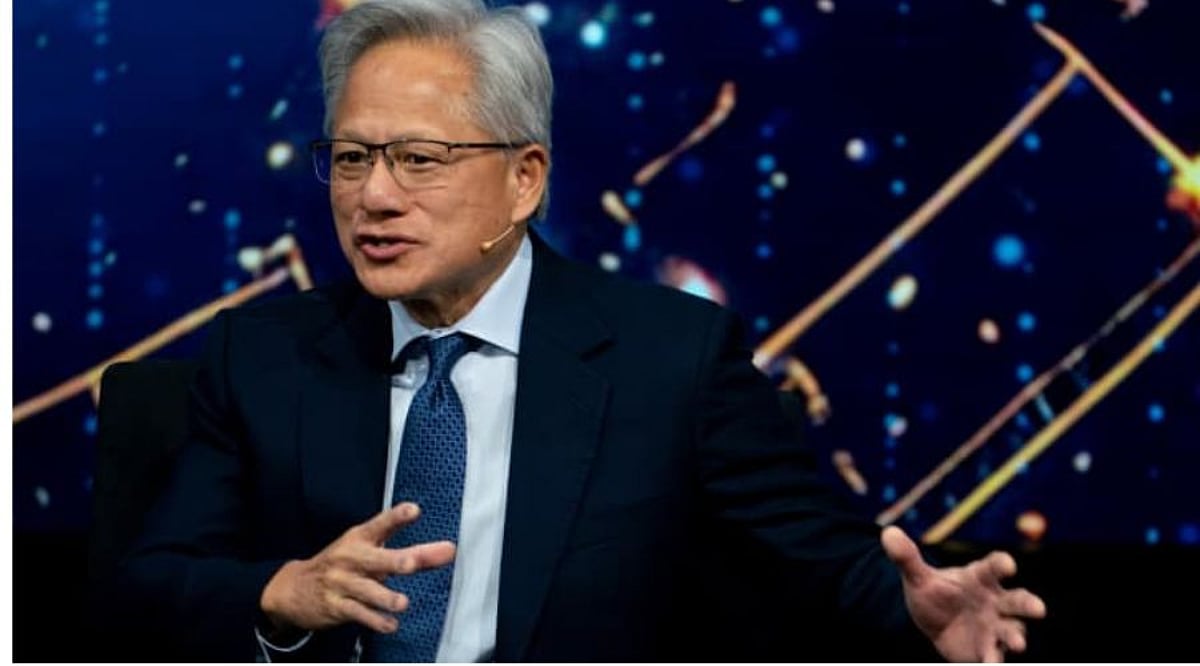
Artificial intelligence is unlikely to experience a bubble burst anytime soon, according to NVIDIA CEO Jensen Huang, who believes the current AI boom is driven by a fundamental shift in computing rather than short-term market hype. His remarks come as investors continue to debate whether massive spending on AI infrastructure can be sustained.
Infrastructure Shift Backs AI Demand
Speaking during an interview with Axios co-founder Mike Allen, Huang argued that the semiconductor industry’s current growth cycle differs from previous booms. He said that the demand is not being driven by seasonal buying patterns or temporary trends but by a structural transformation in computing.
According to Huang, AI requires an entirely new computing infrastructure, with businesses, governments, and developers investing heavily in data centers and advanced processors. He believes the industry will need to expand several times over the next decade to meet rising AI requirements.
No Signs of a Slowdown Yet
The NVIDIA chief highlighted that he does not expect a downturn in AI chip demand ‘for a while,’ despite concerns over rising capital expenditure by technology companies. His comments arrive after semiconductor stocks experienced volatility amid questions about whether spending on AI hardware can continue at its current pace.
Huang maintained that customers are investing because AI infrastructure is becoming an essential part of modern computing rather than an optional technology upgrade. In his view, the industry’s growth is tied to long-term technological change instead of speculative buying.
Bullish View from AI Chip Leader
NVIDIA has emerged as the biggest beneficiary of the AI boom, with its graphics processors powering many of the world’s leading AI models. As the company’s chief executive, Huang has consistently defended the long-term outlook for AI investments.
His latest comments also reinforce his broader position that AI adoption is still in its early stages. He has repeatedly argued that wider use of AI will create new opportunities across industries and continue driving demand for computing infrastructure, rather than triggering a rapid market correction.
While some analysts remain cautious about the pace of AI spending, Huang believes the industry’s trajectory is supported by real technological needs rather than speculative enthusiasm. For NVIDIA, that translates into continued demand for AI chips as businesses build the infrastructure needed for the next generation of computing.
Leave a Reply