Author: vitorcherulli

  • Apple Maps Ads Launch: Strict Rules Block Plumbers, Electricians, and Crypto ATMs

    Apple Maps Ads Launch: Strict Rules Block Plumbers, Electricians, and Crypto ATMs

    Apple is preparing to introduce paid advertisements in Apple Maps, allowing businesses to pay for better placement in search results. However, the company is implementing strict guidelines that will exclude several high-risk business categories from participating, aiming to maintain user trust and search result reliability.

    Strict Ad Standards

    According to reports, Apple will block ads from categories often linked to scams, including plumbers, electricians, locksmiths, garage door repair services, and crypto ATMs. The company wants to ensure that users feel confident that the businesses they find through Maps are legitimate. Unlike Google, which allows such businesses to advertise after rigorous verification and background checks, Apple is taking a more cautious approach by outright banning these categories.

    Apple will also reject any advertisements containing false claims, misleading information, or offensive content. The company appears to be steering away from the open-advertising model used by many other online platforms, choosing instead to keep the number of ads limited and meet its high standards. For users, this could mean cleaner search results and fewer chances of encountering fake businesses.

    Impact on Local Businesses

    While the new rules may help reduce scams, they could also affect honest local businesses that rely on online searches to find customers. Many plumbers, electricians, and locksmiths are small, reputable operations that have built a strong reputation over time. A blanket ban may not be the perfect solution—a system that verifies trusted businesses could allow them to advertise while keeping bad actors away.

    Apple has not yet announced an official release date, but the company confirmed that the ad platform will launch this summer in the United States and Canada. As the platform grows, Apple may need to find a better balance between protecting users and giving genuine local businesses a fair opportunity to be seen.

  • NVIDIA Jetson Thor T3000: A Game-Changer for Robotics and Edge AI

    NVIDIA Jetson Thor T3000: A Game-Changer for Robotics and Edge AI

    NVIDIA introduced the Jetson Thor T3000 and T2000 AI modules on July 15 to support robotics and Edge AI applications. The new NVIDIA Blackwell-powered modules help developers build smarter robots and AI machines with less power and smaller hardware. The company plans to launch both modules in the first quarter of 2027.

    The launch comes as more industries adopt robots for real-world work. NVIDIA created the new Jetson Thor modules to run powerful AI models directly on robots and edge devices. This approach reduces cloud dependence while improving speed, safety, and overall performance.

    The Jetson Thor T3000 is the more powerful model in the lineup. It delivers up to 865 FP4 teraflops of AI performance and includes an eight-core Arm Neoverse CPU with 32GB LPDDR5X memory. NVIDIA said that the module is about half the size and uses nearly half the power of the larger T5000 while offering similar AI performance for language, vision, and robotics tasks.

    The Jetson Thor T2000 targets developers looking for a more affordable option. It delivers up to 400 FP4 teraflops with 16GB memory and supports visual AI, autonomous mobile robots, and industrial machines. NVIDIA also introduced new software tools that reduce memory use and make advanced AI models easier to run on smaller systems.

    NVIDIA stated that companies like Amazon Robotics, Boston Dynamics, Agile Robots, Hitachi, 1X, and Techman Robot already use the Jetson Thor platform. Developers can test the T3000 through JetPack 7.2.1 emulation today, while T2000 support will arrive later. Both modules are expected to become available in the first quarter of 2027.

  • DOG Mode Proposal Seeks to Loosen Bitcoin Relay Rules as BIP 110 Fails to Gain Traction

    DOG Mode Proposal Seeks to Loosen Bitcoin Relay Rules as BIP 110 Fails to Gain Traction

    A new Bitcoin client proposal has emerged just days after BIP 110 failed to attract meaningful miner support for restricting non-financial data on the network. On Friday, Runestone co-founder Leonidas announced DOG Mode, an open-source Bitcoin client that would loosen Bitcoin Core’s relay policies without requiring a consensus vote.

    Unlike BIP 110, which seeks a consensus change through a user-activated soft fork, DOG Mode would simply alter how participating nodes relay transactions. The proposal introduces larger transaction relay limits and a lower dust threshold while leaving Bitcoin’s consensus rules unchanged.

    DOG Mode Targets Bitcoin Core Relay Policies

    Leonidas said DOG Mode would remove two restrictions currently enforced by Bitcoin Core. One limits the maximum standard transaction size that nodes relay. The other defines the minimum Bitcoin value an output must contain before nodes forward it.

    Bitcoin’s consensus rules determine whether a block remains valid across the network. By contrast, relay policy only controls which transactions an individual node shares with neighboring nodes. Therefore, transactions rejected under relay policy can remain valid under Bitcoin’s consensus rules.

    Since most Bitcoin nodes run Bitcoin Core, its default relay settings effectively shape network behavior. Nevertheless, miners can still include non-standard transactions if they receive them directly. Services such as MARA’s Slipstream already help users submit those transactions to miners.

    DOG Mode would increase the maximum standard transaction size from 400,000 weight units to 3,900,000 weight units. Since a Bitcoin block holds four million weight units, the proposed limit would allow nodes to relay transactions occupying almost an entire block.

    Meanwhile, the proposal would lower the dust limit from 294-546 satoshis to just one satoshi. As a result, smaller transaction outputs could move through participating nodes without meeting today’s higher threshold.

    Proposal Could Affect Ordinals and Runes

    Ordinals store images and text inside Bitcoin transactions. Likewise, Runes allows users to issue tradable tokens on the Bitcoin network. Both systems currently add extra Bitcoin to outputs so they satisfy Bitcoin Core’s dust requirement.

    Leonidas said removing the dust limit would free about $25 million currently locked as padding within those ecosystems. According to his statement, those funds could return to the related markets if the lower threshold gains adoption.

    Even so, DOG Mode does not require approval from miners or a formal activation process. Instead, any node operator can choose to run the software. If enough nodes adopt it and a miner accepts the transactions, they can enter confirmed blocks.

    BIP 110 Faces a Different Path

    BIP 110 follows a different approach by seeking to restrict arbitrary data through a user-activated soft fork. The proposal requires support from 55% of miners before activation. Current tracking data shows BIP 110 has received no miner support during the ongoing signaling period. Furthermore, it has never exceeded roughly 1% support during previous periods, according to the BIP 110 monitor.

    Support for BIP 110 mainly comes through Bitcoin Knots, an alternative Bitcoin client favored by developers who support stricter data controls. In contrast, Leonidas described DOG Mode as a Core fork that would diverge less from Bitcoin Core than Knots.

    DOG Mode currently exists only as an announced initiative. Leonidas invited developers to build the first release, encouraged miners to support it, and asked users to promote the project. As of Friday, no public code repository, software version, or benchmark existed.

    Runes creator Casey Rodarmor developed the protocol, while Leonidas helped promote it and co-founded Runestone, the project behind the DOG token. DOG traded little changed following Friday’s announcement and fell 1.2% over the previous 24 hours.

    What’s Next?

    DOG Mode proposes broader Bitcoin relay rules without requiring miner approval or a consensus vote, while BIP 110 continues to seek support for stricter data limits through a soft fork. The proposals present different approaches to Bitcoin transaction relay policies as developers and node operators monitor future adoption.

  • EA Plans to Expand In-Game Advertising Without Disrupting Gameplay

    EA Plans to Expand In-Game Advertising Without Disrupting Gameplay

    Electronic Arts (EA) is exploring in-game advertising as a significant new revenue stream, signaling a shift in how the company monetizes its titles. While EA has long run ads between games, executives now see integrated advertising within gameplay as a key growth opportunity—provided it doesn’t harm the player experience.

    Alexander Dao, an EA advertising executive, emphasized that any ads appearing in EA games must feel natural and authentic. “You’re playing the game, and it feels like you’re at a live match. It makes the experience so much more authentic than if random brands were showing up, or just the EA Sports logo was showing up,” Dao explained. He added that the approach must be nuanced, title by title, to align with what players want.

    EA already incorporates real-world brands into its sports games through stadium signage and sponsorships. Now the company is evaluating whether similar strategies can be applied across more franchises without making players feel bombarded by advertisements. The company is clear that if advertising degrades gameplay, it will not pursue that path.

    The gaming industry has evolved, with players spending months or even years in live-service games. Publishers now rely on battle passes, downloadable content, subscriptions, and in-game purchases—not just game sales. Advertising could become another pillar of EA’s revenue model, but the company insists it will prioritize player experience over short-term gains.

  • Meta Introduces AI-Powered Alerts to Protect Teens from Self-Harm Conversations

    Meta Introduces AI-Powered Alerts to Protect Teens from Self-Harm Conversations

    Meta is rolling out a new safety feature that alerts parents when their supervised teen discusses suicide or self-harm with Meta AI. The company has also updated how its AI responds to such conversations and expanded content restrictions for teen accounts.

    The feature is currently launching in the United States, the United Kingdom, Australia, and Canada, with plans for a global rollout by the end of the year.

    Parents to Receive Safety Alerts

    If a supervised teen shares thoughts of suicide or self-harm, Meta AI will encourage them to reach out to a trusted adult, counselor, or crisis support service. Parents using Meta’s supervision tools will receive a notification if their teen needs support. The company aims to help parents recognize signs of distress and intervene when necessary. The system can identify conversations where a teen may be expressing suicidal thoughts, even if the language is not explicit.

    Every Alert Will Be Reviewed

    Meta emphasized that alerts are not generated automatically. Each conversation flagged by its AI is reviewed before a notification is sent to a parent. The company said it will ‘err on the side of caution’ when assessing conversations. If there is uncertainty, parents may still receive an alert rather than risk missing a genuine case where a teen needs help.

    AI Responses Updated with Expert Input

    To improve Meta AI’s responses, the company consulted more than 75 mental health clinicians with experience in adolescent care. Experts reviewed hundreds of conversations involving teens and evaluated whether the AI responded appropriately. Their feedback was used to enhance how Meta AI handles sensitive discussions.

    Meta said the updated system is designed to acknowledge a teen’s emotions, encourage them to seek help, and connect them with relevant support instead of ending the conversation quickly.

    Emergency Response Feature in Development

    Meta is also developing a feature that could allow it to contact emergency services if conversations with Meta AI suggest a user faces an imminent risk of suicide. The company already reports credible suicide threats identified on Facebook and Instagram. Meta said it made more than 19,000 referrals to emergency responders worldwide last year, enabling authorities to perform welfare checks when required.

    More Restrictions for Teen Accounts

    Meta is extending Instagram’s Limited Content setting to Meta AI chats. Teen Accounts already receive age-appropriate AI responses. Meta AI does not engage in sexual or romantic conversations with teens and does not provide recipes for alcoholic drinks. With the stricter Limited Content setting enabled, Meta AI will refuse a wider range of sensitive requests.

    The update builds on Meta’s existing parental supervision tools, including alerts when supervised teens repeatedly search for suicide or self-harm-related content on Instagram. The company said the latest changes are aimed at giving parents more visibility while strengthening protections for teenagers using its AI services.

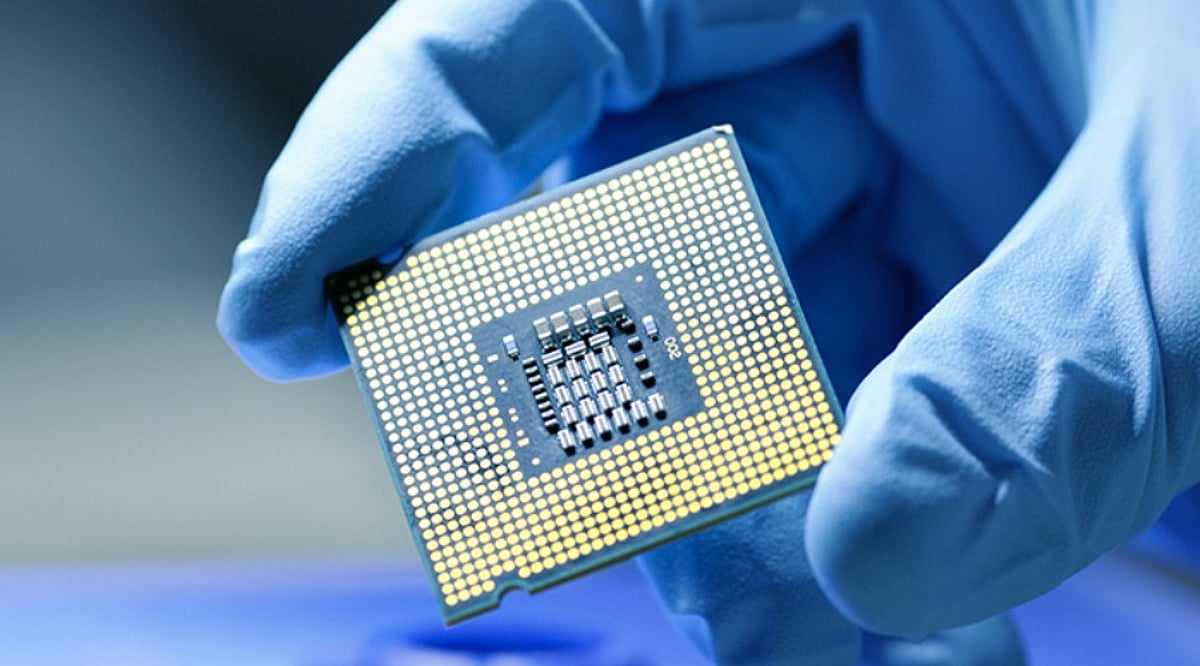
  • India’s Semicon 2.0 Program to Take Equity Stakes in Chip Startups, Shifting from Grants to Venture-Style Funding

    India’s Semicon 2.0 Program to Take Equity Stakes in Chip Startups, Shifting from Grants to Venture-Style Funding

    The Indian government is preparing to take equity stakes in semiconductor startups under the newly approved Semicon 2.0 program, signaling a major shift in how it supports the country’s chip industry. Instead of relying primarily on one-time grants, the Centre plans to co-invest alongside venture capital (VC) firms, providing funding to promising startups while allowing founders to retain operational control. The move aims to strengthen India’s semiconductor design ecosystem and attract greater private investment into one of the country’s most strategic sectors.

    The policy is part of the broader India Semiconductor Mission (ISM) 2.0, which received Cabinet approval earlier this week with an outlay of Rs. 1.27 lakh crore to expand domestic semiconductor manufacturing, chip design, packaging, research, and supply-chain capabilities.

    From Grants to Venture-Style Funding

    Under the new scheme, eligible semiconductor startups that obtain funding from private venture capital firms would also receive matching investment from the government on an equity basis. Unlike conventional government funding schemes, the government will not seek board representation or management control in these startups.

    The Centre also plans to exit its investments as the companies mature or obtain additional funding, recycling the capital into other semiconductor firms. More mature and larger companies would be supported through royalty payments.

    Semicon 2.0 Expands Beyond Chip Manufacturing

    Semicon 2.0 emphasizes developing every link in the semiconductor value chain, including design, packaging, materials, equipment manufacturing, research, and skilled labor. The Indian government anticipates this will build a robust ecosystem at home, reduce reliance on foreign technology, and position India as a competitive player in the global semiconductor market.

    Speaking at a media interaction on Wednesday, India Semiconductor Mission (ISM) CEO Amitesh Kumar Sinha said, The government will also match the amount brought in by investors. The Centre would invest on the same commercial terms and hold the same class of equity as private investors. He added, We don’t want to interfere in their day-to-day working, clarifying that the government would remain a financial investor without board representation. Detailed operational guidelines will be issued separately.

    Sinha also noted, When the revenue starts flowing, we’ll take back 1.5 times the amount the government has given.

    A Confidence Boost for India’s Startup Ecosystem

    This move reflects an understanding that semiconductor R&D requires patient, long-term investment. Semiconductor companies often take years to become profitable as they develop innovative products. By having the government share risks with VC funds, the program is expected to increase private financing for young enterprises and provide more stable financial conditions during the startup stage. It may also encourage more entrepreneurs to pursue semiconductor development, leveraging India’s large engineering workforce.

    Bigger Than Startup Funding

    Beyond funding individual firms, the policy signals a fundamental shift in India’s industry approach. Rather than simply offering incentives, the Indian government is positioning itself as a long-term ecosystem builder by making equity investments that foster innovation and recycle public money back into the economy.

    If the strategy succeeds, it could create a steady pipeline of domestic semiconductor firms capable of supplying products for industries such as artificial intelligence, electric vehicles, telecommunications, and defense. At a time when global competition for stable chip supplies is intensifying, India is aiming to become not just a manufacturing hub but also an innovation center.

  • Crypto Market Slumps in Q2 2026 as Prediction Markets and NFTs Surge

    Crypto Market Slumps in Q2 2026 as Prediction Markets and NFTs Surge

    The cryptocurrency market experienced a sharp decline in the second quarter of 2026, with total market capitalization dropping by 12.6% to $2.1 trillion. Despite this broader downturn, prediction markets and tokenized collectibles posted record growth, defying the negative trend. Bitcoin and Ethereum suffered steep losses, while stablecoins saw their first quarterly contraction since 2023.

    Crypto Market Extends Quarterly Decline

    According to CoinGecko, the total crypto market capitalization fell by $304.8 billion during Q2 2026, marking the third consecutive quarterly decline and the lowest level since September 2024. The market remains about 52% below its October 2025 peak. June saw the sharpest correction of the quarter, driven by a hawkish Federal Reserve stance, shifting U.S.-Iran tensions, and Strategy’s symbolic Bitcoin sale. Bitcoin declined 14.2% during the quarter, while Ethereum fell 25.4%, underperforming U.S. equities. Stablecoins also contracted by 1.6% to $305.1 billion, ending a streak of growth since Q3 2023. Trading activity slowed significantly: spot trading volume on the ten largest centralized exchanges dropped 27.9% to $1.95 trillion, and perpetual futures volume declined 10% to $12.7 trillion.

    Prediction Markets Reach Record Activity

    Prediction markets emerged as the strongest-performing sector in Q2 2026. Notional trading volume surged 48.7% to $113.8 billion, with June alone generating $52.8 billion—92% above the previous five-month average of $27.5 billion. The FIFA World Cup, NBA Finals, and Wimbledon fueled much of this activity. Kalshi expanded its market share from 42.4% to 58.9%, while Polymarket’s share dropped to 30.2%. Rothera, the joint venture between Robinhood and SIG, secured fourth place with $2.1 billion in quarterly volume.

    Tokenized Collectibles Rise as Bitcoin Faces More Pressure

    Tokenized collectibles also recorded strong growth, with segment volume reaching $1.4 billion—a 143% increase from Q1 2026. June accounted for $646 million of that activity. Collector Crypt drove most of the expansion, with monthly volume climbing from $97 million in January to $406 million in June, capturing 62.8% of the collectibles market. OpenSea recorded only $32.7 million in NFT sales during June. CoinGecko noted that about 98% of collectibles trading volume came from gacha mechanics rather than secondary market transactions. Meanwhile, NYDIG warned that Bitcoin’s correction increasingly resembles the major bear markets of 2014, 2018, and 2022. The firm attributed the weakness to soft spot demand, rising leverage, and changing institutional behavior. Bitcoin finished the first half of 2026 down 32.9%, including a 13.4% decline in Q2. In contrast, technology stocks gained 43.5% and the Nasdaq 100 advanced 27.7% over the same period. NYDIG estimated that Bitcoin could decline toward $38,000 to $39,000 before establishing a cycle bottom, having already fallen nearly 50% from its October 2025 record high near $126,000.

    What’s Next?

    The crypto market extended its decline in Q2 2026 as Bitcoin, Ethereum, stablecoins, and trading volumes weakened. Meanwhile, prediction markets and tokenized collectibles delivered strong growth despite the broader downturn. Investors will closely watch whether these sectors sustain their momentum as Bitcoin searches for a potential market bottom.

  • How AI-Driven Matrimony Scams Exploit Trust and Defraud Victims

    How AI-Driven Matrimony Scams Exploit Trust and Defraud Victims

    Finding a partner through a matrimonial platform has long been built on trust. However, that trust is increasingly being exploited by cybercriminals using artificial intelligence to create convincing fake identities that are difficult to detect.

    How AI Makes Scams Harder to Detect

    Cybersecurity experts report that fraudsters are no longer relying solely on stolen photographs or fabricated profiles. AI tools now enable them to generate realistic faces, manipulate voice and video interactions, forge identity documents, and maintain natural conversations for weeks, making fake profiles appear authentic.

    Victims often realize they have been deceived only after being persuaded to transfer money or invest in fraudulent schemes. According to identity verification firm Bureau, India ranks third globally for new romance scam profiles, accounting for 12% of such profiles worldwide.

    Investigations by police in different states suggest that matrimonial platforms are increasingly used to identify financially stable targets before scammers introduce fake investment opportunities or requests for financial assistance.

    Trust Becomes the Biggest Weapon

    Unlike traditional online fraud, these scams are rarely rushed. Fraudsters invest time in building relationships, speaking regularly, sharing stories about work and family, and creating an emotional connection before discussing money. By the time an investment opportunity or emergency request surfaces, many victims have already lowered their guard.

    Experts note that generative AI has significantly reduced the effort required to run such operations. A single network can create multiple believable identities, personalize conversations, and even simulate video interactions, allowing scammers to target several people simultaneously.

    Verification Is the Strongest Defense

    Cybersecurity experts have found that the increasing use of artificial identities has questioned the validity of traditional verification methods. Relying on photos, identity documents, and even video calls to validate a person’s identity is no longer enough.

    Individuals are advised to independently verify information, involve family members before making any decision, and proceed with caution if the other party quickly moves the discussion to a private chat application or talks about investments. Financial requests or demands for gifts and monetary assistance are strong indicators of fraud.

    Experts further suggest that matrimonial sites should use AI for identity verification—employing liveness detection, behavioral analytics, and device intelligence—to help curb the problem.

  • Bitcoin ETF Inflows Hit $79M, Visa Launches Stablecoin Platform, Polygon Adds 107K Holders in a Month

    Bitcoin ETF Inflows Hit $79M, Visa Launches Stablecoin Platform, Polygon Adds 107K Holders in a Month

    The crypto market saw a flurry of activity as Bitcoin spot ETFs recorded $79.15 million in net inflows, Visa introduced its Stablecoin Platform for financial institutions, and Polygon added over 107,000 new holders in just one month. Meanwhile, BitPay secured regulatory approval under the EU’s MiCA framework, and prediction market platform Kalshi hit a record $217.98 million in daily crypto contract volume.

    Bitcoin Spot ETFs See $79.15 Million in Inflows

    According to data from SoSoValue, Bitcoin spot ETFs recorded a total net inflow of $79.15 million on July 16. BlackRock’s IBIT led the pack with $33.44 million in daily net inflows, bringing its historical net inflow to $60.35 billion. Fidelity’s FBTC followed with $30.73 million, pushing its total historical net inflow to $9.97 billion. The combined net asset value of all Bitcoin spot ETFs now stands at $77.72 billion, with an ETF net asset ratio of 6.04% and historical cumulative net inflows reaching $51.22 billion.

    Visa Launches Stablecoin Platform for Institutions

    On July 16, Visa announced the Visa Stablecoin Platform (VSP), a new enterprise offering designed to help banks, fintechs, and payment providers integrate on-chain settlement without building their own infrastructure. The platform provides access to OpenUSD, a stablecoin launched by Open Standard with participation from over 140 institutions. VSP addresses the operational challenge of stablecoin adoption by offering pre-built wallet infrastructure via a Wallet-as-a-Service model, direct minting and burning of OpenUSD, and seamless connectivity to Visa’s settlement and treasury systems.

    Polygon Holders Surge 78% in One Month

    Polygon (POL) saw its holder count jump from 138,000 to 245,000 in just 30 days, adding more than 107,000 new wallets—a 78% increase. This growth was driven by rising payment activity on the network. Monthly Crypto Card Volume surged over 122% to a record high, with more than $30.5 million processed so far, compared to $13.69 million in June.

    BitPay Receives MiCA Approval in the Netherlands

    BitPay has secured authorization under the European Union’s Markets in Crypto-Assets (MiCA) framework through its Dutch subsidiary, BitPay B.V., from the Dutch Authority for the Financial Markets (AFM). This approval allows BitPay to offer regulated digital asset services—including payment acceptance and stablecoin transactions—across all EU member states via MiCA’s passporting rules. Thom de Jong, BitPay’s Chief Compliance Officer for Europe, emphasized that the authorization strengthens the company’s ability to serve EU businesses and consumers while reinforcing its compliance-focused approach.

    Kalshi Crypto Contract Volume Hits Record $217.98 Million

    Kalshi’s crypto event contracts set a new single-day volume record on July 15, reaching $217.98 million, according to Artemis data. Volume on the platform has been steadily climbing since May, rising from roughly $5 million daily on January 1 to the current record—a 44x increase in about seven months. Kalshi now controls roughly 84% of crypto-prediction volume, having overtaken Polymarket in the space.

    Frequently Asked Questions

    How much inflow did Bitcoin spot ETFs record?

    Bitcoin spot ETFs recorded $79.15 million in net inflows. BlackRock’s IBIT led with $33.44 million, followed by Fidelity’s FBTC at $30.73 million.

    What is Visa’s Stablecoin Platform?

    Visa’s Stablecoin Platform is an enterprise offering for banks, fintechs, and payment providers. It supports wallet infrastructure, OpenUSD minting and burning, and integration with Visa settlement systems.

    How many new holders did Polygon add?

    Polygon added more than 107,000 holders in one month. Its holder count rose from 138,000 to 245,000, marking a 78% increase.

    What MiCA approval did BitPay receive?

    BitPay secured authorization under the EU’s MiCA framework through its Dutch subsidiary. This allows it to offer regulated crypto payment and stablecoin services across EU member states.

    Why is Kalshi’s crypto contract volume important?

    Kalshi’s crypto event contracts hit a record $217.98 million in daily volume. The surge shows rising demand for regulated prediction-market exposure to crypto-related events.

  • India’s Forex Reserves Rise to $675.16 Billion After Weekly Gain

    India’s Forex Reserves Rise to $675.16 Billion After Weekly Gain

    India’s foreign exchange reserves increased for the second consecutive week, rising by $964 million to reach $675.16 billion for the week ending July 10, according to data released by the Reserve Bank of India (RBI). This follows a much larger jump of $7.26 billion in the previous week, signaling a recovery in the country’s external financial position.

    The primary driver of the increase was foreign currency assets, which grew by $930 million to $546.51 billion during the reporting period. These assets, which include major global currencies such as the euro, pound sterling, and Japanese yen, fluctuate in value against the US dollar. Additionally, gold reserves rose by $24 million to $105.23 billion, while Special Drawing Rights (SDRs) with the International Monetary Fund (IMF) increased by $3 million to $18.626 billion. India’s reserve position with the IMF also edged up by $7 million to $4.793 billion.

    The back-to-back weekly gains come after several weeks of decline, which had been driven by RBI’s intervention in the foreign exchange market to stabilize the rupee amid geopolitical tensions in the Middle East. Earlier this year, India’s forex reserves hit a record high of $728.494 billion in late February, but subsequent volatility led to sell-offs by the central bank to curb sharp currency fluctuations.

    The RBI has reiterated that it does not target a specific exchange rate for the rupee but will continue to monitor market conditions and act as needed to ensure stability. Strong forex reserves are crucial for the country to manage import payments, meet external financial obligations, and navigate global economic uncertainties. Although reserves remain below the peak, the latest increase underscores an improving external financial landscape.