
Author: vitorcherulli

  • Pi Network Revamps Mining App and Prepares for Protocol V25 Launch Amid Token Price Weakness

    Pi Network Revamps Mining App and Prepares for Protocol V25 Launch Amid Token Price Weakness

    Pi Network has rolled out a redesigned mining app interface, improving navigation and user experience, while confirming that Protocol V25 will go live on July 22. The update introduces long-awaited features like dark mode and reorganizes key ecosystem tools into a single, streamlined menu. However, the PI token continues to face selling pressure as large token unlocks loom.

    Pi Network Mining App Redesign

    The Core Team announced that the redesign is the first phase of a broader refresh for the mining application. Users can now access the new menu via the hamburger icon at the top-left corner of the app. The consolidated menu groups the Mainnet Checklist, mining information, featured Pi Apps, and other ecosystem services, eliminating the need to navigate through multiple screens. A dark mode option has also been added, a feature frequently requested by the community.

    According to the team, the redesign was driven by extensive feedback from the over 60 million engaged Pioneers. To ensure stability, the changes are being rolled out gradually, with future updates planned to refine the interface further while preserving existing functionality. The developers intend to collect additional community feedback before expanding the redesign.

    Protocol V25 Privacy Upgrades

    Pi Network has confirmed that Protocol V25 will activate on July 22, focusing on network stability, reliability, and privacy-preserving smart contracts. The upgrade introduces BN254 cryptography and Poseidon hashing, enabling developers to build zero-knowledge applications that protect sensitive information while keeping private data off the public blockchain.

    The Core Team emphasized that the upgrade should improve smart contract efficiency as more decentralized applications join the ecosystem. This could give developers greater flexibility in building privacy-focused services on Pi Network. However, the long-term impact will depend on developer adoption, ecosystem growth, and network performance after deployment.

    PI Token Under Pressure

    Despite the technical progress, the PI token remains under pressure. The token recently lost the crucial $0.10 support level, falling to a record low slightly above $0.07. A brief recovery pushed the price toward $0.085, but sellers quickly regained control, sending PI back to around $0.073 before a modest recovery to $0.078.

    Data from PiScan indicates that nearly 130 million PI tokens are set to unlock over the next month. This additional supply could intensify short-term selling pressure if more holders decide to move their tokens to the market.

    What Lies Ahead

    Pi Network is combining product development with infrastructure upgrades as it prepares for Protocol V25. While the redesigned app and forthcoming privacy features are positive steps, the market will likely await stronger ecosystem growth and sustained developer activity before confirming any lasting recovery in the PI token. Participants will closely monitor the upgrade’s impact on adoption and network activity.

  • Trump’s $1.4B Crypto Income Stalls Senate Action on CLARITY Act

    Trump’s $1.4B Crypto Income Stalls Senate Action on CLARITY Act

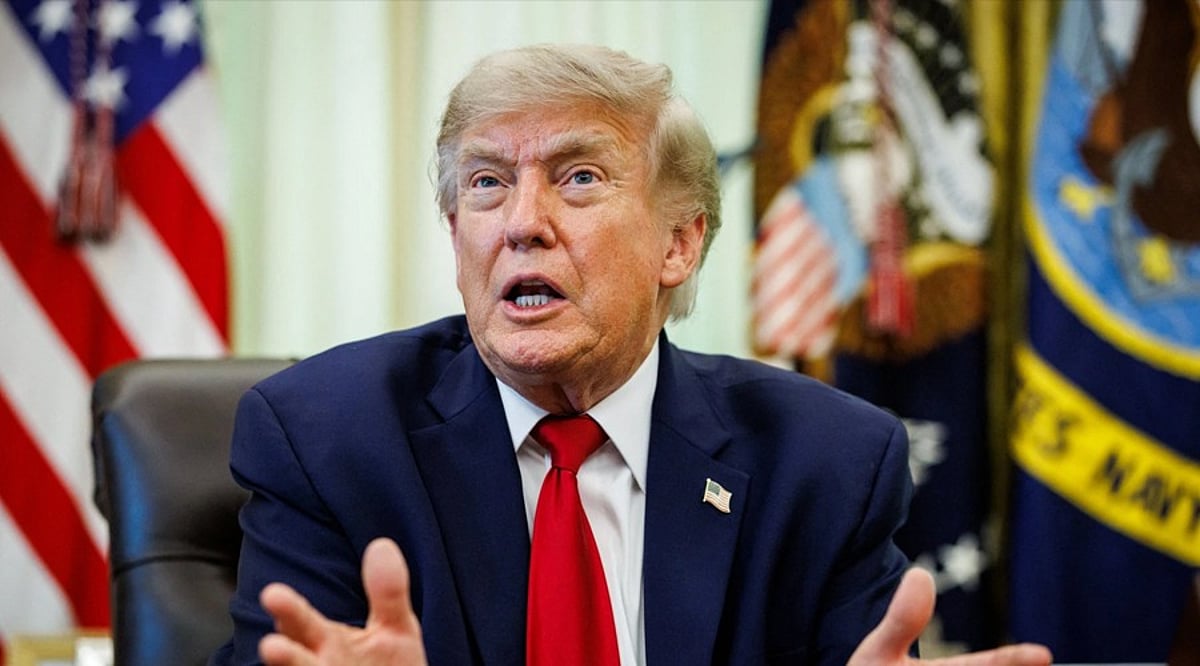
    President Donald Trump’s 2025 financial disclosure reveals more than $1.4 billion in crypto-related income, reigniting a Senate debate over ethics provisions in the Digital Asset Market Clarity Act (CLARITY Act). The filing, released by the Office of Government Ethics on June 30, details earnings from the TRUMP memecoin and World Liberty Financial, placing the president’s digital asset profits at the center of a legislative standoff.

    The disclosure shows $635 million from the TRUMP memecoin, over $520 million from World Liberty Financial token sales, and more than $250 million from business interest sales. Combined, these sources generated nearly $800 million for entities tied to World Liberty Financial, with portions shared among family members. While golf clubs, resorts, and property licensing added other revenue, crypto accounts for the majority of Trump’s reported income.

    The CLARITY Act, which would divide crypto oversight between the Securities and Exchange Commission (SEC) and the Commodity Futures Trading Commission (CFTC), advanced from the Senate Banking Committee on a 15-9 vote in May. However, Democrats—including Senators Ruben Gallego and Angela Alsobrooks—have signaled that their support hinges on stronger ethics rules covering senior officials who own, issue, or profit from digital assets while shaping federal policy.

    Former acting OGE director Don Fox called Trump’s filing “a clear sign that additional ethics reforms are overdue.” The White House has denied any conflict of interest, stating that “neither the President nor his family has ever engaged” in improper conduct.

    With Republicans holding 53 Senate seats and most major legislation requiring 60 votes, the bill’s fate depends on cross-party support. Without agreed ethics language, the CLARITY Act may lose the Democratic votes it gained during the committee stage. Senate leaders aim for a vote before the August recess, but the tight calendar leaves little room for prolonged negotiations. Any changes made in the Senate may also require further House action before reaching the president’s desk.

    The next milestone is the release of revised Senate text. Its ethics provisions will determine whether negotiators can secure enough Democratic support while maintaining Republican backing for the broader crypto market structure framework.

  • Wordle #1854 Hints and Answer for July 17, 2026: Today’s Word Is BUTTE

    Wordle #1854 Hints and Answer for July 17, 2026: Today’s Word Is BUTTE

    Stuck on today’s Wordle? The July 17, 2026 puzzle (Wordle #1854) features a five-letter noun that relates to a short story and something you might enjoy eating at parties. Use the hints below to crack the word and keep your streak alive.

    Wordle Hints for July 17, 2026 (Puzzle #1854)

    Here are the clues to help you solve today’s Wordle:

    • Vowel Count: 2 vowels
    • Consonant Count: 2 consonants
    • Repeated Letters: Yes, 1 letter repeats
    • Letter Rarity: All common letters
    • First Letter: B
    • Bonus Hint: The word ends with the letter ‘E’.

    Wordle Answer for July 17, 2026

    If the clues above have guided you in the right direction, great! If not, here’s the final answer for Wordle #1854: BUTTE.

    Best Tips to Play Wordle

    New to Wordle or want to sharpen your skills? Follow these expert tips:

    • Start with words that include common vowels and consonants to gather as much information as possible early.
    • Avoid repeating letters in your first few guesses unless you’re confident about their placement.
    • Pay close attention to the color feedback: green letters are correct and well-placed, while yellow letters belong in the word but need to be repositioned.
    • Use each guess to eliminate possibilities rather than rushing toward the final answer.
    • Expand your vocabulary—familiarity with less common words can make solving the puzzle much quicker.

    Final Thoughts

    The allure of Wordle comes from its uncertainty. Every day, the puzzle presents a new grid with a new word to guess. Although Wordle experts often rank the solutions as average or simple, most players find every puzzle equally challenging. Another appealing part of Wordle is that you can solve it anytime—whether with a cup of coffee in the morning or during a short break at work. Wordle quietly and efficiently sharpens your vocabulary and pattern-recognition skills. Every puzzle offers a little but rewarding mental exercise, reminding players that even the simplest games can offer the biggest rewards.

  • Why Foreign Exchange Costs Are Invisible to Finance Teams—and How to Uncover Them

    Why Foreign Exchange Costs Are Invisible to Finance Teams—and How to Uncover Them

    Modern finance teams are drowning in analytics. Revenue dashboards update in real time, marketing spend is attributed down to the click, and procurement can tell you the unit cost trend of every input going back five years. Data-driven decision making has conquered almost every corner of the business.

    Almost. There is one line of spend that routinely escapes this scrutiny, despite touching every international transaction a company makes: the cost of exchanging and moving currency. For businesses with meaningful cross-border activity, foreign exchange is often one of the larger unexamined expenses on the books. It escapes analysis not because it is small, but because it is invisible by design.

    Why FX Costs Evade Normal Analysis

    Most costs announce themselves. A software subscription generates an invoice. A salary appears on the payroll run. FX costs do neither. They arrive embedded inside exchange rates, deducted before money ever lands, and split across intermediaries that never appear in the company’s records.

    Consider what happens when a business receives a $100,000 payment from a US customer into a euro account. The bank converts it at its own rate, which might sit 1.5% away from the mid-market rate. Nothing on the statement says “fee: $1,500.” The statement simply shows a euro amount, and unless someone checks that amount against the interbank rate at the moment of conversion, the cost never becomes a data point at all.

    Multiply that across every incoming payment, every supplier settlement, every intercompany transfer, and a mid-sized international business can easily be spending six figures a year on currency conversion without a single line item recording it. From an analytics perspective, this is the worst kind of cost: material, recurring, and generating no data exhaust.

    Treating FX as a Data Problem

    The fix is to treat currency costs the way an analyst would treat any other opaque process: instrument it, baseline it, then look for the variance. That is essentially what running an FX audit involves. The methodology is straightforward enough that most finance teams can execute a first pass internally, and the dataset it produces tends to justify the effort within the first afternoon.

    The core procedure has three steps:

    1. Reconstruct the transaction log. Pull every foreign currency transaction from the past six to twelve months: incoming payments, outgoing payments, and conversions between accounts. For each one, record the date, time where available, currency pair, amount sent and amount received.
    2. Benchmark against mid-market. For each transaction, look up the interbank mid-market rate at the time of execution. Historical rate data at daily granularity is freely available and sufficient for a first analysis. The difference between the rate received and the mid-market rate, expressed as a percentage, is the effective spread paid on that transaction.
    3. Aggregate and segment. Sum the spreads into a total annual cost, then segment the way you would any other dataset: by provider, by currency pair, by transaction size, by month. This is where the findings get interesting.

    What the Data Typically Reveals

    Companies that run this analysis for the first time tend to find the same patterns—consistent, quantifiable, and actionable.

    • Effective spreads are far higher than anyone assumed. Businesses that believed they were paying “around half a percent” routinely discover blended costs of 1.5% to 3% once every embedded margin is counted.
    • Inconsistency. The same provider often applies visibly different spreads to different transactions, with smaller payments and less common currency pairs carrying the widest margins. Plotting spread against transaction size usually produces an unmistakable downward curve, which is useful evidence when renegotiating terms.
    • Concentration. A handful of currency corridors typically account for the large majority of total cost. That matters because it means the problem is tractable. Fixing pricing on two or three pairs captures most of the available saving.
    • Unnecessary conversions. Money converted into the home currency and then converted back out again weeks later to pay suppliers in the original currency—with the business paying a spread in both directions for a round trip that served no purpose.

    From One-Off Audit to Ongoing Metric

    A single audit produces a snapshot and usually a round of savings. The larger opportunity is turning the exercise into a permanent metric, because currency costs have a habit of drifting back upward when nobody is watching.

    The instrumentation is minimal. Log every conversion with its received rate and the concurrent mid-market rate, and compute the spread automatically. Feed it into whatever dashboard the finance team already uses. From there, effective FX cost becomes a KPI like any other: tracked monthly, reviewed quarterly, and flagged when it moves outside an agreed band.

    Some teams go further and set a formal cost budget for FX, in the same way they budget cloud spend, then hold providers to it. Once the number is visible, that conversation becomes straightforward. Providers quote sharper rates to customers who demonstrably measure them.

    The Broader Lesson

    There is nothing exotic about any of this. It is the standard analytics playbook, applied to a cost category that has historically escaped it: capture the data, establish a benchmark, segment the variance, operationalize the metric. The only unusual feature of FX costs is how long they have managed to avoid the treatment.

    For data-literate finance teams, that is less a problem than an opportunity. The tooling already exists, the data is recoverable from existing statements, and the savings—unlike most analytics projects—drop straight to the bottom line.

  • NYT Strands Daily Puzzle: July 17, 2026 Hints, Spangram, and Full Answers

    NYT Strands Daily Puzzle: July 17, 2026 Hints, Spangram, and Full Answers

    Welcome to the July 17, 2026 edition of our daily NYT Strands guide. Today’s puzzle revolves around the theme of minor topics and trivial matters. If you’re stuck, we’ve got you covered with hints, the Spangram reveal, and the complete list of answers.

    What Is NYT Strands and How to Play

    NYT Strands blends elements of the Crossword, Connections, and Spelling Bee. Players are presented with a 6×8 grid of letters and a daily theme as a clue. The goal is to find theme words and a Spangram that connects two opposite sides of the grid. It’s a fun challenge for vocabulary and pattern recognition.

    Hints for Today’s Puzzle

    Use these hint words to help uncover the theme words: Port, Pore, Taunt, Purge, Tent, Rare, Graph. The theme centers on petty or insignificant topics, and the Spangram begins near the left edge of the grid.

    Spangram Reveal and Explanation

    Today’s Spangram is TRIVIALPURSUIT. Start with the T located four letters down on the far-left column, then wind through the grid. “Trivial Pursuit” is a classic board game where players answer trivia questions across categories. In a broader sense, it refers to activities focused on minor, inconsequential facts.

    All Answers for July 17, 2026

    Here are the non-Spangram answers for today’s puzzle:

    • Nature
    • Sports
    • Geography
    • Entertainment

    Tips for Solving NYT Strands

    Start by identifying the theme—today’s is “categorically speaking,” meaning statements made in an absolute, unconditional manner. Look for long words stretching across the edges of the grid; they often form the Spangram. Practice with these strategies to improve your solving speed.

    For more daily puzzles, check out our related stories below.

  • PowerPlay CEO Iesh Dixit on How AI and Digital Platforms Are Building Smarter Infrastructure in India

    PowerPlay CEO Iesh Dixit on How AI and Digital Platforms Are Building Smarter Infrastructure in India

    India’s construction sector is embracing digital transformation as builders turn to software, artificial intelligence, and data-driven tools to enhance project management. Traditionally reliant on manual processes, the industry is now leveraging smartphones and cloud-based platforms to streamline operations, track progress, and minimize delays.

    In a recent episode of the Analytics Insight Podcast, Iesh Dixit, Co-founder and CEO of PowerPlay, discussed how his company is digitizing construction sites across India. He shared his entrepreneurial journey, the role of AI and predictive analytics, the future of digital twins and IoT, and how technology can help achieve India’s ambitious infrastructure goals.

    From Construction Sites to Startup Founder

    Dixit explained that his childhood was spent on construction sites, where he worked as a site supervisor. After graduation, he was determined to start a company. By 2020, he focused on building something for the construction industry, recognizing a gap in digitization and data centralization. PowerPlay began as bulky software for contractors’ back offices, but the team soon realized they needed to solve problems for on-site users. Today, PowerPlay has over a million users across platforms, all from construction sites.

    Practical Impact of AI in Indian Construction

    According to Dixit, the widespread adoption of smartphones has been a game-changer. He emphasized that construction site workers are not primarily focused on digitization—it’s only 10–20% of their job. Therefore, any digital tool must not interfere with their core tasks. PowerPlay focuses on making adoption seamless so that site teams can continue their main work while benefiting from digital insights.

    Predictive Analytics for Cost and Delay Reduction

    Dixit noted that digitization has broken down silos in construction. Previously, even large companies had projects that rarely communicated with finance except at milestones. Now, predictive analytics can link baseline plans, progress data, material usage, labor, and assets together. This integration helps forecast delays, optimize resource allocation, and improve operational efficiency.

    Digital Twins and IoT

    IoT is essential for collecting accurate data points, while digital twins allow stakeholders to compare planned progress with actual site conditions without visiting the site. Dixit shared that he previously built an AR/VR company and understands the potential, but technology maturity is still a barrier for widespread adoption, particularly among smaller players. Larger firms can afford digital twin implementations now, and they offer significant benefits.

    AI as a Core Enabler for India’s Infrastructure

    PowerPlay’s mission is to support the infrastructure India needs over the next decade, including roughly 90 million homes. Dixit believes AI will help bring new talent into the industry and drive innovation. He called for more entrepreneurs to build solutions that address construction’s unique challenges.

    For the full conversation, listeners can tune into the Analytics Insight Podcast.

  • July 17, 2026 NYT Mini Crossword Answers: Full List of Clues and Solutions

    July 17, 2026 NYT Mini Crossword Answers: Full List of Clues and Solutions

    Overview

    The NYT Mini crossword for July 17, 2026 blends quick wordplay with clues from geography, Roman mythology, languages, and everyday life, creating a short but enjoyable puzzle before the next daily NYT Games challenge arrives. This article provides all the answers with simple explanations.

    Across Clues and Answers

    • Spanish question word — Que (Explanation: “Que” means “what” in Spanish and is one of the most common question words.)
    • National Ice Cream Month and National Hot Dog Month — July (Explanation: Both of these fun food celebrations take place during the month of July.)
    • Battery life, informally — Juice (Explanation: People often call a phone’s remaining battery power “juice.”)
    • Poker buy-ins — Antes
    • Tie up, as a ship — Moor

    Down Clues and Answers

    • Only world capital that starts with “Q” — Quito
    • Painful sore — Ulcer
    • Snake ___ (dice roll) — Eyes
    • The daughter of Saturn, sister of Jupiter and mother to Mars, in Roman myth — Juno
    • Traffic snarl — Jam

    Quick Look at Today’s Puzzle

    The July 17 Mini crossword offers a nice mix of easy and tricky clues. Some answers come from daily life, while others test knowledge of history, geography, and mythology. Short clues like Juice and Jam are simple once the first few letters appear. Clues such as Quito and Juno may take a little more thinking, making the puzzle more enjoyable.

    The Mini stays popular because it gives players a quick challenge without taking much time. Many people solve it every morning before moving on to other NYT Games.

    Final Words

    Today’s NYT Mini crossword delivered another enjoyable challenge with a good mix of simple and thoughtful clues. Whether the puzzle was finished in one try or after checking a few answers, every day’s crossword is a fun way to keep the mind active.

    Tomorrow brings another brand-new NYT Mini puzzle with a fresh set of clues and answers waiting to be solved. Along with the Mini, NYT Games also offers daily favorites like Wordle, Connections, Strands, Spelling Bee, and the full New York Times Crossword, giving puzzle lovers a new challenge every day.

  • NYT Connections Puzzle #1132: Hints and Full Answers for July 17, 2026

    NYT Connections Puzzle #1132: Hints and Full Answers for July 17, 2026

    The New York Times Connections puzzle for July 17, 2026 (Puzzle #1132) brings together a mix of grand finale terms, arcade game items, groups of four, and clever words ending in car parts. The yellow category is easy to identify, while the purple group delivers today’s toughest wordplay.

    Overview

    The yellow category groups together words associated with a grand finale or farewell. The middle categories focus on arcade games and well-known groups of four. The purple category challenges players with words that end in the names of car parts.

    NYT Connections’ today’s grid is live, featuring 16 fresh words and 4 categories. Initially, the words are scattered randomly, and none of the themes provide any clues to help guess. Therefore, players need to observe to discover the links between apparently disconnected words. Four of them must share a connection to four sets.

    If you are struggling with today’s NYT Connections, the puzzle on July 17 presents words that are closely connected to synonyms for the grand finale to different parts of a car. Finding the correct four words to make each set may require some help, so here’s the detailed guide to dive into NYT Connections answers and hints for today.

    Hints for July 17, 2026

    NYT Connections is challenging, for sure, but every day, The New York Times publishes expert reviews of the puzzles, with experts rating NYT Connections out of 5. The rating depends on how many chances they need to solve the puzzle.

    Players’ personal ratings may differ, but the July 17 Connections puzzle is rated as 3 out of 5. Still, for those who are struggling to figure it out, here are the hints to make the process easier. Let’s start with the hints category-wise:

    • Easiest Group (Yellow): Today’s yellow group words indicate terms that we often use to indicate a climax or a grand finale.
    • Moderate Group (Green): This group will contain words related to arcade games.
    • Challenging Group (Blue): In this group, you will have terms that all have four in the bunch.
    • Most Difficult Group (Purple): This is the final category, and its words have car-related endings.

    Answers for July 17, 2026

    With the above hints, solvers must have reached near the themes of today’s Connections, but if there are the words to form them, below are the solutions to check out:

    • Yellow Category (GRAND FINALE): EPILOGUE, FAREWELL, LAST DANCE, SWAN SONG
    • Green Category (SEEN IN AN ARCADE): CRANE GAME, PINBALL, TICKETS, TOKENS
    • Blue Category (FOUR GROUPS OF FOUR): CARDINAL DIRECTIONS, CLASSICAL ELEMENTS, SEASONS, SUITS
    • Purple Category (ENDING IN PARTS OF A CAR): PLOT SPOILER, ROBIN HOOD, SATIRES, TREE TRUNK

    These are the four categories for today’s puzzle, and hopefully, most players have guessed the word sets without the answer. So, congratulations to all who have solved it!

    What is NYT Connections?

    Unlike traditional crosswords or word searches, NYT Connections asks players to identify subtle connections between the given words and form four groups of four. Connections presents a grid of 16 words, and the objective is to group them into four sets of four words each. The twist is that each set must be formed around a specific theme. To solve this puzzle, players must be aware of the connection between particular words.

    Final Thoughts

    NYT Connections offers a tricky yet enjoyable puzzle-solving experience to word-puzzle enthusiasts. The unique solving method is one of the most attractive parts of the puzzle. This puzzle appeals to those who love challenges. Unlike other puzzles, this one offers four different themes every day, making it both complicated and exciting. These themes never get repeated. Therefore, the solutions require a solid vocabulary to identify connections between words.

  • Today’s Top Tech Roundup: Gemini AI Voice Tests, India’s Semiconductor Mission, Meta AI Safety, and More

    Today’s Top Tech Roundup: Gemini AI Voice Tests, India’s Semiconductor Mission, Meta AI Safety, and More

    Stay ahead with the latest tech developments making headlines today. From Google’s Gemini AI voice experiments to India’s ambitious semiconductor push, here is your quick roundup of top tech news.

    Google Tests Custom Gemini Voices

    Google is reportedly testing custom voice options for its Gemini AI assistant, giving users more personalized interactions. The move signals growing competition in the AI voice assistant space as companies race to differentiate through natural language capabilities.

    India Launches Semiconductor Mission 2.0

    India approved a massive ₹1.27 lakh crore investment under Semiconductor Mission 2.0 to build a self-reliant global semiconductor ecosystem. The initiative aims to boost domestic chip manufacturing, reduce import reliance, and foster innovation in chip design and fabrication.

    Meta Adds AI Safety Alerts

    Meta is rolling out new AI safety alerts across its platforms, aiming to protect users from potential harms such as misinformation, hate speech, and malicious AI-generated content. The step aligns with broader industry efforts to implement responsible AI guardrails.

    IT Hiring Rebounds

    After a period of slowdown, IT hiring is showing signs of recovery. Companies are increasingly recruiting for roles in artificial intelligence, data science, and cybersecurity, driven by demand for digital transformation and emerging technologies.

    Microsoft Expands Beyond OpenAI

    While continuing its partnership with OpenAI, Microsoft is actively exploring other AI partnerships and internal projects. This diversification strategy aims to reduce dependency on a single vendor and accelerate AI integration across its product suite.

    These stories underscore the rapid pace of change in technology. For deeper insights, explore related coverage on India’s Semicon 2.0 and other breaking tech news.