
Author: vitorcherulli

  • Bitcoin ETFs See $181M Inflow, US Freezes $130M in Iran-Linked USDT, and BitMine Earns $45.7M from ETH Staking

    Bitcoin ETFs See $181M Inflow, US Freezes $130M in Iran-Linked USDT, and BitMine Earns $45.7M from ETH Staking

    The crypto market witnessed several major developments today, including significant Bitcoin ETF inflows, a US government action against Iran-linked USDT wallets, and BitMine’s massive Ethereum staking revenue.

    Bitcoin ETFs Attract $181 Million in Net Inflows

    According to data from SoSoValue, Bitcoin spot ETFs recorded a total net inflow of $181.08 million yesterday. BlackRock’s IBIT led the charge with a daily net inflow of $138.91 million, bringing its historical cumulative net inflow to $60.24 billion. Fidelity’s FBTC followed with $21.07 million, accumulating a total net inflow of $9.93 billion. The combined net asset value of all Bitcoin spot ETFs now stands at $77.96 billion, representing a 6.02% net asset ratio, while the historical cumulative net inflow has reached $51.03 billion.

    US Freezes $130 Million in Iran-Linked USDT Wallets

    On Tuesday, Treasury Secretary Scott Bessent confirmed that the United States has frozen over $130 million worth of cryptocurrency tied to Iran. The action targeted four Tron wallets holding approximately $131 million in Tether (USDT). Blockchain investigator Specter first identified the wallets on-chain, and Bessent later confirmed their connection to the Central Bank of Iran. In a statement shared on X, Bessent reiterated the Treasury Department’s commitment to preventing Iran from using digital assets to support illicit financial activities.

    FTX Allegations Against Justin Sun

    FTX Trading Ltd. has alleged that Justin Sun moved $10 million in Bitcoin from customer accounts at the Poloniex exchange. The claim was detailed in an adversary proceeding court document published on July 14, 2026. FTX is seeking to recover these funds as part of its ongoing bankruptcy proceedings, highlighting the continued efforts to reclaim assets following the exchange’s collapse. The allegations add another layer to the complex legal landscape surrounding FTX.

    Stablecoin Treasury Platform Velocity Raises $38 Million

    Velocity, a stablecoin treasury platform, has raised $38 million in a Series A funding round co-led by Dragonfly and FirstMark. The company plans to expand its infrastructure, enabling companies and financial institutions to use digital assets for cross-border settlement and treasury operations. The new funds will also focus on expanding its banking and payments network, developing new products, and strengthening global regulatory capabilities. Founded in 2025, Velocity develops software that connects stablecoin networks with banking, custody, compliance, and settlement systems, targeting corporate finance teams, payment providers, fintech firms, and financial institutions.

    BitMine Earns $45.7 Million from ETH Staking

    BitMine Immersion Technologies generated $45.7 million from Ethereum staking and validation during the three months ended May 31. This figure represents 98% of the company’s total quarterly revenue of $46.5 million, according to its latest 10-Q filing with the SEC. A year earlier, BitMine reported total quarterly revenue of just $2.05 million, with machine leasing contributing $1.08 million and Bitcoin self-mining generating $813,000. The latest results underscore the company’s dramatic shift toward Ethereum after building one of the world’s largest corporate ETH treasuries.

    FAQs

    1. How much inflow did Bitcoin spot ETFs record?
    Bitcoin spot ETFs recorded total net inflows of $181.08 million. BlackRock’s IBIT led with $138.91 million, while Fidelity’s FBTC followed with $21.07 million.

    2. What happened to the Iran-linked USDT wallets?
    The United States froze four Tron wallets holding around $131 million in USDT. Treasury Secretary Scott Bessent confirmed the wallets were linked to the Central Bank of Iran.

    3. Why is BitMine’s ETH staking revenue important?
    BitMine generated $45.7 million from Ethereum staking and validation during the quarter, representing 98% of its total quarterly revenue, showing a major shift toward Ethereum.

    4. How much did Velocity raise in funding?
    Velocity raised $38 million in a Series A funding round co-led by Dragonfly and FirstMark to expand stablecoin treasury, payments, and settlement infrastructure.

    5. What did FTX allege against Justin Sun?
    FTX alleged that Justin Sun moved $10 million in Bitcoin from customer accounts at Poloniex, as part of FTX’s ongoing bankruptcy-related recovery efforts.
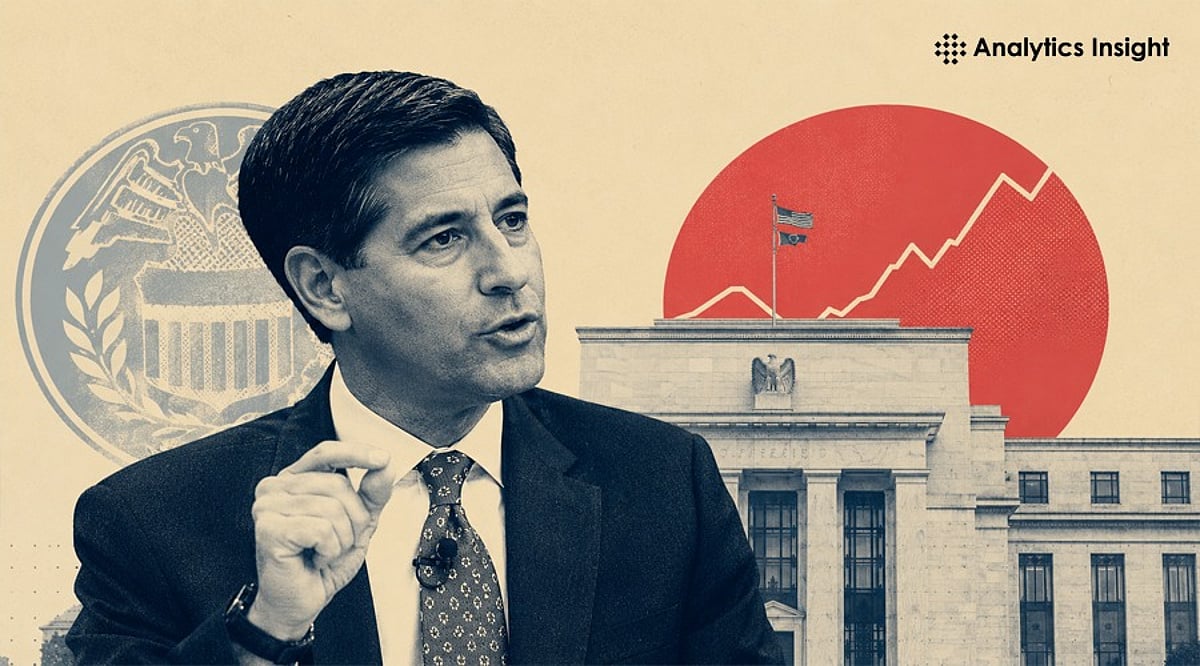
  • Kevin Warsh Labels Fed’s 2020 Inflation Strategy a Costly Error, Launches Policy Review

    Kevin Warsh Labels Fed’s 2020 Inflation Strategy a Costly Error, Launches Policy Review

    Federal Reserve Chair Kevin Warsh has publicly criticized the central bank’s 2020 inflation framework, calling it a costly policy mistake. During testimony before the House on July 14, Warsh announced the creation of five task forces to reassess how the Fed sets monetary policy. He emphasized a firm commitment to returning inflation to the 2% target, though he offered no clear signals on the timing of future interest-rate changes.

    Rejection of the 2020 Inflation Framework

    The Fed adopted flexible average inflation targeting in 2020, which allowed policymakers to aim for inflation moderately above 2% after periods of below-target price growth. The framework also prioritized employment shortfalls before withdrawing policy support. Warsh told lawmakers this approach was a mistake, stating that the Fed asked for a little more inflation and received much more. Inflation has remained above the 2% goal since 2021, and Warsh stressed that policymakers have no tolerance for persistently elevated inflation.

    The framework was revised in August 2025, before Warsh became chair, replacing the average-inflation makeup strategy with flexible inflation targeting. The update also shifted from a focus on employment shortfalls to a balanced approach considering both inflation and employment gaps.

    Five Task Forces to Review Fed Policy

    Warsh has established five task forces to examine monetary policy operations. These groups cover Fed communications, balance-sheet policy, economic data, productivity and jobs, and inflation frameworks. External advisers will collaborate with Fed staff and present findings to the Federal Open Market Committee (FOMC). The inflation group will study how the Fed identifies and responds to price growth, while the communications group will review how officials explain decisions during uncertain periods. Another panel will assess the timeliness of economic data, and the balance-sheet group will evaluate the Fed’s asset holdings and operating system.

    Warsh has not specified when the reviews will produce proposals. Any new framework would require support from other Fed policymakers. The FOMC makes rate decisions through votes, and members remain divided on whether rates should rise, stay unchanged, or fall later in 2026.

    Uncertain Interest-Rate Path

    June inflation data provides the Fed more time to assess its next move. The Consumer Price Index fell 0.4% for the month, and annual inflation slowed to 3.5% from 4.2%. Core inflation held flat monthly and eased to 2.6% year-over-year. Warsh warned lawmakers against treating one report as proof that inflation is defeated, saying, “There might be some that look at this morning’s data and say, ‘mission accomplished.’ That is not my view.” He offered no clear guidance on whether the Fed will raise rates at its July 28-29 meeting.

    The federal funds rate remains in a 3.5% to 3.75% range after the Fed held it steady in June. Warsh’s second congressional appearance is scheduled for July 15 before the Senate Banking Committee, where lawmakers may seek details on the task forces, the 2% target, Fed independence, and how future policy changes will balance inflation control with maximum employment.

  • Zoho Launches AI-Powered Classes 2.0 Across India with Support for 22 Languages

    Zoho Launches AI-Powered Classes 2.0 Across India with Support for 22 Languages

    Zoho has unveiled Zoho Classes 2.0, an advanced Learning Management System (LMS) that leverages artificial intelligence to simplify teaching and learning. The platform introduces a suite of new tools designed for students, teachers, schools, colleges, and universities. Notably, Zoho is offering the platform free of charge to government educational institutions across India.

    Originally launched during the COVID-19 pandemic as a tool for teachers to collect assignments online, Zoho Classes has evolved significantly based on educator feedback. Zoho Classes 2.0 now functions as a comprehensive learning platform that supports everyday classroom activities.

    AI Tools Enhance Teaching and Learning

    One of the standout features is the AI tutor, which only answers questions related to the subjects a student is studying. This ensures learners stay focused on their curriculum rather than receiving answers on unrelated topics. The platform also offers daily practice questions and rewards consistent learning through simple streaks.

    Teachers benefit from time-saving AI tools that can quickly generate lesson plans, course details, learning objectives, and classroom content. Educators can review and customize materials before sharing them with students, significantly speeding up lesson preparation.

    Another valuable addition is AI-based grading, which evaluates computer science assignments and prepares feedback for teachers. Teachers retain final control before releasing marks to students. Zoho states this feature can reduce hours of manual grading each semester, allowing educators to dedicate more time to student interaction.

    New Features for Schools and Colleges

    Educational institutions gain tools to streamline administrative tasks. Many schools and colleges must prepare reports for government and education authorities. Zoho Classes 2.0 helps collect course information and learning records, simplifying and accelerating report generation.

    The platform supports all 22 scheduled Indian languages, enabling students and teachers from diverse regions to use it comfortably. Zoho says the AI understands multiple Indian languages, making learning more natural for users.

    Safety features are also enhanced. The AI tutor restricts answers to classroom subjects, and schools can decide whether to enable AI features for students. The mobile app allows students to view saved lessons offline for a limited time, though full downloads are not available.

    Free Access for Government Institutions

    Zoho is providing Zoho Classes 2.0 at no cost to central and state government schools, colleges, and universities. Individual teachers can use it free for up to 100 students. Private institutions can subscribe for Rs 500 per teacher per month.

    With Zoho Classes 2.0, the company aims to make education more accessible and efficient. The platform reduces routine tasks for teachers, offers better learning support for students, and helps schools manage academic operations smoothly. Its intuitive AI features and multilingual support are expected to drive digital learning adoption across India in the coming years.

  • WhatsApp Tests Independent Cloud Backup for iPhone Users, Reducing iCloud Reliance

    WhatsApp Tests Independent Cloud Backup for iPhone Users, Reducing iCloud Reliance

    WhatsApp is developing a new feature that would allow iPhone users to back up their chat history without relying on Apple’s iCloud. The move, discovered in the latest WhatsApp beta for iOS by WABetaInfo, points to Meta’s plan to introduce its own encrypted cloud storage service for conversation backups.

    Currently, iPhone users must use iCloud for WhatsApp backups, requiring sufficient iCloud storage space. The upcoming change would give users the option to choose between iCloud and WhatsApp’s own cloud service, potentially easing storage constraints for those who frequently run out of space or prefer not to depend on Apple’s ecosystem.

    According to leaked screenshots, the new system will offer 2GB of free cloud storage from WhatsApp, with additional paid plans likely available for users who need more capacity. Like the existing backup option, WhatsApp’s cloud backups will be end-to-end encrypted, ensuring messages remain private and secure.

    The feature is still in development and not yet accessible to beta testers. Meta has not announced a release date or availability timeline. If launched, it would give iPhone users greater flexibility in managing their chat backups and reduce dependence on iCloud for storage.

  • XRP Faces Intensifying Selling Pressure as Binance Data Signals Weak Demand; Ripple CTO Defends College Sports Ads

    XRP Faces Intensifying Selling Pressure as Binance Data Signals Weak Demand; Ripple CTO Defends College Sports Ads

    XRP continues to face strong selling pressure, with Binance data pointing to subdued buying demand across the broader crypto market. Meanwhile, Ripple CTO Emeritus David Schwartz has publicly defended the company’s advertising campaign in college sports, arguing that truthful commercial speech for lawful products is protected under the First Amendment.

    Over the past week, XRP lost about 2% of its value, and its 30-day decline stands at roughly 2.5%. The token’s sideways movement mirrors similar price patterns seen in Ether and Solana, with analysts linking the weakness to wider crypto liquidity conditions that continue to favor sellers. Institutional capital has also moved away from several leading altcoins, adding to the pressure.

    Binance Data Reveals Weak XRP Buying Demand

    Data from CryptoQuant shows rising XRP sales across centralized exchanges, tracking trading activity and liquidity movements during a period of negative market sentiment. In particular, Binance’s Cumulative Volume Delta (CVD) has fallen to negative 6.93 million. The CVD metric compares buying and selling volume to assess which force dominates the market. A negative reading indicates that selling has exceeded buying, meaning XRP lacks the sustained demand needed to support a stronger price recovery.

    XRP previously traded above $3 before falling toward $1.10. It has also dropped from third to sixth place among cryptocurrencies ranked by market capitalization. While the token’s 30-day average has remained relatively stable, negative whale activity and retail exits have limited signs of a lasting bullish reversal. CryptoQuant analysts noted that continued negative CVD readings increase the likelihood of weak short-term momentum, while a sustained CVD recovery could signal fresh liquidity and renewed buying demand.

    Whale Activity Offers Mixed Signals

    Some large holders increased their XRP positions earlier this year. In May, wallets holding about 10 million XRP accumulated more tokens while smaller traders reduced their exposure. This suggests that whales absorbed coins sold by retail participants, a move that traders interpreted as a possible shift from consolidation toward market expansion. However, XRP failed to hold above a key support line, weakening its medium-term outlook despite earlier signs of a potential breakout.

    More recently, XRP spot activity on Binance turned positive. Weekly figures rose to $406 million after standing near $42 million in May. The token also posted double-digit gains during that period, following recoveries across several other altcoins, although broader selling pressure remained. Institutional participation remains central to XRP’s performance in the current quarter, and the text points to relatively improved macroeconomic conditions as a possible source of market support.

    Schwartz Defends XRP College Sports Advertising

    Separately, David Schwartz defended XRP advertising after critics questioned Ripple’s college sports sponsorships. The debate followed a partnership with the University of Kansas athletics program, a multi-year agreement that places XRP branding on university team uniforms. Critics compared the promotion with advertising linked to gambling, tobacco, and alcohol, arguing that universities should limit digital asset marketing aimed at students and younger sports audiences.

    Schwartz responded on July 15 via a post on X, focusing on legal protections for commercial speech rather than XRP’s investment prospects. He argued that governments cannot broadly suppress truthful advertising for lawful products, relying on First Amendment protections. Schwartz stated that officials cannot restrict truthful commercial speech simply because consumers may make poor but lawful decisions. He also separated regulation from advertising restrictions, noting that governments may regulate an activity without banning truthful speech about that lawful activity.

    What’s Next for XRP?

    XRP remains under pressure as negative Binance CVD data signals weak demand, while whale activity and institutional flows offer mixed support. Meanwhile, David Schwartz continues to defend lawful XRP advertising in college sports. Traders should watch liquidity trends and institutional participation for signs of renewed market strength.

  • Solana Price Recovery Gains Steam as Morgan Stanley Files Updated ETF Proposal

    Solana Price Recovery Gains Steam as Morgan Stanley Files Updated ETF Proposal

    Solana (SOL) extended its recovery on Wednesday, climbing above its 50-day Exponential Moving Average (EMA) as retail trading activity picked up, even as institutional demand through exchange-traded funds remained subdued. The token gained approximately 4% in the previous session, buoyed by improving sentiment across the broader cryptocurrency market.

    Technical indicators show Solana reclaiming the 50-day EMA at $76.82 and moving above the 50% Fibonacci retracement level at $76.92. These levels are critical for sustaining the current rebound. However, SOL faces immediate resistance from a descending trendline near $81.50. A daily close above that level would confirm a break from the existing downtrend and open the path toward the next resistance at $88.56, with the 200-day EMA at $94.52 serving as the next major barrier.

    The Relative Strength Index (RSI) sits near 54, indicating moderate buying pressure without overbought conditions. Meanwhile, the Moving Average Convergence Divergence (MACD) is approaching a bullish crossover near its signal line, which could signal improving momentum if confirmed.

    Retail Activity Strengthens, Institutional Caution Persists

    Data from CoinGlass shows Solana futures open interest holding steady near $4.91 billion over the past 24 hours, suggesting traders are maintaining leveraged positions. Futures trading volume rose 15% to approximately $6.90 billion, reflecting stronger market participation. Solana’s funding rate remained positive at about 0.0040%, meaning long-position holders are paying shorts to keep positions open.

    In contrast, institutional demand remains weak. SoSoValue data indicates Solana ETFs recorded zero net inflows for two consecutive trading sessions this week, highlighting a cautious approach from traditional investors despite the retail-driven recovery.

    Morgan Stanley Revises Solana ETF Filing

    In a significant development, Morgan Stanley has filed its third round of amendments for proposed spot Ether and Solana ETFs. The updated S-1 registration statements name Coinbase as custodian and staking facilitator, with BNY Mellon serving as joint custodian for both trusts.

    The Solana ETF, proposed to list on NYSE Arca under the ticker MSOL, may stake up to 100% of its SOL holdings, though a portion will remain liquid for redemptions and expenses. Staking providers and custodians would receive 5% of generated staking rewards, with the remaining 95% accruing to the trust. Earlier filings also listed Figment, Galaxy Blockchain Infrastructure, and Coinbase Canada as staking service providers.

    What to Watch

    Solana’s recovery has gained traction after reclaiming its 50-day EMA and seeing improved futures activity. However, weak ETF inflows underscore continued institutional caution. Morgan Stanley’s revised ETF filing could bolster future interest, while the $81.50 resistance level remains the key technical threshold for traders to monitor.

  • NVIDIA GeForce NOW Cloud Gaming Launches in India: Play Steam and Epic Games on Any Device

    NVIDIA GeForce NOW Cloud Gaming Launches in India: Play Steam and Epic Games on Any Device

    NVIDIA has officially launched GeForce NOW in India, bringing cloud gaming to millions of users who want to play high-end PC games without investing in expensive hardware. The service streams supported titles from popular platforms like Steam, Epic Games Store, Ubisoft Connect, and Xbox directly to a user’s device, processing the game on NVIDIA’s servers and delivering it over the internet.

    This launch allows players to access their existing game libraries without repurchasing titles. NVIDIA has confirmed that over 5,000 games, including many free-to-play options, will be supported at launch. The service eliminates the need for large downloads or updates, as games run on cloud servers, enabling users to start playing almost immediately on older laptops, tablets, or basic computers.

    GeForce NOW offers several subscription tiers in India. The Performance membership is priced at Rs. 999 per month, while the Ultimate membership costs Rs. 1,999 per month. For those who want to test the service before committing, day passes are available at Rs. 399 for the Performance tier and Rs. 799 for the Ultimate tier.

    The arrival of GeForce NOW could reshape how people shop for laptops. With cloud gaming, a thin, lightweight office laptop with a good internet connection may be sufficient for both work and gaming, reducing the need for costly gaming laptops. Tablets might also become more appealing to casual gamers who prefer a larger screen without carrying heavy equipment.

    Gaming cafés may need to adapt as cloud gaming gains traction. While fewer players may visit cafés solely for powerful computers, these venues can pivot toward esports events, tournaments, and social gaming experiences that cloud services cannot replicate. Cafés could become community hubs where gamers meet, compete, and enjoy fast internet connections.

  • Bitcoin Nears $65K Resistance Amid Softer Inflation Data and Surging ETF Inflows

    Bitcoin Nears $65K Resistance Amid Softer Inflation Data and Surging ETF Inflows

    Bitcoin traded near $64,600 on July 15 after hitting an intraday high above $65,100, gaining about 3% in 24 hours. The move brings the leading cryptocurrency close to a key resistance zone, fueled by cooler U.S. inflation data, robust ETF inflows, and short liquidations.

    Cooling Inflation Drives Bitcoin Higher

    The U.S. Consumer Price Index fell 0.4% in June—the largest monthly decline since April 2020. Annual inflation slowed to 3.5% from 4.2% in May, while core inflation remained unchanged and eased to 2.6% annually. The report reduced expectations for a near-term Federal Reserve rate hike, with market pricing dropping from 43% to 13%. Lower rate expectations supported risk assets like Bitcoin, as traders moved away from cash positions.

    Bitcoin’s correlation with the S&P 500 reached 86% during the move, indicating a broad macro reaction rather than a crypto-specific event. Fed Chair Kevin Warsh is addressing Congress this week, and the July policy meeting is scheduled for July 28–29.

    ETF Demand and Liquidations Add Support

    U.S. spot Bitcoin ETFs recorded $181 million in net inflows on July 14, led by BlackRock’s IBIT with approximately $139 million and Fidelity’s FBTC adding roughly $21 million. This fresh demand through regulated investment products coincided with rising prices that forced bearish traders to close leveraged positions. About $107.25 million in Bitcoin shorts were liquidated over 24 hours, adding upward momentum.

    The inflow data followed uneven institutional activity earlier in July. Traders are watching for sustained demand after the CPI-driven move.

    Bitcoin Price Faces a $65K Breakout Test

    Bitcoin now faces resistance at $65,000 and near its 50-day exponential moving average around $65,142. A daily close above that level could open a move toward $68,000, with the next resistance zone between $68,000 and $70,000. Analyst Michaël van de Poppe expects Bitcoin to reach $68,000 within one to two weeks, and possibly $75,000 to $80,000 in August, provided price clears nearby resistance.

    Order-book data shows notable selling interest near $67,000 and above, with buyers supporting between $63,500 and $63,800. A fall below $64,000 could expose $63,000, while a deeper break may bring $61,300 into focus.

    Oil prices add a near-term risk: Brent crude climbed to $85.42 after the U.S. restored a naval blockade on Iranian ports. Further supply disruption could lift inflation expectations and alter the rate outlook that supported Bitcoin’s rally.

  • Circle Wins $49M Arbitration Case Against Tether-Linked Heka Funds

    Circle Wins $49M Arbitration Case Against Tether-Linked Heka Funds

    Circle has won an arbitration dispute against Heka Funds, defeating a $49 million damages claim linked to a 2023 platform suspension, according to a report. Circle suspected trading patterns that favored Tether’s USDT and removed the fund’s access. The outcome became public on July 14, 2026.

    None of the parties has issued an official statement. Therefore, the report remains the only public account of the dispute and ruling.

    Circle Defeats Claim After Platform Suspension

    Circle operates the USDC stablecoin and controls access to its platform services. In late 2023, the company suspended Heka Funds after reviewing its trading activity. According to the report, the fund’s trading patterns allegedly favored USDT in a targeted manner. Circle viewed the conduct as close to market manipulation.

    The company considered the activity a threat to USDC’s market integrity. It then withdrew the fund’s access to its platform and related services. Heka Funds challenged the suspension through arbitration in 2024. It demanded $49 million for profits it claimed to have lost after losing platform access.

    The fund relied on Circle’s issuance, redemption, and trading channels. Therefore, the suspension reduced the number of routes available for its arbitrage strategy.

    Heka Built its Business Around Stablecoin Arbitrage

    The arbitrator dismissed the damages claim and ruled in Circle’s favor. As a result, Circle did not have to pay the requested amount. The report did not disclose the ruling date or the arbitrator’s detailed reasoning. Arbitration proceedings usually keep financial disputes outside public courtrooms.

    A privately appointed arbitrator decides the case. Both parties must generally follow the ruling and have limited options to challenge it. Heka Funds operates through Heka Funds SICAV p.l.c. in Malta. Its Elysium Global Arbitrage Fund uses a strategy managed by London-based Abraxas Capital Management.

    The fund began operating in late 2018 and focused on stablecoin and Tether arbitrage. It targeted small price differences across exchanges and digital tokens. These strategies depend on large transaction volumes and fast settlement. Losing a major trading partner can reduce available opportunities and lower potential returns.

    Platform Access Shapes Stablecoin Competition

    A 2021 Protos investigation said the fund held up to €540 million, or about $570 million, across USDC and USDT. The investigation also reported cumulative gains above 100% since the fund’s launch. In 2021, the fund recorded about €49 million in annual profit. That amount resembles the later arbitration claim. However, the figures relate to separate matters from different years.

    Access decisions directly affect arbitrage funds since their strategies depend on issuer redemption channels and several trading routes. Circle and Tether lead the global stablecoin market, while USDT holds the larger market value. Circle has traded on the NYSE since June 2025.

    The company uses the ticker CRCL. Its public listing also places its operations under greater market and regulatory scrutiny. Meanwhile, the United States is developing federal stablecoin rules through the GENIUS Act. The proposed framework covers reserves, audits, disclosures, and issuer requirements. No official response has emerged from Circle, Tether, Heka Funds, or Abraxas Capital. The detailed basis for the arbitrator’s ruling therefore remains undisclosed.

    What’s Next?

    Circle defeated Heka Funds’ $49 million damages claim after suspending the fund over trading patterns that allegedly favored USDT. Although the arbitrator backed Circle, the reasoning remains undisclosed. Market participants should watch for official statements that may clarify the case and its impact on stablecoin platform access.

  • SpaceX Stock Plunges 33% From Peak, Nears $135 IPO Price Amid Valuation Worries

    SpaceX Stock Plunges 33% From Peak, Nears $135 IPO Price Amid Valuation Worries

    SpaceX shares closed at $136.08 on Tuesday, July 14, marking a third consecutive daily decline and putting the stock just $1.08 above its initial public offering price of $135. The drop represents a 33% fall from the post-listing peak of $225.64, erasing nearly $850 billion in market value according to Bloomberg estimates.

    SpaceX Stock Tests Key IPO Level

    The stock’s slide has brought the $135 IPO price back into focus. A move below that level would put early buyers in a losing position, particularly concerning given that retail investors received roughly 20% of the IPO allocation. The stock already trades below its opening price of $150 and its first-day close of $160.95, despite being added to the NASDAQ-100 through fast-entry rules last week.

    High Valuation and New Supply Add Pressure

    SpaceX trades at an estimated forward price-to-sales ratio above 30 times, among the highest in the NASDAQ-100. The valuation has drawn increased scrutiny as technology shares face broader questions about growth expectations. Additionally, a staggered lock-up schedule will release insider shares over the coming months, potentially adding supply. Ken Mahoney, CEO of Mahoney Asset Management, noted, “We still don’t think SpaceX has found its low,” citing the need for sufficient market demand to absorb new shares.

    Wall Street Targets Stay Well Above the Price

    Despite the recent decline, Wall Street analysts remain broadly supportive. Over 80% of analysts covering SpaceX recommend buying, with an average price target of $236.25—more than 70% above Tuesday’s close. However, early volatility is common among large tech listings; a Truist Wealth review of 30 major technology IPOs over 15 years found an average maximum first-year decline of 55%. Some investors may view the $135 area as an attractive entry point after missing the IPO allocation. Talley Leger, chief market strategist at Wealth Consulting Group, said he may consider buying if the decline continues. The coming sessions will test whether demand holds near the offer price as insider supply approaches.