Author: vitorcherulli

  • McDonald’s AI Drive-Thru Saves 50 Labor Hours Per Week Without Cutting Staff

    McDonald’s AI Drive-Thru Saves 50 Labor Hours Per Week Without Cutting Staff

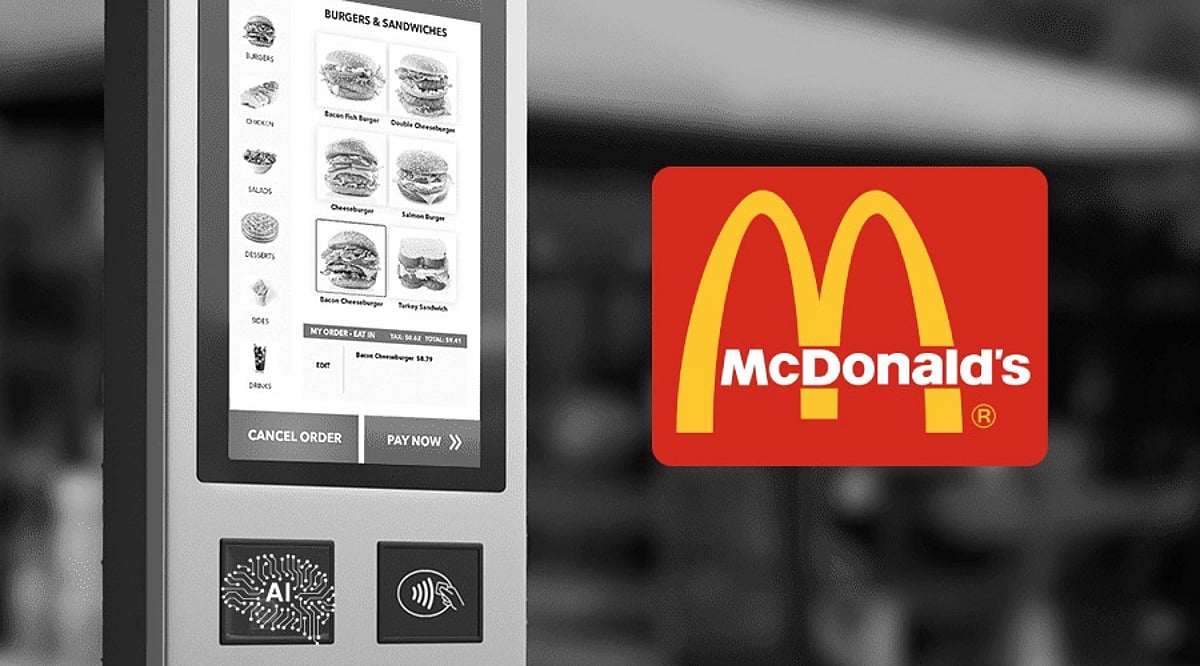
    McDonald’s is expanding its use of artificial intelligence in restaurants, with a new AI ordering system called Archy that can now take drive-thru orders in English and Spanish with 90% accuracy. According to reports, this technology could save at least 50 labor hours per week at a typical McDonald’s location.

    McDonald’s CFO Ian Borden emphasized that the company does not plan to use the system to reduce its workforce. Instead, employees can redirect the saved time to other tasks such as food preparation, customer service, and overall restaurant operations.

    In addition to Archy, McDonald’s is deploying ArchIQ, an AI system developed in partnership with Google, to support broader restaurant operations. ArchIQ helps improve order accuracy, inventory management, and staff scheduling. These initiatives are part of McDonald’s broader plan to invest $8.5 billion over the next decade to upgrade its restaurants, including new delivery lockers, kitchen changes, and larger play areas.

    CEO Chris Kempczinski noted that customers have responded positively to Archy, appreciating the time savings and improved order accuracy. He added that the company’s strategy is not about labeling technology as good or bad, but about how it is implemented effectively.

    The drive-thru is a natural fit for AI assistance. Taking orders can be repetitive, especially during peak hours. Archy handles that task, allowing employees to focus on preparing food, assisting customers, and keeping the restaurant running smoothly.

    McDonald’s approach is less about replacing people and more about reallocating their time. The company believes AI can take over routine work while employees handle tasks that require direct human attention.

    McDonald’s is also expanding other technologies, such as order-accuracy scales already in use at 10,000 restaurants, with plans to reach 20,000 locations by 2028. Archy and ArchIQ demonstrate how AI is moving from trials to everyday restaurant operations, potentially making small tasks faster and giving employees more time for customer-facing work.

  • Apeing Stage 5 Presale Launches as Cardano Surges on x402 Integration

    Apeing Stage 5 Presale Launches as Cardano Surges on x402 Integration

    Apeing Stage 5 Presale Now Live

    Apeing has entered Stage 5 of its crypto presale, with the $APEING token currently priced at USD 0.00055. The project reports raising over USD 102,000 and selling more than 463 million tokens. This latest phase, called Dip Devourers, marks a continued rollout across 33 total stages, each with a progressively higher token price. The next stage will increase the price to USD 0.0006, with a future listing target of USD 0.01. Based on these figures, Apeing projects a potential 1,700% return from the current presale price to the listing level, though this depends on market conditions. Unsold tokens from each stage are burned after closure, reducing the total supply over time.

    Referral and Staking Features

    Apeing has introduced several participation incentives, including Ape Wars, the Ape Referral League, and a tiered staking system. Buyers using a referral code receive 10% additional tokens, and referrers earn a 10% reward from qualifying purchases. Purchases of USD 25 or more unlock a personal referral code. The project also offers four staking tiers with annual percentage yields of 10%, 25%, 50%, and 85%, allocating 30% of the total token supply to staking. Participants can connect compatible Ethereum wallets like MetaMask or Trust Wallet, and pay with supported cryptocurrencies or Visa/Mastercard.

    Cardano Gains on x402 Integration

    Cardano (ADA) saw a 3.62% gain in an 18-hour period and nearly 9.6% over 24 hours, driven by renewed market attention and the integration of the x402 software development kit. This SDK enables applications and AI agents to make API payments using ADA or Cardano-native tokens, connecting the network to the growing machine-to-machine payment sector. The broader crypto market also rallied, with total capitalization rising from about USD 2.74 trillion to USD 2.87 trillion, and Bitcoin moving above $84,000. Cardano’s wider ecosystem developments, including the Leios scaling upgrade and governance updates, continue to generate discussion. The x402 integration adds a practical utility layer to Cardano’s ongoing evolution.

  • Tata Sons Considers NCLT Intervention to Proceed with AGM Amid Trust Quorum Impasse

    Tata Sons Considers NCLT Intervention to Proceed with AGM Amid Trust Quorum Impasse

    Tata Sons is preparing to hold its annual general meeting (AGM) within the next month, a gathering that is critical for voting on the reappointment of N Chandrasekaran as a director. However, the company may face the same quorum hurdle that forced the adjournment of its August 18 meeting, as restrictions on the Sir Ratan Tata Trust (SRTT) remain in place. If the quorum cannot be met, Tata Sons is likely to seek directions from the National Company Law Tribunal (NCLT) under Section 97 of the Companies Act.

    Background: The Reappointment Vote

    Chandrasekaran’s reappointment as a director requires shareholder approval at a valid AGM. After the August meeting was stalled due to a lack of quorum, the Registrar of Companies granted Tata Sons a three-month extension. The company has yet to announce a new date. According to executives familiar with the company’s rules, Chandrasekaran would remain a director even if the AGM fails again, with his reappointment pending until a valid meeting can be convened.

    The urgency of the meeting also follows a reported disagreement at a recent Tata Sons board meeting. Tata Trusts chairman Noel Tata opposed both Chandrasekaran’s reappointment as chairman and the proposed listing of Tata Sons, while other directors supported both proposals. It is important to note that the chairmanship matter and the shareholder vote on directorship are separate issues.

    The Quorum Problem

    Tata Sons’ articles require at least five members to attend a general meeting in person. Additionally, if the Tata Trusts collectively hold at least 40% of the company’s paid-up ordinary share capital, an authorized representative jointly nominated by SRTT and the Sir Dorabji Tata Trust (SDTT) must be present. SDTT holds 27.98% and SRTT holds 23.56% of Tata Sons, giving them a combined stake of 51.54%—well above the threshold.

    However, the Maharashtra Charity Commissioner has restricted SRTT from holding meetings or making decisions. This restriction prevented the trusts from jointly nominating a representative for the August AGM, leading to its adjournment. The restriction remains in effect, meaning the same quorum issue could derail the upcoming meeting unless SRTT is able to make the nomination. Tata Sons has not commented on its reported plan.

    Seeking NCLT Directions

    If the quorum requirement cannot be satisfied, Tata Sons may approach the NCLT for guidance. Section 97 of the Companies Act empowers the tribunal to direct that an AGM be held and to specify the manner in which it must be conducted. However, legal experts have differing views on the scope of such an order.

    Shafaq Uraizee Sapre, a lawyer quoted by The Economic Times, noted that the NCLT could deem a single member present sufficient for the meeting, but it cannot lift the Charity Commissioner’s restrictions on SRTT. Shreni Shetty considered it “extremely unlikely” that the tribunal would override a shareholder’s quorum rights under Tata Sons’ rules. Vimal Taparia, a partner at Morphis Management Services, added that an affected shareholder could challenge an AGM held under such an order or the resolutions passed there.

    For now, both the date of the AGM and the path to a valid shareholder vote remain uncertain. Tata Sons has not announced any application to the NCLT, but the option remains on the table.

  • PayGlocal Receives IFSCA In-Principle Approval for GIFT City Payment Services Subsidiary

    PayGlocal Receives IFSCA In-Principle Approval for GIFT City Payment Services Subsidiary

    PayGlocal, a Bengaluru-based fintech company, has secured in-principle approval from the International Financial Services Centres Authority (IFSCA) to establish a wholly owned subsidiary as a Payment Service Provider (PSP) in GIFT City. The proposed entity is designed to serve businesses operating in international markets, with plans to offer cross-border money transfers, account services, and merchant payment solutions.

    Scope of the IFSCA Approval

    The IFSCA approval enables PayGlocal to issue e-money accounts, facilitate cross-border transfers, and provide merchant acquisition services—allowing businesses to accept payments seamlessly. The company has not yet announced when operations will commence or whether final authorization has been obtained.

    PayGlocal intends to develop international payment services through its GIFT-IFSC entity while continuing its technology and operational work from India. The subsidiary will serve as a base for these services once all required approvals are in place.

    Existing Regulatory Permissions

    The GIFT City approval adds to PayGlocal’s existing regulatory footprint. Last year, the company received final authorization from the Reserve Bank of India (RBI) to operate as a Payment Aggregator-Cross Border, covering both inward and outward payments. Additionally, PayGlocal has registered as a Money Services Business with the U.S. Financial Crimes Enforcement Network (FinCEN), supporting its expansion into the American market.

    CEO’s Vision and Future Plans

    Prachi Dharani, co-founder and CEO of PayGlocal, emphasized the company’s mission to simplify cross-border money movement for businesses. “PayGlocal is building something from India that can become a trusted part of how businesses transact with the world,” she said. Dharani added that the company aims to make cross-border payments feel as straightforward as domestic transactions.

    Looking ahead, PayGlocal plans to help Indian merchants reach overseas customers, enter new markets, and develop localized options for collecting and making payments. The company did not disclose specific markets or a launch timeline.

    Company Background

    Founded in 2021, PayGlocal serves businesses in exports, retail, travel, education, and software services. Its product suite includes multi-currency accounts, payment gateways, and solutions for international merchants to accept payments from Indian customers via UPI, cards, and netbanking. The platform supports over 130 currencies and more than 40 global and local payment methods. PayGlocal has not specified which of these services the GIFT City entity will offer initially.

  • Bitcoin Slumps Below $84,000 as Surging Bond Yields and Oil Prices Deepen Crypto Sell-Off

    Bitcoin Slumps Below $84,000 as Surging Bond Yields and Oil Prices Deepen Crypto Sell-Off

    Bitcoin and Altcoins Tumble Amid Rising Bond Yields and Oil Prices

    The cryptocurrency market experienced a sharp decline on Thursday as global bond yields surged and oil prices climbed, pressuring risk assets across the board. Bitcoin fell to approximately $83,830 after trading near $87,000 earlier in the week. Ethereum dropped to around $2,670, while several major altcoins recorded double-digit losses.

    Treasury Yields and Oil Prices Fuel the Sell-Off

    The US 10-year Treasury yield rose above 5%, reaching levels not seen since 2007, as stronger economic data and hawkish Federal Reserve comments drove the move. The Fed’s recent 25-basis-point rate hike and commitment to returning inflation to 2% have reinforced expectations for further tightening. Meanwhile, crude oil prices added to inflation concerns, with gasoline and diesel prices rising sharply since January. Higher bond yields reduce the appeal of speculative assets like cryptocurrencies, as government debt offers more attractive returns.

    Altcoins Hit Hard as Profit-Taking Accelerates

    Tokens that had posted strong gains in recent weeks were among the hardest hit. Arbitrum fell more than 14% in 24 hours, trading about 15% below its weekly high after a 263% rally from August lows. Uniswap dropped 13.78% to around $9.25, following a 240% surge from its August low. Other tokens such as Pepe, Worldcoin, and Dogecoin also gave back gains. Technical indicators, including Relative Strength Index readings above 70, suggested many cryptocurrencies had entered overbought territory.

    Broader Market Retreat

    The selling extended beyond crypto. Gold and silver declined as rising interest rates made yield-bearing assets more competitive. US stock futures also weakened, with Dow Jones Industrial Average futures falling about 142 points and S&P 500 futures dropping around 25 points. Despite the losses, Bitcoin remained higher for September overall, supported by a more favorable US regulatory environment earlier in the month.

    Market participants now face uncertainty over whether the decline is a temporary pullback or the start of a broader bearish trend. With the Federal Reserve signaling further rate hikes and bond yields continuing to climb, the outlook for risk assets remains cautious.

  • Hedera (HBAR) Price Prediction: Tightening Triangle Meets Enterprise Growth

    Hedera (HBAR) Price Prediction: Tightening Triangle Meets Enterprise Growth

    HBAR, the native token of Hedera, is trading at $0.09153 after a 7.98% drop. The pullback comes as a triangular chart formation reaches a critical point, while the network pushes deeper into enterprise blockchain with new IBM Cloud and Taurus integrations.

    Derivatives activity continues to dominate trading. CoinGlass data from Sept. 24 put HBAR futures volume at $206.56 million, compared with spot volume of $67.92 million — meaning leveraged traders accounted for more than three times the activity of spot buyers.

    HBAR Triangle Puts Price Resolution in Focus

    HBAR’s chart structure has compressed into a triangle, placing traders’ focus on its next directional move. The setup follows a sharp daily decline, with the token trading below recent levels.

    Open interest reached $145.21 million, signaling that substantial futures exposure remains active. As the triangle narrows, changes in leveraged positioning could become important in determining whether HBAR breaks upward or extends its slide.

    The supply picture is clearly defined. Hedera has a fixed maximum supply of 50 billion HBAR, and 43.83 billion tokens are already in circulation. That means most of the network’s maximum token supply is now available, giving traders full visibility into supply dynamics.

    IBM Cloud Listing Expands Hedera’s Enterprise Reach

    On the enterprise side, The Hashgraph Group has become an IBM Silver Partner, according to crypto account ALLINCRYPTO. Its Hedera-powered IDTrust platform is now listed on IBM Cloud, making the technology accessible to IBM’s global customer base.

    This development broadens Hedera’s exposure beyond cryptocurrency trading. IDTrust gives enterprise users another route to interact with technology running on Hedera infrastructure. IBM is already a member of Hedera’s governing council, which also includes Google, Deutsche Telekom, and Standard Bank.

    Hedera says its network has processed more than 70 billion transactions. Lloyds Bank recently used Hedera to post tokenized gilts and fund units as foreign exchange collateral, underscoring the network’s institutional appeal.

    Taurus Completes Full Hedera Stack Integration

    Taurus, a Swiss digital asset infrastructure provider, has completed an 18-month integration of Hedera’s full technology stack. The company serves more than 40 banks and regulated financial institutions, including Deutsche Bank, CACEIS, and State Street.

    The integration allows Taurus clients to custody and stake HBAR, issue tokens, and deploy smart contracts through one platform. It covers Taurus-PROTECT, Taurus-EXPLORER, and Taurus-CAPITAL. The final development added smart contract functionality through Hedera’s EVM-compatible Smart Contract Service, which supports Solidity and other established Ethereum development tools.

    Institutions can also issue assets through the Hedera Token Service. Potential applications include tokenized bonds, funds, stablecoins, and other programmable financial instruments.

    Taurus co-founder Lamine Brahimi said financial institutions want infrastructure that supports more than one digital asset use case. Clients are looking for a single platform that covers their broader digital asset strategies, he added.

    What to Watch Next

    The central question is whether HBAR’s tightening triangle will resolve to the upside alongside stronger enterprise activity, or whether derivatives-led selling will continue to control short-term price action. Traders may want to monitor the triangle, derivatives positioning, and institutional adoption as the next price move develops.

  • ARC Raiders Frozen Trail Update Adds Pendola Pass, Outposts, and Weapon Amplification to Reshape Raid Gameplay

    ARC Raiders Frozen Trail Update Adds Pendola Pass, Outposts, and Weapon Amplification to Reshape Raid Gameplay

    ARC Raiders is receiving a major free update on October 8, 2026, called Frozen Trail. The update introduces the Pendola Pass, a snowy new map filled with resources and dangers, along with new enemies, weapons, Outposts, and a fifth weapon upgrade tier. This update aims to reinvigorate player engagement after a period of slow updates and declining player counts.

    What’s New in Frozen Trail

    The Pendola Pass is built around a crashed Emperor Arc called Frigate. Players can explore this area to gather useful materials while facing three new enemy types: Bully, Skulker, and Hydra. The update also adds a grappling hook, new quests, a reworked Skill Tree, and a free and premium Rewards Pass.

    Frozen Trail introduces Outposts, which players can build and customize with furniture and modules. A new research workstation gives these outposts additional purpose. Weapon Amplification adds new upgrade paths, allowing players to change how their weapons function.

    Impact on Raids

    The Pendola Pass could make each raid feel less predictable. Players will need to decide how much time to spend searching for resources in a dangerous area. Outposts give those resources more value, encouraging players to build and improve their own space rather than simply collecting items and moving on.

    These new systems provide more reasons to return after each raid. Players can explore Pendola Pass, collect materials, improve weapons, and work on longer-term goals. This is crucial for ARC Raiders as it looks to maintain player engagement beyond its initial launch.

    The Frozen Trail update is not just another map; it adds more decisions before, during, and after each raid. For players, the biggest change may be having more than one reason to return to the surface.

  • Belden Ramps Up Ruckus Wireless Manufacturing in India with New Pune Production Line

    Belden Ramps Up Ruckus Wireless Manufacturing in India with New Pune Production Line

    Belden Inc., the US-based networking and connectivity specialist, is expanding its local manufacturing capabilities in India. The company’s Pune facility will now produce Ruckus ICX Ethernet switches, which are integral to Wi-Fi connectivity, networking equipment, and AI-powered automation systems.

    This strategic move follows Belden’s $1.8 billion acquisition of Ruckus Wireless and aligns with the Indian government’s ‘Make in India’ initiative, signaling a significant shift toward domestic production of enterprise networking hardware.

    Pune Facility to Drive Local Production

    The initial manufacturing of Ruckus ICX Ethernet switches will take place at Belden’s 300,000-square-foot facility in Pune. This expanded capacity is designed to meet domestic demand, with potential export opportunities to be assessed in later phases.

    Bart Giordano, senior vice president and general manager at Ruckus Networks, noted that the company has not disclosed specific investment figures or capacity metrics for the expansion. “The first batch of locally manufactured switches is set to roll off the assembly line as we speak,” Giordano said in a virtual interaction.

    The ICX Ethernet switching portfolio currently represents nearly 50% of Ruckus’s total business.

    Expansion to Include Workforce, Products

    Historically, Ruckus Wireless relied entirely on outsourced manufacturing. Following the integration with Belden, the company is leveraging Belden’s existing Pune facility to establish local production.

    Ruckus plans to make incremental investments and expand its local workforce as manufacturing scales up. Ethernet switches will form the first phase of production, while the company will evaluate manufacturing other enterprise networking products at the Pune facility in the future.

    Strengthening India Operations

    The Pune manufacturing operation adds to Ruckus’s existing presence in innovation, operations, and customer delivery across India. Bengaluru hosts the company’s largest global research and development and customer success site, along with Belden’s customer innovation center. Ruckus also operates an R&D center in Chennai in collaboration with the IIT Madras Research Park, focusing on software development and networking innovation.

    Beyond enterprise IT, the combined Belden-Ruckus portfolio will target industrial sectors such as advanced manufacturing, warehousing, and logistics.

  • Amazon Recruits Former Employees for AI and Cloud Roles After Major Layoffs

    Amazon Recruits Former Employees for AI and Cloud Roles After Major Layoffs

    Amazon is reaching out to former employees, including those affected by recent layoffs, to fill positions in artificial intelligence, machine learning, and cloud computing. According to a report by Business Insider, the company has initiated a “Boomerang Reengagement Initiative” to bring back former staff.

    Amazon Launches Former Employee Outreach

    Recruiter emails seen by Business Insider reveal that Amazon’s AI agent organization, under AWS Vice President Swami Sivasubramanian, contacted former employees last month about available AI and machine learning positions. The outreach was described as “Swami’s Boomerang Reengagement Initiative.”

    In another instance, an AWS Finance recruiter contacted a former employee and offered an expedited interview process that could potentially lead to a job offer. One email read: “A lot has changed since you were here, and there’s some really compelling work happening across AI/ML right now.”

    Outreach Follows More Than 30,000 Job Cuts

    This outreach comes after Amazon eliminated more than 30,000 positions through multiple rounds of job cuts. Despite these reductions, the company continues to recruit for AI-related roles as it expands its focus on the technology.

    Amazon Says Rehiring is Longstanding Practice

    Amazon told Business Insider that rehiring former employees is a longstanding companywide practice. Company spokeswoman Haley Silva said that former employees, including those laid off, could be considered for open positions based on current needs. She clarified that the outreach was not specifically aimed at people who had left because of Amazon’s return-to-office policy, and that workplace attendance requirements remain unchanged.

    “We’re always interested in connecting with talented people, both new candidates and former Amazonians, for open roles,” Silva was quoted as saying.

  • TeamLease Digital Establishes Delaware Subsidiary to Boost US Staffing Operations

    TeamLease Digital Establishes Delaware Subsidiary to Boost US Staffing Operations

    TeamLease Digital Private Limited, a wholly owned subsidiary of TeamLease Services Limited, has taken a significant step in its international expansion by incorporating a new US-based entity. The company announced the formation of TL Business Solutions Inc. in Delaware, United States, on September 23, 2026. This move is aimed at strengthening its presence in the American staffing and business solutions market.

    New Entity to Focus on Staffing and Talent Solutions

    TL Business Solutions Inc. is a step-down wholly owned subsidiary of TeamLease Services, with TeamLease Digital Private Limited as its direct parent. The newly formed entity will specialize in staffing, talent solutions, and workforce management services. This strategic initiative is designed to facilitate the company’s expansion into international markets, with a particular focus on the United States.

    The authorized capital of TL Business Solutions Inc. is set at USD 105,000, comprising 1,050,000 shares with a par value of USD 0.10 each. This capital structure positions the subsidiary to pursue growth opportunities in the competitive US staffing landscape.

    Strategic Expansion into the US Market

    By establishing a dedicated legal entity in Delaware, TeamLease Digital is extending its operational footprint into the US. While financial details such as size and turnover are not yet disclosed, the company has confirmed that TL Business Solutions Inc. is a related party as a step-down wholly owned subsidiary. Notably, the promoters and promoter group have no direct interest in the new entity.

    This incorporation provides TeamLease with a structured corporate framework to explore and capitalize on staffing and business solutions opportunities in the US. It also complements the group’s existing international operations and subsidiaries across various markets.

    TeamLease continues to focus on enhancing its digital and workforce-related capabilities. The Delaware incorporation marks a pivotal step in TeamLease Digital’s US expansion strategy, reinforcing its commitment to delivering comprehensive talent and workforce management solutions on a global scale.