Author: vitorcherulli

  • Ethereum Holds Near $1,800 as ETF Inflows Counter Retail Bearish Pressure

    Ethereum Holds Near $1,800 as ETF Inflows Counter Retail Bearish Pressure

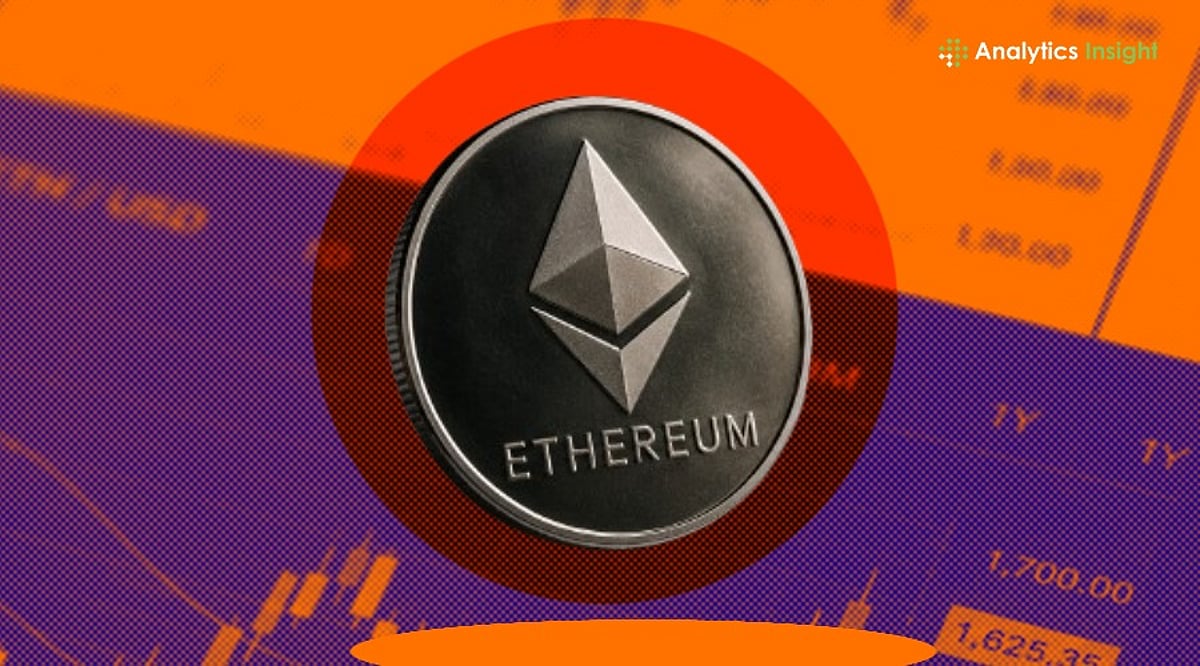
    Ethereum traded near $1,800 on Friday, gaining roughly 3% between Thursday and Friday as renewed demand for spot exchange-traded funds (ETFs) and continued expansion in tokenized assets provided support. The move outpaced other major cryptocurrencies, but futures market data revealed that retail traders continued to sell into the weekend, creating a tug-of-war between institutional buying and weak short-term sentiment.

    Institutional Demand Returns After Nine Weeks

    Spot U.S. Ethereum ETFs recorded their first weekly inflow in nine weeks, with $84.4 million in net buying, according to SoSoValue. This ended eight consecutive weeks of net outflows and signaled a shift in institutional demand. The funds experienced net outflows only on July 9, when Ethereum dropped to roughly $1,748 and funds lost $52.08 million. The renewed buying helped Ethereum maintain its position near $1,800 through the weekend.

    Institutional demand was further reflected in broader corporate accumulation. BitMine added 198,370 ETH over the past 30 days, bringing its reserves to approximately $10.3 billion. Additionally, a transfer of 20,500 ETH (worth about $36 million) from Galaxy Digital to a new wallet was flagged by Arkham Intelligence, following a pattern previously linked to large corporate ETH purchases.

    Retail Traders Turn Bearish

    In contrast, retail traders in the perpetual futures market moved in the opposite direction. Ethereum’s long-to-short ratio fell to 0.946, indicating that short positions now outnumber long positions. CoinGlass data showed an “extremely bearish” reading for large traders on OKX and Bybit, which handled roughly $4.10 billion and $1.19 billion in perpetual trading volume, respectively. One trader opened an ETH short position worth $12.43 million before the weekend.

    Despite the bearish tilt, short sellers faced higher liquidation losses. Short liquidations reached $11.49 million, compared to $8.30 million for long traders, suggesting that bearish bets carried near-term risk even as selling activity increased.

    Tokenization Growth Adds Support

    Ethereum also gained support from the expanding tokenized asset market and the launch of Robinhood Chain, a layer-2 network that uses ETH for gas fees. Robinhood Chain attracted about $106 million in bridge deposits and offers tokenized stocks to users in 120 countries, adding activity to the Ethereum-compatible ecosystem.

    Ethereum currently holds a 47% share of the real-world asset tokenization market, according to RWA.xyz. Analyst Leon Waidmann noted that Ethereum’s total value locked has reached $260 billion, surpassing Ether’s market value of about $210 billion, describing ETH as “underpriced.” However, network activity remains below earlier peaks. Ethereum decentralized applications generated $11 million in weekly revenue, down from $20 million in the first quarter, while active addresses fell to 3.2 million from 5.4 million.

    Funding Rates and Resistance Levels

    The annualized funding rate for ETH perpetual futures dropped to 3%, below the 6% level typically associated with balanced demand. This, combined with lower network activity, has kept Ethereum’s price recovery limited. ETH now faces resistance near $1,800 as ETF buying and tokenization demand compete with retail selling and weakening on-chain metrics.

  • French Door vs. Side-by-Side Refrigerators: A Detailed Comparison for Smart Buyers

    French Door vs. Side-by-Side Refrigerators: A Detailed Comparison for Smart Buyers

    Overview

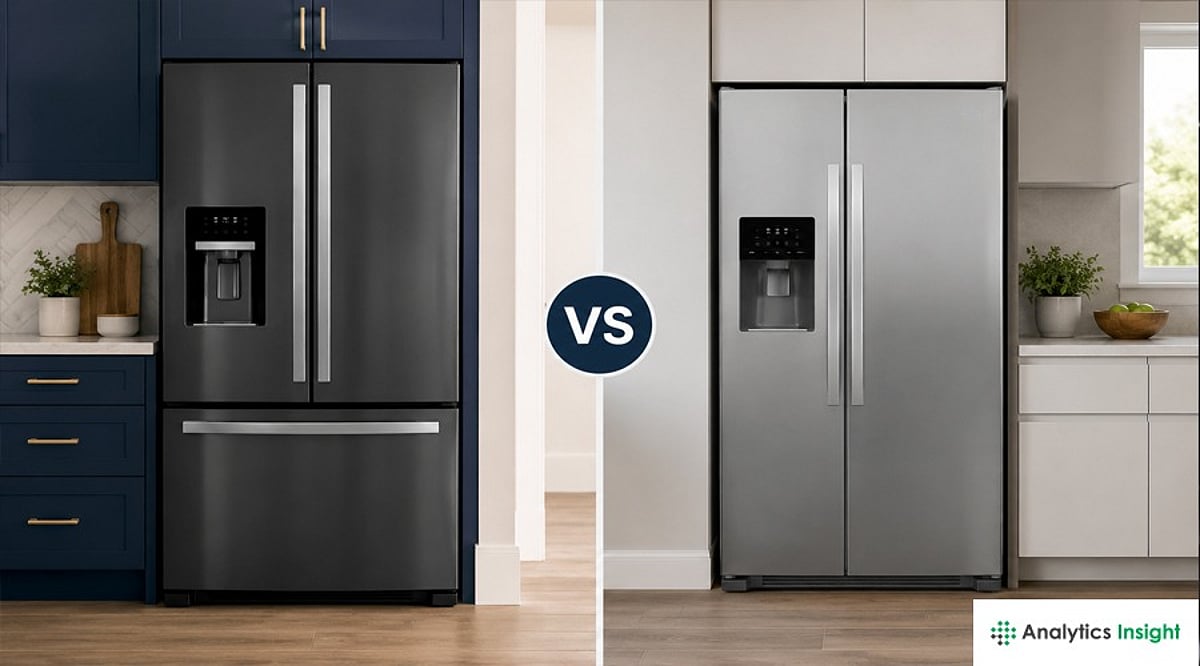
    Choosing between a French door and a side-by-side refrigerator is about more than door style. It affects how you store food, access your freezer, and even how much food you waste. Research shows that drawer-style freezers can hide items more easily than shelf-style ones, influencing shopping and cooking habits. In one matched retail comparison, a French door model cost $600 more than a similar side-by-side, despite offering less capacity. The right choice depends less on kitchen size and more on how often frozen food gets forgotten and wasted.

    Why Freezer Drawers Hide Food

    Side-by-side freezers use vertical shelves, viewed straight on, like a pantry shelf. French door freezers are pull-out drawers, viewed from above, making depth a visibility challenge. A peer-reviewed study on refrigeration and food waste found that drawer storage, meant to protect food, often conceals it instead. Owners of French door models frequently report digging through a drawer, unsure what lies beneath stacked vegetables and old meal-prep containers. Side-by-side owners rarely mention this problem because the freezer is at eye level and doesn’t require excavation.

    This is a documented tendency, not proof that French door households waste more food overall. However, it has real consequences for anyone who freezes meals in batches or buys frozen staples in bulk.

    When the Price Gap Isn’t About Features

    While French doors often come with added features like humidity control and in-door dispensers, a same-brand, same-width, same-finish comparison reveals a different story. One retailer listed a 36-inch Whirlpool side-by-side in black stainless steel, 28 cubic feet, at $2,199. The French door version, same brand, same width, same finish, offered only 25 cubic feet and cost $2,799. The only real difference was the door and drawer configuration. This pattern is common across the market, showing that the premium is often driven by the door style itself, not by extra storage capacity.

    Where Each Style Actually Wins

    French doors shine in fresh-food storage: full-width shelves accommodate platters, sheet pans, and bulky produce that side-by-side’s narrower columns cannot. Fresh food is at eye level, a real advantage for households that cook in volume or host often.

    Side-by-side refrigerators offer not only a lower price tag but also better freezer organization. The full-height, shelf-based structure solves the visibility problem that French doors struggle with. Narrower compartments are a limitation for wide items, but they come with an organizational upside: nothing sits more than one shelf-depth from view.

    The decision ultimately comes down to habit: how often food goes into the freezer and gets forgotten. Households that batch-cook or buy frozen staples in bulk should weigh the drawer-visibility research seriously. Households that entertain often or need wide-shelf capacity have a legitimate case for French doors, price gap and all.

    Final Thoughts

    The real difference between these two layouts is not measured in cubic feet. It shows up in daily decisions: how easily ingredients are found and how often frozen food actually gets eaten instead of forgotten at the bottom of a drawer. Once that connection between layout and daily habit is clear, the right choice stops feeling like a coin flip and starts feeling obvious.

    FAQs

    1. Which is better, a French door or a side-by-side refrigerator? Neither is universally better. French door models offer wider fresh-food storage and a modern design, while side-by-side models provide easier freezer access, better organization, and are often more affordable.
    2. Are French door refrigerators more energy efficient than side-by-side models? Energy efficiency depends on the model and rating. Compare energy labels before buying.
    3. Which refrigerator is better for a small kitchen? French door models typically require less door swing space, but the best choice depends on your kitchen layout and clearance.
    4. Is a side-by-side refrigerator better for storing frozen food? Yes, side-by-side models make it easier to organize and access frozen foods with full-height shelves.
    5. What should I consider before choosing? Consider your food storage habits, kitchen space, budget, energy efficiency, freezer usage, and preferred layout.

    For more insights, check out related articles: Bottom Freezer vs Top Freezer Refrigerators and Best Samsung Refrigerators with Digital Inverter Technology.

  • XRP Price Forecast for 2026: Is Ripple a Solid Long-Term Investment?

    XRP Price Forecast for 2026: Is Ripple a Solid Long-Term Investment?

    XRP remains a leading cryptocurrency with stronger legal clarity, real payment utility, and long-term growth potential. However, competition, market volatility, and adoption levels continue shaping its future investment outlook.

    Overview

    • Improved legal clarity has increased investor and institutional confidence in XRP.
    • Ripple’s payment technology continues to drive XRP’s real-world utility and long-term potential.
    • Competition and market volatility remain the biggest risks for future price growth.

    XRP is one of the most popular cryptocurrencies in the world. It has stayed in the market for many years, experiencing numerous price changes, legal challenges, and market fluctuations. Despite these hurdles, XRP remains one of the largest digital coins.

    XRP has a distinct goal compared to many other cryptocurrencies. It facilitates fast, low-cost international payments for banks and financial institutions. Ripple, the company behind XRP, continues to develop new payment solutions. Many still believe XRP has a bright future, though some risks remain.

    Current Market Position

    The crypto market has faced significant volatility. XRP has declined after a strong rally in 2025, losing approximately 26% of its value since the start of the year. Despite this drop, XRP remains among the top cryptocurrencies. Experts attribute this decline to broader market weakness rather than a failure of XRP itself.

    Better Legal Position

    For years, legal uncertainties created doubt about XRP, deterring many investors. Today, the situation has improved markedly, with most legal hurdles resolved. This clarity boosts confidence among banks, companies, and investors, making XRP’s legal standing one of its strongest assets.

    Real Use in Payments

    XRP’s value is underpinned by its real-world utility. Ripple aims to make international payments faster and cheaper. Traditional bank transfers between countries can take days and incur high fees. Ripple offers a faster alternative, working on payment services, digital assets, and tools for financial institutions. This gives XRP a tangible purpose beyond market speculation.

    Interest from Big Companies

    Many large financial firms are exploring blockchain technology. XRP attracts attention due to its clear use case and improved legal position. If more banks and payment providers adopt Ripple’s technology, XRP could see increased value over time. However, this process requires patience, and broader adoption is critical for future growth.

    Challenges Ahead

    XRP still faces significant obstacles. The biggest challenge is competition from stablecoins, central bank digital currencies, and other blockchain projects vying for a share of the payment market. Another weakness is its small DeFi ecosystem compared to Ethereum and Solana, with fewer applications and financial services.

    Investors also worry about Ripple’s large XRP supply held in escrow. Future releases of these coins could increase supply and pressure prices.

    Price Outlook for 2026

    Exact price predictions for XRP are impossible due to the volatile crypto market. Prices depend on economic conditions, market sentiment, regulations, and adoption rates. Some experts forecast XRP trading between $1.10 and $1.40 under weak market conditions. Others suggest $1.50 to $3.00 if the market improves. Bullish forecasts see XRP above $5, but this requires strong business growth, increased user adoption, and another major crypto bull run. These are predictions, not guarantees.

    Is XRP a Good Long-Term Investment?

    Many investors view XRP as a solid long-term investment. It is a well-known cryptocurrency with high trading volume and a clear purpose. Ripple continues to innovate and partner with financial institutions worldwide. However, crypto remains risky, with prices capable of rapid swings. Competition is intense, and future success hinges on how many banks and businesses adopt Ripple’s technology.

    Final Thoughts

    XRP remains one of the strongest cryptocurrencies, benefiting from a better legal position and a focus on fast international payments. These strengths support its growth potential. Yet, risks like competition and market volatility persist. XRP’s future depends on Ripple’s ability to expand its business and attract users. For long-term investors, XRP appears promising but is best suited as part of a diversified portfolio.

    FAQs

    1. Why is XRP different from other cryptocurrencies? XRP focuses on enabling fast, low-cost international payments for banks and financial institutions.
    2. What is the biggest positive factor for XRP in 2026? Its stronger legal position and continued adoption of Ripple’s payment solutions.
    3. What risks should investors consider? Market volatility, competition from stablecoins and other blockchains, and Ripple’s escrowed XRP supply.
    4. Can XRP reach $5 in 2026? Some bullish forecasts suggest it could, but this requires strong adoption, business growth, and a favorable crypto market.
    5. Is XRP a good long-term investment? Many investors view XRP as a promising long-term asset with real-world use, but it should be part of a diversified portfolio amid crypto market risks.
  • Top Computer Vision APIs and AI Models to Watch in 2026: A Comprehensive Guide

    Top Computer Vision APIs and AI Models to Watch in 2026: A Comprehensive Guide

    Computer vision APIs and AI models have become essential for OCR, facial recognition, image analysis, and visual reasoning. This guide compares leading platforms, including Google Cloud Vision, AWS Rekognition, Azure AI Vision, Clarifai, Imagga, and multimodal AI models, helping businesses choose the right solution.

    Overview

    Computer vision has moved well past simple object detection. Today’s APIs and models handle everything from document OCR and facial analysis to open-ended visual reasoning, and the right choice depends heavily on what a team is actually building. With hyperscalers, specialized platforms, and multimodal language models all competing for the same use cases, picking a computer vision stack in 2026 means weighing accuracy, cost, and ecosystem fit rather than chasing a single “best” answer.

    The Hyperscaler Trio Still Anchors Most Production Systems

    Google Cloud Vision, AWS Rekognition, and Azure AI Vision continue to be the default starting point for almost all teams due to their unique strengths. Google Cloud Vision wins on OCR precision and number of label classes, which is above 10,000, with good support for multilingual text detection and hence is great for document scanning and e-commerce catalogs. AWS Rekognition wins on face-based functionality and video recognition and comes pre-integrated with S3, Lambda, and Kinesis Video Streams for organizations that want to use AWS. Azure AI Vision is a part of the new Azure AI Foundry Tools, and for enterprise teams on Microsoft identity & compliance services, it is clearly the winner, although its pricing model for Vision, Custom Vision, Face, and Document Intelligence services might be quite confusing.

    Specialized Platforms Fill Gaps Hyperscalers Leave Open

    Apart from the “big three”, Clarifai and Imagga offer their services to those teams that require more flexibility than label-based tools can provide. With Clarifai, you get access to pre-trained models, visualized no-code model building, and a marketplace of 300+ community models, which makes it one of the best options for teams without dedicated machine learning engineers but wishing to create custom classifiers. Imagga is marketed as an inexpensive solution providing tagging and classification of images for about $0.60 per 1,000 images along with color detection and intelligent image cropping.

    Multimodal Language Models are Reshaping What ‘Vision’ Means

    The biggest shift in 2026 isn’t a new API; it’s the rise of vision-capable large language models like GPT-4o, GPT-5.4 Vision, and Claude’s vision capabilities. Unlike traditional cloud vision APIs that return a fixed list of labels, these models can reason about an image, answer open-ended questions about its content, and extract information in custom formats without retraining. This makes them a better fit whenever a task requires contextual understanding rather than a predefined label taxonomy, reading a messy handwritten form and inferring intent, for instance, rather than simply detecting that text is present.

    Comparing the Leading Computer Vision Options

    [Insert comparison table or bullet list summarizing Google Cloud Vision, AWS Rekognition, Azure AI Vision, Clarifai, Imagga, GPT-4o Vision, Claude Vision, YOLO, SAM 2, CLIP, SigLIP – as per source text but rewritten for clarity]

    Open-Source Models Remain a Serious Option

    For teams with in-house ML infrastructure, open-source models continue to close the gap with commercial APIs. YOLO-based object detectors remain the go-to for real-time detection tasks, while Meta’s Segment Anything Model (SAM 2) has become a standard tool for precise image segmentation. CLIP and SigLIP-style embedding models have also gained traction, since they produce reusable vectors that power similarity search and clustering rather than fixed labels, a meaningfully different approach from the labeled-output model that cloud APIs are built around.

    Choosing Right Stack for Your Use Case

    No clear victor emerges from the comparison above. Teams who develop pipelines that use large quantities of documents find that Google Cloud Vision works better for them; those with a native AWS infrastructure find more value in Rekognition, while those who use Microsoft software find greater utility in closer integration with Azure services. At the same time, the need for vision to include actual visual understanding is moving the industry towards multimodal LLMs. The best generic advice in 2026 remains unchanged: always try at least two or three solutions on your actual data since accuracy and cost both vary significantly once you move past vendor demo datasets.

    Why This Matters

    Computer vision now powers everything from document automation and medical imaging to autonomous systems and AI assistants. Choosing the right API or AI model directly impacts development speed, operating costs, accuracy, and scalability, making platform selection a critical decision for businesses investing in AI-powered applications.

    Frequently Asked Questions

    What is a computer vision API?

    A computer vision API enables software applications to analyze and interpret images or videos using artificial intelligence. It can detect objects, recognize faces, extract text through OCR, classify images, and automate visual inspection without requiring developers to build AI models from scratch.

    Which is the best computer vision API in 2026?

    There is no single best option for every project. Google Cloud Vision excels in OCR, AWS Rekognition is ideal for facial recognition and video analysis, Azure AI Vision suits Microsoft enterprises, while GPT-4o Vision and Claude Vision are stronger for contextual image understanding.

    What is the difference between traditional computer vision APIs and multimodal AI models?

    Traditional computer vision APIs return predefined outputs such as labels, detected objects, or extracted text. Multimodal AI models like GPT-4o Vision and Claude Vision go further by understanding context, answering questions about images, summarizing visual content, and extracting structured information.

    Is Google Cloud Vision better than AWS Rekognition?

    The answer depends on the use case. Google Cloud Vision generally offers stronger OCR capabilities and broader image labeling, while AWS Rekognition provides better facial analysis, video recognition, and seamless integration for organizations already using the AWS cloud ecosystem.

    When should businesses choose open-source computer vision models?

    Open-source models such as YOLO, SAM 2, and CLIP are ideal for organizations with machine learning expertise and dedicated infrastructure. They provide greater flexibility, customization, and lower long-term costs but require more technical effort than managed cloud APIs.

  • Wordle Hints and Answer for July 12, 2026 (Puzzle #1849): Solve ‘CLACK’

    Wordle Hints and Answer for July 12, 2026 (Puzzle #1849): Solve ‘CLACK’

    The New York Times Wordle puzzle for July 12, 2026, is live and ready to challenge players. Today’s word is a five-letter term with just one vowel and a repeated consonant. The answer is CLACK—a word that describes a sharp, hard sound and can function as both a noun and a verb.

    Wordle Hints for July 12, 2026 (Puzzle #1849)

    • Starting Letter: The word begins with the letter ‘C’.
    • Vowel Count: Only one vowel appears in the word.
    • Part of Speech: It is a noun, but it can also be used as a verb.
    • Repeated Letter: One letter appears twice.
    • Meaning: As a verb, it means to make a sharp noise; as a noun, it refers to that sharp sound itself.

    Bonus Clues

    • Bonus Hint 1: The word ends with the letter ‘K’, which is less common in English.
    • Bonus Hint 2: The letter ‘C’ appears in the first and fourth positions.

    Today’s Wordle Answer

    If the hints above haven’t led you to the solution, here is the answer for Wordle #1849: CLACK.

    Best Tips for Playing Wordle

    For those new to the game or looking to improve their streak, consider these strategies:

    • Start with common vowels and consonants. Use words that contain frequent letters.
    • Avoid repeating letters in your first few guesses. Cover as many different letters as possible to quickly identify which ones are in the word and their correct positions.
    • Pay close attention to the feedback. Green letters are correctly placed; yellow letters are in the word but in the wrong position.
    • Expand your vocabulary. Familiarity with less common words helps you guess the answer in fewer attempts.

    Why Wordle Keeps Players Engaged

    Wordle’s appeal lies in its simplicity and unpredictability. Each day brings a new word with no connection to the previous one, creating a sense of urgency with only six attempts. The game encourages habit formation—players return not just for entertainment but to maintain streaks and sharpen cognitive skills. Its minimalistic design shows how a simple concept can drive massive engagement, training memory, logic, and linguistic awareness.

    For more Wordle strategies and daily answers, stay tuned.

  • Top-Paying Jobs That Will Survive the AI Revolution in 2026

    Top-Paying Jobs That Will Survive the AI Revolution in 2026

    AI is transforming workplaces at an unprecedented pace, but not every career is at risk. Jobs that require human judgment, empathy, accountability, and hands-on expertise remain not only relevant but highly lucrative. Here are the high-income careers safest from AI in 2026 and why they continue to thrive.

    What Makes a Job AI-Proof?

    Careers that survive automation share three key traits: real judgment, genuine human interaction, and personal accountability. AI can process data, generate text, and even assist in diagnostics, but it cannot take responsibility for a critical decision or provide the emotional support a patient needs. These human elements create a durable shield against full replacement.

    Healthcare Professionals: Doctors, Nurses, and Surgeons

    Healthcare consistently tops the list of AI-safe careers. Nurse practitioners are among the fastest-growing roles in the U.S., driven by an aging population. Surgeons command high salaries because their work demands steady hands, sharp focus, and split-second decision-making under pressure. AI can analyze X-rays faster than any human, but it cannot hold a scalpel or bear responsibility during surgery. That combination of skill and accountability keeps these roles indispensable.

    Therapists, Psychologists, and Executive Coaches

    Rising rates of stress, anxiety, and burnout have increased demand for mental health professionals. People seek genuine understanding, not generic chatbot advice. Executive coaches also thrive as business leaders need trusted advisors for tough decisions. Trust takes time to build and cannot be automated, making these roles both secure and well-compensated.

    Skilled Trades: Electricians, Plumbers, and HVAC Technicians

    Many overlook trades, but they are booming. Electricians, plumbers, and HVAC technicians often earn six figures without a college degree. Every home is unique, and fixing a broken pipe or faulty wiring requires hands-on work that no software can replicate. Fewer young people are entering these fields, creating a supply shortage that drives wages higher year after year.

    Senior Tech Roles: Leadership Over Routine Coding

    Entry-level coding and data entry are increasingly automated, but senior technology roles are more critical than ever. Companies need leaders to guide AI strategy, defend against cyberattacks, and make high-stakes decisions. Titles like Chief AI Officer and cybersecurity director command top salaries. Experience and leadership amplify the value of technical skills, making seasoned professionals irreplaceable.

    Top Lawyers and Senior Sales Executives

    Law and sales are splitting into two tiers. Junior lawyers and basic sales roles are shrinking as AI drafts contracts and follows up on leads. However, senior lawyers handling major cases and top sales leaders closing big deals rely on relationships built over years. Trust and negotiation skills cannot be automated, ensuring these roles remain high-income and secure.

    Final Thoughts

    Job security in the AI era comes down to three factors: judgment, human presence, and accountability. Careers that combine all three will continue to pay well. Instead of panicking or chasing the “safest” title, focus on building real skills, cultivating trust, and staying adaptable. The tools will change, but your ability to learn and connect will keep you ahead.

    Frequently Asked Questions

    1. Which careers are safest from AI in 2026? Healthcare professionals, skilled tradespeople, senior tech leaders, experienced lawyers, therapists, and top sales executives are among the least likely to be replaced.
    2. Why are healthcare jobs considered AI-proof? They require empathy, hands-on care, and personal accountability that AI cannot replicate.
    3. Are software engineering jobs still good choices? Yes, especially for experienced engineers, AI specialists, cybersecurity experts, and tech leaders. Routine coding is being automated, but strategic roles remain in demand.
    4. Can skilled trades offer high incomes without a degree? Absolutely. Electricians, plumbers, and HVAC technicians can earn six figures, particularly with experience or their own business.
    5. What skills will keep professionals relevant? Critical thinking, leadership, communication, adaptability, emotional intelligence, and a commitment to continuous learning.
  • Best Python Frameworks for Autonomous AI Agents in 2026: A Comprehensive Guide

    Best Python Frameworks for Autonomous AI Agents in 2026: A Comprehensive Guide

    The Python AI agent framework landscape has evolved rapidly in 2026, offering specialized tools for production orchestration, multi-agent collaboration, enterprise deployment, and retrieval-augmented generation (RAG) workflows. This guide compares the leading frameworks to help developers choose the right platform for scalable autonomous AI applications.

    LangGraph Leads on Production-Grade Control

    LangGraph, developed by LangChain, uses a directed graph model where each node represents an API call to an LLM, tool use, or logic, while edges handle interaction, conditional execution, and looping. It provides complete control over execution, making it popular for complex stateful applications like customer service chatbots with escalation paths. LangGraph gained general availability in October 2025 and saw further improvements in 2026, including per-node timeouts and durable streaming. The main drawback is the steep learning curve compared to more opinionated frameworks.

    CrewAI Remains the Fastest Path to Prototyping

    CrewAI models agents as a crew of specialists with unique purposes, goals, and background stories. Developers can get it operational in under 20 lines of Python code, making it the most straightforward framework. However, it trades off scalability due to less precise error handling and lower accuracy in inter-agent communication. Teams often start with CrewAI and migrate to LangGraph when they need complex state management. The project still attracts millions of monthly downloads and now supports Google’s A2A protocol.

    Microsoft’s Consolidation: AutoGen Gives Way to Agent Framework

    AutoGen, Microsoft Research’s multi-agent conversation platform, introduced agents having discussions to improve output. In April 2026, Microsoft unified AutoGen and Semantic Kernel into the Microsoft Agent Framework, integrating AutoGen’s conversational architecture with Semantic Kernel’s enterprise capabilities like session-based state and telemetry. AutoGen is now in maintenance mode, suitable for research and legacy code, while new Microsoft-stack projects should use Agent Framework.

    Vendor SDKs Are Squeezing Out Frameworks for Simple Agents

    For single agents calling one or two tools, the OpenAI Agents SDK or Anthropic’s Claude Agent SDK offer a faster path with built-in tool use, memory, and tracing, without the abstraction overhead of LangGraph or CrewAI. The Claude Agent SDK reportedly passed AutoGen in production deployment counts during early-to-mid 2026. The general guidance: use a full framework for multi-agent coordination or graph-shaped control flow; use a vendor SDK for a single well-tooled agent.

    Choosing the Right Framework for Your Project

    There is no universal winner. Teams building production systems with complex execution paths gravitate toward LangGraph, while those prototyping role-based workflows find CrewAI faster. Microsoft-stack teams consolidate around Agent Framework, GCP-native teams lean on Google ADK, and document-heavy RAG pipelines favor LlamaIndex Workflows. The safest approach is matching the framework to the specific coordination problem rather than defaulting to the most popular tool.

    As autonomous AI agents become central to enterprise software, selecting the right framework directly affects scalability, maintainability, and development speed. Understanding each framework’s strengths helps developers build more reliable AI applications while avoiding unnecessary complexity and costly migrations.

  • NYT Strands Hints and Answers for July 12, 2026: In the Big Apple Puzzle #861

    NYT Strands Hints and Answers for July 12, 2026: In the Big Apple Puzzle #861

    Players explore New York City landmarks, shops, and streets in today’s Strands puzzle. The July 12 challenge reveals TAXI, DELI, BODEGA, BROWNSTONE, and the NEWYORKCITY spangram.

    Overview

    NYT Strands on July 12, 2026, uses the theme In the Big Apple and focuses on places, shops, and sights found across New York City. The puzzle feels easier than recent entries since words like TAXI and DELI quickly reveal the city theme and guide later guesses.

    This guide includes the complete list of answers, the NEWYORKCITY spangram, and simple tips that can help players finish the puzzle confidently.

    Today’s NYT Strands puzzle brings a recognizable New York City-themed challenge. Once a few words appear, the overall theme becomes much easier to identify. Unlike the other theme words, the Spangram stretches across the grid, connecting two opposite sides. It can change direction as it winds through adjacent letters, making it one of the puzzle’s defining features.

    Theme Explanation

    Today’s NYT Strands is ‘In the Big Apple.’ It sounds like it’s about fruits, but it’s mostly about New York City. So, for today’s non-spangram words, you must look for words that are related to shops, buildings, or anything you can see in the city of New York. Most of the words are easy to identify, although a few may be slightly trickier depending on familiarity with the city. The solution offers complete satisfaction since the theme remains unchanged from the start to the conclusion.

    NYT Strands Hints July 12

    Here are the clues for each word in today’s puzzle:

    • First word: a four-letter word starting with TA
    • Second word: a four-letter word starting with DE
    • Third word: a five-letter word starting with BA
    • Fourth word: a five-letter word starting with ST
    • Fifth word: a six-letter word starting with BO
    • Sixth word: a six-letter word starting with SU
    • Seventh word: a seven-letter word starting with BO

    NYT Strands Answers Today

    The non-spangram answers for the July 12 NYT Strands Answer are: TAXI, DELI, BAGEL, STOOP, BODEGA, SUBWAY, BOROUGH. Each answer fits perfectly within the New York City theme and reflects places, landmarks, or features associated with the city.

    Spangram Explained

    Spangram: EMPIRESTATE

    Check out the image below to learn how to make the sets of today’s puzzle:

    Image placeholder: [Insert grid image here]

    The Strands Wrap Up

    The puzzle of today provides a simple yet enjoyable challenge that features terms that indicate one of the most lively cities in the world. The NYT Strands Today puzzle combines entertaining wordplay with established categories to produce daily puzzles that provide satisfying gameplay to all players.

    Join our WhatsApp Channel to get the latest news, exclusives and videos on WhatsApp.

  • Top AI Healthcare Stocks and ETFs to Watch in 2026: Intuitive Surgical, Tempus AI, and More

    Top AI Healthcare Stocks and ETFs to Watch in 2026: Intuitive Surgical, Tempus AI, and More

    Artificial intelligence is rapidly reshaping the healthcare sector, with applications in robotic surgery, diagnostics, medical imaging, drug discovery, genomics, and clinical workflow automation. Investors can gain exposure through individual stocks or diversified ETFs. Here’s a look at the leading opportunities.

    Intuitive Surgical

    Intuitive Surgical is the maker of the da Vinci robotic surgery system, widely used in minimally invasive procedures. The stock offers exposure to surgical automation and data-driven operating rooms. In Q1 2026, the company reported revenue of $2.77 billion, up 23% year-over-year, with adjusted earnings of $2.50 per share. Both the da Vinci and Ion systems saw procedure growth of 17% and 39%, respectively, and 431 new da Vinci systems were installed globally.

    Tempus AI

    Tempus AI uses AI and medical data to enable precision medicine, focusing on oncology, cardiology, radiology, and depression. Listed on Nasdaq under ticker TEM in 2024, the company specializes in diagnostics and genome sequencing. While the opportunity is large—precision medicine requires integrating genomic, clinical, and imaging data—Tempus remains a growth-stage business, so investors should monitor revenue growth, margins, cash burn, and adoption rates.

    GE HealthCare

    GE HealthCare provides AI exposure through medical imaging and hospital technology at scale. The company operates four segments: medical imaging, ultrasound, patient care solutions, and pharmaceutical diagnostics. It has acquired AI firms such as Caption Health (2023) and Intelligent Ultrasound’s clinical AI business (2024). Trading near $64, about 27.77% below its 52-week high of $89.77, GE HealthCare offers a less momentum-driven AI healthcare play.

    AI Healthcare ETFs

    For diversified exposure, consider these ETFs:

    • Global X Robotics and Artificial Intelligence ETF (BOTZ) – $3.52 billion AUM, 0.68% expense ratio. Includes industrial robotics, autonomous systems, and medical robotics, with holdings like Intuitive Surgical.
    • First Trust Nasdaq Artificial Intelligence and Robotics ETF (ROBT) – 114 stocks, 0.65% expense ratio. Broader exposure across tech, industrials, and healthcare, including Tempus AI and Illumina.
    • ROBO Global Robotics and Automation Index ETF (ROBO) – $2.05 billion AUM, 0.95% expense ratio. Targets robotics, automation, and AI across healthcare, life sciences, and industrials, with no single oversized holding.

    Final Thoughts

    Intuitive Surgical offers robotic surgery exposure; GE HealthCare provides scale in hospital technology; and Tempus AI targets high-growth precision medicine. ETFs like BOTZ, ROBT, and ROBO reduce single-stock risk. A balanced strategy combining established names, ETFs, and a smaller allocation to higher-risk AI stocks may be prudent.

    Disclaimer: This article is for informational purposes only and does not constitute investment advice. Always conduct your own research before making investment decisions.

  • Master Dynamic Programming in 2026: Top Patterns and Interview Questions

    Master Dynamic Programming in 2026: Top Patterns and Interview Questions

    Dynamic programming remains one of the most important coding interview topics in 2026. Mastering common DP patterns, understanding company-specific expectations, and practicing representative problems can significantly improve problem-solving skills and increase success in technical interviews at top technology companies.

    Why Pattern Recognition Beats Memorization

    Interview data from recent hiring cycles suggests that around 87% of coding questions at Google, Meta, Apple, Netflix, and Amazon are built around just 10 to 12 core problem-solving patterns, with dynamic programming forming one of the most versatile among them. The core idea behind DP is simple even when the problems aren’t: break a larger problem into smaller, overlapping subproblems, solve each one exactly once, and store the results, typically through memoization or a tabulation array, so the same subproblem is never recomputed. Any time a question asks for a maximum, minimum, or count of ways to do something under constraints, there’s a strong chance dynamic programming applies.

    The Core Patterns Worth Mastering

    DP breaks down into a manageable number of recognizable categories rather than one giant, undifferentiated topic. Knapsack-style problems (0/1 and unbounded variants) cover resource allocation and optimization questions. Grid-based 2D DP tests a candidate’s ability to reason across two-dimensional state spaces with multiple transition directions. String DP handles text-processing challenges like edit distance and longest common subsequence, patterns with direct application in areas like version control and bioinformatics. Interval DP applies to scheduling and matrix chain multiplication-style problems, while state-machine DP models transitions governed by specific rules, useful in problems involving buy/sell timing or step-based decisions.

    Frequently Asked DP Problems in 2026

    Company-Specific Differences Worth Knowing: Every organization does not follow the same approach toward DP problems. The first difference between companies is that Google requires higher DP expertise compared to other organizations, not only in 1D problems such as staircase problems but 2D Grid, String DP and even DP on Trees/Graphs problems and an overall preference for harder problems in general. The next two organizations, Meta and Amazon, have more focus on array and string DP problems with medium-level difficulty. Microsoft avoids going into hard problems related to DP and prefers medium-level difficult problems along with good explanations. This shows that preparation according to the requirements of a particular company pays off in a bigger way.

    How to Actually Prepare for DP Interviews

    The most optimal form of preparation is no different from the tried and tested methods of pattern-based preparation. The method is to select a canonical example for each pattern, practice solving it until the logic of the solution takes under two minutes to describe and then use that logic for other variations. Interviewers are much more concerned about the ability of candidates to recognize the structure of subproblems, verbally derive a recurrence relation for the same and explain their trade-offs on time and space than knowing whether the candidate has seen the problem or not. Considering the frequent appearance of DP questions on arrays, strings, trees and grids, spending the effort to really comprehend a few basic patterns goes a long way.

    Why This Matters

    Dynamic programming is one of the most frequently tested problem-solving techniques in software engineering interviews. Understanding its recurring patterns helps candidates solve complex coding challenges efficiently, improve algorithmic thinking, and perform better in technical interviews across leading technology companies.

    FAQs

    What is dynamic programming in programming?

    Dynamic programming (DP) is an algorithmic technique used to solve complex problems by breaking them into smaller overlapping subproblems. Instead of solving the same subproblem repeatedly, DP stores previously computed results using memoization or tabulation, significantly improving time efficiency.

    Why is dynamic programming important for coding interviews?

    Dynamic programming tests a candidate’s problem-solving ability, optimization skills, and understanding of algorithms. Many leading technology companies include DP questions because they evaluate logical thinking, recurrence formulation, state transitions, and the ability to optimize brute-force solutions into efficient algorithms.

    Which companies frequently ask dynamic programming questions?

    Dynamic programming questions commonly appear in interviews at Google, Meta, Amazon, Microsoft, Apple, Netflix, Adobe, Uber, and many other technology companies. Google generally asks more advanced DP problems, while Amazon and Meta often focus on medium-difficulty array and string-based DP questions.

    What are the most common dynamic programming patterns?

    The most frequently tested DP patterns include 0/1 Knapsack, Unbounded Knapsack, Grid DP, String DP, Interval DP, State Machine DP, Tree DP, and Bitmask DP. Learning these core patterns enables candidates to solve a wide variety of interview problems efficiently.

    How should beginners start learning dynamic programming?

    Beginners should first understand recursion before learning memoization and tabulation. They should then practice simple problems like Fibonacci, Climbing Stairs, and House Robber before progressing to Knapsack, Longest Common Subsequence, Coin Change, and more advanced DP patterns.