Author: vitorcherulli

  • Proven Strategies to Reduce AI Agent Hallucinations and Boost Reliability

    Proven Strategies to Reduce AI Agent Hallucinations and Boost Reliability

    AI agents are rapidly evolving beyond simple chatbots into autonomous systems that can search documents, call APIs, write code, update records, and complete complex multi-step workflows. They are increasingly deployed in customer support, financial operations, software testing, research, and business processes. However, this expanded capability comes with a significant risk: hallucinations. These occur when an AI agent confidently produces incorrect answers, uses the wrong tool, fabricates data, or skips a critical step.

    Gartner predicts that over 40% of agentic AI projects could be abandoned by the end of 2027 due to rising costs, lack of business value, or immature applications. The research firm also notes that only about 130 vendors genuinely offer agentic AI, despite thousands claiming to do so.

    Why AI Agents Hallucinate

    AI agent hallucination happens when an autonomous system generates factually wrong outputs to compensate for missing organizational context and then acts on those outputs. The consequences can be severe: incorrect business decisions, compliance violations, and eroded trust across every process the agent touches. Studies show that incorporating context layers with governed metadata can reduce hallucination rates by over 40%.

    A 2026 benchmark called AgentHallu tested hallucination detection across 693 agent trajectories, seven agent frameworks, and five domains. The best model tested achieved only 41.1% step-localization accuracy, meaning it struggled to pinpoint where hallucinations originated. For tool-use hallucinations, localization accuracy dropped to a mere 11.6%.

    Use Grounded Retrieval, Not Model Memory

    The first step is to reduce reliance on the model’s internal memory. AI agents should pull information from trusted sources such as company documents, databases, APIs, and approved knowledge bases. Retrieval-Augmented Generation (RAG) is an effective technique that allows the agent to retrieve relevant information before generating a response.

    However, RAG must be carefully managed. Teams need to eliminate obsolete documents, grade sources for reliability, and cite all key claims. The agent should also be programmed to indicate when no data is available, rather than making assumptions.

    Validate Tool Calls and Actions

    Tool hallucination remains a major risk. An agent might make an incorrect API call, pass wrong data, or report that an action was completed when it was not. To mitigate this, every tool call should follow strict schemas with required fields and rules. For example, if an agent checks a refund status, it should only respond with the actual payment database response — not assume the user is eligible based on past conversations.

    Real-world benchmarks highlight the severity of this issue. Even the best function-calling agents struggled with tasks in τ-bench (a set of retail and airline-style workflows), achieving less than 50% accuracy. Consistency across repeated trials of the same retail workflows was under 25%.

    Add Human Review for High-Risk Workflows

    Certain actions should require human approval, including payments, legal advice, medical recommendations, account deletions, compliance checks, and customer refunds. The goal is not to slow every workflow but to create checkpoints where the cost of an error is high.

    Measure Reliability Continuously

    Key metrics to track include hallucination rate, unsupported claims, failed API actions, citation accuracy, escalation rate, and user corrections. Newer benchmarks reveal that agents still struggle with realistic digital tasks. Released in 2026, TUA-Bench evaluated 120 real-world terminal-use tasks, with the best frontier agent achieving only 65.8% total performance, revealing notable gaps.

    Why This Matters

    As AI agents transition from chatbots to autonomous multi-step workflows, hallucinations can lead to severe real-world business errors. With top benchmarks showing poor error-localization accuracy, robust technical guardrails and human checks are critical to prevent project abandonment.

    Final Thoughts

    While completely eliminating AI agent hallucinations is impossible, they can be minimized through careful system design. Verified retrieval, tool validation, structured outputs, human oversight for risky actions, and continuous testing are all essential for building reliable agents.

    Frequently Asked Questions

    1. What are AI agent hallucinations?
    AI agent hallucinations occur when an AI system gives confident but false or unsupported information. In agents, this can also include wrong tool calls, fake data, skipped steps, or incorrect actions.

    2. Why do AI agents hallucinate?
    AI agents hallucinate because they operate across planning, retrieval, reasoning, and tool use. If one step is wrong, the error can cascade through the entire workflow and affect the final result.

    3. How does RAG reduce hallucinations?
    Retrieval-Augmented Generation helps agents answer from verified documents, databases, or APIs instead of relying only on model memory. It works best when sources are updated, ranked, and cited properly.

    4. Why is tool validation important for AI agents?
    Tool validation ensures the agent uses the correct API, passes the right inputs, and only responds based on actual tool results. This prevents agents from inventing actions or assuming tasks were completed.

    5. Can AI hallucinations be completely removed?
    No, hallucinations cannot be fully eliminated, but they can be reduced. Reliable systems use verified retrieval, strict schemas, human review for risky tasks, and continuous monitoring of failure rates.

  • How AI Is Transforming Phone Calls: Real-Time Transcription, Translation, and Beyond

    How AI Is Transforming Phone Calls: Real-Time Transcription, Translation, and Beyond

    Artificial intelligence is rapidly changing the way we communicate over the phone. From live transcription to instant summaries and real-time language translation, AI is making phone calls more efficient, accessible, and secure. Here’s an overview of the key capabilities and what they mean for users and businesses.

    Live Call Transcription

    AI converts spoken conversations into real-time text, making it easier to review discussions, capture details, and improve accessibility for everyone.

    Instant Call Summaries

    AI automatically creates concise summaries after conversations, highlighting key decisions, action items, and important points without manual note-taking effort.

    Real-Time Language Translation

    AI translates conversations instantly between different languages, helping people communicate naturally without requiring professional interpreters during phone calls.

    Spam Call Detection

    AI identifies suspicious callers using behavioral patterns and known databases, reducing unwanted interruptions and protecting users from scam attempts effectively.

    Smart Voice Assistance

    AI assistants answer questions, retrieve information, schedule appointments, and complete simple tasks without interrupting the natural flow of conversations.

    Sentiment Analysis

    AI analyzes tone, emotion, and speech patterns to identify customer satisfaction, frustration, or urgency, helping businesses improve communication quality consistently.

    Automatic Action Items

    AI recognizes commitments made during calls and generates reminders, follow-up tasks, and calendar events, improving productivity after every conversation.

    Privacy and Security Challenges

    AI processing requires sensitive voice data, making strong encryption, transparent consent, and responsible data handling essential for user trust.

    The Future of AI-Powered Calling

    AI-powered conversations will become more personalized, context-aware, and proactive, offering seamless assistance while balancing convenience with responsible privacy practices.

  • How AI Is Transforming Search: Will Traditional Search Engines Survive?

    How AI Is Transforming Search: Will Traditional Search Engines Survive?

    The rise of conversational AI and personalized search assistants is reshaping how we discover information online. While traditional search engines have long been the gatekeepers of the web, artificial intelligence is introducing new ways to get answers faster, more intuitively, and with less clicking. But will AI replace search engines entirely? The likely answer is a hybrid future where both coexist.

    Conversational AI Search

    AI-powered search tools can answer questions in natural language, reducing the need to browse multiple links for straightforward information. This makes finding quick insights much more efficient.

    Personalized Search Results

    By analyzing user preferences, context, and past interactions, AI tailors responses to deliver a more relevant and personalized search experience. This level of adaptation was impossible with traditional keyword-based engines.

    Instant Information Summaries

    AI can combine data from multiple sources into concise summaries, helping users understand complex topics without reading several webpages. This saves time and makes research more accessible.

    The Value of Traditional Search Engines

    Despite AI’s advantages, traditional search engines still provide diverse sources, official websites, and multiple viewpoints that are essential for in-depth research and fact verification. They remain a cornerstone of reliable information retrieval.

    AI-Powered Search Assistants

    Intelligent assistants can refine questions, suggest follow-up queries, and guide users through complex searches with conversational flexibility, making them powerful tools for discovery.

    Challenges: Accuracy and Hallucination Risks

    AI may occasionally generate incorrect or misleading answers, so source verification remains crucial for critical decisions and factual research tasks. Users must remain vigilant.

    Impact on Website Traffic

    AI-generated answers could reduce direct visits to websites, forcing publishers to rethink content strategies and audience engagement methods. This shift may encourage more interactive and value-driven content.

    A Hybrid Search Experience

    Future search platforms will likely combine AI-generated responses with traditional search results, offering both quick answers and reliable source exploration. This hybrid model promises the best of both worlds.

    The Future of Search

    AI is undeniably transforming information discovery, but search engines will evolve alongside AI rather than disappear completely. The next decade will bring a more intelligent, personalized, and efficient search ecosystem.

  • WhatsApp and Telegram Address Government Queries on Username Security and Impersonation Risks

    WhatsApp and Telegram Address Government Queries on Username Security and Impersonation Risks

    WhatsApp and Telegram have officially responded to the Indian government’s concerns regarding the safety of their username-based messaging features. The Ministry of Electronics and Information Technology (MeitY) had issued notices to the platforms, seeking details on how they plan to prevent identity impersonation and online fraud facilitated by the new username system. Signal, another messaging app, had not yet submitted its response by the deadline.

    Government Scrutiny Intensifies on Username Features

    MeitY sent notices to WhatsApp, Telegram, and Signal, asking them to explain the safety mechanisms integrated into their username systems. The government is particularly worried that allowing users to communicate via usernames instead of phone numbers could make it easier for fraudsters to impersonate individuals, launch phishing attacks, and carry out digital scams. WhatsApp received the notice on July 1, while Telegram and Signal were issued notices two days later. After discussions with officials, WhatsApp was granted a four-day extension and submitted its response. Telegram also met the deadline.

    Meta Outlines Anti-Impersonation Measures

    Meta, the parent company of WhatsApp, detailed its approach in the response. The company stated that the upcoming username feature includes multiple layers of protection to curb misuse. Accounts will be suspended or usernames revoked if there is evidence of impersonation or fraudulent activity. Additionally, usernames already associated with Facebook and Instagram accounts will be reserved for their rightful owners during the rollout. Usernames linked to verified accounts, public figures, celebrities, and government entities—along with look-alike variations—will remain exclusive to legitimate users to reduce the risk of identity fraud.

    Privacy vs. Security: A Delicate Balance

    While the username feature is designed to enhance user privacy by allowing people to communicate without sharing their phone numbers, the government believes that anonymity could create new challenges for law enforcement and cybercrime investigations if proper safeguards are not in place. This exchange represents the latest step in the government’s ongoing efforts to strengthen protections against online impersonation while balancing user privacy and platform innovation. MeitY is expected to review the submissions before deciding on the next course of action.

  • TCS Stock Surges 4% on Q1FY27 Beat: Should Investors Buy, Sell, or Hold?

    TCS Stock Surges 4% on Q1FY27 Beat: Should Investors Buy, Sell, or Hold?

    Tata Consultancy Services (TCS) shares surged over 4% on Friday, July 10, following the release of the company’s Q1FY27 earnings. The stock rose to Rs. 2,132 on the BSE and hit a high of Rs. 2,133.30 on the NSE after opening at Rs. 2,105.20.

    While the rally is a welcome reprieve, TCS shares have struggled recently, falling 2% over the past month, 16% over three months, 33% over six months, and 38% over the past year.

    Q1FY27 Results at a Glance

    TCS reported a consolidated net profit of Rs. 13,349 crore for the quarter ended June, a near 5% year-on-year increase from Rs. 12,760 crore. However, profit declined 3% sequentially from Rs. 13,718 crore in the March quarter.

    Revenue from operations rose 14% YoY to Rs. 72,275 crore from Rs. 63,437 crore, and grew 2% sequentially from Rs. 70,698 crore. The company’s operating margin stood at 24%, with a net margin of 19.2%.

    TCS also recorded a strong total contract value of $9.5 billion in the quarter. Its AI revenue run rate hit an annualized $2.6 billion, representing 13.6% quarter-on-quarter growth.

    The Board announced an interim dividend of Rs. 12 per share, with a record date of July 15, 2026, and payment on July 31, 2026.

    Management Commentary

    TCS CEO and Managing Director K. Krithivasan highlighted the company’s resilience amid geopolitical and macroeconomic headwinds. “Q1 FY27 reflects continued growth momentum and the strength of our strategic positioning… We delivered a strong order book of $9.5 billion, including a marquee AI-led transformation deal with SKF, while continuing to add clients across key revenue bands and scaling our AI business to a $2.6 billion annualized revenue run rate,” he said.

    Krithivasan added, “As customers accelerate investments in AI, modernization, cybersecurity, sovereign cloud, and platform simplification, our strong deal conversion, improving client mining, and expanding ecosystem partnerships position TCS well to translate opportunity into sustained growth.”

    Brokerage Views Remain Divided

    Nomura maintained a ‘Buy’ rating on TCS, raising its target price to Rs. 2,590, citing “reasonable growth visibility” from deal bookings. Centrum Broking also kept a ‘Buy’ rating with a target of Rs. 3,480, noting record deal wins and enterprise adoption of AI-driven transformation.

    Anand Rathi retained a ‘Buy’ rating with a target of Rs. 2,408, pointing to “resilient deal bookings and improving revenue conversion.” In contrast, 360 ONE Capital maintained a ‘Hold’ rating with a target of Rs. 2,290, warning that re-rating may be limited in the near term due to AI disruption, pricing pressure, and weak macro conditions.

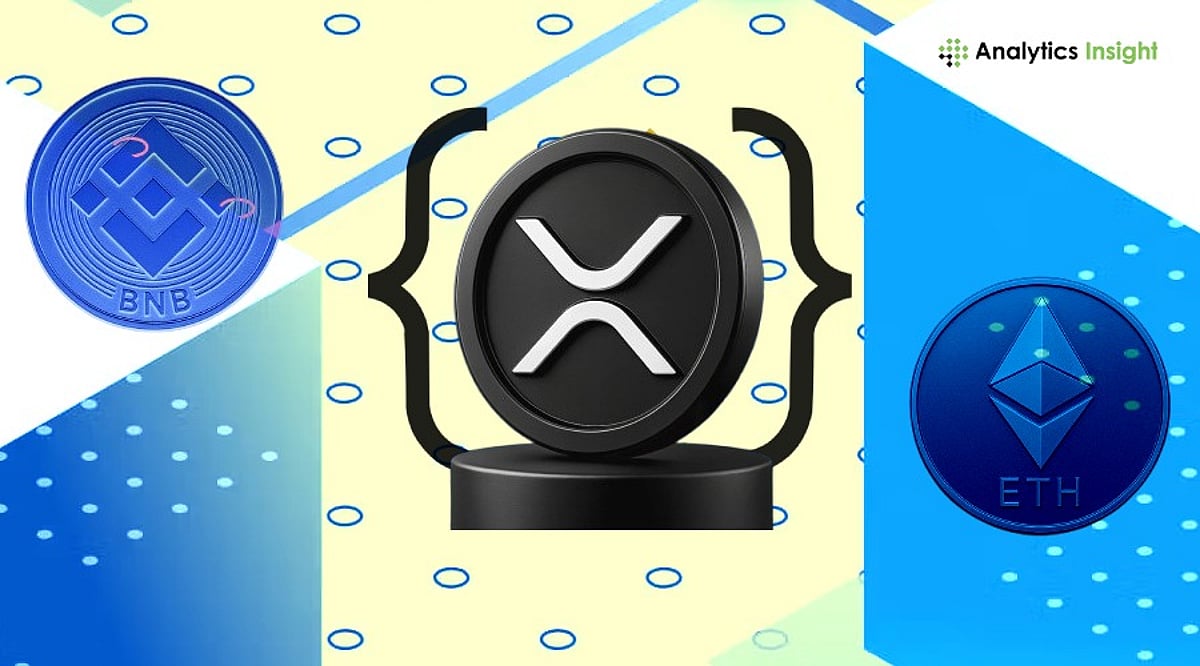
  • XRP Ledger Hits $4B in Tokenized Assets: How It Challenges Ethereum and BNB Chain

    XRP Ledger Hits $4B in Tokenized Assets: How It Challenges Ethereum and BNB Chain

    The XRP Ledger (XRPL) has achieved a remarkable milestone, with the value of tokenized assets on its network surpassing $4 billion. This represents a dramatic increase from approximately $150 million just one year ago, placing XRPL among the top blockchain networks for real-world asset tokenization and intensifying competition with established platforms like Ethereum and BNB Chain.

    Tokenized assets are blockchain-based digital representations of real-world financial instruments, such as bonds, stocks, real estate, and investment funds. The rapid growth on XRPL underscores rising institutional confidence in blockchain technology for faster, cheaper, and more transparent financial transactions.

    Explosive Growth in One Year

    The leap from $150 million to over $4 billion within twelve months highlights the accelerating adoption of XRPL for tokenization. This growth is driven by a combination of institutional interest, network upgrades, and enterprise demand. Financial institutions are increasingly turning to XRPL for its low transaction costs, high-speed settlement, and robust infrastructure.

    Institutional Adoption Fuels Expansion

    Major financial organizations are leveraging XRPL to tokenize government bonds, treasury products, and investment funds. The network’s established reputation in digital payments, combined with its efficient design, makes it an attractive choice for institutions seeking modern financial solutions. This institutional push has been a key catalyst for the surge in tokenized asset value.

    Network Improvements Support Growth

    Recent upgrades, including the introduction of Multi-Purpose Tokens (MPTs), have enhanced XRPL’s ability to support regulated financial assets and enterprise requirements. These features simplify the issuance and management of digital versions of traditional financial products. Stronger stablecoin activity and broader ecosystem participation further bolster the network’s appeal.

    Implications for Ethereum

    Ethereum remains the dominant force in asset tokenization, thanks to its extensive developer community, smart contract capabilities, and mature DeFi ecosystem. However, the rise of XRPL introduces new competition. Some enterprises may prefer XRPL for its lower fees and faster settlement, especially for regulated financial products. Despite this, Ethereum’s rich ecosystem of interconnected applications, such as lending platforms and decentralized exchanges, gives it a significant advantage.

    Implications for BNB Chain

    BNB Chain has built its reputation on low fees, fast speeds, and a strong retail user base, making it a hub for DeFi and trading. The growth of XRPL is likely to increase competition in institutional tokenization rather than retail finance. BNB Chain remains well-positioned for consumer-focused blockchain services, while XRPL attracts enterprise-level, regulated asset tokenization. Both networks may serve distinct niches in a multi-chain future.

    A Multi-Chain Future

    This milestone does not signal the end of Ethereum’s leadership. Instead, the blockchain industry is moving toward a multi-chain landscape where different networks excel in different areas. Ethereum leads in smart contracts and DeFi, XRPL strengthens in enterprise payments and regulated tokenization, and BNB Chain continues to serve retail users. This specialization allows each network to thrive without displacing others.

    Why This Matters

    XRPL reaching $4 billion in tokenized assets is a clear signal that Wall Street seeks specialized, high-performance infrastructure for digital finance. The rapid growth demonstrates that the market is ready for a multi-chain ecosystem where each network dominates specific use cases, rather than a single platform ruling everything.

    FAQs

    1. What are tokenized assets?
    Tokenized assets are blockchain-based digital certificates representing real-world financial products like bonds, stocks, and real estate, enabling seamless digital trading.

    2. Why has XRP Ledger grown so quickly?
    Rapid growth is driven by institutional adoption, ultra-low transaction costs, high-speed settlements, and network upgrades tailored for enterprise compliance.

    3. Will XRP Ledger replace Ethereum?
    No. Ethereum remains dominant in DApps and smart contracts, while XRPL carves out a specialized niche in regulated institutional finance.

    4. How is BNB Chain affected?
    BNB Chain stays strong in retail finance and community apps, while XRPL attracts the enterprise side of tokenized asset markets.

    5. Why is real-world tokenization important?
    Tokenization modernizes finance with 24/7 market access, fractional ownership, lower costs, instant settlements, and full transparency on a public ledger.

  • UKey Seed Ring: A Wearable NFC Ring for Secure Crypto Backup and Recovery

    UKey Seed Ring: A Wearable NFC Ring for Secure Crypto Backup and Recovery

    UKey Limited, a self-custody hardware brand for cryptocurrency users, has unveiled the Seed Ring—a battery-free NFC ring designed to make seed phrase backup a seamless part of everyday life. Unlike traditional hardware wallets that are stored away in drawers, the Seed Ring is a wearable device that brings hardware signing into daily routines.

    Why a Ring?

    In the world of self-custody, the greatest risk to asset security often lies not in how transactions are signed, but in how the seed phrase is stored. Photos, screenshots, and scraps of paper are easily lost, damaged, or stolen. Most hardware wallets focus on signing security but leave backup to the user and a piece of paper. UKey splits the two functions: signing is handled by a dedicated device, while backup is managed by the Seed series. The Seed Ring transforms a recovery credential from a forgotten note into a wearable ring that can be tapped to a phone when needed.

    Three Defining Features of the Seed Ring

    • Battery-free and passive: The ring has no battery. It draws power only when held near an NFC-capable phone and stops responding immediately when moved away. No background processes, no remote connectivity.
    • Ceramic construction for daily wear: A high-strength ceramic surface resists scratches and everyday wear while remaining NFC-friendly. It can be worn as a ring or on a chain, just like any ordinary accessory.
    • Seed phrase never stored in plaintext: The ring holds only the index, order, and checksum data required for recovery—never the full seed phrase. Even if the ring falls into the wrong hands, the complete seed phrase cannot be read.

    More of the Seed Series

    The Seed Ring is the first product in the Seed series. Two additional backup companions are coming: the Seed Card, a credit-card-sized backup for wallets or card holders, and the Seed Ti, a titanium backup built to withstand fire and water. All share the same philosophy—your recovery credential should fit your lifestyle, and none store the seed phrase in plaintext. Further details will be announced through UKey official channels.

    UKey’s Philosophy

    UKey believes that something worn on the hand should be safer than a note in a drawer. The industry has perfected signing, but most coin losses stem from poor seed phrase storage. UKey aims to make backup and signing not cold, utilitarian tools, but items you can wear and live with.

    For launch updates, visit ukey.com, follow @UKeyWallet on X, or subscribe to UKeyWallet on YouTube.

  • Dogecoin Price Fails to Rally Despite Trump’s Pro-Crypto Comments

    Dogecoin Price Fails to Rally Despite Trump’s Pro-Crypto Comments

    Dogecoin did not record a strong price jump after recent pro-crypto remarks from United States President Donald Trump. Market data showed a different picture. The popular meme coin traded at about $0.072 and stayed slightly lower during the latest 24-hour period. The daily loss remained between 0.3% and 1.5%, based on the exchange and price tracker. Trading activity remained high, which showed that many traders continued to buy and sell the coin even though the price stayed under pressure.

    Many people expected positive comments from Trump to push the crypto market much higher. That expectation came from past events, where political support often lifted market confidence. This time, however, Dogecoin did not enjoy a major rally. The price stayed close to an important support level, while investors looked at several other events that affected the wider financial market.

    Trump Repeats Strong Support for Cryptocurrency

    Donald Trump recently spoke in favor of cryptocurrency and once again described himself as ‘a big crypto guy.’ He also repeated criticism of earlier policies that many people in the crypto industry believed created strict rules for digital assets. Those remarks helped improve confidence across parts of the crypto market. Bitcoin managed to recover from earlier losses after the comments. The reaction showed that investors still paid close attention to statements from political leaders. Even so, the positive mood did not last long enough to lift every digital asset. Dogecoin failed to follow Bitcoin with a meaningful gain.

    Wider Market Pressure Limits Dogecoin

    The overall crypto market faced fresh pressure since investors became more careful. Rising geopolitical tensions created uncertainty across global financial markets. During such periods, many traders prefer safer investments instead of assets that carry higher risk. Dogecoin belongs to the group of meme coins, which usually record larger price swings than major cryptocurrencies. Given this, the token often feels stronger selling pressure whenever market confidence becomes weak. This cautious mood reduced the impact of Trump’s supportive remarks. Even though the comments created positive headlines, investors paid closer attention to broader market risks. As a result, Dogecoin remained under pressure instead of recording a major breakout.

    Technical Picture Stays Weak

    Market analysts also pointed to technical signals that showed limited strength for Dogecoin. The coin continued to trade near an important support area around $0.07. This level has attracted attention as many traders believe it could decide the next major move. Momentum indicators also remained weak. Such signals suggested that buyers did not hold enough strength to push the price much higher within the latest trading sessions. High trading volume showed active participation, but it did not lead to a strong upward move. Many traders continued to watch the support level closely. A strong hold above this area could improve confidence, while a move below it could invite additional selling pressure.

    Bitcoin Shows Better Response

    Bitcoin reacted more positively than Dogecoin after Trump’s latest remarks. The largest cryptocurrency recovered from earlier weakness as investors welcomed his support for digital assets. Even with that recovery, the wider crypto market did not enter a powerful rally. Several digital coins remained under pressure as traders focused on global economic and geopolitical developments rather than political statements alone.

    Political Support Alone Does Not Decide Prices

    Past market trends showed that Trump’s support for cryptocurrency often improved investor confidence. Earlier events connected to his campaign and public statements helped lift prices across the crypto sector. The latest market action told a different story. Political support remained an important factor, but it could not overcome broader market concerns. Investors looked at several issues at the same time before making trading decisions. Global events, economic conditions, technical signals, and overall market confidence continued to shape price movement across digital assets. These factors reduced the impact of positive political remarks.

    Why This Matters

    This muted reaction demonstrates a critical maturation in the cryptocurrency market: hype and political rhetoric alone no longer guarantee immediate retail-driven speculative rallies. Instead, macroscopic headwinds, underlying asset utility, and technical support levels are increasingly overriding political news cycles, even for major meme coins like Dogecoin.

    Outlook for Dogecoin

    Dogecoin now stands at an important point. The price remains close to $0.07, which many analysts consider a key support level. Market participants will continue to watch whether the coin stays above this area or moves lower. Future price direction may depend on several market conditions. Better investor confidence, stronger demand across the crypto sector, and a calmer global environment could improve the outlook. On the other hand, fresh uncertainty could keep pressure on the token. For now, the latest data does not support claims of a major Dogecoin price jump after Trump’s recent pro-crypto remarks. Instead, the coin continues to trade near $0.072 with a small daily decline, even though trading activity remains strong. The market shows that positive political support can help sentiment, but it does not always lead to an immediate rise in price.

    FAQs

    1. Did Dogecoin’s price jump after Donald Trump’s pro-crypto remarks?

    No, Dogecoin did not experience a significant rally. It continued trading near the $0.072 mark, recording a minor daily decline despite the positive political headlines.

    2. What exactly did Donald Trump say regarding cryptocurrency?

    Donald Trump repeated his strong support for the digital asset industry, openly describing himself as ‘a big crypto guy’ while criticizing historically restrictive regulatory policies.

    3. Why didn’t Trump’s supportive comments trigger a major Dogecoin breakout?

    Broader macroeconomic factors, including heightened global geopolitical tensions, weak technical momentum indicators, and an overall risk-averse market sentiment, heavily suppressed the speculative upside.

    4. Did Bitcoin’s price react differently to the political statements?

    Yes, Bitcoin responded more favorably by recovering from its previous session losses. However, this positive momentum failed to spill over into altcoins or trigger a broader market-wide rally.

    5. What is the key technical price level to watch for Dogecoin?

    Market analysts are heavily focused on the critical $0.07 support zone, as holding above or breaking below this specific threshold will likely dictate Dogecoin’s next major trend.

  • Bitcoin and Solana ETFs Attract Fresh Capital, Ending Weeks of Withdrawals

    Bitcoin and Solana ETFs Attract Fresh Capital, Ending Weeks of Withdrawals

    After more than eight weeks of steady investor withdrawals, Bitcoin and Solana exchange-traded funds (ETFs) have recorded net inflows, signaling renewed institutional interest and lifting sentiment across the cryptocurrency market. Bitcoin ETFs saw $265.7 million pour in, breaking a long outflow streak, while Solana ETFs attracted $8.36 million, led by Bitwise’s BSOL fund.

    Bitcoin ETFs End a Long Outflow Streak

    U.S. spot Bitcoin ETFs recorded approximately $265.7 million in net inflows during the latest trading session — the strongest single day of fresh investment since early May. This marks a turning point after more than eight consecutive weeks of net outflows, during which investors withdrew over $8.2 billion from Bitcoin ETF products. The prolonged selling had pressured Bitcoin prices and weakened overall market confidence.

    Solana ETFs Also Return to Positive Territory

    Spot Solana ETFs reported net inflows of $8.36 million, reversing a period of weakness. The majority of this new capital flowed into Bitwise’s BSOL ETF, which recorded its best single day in nearly two months. While the volume is smaller than Bitcoin’s, it demonstrates improving investor comfort with Solana after a stretch of uncertainty.

    A Difficult Period for Crypto Investment Products

    The recovery follows one of the weakest stretches for cryptocurrency investment products since spot ETFs launched. Bitcoin ETFs alone lost $8.2 billion during the outflow period. Solana ETFs recorded their first monthly net outflow. Investment products tied to Bitcoin, Ethereum, Solana, and XRP collectively saw nearly $5 billion exit the market in the previous month, highlighting institutional caution.

    Crypto Prices React to Fresh Investments

    Bitcoin climbed from below $60,000 to around $63,000, briefly topping $64,000. Solana rose from approximately $60 to above $80, touching an intraday high of $83.50. These price gains often follow stronger ETF demand as fresh capital enters the market.

    Why ETF Flows Matter

    ETF flows are a critical market indicator. Large investment firms and institutional investors use ETFs for easy exposure to digital assets. Strong inflows signal confidence; prolonged outflows suggest caution. The return of positive inflows may indicate that professionals see current prices as attractive after the decline.

    Experts Remain Cautious

    Market experts warn that one day of inflows does not confirm a sustained rebound. A lasting recovery will require consistent inflows over weeks. If fresh money continues to enter Bitcoin and Solana ETFs, sentiment could strengthen further, but another wave of withdrawals would quickly change the outlook.

    Outlook Remains Positive but Uncertain

    The latest ETF data has brought fresh optimism. Bitcoin ETFs ended their long outflow streak with $265.7 million in net inflows, while Solana ETFs added $8.36 million, led by Bitwise’s BSOL ETF. These numbers suggest institutional investors are returning after heavy selling, but one positive session does not guarantee a recovery. Future ETF data will be closely watched.

  • Best Smart Telescopes of 2026: Top 7 Robotic Models for Astrophotography and Space Observation

    Best Smart Telescopes of 2026: Top 7 Robotic Models for Astrophotography and Space Observation

    Overview

    Smart telescopes now handle alignment, tracking, and image stacking automatically, allowing anyone to capture deep-sky photos within minutes of setup. Prices range from around $349 for compact beginner models to nearly $4,000 for observatory-grade astrophotography rigs. The right choice depends on your budget, travel habits, and whether you prioritize wide-aperture power or maximum portability.

    These telescopes have made astronomy more accessible than ever. Open an app, select a galaxy, nebula, or planet, and the telescope does the rest—lining up, tracking, focusing, and constructing a detailed image in just a few minutes. With improved sensors, object recognition, and automatic image stacking, today’s smart telescopes are more capable than ever before.

    To compile this list of the seven best smart telescopes for 2026, we evaluated optical performance, automation, portability, ease of use, price, and overall value.

    Comparison Table

    Prices shift often across retailers and sale events. Check the retailer link for current pricing before buying.

    1. ZWO Seestar S30 — Best for First-Time Buyers

    The Seestar S30 is one of the best entry-level smart telescopes. It fits in a small bag, sets up in minutes, and its wide-angle lens works for both daytime and night sky shots. Image quality trails larger models, but for beginners testing the hobby, it removes nearly every barrier to entry.

    2. ZWO Seestar S30 Pro — Best Budget Upgrade

    The S30 Pro adds a second wide-angle camera and an upgraded IMX585 sensor, delivering noticeably cleaner deep-sky images than the standard S30. It keeps the same compact body and simple app control, making it a strong pick for buyers who want better photos without jumping to premium pricing.

    3. Dwarflab Dwarf 3 — Best for Travel

    Dwarf 3 packs a 35mm aperture and a wide field of view into a body that fits in a jacket pocket. It handles both landscape and deep-sky imaging, and its EQ mode improves tracking accuracy for longer exposures. Frequent travelers get the most value here.

    4. Vaonis Vespera II — Best Mid-Range Value

    The Vespera II brings a sharper 8.3-megapixel sensor and a signature Mosaic mode that stitches multiple frames into wide, detailed images of large targets like the Andromeda Galaxy. It costs more than budget models, but the jump in image quality and field of view justifies the price for serious hobbyists.

    5. Unistellar eQuinox 2 — Best Aperture for the Price

    At 114mm, the eQuinox 2 gathers far more light than any model below it, pulling in fainter, more detailed deep-sky targets. It skips the eyepiece found on other Unistellar models, keeping the price down while delivering strong optical performance. It also connects owners to a citizen science network for real research contributions.

    6. Vaonis Vespera Pro — Best Resolution

    The Vespera Pro carries a 12.5-megapixel sensor—the highest resolution on this list—paired with an 11-hour battery that covers a full night of imaging without a recharge. Buyers who want the sharpest possible images from a portable smart telescope will find the price justified.

    7. Celestron Origin Mark II — Best for Astrophotography Quality

    The Celestron Origin pairs a 152mm RASA astrograph with a fast f/2.2 focal ratio and an 8.4-megapixel Sony Starvis 2 sensor, capturing detailed shots of galaxies and nebulae without long exposure times. It is the most expensive telescope in this lineup, making it ideal for enthusiasts serious about advanced astrophotography rather than casual stargazers.

    What to Look for Before Buying a Smart Telescope

    Picking the right smart telescope comes down to a handful of practical considerations. Aperture matters most, as it determines how much light reaches the sensor—turning a dim galaxy from an invisible smudge into a recognizable photo. Many modern models also include AI-powered features such as automatic object recognition, making galaxies, nebulae, and star clusters easier to locate and photograph.

    Portability and battery life matter equally in practice, since they affect where you can set up and how long a session can last. Beyond hardware, reliable tracking, quick image stacking, and an intuitive app all contribute to a smoother night outside and sharper photos at the end.

    Final Thoughts

    There is no single best smart telescope. The right choice depends on budget, experience, and what you actually want to observe. Beginners or budget-conscious buyers will likely be happiest with the ZWO Seestar S30 or S30 Pro. Those wanting a light, grab-and-go option should check out the Dwarflab Dwarf 3. The Unistellar eQuinox 2 offers a larger aperture and the bonus of contributing to real citizen science projects. For serious astrophotographers, the Vaonis Vespera Pro or Celestron Origin will handle heavier lifting. Ultimately, the best telescope matches how you plan to use it.

    Frequently Asked Questions

    What is a smart telescope?

    A smart telescope is an automated telescope that uses motors, sensors, and software to align, track, focus, and capture images of celestial objects through a smartphone app.

    Which is the best smart telescope for beginners in 2026?

    The ZWO Seestar S30 is one of the best smart telescopes for beginners in 2026 due to its affordability, portability, easy setup, and minimal manual adjustment requirement.

    Can smart telescopes capture galaxies and nebulae?

    Yes. Most smart telescopes use automatic tracking and image stacking to photograph galaxies, nebulae, and star clusters. Higher-end models generally produce better detail and low-light performance.

    Are smart telescopes good for astrophotography?

    Yes. Smart telescopes are designed for astrophotography by combining automated tracking, image processing, and smartphone control. Premium models offer larger apertures and higher-resolution sensors for more detailed deep-sky images.

    What should be considered before buying a smart telescope?

    Key factors include aperture, sensor quality, tracking accuracy, portability, battery life, software experience, and overall value. Choosing the right model depends on your budget, observing goals, and intended use.