Author: vitorcherulli

  • Top AI Certifications for CEOs and Senior Executives in 2026

    Top AI Certifications for CEOs and Senior Executives in 2026

    As AI governance, board expectations, and enterprise transformation accelerate, CEOs are increasingly turning to executive-focused AI certification programs. These programs strengthen strategic decision-making, improve cross-functional leadership, and build confidence in evaluating AI investments—all without requiring technical expertise.

    Many CEOs still rely on secondhand briefings from technical teams instead of forming independent judgment on artificial intelligence. Boards now expect leaders to defend AI strategy on their own terms. This gap between passive awareness and active command has pushed senior executives toward formal certification.

    PwC recently found that 70% of CEOs expect generative AI to reshape their business models within three years. Only 28% of leadership teams feel prepared for that shift. Certification programs built for executives close this gap by turning technical concepts into usable strategic frameworks.

    AI Certifications for Executives

    Certifications built for executives differ sharply from technical bootcamps aimed at engineers or data scientists. These programs assume no coding background. Instead, they concentrate on strategic frameworks, governance structures, and organizational change management. Curricula generally cover AI capabilities, ethical risk, vendor evaluation, and communication with technical teams.

    Enrollment numbers reflect this shift in priorities. Coursera reported a 67% rise in enrollments across AI leadership courses among C-level executives. Boston Consulting Group separately found that leaders with high AI literacy report revenue outperformance at more than twice the rate of less literate peers.

    AI Certifications for CEOs and Senior Executives

    Choosing the right program depends on organizational stage, industry, and the specific leadership gap a CEO wants to close. Some executives need governance fluency to satisfy regulators. Others want applied frameworks to guide transformation projects spanning multiple business units.

    Certification providers now design separate tracks for CEOs, CFOs, and CTOs rather than a shared curriculum. Each role interacts with artificial intelligence through a different lens. A CEO typically needs a wide view of strategy, market positioning, and board-level communication around AI spending. A CFO instead focuses on cost modeling and measurable return on that spending.

    Top Programs for CEOs and Senior Leaders

    • MIT Sloan Artificial Intelligence: Implications for Business Strategy – Delivered jointly through MIT Sloan and MIT CSAIL, this six-week program pairs AI fundamentals with enterprise strategy challenges. A capstone project applies coursework directly to the participant’s own organization.
    • Stanford AI for Leaders – Senior managers and transformation leads gain a functional grasp of AI capabilities and operational risk. Structured case studies walk through how these risks play out inside real organizations.
    • Oxford Saïd Business School Executive AI Programme – Oxford applies its own strategic framework to real business problems through a personalized capstone project. CEOs, CTOs, and transformation officers learn to govern and measure AI across regulated units.
    • Wharton AI and Machine Learning for Business – Wharton’s certificate centers on data-driven methods that senior managers can apply soon after finishing the program. Vendor evaluation and cross-functional AI initiatives receive particular attention throughout the coursework.
    • Chief Executives Council AI Prompting and Automation Certificates – Built alongside Arizona State University, these certificates prioritize repeatable, hands-on AI use inside daily executive work. No coding background is required, and workflow automation sits at the center.
    • Harvard Business School Online Artificial Intelligence for Business – Harvard’s course studies how artificial intelligence reshapes entire industries, with heavy emphasis on strategy and rollout. Graduates receive a verified certificate recognized widely across corporate leadership circles.

    Why Executives Are Pursuing AI Certification

    • Boards expect leaders to explain AI strategy without depending entirely on technical staff.
    • Regulatory scrutiny around AI governance keeps expanding across most major industries.
    • Certification signals readiness to boards, investors, and prospective hires evaluating leadership credibility.
    • Companies with more AI-literate senior executives report stronger revenue outcomes overall.
    • Programs increasingly blend ethics, governance, and applied strategy instead of isolated technical modules.

    Accreditation, faculty reputation, and relevance to a specific industry deserve close attention before enrollment. Most application requirements include five to ten years of senior management experience. Prior coding knowledge rarely matters here, since the emphasis stays on functional strategic understanding.

    Final Thoughts

    AI certification for senior executives has moved well past a resume credential or a passing trend. Each program addresses a genuine gap between technical capability and confident leadership judgment. None of these credentials replaces an executive’s own strategic instinct or accountability for outcomes.

    Leaders gaining real value from these programs tend to choose deliberately rather than enroll broadly. CEOs who match certification choice to their organization’s actual AI maturity see results sooner. As adoption accelerates across every industry, executives treating certification as genuine preparation will lead with sturdier judgment and lasting credibility.

  • How Brain-Inspired AI from Prophesee and Volkswagen Is Accelerating Autonomous Driving Safety

    How Brain-Inspired AI from Prophesee and Volkswagen Is Accelerating Autonomous Driving Safety

    Prophesee and Volkswagen are teaming up to bring neuromorphic computing to autonomous driving, equipping self-driving cars with human-like perception and reaction on the road. Instead of relying solely on traditional cameras and GPUs that process every pixel in every frame, the latest approach uses event-based vision sensors and brain-inspired chips that operate only when something in the scene actually changes.

    This shift dramatically reduces data load and power consumption while enabling faster detection of pedestrians, obstacles, and sudden hazards, even in poor lighting or weather conditions. For Volkswagen, such intelligence paves the way to safer, more scalable autonomous vehicles that can think and respond more like human drivers, but with machine-level consistency.

    What Neuromorphic Computing Brings to Cars

    Neuromorphic computing refers to hardware and algorithms modeled on how the brain works: massively parallel, event-driven, and highly energy-efficient. Instead of processing continuous data streams, neuromorphic chips react to spikes—discrete events such as changes in brightness or motion in a scene. In an autonomous car, that means focusing compute power only on what matters: a child stepping off the curb, a fast-moving motorcycle in the blind spot, or debris on the highway.

    Prophesee’s Metavision sensors are built around this principle of event-based vision. Each pixel triggers only when it detects a change, so the sensor outputs a sparse, high-value stream of events instead of dense frames. When such sensors are paired with neuromorphic processors, the perception stack can run faster, with less energy, and lower latency than conventional camera-plus-GPU pipelines. This combination is particularly attractive to automakers like Volkswagen, who need robust, low-power intelligence running directly on the vehicle’s edge hardware, rather than in the cloud.

    Why This Matters

    Neuromorphic computing matters because it lets self-driving cars react faster and use less energy, focusing only on important changes in the scene. This shift enables safer, more reliable autonomy at scale, especially in complex, unpredictable real-world traffic and weather conditions.

    Brain-Inspired Speed Boost for Safer Autonomy

    Reaction time is critical for safety; shaving even fractions of a second off perception delays can translate into meters of braking distance saved at highway speeds. In experiments with neuromorphic vision chips, researchers have shown up to a four-fold boost in hazard detection speed compared to conventional computer vision systems, along with significant improvements in accuracy. Since neuromorphic systems process only regions of interest, they can keep up with high-speed motion, cluttered scenes, and low-light conditions better than standard frame-based cameras.

    For self-driving stacks, this opens up several practical advantages:

    • Lower Latency: Event-driven detection enables near-instant recognition of emerging hazards.
    • Energy Efficiency: Chips designed for spiking neural networks and neuromorphic sensing consume far less power, which is crucial for electric vehicles and large fleets.
    • Scalability: More sensors and more intelligence can be added to a car without blowing up the thermal or power budget.

    Volkswagen and partners see neuromorphic hardware as a way to embed AI directly into the vehicle, bridging the gap between research prototypes and production-grade safety systems.

    Future Outlook: Cars That Sense Like Brains, Scale Like Software

    Looking ahead, neuromorphic computing is poised to become a strategic layer in the autonomous vehicle ecosystem rather than a niche add-on. As chipmakers and automotive suppliers refine event-based vision sensors and spiking neural hardware, car platforms will evolve to host more adaptive, fleet-aware intelligence that learns from real-world driving while staying within strict power and cost limits.

    For collaborations like Prophesee and Volkswagen, the trajectory points toward vehicles that perceive their environment with brain-like efficiency, share insights across fleets, and continuously update their behavior without needing a complete hardware replacement every few years. If this momentum holds, ‘neuromorphic-ready’ may soon be as important a specification for self-driving cars as range or battery capacity—especially in emerging markets where infrastructure is patchy and on-board intelligence is the first and last line of safety.

  • AI-Enabled Smart Microgrids: Transforming Energy Systems with Predictive Intelligence and Autonomous Optimization

    AI-Enabled Smart Microgrids: Transforming Energy Systems with Predictive Intelligence and Autonomous Optimization

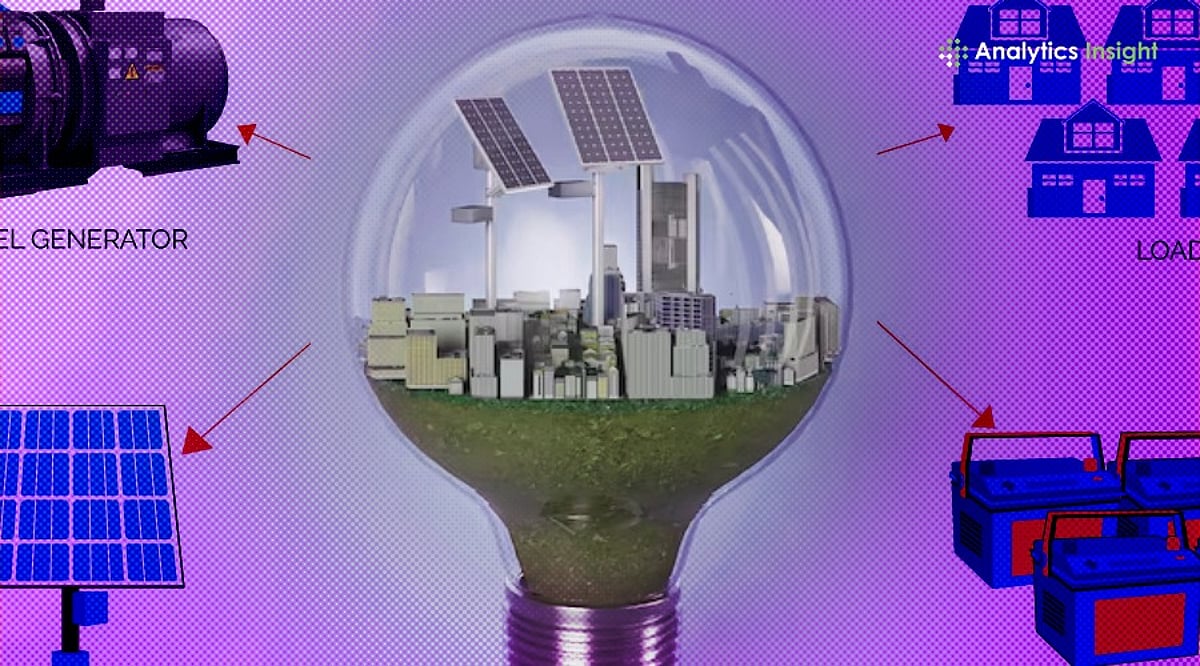
    AI is transforming microgrids from rule-based energy systems into intelligent, self-optimizing networks. By combining predictive analytics, renewable forecasting, and autonomous energy management, AI improves grid reliability, lowers operating costs, and supports the growing power demands of data centers, industries, and smart communities.

    From Passive Systems to Predictive Ones

    Traditional microgrids relied on relatively simple rule-based controllers: if battery storage drops below a threshold, switch to backup generation. AI-enabled systems operate very differently, using machine learning models such as LSTM neural networks to forecast solar and wind output, anticipate demand spikes hours in advance, and adjust dispatch decisions before a shortfall occurs. Research comparing forecasting techniques has shown LSTM networks achieving strong accuracy for wind generation prediction, while random forest models have performed particularly well for solar forecasting—both feeding directly into how confidently a microgrid can rely on renewable sources rather than falling back on diesel generation as a safety net.

    The Market Is Scaling Fast, and AI Is the Reason Why

    The global microgrid market was valued at roughly $28.9 billion in 2025 and is projected to grow at a compound annual rate of around 18% through the early 2030s, according to Global Market Insights. A narrower but faster-growing segment—AI-integrated microgrids purpose-built for data centers—is expected to expand from $4.8 billion in 2025 to $20.9 billion by 2034. That growth is being driven largely by AI’s own power appetite: hyperscale data centers need reliable, high-density power that public grids increasingly can’t guarantee, making AI-optimized microgrids as much an enabler of the broader AI boom as a beneficiary of it.

    Who’s Building the Intelligence Layer

    A handful of established industrial players and newer software specialists are shaping how AI actually gets embedded into microgrid operations. Key companies include:

    • Schneider Electric
    • Siemens
    • Tesla Energy
    • ABB
    • Eaton
    • Heila Technologies

    Predictive Maintenance Is Quietly Cutting Costs

    Beyond forecasting and dispatch, AI is reshaping how microgrids stay operational in the first place. By continuously analyzing sensor data from batteries, inverters, and generation assets, machine learning models can flag early signs of equipment degradation well before a failure actually occurs. This shifts maintenance from a fixed, calendar-based schedule to a condition-based one, reducing unplanned downtime and avoiding the kind of costly emergency repairs that used to be treated as simply unavoidable in distributed energy systems.

    Real-World Deployments Show the Financial Case

    The economic argument for AI-driven microgrids is no longer theoretical. Schneider Electric’s EcoStruxure Microgrid deployment at a California winery, Domaine Carneros, cut carbon emissions by 375 tonnes and saved roughly $70,000 annually through smarter load management alone. At a larger scale, research into hydrogen-integrated microgrids combining LSTM forecasting with optimization algorithms has shown grid import reductions of over 35% and improvements in energy self-sufficiency from roughly 71% to nearly 90%—figures that would be difficult to reach with static, rule-based control systems.

    What’s Next for AI-Driven Microgrids

    The next phase of development looks likely to center on two things: tighter integration with digital twins that simulate microgrid behavior before changes are made in the real world, and deeper participation in energy markets, where systems like Tesla’s Autobidder let storage assets buy and sell power autonomously based on real-time price signals. As renewable penetration keeps climbing and AI’s own electricity demand keeps growing in parallel, the pressure on microgrids to get smarter is only going to intensify.

    Why This Matters

    As renewable energy adoption accelerates and electricity demand rises from AI workloads and data centers, intelligent microgrids have become essential for grid resilience. AI enables real-time optimization, predictive maintenance, and efficient energy distribution, helping businesses and communities reduce costs, improve reliability, and support a more sustainable energy future.

  • Top Privacy Coins by Market Cap in 2026: Monero, Zcash, and More

    Top Privacy Coins by Market Cap in 2026: Monero, Zcash, and More

    Privacy-focused cryptocurrencies continue to attract investors who value secure and anonymous transactions. As regulatory scrutiny increases, these digital assets offer enhanced confidentiality features. Here are the leading privacy coins ranked by market capitalization and popularity in 2026.

    Monero (XMR)

    Monero remains the most recognized privacy coin. It hides wallet addresses, transaction amounts, and sender information, making transactions truly untraceable.

    Zcash (ZEC)

    Zcash offers optional privacy using zero-knowledge cryptography. Users can choose between transparent and shielded transactions, providing flexibility.

    Dash (DASH)

    Dash combines fast payments with PrivateSend technology for improved transaction privacy, mixing coins to obscure transaction origins.

    Firo (FIRO)

    Firo uses advanced privacy protocols that remove transaction history while maintaining blockchain security, ensuring complete anonymity.

    Verge (XVG)

    Verge enhances privacy by integrating Tor and I2P networks to hide users’ IP addresses, adding an extra layer of anonymity.

    Secret (SCRT)

    Secret Network enables privacy-preserving smart contracts and decentralized applications, allowing data to remain encrypted during processing.

    MobileCoin (MOB)

    Built for mobile payments, MobileCoin focuses on speed, privacy, and low transaction costs, making it ideal for everyday use.

    Things to Consider

    Privacy coins face increasing regulations worldwide. Always research the legal status and risks before investing. Stay informed through official channels and community updates.

  • 7 AI Tools for Writing, Coding, and Research That Go Beyond ChatGPT and Gemini

    7 AI Tools for Writing, Coding, and Research That Go Beyond ChatGPT and Gemini

    Looking for more AI tools beyond ChatGPT and Gemini? These powerful platforms help with writing, coding, research, and productivity across different industries. Whether you need long-form content, accurate research, or efficient code development, these AI tools offer specialized capabilities to enhance your workflow.

    • Claude – Excels at long-form writing, document analysis, and thoughtful conversations with strong reasoning capabilities.
    • Perplexity AI – Delivers AI-powered answers with web citations, making research faster and more reliable.
    • Cursor AI – Helps developers write, edit, debug, and understand code using AI directly inside the editor.
    • GitHub Copilot – Speeds up coding by suggesting functions, code snippets, and complete solutions.
    • NotebookLM – Google’s AI tool that helps users summarize documents, generate insights, and organize research.
    • Grok – Built by xAI, Grok combines real-time information with conversational AI for news and research.
    • You.com AI – Combines AI chat with search, coding, writing, and productivity tools in one platform.

    Different AI tools excel at different tasks. Pick the right one based on your workflow and daily needs to maximize your productivity.

  • Top Wireless Keyboards With Touchpads in 2026: Streamline Your Desk Setup

    Top Wireless Keyboards With Touchpads in 2026: Streamline Your Desk Setup

    Upgrade your workspace with an all-in-one wireless keyboard and touchpad. These devices reduce clutter while making work and entertainment easier. Here are the best options worth buying in 2026.

    Logitech K400 Plus

    A lightweight wireless keyboard with a built-in touchpad. It offers reliable performance, long battery life, and works well with PCs and smart TVs.

    Logitech K830

    The K830 features backlit keys and a responsive touchpad. It is perfect for home entertainment, media streaming, and working in low-light conditions.

    Microsoft All-in-One Media Keyboard

    Designed for Windows users, it combines comfortable typing with a large multi-touch trackpad. It is also spill-resistant for added durability.

    Rii i8+ Mini Keyboard

    Small but powerful, the Rii i8+ is ideal for HTPCs, Android TV boxes, and portable setups. It includes multimedia shortcuts and RGB backlighting.

    Corsair K83 Entertainment Keyboard

    Built for premium home entertainment, the K83 features a precision touchpad, joystick, and media controls. It works with Windows, smart TVs, and streaming devices.

    Arteck Universal Keyboard

    This ultra-slim wireless keyboard supports multiple operating systems. Its large touchpad offers smooth navigation and everyday productivity.

    Jelly Comb Wireless Keyboard

    A stylish keyboard with multi-device Bluetooth connectivity. The integrated touchpad makes it perfect for tablets and laptops.

    How to Choose One

    Look for battery life, Bluetooth support, touchpad accuracy, build quality, and compatibility before buying.

  • How AI-Powered Robotics Are Helping Farmers Slash Pesticide Use by 70%

    How AI-Powered Robotics Are Helping Farmers Slash Pesticide Use by 70%

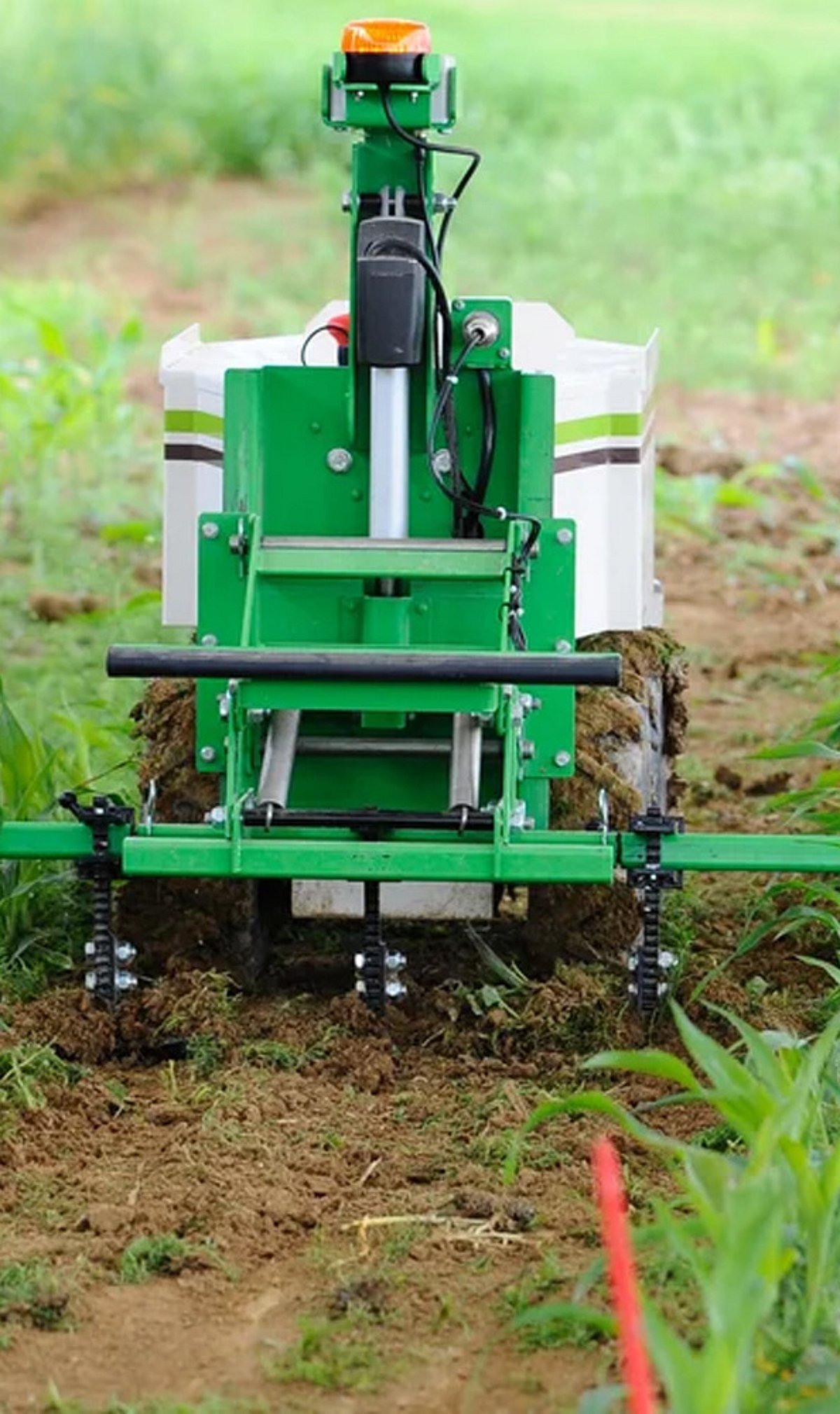
    Precision agriculture is entering a new era thanks to a robotics startup that uses artificial intelligence and computer vision to drastically reduce pesticide use. By identifying weeds individually and applying chemicals only where needed, these autonomous machines help farmers cut pesticide consumption by up to 70 %, lowering costs and reducing environmental harm.

    Precision Spraying Robots

    Equipped with AI-driven algorithms, the spraying robots scan fields row by row, distinguishing crops from weeds in real time. Instead of blanket spraying, they target only the unwanted plants, significantly cutting the volume of chemicals released into the soil and air.

    Computer Vision Technology

    Advanced cameras and machine learning models enable the robots to differentiate between crops and weeds with high accuracy. This ensures that every drop of pesticide or herbicide is applied precisely where it is needed, minimizing waste and preventing damage to healthy plants.

    Reduced Farming Costs

    With lower pesticide consumption comes a direct decrease in operational expenses. Farmers can maintain or even improve crop yields while spending less on chemicals, which boosts profitability and makes farming more economically sustainable.

    Sustainable Agriculture

    By reducing chemical runoff, precision spraying protects local biodiversity, conserves soil health, and promotes environmentally responsible farming. This approach aligns with global efforts to make agriculture more sustainable and resilient.

    Higher Crop Productivity

    Healthy crops receive fewer unnecessary chemical treatments, leading to stronger growth and more consistent yields. Targeted application also reduces the risk of pesticide resistance, ensuring long-term effectiveness.

    Autonomous Field Operations

    These self-driving robots navigate fields independently, covering large areas with minimal human supervision. They can operate day and night, handling repetitive tasks efficiently and freeing up farm workers for other critical duties.

    Water Conservation Benefits

    Because the robots apply chemicals only where needed, they also reduce the amount of water used in spraying operations. This helps conserve precious water resources, especially in regions prone to drought.

    Scalability for Large Farms

    The robotics platform is designed to adapt to farm sizes ranging from small family plots to vast commercial fields. Autonomous operation and data-driven insights make it easy to scale up without requiring proportional increases in labor or resources.

    The Future of Smart Farming

    Robotics, artificial intelligence, and data analytics are transforming agriculture into a high-tech, sustainable industry. As these technologies become more affordable and accessible, the vision of fully automated, environmentally friendly farming is quickly becoming a reality.

    Want to stay updated on the latest in agtech and robotics? Join our WhatsApp channel for exclusive news and insights.

  • Must-Watch OTT Premieres in July 2026: Netflix, Prime Video & More

    Must-Watch OTT Premieres in July 2026: Netflix, Prime Video & More

    July 2026 is shaping up to be a blockbuster month for streaming enthusiasts. From the final season of a cultural phenomenon to the return of dark comedies and explosive superhero satire, the biggest OTT platforms are pulling out all the stops. Here’s your guide to the most anticipated series premiering this July across Netflix, Prime Video, Apple TV+, and more.

    Stranger Things (Netflix)

    The final season brings Eleven and the Hawkins crew together for one last battle against Vecna. This is Netflix’s biggest television event of the year, promising emotional goodbyes and epic confrontations.

    The Boys (Prime Video)

    New episodes continue the explosive superhero satire with shocking twists, political drama, and intense action. Expect the unexpected as the series pushes boundaries further than ever.

    Wednesday (Netflix)

    Jenna Ortega returns as Wednesday Addams, solving darker mysteries while navigating friendships, family conflicts, and supernatural threats. The series continues to blend Gothic charm with sharp wit.

    The Terminal List (Prime Video)

    Chris Pratt reprises his action-packed role in another high-stakes military thriller filled with suspense and revenge. Fans of gritty, tactical storytelling won’t want to miss it.

    Foundation (Apple TV+)

    Apple TV+ expands Isaac Asimov’s universe with larger-scale conflicts, political intrigue, and visually stunning science-fiction storytelling. The series continues to be a feast for the eyes and the mind.

    House of the Dragon (HBO / Max)

    Westeros witnesses fresh rivalries, betrayals, and dragon battles as the Targaryen civil war intensifies dramatically. This prequel to Game of Thrones remains a must-watch for fantasy fans.

    Reacher (Prime Video)

    Amazon’s action hero returns, investigating another dangerous conspiracy with brutal combat and gripping detective work throughout the season. Alan Ritchson embodies the iconic character perfectly.

    Squid Game (Netflix)

    Deadlier survival challenges push contestants to their limits while exposing deeper conspiracies behind the deadly competition. The global phenomenon returns with higher stakes and more twists.

    Special Ops (New Series)

    This new espionage drama delivers international missions, high-stakes intelligence operations, and thrilling action across multiple global locations. A fresh entry into the spy genre.

    Stay tuned to our WhatsApp Channel for the latest news, exclusives, and video updates on these shows and more.

  • Apple and Broadcom Forge $30B+ Chip Supply Deal for US Manufacturing Through 2031

    Apple and Broadcom Forge $30B+ Chip Supply Deal for US Manufacturing Through 2031

    Apple has signed a multiyear agreement valued at over $30 billion with Broadcom to design and produce custom silicon parts and wireless connectivity chips in the United States through 2031. The deal includes a $1.5 billion expansion of Broadcom’s Fort Collins, Colorado facility, reinforcing Apple’s broader commitment to domestic manufacturing.

    Strategic Partnership Expansion

    The agreement covers advanced radio-frequency components, including FBAR filters, which are critical for wireless communication features in Apple products. This expands a long-standing supplier relationship and secures a larger US-based production path for key components used across Apple’s device lineup.

    Apple expects the collaboration to result in the production of more than 15 billion chips in the United States, supporting hundreds of American jobs tied to chip production and related manufacturing work. This deal is the largest commitment under Apple’s American Manufacturing Program, which aims to increase domestic production and deepen ties with US suppliers.

    Infrastructure Investment

    Broadcom will invest $1.5 billion to expand and modernize its Fort Collins facility, which will produce radio-frequency components and advanced wireless connectivity technologies for Apple devices. Apple CEO Tim Cook stated, “The cutting-edge components built in Fort Collins are essential to delivering the incredible performance and connectivity our customers expect, and we’re proud to deepen our investments in US-based suppliers that share our commitment to excellence and innovation.”

    Hock Tan, President and CEO of Broadcom, added, “Broadcom is proud to continue to work with Apple after decades of success together, and we share a strong commitment to American innovation.”

    Broader US Supply Chain Strategy

    The agreement aligns with Apple’s plan to invest $600 billion in the US economy over four years, covering manufacturing, job creation, supplier growth, and technology development. It also comes amid federal efforts to boost domestic chip production, with the Trump administration urging tech companies to reduce reliance on foreign supply chains.

    Following the announcement, Broadcom shares rose over 4%, while Apple shares dipped slightly, reflecting investor reactions to the expanded supplier role and spending commitments.

  • Apple’s Foldable iPhone Begins Mass Production: 10 Million Units Expected for September 2026 Launch

    Apple’s Foldable iPhone Begins Mass Production: 10 Million Units Expected for September 2026 Launch

    Apple’s first foldable iPhone has officially entered mass production, signaling a major step toward its anticipated September 2026 launch. According to supply chain reports, the tech giant has begun large-scale manufacturing after finalizing the device’s design. The foldable model is expected to debut alongside the iPhone 18 Pro and iPhone 18 Pro Max at Apple’s annual September event.

    Earlier reports hinted at delays due to hinge development challenges, but fresh updates indicate those issues have been resolved, and production is now on schedule. This contradicts a recent prediction from analyst Ming-Chi Kuo, who suggested that while the phone might be announced in September, customer availability could be limited until later in the year. Kuo also speculated that initial stock would be constrained as production ramps up.

    The foldable iPhone, rumored to carry the name “iPhone Ultra,” is expected to feature a 7.8-inch inner OLED display and a 5.5-inch cover screen, using a book-style folding design that opens like a small tablet. A titanium body and an advanced hinge are anticipated to deliver a smoother folding experience. Under the hood, the device may include Apple’s upcoming A20 chip for faster performance and better battery efficiency. Reports also suggest a Touch ID fingerprint sensor embedded in the power button instead of Face ID, along with two rear cameras and a slim, premium build.

    Mass production is a critical milestone, indicating Apple’s readiness to compete with established foldable phone makers like Samsung and Huawei. The company has reportedly increased its 2026 production target from 7–8 million units to nearly 10 million units, reflecting strong anticipated demand. However, early availability may still be limited. Pricing is expected to range between $2,300 and $2,500, making it the most expensive iPhone to date. Apple has not officially confirmed the device, so the name, features, price, and launch date remain subject to change before the September event.