Author: vitorcherulli

  • OpenAI Upgrades ChatGPT Agent with Advanced Features to Supercharge Productivity in 2026

    OpenAI Upgrades ChatGPT Agent with Advanced Features to Supercharge Productivity in 2026

    By Akshita Pidiha

    AI assistants are becoming more capable in 2026, with ChatGPT Agent helping users automate tasks, conduct research, and improve daily productivity.

    ChatGPT Agent can assist with planning projects, summarizing large documents, organizing information, and generating detailed reports.

    The latest updates allow users to work with files, spreadsheets, PDFs, and presentations more efficiently through natural language instructions.

    Businesses are increasingly using ChatGPT Agent for customer support, content creation, workflow automation, and internal knowledge management.

    Students and professionals benefit from faster research, study guides, coding assistance, writing support, and brainstorming sessions.

    Improved reasoning capabilities help users solve complex problems while maintaining context across longer conversations.

    Privacy and user control remain important, with users encouraged to review permissions before sharing confidential information. Although AI can significantly improve productivity, human review is still essential for critical decisions, legal matters, financial advice, and factual accuracy.

    With rapid AI innovation continuing throughout 2026, intelligent assistants are expected to become an essential part of personal and professional workflows.

  • China Alerts on Backdoor Vulnerabilities in Anthropic’s Claude Code AI Assistant

    China Alerts on Backdoor Vulnerabilities in Anthropic’s Claude Code AI Assistant

    Security Alert Issued

    China’s cybersecurity authorities have warned that certain versions of Anthropic’s Claude Code contain alleged “backdoor” vulnerabilities capable of transmitting sensitive user information to remote servers. The warning was published in China’s National Vulnerability Database, urging organizations to take immediate action.

    Data Privacy Concerns

    The reported vulnerabilities could expose user identity, device information, and location data without explicit consent, raising serious privacy and enterprise security concerns. Researchers highlighted the risk of data exfiltration through the coding assistant’s communication channels.

    Official Advisory Released

    China’s National Vulnerability Database advised organizations to uninstall affected versions of Claude Code or immediately update the software to reduce potential cybersecurity risks. The advisory emphasized the need for prompt remediation to protect sensitive data.

    Anthropic’s Response

    Anthropic responded by stating that the feature in question was an experimental anti-abuse mechanism designed to prevent unauthorized usage and model misuse, not a malicious backdoor. The company defended its security practices while acknowledging the need for clearer communication.

    Alibaba Takes Action

    Alibaba reportedly classified Claude Code as high-risk software and instructed employees to stop using the coding assistant over security concerns. This move underscores the growing tension between AI adoption and enterprise security policies in China.

    AI Rivalry Intensifies

    The dispute reflects broader geopolitical competition between the United States and China, where AI security increasingly overlaps with national technology policy. Both nations are scrutinizing foreign AI tools for potential risks to national interests.

    Developers Remain Interested

    Despite restrictions, Claude Code continues attracting Chinese developers who access the platform through overseas services and alternative connectivity methods. This highlights the persistent demand for advanced coding assistants even amid regulatory barriers.

    Enterprise Security Impact

    The incident highlights growing demand for transparent AI software, stronger security auditing, and verifiable safeguards before enterprise deployment of coding assistants. Organizations are now prioritizing security evaluations when adopting AI tools.

    Global AI Governance

    The controversy underscores how AI tools now face increasing regulatory scrutiny, with governments treating advanced coding assistants as strategic cybersecurity technologies. International frameworks for AI security are becoming critical as such incidents proliferate.

  • SpaceX Launches First Commercial Nuclear-Powered Satellite on Falcon 9

    SpaceX Launches First Commercial Nuclear-Powered Satellite on Falcon 9

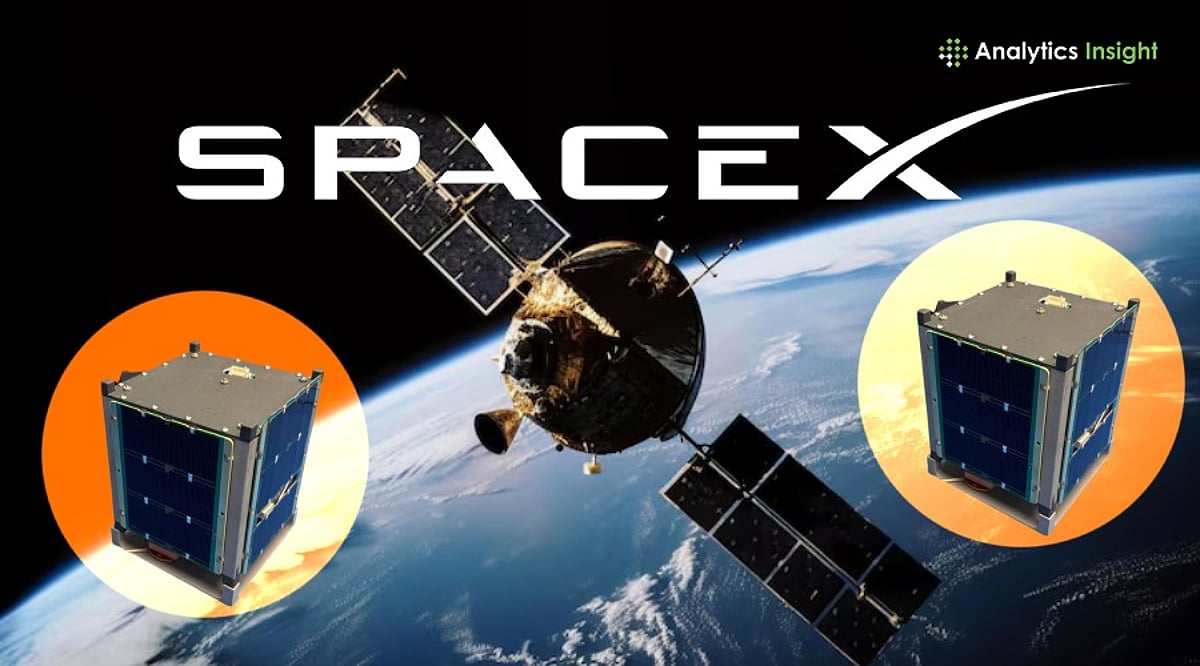
    SpaceX has successfully launched the world’s first commercial nuclear-powered satellite into orbit, marking a significant milestone in the commercialization of space nuclear technology. The satellite, named BOHR (Betavoltaic Orbital High-Reliability CubeSat), was built by Miami-based City Labs and launched aboard a Falcon 9 rocket as part of the Transporter-17 rideshare mission from Vandenberg Space Force Base on July 7.

    The BOHR satellite uses a novel betavoltaic battery system called NanoTritium, which generates electricity from the natural beta decay of tritium trapped in a metal hydride matrix. Unlike traditional radioisotope thermoelectric generators used by NASA on missions like Voyager or the Curiosity rover, this system has no moving parts, no liquid electrolytes, and virtually no fire risk. As the tritium fuel decays, it converts into helium-3, a stable, non-radioactive byproduct.

    City Labs CEO Peter Cabauy emphasized the significance of this achievement, stating, “This is a historic step for commercial nuclear power in space.” The mission demonstrates that nuclear energy systems are ready for commercial use, addressing a critical limitation of solar panels: they cease to function when not exposed to sunlight. Batteries can provide short-term power but cannot sustain long-duration operations.

    NASA has separately explored tritium betavoltaics for powering small autonomous sensors in permanently shadowed regions of the Moon, where extreme cold and total darkness make conventional batteries impractical. The BOHR mission also cleared a new regulatory path, becoming the first commercial nuclear payload to undergo the FAA’s dedicated review pathway established under National Security Presidential Memorandum-20 in 2019.

    The launch arrives alongside NASA and the Department of Energy’s continued development of a lunar surface fission reactor, targeting a first deployment by 2030. Cabauy described BOHR as a pathfinder, noting that the goal extends beyond City Labs to open the commercial nuclear space sector for other firms pursuing similar technology. “BOHR demonstrates that safe, compact, and regulatory-approved nuclear power systems are ready for routine commercial deployment. This capability enables persistent, always-on payload operations that are not constrained by sunlight or battery life,” he said.

    While the power output is modest, unsuitable for large-scale applications like lunar bases, Cabauy hopes it can scale toward larger applications over time, underscoring nuclear power as essential infrastructure for the next phase of deep space and lunar exploration.

  • TCS Q1 FY27 Results: AI Investments, Margin Pressure, and Dividend in Focus

    TCS Q1 FY27 Results: AI Investments, Margin Pressure, and Dividend in Focus

    Tata Consultancy Services (TCS) will announce its Q1 FY27 results today, with investors closely watching the company’s earnings, artificial intelligence strategy, dividend decisions, and overall business outlook. As India’s largest IT services firm, TCS kicks off the earnings season for the sector, making its quarterly update a critical indicator for the broader market.

    TCS shares traded lower ahead of the results, slipping nearly 2% as cautious sentiment dominated. Concerns about sluggish corporate spending and rising AI investments weighed on investor confidence.

    Revenue and Margin Expectations

    Most brokerages expect TCS to report flat sequential revenue growth, with figures likely between Rs. 71,270 crore and Rs. 72,267 crore. Net profit is anticipated to show healthy year-over-year growth. However, operating margins may dip after the company implemented annual salary hikes from April. Favourable currency movements and improved operational efficiency could partly offset the margin pressure.

    Market analysts believe the earnings numbers alone will not dictate the stock’s trajectory. Instead, management commentary on demand trends, large client deals, hiring plans, and the outlook for FY27 will be more closely scrutinized.

    AI Strategy and Deal Pipeline

    Artificial intelligence remains a central theme on the earnings call. TCS has expanded its AI capabilities over the past year and continues to invest in AI services and data centre infrastructure. Investors want to understand how these investments will translate into revenue growth without eroding profitability.

    The company’s deal pipeline is also under the spotlight. Analysts expect TCS to report new deals worth between $7 billion and $10 billion for the quarter. While this may be lower than the previous quarter, recent contract wins in insurance, manufacturing, and packaging indicate that clients remain committed to technology spending despite global uncertainties.

    Dividend Announcement

    In addition to earnings, the TCS board will consider an interim dividend. The record date has been set for July 15, allowing eligible shareholders to receive the payout if approved.

    Outlook for the IT Sector

    TCS typically sets the tone for the entire IT earnings season. Strong guidance on AI, client demand, and deal wins could boost sentiment across technology stocks. Conversely, cautious remarks on spending or margins may keep pressure on the sector for an extended period.

    Several analysts emphasize that management’s outlook will matter more than the quarterly numbers. Positive updates on AI growth, business demand, and large contracts could support investor confidence in the coming months. Investors will also look for signs of stronger client spending in the second half of FY27.

    Overall, TCS Q1 results will provide crucial signals about the health of India’s IT industry, making this earnings announcement one of the most closely watched events of the quarter.

  • Sony CEO Hiroki Totoki Sells 56% of His Stake: What It Means for Investors and PlayStation Fans

    Sony CEO Hiroki Totoki Sells 56% of His Stake: What It Means for Investors and PlayStation Fans

    Sony CEO Hiroki Totoki has sold more than half of his personal Sony shares, a move that has drawn intense scrutiny from investors and the gaming community. The transaction, disclosed in a recent SEC filing, comes at a time when the company is making bold decisions about its digital future, including the withdrawal of physical PlayStation discs.

    Details of the Stock Sale

    According to the filing made on July 3, Totoki sold 225,000 shares of Sony stock, representing approximately 56% of his stake. The shares were sold at $21.02 each, netting the CEO about $4.7 million. He still holds 173,250 shares. Additionally, on the same day, he sold another 25,000 shares (about 18% of his remaining stake) for $525,500. The timing of the filing—two days after Sony announced the end of physical PlayStation discs—has fueled speculation.

    Why the Timing Matters

    Investors often watch insider trades closely, and a CEO sale can trigger questions about confidence in the company. Sony has recently faced backlash over rising prices, subscription changes, and the shift toward digital-only gaming. Many players worry about fewer choices and higher costs. When a top executive sells a large chunk of shares during such turbulence, it naturally raises eyebrows.

    However, a filing only confirms that shares changed hands—it does not reveal the seller’s motivation. Executives sell stock for many reasons: tax planning, portfolio diversification, estate management, or personal financial needs. There is no public evidence linking this sale to any specific PlayStation decision or a loss of faith in Sony’s future.

    What This Means for Sony

    Context is crucial. One insider sale does not define a company’s trajectory. Sony remains a powerhouse in gaming, music, movies, and electronics. Its long-term success depends on product innovation, strategic execution, and market performance—not on a single stock transaction.

    For now, the filing shows that Hiroki Totoki sold a significant portion of his Sony shares. Beyond that, the interpretation is open. Investors should consider the broader picture rather than jumping to conclusions based on timing alone.

  • Cryptocurrency Trail Leads Police to Pokémon Card Theft Suspect

    Cryptocurrency Trail Leads Police to Pokémon Card Theft Suspect

    The popularity of the Pokémon Trading Card Game (TCG) has turned rare cards into high-value collectibles, attracting both enthusiasts and criminals. A recent case highlights how digital currency transactions can become key evidence in theft investigations.

    Police arrested Christian Elam after tracing cryptocurrency payments linked to a scheme involving stolen Pokémon cards. Investigators said the digital currency trail was one of the most important clues in the case.

    According to reports, Elam attempted to steal a rare Poncho-wearing Pikachu promo card valued at approximately $24,000. The card was listed for $24,200 on Facebook Marketplace. During a meetup on June 14 at the Evesham Township Police Department’s safe exchange zone in Marlton, New Jersey, Elam sent the listed amount using cryptocurrency, which later proved to be fraudulent. Authorities followed the payment records to identify and arrest him.

    This incident serves as a warning for collectors. Experts recommend keeping detailed purchase records, including photos, grading details, receipts, and purchase dates to prove ownership. Valuable cards should be stored securely. When buying or selling, collectors should verify the other party’s identity and use trusted marketplaces whenever possible.

    As Pokémon cards are expected to retain their value, criminal activity around them is likely to increase. The arrest of Christian Elam demonstrates that cryptocurrency transactions are not always anonymous and can serve as evidence in criminal investigations. For collectors, careful record-keeping, secure storage, and verified sales remain the best ways to protect a valuable collection.

  • Sony Bank Secures Preliminary OCC Approval for Connectia Stablecoin Trust

    Sony Bank Secures Preliminary OCC Approval for Connectia Stablecoin Trust

    Sony Bank has received preliminary conditional approval from the U.S. Office of the Comptroller of the Currency (OCC) to establish Connectia Trust, National Association — a national trust bank focused exclusively on issuing and managing U.S. dollar stablecoins. This approval places Sony alongside major digital asset firms such as Circle, Ripple, and Paxos that have pursued federal trust charters.

    Connectia will operate as a wholly owned subsidiary of Sony Financial Group with an initial capital of $40 million (approximately ¥6.4 billion). The company targets a 2027 launch, but cannot begin operations until it secures final authorization from U.S. regulators and additional approvals from Japanese authorities.

    Connectia Trust Focuses Only on Stablecoin Operations

    Sony Bank confirmed that Connectia will serve a single purpose: issuing and managing dollar-denominated stablecoins. The trust will not offer traditional banking services such as deposit-taking, lending, or payment processing. Instead, its activities will be strictly limited to stablecoin issuance, custody, management, transfer, and redemption.

    No commercial activities will commence until all regulatory approvals are obtained. Sony stated that stablecoin issuance will remain on hold until the OCC grants final approval and every required authorization becomes effective.

    As part of the disclosure, Sony Financial Group noted that it plans to invest more than 10% of its capital in this venture, as reported under Japan’s Financial Instruments and Exchange Act. Additionally, Sony partnered with California-based Bastion Platforms in December 2025. Bastion is expected to act as issuer, custodian, and reserve manager after the token launches, while also seeking its own national trust charter.

    Federal Charter Expands Sony’s Role

    Roman Goldstein, director at Klaros Group and a former OCC regulator, described Sony’s project as the first commercial-conglomerate ecosystem bank. He noted that the charter would make Sony the issuer of record, enabling direct communication with regulators and oversight of its own compliance program. The charter would also allow Sony to earn income from reserve assets.

    Goldstein added that this structure could position Sony to qualify under the GENIUS Act in the future. Without its own charter, Sony would have to rely on another company’s license and assume that firm’s regulatory risks.

    Evey Guo, principal at FS Vector, said the federal charter would allow Sony to manage issuance, custody, transfers, and redemption under one federal supervisor instead of depending on third-party providers and money-transmitter licenses.

    Sony plans to integrate the stablecoins into its own ecosystem. According to American Banker, the company expects to use the tokens for treasury management, cross-border payments, and purchases across its gaming, anime, movie, and music businesses — reducing payment processing costs.

    Critics Raise Banking and Regulatory Concerns

    The proposal has faced scrutiny since October 2025. The Bank Policy Institute questioned whether the charter could blur the longstanding separation between commerce and banking. The Independent Community Bankers of America argued that the trust would not carry deposit insurance and warned that regulators had not tested this framework for an institution of Sony’s size.

    The National Community Reinvestment Coalition also argued that approving Connectia could create a two-tier chartering system by granting digital asset firms federal status without equivalent public obligations.

    Despite criticism, the OCC moved forward under its current legal interpretation. Goldstein suggested that regulators may also require Connectia to appoint a full-time chief financial officer before operations begin. Sony still needs final OCC approval, clearance from Japanese regulators, and leadership for the new trust before Connectia can launch its stablecoin business in 2027.

  • SBI Funds Management IPO Opens July 14: Shareholder Quota Details and Key Dates

    SBI Funds Management IPO Opens July 14: Shareholder Quota Details and Key Dates

    SBI Funds Management, one of India’s largest asset management companies, is set to launch its Rs 11,693-crore initial public offering (IPO) next week, with shares expected to list on the BSE and NSE on July 21. The issue opens for subscription on July 14 and closes on July 16, with a price band of Rs 545–574 per share, valuing the company at approximately Rs 1.17 lakh crore post-listing.

    IPO Structure and Key Dates

    The entire offering is structured as an offer for sale, meaning no fresh shares are being issued. Existing promoters State Bank of India (SBI) and Amundi India Holding are offloading up to 20.39 crore shares, representing a combined 10% stake. Anchor investor bidding begins a day earlier, on July 13. Allotment is expected to be finalized on July 17–18, with refunds and share credits scheduled for July 20, just ahead of the listing.

    Shareholder Quota and Eligibility

    Existing SBI shareholders have a unique reservation category. The bank has reserved about 1.3 crore shares, valued at nearly Rs 750 crore, for its shareholders. This represents approximately 6.41% of the entire offering. To be eligible, investors must hold SBI shares in their demat accounts up to the IPO’s record date. Shares purchased after that date will not qualify for this category.

    Unlike many IPOs, there is no price discount for SBI shareholders. However, eligible SBI employees have been allotted shares worth about Rs 170 crore at a discount of Rs 54 per share. The allotment breakdown is: 50% for qualified institutional buyers, 35% for retail investors, and 15% for non-institutional investors.

    Company Financials and Backing

    SBI Funds Management held a 15.4% market share in mutual funds as of December 2025, with quarterly average assets under management of Rs 12,49,970 crore. The company’s income rose from Rs 3,426 crore in FY24 to Rs 4,236 crore in FY25, while profit after tax increased from Rs 2,073 crore to Rs 2,540 crore—representing an approximate 17% increase in income and 21% in profit after tax. The IPO has received backing from prominent investors such as ADIA and GIC.

    This listing represents a substantial gain for SBI from an investment made decades ago. SBI acquired a 61.73% equity stake in SBI Funds Management at a weighted average cost of just Rs 0.15 per share, which is now valued at about Rs 68,670 crore.

    With strong institutional interest and the company’s market leadership, the listing will be closely watched as a key indicator of investor confidence in India’s asset management sector.

  • Reddit Claim That Claude Fable 5 Replaced 90% of Developers Reignites AI Layoff Debate

    Reddit Claim That Claude Fable 5 Replaced 90% of Developers Reignites AI Layoff Debate

    A Reddit post alleging that a software services company laid off nearly 90% of its development team after embracing artificial intelligence has triggered a heated debate over AI’s growing role in the workplace.

    While the claims have not been independently verified, the post has resonated with developers concerned about how rapidly generative AI is reshaping the tech industry.

    The anonymous developer claimed that their mid-sized services company reduced a department of around 70 software engineers to just eight employees, with executives reportedly citing productivity improvements from Claude Fable 5 as the reason behind the decision.

    “Nearly the entire team of ~70 laid off citing efficiency from Claude Fable, 8 of us remain. This is insane,” the Reddit user wrote.

    According to the post, the company had employed a large number of developers before 2023 but had not hired any new engineers since 2025. The employee said the decline in client projects had already suggested difficult times ahead, but the scale of the layoffs still came as a surprise.

    “The writing was already on the wall because the number of projects drastically reduced, but today morning I got to know they laid off over 90% of the dev team,” the developer added.

    Employee Says Executives Believe AI Can Handle Remaining Workload

    The Reddit user further claimed that company executives told the remaining employees that Claude Fable 5 would enable the reduced team to manage all ongoing projects.

    “CXOs basically saying Claude Fable 5 is enough for those of us remaining (supposedly the top performers) to handle the projects the company has left,” the employee wrote.

    The post also reflected growing anxiety among software professionals. The developer admitted they had once dismissed AI as ‘just fancy autocomplete,’ but said recent advances in large language models had significantly changed their outlook, raising concerns about long-term career security.

    Reddit Users Question AI Explanation

    The post drew mixed reactions from Reddit users. Some questioned whether AI alone could realistically replace dozens of software engineers, arguing that the costs of running advanced AI models would be substantial.

    However, others noted that the layoffs could be triggered by poor business performance rather than AI. One contributor who self-identifies as a CTO stated that sometimes corporations use the implementation of AI as an excuse for laying off employees, rather than mentioning the actual business or financial difficulties.

    On the other hand, some developers advised laid-off programmers to develop higher-level skills, such as software architecture, product design, testing, and requirements gathering. They claimed that although AI can speed up programming, experienced programmers were still necessary to create, review, and maintain robust software systems.

    Even though the Reddit thread was not verified, it once again sparked debate on whether generative AI replaces software engineers or serves as an excuse for cost-cutting efforts in the tech sector.

  • ESMA Launches EU-Wide Crypto Custody Review Following MiCA Deadline

    ESMA Launches EU-Wide Crypto Custody Review Following MiCA Deadline

    The European Securities and Markets Authority (ESMA) has initiated a comprehensive review of licensed crypto custody providers across the European Union, just days after the full implementation of the Markets in Crypto-Assets (MiCA) regulation on July 1, 2026. Announced on July 8, 2026, this Common Supervisory Action (CSA) marks a significant shift from the licensing phase to ongoing compliance and supervision in the crypto sector.

    ESMA’s review will focus on how authorized crypto-asset service providers (CASPs) safeguard client assets through secure custody practices, operational resilience, and risk management. National regulators will inspect a risk-based sample of licensed firms during the assessment period, running from the second half of 2026 through the first half of 2027.

    Key Areas of Assessment

    The supervisory action will examine several critical aspects of crypto custody operations under MiCA:

    • Governance arrangements – How firms manage and oversee custody processes.
    • Private key management – Security measures for controlling access to client assets.
    • Storage controls – Physical and logical safeguards for digital asset storage.
    • Transaction monitoring – Systems for detecting and reporting suspicious activities.
    • Incident detection procedures – Protocols for identifying and responding to security breaches.
    • Smart contract risks – Assessment of vulnerabilities in automated agreements.
    • Third-party reliance – Evaluation of technology providers supporting custody operations.

    Post-MiCA Transition Period

    The review follows the expiration of MiCA’s transitional period on July 1, 2026. From that date, any company offering crypto services in the EU without proper MiCA authorization is violating EU law. ESMA has instructed unauthorized firms to cease operations and implement orderly wind-down plans, which must include notifying clients and allowing them to transfer assets to an authorized provider or a self-hosted wallet. Additionally, MiCA prohibits authorized firms from outsourcing custody services to entities lacking CASP authorization.

    No New Obligations, But Higher Scrutiny

    ESMA confirmed that the review introduces no new custody obligations. Instead, regulators will assess whether licensed firms already meet the operational standards established under MiCA. Custody providers remain liable for client asset losses resulting from incidents attributable to them, with liability capped at the market value of the lost assets. The review aims to ensure firms have robust controls to reduce operational failures and protect customer holdings.

    According to CoinPaprika data cited by ESMA, the global cryptocurrency market stood at approximately $2.25 trillion on July 8, 2026, after a 2% decline in the previous 24 hours. This substantial market value underscores the importance of secure custody practices.

    Future Implications

    The Common Supervisory Action will continue until the first half of 2027. ESMA will then compile its findings into a report for its Board of Supervisors during the second half of 2027. The results, which will not identify individual firms, will guide how national regulators apply MiCA standards and supervise crypto custody providers across the EU. This coordinated effort aims to ensure consistent supervisory practices and strengthen the overall security of the European crypto market.