Author: vitorcherulli

  • Sony IER-M500 Brings Professional-Grade In-Ear Monitoring at an Affordable Price

    Sony IER-M500 Brings Professional-Grade In-Ear Monitoring at an Affordable Price

    Sony has officially entered the professional in-ear monitor (IEM) market with the launch of the IER-M500, a wired monitor tailored for musicians, live performers, and audio engineers. The new model is engineered for stage monitoring, delivering accurate sound reproduction, strong noise isolation, and a secure fit during live performances.

    The IER-M500 in-ear monitors were developed with feedback from monitoring engineers. Each earpiece uses a dynamic driver paired with a larger, sealed acoustic chamber to produce clear vocals, high frequencies, and a robust bass response. A thin polyurethane wall helps block external noise, enabling users to hear their mix more clearly on stage.

    Sony has prioritized comfort by including four sizes of noise-isolating eartips and flexible ear supporters that keep the earphones stable during extended use. The IEMs also feature a detachable 1.6-meter cable built to withstand the demands of regular professional use.

    The IER-M500 is available in Black, Clear, and Red/Blue color options. Sony has priced the earphones at $119.99, positioning them as one of the company’s most affordable professional monitoring products. Pre-orders are now open, with deliveries expected to begin in late August 2026.

    With the IER-M500, Sony aims to expand its pro audio lineup beyond studio headsets and microphones, offering performers and creators a reliable in-ear monitoring solution.

  • Pi Network Debuts App Studio Upgrades as PI Token Hits New All-Time Low Near $0.10

    Pi Network Debuts App Studio Upgrades as PI Token Hits New All-Time Low Near $0.10

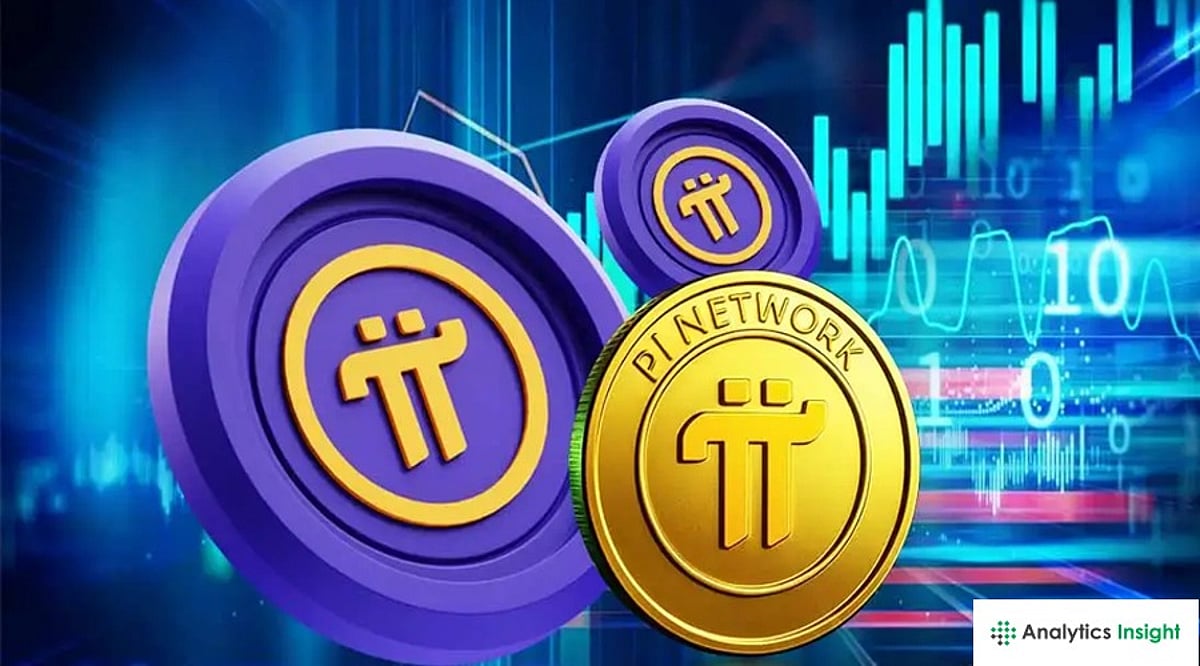
    Pi Network has rolled out significant upgrades to its App Studio, introducing persistent storage and enhanced backend support for AI-driven applications. However, the development improvements have done little to stem the slide of the network’s native token, PI, which has plunged to a fresh record low of approximately $0.1002.

    App Studio Gains Persistent Storage and Backend Tools

    In a recent announcement on X, Pi Network detailed two major App Studio updates. The first is an AI-assisted app planning phase, while the second expands backend capabilities to support more complex applications. The most notable addition is persistent storage, which allows apps to save and retrieve user-specific data across multiple sessions.

    This means developers can now build applications that remember user preferences and progress. For example, games can retain high scores, productivity apps can restore to-do lists, and note-taking apps can automatically preserve content. Previously, App Studio apps were limited to frontend-only experiences, causing data to disappear after each session.

    The team described persistent storage as the first feature built on the new backend foundation, broadening the range of practical AI-created applications available through Pi Network.

    PI Token Continues Its Downtrend

    Despite the technical upgrades, PI has failed to reverse its prolonged decline. The token fell below $0.115 in late June during a broader crypto market correction, then recovered briefly into the $0.12–$0.13 range before renewed selling pressure drove prices lower again.

    According to CoinGecko data, PI dropped to $0.1033 before hitting an all-time low of $0.1002. Although it later recovered about 1.5%, the token remains perilously close to the $0.10 psychological threshold. Weak market sentiment and limited confidence in PI continue to weigh on its price.

    Supply Growth and Market Caution Keep Pressure On

    Pi Network has declined nearly 33% over the past month, underperforming much of the broader cryptocurrency market. Ongoing token unlocks remain a major factor, as increasing supply has not been met by commensurate buying demand. Short-term rebounds have quickly faded as sellers return.

    While Bitcoin and several major altcoins have shown signs of recovery, PI remains locked in a sustained downtrend. Recent geopolitical tensions have added to market caution, but PI has underperformed even larger assets, reflecting cautious participation and limited capital inflows.

    What’s Next for Pi Network?

    Pi Network has expanded its App Studio with persistent storage and stronger backend support, enabling developers to build more capable applications. Yet the token’s price action tells a different story, with token unlocks, weak demand, and cautious market sentiment keeping sellers in control. Market participants will be closely watching both ecosystem development and price movement in the coming weeks.

  • WhatsApp Username Feature Delayed in India as Meta Fails to Meet Government Deadline

    WhatsApp Username Feature Delayed in India as Meta Fails to Meet Government Deadline

    The Ministry of Electronics and Information Technology (MeitY) has not yet received Meta’s formal response regarding WhatsApp’s proposed username feature, even after the extended deadline passed on Wednesday, according to government sources.

    The Centre had granted Meta an additional three days to respond to the notice issued over privacy and security concerns. During earlier discussions, Meta assured that the username feature would not launch in India until consultations with the ministry concluded.

    Government Raises Cybersecurity Concerns

    MeitY’s notice sought clarity on safeguards accompanying WhatsApp usernames, which allow users to connect without sharing phone numbers. Officials fear the change could enable fraudsters to impersonate users, create fake identities, and conduct phishing attacks while hiding their real identities.

    The ministry asked Meta to explain user verification, misuse prevention, and grievance redressal plans. The feature is expected to work like usernames on other platforms.

    Meta Assures No India Rollout for Now

    Meta representatives met MeitY officials and reportedly assured that the feature would not launch in India until regulatory consultations are complete. The extension was meant to give Meta time to detail its user safety measures.

    As of the deadline, the ministry had not received the company’s formal reply.

    Wider Review of Messaging Platforms

    MeitY has also sought explanations from Telegram and Signal, which already support username-based communication. The government is examining whether such features could complicate cybercrime investigations. The review is part of India’s broader push to strengthen digital safety while balancing user privacy and innovation.

  • Bitcoin Exchange Supply Drops to Multi-Year Lows as ETFs and Institutional Custody Shift Market Dynamics

    Bitcoin Exchange Supply Drops to Multi-Year Lows as ETFs and Institutional Custody Shift Market Dynamics

    Bitcoin exchange balances have fallen to levels not seen in years, but analysts warn that the traditional bullish interpretation of this trend no longer holds the same weight. According to blockchain analytics firm Santiment, the amount of Bitcoin held on exchanges has dropped to just 6.6% of its circulating supply, while Ether stands at 4.3%—the lowest since 2017 and 2015, respectively.

    Industry executives point to the rise of institutional custody, spot exchange-traded funds (ETFs), and decentralized finance (DeFi) as key factors reshaping how digital assets move. In the past, declining exchange reserves signaled that investors were moving coins into self-custody, reducing immediate selling pressure and often preceding price rallies. Today, the picture is more complex.

    Mark Zalan, CEO of GoMining, noted that prolonged declines in exchange supply have historically appeared before multi-quarter bull markets, but he cautioned that accurate timing remains uncertain. Meanwhile, Eneko Knorr, CEO of Stabolut, explained that many assets now flow into staking platforms, DeFi protocols, and institutional custody rather than remaining on exchanges. Bitcoin withdrawn from exchanges often becomes wrapped assets like WBTC, used as collateral or lent across decentralized markets.

    Spot Bitcoin ETFs further complicate the narrative. When demand rises, ETF issuers purchase Bitcoin and place it with custodians such as Coinbase Custody, Fidelity Digital Assets, and BitGo. Investors then trade ETF shares on regulated exchanges while the underlying Bitcoin stays off exchange wallets. Currently, U.S. spot Bitcoin ETFs hold over $73 billion in net assets (more than 641,400 BTC), and Ether ETFs manage roughly $13.7 billion (about 7.7 million ETH).

    Ben Nadareski, CEO of Solstice, described lower exchange balances as the end of the exchange-custody era rather than a simple bullish indicator. Assets are now moving toward regulated custodians or productive on-chain positions. Historical data also shows that low exchange reserves do not guarantee higher prices—during 2022, reserves stayed relatively low while Bitcoin prices still declined sharply.

    Despite these shifts, accumulation continues across multiple sectors. Public companies now hold about 1,264,579 BTC, private companies own 281,752 BTC, and government entities control 649,954 BTC. DeFi and related protocols hold 369,595 BTC, while ETFs and exchanges account for 1,622,533 BTC. Nearly seven million Bitcoins remain in dormant wallets, meaning about 56.5% of the circulating supply (roughly 11.2 million BTC) sits outside active trading.

    In summary, while Bitcoin’s exchange supply remains near historic lows, the indicator no longer provides a straightforward bullish signal. The market has matured, and investors must consider ETFs, institutional custody, and DeFi to understand true supply dynamics.

  • Crimson Desert Confirmed for Nintendo Switch 2; Pearl Abyss Working on Multiplayer

    Crimson Desert Confirmed for Nintendo Switch 2; Pearl Abyss Working on Multiplayer

    Pearl Abyss has announced that Crimson Desert is officially in development for the Nintendo Switch 2, alongside plans to explore multiplayer features. The studio’s CEO, Huh Jin-young, revealed these updates during a corporate briefing on July 8, 2026, sparking excitement among gamers worldwide.

    The fantasy RPG, known for its expansive world, compelling narrative, and stunning visuals, has already generated significant buzz. Now, players are eager to see how the game will adapt to Nintendo’s next-generation console and whether multiplayer could become a core component of the experience.

    Pearl Abyss Talks Switch 2 and Multiplayer

    During the briefing, Jin-young shared that research and development for the Switch 2 port began in March. While the project is still in early stages and no release date has been announced, he confirmed that basic gameplay is already functional. He emphasized the challenges of porting a graphically demanding title: “Platform expansion is not just a simple port; the key is whether we can fully maintain the graphics, action, and open-world experience of Crimson Desert on that device. The Switch 2 version still requires optimization and technical verification.”

    Regarding multiplayer, Jin-young noted that the team is actively exploring possibilities but warned that adding such a mode involves significant hurdles: “It is a major task that requires reviewing server structures, balance, platform-specific stability, and operating systems.” He added that the studio is conducting feasibility studies and aims to let players enjoy the Crimson Desert IP for longer, with multiplayer being a potential avenue.

    Can the Switch 2 Handle Crimson Desert?

    Crimson Desert is a technically demanding title, featuring a vast open world, detailed environments, dynamic weather, and fast-paced combat. Running such a game on a portable console poses significant performance challenges, particularly in maintaining smooth world streaming. However, previous cross-platfrom successes like The Witcher 3 and Hogwarts Legacy have demonstrated that ambitious RPGs can thrive on Nintendo consoles with careful optimization.

    The Witcher Effect

    Like many great fantasy RPGs, Crimson Desert aims to deliver a compelling story, a vast world, and memorable characters. The integration of multiplayer could offer new ways to experience the world without detracting from the main single-player narrative. Pearl Abyss is currently balancing both visions, ensuring that the core adventure remains intact while exploring social features that could broaden the game’s appeal.

    As development progresses, fans can expect more details on both the Switch 2 port and potential multiplayer modes. For now, the confirmation marks an exciting step for one of the most anticipated RPGs of the year.

  • SpaceX Stock Slips Below IPO Price as Blue Origin Raises $10 Billion to Expand Space Operations

    SpaceX Stock Slips Below IPO Price as Blue Origin Raises $10 Billion to Expand Space Operations

    SpaceX shares dropped below their IPO opening price this week, closing at $148 on Wednesday after a two-day decline following the company’s inclusion in the NASDAQ-100 index. The stock touched an intraday low of $145.20 before recovering some losses. The decline came as rival Blue Origin moved to raise $10 billion in outside capital at a reported $130 billion valuation, intensifying competition in the space launch and satellite connectivity markets.

    SpaceX’s IPO opened at $150 per share in June after the company raised $85.7 billion, including the greenshoe option. The stock reached a closing high of $201.80 on June 16 but has since pulled back. Analysts attribute the decline to a post-IPO adjustment phase, where early demand cools and investors test valuation support. Despite the drop, most analysts remain bullish, with price targets above $200. Morgan Stanley rates the stock overweight with a $300 target, while Bernstein, RBC, and UBS initiated coverage with positive ratings.

    Analysts point to SpaceX’s leadership in reusable rockets, launch services, and Starlink satellite internet, as well as potential growth from AI tools, orbital data centers, and broader space infrastructure. Morgan Stanley’s Adam Jonas described SpaceX as more than a rocket company, noting its ability to connect launch economics, satellite networks, and AI infrastructure into a single business model.

    Meanwhile, Blue Origin is seeking outside funding for the first time in its 25-year history. The Jeff Bezos-backed company is raising $10 billion, including $4 billion from Coatue Management, $4 billion from other large investors, and $2 billion from Bezos himself. The raise follows a difficult period that included a New Glenn rocket explosion during a static engine test that damaged its only launch pad. Bezos told CNBC in May that the company has enough visibility into its future to bring in outside investors. Blue Origin also plans to operate TeraWave, an enterprise satellite connectivity service, using New Glenn rockets to launch satellites into medium and low Earth orbit.

    Amazon is preparing its own satellite internet service, Amazon LEO, which would compete with Starlink in consumer connectivity, but TeraWave targets large business customers. The funding signals Blue Origin’s push to strengthen its capital base as competition in launch services and satellite internet intensifies. SpaceX still leads in satellites in orbit, but Blue Origin is working to build a stronger position across rockets and connectivity.

  • X Launches Built-in Video Editor for iPhone to Encourage Original Content

    X Launches Built-in Video Editor for iPhone to Encourage Original Content

    X has introduced a new built-in video editor for iPhone users, designed to help creators produce original videos without leaving the app. The feature aims to reduce reposted content, enhance creator tools, and strengthen X’s position against competitors like TikTok, YouTube, and Instagram.

    The video editor is now available on iOS, with an Android version expected in the future. It includes basic editing tools such as trimming, adding captions, customizing caption styles, and a green screen option that lets users use a photo from their phone or a post on X as the background. These tools are integrated directly into the app for seamless video creation and posting.

    Video content has become a significant part of user engagement on X, with many popular clips being reposted from other accounts. By making it easier to create original videos within the app, X hopes to shift the focus from reposts to fresh, self-made content. The company wants original creators to receive more attention and value for their work.

    Nikita Bier, Head of Product at X, stated that the company plans to add more features to the video editor over the coming weeks. He noted that many large posts from prominent creators are often copied from others, and X aims to change this habit by providing better tools for original content creation. The update is part of a broader strategy to build a stronger creator platform, similar to TikTok, YouTube, and Instagram.

    This new video editor is a small update but could have a significant impact over time. It demonstrates X’s commitment to original content and reducing reposts, potentially encouraging more users to create and share videos directly on the platform.

  • Oppo Reno 16 and Reno 16c Now on Sale in India: Full Pricing, Specs, and Launch Offers

    Oppo Reno 16 and Reno 16c Now on Sale in India: Full Pricing, Specs, and Launch Offers

    Oppo has kicked off the first sale of its latest mid-range smartphones, the Reno 16 and Reno 16c, in India. Alongside the phones, the company also introduced the Oppo Bubble accessory. Customers can purchase these devices through Amazon, Flipkart, the Oppo India online store, and offline retail outlets, with attractive launch offers including cashback, bank deals, exchange discounts, and no-cost EMI options.

    The Reno 16 series is designed for users who want a strong camera system, long battery life, and premium features without the flagship price tag. The introductory offers make these phones even more appealing for those looking to upgrade.

    Oppo Reno 16 First Sale: Price, Offers, and Availability

    • Oppo Reno 16: 8GB + 256GB variant priced at Rs. 61,999; 12GB + 256GB variant at Rs. 67,999.
    • Oppo Reno 16c: 8GB + 128GB variant at Rs. 46,999; 8GB + 256GB at Rs. 49,999; 12GB + 256GB at Rs. 55,999.

    Buyers can get up to 10 percent instant cashback with select bank cards, along with no-cost EMI plans and exchange benefits through partner banks and retailers. These offers effectively reduce the upfront cost.

    Oppo Reno 16 and Reno 16c: Key Features and Specifications

    Oppo Reno 16 features a 6.32-inch AMOLED display with a 120Hz refresh rate. It is powered by the Snapdragon 7 Gen 4 processor and houses a 6,700mAh battery with 80W fast charging. The rear camera setup includes a 50-megapixel main sensor with OIS, complemented by additional sensors. For selfies and video calls, it has a 50-megapixel front camera.

    Oppo Reno 16c comes with a larger 6.57-inch AMOLED display, also with a 120Hz refresh rate. It is equipped with the MediaTek Dimensity 7300 processor and a bigger 7,000mAh battery, still supporting 80W fast charging.

    Both phones run ColorOS 16 based on Android 16 and support 5G connectivity. They are IP-rated for dust and water resistance and include AI-powered camera and productivity features.

    The Oppo Reno 16 series offers a compelling option in the premium mid-range segment. With strong cameras, large batteries, and long software support, these phones are worth considering for everyday users.

  • Ethereum Phishing Scam Drains Nearly $1M as BitMine Nears 5% of Total Supply

    Ethereum Phishing Scam Drains Nearly $1M as BitMine Nears 5% of Total Supply

    A cryptocurrency user lost nearly $1 million after unknowingly approving a malicious Ethereum transaction that allowed attackers to drain almost the entire wallet balance. Blockchain security platform Scam Sniffer reported that the victim lost 999,999 Tether (USDT) after signing a fraudulent token approval request on Wednesday.

    On-chain records show the attackers first attempted to transfer a rounded $1 million, but the transaction failed since the wallet held slightly less. Moments later, the attackers recalculated the available balance and successfully withdrew every remaining token. Meanwhile, Ethereum treasury company BitMine disclosed that it now controls more than 5.74 million ETH, placing it close to its stated goal of owning 5% of Ethereum’s total token supply.

    Phishing Attack Exploits Token Approval

    Scam Sniffer said the attackers relied on a phishing approval request rather than stealing private keys. The malicious approval granted permission to move the victim’s tokens without requiring another signature. According to the platform, the attackers initially failed when they tried withdrawing as much as $1 million through multicall transactions. Soon afterward, their script recalculated the balance and transferred the exact amount left in the wallet.

    Security researchers continue to identify approval phishing as one of the most common social engineering threats in crypto. Victims often believe they are confirming routine transactions while unknowingly granting unlimited spending permissions.

    According to blockchain security firm CertiK, phishing scams caused $723 million in losses across 248 incidents during 2025. In those cases, attackers convinced users to approve malicious token permissions that later enabled unauthorized transfers.

    Earlier this month, another crypto holder reportedly lost about $1.65 million after connecting to a fake exchange and signing a malicious smart contract. Researcher Ryan Coleman said the approval gave attackers unlimited wallet access, allowing an automated sweeper to drain the assets.

    Separate On-Chain Loss Shows Different Threat

    Besides phishing attacks, researchers recently reported another major on-chain loss involving transaction routing. A trader lost nearly $2 million after a decentralized exchange routed an Ether swap through a low-liquidity pool.

    GoPlus Security said the incident resulted from transaction routing instead of phishing. The routing allowed a same-block arbitrage trade to capture most of the transaction’s value.

    Following the incident, Scam Sniffer advised users to review every signature request carefully. The platform also recommended avoiding rushed approvals and using scam detection tools or browser extensions before signing wallet transactions.

    BitMine Nears Five Percent Ethereum Ownership

    At the same time, BitMine disclosed that it holds 5,742,237 ETH, representing about 4.8% of Ethereum’s 120.7 million token supply. The company now sits only 0.2 percentage points below its stated ownership target.

    The company reported total crypto assets, cash, marketable securities, and strategic holdings worth $11.1 billion as of June 28. It also said 4,879,157 ETH remained staked as of July 5, representing about 85% of its Ethereum holdings.

    Based on an ETH price of $1,800, BitMine valued its staked assets at approximately $8.8 billion. Furthermore, the company projected current annualized staking revenue of $235 million and estimated annual rewards of $277 million if all holdings remain fully staked through MAVAN and its staking partners.

    CryptoSlate’s Ethereum market data listed Ethereum’s total supply at about 120.68 million ETH and its market capitalization near $209 billion on July 6. Consequently, BitMine’s growing treasury has entered the broader discussion surrounding exchange liquidity, institutional treasury demand, staking participation, and large-holder activity.

    What’s Next?

    An Ethereum phishing scam drained nearly $1 million after a victim approved a malicious transaction, while separate on-chain losses exposed transaction routing risks. Meanwhile, BitMine expanded its Ethereum treasury to 5.74 million ETH, bringing its holdings close to 5% of the network’s total supply. Users should carefully verify every wallet approval before signing.

  • Ethereum Price Analysis: Can ETH Break Through the Critical $1,800 Resistance?

    Ethereum Price Analysis: Can ETH Break Through the Critical $1,800 Resistance?

    Key Takeaways

    • $1,800 remains Ethereum’s most important resistance level for confirming bullish momentum.
    • Lower exchange outflows and stronger market participation support a positive outlook.
    • Failure to break resistance could keep ETH trading between $1,500 and $1,800.

    Ethereum has shown fresh strength after a difficult period, with $1,800 resistance standing between here and a bigger move. Right now, Ethereum trades near $1,625, and many traders keep a close watch on the $1,800 resistance level. That level has capped several previous rallies. A clean break above $1,800 changes the picture. Another rejection keeps the pressure on.

    Ethereum Stays Below a Key Level

    The current Ethereum price stands near $1,625, which keeps the digital asset below the major resistance zone between $1,800 and $1,850. This gap may not look very large, but it has a big effect on market sentiment. Many traders wait for Ethereum to cross this level before they expect a stronger upward move.

    The market has already seen several attempts near this resistance area. Each time, selling pressure became stronger and pushed the price lower. Given this history, many experts believe that a clear break above $1,800 would send a positive signal across the crypto market. Such a move would also show that buyers have more control than sellers.

    Why the $1,800 Level Matters

    The $1,800 price level is important as it has acted as a strong barrier in recent months. A large number of buy and sell orders sit around this area. When Ethereum reaches this zone, many traders decide to book profits, while others wait before they enter fresh positions. This creates extra pressure on the price.

    Market experts also view this level as an important technical point. A daily or weekly close above $1,800 would show that demand has become stronger. Such a result could open the door for another rally and improve confidence across the wider crypto market.

    Positive Signs Support Ethereum

    Several market signals have started to improve after the recent recovery. Ethereum has moved higher from its June lows, which has helped market confidence. The price has also moved above a short-term downward trend, a sign that buyers have returned after weeks of weakness.

    Another positive signal comes from exchange activity. Large amounts of Ethereum have left crypto exchanges during the past few weeks. Many investors usually move coins into private wallets or staking platforms when they plan to hold them for a longer time instead of selling them. This trend often reduces selling pressure and supports price stability.

    Risks Still Remain

    Despite the recent improvement, Ethereum still faces several challenges. The biggest concern remains the failure to move above $1,800. If sellers once again stop the rally, the market could lose confidence.

    Ethereum also trades below several important long-term moving averages. Many traders use these indicators to judge the overall market trend. Until the price moves above these levels, some investors may stay careful.

    Another concern comes from exchange reserves. Recent data shows that exchange balances have increased in some cases. A larger supply of coins on exchanges may raise the chance of selling if market conditions become weaker. This could place fresh pressure on the price.

    Important Price Levels Ahead

    Support and resistance levels continue to guide market expectations. The strongest support area currently sits between $1,500 and $1,600. This zone has helped Ethereum recover during recent price declines.

    The next resistance appears between $1,700 and $1,750, while the biggest challenge remains the $1,800 to $1,850 range. A successful move above this area could change the market outlook and create fresh buying interest.

    Outlook for Ethereum

    Ethereum has shown better strength after the recent recovery, but the market still waits for clear confirmation before it expects a larger rally. The price has improved from earlier lows, and several market signals now support a more positive outlook. Lower selling pressure, stronger market participation, and better price action all add hope for future gains.

    However, the biggest test still stands at $1,800. A successful break above this level would strengthen bullish sentiment and could push Ethereum closer to the $2,000 mark. On the other hand, another rejection could keep the price inside the current range between $1,500 and $1,800 for some time.

    FAQs

    1. Why is the $1,800 level such a critical resistance point for Ethereum right now?

    The $1,800 mark represents a major psychological and historical liquidity cluster. Heavy sell walls sit at this level, meaning a high volume of limit orders must be absorbed before ETH can establish a cleaner upward trend.

    2. What bullish signals could trigger an ETH breakout past $1,800?

    Key catalysts include a sustained increase in Layer-2 network transaction volumes, growing institutional net inflows into spot Ethereum ETFs, and a broader market lift led by stability in Bitcoin’s price dynamics.

    3. What happens to the price of ETH if it gets rejected at $1,800 again?

    If selling pressure overpowers buyers at $1,800, Ethereum is highly likely to retreat and retest local support levels around $1,625 and $1,550, extending its current range-bound accumulation phase.

    4. How do current network fundamentals compare to ETH’s price action?

    While the spot price faces near-term headwinds, underlying network fundamentals remain robust. Total value locked (TVL) in decentralized finance and overall daily transaction counts sit near healthy levels, signaling high organic utility despite price stagnation.

    5. How does Ethereum’s price trend typically impact alternative layer-one networks?

    Ethereum serves as the primary benchmark for the altcoin market. A confirmed breakout and daily close above $1,800 by ETH often signals renewed capital rotation into high-performance alternative layer-one protocols and ecosystem tokens.

    Disclaimer: This article is provided for informational purposes and does not constitute financial or investment advice. Cryptocurrencies are volatile assets; always do your own research (DYOR) before investing.