
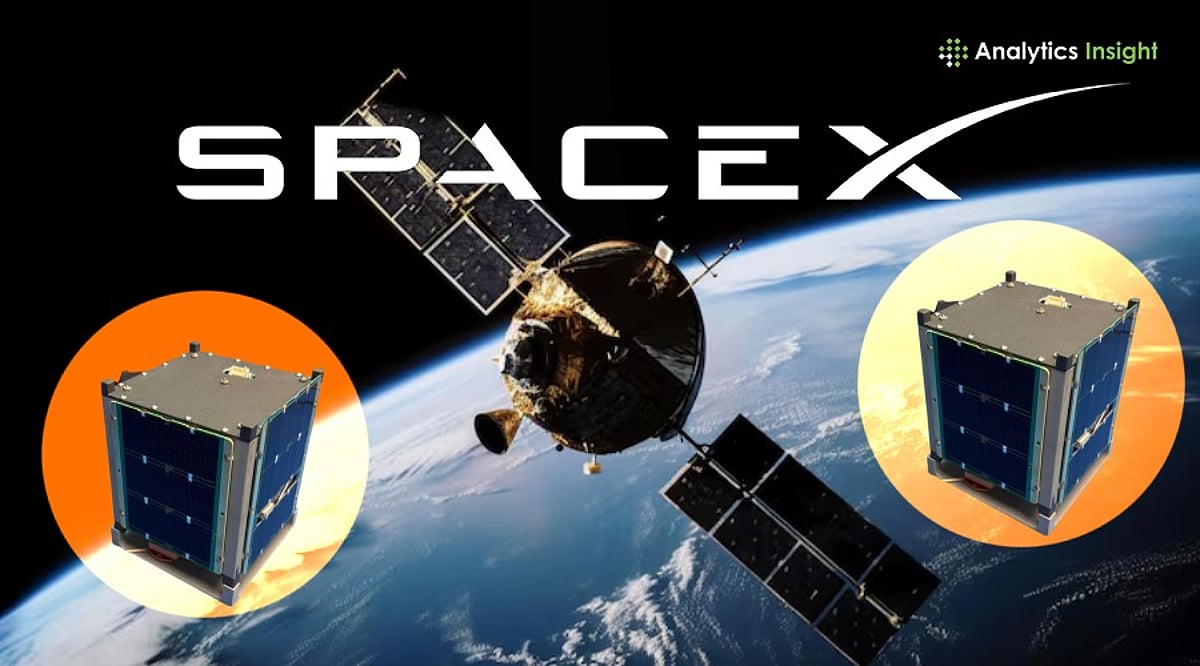
SpaceX has successfully launched the world’s first commercial nuclear-powered satellite into orbit, marking a significant milestone in the commercialization of space nuclear technology. The satellite, named BOHR (Betavoltaic Orbital High-Reliability CubeSat), was built by Miami-based City Labs and launched aboard a Falcon 9 rocket as part of the Transporter-17 rideshare mission from Vandenberg Space Force Base on July 7.
The BOHR satellite uses a novel betavoltaic battery system called NanoTritium, which generates electricity from the natural beta decay of tritium trapped in a metal hydride matrix. Unlike traditional radioisotope thermoelectric generators used by NASA on missions like Voyager or the Curiosity rover, this system has no moving parts, no liquid electrolytes, and virtually no fire risk. As the tritium fuel decays, it converts into helium-3, a stable, non-radioactive byproduct.
City Labs CEO Peter Cabauy emphasized the significance of this achievement, stating, “This is a historic step for commercial nuclear power in space.” The mission demonstrates that nuclear energy systems are ready for commercial use, addressing a critical limitation of solar panels: they cease to function when not exposed to sunlight. Batteries can provide short-term power but cannot sustain long-duration operations.
NASA has separately explored tritium betavoltaics for powering small autonomous sensors in permanently shadowed regions of the Moon, where extreme cold and total darkness make conventional batteries impractical. The BOHR mission also cleared a new regulatory path, becoming the first commercial nuclear payload to undergo the FAA’s dedicated review pathway established under National Security Presidential Memorandum-20 in 2019.
The launch arrives alongside NASA and the Department of Energy’s continued development of a lunar surface fission reactor, targeting a first deployment by 2030. Cabauy described BOHR as a pathfinder, noting that the goal extends beyond City Labs to open the commercial nuclear space sector for other firms pursuing similar technology. “BOHR demonstrates that safe, compact, and regulatory-approved nuclear power systems are ready for routine commercial deployment. This capability enables persistent, always-on payload operations that are not constrained by sunlight or battery life,” he said.
While the power output is modest, unsuitable for large-scale applications like lunar bases, Cabauy hopes it can scale toward larger applications over time, underscoring nuclear power as essential infrastructure for the next phase of deep space and lunar exploration.
Leave a Reply