Author: vitorcherulli

  • Two LLMs Team Up to Help Robots Interpret Vague Instructions and Prioritize What Matters

    Two LLMs Team Up to Help Robots Interpret Vague Instructions and Prioritize What Matters

    Researchers at MIT’s Computer Science and Artificial Intelligence Laboratory (CSAIL) have developed a new method that uses two large language models (LLMs) to help robots understand ambiguous instructions and focus on key details. The approach, called Masked Inverse Reinforcement Learning (Masked IRL), reduces the amount of demonstration data needed to teach a robot by nearly five times, while improving the robot’s ability to infer unspoken user preferences.

    Traditional robot training often requires either extensive physical demonstrations or detailed written instructions. Masked IRL automates the process: first, one LLM clarifies ambiguous prompts (e.g., turning “stay close” into “stay close to the surface of the table”) by comparing a user’s demonstration trajectory to the shortest possible path. Then a second LLM evaluates the environment and “masks” irrelevant details – such as a person leaning on a table – while highlighting critical ones like obstacles to avoid. The robot then uses these prioritized details to generate a safe motion plan.

    In experiments, the system correctly identified unstated user preferences up to 15 percent more often than comparable baselines. Real-world tests showed a robotic arm successfully moving a coffee mug around a laptop, wiping a table while “staying close” to it, and handing a user a bag of chips while “staying away” from both the person and the table – all after fewer than 50 kinesthetic demonstrations.

    The team plans to enhance Masked IRL with camera input, allowing robots to visually focus on relevant objects in dynamic environments. The work was supported by the Tata Group via the MIT Generative AI Impact Consortium Award and the Department of Defense, and will be presented at the 2026 IEEE International Conference on Robotics and Automation.

  • MIT Economist David Autor Appointed Head of Department of Economics

    MIT Economist David Autor Appointed Head of Department of Economics

    David Autor, the Daniel (1972) and Gail Rubinfeld Professor in MIT’s Department of Economics, has been named head of the department, effective July 1, 2026. A faculty member since 1999, Autor is a leading researcher in artificial intelligence and the future of work.

    “David is a world-class labor economist,” said Agustín Rayo, the Kenan Sahin Dean of the School of Humanities, Arts, and Social Sciences. “He is also an individual of wisdom and insight. I look forward to welcoming him to the school’s leadership team.”

    Autor’s scholarship explores the labor-market impacts of technological change and globalization on job polarization, skill demands, earnings inequality, and electoral outcomes. He co-directs the James M. and Cathleen D. Stone Center on Inequality and Shaping the Future of Work.

    “I’ve been at MIT since 1999, and I owe my career to the Institute, the department, and colleagues who are as kind as they are accomplished,” Autor said. “Stepping into this role is a chance to contribute to a place that has shaped me at every stage.”

    Autor succeeds Jon Gruber, the Ford Professor of Economics, who served as department head since July 2023. In his new role, Autor aims to “build on the stellar standard set by its faculty and students while navigating budget tightening and a shifting political landscape.” He added: “Just as important, I want to lead the department toward the opportunities that advancing AI is opening in how we teach and what we research.”

    A co-director of the National Bureau of Economic Research (NBER) Labor Studies Program, Autor holds a BA in psychology from Tufts University and a PhD in public policy from Harvard Kennedy School. His honors include the NSF CAREER Award, an Alfred P. Sloan Fellowship, the Sherwin Rosen Prize, an Andrew Carnegie Fellowship, the Society for Progress Medal, and the Heinz 25th Special Recognition Award. In 2023 he was named a NOMIS Distinguished Scientist, and in 2024 an AI2050 Senior Fellow by Schmidt Sciences.

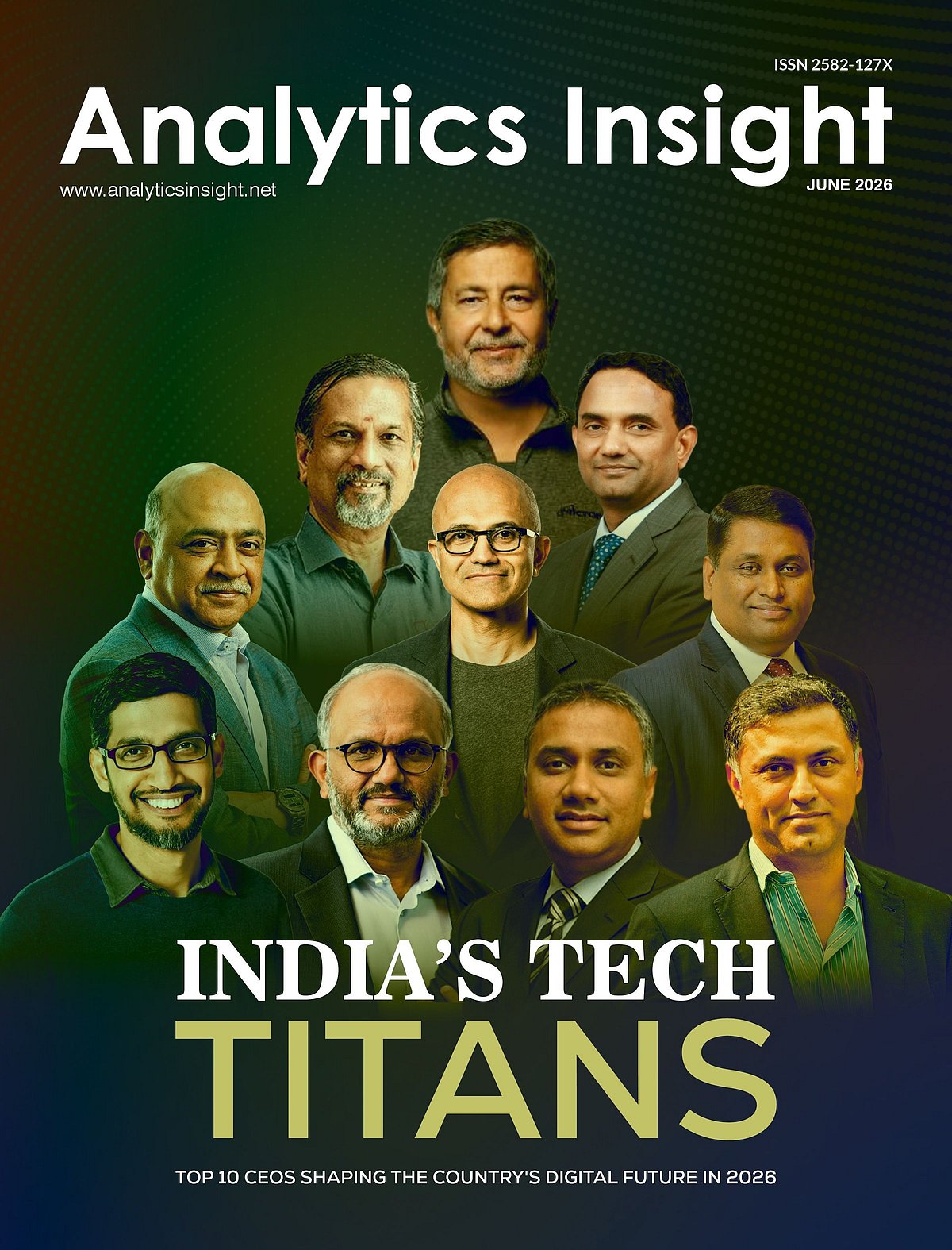
  • India’s Tech Titans and AI Frontier: Analytics Insight’s June 2026 Issue Highlights

    India’s Tech Titans and AI Frontier: Analytics Insight’s June 2026 Issue Highlights

    Analytics Insight’s June 2026 issue delivers a comprehensive look at India’s rapidly evolving technology landscape, profiling the nation’s top 10 tech CEOs who are shaping the digital future—from Sundar Pichai to Bhavish Aggarwal. The edition dives deep into semiconductors, space startups, fintech, and AI leadership readiness.

    Key Articles in This Issue

    • Capability Over Scale: Piper Serica’s Ajay Modi argues that India’s most important startups are hidden inside supply chains.
    • Aravind Srinivas and the Rise of Perplexity: From IIT classrooms to the center of the AI search race.
    • Leading Without the Noise: The Salil Parekh way.
    • Semiconductor Dreams: Can India build a chip industry from scratch?
    • Roshni Nadar Malhotra’s Journey: From media to HCLTech leadership.
    • How Small-town India Became the World’s Most Exciting Fintech Market.
    • Building Intelligence for a Billion Voices: Vivek Raghavan’s next national infrastructure bet.
    • Bhavish Aggarwal’s Journey: From Ola Cabs to Ola Electric and Krutrim AI.
    • India’s Private Space Startups: Who will be the country’s SpaceX?

    This issue underscores India’s ambition to lead in AI, semiconductors, and space technology, with detailed analysis and exclusive interviews. Whether you’re tracking the fintech revolution or the rise of indigenous AI models, the June 2026 edition is a must-read.

  • Tech Giants Bet Big on a Screen-Free Future: The Rise of AI Wearables

    Tech Giants Bet Big on a Screen-Free Future: The Rise of AI Wearables

    Major tech companies—Apple, Meta, Google, OpenAI, and Snap—are pivoting from screen-centric devices to screen-free alternatives such as smart glasses, AI pendants, and audio-first wearables. The goal is to reduce reliance on smartphones by creating seamless, context-aware interactions powered by on-device artificial intelligence.

    Screens Are Hitting a Human Wall

    For six decades, displays have been the primary interface between people and machines. Now, screen fatigue and fractured attention are driving demand for hands-free alternatives. Research shows that continuous screen interaction is exhausting, pushing users toward less intrusive computing methods.

    The First Generation of Screenless Devices

    Each product category solves a distinct interaction problem. Smart glasses keep information in the user’s line of sight without pulling focus from the physical world. AI pendants offer conversational access to language models without any display. AI-enabled earbuds enable discreet, voice-first interaction. Meta’s Ray-Ban smart glasses and Snap’s AI glasses are early bets on persistent, low-friction wearables, while Apple is rumored to be exploring camera-equipped AirPods for ambient sensing.

    Intelligence Behind the Shift

    The enabler is not hardware but AI. With on-device processing, a device can infer user context—location, movement, time of day—and anticipate needs without manual input. Recent advances in compact AI models and low-power chips make screenless products commercially viable for the first time.

    The Privacy Problem

    Screenless devices that continuously listen or see raise unresolved privacy concerns. Bystanders cannot easily tell if smart glasses are recording. Companies must address trust through visible indicators, on-device processing, and strict data policies to achieve mainstream adoption.

    Platform Stakes

    As smartphone upgrade cycles slow, tech giants need a new interface layer to sustain growth. The shift from app-centric to AI-driven interaction redefines how platforms are built and monetized. Whoever controls the next everyday interface will shape the commercial layer built on top of it.

    What Changes for Users

    The near-term outcome is a hybrid world where phones remain central but are used less often. Wearables handle moments—walking, cooking, commuting—where pulling out a phone creates friction. The screen-free future is about removing the need for a screen when a better interface exists.

    Success depends on whether these devices save users time without creating new privacy or social acceptance concerns. Technology enables the transition, but trust and genuine usefulness will determine adoption.

  • How to Reduce Claude AI Token Usage and Lower Your AI Costs

    How to Reduce Claude AI Token Usage and Lower Your AI Costs

    Artificial intelligence tools have become a major part of business and software workflows. Among the most popular AI systems, Claude AI from Anthropic has gained strong attention for its powerful writing, coding, and reasoning abilities. However, as more companies use AI daily, a major issue becomes impossible to ignore: rising token costs.

    Tokens are the small pieces of text that AI models read and create while processing a request. Every sentence entered into Claude AI uses input tokens, and every answer generated uses output tokens. The more tokens used, the higher the cost becomes. For businesses that rely on AI every day, poor token management can lead to high monthly bills. Thus, smart token usage has become one of the most important ways to control AI expenses.

    Why Token Costs Matter More in 2026

    AI adoption has grown at an unbelievable speed this year. More companies now depend on language models for customer support, research, coding, content writing, and automation. However, many businesses fail to realize how fast token usage grows over time.

    A recent report showed that legal AI company Harvey increased AI usage from 1 trillion tokens per month at the start of 2026 to almost 12 trillion tokens only a few months later. This shows how quickly AI costs can rise once usage expands across teams and departments. As AI demand grows, companies now pay much closer attention to token spending because even small waste can turn into huge monthly costs.

    Keep Prompts Short and Clear

    One of the biggest reasons for high token usage comes from long prompts. Many people write large instructions with too much background information, extra explanations, or repeated details. Claude processes every word, so longer prompts naturally create higher costs.

    A shorter prompt with clear instructions usually gives similar or even better results. Instead of sending large paragraphs, simple and direct instructions save tokens without reducing quality. Even a small reduction in prompt size can create major savings after thousands of requests.

    Avoid Long Conversations

    Claude remembers previous messages in a conversation. This helps maintain context, but it also increases token usage. Every time a new message enters the chat, Claude reads the older conversation history again before creating a response.

    As conversations become longer, token usage quickly rises. Therefore, separate conversations work better for separate tasks. Starting a fresh chat instead of keeping a long session can reduce unnecessary token use. Developer experiments published during 2026 showed that shorter conversation threads reduced token usage by almost 60% in some workflows. This makes conversation management one of the easiest ways to reduce costs.

    Choose the Right Model for the Job

    Not every task needs the most advanced AI model. High-performance models usually cost more because they process information at a deeper level. However, simple work often does not need that extra power. Tasks like grammar correction, article summaries, email writing, simple coding fixes, and text rewriting can work perfectly with lighter models. Advanced models should stay reserved for difficult research, complex coding, technical analysis, or problem-solving.

    Experts in AI cost management now recommend a multi-model system where simple work goes to cheaper models and complex work goes to premium models. This approach helps companies lower expenses without hurting productivity.

    Combine Multiple Tasks in One Request

    Another common mistake comes from sending too many separate requests. For example, many users ask Claude to summarize text first, then rewrite it, then edit grammar, and then change the structure in separate prompts. Each new request forces Claude to process instructions again, which creates extra token usage. A better approach combines multiple tasks inside one carefully written prompt.

    Instead of four separate requests, one complete request can often finish the same work. This simple change reduces repeated processing and lowers overall cost.

    Limit Extra Context in Coding Work

    Claude has become extremely popular among software developers, especially through Claude Code. However, coding tasks often consume large numbers of tokens because developers frequently give huge files, entire code repositories, or unnecessary documentation.

    A better method focuses only on the exact code section that needs help. Smaller code samples allow Claude to process less information while still giving useful answers. Technical benchmark reports released in 2026 showed that reducing unnecessary coding context lowered token use by nearly 70%. This proves that selective context saves both money and processing time.

    Reuse Prompts Instead of Writing New Ones

    Prompt reuse has become another effective strategy for cost control. Many businesses use the same type of instructions every day for customer support, report generation, content creation, and internal automation. Instead of creating new prompts every time, fixed prompt templates help reduce repeated token waste. Standard prompt structures also improve consistency and allow faster AI processing. Research around token economics now shows that stable prompt systems help organizations improve efficiency while keeping usage costs under control.

    AI Spending Has Become a Serious Business Concern

    Large companies have started paying much closer attention to AI expenses because costs now rise at extreme levels. A major report in 2026 revealed that a company accidentally spent almost 500 million dollars in a single month after employees received unlimited Claude access without proper usage restrictions. The company failed to place limits on usage, which caused massive overspending.

    This incident created serious concern across the AI industry. Many organizations now place strict monthly budgets, usage tracking systems, and internal controls to prevent similar financial mistakes.

    Final Thoughts

    Success with AI no longer depends only on powerful models. Cost efficiency has become equally important. Claude AI offers excellent performance, but careless token use can quickly create expensive monthly bills. Short prompts, smaller conversations, proper model selection, fewer requests, controlled coding context, and prompt reuse can significantly lower expenses. As AI becomes part of everyday business operations, smart token management has turned into an essential strategy for long-term success. The companies that control token usage properly will save more money while still gaining the full benefits of artificial intelligence.

    FAQs

    1. What are tokens in Claude AI? Tokens are small pieces of text that Claude processes while reading prompts and generating answers.
    2. Why does Claude AI become expensive? High usage, long prompts, and repeated conversations increase total token consumption.
    3. Can shorter prompts reduce costs? Yes, simple and direct prompts use fewer tokens and lower expenses.
    4. Does conversation length affect token usage? Yes, longer chats force Claude to process old messages again, which raises costs.
    5. What is the best way to reduce Claude AI spending? Prompt optimization, smaller context, proper model selection, and prompt reuse help save money.

  • Comparing Generative AI Coding Tools: Which Offers the Most Value for Developers in 2026?

    Comparing Generative AI Coding Tools: Which Offers the Most Value for Developers in 2026?

    Generative AI coding tools are becoming a standard part of software development. They help developers write, review, and improve code more efficiently. Comparing their features and workflows reveals which tools deliver the greatest value in 2026.

    Overview

    Windsurf and Amazon Q Developer, two familiar AI coding brands, will have each moved into different product areas by mid-2026, reshaping the competitive landscape. GitHub Copilot, Cursor, Claude Code, and Kiro have emerged as the four tools that are actually shaping how developers choose AI coding help today. Pricing across the category has shifted from flat subscriptions to usage-based credits, changing how teams should evaluate cost.

    Choosing an AI coding tool is now much harder than choosing a programming language. The names of the tools developers trusted a year ago have changed, merged, or shifted their direction. Windsurf is now part of Devin Desktop, and Amazon is moving developers from Q Developer to Kiro. The bigger change, however, is that AI coding tools now serve very different workflows. Comparing them by brand alone is no longer enough.

    AI Coding Tools at a Glance

    Claude Code: Built for Complexity

    Claude Code runs from the terminal, not inside an editor. This is a deliberate design choice rooted in a specific philosophy: for genuinely complex engineering work, the file you are editing is rarely the whole problem. It reads the entire codebase, plans changes across multiple files, and refactors code by understanding how everything works together. Its large context window is the engine behind this. For backend systems, infrastructure work, or legacy codebases where cross-file relationships pose the real challenge, Claude Code operates at a depth that editor-based tools rarely reach.

    Cursor: The IDE Reimagined

    Cursor does not add AI to an existing editor. It builds the editor around AI from the start. Multi-file editing, repository-wide context, and conversational assistance are not features you enable. They are simply how the tool works. For developers who spend most of their day inside an IDE, Cursor reduces the need to switch between tools. Developers can edit multiple files, understand repository context, and generate new code without leaving the IDE.

    GitHub Copilot: The Reliable Standard

    GitHub Copilot remains the easiest AI coding assistant to adopt. It works inside popular editors such as VS Code, JetBrains, and Neovim without changing existing workflows. Teams already on GitHub can adopt it with almost no friction. Newer tools have pushed further into deep repository reasoning. But for the work that makes up most of a developer’s day, Copilot remains consistent, fast, and dependable.

    Kiro: Amazon’s Next Move

    Kiro approaches development from a different angle entirely. It starts from structured specifications rather than open-ended prompts, and it integrates directly with AWS services in ways that general-purpose tools cannot replicate. For teams building cloud-native applications on AWS, that specificity is a genuine advantage. Amazon is positioning Kiro as the successor to Q Developer, and the direction is clear, even if the ecosystem is still maturing.

    What the Benchmarks Now Measure

    Reliable code completion is now common across leading AI coding tools. The real difference lies in how well each tool understands the entire project before making changes. Benchmarks like SWE-bench Verified now test whether an AI can resolve a complete software issue end-to-end. That is a harder test and a more honest one.

    Choosing the Right Tool

    Pick GitHub Copilot for fast, reliable completion that fits into your current setup. Pick Cursor for an AI-first editing experience with real multi-file capability. Pick Claude Code for large-scale codebases, enterprise systems, and complex engineering where project-wide understanding matters. Pick Kiro when AWS is your primary environment and cloud-native integration is a priority. No single tool wins across every context. The best choice is the one that fits how you actually build software, not the one with the most visible brand.

    Why This Matters

    AI coding tools are changing how developers build software by speeding up development, improving code quality, and reducing repetitive work. Knowing the strengths of each tool helps individuals and teams choose the right assistant, improve productivity, control costs, and build better applications with greater confidence.

    Final Thoughts

    AI coding tools have moved well beyond simple code completion. They now help developers understand entire projects, refactor code, and automate complex development tasks. That makes choosing the right tool less about finding the biggest brand and more about matching the tool to the way a team builds software. The strongest choice is the one that fits the workflow, development environment, and scale of the projects being built.

  • Balancing Speed and Integrity: How Michael Rainesh Reinvents AI-Driven Software Engineering Governance

    Balancing Speed and Integrity: How Michael Rainesh Reinvents AI-Driven Software Engineering Governance

    As artificial intelligence accelerates the pace of code generation, it simultaneously shifts the cognitive burden toward code review, verification, and technical control. The 2025 DORA analysis of AI-assisted software development warns that while AI can boost delivery speed, it introduces systemic risk without rigorous engineering discipline. In this exclusive interview, Michael Rainesh, Director of Engineering at Portside, shares how organizations can adopt AI without sacrificing quality or control.

    From Reactive Gatekeeping to Federated AI Governance

    Rainesh advocates moving away from manual, reactive gatekeeping toward a federated, AI-enabled governance model. At Portside, his team integrated Generative AI into code reviews for every pull request, but maintained that developers retain ownership of the final commit. The result? An 80% reduction in production release issues, a 20% increase in team productivity, and a 40% faster, more reliable delivery cycle.

    AI Velocity vs. Risky Velocity

    What separates useful AI acceleration from dangerous speed? Human ownership. Rainesh emphasizes that AI outputs should be treated as first drafts, not finished products. When measurable quality indicators are established and engineers actively verify AI suggestions, speed is gained without compromising codebase integrity.

    Building Quality into the Development Process

    Rainesh’s background as a QA analyst taught him that quality cannot be a secondary phase. For teams without a dedicated QA department, the solution is to embed the QA automation mindset directly into the developer workflow. This means rigorous peer reviews, comprehensive automated test coverage built alongside features, and strict release discipline—all of which contributed to the 80% drop in release issues.

    Metrics That Matter

    Not all engineering metrics are useful. Rainesh warns against vanity metrics like lines of code or commit counts, which AI can easily inflate. Instead, he focuses on defect trends, deployment frequency, and burn-down reliability. Throughput is valuable only if production issues remain near zero; if rollback rates increase alongside throughput, review quality is failing.

    Scaling AI from Experiment to Organizational Capability

    Leading an AI proof-of-concept at Price Industries taught Rainesh that an AI model is only as powerful as the data infrastructure supporting it. Transitioning from experiment to permanent capability requires stakeholder trust, centralized high-quality data, and continuous feedback loops. The AI is the spear tip; the real organizational muscle is the data warehouse and cross-functional teams maintaining the business context.

    Knowing When to Formalize an AI Initiative

    Rainesh advises that an AI experiment is ready to become a formal function when it reliably solves an expensive, recurring business problem and other departments depend on its output. Measurable usefulness, repeatability, leadership buy-in, and robust data infrastructure are the key signals.

    Protecting Engineering Culture in Fast-Moving Teams

    To prevent burnout and silos in distributed teams, Rainesh makes mentorship and psychological safety non-negotiable. Pairing sessions force collaboration, and he personally talks to team members to push them out of their comfort zones. Speed becomes a byproduct of team cohesion when strong onboarding and continuous learning are prioritized.

    What Makes a Technical Standard Durable

    A standard survives when it solves a real problem simply and clearly. Rainesh keeps documentation accessible and ensures standards act as guardrails that make developers’ lives easier, not harder. When teams see that a standard prevents late-night production fires, they adopt it as part of their culture.

    The Next 12–18 Months: Prioritizing Engineering Judgment

    As AI becomes a normal part of software delivery, Rainesh believes leaders must evolve engineering judgment. Teams should be trained to think like architects, focusing on system design, security, edge-case verification, and deep ownership. The companies that succeed will use AI to free human intellect for solving harder architectural problems.

  • How AI Agents Are Reshaping Infrastructure Engineering Without Replacing Engineers

    How AI Agents Are Reshaping Infrastructure Engineering Without Replacing Engineers

    Julien Moutte, Chief Technology Officer at Bentley Systems, explains how artificial intelligence is transforming infrastructure engineering by augmenting human expertise rather than replacing it. In an exclusive interview, Moutte details how AI agents are helping engineers work faster, smarter, and more collaboratively on complex projects like Crossrail and Heathrow Airport expansions.

    AI as a Force Multiplier for Civil Engineering

    With a growing global demand for infrastructure driven by climate change, population growth, and geopolitical instability, the shortage of civil engineers is becoming critical. Moutte argues that AI can serve as a “force multiplier,” enabling fewer engineers to achieve more, faster, and to higher standards.

    Collaboration at Scale with Common Data Environments

    Bentley Systems’ software underpins major projects worldwide, including London’s Crossrail (now the Elizabeth line). The company’s common data environment allows multiple engineering firms to share 3D models, drawings, and data in a single platform. AI agents now extend this capability by automatically running quality validations, detecting inconsistencies, and flagging issues before they escalate.

    Smarter Scheduling at Heathrow

    At Heathrow Airport, Bentley’s SYNCHRO+ software uses AI to optimize construction scheduling. The system automatically assigns tasks in logical order and recalculates programs in real time when conditions change, factoring in variables like weather forecasts that affect concrete pouring.

    Giving AI an Engineering License

    Moutte emphasizes that AI outputs must be validated by proven engineering tools. Bentley’s approach pairs AI agents with established structural analysis software, ensuring that AI-generated designs meet professional standards. Engineers remain accountable for final designs, with AI acting as a capable assistant.

    AI as Orchestrator

    Bentley’s portfolio spans structural analysis, geotechnical modeling, and evacuation simulations. AI agents can draw on all these domains simultaneously, running checks across multiple engineering disciplines. This allows engineers to focus on high-level decisions while AI handles routine tasks like technical drawing annotations, which can consume 30-50% of project time.

    Open Standards for Long-Term Accessibility

    Moutte advocates for open standards, open APIs, and open source to ensure infrastructure data remains accessible for decades. He argues that governments should mandate open approaches for publicly funded projects, enabling future generations to understand and maintain today’s designs.

    The Engineer of the Future

    As AI takes on more routine work, Moutte sees civil engineers becoming orchestrators who manage teams of AI agents while retaining decision-making authority. This shift allows engineers to focus on more meaningful and rewarding work, applying human intelligence to critical infrastructure decisions.

  • AI Industry Leaders Share Insights on Strategy, Agents, and Transformation

    AI Industry Leaders Share Insights on Strategy, Agents, and Transformation

    Artificial intelligence continues to reshape industries, and a recent round of interviews with top AI executives reveals the key trends driving adoption. From infrastructure engineering to automotive manufacturing and energy management, leaders from Bentley Systems, Schneider Electric, Stellantis, and more shared their perspectives on how AI is being deployed responsibly and at scale.

    Julien Moutte, Bentley Systems

    Julien Moutte, CTO at Bentley Systems, discussed how AI agents are transforming infrastructure engineering. He emphasized that these tools augment engineers rather than replace them, enabling faster and more accurate design and analysis.

    Philippe Rambach, Schneider Electric

    Philippe Rambach, Chief AI Officer at Schneider Electric, highlighted the importance of critical thinking and a business-first approach when scaling AI across factories. He stressed that technology must align with operational goals to deliver real impact.

    Kaynaz Behdin, Stellantis

    Kaynaz Behdin, SVP of Digital, Data & AI at Stellantis, detailed how the automotive giant turns AI strategy into measurable business performance, focusing on data-driven decision-making across the enterprise.

    Johnson Agogbua, Kasi Cloud

    Johnson Agogbua, co-founder and CEO of Kasi Cloud, shared his vision for bringing hyperscale, AI-ready data centers to Africa, leveraging his three decades of experience building internet infrastructure.

    Emilio Tenuta, Ecolab

    Emilio Tenuta, SVP and Chief Sustainability Officer at Ecolab, discussed water resilience and AI-driven cooling, noting that data centers must rethink resource strategy to meet sustainability goals.

    Sunil Dadlani, Atlantic Health

    Sunil Dadlani, EVP at Atlantic Health, explained how putting human mission at the heart of AI innovation is redefining healthcare technology and improving patient outcomes.

    Moe Haidar, Nexthink

    Moe Haidar, Head of Agentic AI and Engineering at Nexthink, spoke about his passion for products and the breakneck speed of AI development, particularly in the agentic AI space.

    Ivana Bartoletti, Wipro

    Ivana Bartoletti, VP and Global Chief Privacy & AI Governance Officer at Wipro, detailed the foundational steps every organization must take to build trustworthy AI systems, emphasizing governance and ethics.

    Sasha Rubel, AWS

    Sasha Rubel, Head of AI Policy for EMEA at AWS, highlighted the urgent need for Europe to move from AI experimentation to large-scale transformation, addressing policy and innovation challenges.

    These interviews underscore a common theme: AI is not just about technology—it’s about strategy, governance, and human-centric implementation. As organizations across sectors embrace AI, the insights from these leaders offer a roadmap for responsible and effective adoption.

  • AWS Chief Matt Garman Says AI Will Reshape Jobs, Not Erase Them

    AWS Chief Matt Garman Says AI Will Reshape Jobs, Not Erase Them

    AWS CEO Matt Garman has pushed back against fears that artificial intelligence will lead to widespread job displacement, arguing instead that AI will transform white-collar roles and create new opportunities. In a recent appearance on the Platformer podcast, Garman said that while half of all white-collar jobs “may change” due to AI, that does not mean they will disappear.

    Drawing a historical parallel, Garman compared AI’s impact to the introduction of Microsoft Excel. “Wipe out and change are different,” he explained. “The key thing is not to look at a still picture of the world and say that job’s not going to exist. New jobs will be created.”

    Garman emphasized that entry-level employees remain highly valuable. “They come in with an energy and excitement, a new view on things,” he said. Amazon plans to hire more than 11,000 software development engineering interns and early-career engineers globally in 2026, underscoring its commitment to nurturing new talent.

    According to Garman, adaptability will become more important than specific technical skills. “I actually think one of the things we start to look for in employees is not what skill set you have, but whether you have the ability to learn,” he stated.

    Amazon continues to invest heavily in AI, with AWS generating roughly $130 billion in annual revenue. The company is developing AI-powered tools for coding, security, productivity, and recruitment, signaling that the transformation Garman describes is already underway.