Author: vitorcherulli

  • Must-Have USB-C Gadgets for Productivity, Security, and Convenience in 2026

    Must-Have USB-C Gadgets for Productivity, Security, and Convenience in 2026

    USB-C has become the universal standard, powering everything from smartphones and laptops to accessories and smart devices. Today’s USB-C gadgets go far beyond simple charging—they boost productivity, strengthen security, expand connectivity, and simplify daily tasks. Here are some of the coolest USB-C gadgets worth adding to your tech toolkit.

    YubiKey 5C NFC for Stronger Security

    Cybersecurity remains a top concern, making hardware security keys more valuable than ever. The YubiKey 5C NFC provides passwordless login and two-factor authentication for your online accounts. Simply plug it into a USB-C port or tap via NFC. It adds an extra layer of protection against phishing attacks and unauthorized access.

    SanDisk Dual USB-C Drive for Easy Transfers

    Managing files across devices becomes effortless with a dual-interface USB-C flash drive. The SanDisk Ultra Dual Drive Luxe enables quick file transfers between smartphones, tablets, and computers. It reduces reliance on cloud storage and internet connectivity, making it especially useful for content creators, professionals, and frequent travelers.

    USB-C Hub Expands Connectivity

    Many modern laptops come with limited ports, creating a need for expansion solutions. A USB-C hub solves this by adding multiple USB ports, HDMI output, memory card readers, and power delivery support. Compact and portable, these hubs turn a single USB-C port into a versatile workstation for work and entertainment.

    Magnetic USB-C Dock for Smartphones

    A magnetic USB-C dock can transform your smartphone into a productivity powerhouse. These accessories provide additional ports, display output, charging capabilities, and storage options. Whether you’re delivering presentations, editing content, or connecting peripherals, a magnetic USB-C dock helps you get more functionality from your mobile device.

    USB-C Charging Stations Reduce Cable Clutter

    As the number of connected devices grows, managing chargers becomes a challenge. USB-C charging stations simplify this by powering multiple devices from a single location. Smartphones, tablets, earbuds, smartwatches, and accessories can be charged simultaneously, reducing cable clutter and creating a cleaner, more organized workspace.

    Small USB-C Gadgets Deliver Big Value

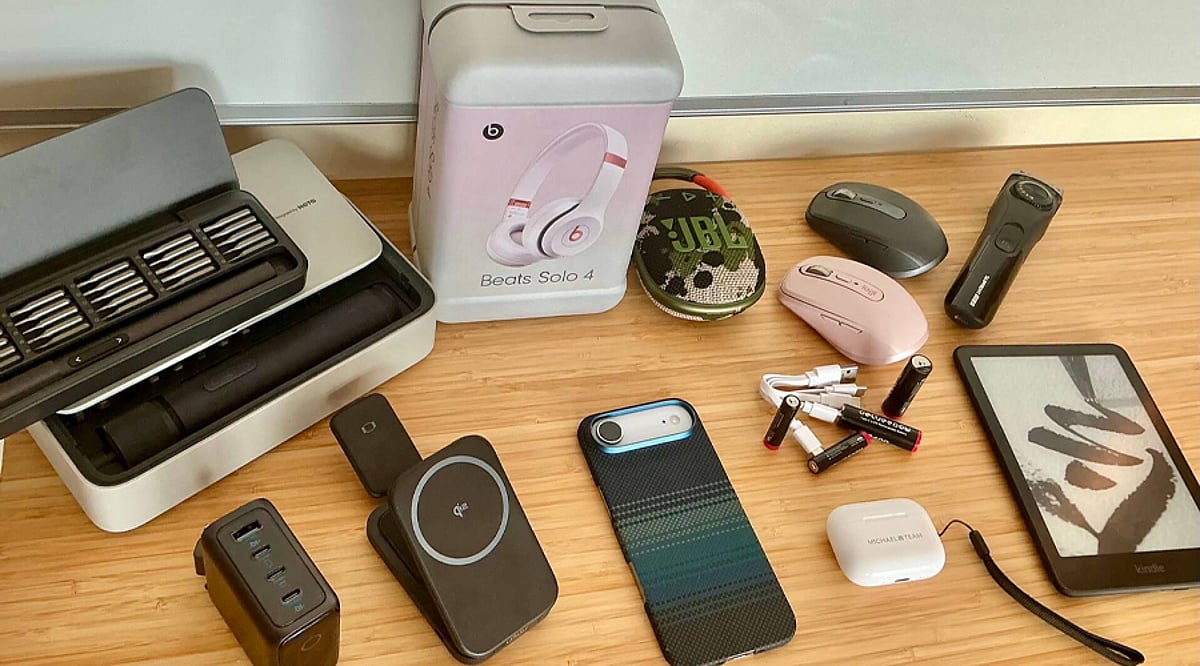
    Beyond mainstream accessories, innovative USB-C gadgets include mini flashlights, endoscope cameras, electric screwdrivers, and portable air pumps. These compact tools showcase the versatility of USB-C technology. Whether you focus on productivity, security, travel, or DIY projects, the right USB-C gadget can significantly improve everyday convenience.

  • Bitcoin Holds Near $61,487 as Record ETF Outflows, Dollar Strength Weigh on Crypto Markets

    Bitcoin Holds Near $61,487 as Record ETF Outflows, Dollar Strength Weigh on Crypto Markets

    Market Overview

    Bitcoin is trading at $61,487 as six straight weeks of spot ETF outflows drain institutional capital, pushing the Fear and Greed Index to 24 in Extreme Fear territory. Dogecoin is down 3.81% in 24 hours and 10.48% on the week, leading losses among the top ten, while XRP and Hyperliquid follow with notable declines. Traders are monitoring the $60,000 support floor closely, with a confirmed break risking a slide toward $55,000 amid sustained macro pressure from the Fed and the Dollar Index.

    Bitcoin Price Today

    Bitcoin is holding near $61,487, showing a modest 24-hour gain of 1.87% off session lows. The token is recovering cautiously after testing the $59,000 region earlier in the week. Support sits at $60,000, a level traders are treating as the cycle’s last credible floor. A firm break below opens the path toward $55,000. Resistance is stacked at $63,000, then $64,400 to $65,000, where the 21-day EMA has been rejecting rallies.

    Giving the market overview, Akshat Siddhant, Lead Quant Analyst at Mudrex, stated: “Bitcoin hit a multi-year low of $59,000 as risk-off sentiment continued to dominate global markets. The Dollar Index stands at a 13-month high, indicating growing confidence in the US economy. Typically, BTC and the dollar have shown an inverse correlation, adding to the selling pressure. For now, investors are closely watching key US macroeconomic data, including the PCE inflation report, GDP figures, and jobless claims, which could play a major role in determining Bitcoin’s next directional move.”

    Meanwhile, Piyush Walke, Derivatives Research Analyst at Delta Exchange, noted: “Bitcoin plunged below the key $60,000 support level, falling to around $59,068 amid a sharp market sell-off. The decline was fueled by investor concerns over financing risks at Strategy Inc., a broader shift of retail capital toward AI-related stocks, persistent inflation, and expectations of higher interest rates from the Federal Reserve.” He added, “The $59,000 level now serves as a crucial support zone, having been tested multiple times in the past. A break below $59,000 could trigger a deeper correction toward the $52,000 region. On the upside, immediate resistance is located between $64,400 and $65,000, which also coincides with the 21-day EMA rejection zone.”

    According to the WazirX Market Desk: “Bitcoin is trading near $60.6K, while Ethereum is around $1,620, with both assets moving in a narrow range as broader market sentiment remains cautious. Despite the consolidation, institutional participation, ETF interest, and long-term adoption continue to provide support for the crypto market.” The desk also noted Jupiter (JUP) gained over 6% after renewed attention on its Litterbox buyback program, while Hyperliquid recovered after recent volatility, supported by continued whale accumulation.

    The CoinSwitch Markets Desk added: “BTC dipped to $59K before buyers stepped in to take it to $61K. The slide below $60K reflects current market conditions of spot BTC ETF outflows, the Fed’s hawkish stance, and a strengthening US dollar. On the chart, liquidity at $61,800 to $62,000 acts as a magnet. If momentum holds, price could be drawn there as shorts get squeezed, though that same cluster may cap the bounce as resistance. Should support fail, $55K remains a plausible cycle low.”

    Crypto Prices Today: Top 10 Coins at a Glance

    Biggest Gainers: Bitcoin, BNB, Ethereum

    Bitcoin leads the session with a 1.87% recovery, bouncing off the week’s lows as some short positions get squeezed. BNB adds 1.46%, benefiting from steady on-chain activity on the BNB Chain network. Ethereum follows at 1.30%, holding above $1,644 as traders watch for a decisive reclaim of the $1,700 zone.

    Biggest Losers: Dogecoin, Hyperliquid, XRP

    Dogecoin leads today’s declines with a 3.81% drop, extending a painful weekly loss of 10.48% as risk appetite stays compressed. Hyperliquid follows with a 3.67% slide, giving back recent gains as derivatives volumes pull back. XRP slips 1.81% on a 24-hour basis but holds a steep 7.16% weekly loss, with the CLARITY Act’s uncertain Senate timeline keeping buyers cautious.

    Crypto News Today Driving Market Sentiments

    Bitcoin ETF Outflows Extend to Six Consecutive Weeks, Totaling $5.94 Billion

    US spot Bitcoin ETFs have now posted outflows across six straight weeks, the longest redemption streak in the funds’ history. Galaxy Research data puts total withdrawals at $5.94 billion over that span, with June 23 seeing a rare $39.2 million inflow that offered brief relief. BlackRock’s IBIT has led redemptions in several sessions, signaling that even the dominant ETF product is not immune. Year-to-date net inflows have slipped to $55.79 billion from $58.09 billion in April.

    Binance Faces MiCA License Collapse as June 30 Deadline Closes In

    Binance is racing against the clock after its bid to secure a critical passporting license in Greece unraveled, leaving its European operations without a compliant path forward. Gillian Lynch, Binance’s head of Europe and the UK, confirmed the firm is actively exploring alternative licensing pathways and is not planning to exit the EU. The European Securities and Markets Authority has warned all unlicensed crypto firms to begin winding down EU activities immediately. Binance now has days to find a replacement license before June 30, after which the platform would be required to halt services for millions of European users.

    CLARITY Act Awaits Senate Floor Vote as White House Targets July 4 Deadline

    The CLARITY Act remains on the Senate Legislative Calendar under General Orders, eligible for a full floor vote but still facing a 60-vote threshold. The White House is pushing hard for a July 4 signing, but Catholic leaders and advocacy groups have filed formal opposition letters to Senate leadership. A 15-9 Senate Banking Committee vote in May cleared the bill out of committee, with two Democrats joining all Republicans. Passage would classify most digital assets as commodities under CFTC oversight, removing years of regulatory ambiguity for XRP, Solana, and other major tokens.

    Dollar Index Reaches 13-Month High, Squeezing Bitcoin

    The US Dollar Index has climbed to a 13-month high, maintaining its inverse pressure on Bitcoin and risk assets broadly. Markets are now pricing a 68.8% probability of zero Fed rate cuts in all of 2026. Inflation came in at 3.8% year-over-year in April, the hottest reading since May 2023. The Fed held rates steady at its June 16-17 meeting, with Fed Chair Kevin Warsh eliminating forward guidance, adding another layer of uncertainty to rate expectations.

    Strategy’s Bitcoin Sale and Whale Exits Add to Selling Pressure

    Strategy disclosed its first Bitcoin sale in nearly four years, offloading 32 BTC at approximately $77,135 per coin. The transaction raised roughly $2.5 million and shook sentiment far beyond its modest size. On-chain data shows whales holding between 10 and 10,000 BTC sold approximately 25,000 BTC over the past week. The combined signal from corporate and whale exits has reinforced the market’s cautious tone heading into the weekend.

    Investor and Market Outlook

    Bitcoin is attempting a tentative recovery near $61,487, but the broader picture remains fragile. Six weeks of institutional outflows, a 13-month-high Dollar Index, and a hawkish Fed have kept the Fear and Greed Index anchored at 24. Liquidity is rotating away from crypto and toward AI stocks and the SpaceX IPO. That competition for speculative capital is a structural headwind that technical signals alone cannot overcome.

    The $60,000 level remains the market’s key test. Corporate buyers are still present, with Strategy and Strive adding Bitcoin at average prices near $65,850, offering a structural counterweight to the dominant redemption narrative. A confirmed hold above $60,000 keeps the path open toward $63,000 and the $64,400 to $65,000 EMA cluster. Traders should track PCE inflation data, jobless claims, and any Senate movement on the CLARITY Act as the week’s remaining catalysts.

    FAQs

    What is the Bitcoin price today?

    Bitcoin is trading near $61,487 today, up 1.87% in the past 24 hours. Support sits at $60,000, with a deeper floor near $55,000 if that level fails. Resistance holds at $63,000, then $64,400 to $65,000.

    Why is Bitcoin under pressure this week?

    Bitcoin is under pressure from six straight weeks of spot ETF outflows, a 13-month-high Dollar Index, and a hawkish Fed that has pushed zero-rate-cut odds to 68.8% for all of 2026. Strategy’s first Bitcoin sale in four years also rattled sentiment.

    What is the biggest crypto news today?

    The CLARITY Act awaits a Senate floor vote, Binance’s collapsing MiCA license with a June 30 deadline, and Bitcoin’s record ETF outflow streak are the top stories driving market sentiment today.

    Which coins are falling the most today?

    Dogecoin leads losses at -3.81%, followed by Hyperliquid at -3.67%. On a weekly basis, Dogecoin is down 10.48% and XRP has shed 7.16%, making both the standout underperformers of the cycle.

    What should crypto investors watch this week?

    Track the US Dollar Index for further breakout signals, the Senate’s CLARITY Act vote, and the Binance MiCA situation ahead of the July 1 EU deadline. PCE inflation data and jobless claims are the key macro prints that could shift Fed expectations and risk appetite.

  • Free Fire MAX Redeem Codes for June 25, 2026: Unlock Premium Rewards and Emotes Now

    Free Fire MAX Redeem Codes for June 25, 2026: Unlock Premium Rewards and Emotes Now

    Garena Free Fire MAX continues to reward its players with a fresh set of redeem codes on June 25, 2026. These codes unlock premium cosmetic items, weapon skins, outfits, and in-game currencies like Diamonds. Both newcomers and veterans can benefit from these exclusive bundles, but time is of the essence—most codes expire within 24 hours.

    Active Free Fire MAX Redeem Codes (June 25, 2026)

    Below are the valid codes for today. Redeem them as soon as possible, as each code can only be used once per account, and availability is limited to the first 1,000 players for some codes.

    • P3LX6V9TM2Q
    • HN7QK5L3MRP9J
    • ZRW3J4N8VX56
    • FFWCTKX2P5NQ
    • J2QP8M1KVL6V
    • E9QH6K4LNP7V
    • S5PL7M2LRV8K
    • Q8M4K7L2VR9J
    • RD3TZK7WME65
    • TX4SC2VUNPKF
    • RHTG9VOLTDWP
    • FFPLUFBVSLOT
    • MCPW3D28VZD6
    • ZZZ76NT3PDSH
    • V427K98RUCHZ
    • J3ZKQ57Z2P2P
    • TFX9J3Z2RP64
    • WD2ATK3ZEA55

    How to Redeem Free Fire MAX Codes

    Follow these simple steps to claim your rewards:

    1. Visit the official Garena Free Fire Rewards Redemption website.
    2. Log in using your Gmail, Facebook, Twitter (X), or VK ID.
    3. Copy and paste a code into the designated field.
    4. Click “Confirm,” then press “OK” to verify.
    5. Wait up to 24 hours for the rewards to appear in your in-game mailbox. Diamonds and other currencies update instantly.

    Important Reminders

    To avoid missing out, keep these points in mind:

    • Codes are time-sensitive—most expire after 18 hours.
    • Some codes are limited to the first 1,000 redemptions.
    • Each code can be redeemed only once per account. Guest accounts are not eligible.
    • Enter codes exactly as shown; any mistake voids the reward.
    • Codes are region-specific; for example, codes for Indian servers won’t work on other servers.

    Why These Codes Matter

    Exclusive cosmetic items—such as skins, emotes, and bundles—are often locked behind this code system. Missing a redemption means missing out on items that are otherwise expensive or level-locked. Act quickly and enjoy the rewards while they last.

  • Daily Tech Roundup: Qualcomm Deepens AI Chip Ambitions, QOSMIC Raises $3.3M, Infosys Boosts Hiring, and Crypto Compliance Tightens

    Good morning! Here’s your quick roundup of the latest developments across AI infrastructure, startup funding, IT services, cryptocurrency markets, and generative AI technologies.

    Qualcomm Expands AI Chip Push With Microsoft and Meta

    Qualcomm has launched an aggressive plan to expand its AI infrastructure capabilities, supplying its new AI processors to major partners including Microsoft and Meta. The company aims to achieve substantial revenue growth in its data centers and become a competitive player in the growing AI hardware market. Qualcomm’s processors are designed to deliver efficient AI performance at lower costs.

    QOSMIC Raises Fresh Capital for Space Communications

    Bengaluru-based space-tech startup QOSMIC has secured $3.33 million in seed funding, led by Accel and Prosus. The company specializes in optical communication hardware for fast data transmission between satellites and ground stations. The new capital will support manufacturing, testing, engineering expansion, and deployment of operational systems for global customers.

    Infosys Accelerates Graduate Hiring and Deal Growth

    Infosys has ramped up its workforce plans by recruiting approximately 20,000 new graduates, while also closing several large deals worth a total of $1.49 billion in FY26. This reflects the company’s continued optimism about corporate technology spending despite broader economic concerns.

    Crypto Compliance Risks Draw Increased Regulatory Attention

    Concerns around cryptocurrency compliance and illicit financial activity remain a key focus for regulators worldwide. Recent discoveries have highlighted the role some cryptocurrency exchanges play in facilitating sanctioned or restricted transactions. These developments reinforce growing pressure on crypto platforms to strengthen monitoring, transparency, and anti-money laundering frameworks as the sector matures.

    Claude AI Tokens Become Key Enterprise Discussion

    As organizations deploy increasingly sophisticated generative AI systems, understanding tokens and context windows has become critical. Claude AI’s token structure influences the amount of data processed in a conversation, impacting system efficiency, cost, and user experience.

  • Quest Global Named Leader in All Digital Engineering Categories in ISG Provider Lens 2026 Study for US Market

    Quest Global Named Leader in All Digital Engineering Categories in ISG Provider Lens 2026 Study for US Market

    Quest Global, the largest independent pure-play engineering services company, has been recognized as a Leader in every category of the ISG Provider Lens® Digital Engineering Services Midsize Providers 2026 Study for the U.S. market. The categories include Augmented Design and R&D Services, Intelligent Operations and Connected Experiences, and Integrated Platform and Application Services. This acknowledgment underscores the company’s ability to help enterprises accelerate innovation and tackle increasingly complex technology and business challenges.

    The ISG Provider Lens® research series is one of the most widely referenced analyst assessments used by enterprises to evaluate technology and engineering service providers. Companies named as Leaders are recognized for their comprehensive capabilities, strong market presence, competitive positioning, and ability to guide customers through evolving business and technology requirements.

    Shirish Kulkarni, Senior Lead Analyst at ISG, commented on Quest Global’s positioning: “Quest Global is leveraging its core strength in deep ER&D and systems engineering capabilities, which continue to resonate with global OEMs seeking outcome-led innovation. By sharpening its digital software and managed services capabilities around this engineering foundation, Quest Global is well positioned to support customers as they navigate increasingly complex transformation journeys.”

    The company’s leadership positions reflect its ability to help organizations bridge the growing convergence of engineering, software, data, and artificial intelligence. The assessment highlights strengths in engineering-led innovation, supported by expertise in AI-driven engineering, Model-Based Systems Engineering (MBSE), digital twins, and virtual validation frameworks. With capabilities spanning silicon-to-system engineering and high-fidelity virtual prototyping, Quest Global helps customers shorten development cycles, improve operational performance, and build scalable digital ecosystems.

    Rob Vatter, Executive President of Quest Global, said: “Engineering is no longer just a function of execution; it is increasingly the force that shapes innovation, resilience, and competitive advantage across industries. We believe this recognition reflects Quest Global’s ability to help customers navigate complex engineering challenges while advancing digital adoption, intelligent operations, and the development of next-generation products. As companies invest more deeply in AI, connectivity, and platform-led transformation, the real differentiator will be how effectively these technologies are engineered into scalable, meaningful business outcomes. That remains our focus.”

    According to the study, Quest Global’s differentiated position is driven by its deep engineering heritage, domain expertise, and ability to deliver integrated engineering solutions across the product lifecycle. The report highlights capabilities in AI-augmented engineering, intelligent operations, connected experiences, and integrated platform engineering, helping enterprises transform ideas into market-ready products and scalable digital solutions.

    To access and download the full report, click here.

    About Quest Global

    Quest Global is the largest independent pure-play engineering services company, operating in over 20 countries with more than 104 global delivery centers and 23,000+ employees. For over 25 years, the company has solved complex engineering problems across industries including Aerospace & Defence, Automotive, Energy, Hi-Tech, MedTech & Healthcare, Rail, and Semiconductor. They combine technology, industry expertise, and diverse talents to tackle critical challenges faster and more effectively.

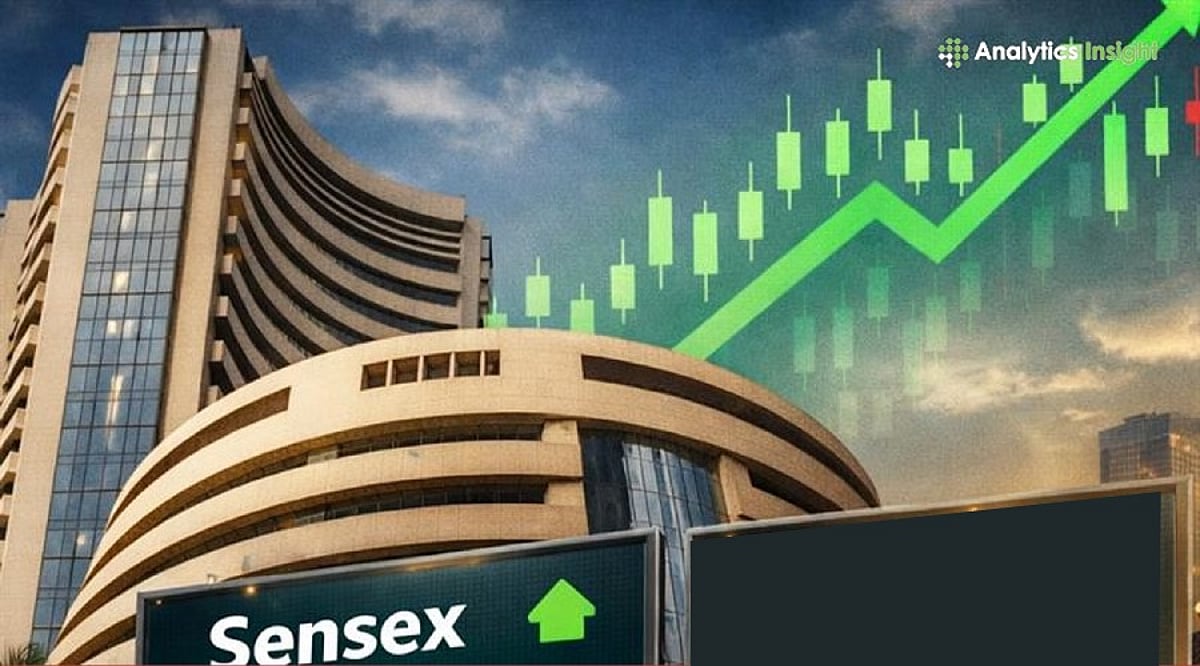
  • Indian Stock Market Rally: Sensex Surges 527 Points, Nifty Rises on Auto and Realty Strength

    Indian Stock Market Rally: Sensex Surges 527 Points, Nifty Rises on Auto and Realty Strength

    The Indian stock market traded sharply higher on Thursday, June 25, 2026, driven by robust buying in auto and realty shares. Positive cues from Asian markets further bolstered investor sentiment, pushing benchmark indices into positive territory for the entire session.

    Benchmark Indices Climb

    The Nifty50 rose 0.69% or 166.85 points to settle at 24,187.45, while the Sensex gained 526.77 points or 0.68% to reach 77,517.99. Both indices remained in the green throughout the day, reflecting broad-based buying activity and positive market mood.

    Auto and Realty Lead the Rally

    The Nifty Auto index emerged as a top performer, buoyed by strong buying in automobile stocks. Optimism around demand and solid quarterly performance drove the sector higher. The Nifty Realty index also outperformed, driven by positive sentiment around housing demand and business expansion. These two sectors were instrumental in lifting the overall market.

    Top Gainers: Shriram Finance, Mahindra & Mahindra, InterGlobe Aviation

    Among individual stocks, InterGlobe Aviation, Shriram Finance, and Mahindra & Mahindra led the gains on the Nifty50. InterGlobe Aviation attracted strong buying on growth optimism, while Shriram Finance benefited from investor confidence in the financial sector. Mahindra & Mahindra rode the broader auto rally to emerge as a key contributor.

    Broader Markets Also Positive

    Broader market indices also showed strength. The Nifty MidCap index rose 0.39%, and the Nifty SmallCap index gained 0.25%. This indicates that investor confidence was not limited to large-caps but spread across mid- and small-cap segments, signaling healthy market participation.

    Metal and Media Underperform

    Not all sectors fared well. The Nifty Metal index underperformed due to weak buying interest, while the Nifty Media index remained under pressure as traders stayed cautious. Despite these drags, strong gains in auto and realty helped the market maintain its upward momentum.

    Overall, the session reflected steady strength, supported by global cues and domestic buying. The market’s positive trend remains intact, with auto and realty leading the charge.

  • Solana’s Price Slump: Key Factors Behind the Drop to $67 and What’s Next

    Solana’s Price Slump: Key Factors Behind the Drop to $67 and What’s Next

    Solana, once a high-flying blockchain known for its lightning-fast transactions and low fees, is facing a significant momentum test. As of late June 2026, SOL trades near $67 to $70, far below its previous highs, leaving many investors questioning the network’s short-term prospects.

    Why Solana’s Price Is Falling

    The decline stems from a combination of broader market weakness, reduced trading activity, and increased competition—especially from Ethereum. Here are the main drivers:

    • Market-wide slowdown: Risk appetite has dried up across crypto, with traders favoring Bitcoin and stablecoins over altcoins.
    • Technical resistance: SOL is stuck between support at $64–$68 and resistance at $70–$75, signaling indecision.
    • Drop in speculative demand: Meme coins and NFT mania on Solana have cooled, reducing network activity and trading volumes.
    • Ethereum’s Layer-2 upgrades: Faster, cheaper transactions on Ethereum have eroded Solana’s speed advantage.
    • Institutional caution: Large investors have not poured capital into SOL as they have into Bitcoin.
    • Global economic pressure: High interest rates and tight financial conditions suppress demand for risky assets.

    But Fundamentals Remain Strong

    Despite the price pain, Solana’s network health is solid. Developer activity continues, DeFi platforms are active, and the upcoming Firedancer validator upgrade promises to boost speed and efficiency. Many analysts believe these factors support a long-term recovery.

    Outlook: Could SOL Rebound in 2026?

    Some forecasts suggest a recovery toward $80–$100 later this year if the broader market improves. However, short-term sentiment remains bearish, with a possible dip to $60 before any sustained rally. For now, traders should watch the $64–$68 support zone closely.

    Frequently Asked Questions

    1. Why is Solana’s price dropping right now?

    SOL is caught in a wider crypto market slowdown. A drop in high-risk retail trading, lower trading volumes, and broader global economic caution are putting heavy pressure on the price.

    2. What key price levels should traders watch?

    Keep a close eye on the $64 to $68 support zone. If SOL breaks below that, it could sink toward $60. To recover, it needs to clear resistance between $70 and $75.

    3. How is Ethereum hurting Solana’s growth?

    Ethereum’s new Layer-2 scaling upgrades have made its transactions much faster and cheaper. This directly challenges Solana’s main selling points—speed and ultra-low costs—shrinking the competitive gap between them.

    4. Can Solana realistically bounce back in 2026?

    Yes, if the broader crypto market recovers, analysts see a path back to the $80–$100 range. However, short-term prediction sentiment remains bearish, with a possible drop to $60 first.

    5. Does Solana still have strong long-term potential?

    Absolutely. Network health remains robust with high developer activity and major infrastructure upgrades rolling out, including the Firedancer validator client, which keeps long-term investor optimism intact.

    Disclaimer: This article is for informational purposes only and does not constitute financial advice. Cryptocurrency investments carry risk. Always do your own research before investing.

  • Best Smartphones Under ₹20,000 in 2026: Top Picks Reviewed

    Best Smartphones Under ₹20,000 in 2026: Top Picks Reviewed

    The smartphone market under ₹20,000 has never been more competitive, with brands offering flagship-inspired features at budget-friendly prices. Here are the top-rated smartphones available in 2026 that deliver excellent value for money.

    CMF Phone 2 Pro

    The CMF Phone 2 Pro delivers excellent value with its vibrant AMOLED display, capable MediaTek processor, clean software experience, and dependable battery life. Its versatile camera setup and smooth 120Hz refresh rate make it an ideal choice for students, professionals, and casual gamers seeking premium features without crossing the ₹20,000 budget.

    Motorola Edge 60 Fusion

    The Motorola Edge 60 Fusion combines a sleek design with a curved pOLED display, near-stock Android experience, and reliable performance. Fast charging, solid cameras, and regular software updates enhance its appeal, making it one of the strongest all-round smartphones available under ₹20,000 for everyday productivity and entertainment.

    Nothing Phone (3a)

    The Nothing Phone (3a) stands out with its distinctive transparent-inspired design, clean Nothing OS, and fluid AMOLED display. Backed by a capable chipset, dependable battery, and balanced camera performance, it offers a unique user experience for buyers looking beyond conventional smartphone designs in the affordable premium segment.

    Redmi Note 15 5G

    The Redmi Note 15 5G offers an excellent combination of performance, battery life, and multimedia capabilities. Its high-refresh-rate AMOLED display, efficient processor, fast charging support, and feature-rich HyperOS deliver smooth everyday usage while maintaining competitive pricing for users seeking dependable long-term value in the mid-range category.

    iQOO Z11 5G

    The iQOO Z11 5G focuses on delivering strong gaming and multitasking performance through its efficient processor and optimized software. A large battery, fast charging, responsive display, and capable cameras ensure a balanced smartphone experience, making it an attractive option for power users on a limited budget.

    Realme Narzo 90 Pro 5G

    The Realme Narzo 90 Pro 5G impresses with its stylish design, smooth AMOLED display, efficient chipset, and dependable battery performance. Its camera system captures detailed images in daylight, while fast charging and optimized software make it suitable for users seeking a feature-packed smartphone without overspending.

    POCO X8 5G

    The POCO X8 5G offers flagship-inspired features at an affordable price, including a high-refresh-rate AMOLED display, capable processor, long-lasting battery, and fast charging support. Its strong gaming performance, reliable cameras, and competitive pricing make it one of the best smartphones available under ₹20,000 in 2026.

  • Senate Committee Approves CLARITY Act: What the 15-9 Vote Means for Crypto Regulation

    Senate Committee Approves CLARITY Act: What the 15-9 Vote Means for Crypto Regulation

    The US Senate Banking Committee has taken a major step toward establishing a comprehensive regulatory landscape for cryptocurrencies with a 15-9 bipartisan vote to approve the Digital Asset Market Clarity Act of 2025 (CLARITY Act). The bill seeks to resolve the uncertainty around digital assets by establishing a clear regulatory framework that assigns the Securities and Exchange Commission (SEC) and the Commodity Futures Trading Commission (CFTC) to the different regulatory responsibilities.

    Introduced in May 2025 by House Financial Services Committee Chairman French Hill and House Agriculture Committee Chairman G.T. Thompson, the bill passed the US House of Representatives on July 17, 2025, with a bipartisan vote of 294 to 134. It would be the first full framework of US legislation for cryptocurrencies, exchanges, stablecoins, and decentralized finance (DeFi).

    SEC and CFTC to Share Crypto Oversight

    The CLARITY Act establishes a two-tier regulatory framework, with its classifications of digital assets depending on their attributes. The SEC would have authority over tokens that meet its definition of an “investment contract,” while the CFTC would have jurisdiction over sufficiently decentralized tokens, for example, Bitcoin and perhaps Ethereum.

    Among others, the “mature blockchain test” provides a mechanism by which projects can move from SEC to CFTC regulation once they meet criteria for decentralization. The criteria are based on caps on the concentration of token ownership, open-source development, decentralization of governance, and the utility of the token beyond speculation.

    The CFTC would also have direct authority over digital commodity spot markets for the first time, extending its regulatory jurisdiction.

    New Rules for Exchanges, Stablecoins, and DeFi

    It would mandate that registered and regulated crypto exchanges, brokers and dealers, in most cases, be centrally registered and abide by customer protection, disclosure, anti-money laundering restrictions (AML), Know Your Customer (KYC) and financial reporting requirements with the CFTC.

    The bill improves tax reporting by adding more platforms and expanding the definition of brokers to include additional coverage. The bill also mandates that additional platforms provide Form 1099-DA to users and the Internal Revenue Service (IRS).

    The use of ‘stablecoins,’ one of the most controversial parts of the bill, remains to be discussed. The Senate version allows returns to be based on the activities or transactions, but does not allow returns to be “economically or functionally equivalent” to bank deposit interest. The bill calls for the SEC, CFTC, and US Treasury, within one year, to establish in detail permissible reward structures.

    Meanwhile, the Blockchain Regulatory Certainty Act (BRCA), which was bundled into the CLARITY Act, gives a “carve out” exemption for non-custodial developers, exempting open-source wallet and protocol developers that don’t have access to customers’ assets from some fund transmitter regulations.

    What the Senate Vote Means for Crypto Markets

    In the majority press release, Chairman Tim Scott (R‑SC) framed the markup as a “historic” bipartisan step after nearly a year of negotiations, emphasizing that the legislation is intended to bring clearer rules, stronger safeguards, and a more transparent framework for everyday digital assets market participants.

    Two Democrats, Senators Angela Alsobrooks (D‑MD) and Ruben Gallego (D‑AZ), joined Committee Republicans to support the bill. Senator Alsobrooks also played a leading role in shaping the compromise language on stablecoin yield. However, not everyone in the legislature approves of the original bill. Committee minority staff released a national security advisory arguing that the current draft “fails to address key vulnerabilities” exploited by criminals, terrorists, and foreign adversaries.

    Why This Matters

    The CLARITY Act establishes the first unified US legal framework for crypto, ending years of regulatory confusion. By clearly dividing SEC and CFTC oversight, the bill provides a predictable path for developers while creating vital safeguards for institutional investors and consumers.

    What’s Next?

    After the committee vote of 15-9, Senate Banking and Agriculture Committee staff will combine their respective bills on the crypto market structure and present a single bill for the full Senate to vote on, which will need 60 votes to avoid a filibuster. Should it become law, the CLARITY Act could redefine the US crypto landscape by offering clarity for Bitcoin, Ethereum, exchanges, and institutional investors, while also putting in place better consumer protections and compliance requirements.

    Frequently Asked Questions

    1. What is the CLARITY Act?

    The CLARITY Act (H.R. 3633) is a proposed US law that establishes a comprehensive regulatory framework for cryptocurrencies. It defines how digital assets are classified and which federal regulator oversees them.

    2. Why is the Senate’s 15-9 vote important?

    The bipartisan committee vote advances the bill to the next legislative stage, bringing it closer to becoming law. It also signals growing political support for clear cryptocurrency regulations in the US.

    3. How does the CLARITY Act divide SEC and CFTC oversight?

    The SEC would regulate digital assets classified as investment contracts, while sufficiently decentralized cryptocurrencies, such as Bitcoin and potentially Ethereum, would fall under the CFTC through the “mature blockchain” framework.

    4. What changes would the CLARITY Act bring for crypto exchanges and stablecoins?

    Crypto exchanges, brokers, and dealers would be required to register with the CFTC and comply with AML, KYC, disclosure, and customer protection rules. The bill also introduces clearer regulations for stablecoin rewards and expands crypto tax reporting requirements.

    5. Is the CLARITY Act now a law?

    No. The bill has passed the US House of Representatives and the Senate Banking Committee, but still requires approval by the full Senate before it can be signed into law and implemented by the SEC and CFTC.

  • How Kiran Veernapu Is Using AI to Turn Enterprise Data Into Better Patient Outcomes

    How Kiran Veernapu Is Using AI to Turn Enterprise Data Into Better Patient Outcomes

    Kiran Veernapu has spent more than 25 years building the data systems that large organizations rely on to make decisions. His work spans healthcare, aviation, manufacturing, and enterprise technology, but the underlying challenge remains constant: turning scattered, inconsistent information into actionable insights.

    Starting in data architecture and business intelligence, Veernapu designed the warehouses and pipelines that move information through organizations. As machine learning matured, his focus shifted toward predictive analytics and clinical decision support—where the stakes are higher because a wrong answer at the point of care costs more than a wrong quarterly report.

    Much of his recent work centers on Clinical Decision Support Systems (CDSS), which sit between complex medical data and clinicians who need clear, timely answers while treating patients. The results are measurable. His AI and automation initiatives have produced tens of millions of dollars in savings, cut billing and inventory errors by double digits, and kept supply chains performing at benchmark levels for eight consecutive years.

    Research Meets Real-World Deployment

    Veernapu is also an active researcher and reviewer, authoring 25 peer-reviewed articles on healthcare AI and predictive analytics that have been cited and downloaded across more than 29 countries. He reviews manuscripts for Elsevier, Springer, Wiley, IGI Global, and MDPI, and has evaluated over 60 submissions for major IEEE, Springer, and Elsevier venues. He serves as a session chair, program committee member, and judge at international conferences, and is a Senior Member of IEEE.

    His research and his day job feed each other. Academic work surfaces new methods, and enterprise deployment tests whether those methods hold up once real data and real workflows get involved. That loop shapes his approach to AI at scale. “The algorithm is rarely the hard part,” he says. “Data quality, governance, and fitting a system into the way people already work are what determine whether a strong model delivers anything at all.”

    Looking Ahead: The Next Wave of Healthcare AI

    Looking forward, Veernapu points to AI-driven clinical decision support, remote patient monitoring, wearable health technology, and ambient clinical intelligence as the developments most likely to change care delivery. Each moves healthcare toward earlier intervention and more personalized treatment—and each depends on the real-time data infrastructure he has spent his career building.

    Beyond his technical work, he serves on the Utah STEM Education Advisory Council and speaks for academic programs internationally. He is currently pursuing a PhD in AI and machine learning applied to wearable devices and clinical bioinformatics. His advice to newcomers: “Start with a problem worth solving. Technology changes quickly. The ability to understand a business or clinical need and translate it into a working system is what creates impact that lasts.”

    The next generation of healthcare innovation will empower clinicians with intelligence of precision care, diagnostic accuracy, disease prediction, making patient care more reachable and affordable. The future of healthcare lies in turning data into better decisions. Clinical Decision Support Systems will help clinicians access timely insights, improve patient outcomes, reduce the cost of care, and enable more personalized and proactive treatment strategies.