Author: vitorcherulli

  • PayU Unveils CLI and Builder MCP: AI-Powered Developer Tools for Lightning-Fast Payment Integration and Operations

    PayU Unveils CLI and Builder MCP: AI-Powered Developer Tools for Lightning-Fast Payment Integration and Operations

    PayU, India’s leading diversified fintech platform, has announced the launch of two innovative developer tools: PayU CLI and Builder MCP. These tools are designed to accelerate payment gateway integrations and streamline daily payment operations, leveraging AI to boost developer productivity.

    PayU Builder MCP: AI-Native Integration Made Simple

    Builder MCP is an AI-native server that connects AI coding assistants—such as Cursor, VS Code, and Claude Desktop—directly to PayU’s APIs. It generates production-ready integration code in seven languages, including PHP, JavaScript, Java, Python, Kotlin, and Swift. The code comes with built-in error handling, webhook verification, and security best practices, allowing developers to complete integrations in hours rather than days. Developers can browse integration catalogs, retrieve platform-specific code, and search documentation semantically without leaving their IDE.

    PayU CLI: Command-Line Payment Management

    PayU CLI brings payment management and operational workflows to a single terminal. Teams can create and send payment links, search transactions, process refunds, review settlements, and generate reports—all without navigating complex web dashboards. The tool supports multi-account management and seamless switching between test and production environments, making it especially useful for DevOps teams handling multiple merchants.

    Complementary Tools for the Full Payment Lifecycle

    While each tool serves a distinct purpose, they work together across the payment lifecycle. Developers can use Builder MCP during implementation to generate code via AI assistants, then switch to PayU CLI for ongoing operations like transaction monitoring and settlement tracking. For instance, a developer using Cursor could ask Builder MCP for PayU checkout integration and receive copy-paste-ready JavaScript with error handling. Meanwhile, the operations team could use PayU CLI to instantly create a ₹5,000 payment link or check yesterday’s settlement—all from the terminal.

    “AI has fundamentally transformed software development, and AI agents are now a nuanced part of everyday developer workflows. Merchants and their tech teams are looking for a payment partner that provides lightning-fast product integrations, operational flexibility, and enhanced developer productivity. Our new CLI and Builder MCP tools solve each of these requirements by bringing PayU’s payment infrastructure to where developers work—in the terminal. This is just the first of our steps in this direction,” said Narendra Babu, CTO of PayU.

    About PayU

    PayU is India’s leading diversified fintech platform, backed by Prosus. Regulated by the Reserve Bank of India, PayU offers advanced digital financial solutions to merchants, banks, and consumers. Its award-winning payment gateway empowers over 450,000 businesses—including top enterprises, e-commerce giants, and SMBs—to accept digital payments across more than 100 online methods, including credit cards, debit cards, net banking, EMIs, pay-later options, QR, UPI, and wallets. PayU is a preferred partner in the affordability ecosystem, offering broad issuer coverage and easy integration for card-based EMIs, pay-later options, and new-age cardless EMIs, while delivering industry-leading success rates and a seamless checkout experience.


  • BPCL Stock at Rs 313.80: Should You Buy Oil Stocks After Brent Crude Decline?

    BPCL Stock at Rs 313.80: Should You Buy Oil Stocks After Brent Crude Decline?

    Bharat Petroleum Corporation Ltd. (BPCL) was trading at Rs. 313.80 on the NSE during Thursday’s session, down 0.60 percent after touching an intraday high of Rs. 320.85. Despite the marginal decline, the stock remains one of the biggest beneficiaries of Brent crude slipping below its pre-Iran conflict levels, with the global benchmark hovering around USD 72 per barrel. The decrease in geopolitical risks in the Middle East has eased fears of supply disruptions, creating positive sentiment toward oil marketing companies in India.

    Low oil prices are economically beneficial for India, since the country meets about 85 percent of its crude oil needs through imports. In other words, it reduces import costs and helps prevent price levels from jumping. Moreover, lower oil prices tend to boost profits for downstream operators, as production costs fall and margins improve for refineries and oil marketing outfits. Among the public-sector OMCs, BPCL has been getting more investor focus lately, mainly because its execution has improved.

    Why Brent Crude’s Decline Matters

    There was an initial surge in Brent crude earlier this year amid heightened geopolitical tensions in the Middle East, raising concerns about disruptions to crude oil flows through the Strait of Hormuz, a crucial passageway for global crude exports. With improved diplomacy and stable crude oil flows, these worries have been addressed. Brent crude is currently trading below pre-Iran conflict levels, thereby reducing the geopolitical risks associated with oil prices. This news will be favorable for India’s downstream petroleum industry, as falling crude oil prices reduce their procurement costs and help them plan their profits well in advance.

    BPCL’s Chart Signals a Recovery in Progress

    BPCL’s one-year daily chart shows a stock gradually rebuilding momentum after a sharp correction. Earlier this year, BPCL climbed close to Rs. 390 before geopolitical tensions and rising crude prices triggered heavy selling across the sector. The stock eventually slipped below Rs. 280 during March and April as investors worried about shrinking refining margins and rising input costs. The trend has changed over the past two months. A wide trading range has been created for BPCL between Rs. 285 and Rs. 315, and buyers have consistently emerged when the stock has touched the lower end of the range. The presence of lower lows suggests a considerable reduction in the selling pressure. The increase in volume suggests an accumulation of institutions.

    Although BPCL was trading at Rs. 313.80 in the last session, it has touched a higher level of Rs. 320.85. It signifies buying interest near an important resistance level. A breakout above Rs. 320-321 will strengthen the uptrend and pave the way towards Rs. 340-350, with Rs. 300 as the important support level. From a technical perspective, BPCL is shifting its posture from correction to recovery.

    Lower Crude Prices Could Boost BPCL’s Profitability

    BPCL is among the major gainers when crude oil prices drop, given its downstream nature. While upstream businesses tend to benefit from higher crude oil prices, BPCL is more focused on refining crude and bringing its petroleum products to market. So when Brent crude is lower, BPCL usually sees reduced production costs, which tends to improve refinery and fuel margins, as long as fuel prices stay roughly where they are. That part happens because inventory costs can be down, working capital needs become lighter, and the operating cash flow picture tends to look cleaner. Should Brent crude remain below USD 75 per barrel, then the company is expected to perform well in future quarters.

    Other Oil Stocks Also Benefited

    The positive sentiment extended across India’s oil marketing sector as investors anticipated stronger profitability from lower crude prices. Hindustan Petroleum Corporation Ltd. (HPCL) advanced 0.9 percent to Rs. 416.85, supported by expectations of improving refining spreads and lower input costs. Indian Oil Corporation (IOC) edged 0.1 percent higher to Rs. 146.47, as investors anticipated better inventory management and stronger cash generation from its integrated refining and fuel retailing operations. The rally was also visible beyond the oil sector. InterGlobe Aviation, the parent company of IndiGo, climbed 4.49 percent to Rs. 5,443, benefiting from expectations that lower aviation turbine fuel (ATF) costs would improve operating margins.

    Low Oil Prices Provide Broad Economic Advantages

    The advantages of falling crude prices go well beyond oil marketing firms. Falling oil prices help reduce India’s import expenditure, thereby narrowing its current account deficit and easing inflationary pressures. Falling oil prices will also cut costs for companies operating in sectors such as aviation, logistics, chemicals, manufacturing, and transportation, leading to improved bottom lines. A benign crude situation also gives the authorities room on the monetary policy front, thus creating a conducive environment for economic growth and equities.

    Risks that Could Alter Outlook

    Even with the optimistic mood, investors need to watch out for international events. Geopolitical risks in the Middle East, supply disruptions via the Strait of Hormuz, or a sudden reduction in production from the OPEC+ coalition can turn the situation around very rapidly. Local factors such as changes in fuel price structures, excise duties, or government intervention in fuel prices may also influence BPCL’s profitability.

    Investment Outlook

    Brent crude oil prices are currently correcting again, and it is bringing investors’ focus back to the Indian oil marketing industry, sort of like BPCL, as the one stock to watch. Even with its current share price of Rs. 313.80 in the latest trading session, BPCL has bounced back strongly from the recent April lows, especially as crude prices have been easing. In the meantime, BPCL should be in a position to benefit from better refining margins and marketing upside as long as crude stays under USD 75, and there is no geopolitical risk hanging over. Sure, both HPCL and IOC will also benefit if crude prices rise, however, BPCL still looks like the stock to watch given its technical strength and earnings visibility.

  • Veeam and HPE Expand Private Cloud Capabilities for AI and Modern Workloads

    Veeam and HPE Expand Private Cloud Capabilities for AI and Modern Workloads

    At HPE Discover, Veeam Software and Hewlett Packard Enterprise (HPE) announced an expanded partnership to help organizations modernize and scale private cloud environments for AI and modern virtualized workloads. The collaboration introduces new validated designs for HPE Private Cloud AI, partner-ready packaging for faster deployments, and a new Data and AI Trust Maturity Model to help enterprises operationalize AI trust.

    “Private cloud is evolving fast as customers want cloud agility with greater control, stronger governance, and the ability to operationalize AI closer to their data,” said John Jester, Chief Revenue Officer at Veeam. “AI will transform the enterprise, but only if leaders can trust the data that powers it. That trust starts with resilience – knowing data is protected, recoverable, and governed end-to-end.”

    New Validated Designs for HPE Private Cloud AI

    Veeam and HPE will release new validated designs for HPE Private Cloud AI, a turnkey AI factory co-engineered with NVIDIA as part of the NVIDIA AI Computing by HPE portfolio. These designs help customers deploy secure, AI-ready private environments with a unified data lakehouse, deployable models, and agentic use cases. The designs include:

    • Veeam Data Platform and Veeam Kasten, part of the Veeam DataAI Command Platform, supporting operational continuity for virtualized and Kubernetes-based workloads.
    • Safe data ingestion to prepare and ingest data for AI use cases with stronger controls and confidence in data handling, complementing HPE AI Essentials for model development and deployment lifecycle management.

    “Enterprises are choosing private cloud to meet performance and sovereignty requirements while putting the right guardrails in place for AI,” said Patrick Osborne, SVP of Technology Acceleration for Hybrid Cloud at HPE. “With these new validated designs and our expanded collaboration with Veeam, we’re giving customers a ready-to-run path to deploy AI closer to their data.”

    Resilient HPE Private Cloud: Partner-Ready Solutions

    In support of HPE’s recent unified private cloud announcement, HPE and Veeam are enabling partners with sizing tools and smart templates to more easily position and deliver resilient private cloud deployments using HPE Private Cloud PC3000 with HPE Morpheus Software VM Essentials. This helps partners standardize designs, streamline scoping, and accelerate delivery. Veeam also provides a practical migration guide for moving vSphere VMs to virtual machines on HPE Morpheus.

    Expanding the Roadmap: Security, Governance, and AI Trust

    As AI shifts from assistive tools to autonomous agents, organizations face a growing gap between confidence in AI readiness and the ability to produce audit-ready evidence. Veeam and HPE are focusing on operationalizing AI trust through the Veeam DataAI Command Platform, the industry’s first unified data and AI trust infrastructure. The platform unifies DataAI Security, Governance, Compliance, Privacy, and Resilience, powered by the DataAI Command Graph.

    Building on Data Resilience by Design, HPE Services will serve as a pilot partner for Veeam’s new Data and AI Trust Maturity Model, a framework that helps leaders assess their trust readiness across four pillars: Understood, Secured, Resilient, and Unleashed.

    “Through this collaboration, Veeam and HPE will help customers move from AI experimentation to trusted execution – improving visibility and governance, reducing risk across AI data pipelines, and ensuring the ability to recover clean, trusted data when it matters most,” the companies stated.

    Veeam (Booth #2039) is an exclusive sponsor of the HPE Virtualization and CloudOps Hub at HPE Discover 2026. For more information, visit Veeam and HPE Alliance.

  • Bitcoin Rebounds to $61,767 as Crypto Market Regains Traction

    Bitcoin Rebounds to $61,767 as Crypto Market Regains Traction

    Bitcoin Price Recovery Gains Momentum

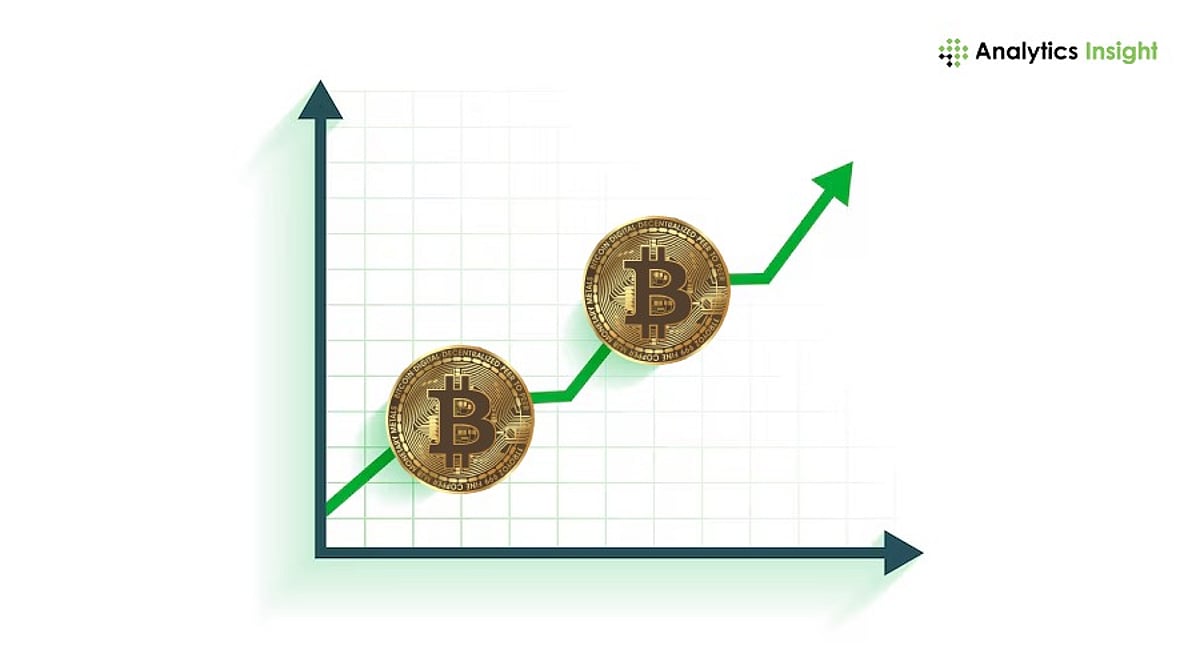
    Bitcoin has staged a sharp recovery from recent weakness, climbing back to approximately $61,767 as of June 25, 2026. After dipping below the crucial $60,000 mark earlier in the week, strong buyer activity swiftly pushed prices higher, restoring a degree of confidence across the cryptocurrency market. At the time of writing, Bitcoin is trading in a stable range between $61,500 and $61,800, with total market capitalization near $1.24 trillion and daily trading volume hovering around $42–$44 billion. Despite the bounce, Bitcoin remains nearly 2% lower over the past 24 hours and roughly 4% down on the week, indicating that a full recovery has not yet materialized.

    Price Action Shows Buyers Back in Control

    The latest 5-minute BTC/USD chart reveals clear strength following an extended period of sideways movement. Bitcoin opened near $59,300 and gradually attracted buying interest. Once the price crossed $60,000, momentum accelerated with strong volume support, eventually reaching the $61,700 resistance zone. Pullbacks remained shallow, and buyers consistently returned after each dip, signaling robust demand. A subsequent breakout above $60,800 was followed by another swift upward leg, suggesting that larger market participants view the recent correction as a buying opportunity.

    Key Levels to Watch

    Bitcoin now sits at a critical decision point. The immediate resistance is near $61,800, which has already slowed upward movement multiple times. A clean break above this level targets $62,200, followed by $63,500 and potentially $64,000 in the near term. On the downside, support is established at $61,300, with stronger support near $60,800—an important breakout zone during the recent rally. The most significant floor remains at $60,000, while a deeper decline could bring prices back to $59,000, where buyers previously stepped in aggressively.

    ETF Outflows Continue to Weigh on Sentiment

    Continued outflows from spot Bitcoin exchange-traded funds (ETFs) remain a key factor behind recent weakness. These products typically attract institutional capital, and reduced inflows have contributed to selling pressure. Earlier this month, Bitcoin traded near $70,000, but diminished ETF buying weakened momentum and drove prices lower over subsequent sessions. Institutional caution continues to limit upside potential.

    Global Economic Pressure Adds to the Mix

    Bitcoin has also been impacted by broader macroeconomic headwinds. Investors have reduced exposure to risk assets amid concerns about slowing economic growth and weakness in major technology stocks. The cryptocurrency often moves in tandem with high-risk assets during periods of uncertainty, and this correlation amplified selling pressure earlier in the week.

    Options Expiry Could Spark Volatility

    A major event looming over the market is the expiry of nearly $10 billion worth of Bitcoin options contracts at the end of June. Large options expirations frequently trigger sudden price swings as traders adjust their positions before settlement. Many bullish contracts are currently placed well above Bitcoin’s spot price, adding to uncertainty and raising the likelihood of sharp movements over the next several sessions.

    Technical Indicators Point to Improving Momentum

    Short-term technical indicators are showing signs of improvement. The Relative Strength Index (RSI) has climbed from oversold territory, typically indicating increasing buying pressure. Volume near $60,000 has been heavy, suggesting that traders viewed that level as an attractive entry point. Moving averages on lower timeframes hint at a short-term trend reversal, though the broader trend remains uncertain as Bitcoin still trades below the major $65,000 resistance level.

    Market Outlook: Cautiously Positive

    Bitcoin now appears poised for a decisive move that could set its short-term trajectory. Buyers have shown resilience, especially near support, after a solid recovery above $61,500. If Bitcoin can break above $62,200, a more significant rally toward $64,000–$65,000 may follow. Conversely, if selling pressure resumes and the price drops below $60,800, a retest of $59,000 becomes plausible. For now, the market remains fragile due to economic uncertainty, ETF outflows, and the impending options expiry. The key question is whether this rebound will evolve into a sustained uptrend or prove to be a temporary bounce before renewed selling.

  • FTSE 100 Edges Up 12 Points to 10,474 as Oil Slips Below $73; 3i Group Leads Gains

    FTSE 100 Edges Up 12 Points to 10,474 as Oil Slips Below $73; 3i Group Leads Gains

    The FTSE 100 opened 12 points higher at 10,474 on Thursday, buoyed by optimism surrounding US-Iran diplomatic talks and a decline in oil prices that pressured energy giants BP and Shell. Brent crude futures dropped 1.32% to $72.70 per barrel, while US West Texas Intermediate (WTI) fell 0.97% to $69.66.

    Gainers & Losers

    3i Group surged 9.11% to £2,480, Barratt Redrow advanced 4.70% to £294.20, and SSE climbed 2.81% to £2,414. Aberdeen Group gained 2.67% to £238.20, Persimmon rose 2.47% to £1,119.50, and Polar Capital Technology Trust added 2.42% to £719.50.

    On the downside, London Stock Exchange Group fell 2.34% to £8,086, Endeavour Mining dropped 2.03% to £3,678, Experian slipped 1.88% to £2,503, and Fresnillo declined 1.44% to £2,733. Shell eased 0.58% to £2,929.50, while BP edged lower by 0.83% to £476.05.

    Halfords Returns to Profit

    Halfords posted a pre-tax profit of £43.6 million for the year to April, beating analyst forecasts of £40.3 million and reversing last year’s £30 million loss. Revenue grew 5% to £1.8 billion, with autocentre operations seeing like-for-like sales jump 6% to £740 million.

    3i Reports Slower Growth for Action

    3i Group noted that its largest portfolio company, European discount retailer Action, delivered like-for-like sales growth of 3.3% in the year to 21 June, down from 3.6% in the first quarter and below the full-year guidance of 4%–5%. Despite the slowdown, the company remains on track for a good second quarter.

    Serco Revenue Expected to Rise

    Serco anticipates a 3% revenue increase to around £2.5 billion, with underlying operating profit climbing to roughly £155 million as margins improve above 6%. CEO Anthony Kirby highlighted the company’s global footprint and sector diversity as core strengths amid geopolitical tensions. Shares were flat in early trading.

    Global Market Roundup

    In the US, the tech-heavy Nasdaq fell 0.4% for a third straight session, the S&P 500 slipped 0.1%, but the Dow Jones gained 0.4%. South Korea’s Kospi surged 6.3% above 9,000 points, led by SK Hynix (up 15.6%) and Samsung Electronics (up 4.7%). Japan’s Nikkei 225 rose 4.6% to 72,403.2 points, Taiwan’s TAIEX added 0.4%, and India’s Nifty 50 and Sensex both advanced 0.7%.

  • Quordle June 25, 2026: Hints, Clues, and Complete Answers for Today’s Puzzle

    Quordle June 25, 2026: Hints, Clues, and Complete Answers for Today’s Puzzle

    Overview

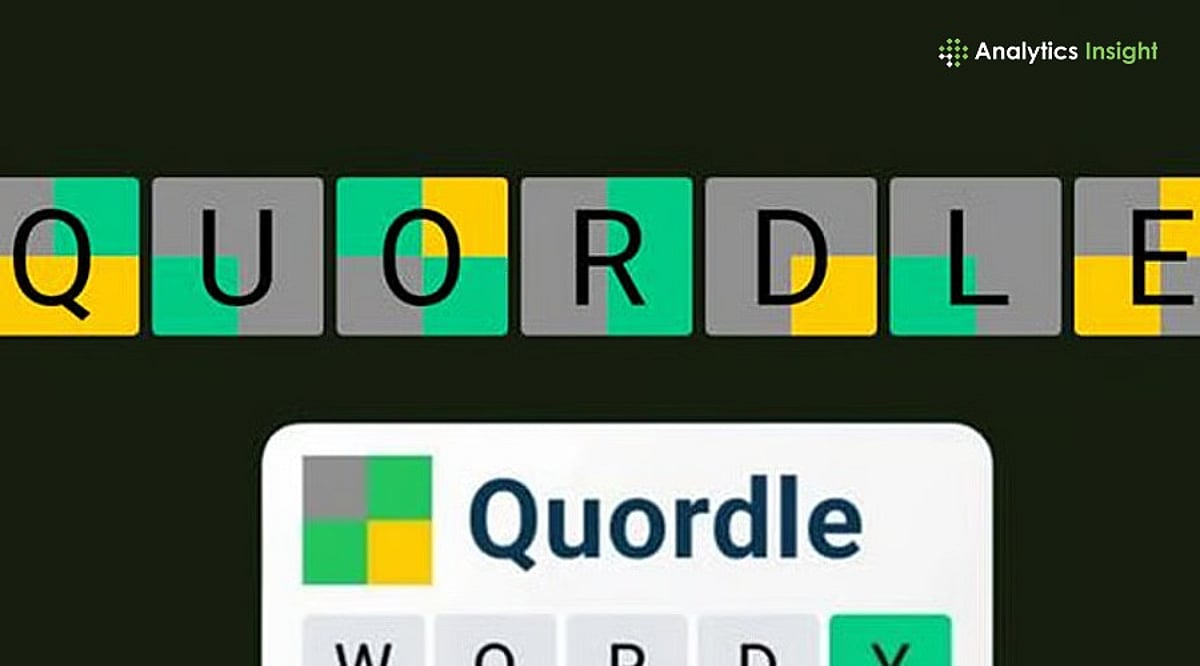
    Today’s Quordle offers a balanced challenge, mixing familiar words with uncommon vocabulary. Solve all four five-letter words within nine attempts using strategic elimination. Here are hints and answers for the June 25 puzzle.

    Today’s Quordle Clues

    If you want a nudge without spoilers, try these clues:

    • Word 1 (Top Left): A flat surface mounted on a wall used to store books or ornaments.
    • Word 2 (Top Right): A light brown or yellow-brown color; often used for owls and animals.
    • Word 3 (Bottom Left): Full of energy or overly excited.
    • Word 4 (Bottom Right): To obtain a solution or solve a puzzle correctly.

    Additional Hints

    • Three distinct vowels appear across the four words.
    • None of the words contain repeating letters.
    • The letters Q, Z, X, or J are absent.
    • Two words share the same starting letter.
    • The first letters of the words are S, T, H, and S.

    Today’s Quordle Answers

    If you’re ready to check your answers, here they are:

    • SHELF
    • TAWNY
    • HYPER
    • SOLVE

    The most challenging word is likely TAWNY (an uncommon adjective), followed by HYPER (familiar but tricky in context). The rest are common, making today’s puzzle relatively easy.

    Conclusion

    Today’s Quordle balanced common and uncommon words without repeated letters. If you solved all four within nine guesses, congratulations! If not, tomorrow offers a new challenge.

  • Top Voice-Controlled Smart Lights for Modern Homes in 2026

    Top Voice-Controlled Smart Lights for Modern Homes in 2026

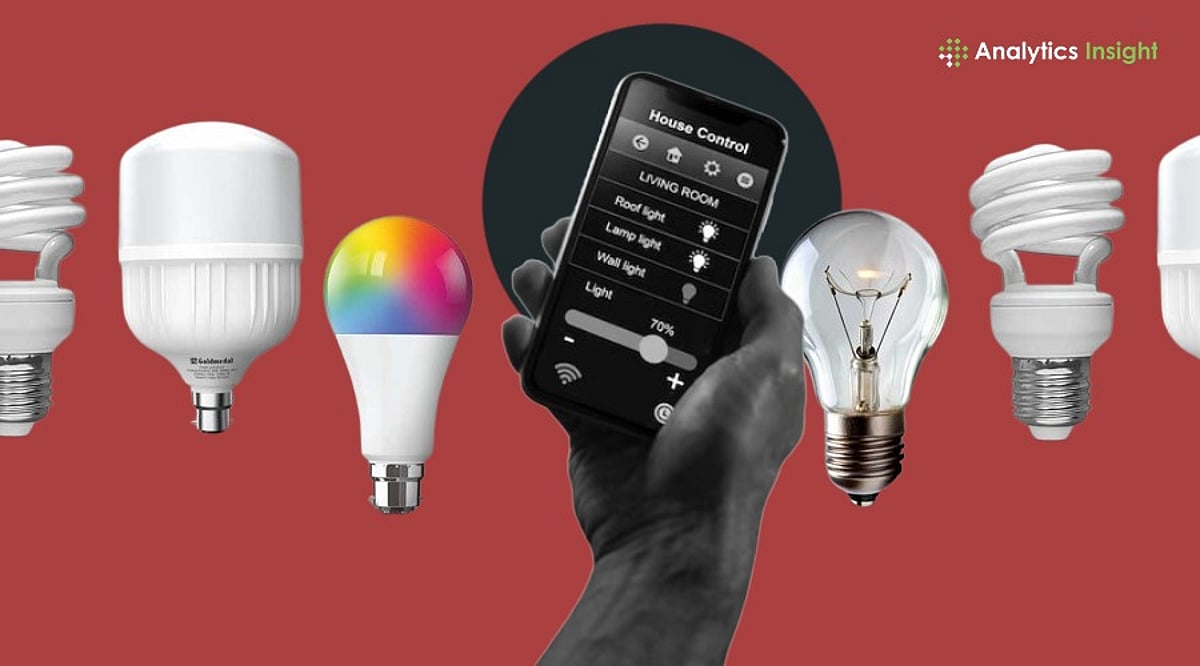
    Smart lighting has quietly reshaped the home decor market, pulling premium-grade technology into an accessible mid-range price. Today’s systems do more than illuminate a room. They let you dim, brighten, or shift the color of your lights on a schedule or through a simple voice command, working seamlessly with Amazon Alexa, Google Assistant, and Apple Siri.

    The appeal goes beyond convenience. A well-lit home uses less energy, adapts to your mood, and signals a deliberate choice to live smarter. Smart lighting fits naturally into the growing ecosystem of connected homes, where comfort and control go hand in hand.

    Key Features to Look For

    The smart lighting provides a wide range of modern features that deliver comfort, ambience, and a premium feel. Here are some features that have become quite mainstream and should be considered for smart lighting gadgets.

    • Voice Assistant Compatibility: Alexa, Google Assistant, Siri
    • Connectivity: Wi-Fi or Bluetooth (no hub required for most)
    • Color Options: Up to 16 million RGB colors + tunable whites
    • Smart Functions: Music sync, motion sensing, timers, app control
    • Energy Efficiency: LED-based, low power consumption

    Which Brand is Best for Which Use Case?

    Smart lights with voice control have a wide range of options. Each brand has established its niche for modern homes. Philips Wiz Neo shines as the premium all‑rounder, offering motion sensing and a larger palette of color options. Havells Glamax is a great choice for mood lighting, with music sync perfect for house parties and relaxed evenings.

    Wipro Smart LED Bulbs provide all-around lighting with advanced tunable whites and dimming, best suited for efficient work and leisure lighting. For budget‑friendly setups, Syska Smart LED features include RGB colors and scheduling, making it a solid entry‑level option.

    TP‑Link Tapo L530B is quite tech-savvy and shines with seamless Wi‑Fi integration. Realme Smart Bulbs attract the younger generation. Crompton Immensa works great on Bluetooth control, offering tunable whites and offline music sync. Finally, NovaGlow SiriSmart is specifically designed for Apple ecosystem users, with deep HomeKit integration and an elegant design, making it the best choice for Siri‑driven smart systems.

    Risks & Trade-offs

    Smart lighting provides futuristic technology, but some smart features can bring unexpected complexity. Here are things to watch out for before investing:

    • Wi-Fi Congestion: Multiple smart devices can slow down networks.
    • App Dependency: Some bulbs fall short on compatibility, requiring proprietary apps.
    • Price vs Features: Premium models (Philips, TP-Link) cost more but offer advanced features like motion sensing.
    • Compatibility Limits: Apple HomeKit users will need to stick with Siri-enabled options like NovaGlow.

    Final Thoughts

    Smart lights with voice control are gaining ground in the mainstream market for modern homes, offering utility, style, and energy efficiency. Each brand has its own strengths, catering to different lifestyles—from high-end models like Philips Wiz Neo to budget models like Syska Smart LED to ecosystem-specific options such as NovaGlow SiriSmart.

    Whether you want to automate complex setups, enjoy bright mood lighting, or integrate perfectly with your voice assistant, there is a smart light that’s right for your needs. These solutions make life easier and more lively, as lighting becomes a personal experience that reacts to your every command.

  • Dogecoin Faces Make-or-Break Moment as Key Support Nears $0.075 in 2026

    Dogecoin Faces Make-or-Break Moment as Key Support Nears $0.075 in 2026

    Dogecoin is trading near $0.076 after an 11% weekly decline, with the critical support zone between $0.075 and $0.085 under intense pressure. Market sentiment remains uncertain as analysts debate whether the meme coin can stage a recovery or sink further in the second half of 2026.

    Current Dogecoin Price in June 2026

    As of June 25, 2026, Dogecoin is trading around $0.076 (roughly ₹7.15 to ₹7.50). The coin has lost nearly 11% over the past seven days, signaling strong short-term weakness. Despite the drop, daily trading volume remains elevated—between $900 million and $950 million—indicating sustained market activity. Dogecoin’s total market capitalization stands at approximately $11.7 billion, keeping it among the largest cryptocurrencies.

    Major Support Level Faces Pressure

    The most important price zone for Dogecoin currently sits between $0.075 and $0.085. This range has become the coin’s primary support area. The 200-day moving average, a key technical indicator, is near $0.0859 and is viewed by analysts as the dividing line between bullish and bearish conditions.

    If Dogecoin fails to hold above this support, further downside could follow. Some analysts predict a drop toward $0.070 first, and if selling pressure intensifies, the next possible level is near $0.065. Recent price action shows buyers struggling to push the coin above resistance, suggesting sellers remain in control of short-term momentum.

    Technical Signals Show Weakness

    Several indicators point to weakness in Dogecoin’s price structure. The Relative Strength Index (RSI) is near 59, meaning the coin has not yet entered oversold territory—suggesting room for further declines. Meanwhile, the MACD indicator is showing bearish divergence, often a precursor to additional correction.

    Market Sentiment Looks Uncertain

    The overall mood around Dogecoin remains mixed. Some experts believe the coin can recover if Bitcoin stays strong above its own key supports. Others think meme coins may continue to underperform in 2026 as investors shift toward projects with stronger real-world utility.

    Dogecoin has underperformed the broader crypto market this week: while DOGE dropped 11.8%, the overall cryptocurrency market fell by about 3.5%. This reflects a growing caution toward speculative digital assets, especially meme coins.

    Still, Dogecoin benefits from one of the most loyal communities in crypto, which often helps sustain long-term interest and support.

    New Developments Keep Dogecoin Relevant

    Despite the price weakness, several developments have kept Dogecoin in the spotlight. A free-mint NFT collection built on the Dogecoin blockchain reached a record floor price of nearly 44,900 DOGE (about $4,100), showing the ecosystem may offer more than just payments.

    Speculation around future payment adoption has also grown, and whale activity has picked up—large holders are accumulating DOGE during the dip, signaling confidence in long-term value.

    Dogecoin Price Forecast for 2026

    Analysts offer a range of forecasts. If support holds, Dogecoin could trade between $0.083 and $0.10 by year-end, assuming the broader crypto market remains stable. A more bullish scenario—driven by a Bitcoin rally and renewed meme-coin interest—could push prices to $0.12–$0.20. Aggressive targets of $1 appear highly unlikely given current conditions.

    Immediate resistance sits at $0.085, followed by $0.095, with $0.10 as the major psychological barrier. A surge in buying volume could push DOGE above $0.12 by late 2026.

    Why This Matters

    Dogecoin is testing the limits of its meme-driven power. With retail investors pulling back and institutional ETF interest nearly nonexistent, the defense of the $0.075–$0.085 support zone will determine whether DOGE stabilizes or enters a prolonged slide.

    Final Outlook

    The next few weeks are critical. If Dogecoin holds above $0.075–$0.085, a gradual recovery toward $0.10–$0.12 is possible. Failure to do so could hand full control to sellers.

    FAQs

    1. What is Dogecoin’s current price in June 2026? Dogecoin trades near $0.076, following an 11% weekly drop.
    2. What is the main support level for Dogecoin? The key support zone is $0.075–$0.085, with the 200-day moving average at $0.0859.
    3. Can Dogecoin reach $0.10 in 2026? Yes, if support holds and market conditions improve.
    4. Why has the price dropped recently? Due to broader market weakness and reduced appetite for speculative assets.
    5. Could Dogecoin hit $1 in 2026? Highly unlikely given current bearish sentiment.
  • How to Reduce Token Consumption in Claude AI: A Practical Guide for Cost-Effective Usage

    How to Reduce Token Consumption in Claude AI: A Practical Guide for Cost-Effective Usage

    Every prompt you send to Claude AI affects token usage, response quality, and overall cost. Managing tokens isn’t about limiting Claude’s capabilities but about using its context window more efficiently. These best practices will help you reduce unnecessary token consumption while maintaining accurate and consistent results.

    What Actually Consumes Tokens

    Every time you send a message, Claude processes the entire active context before generating a response. This context includes your current prompt, all prior messages in the conversation, system instructions, any uploaded documents, and tool outputs. Both input and output tokens contribute to your overall usage and cost.

    One detail many users overlook is how the tokenizer affects token usage. A short follow-up question in a long conversation can still consume a large number of tokens, since Claude processes the entire context window with every new request. Model updates can shift this further. Anthropic’s newer tokenizer, introduced with Opus 4.7, processes the same English text into roughly 30 percent more tokens than earlier versions. Even when prompts remain unchanged, newer models may consume more tokens, reflecting changes in how they process text.

    What Contributes to Claude AI Token Usage?

    The underlying principle is consistent. Every element inside the context window carries a token cost. Unnecessary content does not improve the response. It only adds to the bill. The goal is not to reduce every token. It is to remove tokens that add no value to the final response.

    Write Prompts That Do More with Less

    Prompt quality has a direct impact on token efficiency. Long background explanations, repeated instructions, and multiple unrelated questions increase input tokens without improving the quality of the response. A focused prompt gives Claude exactly what is required and nothing extra.

    Clear instructions also help Claude produce better answers with fewer tokens. Asking Claude to analyze an entire report often generates more information than necessary. Asking it to summarise selected sections and extract specific findings usually delivers better results while using fewer tokens. Defining the output format upfront, such as requesting bullet points or capping the response at a set word count, keeps output tokens predictable and manageable.

    Better Prompt Practices

    • Be specific and concise in your requests.
    • Define the desired output format (e.g., bullet points, summary).
    • Avoid redundant instructions or background.
    • Batch related questions into a single prompt.

    Keep the Context Window Focused

    Long conversations are one of the most common causes of rising token usage. As conversations become longer, each new message becomes more expensive to process. The practical fix is straightforward: ask Claude to summarize the discussion at a natural stopping point, then carry that summary into the next session instead of the full conversation history.

    File uploads follow the same logic. Sharing an entire manual when one chapter is relevant adds unnecessary tokens to every subsequent exchange. Smaller, targeted context windows tend to produce faster responses, sharper answers, and lower costs across longer projects.

    Choose the Right Model for the Task

    Not every task justifies the most advanced model available. Summarization, formatting, classification, and structured data extraction are well within the capabilities of lighter models. Reserving larger models for tasks that genuinely require complex reasoning or deep analysis keeps costs proportional to the actual demand.

    For API users, prompt caching allows reusable instructions to be stored rather than reprocessed with every call. Claude Projects provides a similar benefit in consumer workflows, keeping persistent context available without requiring it to be re-entered in every conversation.

    A Quick Token Management Checklist

    • Keep prompts short and specific.
    • Upload only the files needed.
    • Set the response length before Claude starts writing.
    • Batch related questions into one prompt.
    • Summarize long conversations before starting a new chat.
    • Reuse saved instructions whenever possible.
    • Choose the most suitable Claude model.
    • Review token usage regularly.

    Token-Efficient Claude Workflow

    1. Start with a focused prompt.
    2. Upload only relevant files.
    3. Choose the right Claude model.
    4. Set response length.
    5. Batch-related questions.
    6. Summarise long conversations.
    7. Start a fresh chat.
    8. Lower token usage and API costs.

    Final Thought

    Token efficiency is not about doing less. It is about being deliberate with what Claude processes. Focused prompts, clean conversation history, targeted file uploads, and thoughtful model selection all reduce waste without compromising response quality. As Claude becomes a regular part of daily workflows, these habits quietly compound, keeping costs in line and results sharp across every project.

  • Wordle June 25, 2026: Hints, Answer & Expert Strategy for Puzzle #1832

    Wordle June 25, 2026: Hints, Answer & Expert Strategy for Puzzle #1832

    Wordle Hints for June 25, 2026 (Puzzle #1832)

    Stuck on today’s Wordle? The June 25 puzzle centers on a noun related to change and a short story. Use these clues to uncover the answer without breaking your streak.

    Essential Clues

    • Vowel Count: Two vowels and one semi-vowel
    • Consonant Count: Two consonants
    • Repeated Letters: None
    • Letter Rarity: All common letters
    • First Letter: U
    • Bonus Hint: The word ends with the letter ‘Y’

    Wordle Answer for June 25, 2026

    If the hints above have guided you, here’s the final answer for Wordle #1832: UNITY.

    Best Tips to Master Wordle

    New to NYT’s word puzzle? Improve your guessing strategy with these expert tips:

    • Start with words containing common vowels and consonants to gather maximum early information.
    • Avoid repeating letters in your first few guesses unless you’re certain about placement.
    • Pay close attention to color feedback: green = correct and well-placed, yellow = correct but wrong position.
    • Use each guess to eliminate possibilities instead of racing to the answer.
    • Expand your vocabulary—familiarity with less common words speeds up solving.

    Final Thoughts

    Wordle’s daily challenge combines simplicity with uncertainty, offering a quick mental workout that sharpens vocabulary and pattern recognition. Whether you solve it over morning coffee or a short break, the game rewards patience and strategy. May your 2026 streaks remain unbroken!