Author: vitorcherulli

  • FTSE 100 Opens 45 Points Lower as Bank of England Holds Rates; Brent Crude Sinks to $102.5

    FTSE 100 Opens 45 Points Lower as Bank of England Holds Rates; Brent Crude Sinks to $102.5

    The FTSE 100 opened 45.03 points lower at 10,771.11 on Friday after the Bank of England kept interest rates unchanged while adopting a more hawkish stance. Investors also weighed the Bank of Japan’s latest rate hike. Meanwhile, Brent crude futures fell 2.05% to USD 102.5 per barrel, and US West Texas Intermediate declined 1.89% to USD 99.98.

    BoE Holds Rates at 3.75%

    The Bank of England’s Monetary Policy Committee voted 6-3 to leave Bank Rate at 3.75%, repeating the split seen in July. Huw Pill, Megan Greene and Catherine Mann again voted for a 25-basis-point increase.

    In a notable move, the BoE paused all gilt sales until April 2027 and removed bonds maturing after 2049 — around GBP 120 billion — from active sales. The Bank is also exploring a mechanism to transfer gilts directly to the UK government treasury, replacing long-dated supply with shorter issuance.

    Sterling and Commodities

    Sterling was quoted at USD 1.3363 early Friday, slightly higher than USD 1.3356 at Thursday’s London close. Against the euro, the pound rose to EUR 1.1638 from EUR 1.1627.

    Gainers and Losers

    Top gainers:

    • Fresnillo: +2.70% at 3,085p
    • IG Group Holdings: +2.21% at 1,344p
    • Endeavour Mining: +2.20% at 4,777p
    • Lion Finance Group: +2.17% at 14,120p
    • Antofagasta: +1.35% at 3,752p
    • Polar Capital Technology Trust: +1.14% at 664.50p

    Top decliners:

    • Coca-Cola HBC: -3.86% at 4,432p
    • Next: -2.51% at 14,545p
    • Coca-Cola Europacific Partners: -1.25% at 7,505p
    • Shell: -1.13% at 3,530.50p
    • London Stock Exchange Group: -0.56% at 8,216p
    • Games Workshop Group: -0.51% at 17,670p

    UK Retail Sales Rebound in August

    Retail sales rose 0.5% in August, reversing a 0.5% decline in July, according to the Office for National Statistics. The increase was driven by warmer weather, which boosted demand for fans and air conditioning units, while the World Cup lifted sales of sports merchandise and clothing. Economists polled by Reuters had forecast a 0.2% drop.

    Investec Raises Earnings Targets

    Investec doubled down on its earnings outlook after strong activity in its South Africa division offset a subdued UK performance. The lender projected earnings per share of 41.7p to 43.3p for the six months to 30 September, representing a 3% to 7% rise year on year. South African wealth funds under management grew 13.8% to GBP 30.7 billion, while the UK business expects operating profit to fall between 2% and 6% from the GBP 230 million recorded last year.

    Global Market Update

    Wall Street rebounded overnight as government bond yields retreated. The S&P 500 gained 1.2%, the Nasdaq Composite rose 1.7%, and the Dow Jones added 0.6%, or 316 points.

    In Asia on Friday, Tokyo’s Nikkei 225 climbed 1.38% to 65,018.95, while China’s Shanghai Composite fell 0.94%. Hong Kong’s Hang Seng advanced 0.56%, and South Korea’s Kospi rose 2.66%. In India, the Nifty 50 and Sensex gained 0.25% and 0.28%, respectively.


  • How IoT and AI Are Reshaping the Automatic Door Industry in 2026: 5 Key Trends

    How IoT and AI Are Reshaping the Automatic Door Industry in 2026: 5 Key Trends

    The automatic door at your office entrance is no longer just a mechanical convenience. In 2026, it is a data-generating, self-diagnosing node in a building-wide intelligence network — and the companies manufacturing these systems are undergoing a transformation just as dramatic as the technology itself.

    The global automatic door market, valued at approximately USD 2.8 billion in 2025, is projected to grow at a CAGR of 6.2% through 2030. But the real story is not the market size — it is how IoT connectivity and AI-driven predictive maintenance are reshaping the entire value chain, from contract manufacturers to facilities managers.

    Here are five shifts redefining this industry.

    1. Predictive Maintenance Replaces Reactive Repairs

    Traditional automatic door maintenance follows a simple pattern: something breaks, someone calls a technician, and the building pays a premium for emergency service. IoT sensors are flipping this model. Modern door operators from brands like Dormakaba and Geze now embed vibration, temperature, and cycle-count sensors that stream data to cloud platforms. Algorithms detect degradation patterns — a worn drive belt, a drifting motor controller — weeks before failure.

    For facilities managers overseeing hundreds of entry points across multiple sites, this shift is transformative. Instead of scheduling reactive maintenance visits, they receive automated alerts ranked by urgency. The result: up to 40% fewer unplanned downtime events, according to early adopter case studies from European commercial real estate firms.

    2. Contract Manufacturers Become the Innovation Layer

    The brands that dominate automatic door installations — Dormakaba, Geze, Record, Assa Abloy, Gilgen, and BEA — rely on a network of specialized contract manufacturers to produce critical components. These manufacturers are no longer passive suppliers executing blueprints. Increasingly, they are co-developing next-generation parts: IoT-ready motor controllers, energy-efficient drive systems, and sensor arrays compatible with Building Management Systems (BMS).

    DoorDynamic, for example, serves as a contract manufacturer for several of the world’s leading automatic door brands, producing both genuine OEM components and certified compatible alternatives. This dual-track model — genuine brands alongside 100% compatible parts — gives distributors and facilities managers flexibility on cost without compromising on performance or warranty coverage.

    3. The Rise of Compatible Alternatives Disrupts Pricing

    One of the most significant trends in the automatic door aftermarket is the growing acceptance of compatible replacement parts. Historically, building operators had no choice but to purchase OEM components at premium prices. Today, manufacturers like DoorDynamic offer certified compatible alternatives for drive motors, controllers, drive belts, safety sensors, and door operators — all backed by warranties of up to five years.

    This shift mirrors what happened in the automotive aftermarket a decade ago. Independent manufacturers proved they could match OEM specifications at a fraction of the cost, and the market adjusted. In the automatic door industry, compatible parts are projected to capture 25% of the aftermarket by 2028, driven by cost-conscious facilities managers and distributors seeking better margins.

    4. Edge Computing Brings Intelligence to the Door

    Not every smart door use case requires cloud connectivity. Edge computing — processing data locally on the door controller — is emerging as the preferred architecture for latency-sensitive applications like safety sensor fusion and real-time obstacle detection. BEA’s latest sensor systems, for instance, combine radar and laser scanning to create a 3D detection zone that adapts in real time, reducing false triggers in high-traffic environments.

    This trend favors contract manufacturers with embedded systems expertise. The ability to integrate edge-capable controllers into existing door form factors — without requiring full system replacements — is becoming a key differentiator.

    5. Sustainability Drives Component-Level Upgrades

    Green building certifications like LEED and BREEAM are pushing building owners to evaluate the energy footprint of every system, including automatic doors. The good news: upgrading a door’s motor, controller, and sensors can reduce its energy consumption by 30-50% without replacing the entire door assembly.

    Contract manufacturers are responding with high-efficiency brushless motors, low-standby-power controllers, and LED-integrated sensor housings. For buildings pursuing net-zero targets, these component-level upgrades offer a fast ROI — often under 18 months — compared to full door replacements.

    What This Means for the Industry

    The automatic door industry is at an inflection point. IoT and AI are not just adding features to existing products — they are restructuring how components are designed, manufactured, and serviced. Contract manufacturers that invest in smart-component capabilities are moving up the value chain. Distributors that embrace compatible alternatives are unlocking new margins. And facilities managers that adopt predictive maintenance are cutting costs while improving reliability.

    For decision-makers evaluating building access solutions, the takeaway is clear: the intelligence of your automatic doors now depends less on the brand on the box and more on the capabilities of the manufacturers and suppliers behind it.

  • The Journey of a Trade Order: From Click to Fill

    The Journey of a Trade Order: From Click to Fill

    When you click the buy button on your trading platform, the process feels instantaneous. However, behind the scenes, your order travels through a complex series of steps before it becomes a position on your account. Each step takes time, even if only milliseconds, and during that time, the price can move against you or in your favor.

    The Order Leaves Your Platform

    Your platform sends the order to the broker’s server first, not directly to the market. The broker validates the order, checks that you have sufficient margin, and then decides where to route it next. Depending on your account type and trade size, the order is either routed to a liquidity provider or filled against the broker’s own book.

    Market Execution vs. Instant Execution

    With market execution, you set the trade size and accept the current market price when the order arrives. There are no requotes; the trade opens at the live price, even if it has shifted slightly since you clicked. With instant execution, you request a specific price along with the size. If the price has moved, the broker sends a requote instead of filling the order, and you decide whether to accept the new price or cancel.

    Where Latency Creeps In

    Latency is the delay between sending your order and it reaching the point of execution. It builds up across several stages: your internet connection, the platform’s servers, and the network path to the liquidity provider. A few milliseconds rarely matter in a calm market, but during fast moves, even a short delay can mean the price has already changed by the time your order arrives.

    Slippage: Positive and Negative

    Slippage is the difference between the expected price and the actual execution price. Negative slippage means you paid more on a buy or received less on a sell. Positive slippage is the opposite, giving you a better price than expected. Slippage is most common during high volatility around news events or when liquidity thins out. Market orders are more exposed to slippage than limit orders, which only fill at your chosen price or better.

    Why Order Size Matters

    Small orders usually fill at a single price without issue. Large orders, however, can eat through several price levels in the order book because there may not be enough volume at the best price to cover the entire size. In such cases, part of the order fills at the first price and the rest at slightly worse prices, resulting in an average fill price that blends these levels—another form of slippage tied to size rather than speed.

    What a Requote Looks Like

    Imagine you request a price on instant execution and the market ticks up half a pip before your order arrives. The broker cannot fill you at the old price, so it sends back a new quote and waits for your response. You can accept, reject, or let the request time out. Each of these choices takes time, so a series of requotes in a fast market can cost you more time than the small price gap itself.

    Why This Matters Beyond Forex

    This process is not unique to currency pairs. Trading CFDs on shares and indices follows the same steps, as these contracts also route through liquidity providers and face similar latency and slippage risks.

    Checking Execution Quality

    Execution speed and slippage rarely appear on a pricing page, but they shape your actual results as much as the spread. Ask your broker how orders are routed, how fast they typically fill, and how often clients see requotes. A broker that suits your trading style is one whose execution matches how you trade, not just one with the tightest advertised spread. A scalper feels latency far more than a long-term position holder.

    What You Can Control

    You cannot eliminate slippage or latency, but you can reduce your exposure. Avoid placing large market orders right before major news releases, when liquidity often drops and volatility spikes. Use limit orders when the exact price matters more than instant execution—this trade-off between price certainty and speed underlies almost every order type you will encounter. Splitting a large order into smaller pieces can also reduce how much it moves the price against you, even if it takes a bit more effort to manage.

    Disclaimer: This article is for informational purposes only and does not constitute financial advice. Always conduct your own research before making any investment decisions.

  • Tata Sons IPO Standoff: SP Group Pushes for Listing While Noel Tata Objects

    Tata Sons IPO Standoff: SP Group Pushes for Listing While Noel Tata Objects

    The debate over a potential Tata Sons initial public offering (IPO) intensified on September 18, 2026, as the Shapoorji Pallonji (SP) Group publicly backed a listing while Noel Tata, chairman of Tata Trusts, firmly opposed it. The dispute centers on regulatory compliance, ownership structure, and the future governance of one of India’s most prominent conglomerates.

    Pressure for a listing mounted after the Reserve Bank of India (RBI) rejected Tata Sons’ deregistration request on September 11. The RBI classifies Tata Sons as an upper-layer non-banking financial company (NBFC), which imposes enhanced regulatory requirements, including mandatory listing obligations.

    Ownership Breakdown and Conflicting Interests

    Tata Trusts holds approximately 66% of Tata Sons, while the SP Group owns around 18.4%. Other Tata Group companies collectively hold nearly 13%. This ownership structure creates divergent priorities: the Trusts emphasize philanthropic continuity, while the SP Group seeks liquidity and transparency.

    SP Group’s Case for Listing

    The SP Group has long advocated for a public listing, citing transparency and shareholder value. Chairman Shapoor Mistry called the IPO a “social and moral imperative,” arguing that it would strengthen public accountability while preserving Tata’s philanthropic mission. For the SP Group, which holds a significant minority stake, a public market offers a route to monetize holdings and provides greater visibility for investors.

    Noel Tata and Tata Trusts’ Opposition

    Noel Tata, speaking for Tata Trusts, has taken a starkly different position. He warned that a listing would “destroy the character” of Tata Sons, which he described as an institution built around philanthropy rather than profit maximization. In a board statement, Noel Tata argued that the company’s privately held structure is central to its identity and purpose.

    Tata Trusts has proposed an alternative: a transaction worth at least ₹25,000 crore to provide liquidity to the SP Group without immediately altering the privately held structure. This proposal, reported by Telangana Today, offers a compromise that could delay or avoid an IPO.

    Governance and Leadership Dispute

    The disagreement extends beyond listing strategy. The Tata Sons board has backed a second five-year term for Chairman N. Chandrasekaran, but Noel Tata and the Trusts have challenged the validity of that decision. This governance clash adds another layer of complexity to the IPO debate.

    Regulatory Pressure and Market Implications

    An IPO would introduce public shareholders, mandatory disclosures, and heightened market scrutiny. Analysts such as Abhishek Bhilwaria of BhilwariaFinserv note that valuation, governance, shareholder rights, and potential dilution will be key factors in the coming months. The immediate hurdle remains compliance with the RBI’s September 11 ruling, which forces Tata Sons to navigate listing requirements while facing internal opposition.

    The board’s next steps will determine whether the IPO moves forward or if an alternative arrangement satisfies all stakeholders. The outcome will have significant implications for Tata Sons’ corporate structure and India’s broader IPO landscape.

  • YouTube Partner Program 2026–2027: Eligibility, New Thresholds, and Monetization Changes

    YouTube Partner Program 2026–2027: Eligibility, New Thresholds, and Monetization Changes

    The YouTube Partner Program (YPP) offers creators two main access levels, each with distinct subscriber, watch-hour, and Shorts-view requirements. YouTube has also announced a major update effective February 1, 2027, raising the entry bar for ad and YouTube Premium revenue for new applicants.

    Current YPP Levels

    500-Subscriber Expanded Level

    Eligible creators can access selected monetization tools with at least 500 subscribers, three valid public uploads within the last 90 days, and either 3,000 qualified public watch hours (past 12 months) or 3 million qualified public Shorts views (past 90 days). This level provides Channel Memberships, Super Chat, Super Stickers, Super Thanks, and YouTube Shopping, but not full ad revenue.

    Full Monetization Threshold

    Full access to watch-page ads, Shorts feed ads, and YouTube Premium revenue requires 1,000 subscribers plus either 4,000 qualified public watch hours (past 365 days) or 10 million qualified public Shorts views (past 90 days). Note that watch hours from Shorts do not count toward the 4,000-hour requirement; channels relying on Shorts must meet the separate 10 million view target.

    Other Eligibility Conditions

    • Compliance with YouTube monetization policies and Community Guidelines
    • No active Community Guidelines strikes
    • Two-step verification on the Google Account
    • Access to advanced YouTube features
    • An active AdSense for YouTube account (or readiness to create one)

    YouTube reviews the channel’s main theme, most-viewed videos, newest videos, metadata, and About section before approving monetization.

    Original Content Policy Update

    On July 15, 2025, YouTube renamed its “repetitious content” policy to “inauthentic content,” clarifying the focus on mass-produced, low-value material. Channels using interchangeable templates or reused content without significant original commentary, modification, or educational/entertainment value may face monetization issues. AI-assisted content is allowed if it provides original value and follows monetization rules.

    Major Changes Starting February 1, 2027

    New applicants for full ad and Premium revenue will need 8,000 qualified watch hours (past 365 days) or 20 million qualified Shorts views (past 90 days), along with 1,000 subscribers. The 500-subscriber threshold for Fan Funding and Shopping products remains unchanged. Existing YPP creators are not affected by this specific threshold change.

    Shorts Revenue Rule

    From February 1, 2027, Shorts ad and subscription revenue sharing requires 10 million qualified Shorts views across the previous 90 days. Channels below that level keep long-form revenue and can resume Shorts revenue upon crossing the threshold again. Creators must accept updated YPP terms in YouTube Studio by January 31, 2027.

    What This Means for New Channels

    The current full YPP route (1,000 subscribers + 4,000 watch hours or 10 million Shorts views) remains in effect until February 1, 2027. After that date, new applicants face the higher thresholds. The application date becomes critical for channels near the current thresholds. Original content, policy compliance, valid traffic, and a successful channel review remain essential for sustained monetization.

    Frequently Asked Questions

    1. Current subscriber requirement for full YPP? 1,000 subscribers plus either 4,000 watch hours or 10 million Shorts views.
    2. Can you join YPP with 500 subscribers? Yes, via the expanded YPP route with additional requirements.
    3. Will YPP requirements change in 2027? Yes: new applicants need 8,000 watch hours or 20 million Shorts views plus 1,000 subscribers for full monetization.
    4. Does reaching numbers guarantee approval? No, YouTube also reviews policy compliance, original content, and other conditions.
    5. Can AI content qualify? Yes, if it provides original value and follows monetization rules. Mass-produced or repetitive AI content may be restricted.
  • 7 Essential Metrics for Evaluating Bitcoin Treasury Companies

    7 Essential Metrics for Evaluating Bitcoin Treasury Companies

    Bitcoin treasury companies have emerged as a distinct segment of public markets, using equity, debt, and preferred securities to accumulate Bitcoin. However, evaluating these companies requires more than just comparing their Bitcoin holdings. Recent market conditions have shown that several major treasury companies trade below the gross value of their Bitcoin holdings, while differences in debt, preferred shares, and dilution significantly affect what remains attributable to common shareholders.

    1. Total Bitcoin Holdings

    The most straightforward metric is the total amount of BTC owned. Larger holdings provide greater Bitcoin exposure, but investors should also examine how those coins were financed. A company borrowing aggressively to purchase Bitcoin carries different risks than one using operating cash flow or equity issuance.

    2. Bitcoin per Diluted Share

    Absolute holdings can increase while shareholders become diluted. Bitcoin per diluted share measures whether BTC accumulation is actually increasing each shareholder’s economic exposure. If share issuance grows faster than Bitcoin holdings, total BTC may rise without improving per-share exposure.

    3. Market Net Asset Value (mNAV)

    Market net asset value (mNAV) compares a company’s valuation with the value of its Bitcoin holdings and other relevant assets. Premiums can make issuing equity attractive, as companies may raise capital above underlying asset value and purchase additional Bitcoin. Discounts can weaken that financing mechanism.

    4. Debt and Preferred Obligations

    Investors should examine convertible debt, secured borrowing, preferred securities, and maturity schedules. For example, Strategy reportedly reduced total debt to approximately $6.7 billion after retiring $1.5 billion of convertible debt during 2026. Debt becomes especially important during prolonged Bitcoin downturns.

    5. Bitcoin Acquisition Cost

    Average purchase price shows how far Bitcoin can decline before the market value of treasury holdings falls below the aggregate acquisition cost. However, accounting losses alone do not necessarily force selling. Liquidity and debt structures matter more.

    6. Funding Capacity

    Treasury companies frequently rely on capital markets to continue purchasing Bitcoin. Investors should track available equity programs, credit facilities, and preferred issuance capacity. Metaplanet reportedly used 83% of a $500 million credit facility while expanding its treasury to approximately 43,000 BTC.

    7. Liquidity and Cash Obligations

    Bitcoin holdings should be compared with interest payments, dividends, operating expenses, and upcoming maturities. A company can own substantial Bitcoin yet face financing pressure if cash obligations exceed available liquidity.

    Bitcoin treasury companies should not be valued solely by ranking BTC holdings. Investors need to examine per-share exposure, mNAV, leverage, acquisition costs, and financing sustainability together, particularly when market premiums disappear.

    Final Thoughts

    Bitcoin treasury companies require analysis beyond headline BTC holdings. Per-share exposure, leverage, mNAV, funding capacity, and liquidity together provide a clearer picture of whether a company’s Bitcoin strategy is financially sustainable.

    FAQs

    1. What is a Bitcoin treasury company?

    A Bitcoin treasury company is a business that holds Bitcoin as a significant part of its corporate treasury strategy. Some companies finance additional BTC purchases through equity issuance, debt, preferred securities, or operating cash flow.

    2. What is mNAV for a Bitcoin treasury company?

    Market net asset value, or mNAV, compares a company’s market valuation with the value of its Bitcoin holdings and other relevant assets and obligations. It can help show whether shares trade at a premium or discount to underlying assets.

    3. Why is Bitcoin per diluted share important?

    Bitcoin per diluted share measures BTC exposure after accounting for potential share dilution. A company can increase its total Bitcoin holdings while reducing or failing to improve each shareholder’s economic exposure if its share count rises faster.

    4. Why should investors examine a Bitcoin treasury company’s debt?

    Debt creates interest, repayment, and refinancing obligations regardless of Bitcoin’s market performance. High leverage can increase financial pressure during prolonged BTC downturns, particularly when a company has limited cash or near-term maturities.

    5. What metrics should be considered when comparing Bitcoin treasury companies?

    Key metrics include total BTC holdings, Bitcoin per diluted share, mNAV, debt and preferred obligations, average Bitcoin acquisition cost, funding capacity, and liquidity. Evaluating them together provides more context than BTC holdings alone.

    Disclaimer: This article is for informational purposes only and does not constitute investment advice. Cryptocurrency investments carry risk. Always conduct your own research before making investment decisions.

  • Data Science and AI Learning Path: 5 Free Microsoft GitHub Courses to Explore

    Data Science and AI Learning Path: 5 Free Microsoft GitHub Courses to Explore

    Microsoft has published a series of free, structured GitHub courses that guide learners from the fundamentals of data science through machine learning, artificial intelligence, generative AI, and agentic systems. Each course includes lessons, quizzes, assignments, and hands-on exercises, making it possible to build practical AI skills without enrolling in an expensive training program.

    1. Data Science for Beginners

    Built for learners with no prior experience, this 10-week curriculum features 20 lessons covering statistics, probability, data ethics, data preparation, visualization, and analysis. Quizzes, assignments, and real-world datasets give learners hands-on exposure to the full data science workflow.

    2. Machine Learning for Beginners

    This 12-week, 26-lesson course builds on foundational data knowledge. It covers regression, classification, clustering, natural language processing, time-series forecasting, and reinforcement learning. Learners work with Python and Scikit-learn to train and evaluate traditional machine learning models.

    3. Artificial Intelligence for Beginners

    Offering 24 lessons across 12 weeks, this course introduces broader AI concepts such as neural networks, computer vision, natural language processing, deep learning, symbolic AI, and reinforcement learning. Learners also explore tools and techniques including PyTorch, TensorFlow, transformers, embeddings, transfer learning, and generative adversarial networks.

    4. Generative AI for Beginners

    This 21-lesson course focuses on modern AI application development. Topics include prompt engineering, model selection, responsible AI, function calling, retrieval-augmented generation (RAG), vector databases, AI agents, fine-tuning, security, small language models, and open-source models. Practical examples use both Python and TypeScript.

    5. AI Agents for Beginners

    Designed for developers interested in agentic AI, this 18-lesson curriculum covers tool use, agentic RAG, planning, memory, context engineering, multi-agent systems, MCP, computer-use agents, security, and deployment. Hands-on examples use technologies such as Microsoft Agent Framework and Microsoft Foundry Agent Service.

    A Progression From Fundamentals to Agents

    Together, these courses form a clear learning path. Learners can start with data science fundamentals, move through machine learning and AI concepts, then explore generative AI and agentic systems. This step-by-step progression helps avoid the common mistake of jumping directly into advanced LLM applications without understanding data, models, training, evaluation, and AI fundamentals.

    Free Learning Through GitHub

    All five courses provide structured materials without the cost of traditional training programs. Depending on the curriculum, learners can access lessons, quizzes, assignments, projects, and code examples. Some generative AI exercises may require access to an AI API or Microsoft Foundry, while other models can run locally on your own machine.

  • AI-First Service Delivery: How Enterprises Are Building Smarter Customer and Employee Experiences

    AI-First Service Delivery: How Enterprises Are Building Smarter Customer and Employee Experiences

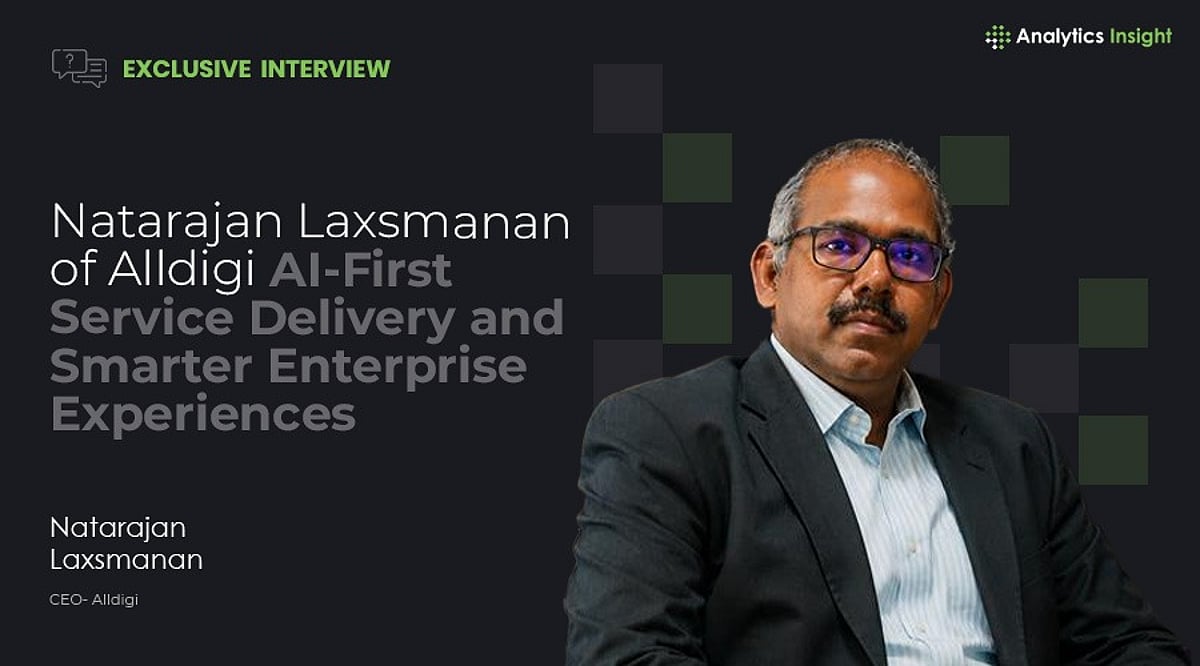
    Artificial intelligence is no longer just a support tool—it is becoming the foundation of enterprise service delivery. In a recent interview, Natarajan Laxsmanan, CEO of Alldigi, shared how AI is transforming customer and employee experiences through predictive engagement, intelligent automation, integrated workflows, and stronger governance. Here are the key insights from that conversation.

    From Reactive Support to Predictive Engagement

    AI is fundamentally changing customer experience by helping businesses move from issue resolution to issue prevention. Traditional support models are reactive: companies respond only after a customer raises a concern. AI enables organizations to anticipate needs by analyzing behavioral patterns, historical interactions, transaction data, and real-time signals.

    This intelligence allows businesses to proactively address issues, offer personalized recommendations, and create highly contextual interactions across channels. AI-powered virtual assistants, intelligent routing, sentiment analysis, and predictive service models are helping enterprises deliver faster resolutions while improving overall customer satisfaction. The result is a shift from transactional touchpoints to continuous, personalized engagement that strengthens loyalty and lifetime value.

    One practical way to operationalize this balance is to use AI-powered service platforms that bring AI agents and human teams together across channels. Connected knowledge, ticketing, messaging, voice, and reporting tools can help organizations automate routine, high-volume requests while keeping human expertise in the loop—supporting faster service without losing empathy or accountability.

    Employee Experience as a Strategic Growth Driver

    Employee experience is no longer just an HR priority; it is a business performance imperative. Organizations increasingly recognize the direct connection between employee satisfaction, productivity, innovation, retention, customer outcomes, and overall business growth.

    Modern employees expect workplace experiences that are as intuitive and responsive as the digital experiences they encounter as consumers. This requires cross-functional collaboration across HR, operations, technology, finance, and leadership teams. AI is helping organizations create more personalized employee journeys through intelligent support, workforce analytics, learning recommendations, and automated service delivery.

    Enterprises that treat employee experience as a strategic lever rather than an administrative function are better positioned to build an engaged workforce, improve operational agility, and drive sustainable growth in an increasingly competitive environment.

    Scaling AI Across the Enterprise

    The biggest challenge is not implementing AI, but identifying where it can create enterprise-wide value. Many organizations deploy AI in isolated applications, leading to fragmented insights and disconnected workflows.

    The real opportunity lies in connecting payroll, compliance, workforce management, and customer experience systems into an integrated operating ecosystem. When AI can access and analyze data across functions, it can uncover patterns, automate decisions, improve compliance oversight, optimize workforce planning, and deliver more personalized experiences for both employees and customers.

    However, success depends on strong data foundations, system interoperability, governance frameworks, security controls, and clearly defined business objectives. Organizations that get these fundamentals right can leverage AI as a strategic capability that delivers measurable improvements in efficiency, compliance, agility, and stakeholder experience.

    Balancing Automation with Human Interaction

    The goal of AI should not be to replace human interaction, but to elevate it. Automation is most effective when applied to repetitive, high-volume, and rules-based tasks, allowing employees to focus on activities that require empathy, judgment, creativity, and relationship-building.

    Whether serving customers or supporting employees, there will always be moments where human intervention is essential. Businesses must therefore design operating models where AI handles routine processes while humans manage complex and emotionally nuanced interactions.

    The organizations that achieve the best outcomes are those that view AI and human expertise as complementary strengths. This approach enables greater efficiency while preserving the trust, personalization, and authenticity that remain critical to exceptional experiences.

    Building an AI-First Operating Model

    Adopting an AI-first approach requires organizations to rethink more than technology. It demands changes across operating models, governance structures, and workforce strategies.

    First, businesses need to redesign workflows around intelligence, automation, and predictive decision-making rather than simply embedding AI into existing processes. Second, robust governance frameworks must be established to ensure transparency, accountability, security, privacy, compliance, and ethical AI usage.

    Equally important is workforce transformation. Employees need the skills and confidence to work alongside AI systems, interpret insights, and focus on higher-value responsibilities. Organizations that invest in continuous learning, digital capability building, and change management are more likely to realize the full benefits of AI.

    Ultimately, successful AI-first enterprises combine technology, governance, and people transformation to create scalable, trusted, and outcome-driven service delivery models that continuously evolve with business needs.

  • NVIDIA Stock at $219: Key Drivers Behind Its $5.3 Trillion Market Cap and AI Spending Outlook

    NVIDIA Stock at $219: Key Drivers Behind Its $5.3 Trillion Market Cap and AI Spending Outlook

    NVIDIA (NVDA) closed near USD 219.34 on September 17, 2026, giving the company a market capitalization of roughly USD 5.30 trillion. The chipmaker became the first in history to cross the USD 5 trillion mark in October 2025, and it has stayed above that level ever since.

    Record Revenue and Data Center Growth

    NVIDIA’s fiscal Q2 2027 results showed record revenue of USD 96.2 billion, up 106% year-over-year. Data Center revenue reached USD 89.0 billion, up 117%, driven primarily by Blackwell systems and early production shipments of the next-generation Vera Rubin platform. GAAP gross margin came in at 75.0%, with diluted EPS of USD 2.46. The company guided Q3 revenue to USD 108.0 billion, plus or minus 2%, and noted that figure assumes no Data Center compute revenue from China.

    Trillion-Dollar Demand Outlook

    CEO Jensen Huang stated at NVIDIA’s GTC event that the company expects at least USD 1 trillion in demand and purchase orders for its Blackwell and Vera Rubin chips through 2027. This forward-looking outlook is not a signed order book, and analysts will watch actual shipments against that projection. NVIDIA’s disclosed purchase and supply commitments had climbed to about USD 279 billion by the end of fiscal Q2, reflecting the company’s efforts to lock in capacity.

    AI Spending Durability Under Scrutiny

    While demand for AI computing is evident, the key question is whether hyperscalers, AI labs, and enterprises can sustain the pace of capital spending. This uncertainty came into focus on September 14, when the Philadelphia Semiconductor index fell 5.9% and NVIDIA shares dropped about 3.4%. The selloff followed warnings from AI industry executives about the pace and economics of AI infrastructure spending, marking one of several sector-wide declines this year tied to debt-funded data center buildouts. NVIDIA’s future growth depends heavily on that spending pace holding up.

    China, Competition, and Valuation

    NVIDIA’s current guidance excludes Data Center compute revenue from China due to ongoing US export restrictions. Any policy shift could affect revenue, product mix, and margins. The company’s competitive edge rests on its CUDA software ecosystem, combined hardware and networking lineup, and deep ties with major cloud and AI customers. Custom chips from cloud providers, including Google’s TPU line, and AMD’s accelerators pose longer-term threats, though neither has slowed NVIDIA’s momentum so far. The stock’s low dividend yield reflects a focus on growth over shareholder payouts.

    Final Thought

    NVIDIA’s stock price reflects a company posting real, verified growth while carrying a demand outlook that assumes years of heavy AI infrastructure spending. The September selloff was a reminder that markets are pricing confidence in that spending pace, not just the chips themselves. The next earnings report, scheduled for November 25, will provide fresh evidence on whether Data Center growth holds its current speed and whether customer AI budgets remain strong.

  • AI Agents Move Beyond Chatbots: 4 Real-World Jobs Where They Act Autonomously

    AI Agents Move Beyond Chatbots: 4 Real-World Jobs Where They Act Autonomously

    AI agents are evolving from simple question-answering tools into autonomous operators that can plan tasks, use software, verify results, and execute multi-step workflows with minimal human oversight. This shift from generating answers to completing entire processes is reshaping industries. Here are four key areas where AI agents are taking independent action in 2026.

    Financial Operations

    Financial firms now deploy AI agents for research, portfolio monitoring, risk assessments, and other complex workflows. Some systems rebalance portfolios within approved limits or handle operational exceptions automatically. Human-defined rules, permissions, and oversight remain essential for high-impact financial decisions, but routine tasks are increasingly handled by agents.

    Customer Support

    AI support agents have moved beyond scripted responses. They can classify customer requests, retrieve account data, check policies, process eligible refunds, update CRM records, send responses, and escalate unusual cases. The goal is no longer just answering a question—it’s resolving the entire customer case autonomously.

    Smart Buildings and Infrastructure

    AI agents connect with building systems, sensors, and HVAC equipment to monitor conditions and adjust operations in real time. Research from 2026 demonstrates agent-based systems that continuously optimize cooling and energy usage, showing how AI can take physical-world actions in smart buildings.

    Software and IT Operations

    Coding agents read repositories, identify relevant files, modify code, run tests, inspect failures, and prepare changes for review. IT agents investigate alerts, search logs, and handle routine fixes. While human engineers still review security-sensitive or high-impact changes, agents now manage significant portions of development and maintenance workflows.

    Setting Boundaries for Autonomous Agents

    Independent action introduces new risks: agents may act on incorrect information, receive excessive permissions, follow malicious instructions, or propagate errors across connected systems. Security experts recommend least-privilege access, detailed activity logs, continuous monitoring, rigorous testing, and human approval for high-risk actions. The transition from assistants to operators requires careful governance.

    The takeaway: AI agents are not replacing all workers overnight. Instead, they are owning narrow, repeatable workflows while humans handle exceptions, accountability, and major decisions. Finance, customer operations, software development, and smart infrastructure are leading this transformation in 2026.